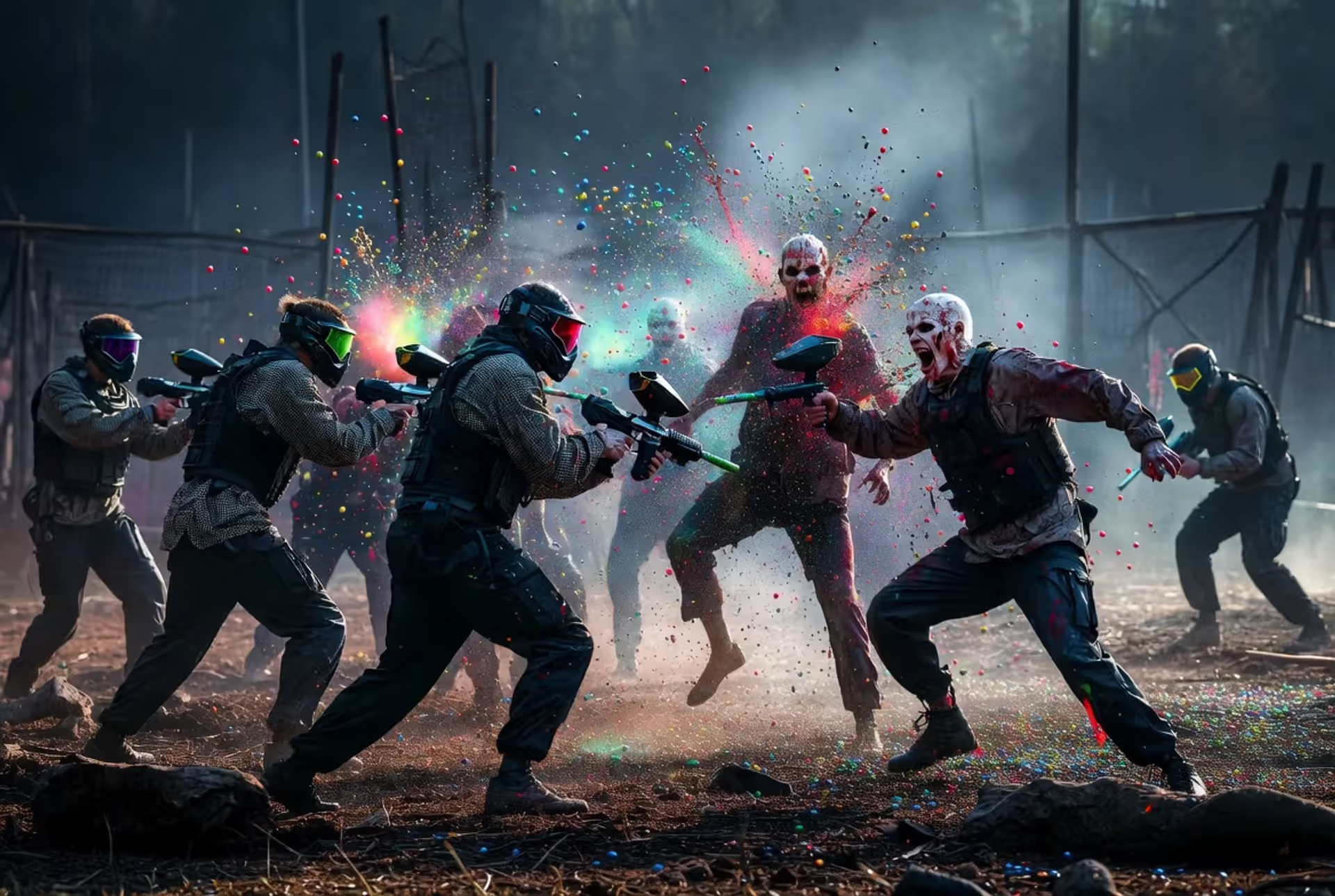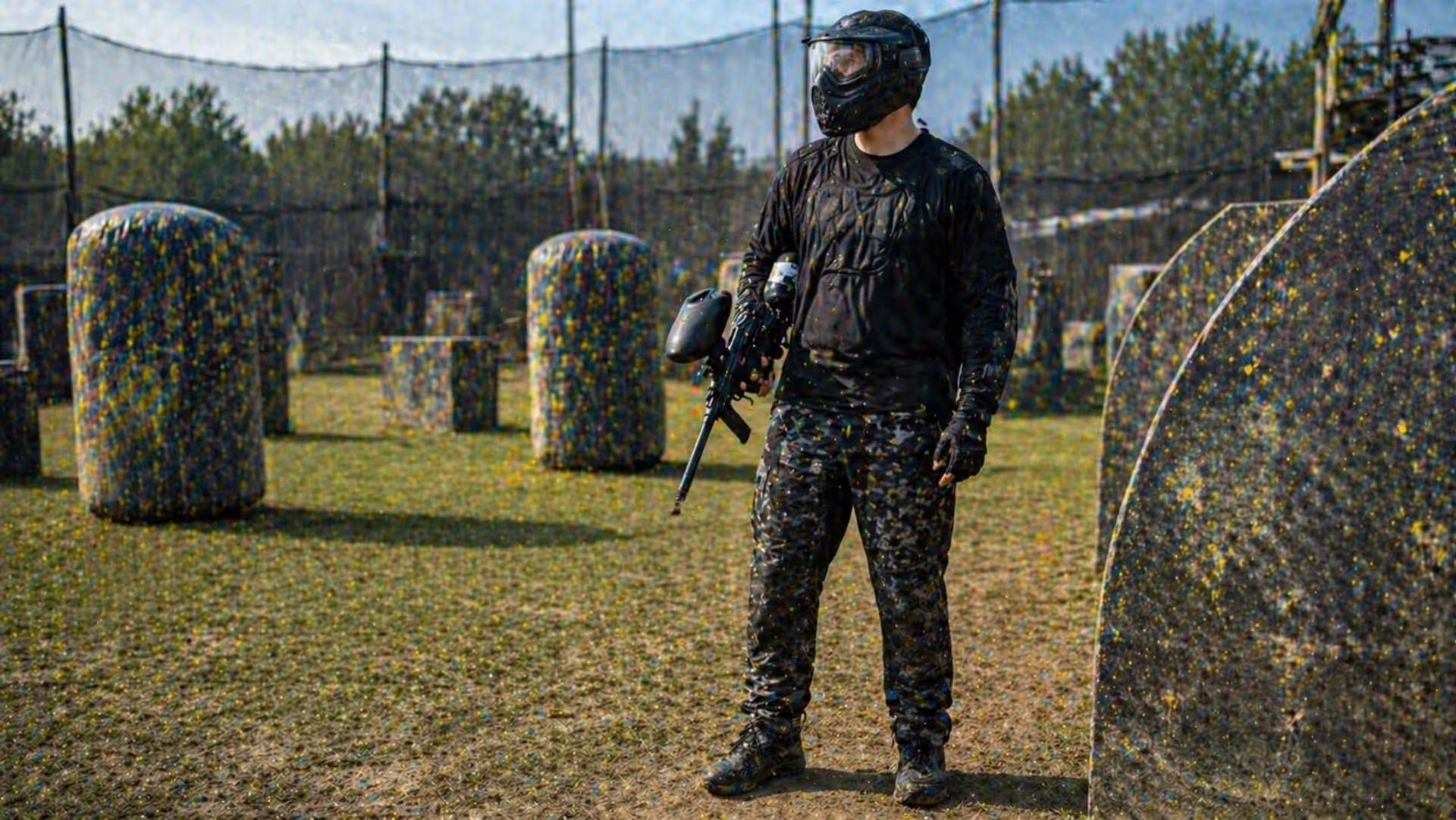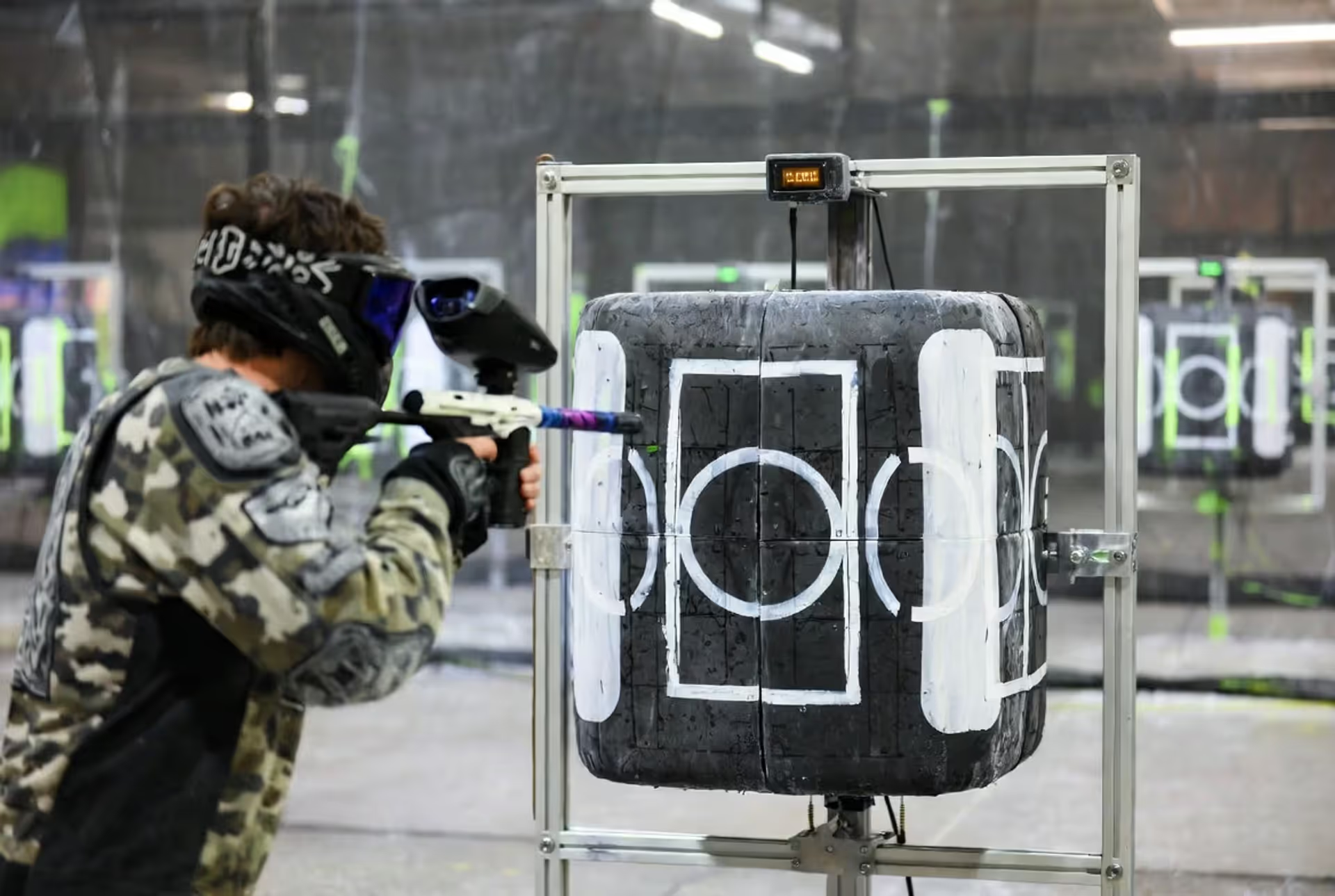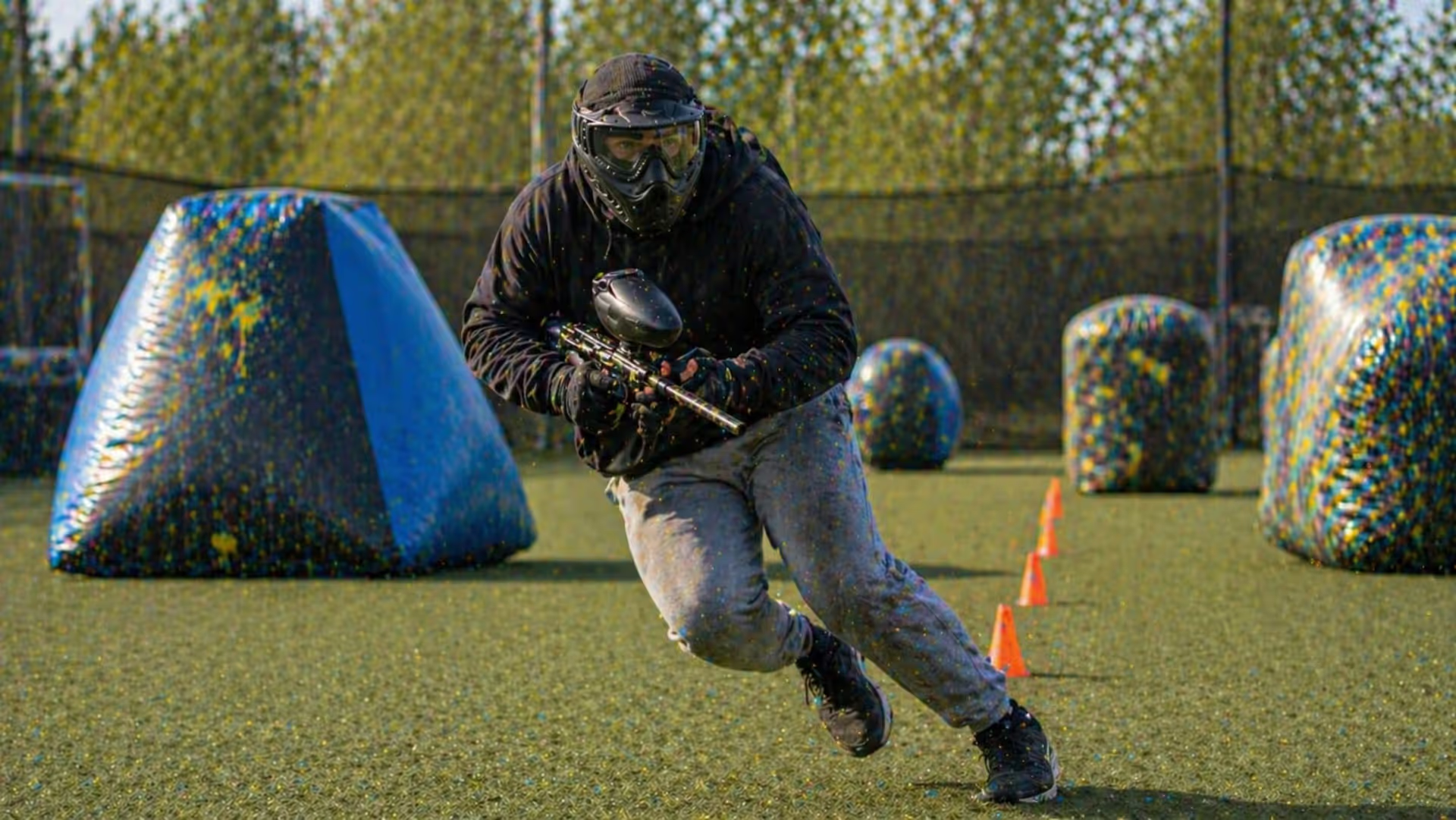
Speedball intensity in action
What Is Speedball Paintball?
Content
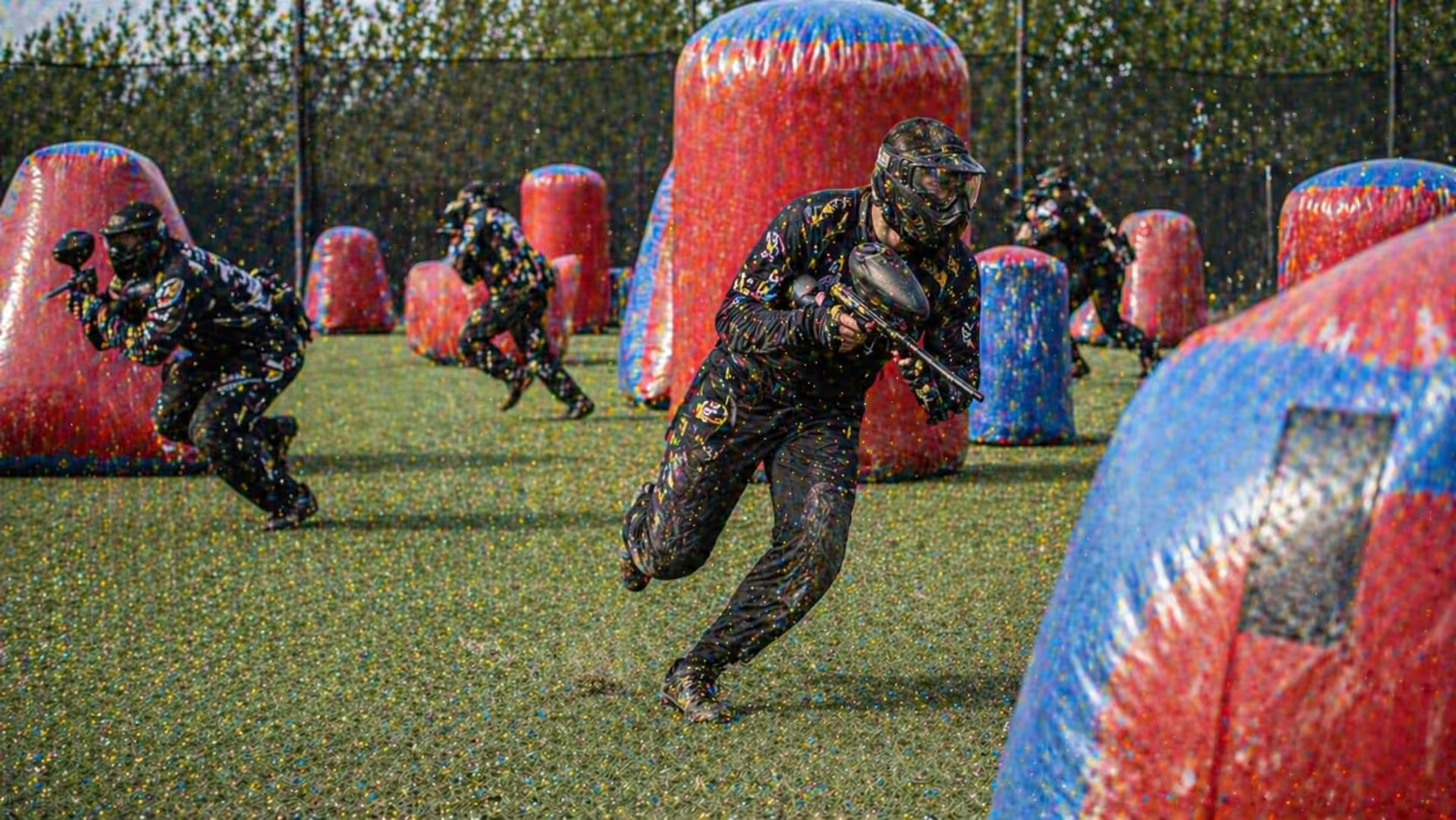
Walk onto any speedball field and you'll know immediately this isn't your typical weekend paintball outing. Brightly colored inflatable bunkers dot a perfectly symmetrical field no bigger than a basketball court. Two teams crouch behind starting barriers, markers raised, waiting for the buzzer. When it sounds? Chaos.
Speedball compresses everything intense about paintball into matches that rarely exceed five minutes. You're sprinting from bunker to bunker, paint flying from both directions, teammates shouting positions in your ear. Three to five players per side battle to eliminate the opposing team or capture objectives before time expires. Think of it as paintball's answer to competitive sports like basketball or hockey—fast breaks, constant pressure, split-second decisions.
Here's how a typical point unfolds: The buzzer blares. You explode from the start box, diving into your assigned bunker while your back players lay down covering fire. Maybe you're running the snake (that long bunker hugging the sideline), crawling forward between volleys, trying to advance before their snake player pins you down. Your insert player might be pushing the center dorito, looking for an angle on their back corner. Every second counts. Hesitate for three seconds too long and you're watching paint sail over your bunker from two angles.
Victory goes to whoever wins the race-to format first—usually four to seven points wins the match. Each point feels like its own mini-war. Lose focus for one moment, leave your hopper exposed while reloading, fail to check your blind side? You're walking off with a splat on your pack and your team's down a player.
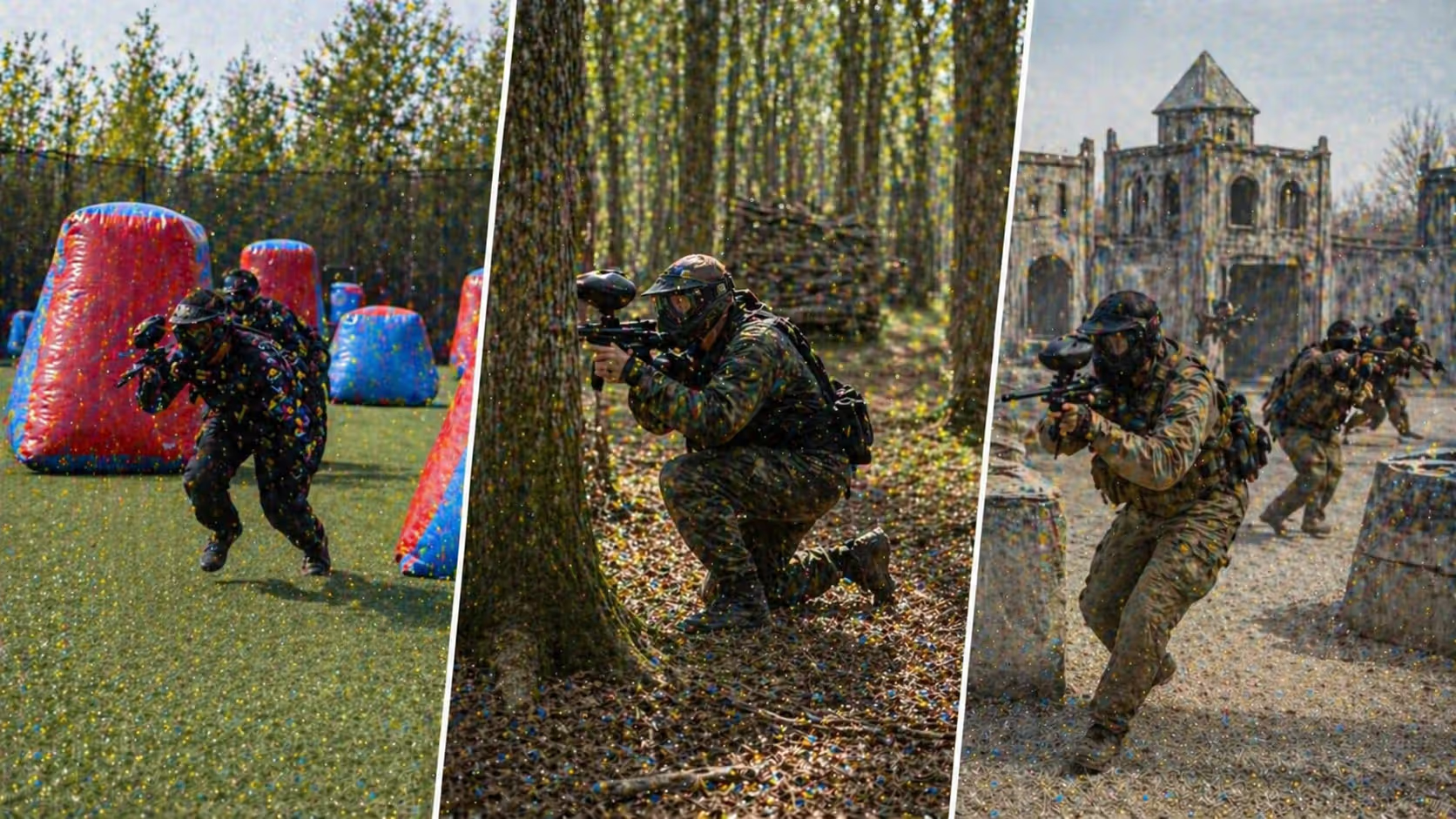
How Speedball Differs from Woodsball and Scenario Paintball
Let me be straight with you—these three paintball styles might as well be different sports. Sure, they all involve markers and paint, but that's where similarities end.
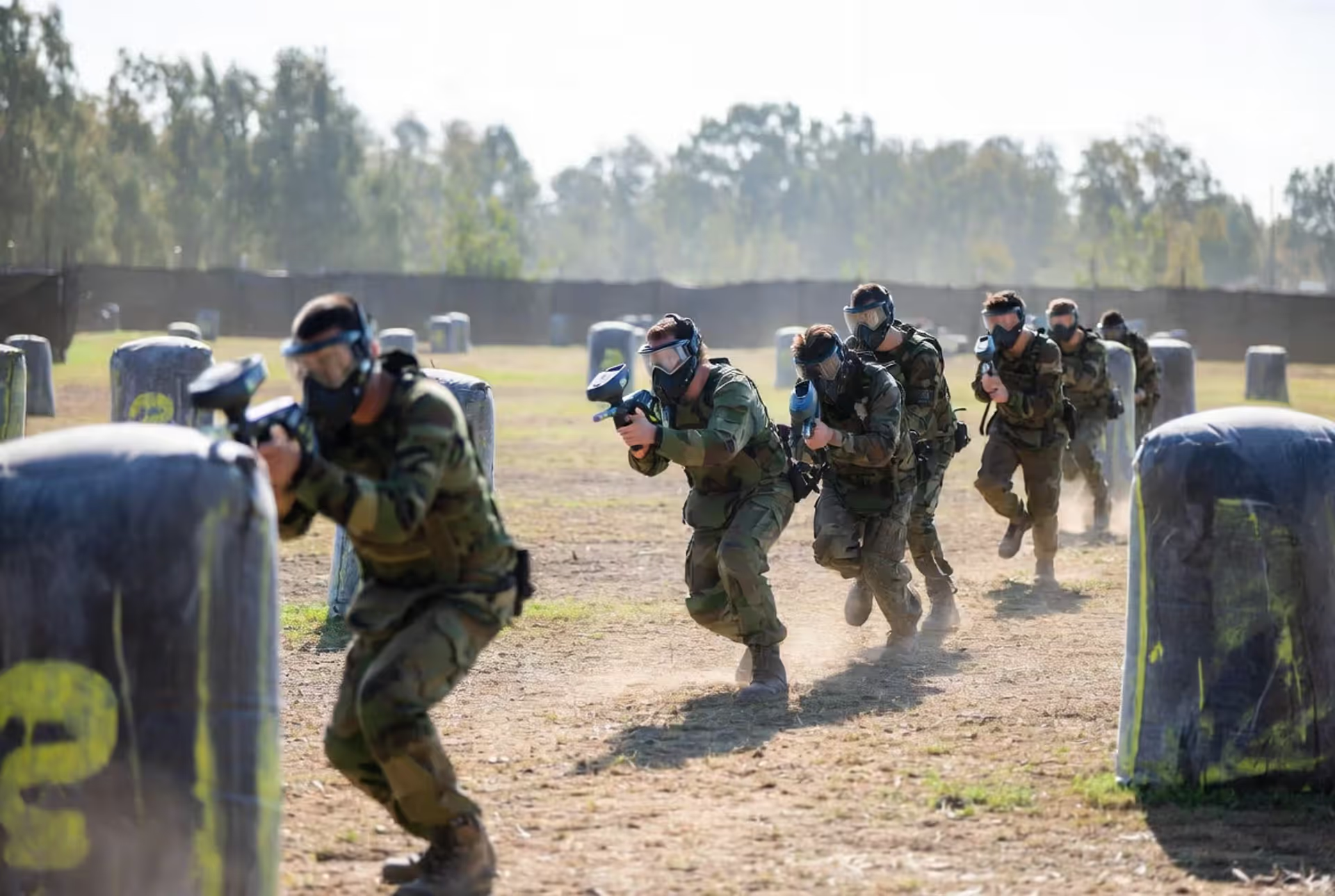
Where you play changes everything. Speedball happens on flat artificial turf with inflatable barriers you could spot from space—hot pink, electric blue, safety yellow. Everything's symmetric, nothing to hide behind except those inflatables. Woodsball? You're in actual woods. Trees, hills, dirt trails, maybe some plywood forts. Scenario paintball mixes both worlds, throwing in themed stuff like crashed helicopters or zombie apocalypse props.
Time pressure separates casual from competitive immediately. Speedball points wrap up in two to five minutes maximum. You'll burn through 500-1,000 paintballs in a single match because you're constantly shooting. Compare that to woodsball where games stretch 15-30 minutes and you might fire 200 rounds total. Scenario events? Those run all day, sometimes entire weekends. I've played eight-hour scenario games where teams rotate players in and out.
How you actually play requires completely different mindsets. Speedball punishes passivity. Stay in your starting bunker longer than five seconds and you're guaranteed to eat paint from someone who actually moved. You've got to push, create angles, force your opponents into bad positions. Woodsball rewards patience—spend ten minutes slowly advancing through brush, wait for the perfect shot. Scenario games become large-scale operations with fifty-plus players coordinating across massive fields.
Your gear choices reflect these differences too. Speedball players need electronic markers capable of shooting 10+ balls per second, massive 200-round hoppers, and tight-fitting jerseys that won't snag on bunkers. Woodsball folks often prefer mechanical markers styled like real firearms, smaller 50-round hoppers, full camouflage. Scenario players add radios, smoke grenades, whatever fits their role.
Here's a breakdown that makes the distinctions clearer:
| Format | Where You're Playing | How Long Points Last | Players Per Side | Who Shows Up | Gear Investment |
| Speedball | Artificial turf with inflatable obstacles | 120-300 seconds each point | 3-5 shooters | Competitive athletes, tournament players | $800-$3,000+ for tournament-ready setup |
| Woodsball | Natural forest terrain and trees | 15-30 minute rounds | 5-20 shooters | Recreational players, beginners | $200-$1,000 gets you started |
| Scenario | Mixed environments with themed structures | 2-8 hour campaigns | 10-100+ shooters | All skill levels welcome | $300-$1,500 depending on role |
The performance ceiling in speedball sits way higher than other formats because mistakes cost you immediately. In woodsball, if you miss a snap-shot, you can reposition and try again. In speedball? That opponent you missed just bunkered your teammate, and now you're in a 3-vs-5 situation with two minutes left. Every single movement, every communication call, every trigger pull matters when the game moves this fast.
Author: Ethan Rowe;
Source: lakestaytents.com
Speedball Field Setup and Bunker Types
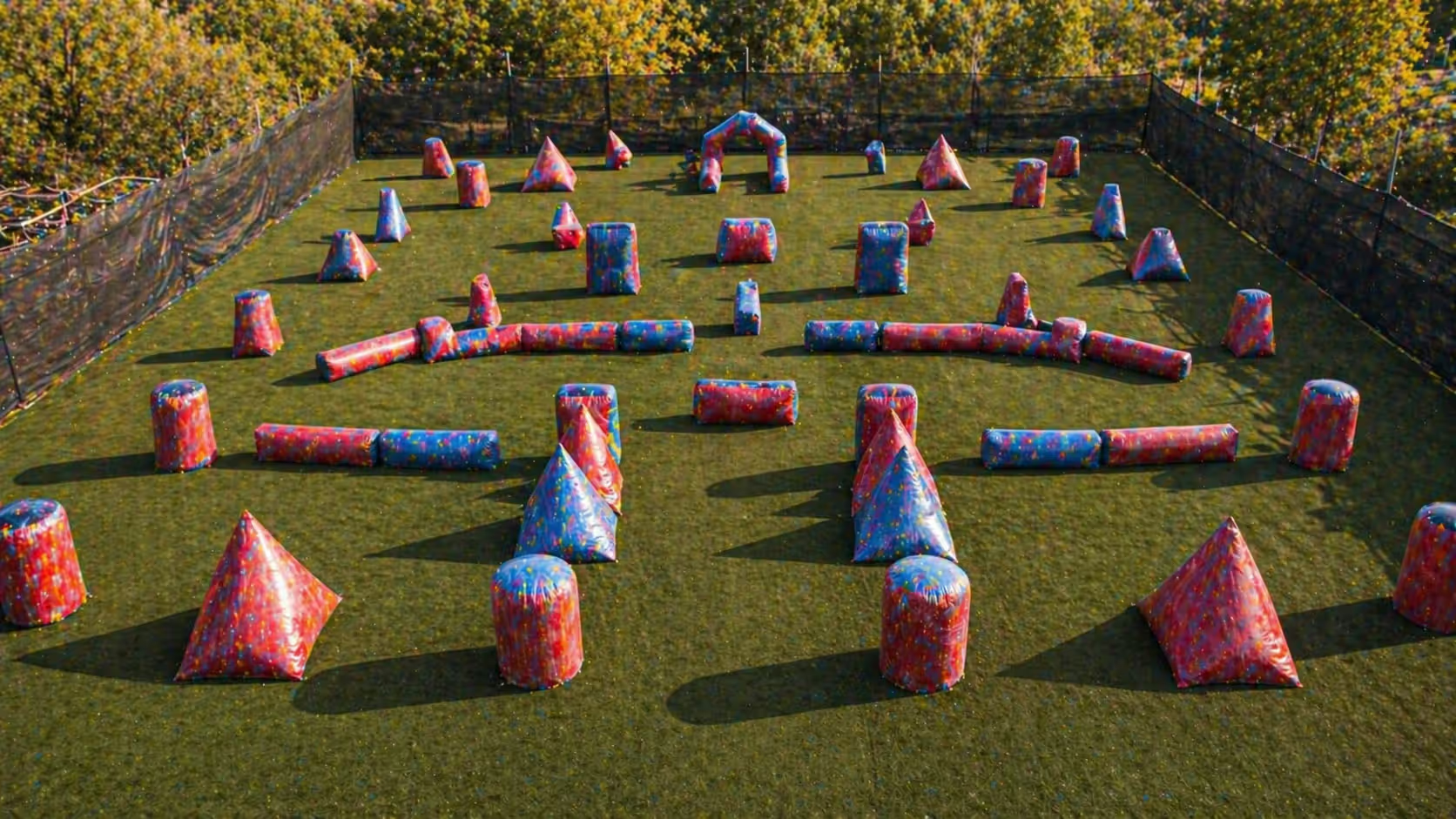
Regulation speedball fields measure roughly 120 feet across and 150 feet deep—about half the size of a football field. The NXL locked in standardized dimensions back in 2018, which means whether you're playing in Texas or Pennsylvania, you're working with identical real estate. Twelve to fifteen-foot netting surrounds everything, keeping paint contained and spectators safe. Both ends feature clearly marked starting boxes (dead boxes) where eliminated players exit and teams stage between points.
Inflatable bunkers revolutionized competitive paintball when they replaced wooden spools and plywood structures in the early 2000s. These air-filled obstacles come in specific shapes, each with its own tactical personality:
Doritos look exactly like the chip—triangular corners that let you see wide angles but expose you to crossfire. Most fields place these near the 50-yard line corners. Playing a dorito means constantly checking three or four shooting lanes because opponents can hit you from multiple directions.
Cans stand tall and cylindrical, perfect for back-corner players who need to stand up and shoot lanes. They're typically 6-7 feet high. You'll find these anchoring starting positions because they offer protection while letting taller players work comfortably.
Bricks are rectangular blocks placed mid-field. They're versatile—you can shoot from either side, slide behind them from multiple approaches, and they're wide enough to actually hide your whole body if you compress tight.
Snakes run along the sidelines like long, low tubes you can barely crouch behind. Aggressive front players live in these. You're crawling, sliding, sometimes going prone to advance while the entire field shoots at you. Snake players need guts and precise timing.
Temples sit center-field shaped like plus signs or Xs. They offer 360-degree coverage but require paranoid awareness since opponents can shoot you from literally any angle. Playing temple means spinning constantly, checking every lane.
Tournament layouts get completely redesigned every few months. The NXL releases new field layouts 3-4 weeks before events, giving teams time to build practice versions and develop strategies. Some teams literally construct full-size replica fields at their practice facilities to drill specific plays before major tournaments.
Symmetry is non-negotiable in competitive speedball. Both teams face identical bunker configurations—if breakside left has a dorito 25 feet out, breakside right mirrors it exactly at 25 feet. This design philosophy eliminates luck, making speedball purely about execution. Unlike woodsball where one team might get better natural cover, speedball gives everyone the same tactical opportunities.
Some recreational facilities still use older equipment—airball bunkers (the original inflatable designs from the 1990s), wooden cable spools, even stacked tires. These work fine for practice but don't meet tournament standards. Budget-conscious fields might mix two or three genuine inflatables with plywood structures painted bright colors.
Surface matters more than people realize. Artificial turf costs serious money ($40,000-80,000 for a full field) but provides consistent footing year-round and drains immediately after rain. Multi-day tournaments need turf or they'd turn into mud pits by day two. Natural grass works for local practice but gets chewed up fast. A few fields use sand, which cushions dives nicely but gets everywhere—inside your marker, your mask, your shoes, your car.
Author: Ethan Rowe;
Source: lakestaytents.com
Choosing the Right Speedball Paintball Gun
Your marker choice matters in speedball. Not in a "you need the most expensive gun" way—in a "your equipment needs to keep up with the pace" way. That $180 mechanical marker from the rental counter? It'll shoot maybe 6-7 balls per second max, and you'll be pulling the trigger so fast your finger cramps. Meanwhile, opponents with electronic markers are laying down 10+ balls per second effortlessly.
Electronic markers run speedball for practical reasons. Circuit boards control firing instead of purely mechanical systems, enabling different shooting modes, consistent ball velocity, and sustained high rates of fire without destroying your trigger finger. You've got tiers:
Entry-level electronics ($300-400) include stuff like the Empire Mini GS and Dye Rize CZR. These work reliably, shoot fast enough for Division 3-4 play, and won't bankrupt you. They're lighter on features—basic boards, standard ASA mounts, decent efficiency but nothing spectacular.
Mid-range options ($600-900) like the Planet Eclipse ETHA3 or Dye DSR+ step up build quality significantly. Better ergonomics, tool-less maintenance, improved air efficiency, smoother shot quality. This range represents the sweet spot for serious amateur players.
Professional-grade markers ($1,200-2,000) like the Planet Eclipse CS3, Dye M3+, or Luxe X deliver marginal performance improvements over mid-range guns but offer boutique features—premium milling, ultra-light weight, hot-swappable batteries, color customization. Honestly? A Division 2 player won't notice much difference between a $700 gun and a $1,600 gun performance-wise.
What actually matters in your marker:
Firing modes—Most tournaments allow ramping mode where the gun automatically accelerates to 10.5 balls per second after three trigger pulls. Semi-automatic mode requires one trigger pull per shot. Burst modes fire 2-3 shots per pull. Your marker needs these programmed correctly or you'll fail chronograph inspection before matches.
Barrel systems—Length affects accuracy and noise signature. Most speedball players run 14-16 inch barrels. Some invest in barrel kits ($80-150) with multiple bore sizes (.684-.691 inches) to match paint diameter. Better bore match = fewer barrel breaks and slightly better accuracy, though paint quality matters more than barrel choice.
Weight and balance—Lighter markers reduce fatigue during ten-match tournament days. Anything under 2.5 pounds feels good. Weight distribution matters too—you want balance near the grip frame, not front-heavy designs that tire your wrists.
Efficiency—Modern electronics shoot 1,000+ paintballs per 68 cubic inch / 4500 PSI air tank. Poor efficiency means swapping tanks mid-match, which is embarrassing and disruptive. Check efficiency ratings before buying.
Maintenance accessibility—You'll be cleaning your marker between matches, sometimes in 90-second intervals. Tool-less disassembly is huge. Markers requiring Allen keys and reference manuals to access the bolt are tournament nightmares.
Mechanical markers made a comeback recently through dedicated mech divisions at major tournaments. These guns use purely pneumatic systems—no circuit boards, no batteries, just air pressure and springs. The nostalgia factor is real, and mechanical divisions level the playing field since everyone maxes out around 8-9 balls per second. Quality mech speedball markers (Empire Resurrection, Planet Eclipse EMEK MG100, Azodin KP4) run $200-600.
Here's my honest advice: Don't buy a $1,800 professional marker before you can consistently shoot cross-field lanes. I've watched 16-year-olds with $450 ETHA2s absolutely dominate players shooting $1,600 Luxes because fundamentals trump equipment. Buy reliable mid-range, invest in premium paint and lots of practice, upgrade later if you make Division 1.
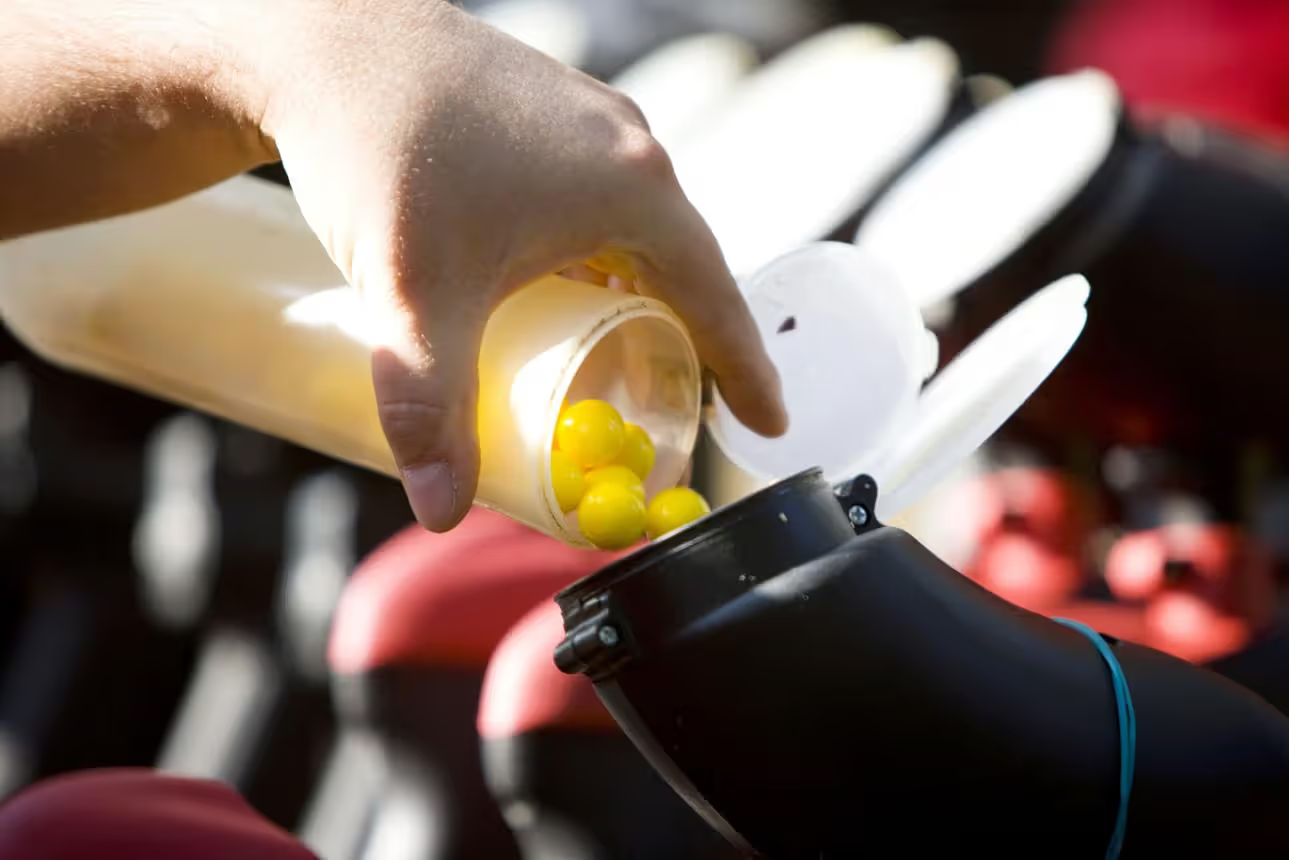
Hoppers are equally critical. Gravity-fed loaders can't keep up when you're shooting 10 balls per second—you'll get ball starvation and start chopping paint. Electronic force-feed loaders ($80-180) like the Dye LTR, Virtue Spire, or Bunkerkings CTRL use motorized systems or spring tension to push paintballs into your marker's feed neck. They're not optional for competitive play.
Author: Ethan Rowe;
Source: lakestaytents.com
How Professional Paintball Tournaments Work
Professional paintball operates through structured circuits with standardized rules, similar to mainstream sports leagues. The format's evolved dramatically since the early 2000s when events were basically organized chaos. Now you've got regular seasons, playoffs, championship events, even some player salaries at the top level.
The Race-to format dominates modern tournaments. Two teams face off in a match. First to win X number of points (Race-to-4, Race-to-5, Race-to-7 depending on division and elimination rounds) wins the match. Each individual point starts with both teams behind start boxes. Buzzer sounds, everyone breaks out, point ends when one team eliminates all opponents or achieves the objective—usually pulling a flag from a stand or hitting a buzzer.
Match flow follows specific timing:
Sixty seconds before point start, teams enter the field and prep gear. At the buzzer, gates drop and play begins. Points last anywhere from 30 seconds (one team gets completely destroyed breaking out) to the full 5-10 minute limit before overtime rules kick in. Between points, you've got 90 seconds to refill hoppers, swap air tanks if needed, wipe sweat from your eyes, and listen to your coach scream adjustments.
Referees trail players across the field checking for hits, assessing penalties, and tracking eliminations. When you're eliminated, you raise your marker and walk to the dead box—no arguments, no replays. Professional refs wear body cameras now, so controversial calls can be reviewed between points.
Division structure separates skill levels clearly. The NXL uses Professional, Division 1, Division 2, Division 3, and Division 4 classifications. Professional division features full-time players on sponsored teams competing for prize pools exceeding $100,000 at major events. Teams like San Diego Dynasty, Houston Heat, and Edmonton Impact field rosters of elite athletes who train year-round.
Lower divisions accommodate amateur and semi-pro teams. D1 teams might have one or two sponsored players. D2-D4 teams are mostly weekend warriors who practice when work schedules allow. Entry fees and prize pools scale accordingly—Pro teams pay more to enter but compete for serious money, while D4 teams pay less and play for smaller prizes or just trophies.
Penalties swing matches instantly. Minor infractions—playing on with an obvious hit, overshooting an eliminated opponent—result in one-for-one pulls. Ref yanks one of your players, now you're shorthanded. Major penalties like physical contact or leaving field boundaries? Two-for-one or three-for-one eliminations, sometimes costing you the entire point. Professional teams drill penalty avoidance religiously because one stupid mistake can eliminate your tournament run.
Individual statistics get tracked at higher levels. Eliminations, survival rate, flag pulls, even positioning data at some events. Teams use these metrics for roster decisions and strategy development. Some divisions publish detailed analytics, though nothing approaching mainstream sports yet.
People think speedball is just about shooting faster than the other guy. That's maybe 20% of it. The real game is processing information—reading opponent body language, tracking paint trajectories to figure out where shots originated, communicating constantly with teammates who are under the same pressure you are, making decisions in microseconds that determine whether your team advances or loads up the van for a six-hour drive home.
— Ryan Greenspan
Major Paintball Leagues in the US
The National Xball League (NXL) runs professional paintball in North America and increasingly worldwide. Founded in 2003, restructured multiple times through financial difficulties and ownership changes, the NXL stabilized around 2014 and now operates a full season from April through October. Typically 4-5 major events plus World Cup championship in November.
Events rotate between established venues—Camp Pendleton in California, CPX Sports in Illinois, Pev's Paintball in Pennsylvania, Las Vegas and Florida locations. Each event hosts 100-200 teams across all divisions. Professional division gets stadium-style setups with grandstands, announcers, and webcast production with instant replay and player interviews. Lower divisions play on outlying fields with simpler infrastructure.
NXL Professional division teams operate like small businesses. They maintain training facilities, hire coaching staff, pay player salaries (top pros make $30,000-60,000 annually plus winnings and sponsorships), and manage brand partnerships. Dynasty, the sport's most successful franchise, has won more championships than any other team and serves as paintball's version of a Yankees or Lakers dynasty.
Regional leagues fill gaps between major NXL events. The Midwest Paintball League (MWPL) hosts monthly tournaments across Illinois, Wisconsin, and nearby states. Pacific Paintball League (PPL) covers the West Coast. East Coast Paintball League (ECPL) operates in Pennsylvania, New York, and New England. These leagues use similar formats to NXL—Race-to points, divisional structure, professional refereeing—but charge lower entry fees and require minimal travel for regional players.
Regional leagues serve as development pipelines. Talented Division 3 and Division 2 teams use them to gain experience before committing to full NXL schedules. Players who dominate regionally often get recruited by higher-level teams scouting for talent.
The National Professional Paintball League (NPPL) operated as NXL's main competitor through the mid-2000s, pioneering innovations like seven-player format and stadium venues in major cities. Financial problems, internal conflicts, and declining participation led to NPPL's collapse in 2015. The league's seven-player format died with it—NXL's five-player race-to system became the undisputed standard.
College paintball operates through the National Collegiate Paintball Association (NCPA), which runs tournaments exclusively for university-affiliated teams. While not professional (no prize money, scholarship status varies), NCPA provides structured competition for 18-22 year olds transitioning from youth leagues toward potential professional careers. Teams represent schools like Texas A&M, Penn State, and UCLA, competing regionally then at national championships.
Tournament Paintballs vs. Recreational Paintballs
Paint quality separates winners from losers at competitive levels. You could hand me a $2,000 marker and $15-per-case bargain paint, and I'd lose to an amateur with a $400 gun shooting premium tournament paint.
Tournament-grade paintballs deliver performance through specific characteristics:
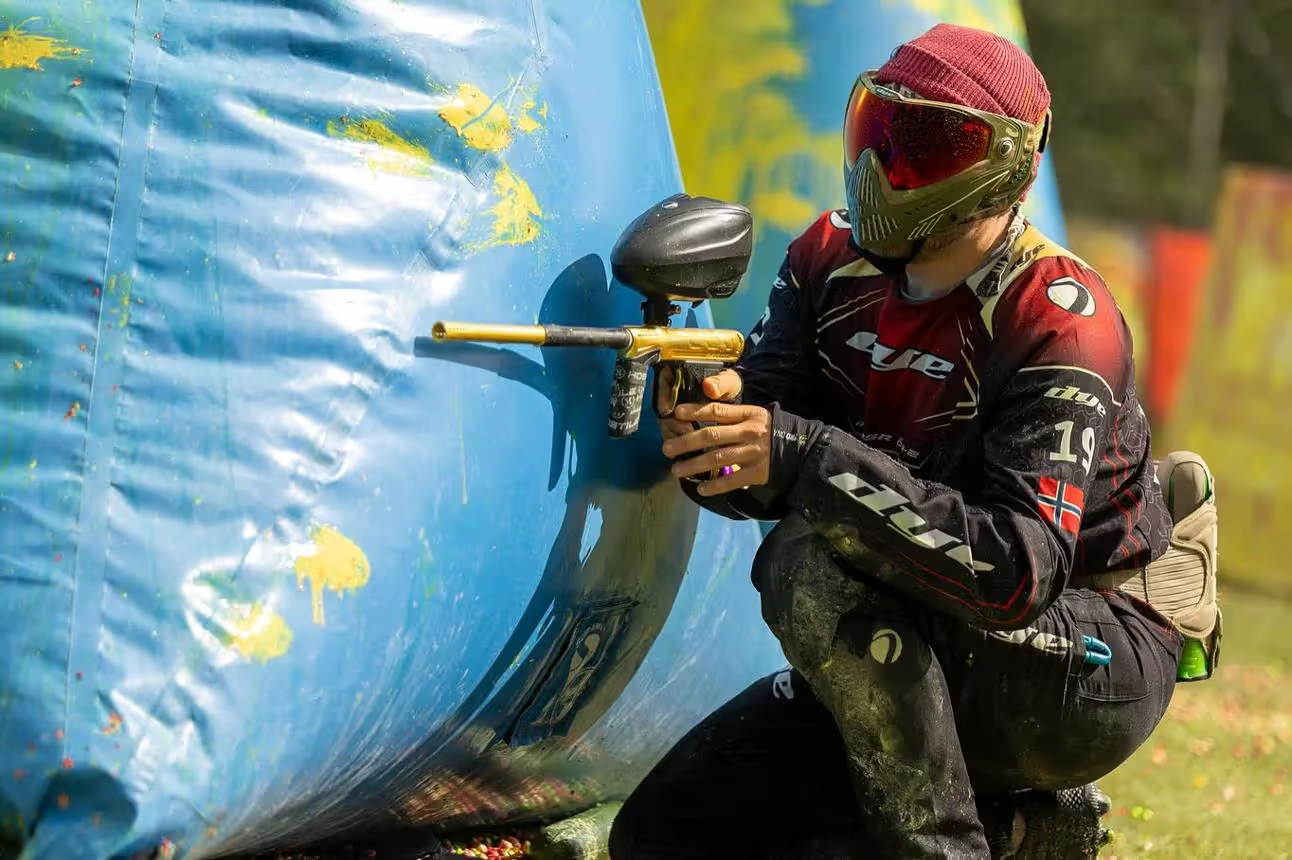
Shell thickness and brittleness matter most. Tournament paint uses thin, fragile gelatin shells engineered to break on impact even at reduced velocities or glancing hits. You're shooting opponents hitting bunker edges at 40-degree angles—thick shells bounce, thin shells break and mark. That's the difference between eliminating their snake player or watching him bunker your entire backline.
Fill brightness and consistency affect referee verification. Professional-grade fill uses vivid pigments that show clearly from 30+ feet away. Refs need to verify hits during live play while running full speed. Dull or thin fill creates ambiguity—"Is that a hit or mud splash?"—leading to contested calls.
Paintball diameter consistency determines accuracy. Premium tournament paint maintains diameter variance under 0.003 inches across an entire case. Cheap paint varies 0.008+ inches, causing inconsistent barrel fit and tumbling during flight. The difference becomes obvious beyond 50 feet where tournament paint flies straight and bargain paint curves unpredictably.
Manufacturing freshness affects performance significantly. Tournament paint ships 2-3 weeks after production before shells harden or deform from temperature fluctuations during storage. Six-month-old paint stored in warehouse heat develops dimples, flat spots, and hardened shells. It still shoots but bounces frequently.
Top tournament brands—Valken Graffiti, GI Sportz 5-Star, Empire Marballizer, Dye Precision—cost $50-75 per case (2,000 rounds) compared to $25-40 for recreational paint sold at walk-on fields. Professional teams negotiate bulk pricing through sponsors, sometimes receiving free paint as part of sponsorship packages, but still budget $200-400 per player per tournament weekend for practice and matches.
Recreational paintballs prioritize durability over performance. Rental operations need paint that survives storage in bins, handling by inexperienced players, and temperature swings in storage sheds. Thicker shells accomplish this but create bounce rates around 30-40% when hitting angled surfaces or light gear. That's acceptable for casual birthday parties, tournament suicide in competitive play where bounces mean your opponent stays in and shoots you.
Temperature compatibility matters more than most players realize. Summer-formula paint uses different gelatin composition than winter paint. Shoot summer paint in 40-degree weather and you'll get bounces all day—shells are too hard for the temperature. Shoot winter paint in 85-degree heat and you'll get barrel breaks as soft shells burst from feed force. Serious players check weather forecasts and select paint formulated for expected conditions.
Author: Ethan Rowe;
Source: lakestaytents.com
Getting Started in Competitive Speedball
Breaking into competitive speedball isn't like joining a softball league where you show up and get assigned a team. This sport demands finding the right group of players, committing to regular practice, and gradually building skills through increasingly difficult competition.
Team discovery starts at local fields on practice days, typically weekend mornings. Arrive around 9-10 AM when competitive teams show up to drill. Bring your own equipment if you have it—teams are way more interested in players who've already invested in gear. Walk up, introduce yourself, explain you're new to competitive play but serious about learning. Most teams will invite you to practice with them, especially if you offer to help fill paint or set up their tent.
Don't expect immediate roster spots. Teams evaluate potential additions over weeks or months, watching work ethic, attitude, coachability. Showing up consistently matters infinitely more than initial skill. I've seen Division 1 teams pick up mediocre shooters who attended every single practice over talented players who showed up sporadically.
Practice commitment for competitive teams typically requires:
Sunday team practice, 3-4 hours of scrimmaging and drilling. You'll shoot 1,500-3,000 rounds minimum. Teams rotate through different formations, practice breakouts, work on specific scenarios like playing shorthanded.
Mid-week individual work—snap shooting drills, cardio training, watching match footage. Better players spend 2-3 hours weekly on solo improvement.
Film review sessions where teams analyze tournament matches, identify mistakes, adjust strategies. Not every team does this, but Division 2 and above usually meet weekly or bi-weekly to watch footage.
Pre-tournament practices Friday before Saturday events. Walk through breakouts, adjust timing based on field layout, make sure everyone's gear functions correctly.
Expect to practice 2-3 months minimum before your first tournament. Use this time learning communication protocols. Speedball teams develop unique terminology—numbering opponent positions, using code words for formations, establishing priority for calling information. You can't just yell "guy over there"—you need "one in the fifty, watching snake side tight."
Entry-level tournaments include local league events (usually Division 3 or Division 4 brackets) and lower divisional play at regional tournaments. Team entry fees run $150-300 for local one-day events, $400-600 for regional weekend tournaments. You'll play 6-10 matches compressed into one or two days, getting more live experience in that timeframe than months of practice provides.
Skill progression follows predictable patterns. New players start back center or back corner—positions requiring accuracy and communication but minimal split-second decision-making. You're shooting lanes, calling opponent movements, providing covering fire for runners. As game sense develops, you'll move to insert positions (mid-field roles) requiring faster processing and positioning decisions. Front players—snake and dorito specialists—need the most experience because these positions demand perfectly timed aggression and fearless pressure under constant fire.
Common beginner mistakes I see constantly:
Excessive patience in starting bunkers. Speedball rewards early aggression. If you're still in your start box ten seconds after the buzzer, you're already losing the point.
Tunnel vision on single opponents while ignoring unchecked angles. Speedball requires constant awareness of 3-4 shooting lanes simultaneously.
Communication failures—either not calling information at all or calling things teammates already know. Effective communication means updating new information immediately: "Snake's crawling up, fifty now."
Inadequate paint budgets. You can't develop shooting skills firing 500 rounds monthly. Competitive speedball requires shooting thousands of rounds in practice to build muscle memory and accuracy under pressure.
Many intermediate players plateau because they only practice with their own team. Seek opportunities to scrim against better teams even if you lose badly. Attend clinics run by professional players—these cost $50-150 but compress years of trial-and-error learning into focused instruction. Watch tournament footage analytically, studying positioning and decision-making instead of just enjoying the action.
Cost of Playing Speedball Paintball
Speedball costs significantly more than weekend recreational paintball. Understanding the financial commitment upfront prevents sticker shock three months in when you realize you've spent $2,000 and barely scratched the surface.
Initial equipment purchases for tournament-ready gear:
Electronic marker: $400-1,200 depending on tier chosen Quality mask with thermal dual-pane lens: $60-180 Electronic force-feed loader: $80-180 HPA tank, preferably 68 cubic inch at 4500 PSI: $150-250 Padded pants and slide-friendly jersey: $100-200 Pod pack (harness) plus 4-6 paint pods: $40-80 Cleats with good traction for turf: $40-100 Barrel kit with multiple bore sizes: $80-150
You're looking at $1,000-2,500 for complete competitive setup. Buying used equipment cuts costs substantially—a $900 marker sells for $500-600 after one season of use. Facebook BST (buy/sell/trade) groups for paintball constantly list used gear. Verify condition before purchasing and meet at paintball fields where you can test equipment before money changes hands.
Recurring costs accumulate quickly and surprise new players:
Practice paint: $50-100 per practice session shooting 2-4 cases Tournament paint: $150-250 per event burning 4-6 cases across a weekend Air fills: $5-15 per session at commercial fields (free if your team owns a compressor) Tournament entry fees: $150-600 per event split among team members Travel expenses: $100-500+ per event covering gas, hotels, food for overnight tournaments
A committed Division 3 player practicing twice monthly and attending one tournament monthly spends approximately $400-600 per month. Professional players shoot 10,000+ rounds weekly during peak season, though sponsorships offset most costs through free paint and discounted equipment.
Team-level expenses sometimes include:
Custom team jerseys with matching designs: $60-90 per player Team tent, table, chairs for pit area: $300-800 split among members Shared equipment like chronographs, Allen key sets, spare parts: $200-400 Coaching or specialized training sessions: $50-150 per session if hiring outside help
Cost-reduction strategies that actually work:
Join teams with existing sponsor relationships. Even small regional sponsors provide 20-30% discounts on paint and gear, saving hundreds annually.
Buy paint in bulk cooperatively. Case prices drop dramatically when ordering 20+ cases. My team coordinates monthly bulk orders, cutting individual costs by $10-15 per case.
Maintain equipment properly to extend lifespan. Clean your marker after every use, replace O-rings before they fail, store gear in climate-controlled space. Neglect costs more through premature replacements.
Start in lower divisions with reduced entry fees while developing skills. D4 and D3 entry fees run $150-300 versus $500-800 for D1 and Pro divisions.
Carpool to tournaments and share hotel rooms. Four teammates splitting a two-queen room costs $30-40 per person instead of $120 solo.
The sport absolutely rewards financial investment—players affording weekly practice and premium equipment progress faster than budget-limited competitors. However, skill ultimately trumps gear quality. I've personally watched dedicated players with $600 total equipment setups destroy casual players running $2,500 loadouts because fundamentals, communication, and game sense matter more than marker specifications. The equipment ceiling is real, but you reach it way later than marketing would have you believe.
Frequently Asked Questions About Speedball Paintball
Speedball paintball creates competitive experiences you won't find in any other paintball format. The combination of speed, strategic depth, and teamwork rewards dedication while providing clear progression through divisional play and measurable skill improvement.
Success requires quality equipment, consistent practice commitment, and finding the right team environment. Start by visiting local fields during weekend practice sessions, invest in reliable mid-range gear instead of chasing professional-level equipment prematurely, and commit to showing up consistently. The learning curve is legitimately steep—your first tournament will feel overwhelming, possibly humiliating if you face experienced teams. Your tenth tournament will challenge you differently as you recognize mistakes in real-time. Your fiftieth tournament might be where everything finally clicks and you understand why players commit thousands of dollars and hundreds of hours to this demanding format.
Whether you aspire to professional competition or simply want more structure than recreational paintball provides, speedball delivers intensity unmatched in the sport. The 2026 season offers more opportunities than ever—expanded regional leagues, improved field infrastructure, growing prize pools at major events, even renewed manufacturer investment in equipment development. Walk onto a speedball field this weekend, talk to teams practicing, and see whether this fast-paced, unforgiving, incredibly rewarding format fits what you're looking for in competitive sports.