Paintball Training Technology Guide

Content
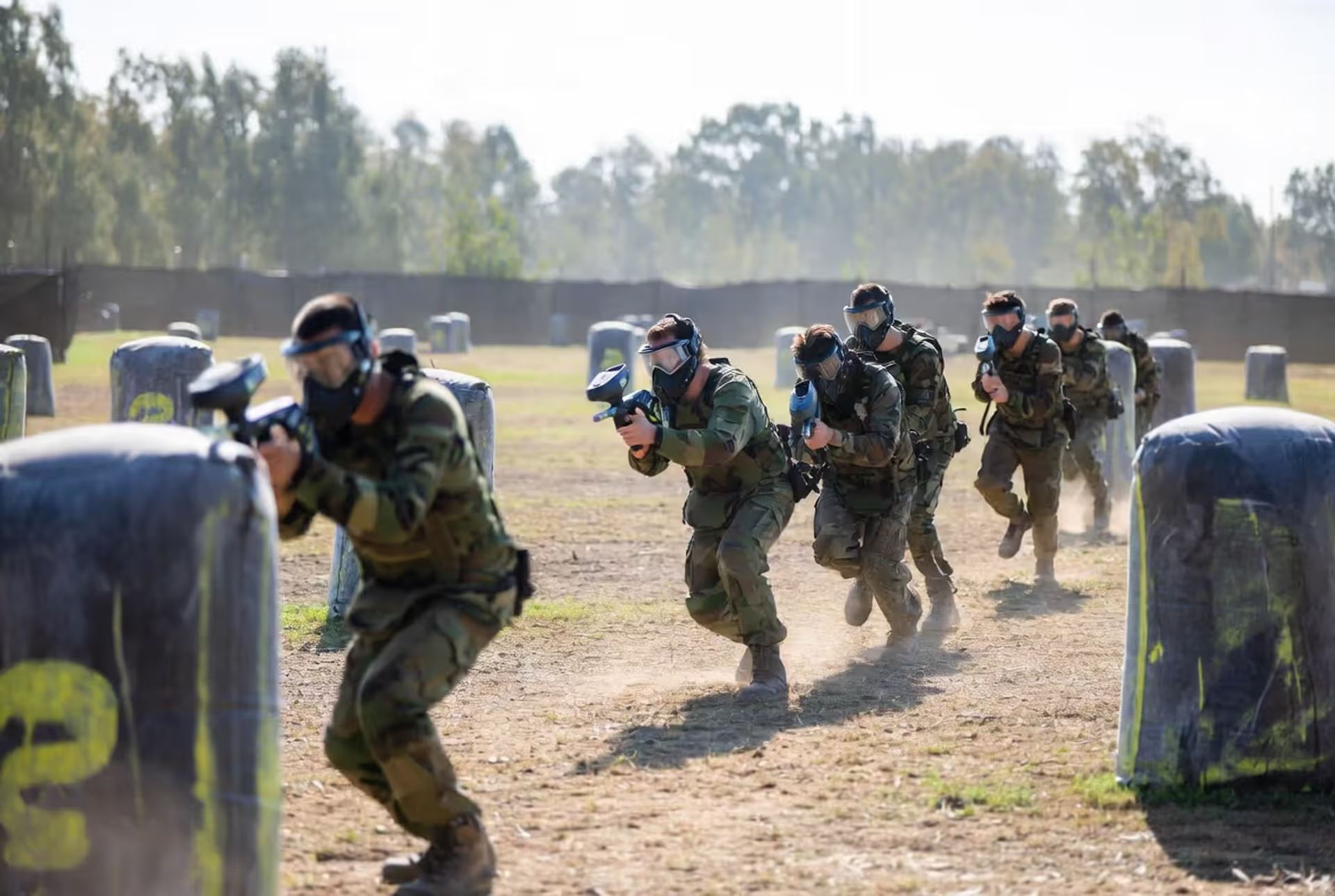
Modern paintball has evolved far beyond recreational weekend games. Competitive players, military units, and law enforcement agencies now rely on sophisticated electronic systems to sharpen their skills. These training platforms combine sensors, software, and automated feedback to create measurable improvement in accuracy, reaction time, and tactical decision-making.
Traditional practice methods—shooting at static plywood targets or running drills with a stopwatch—still have their place. But technology-driven training delivers data that transforms guesswork into precision. A player can now track every shot, analyze patterns over weeks, and identify specific weaknesses that manual observation might miss.
What Is Paintball Training Technology
Paintball training technology encompasses electronic and digital systems designed to enhance skill development through measurable feedback. These systems range from simple impact sensors mounted on targets to full virtual reality simulators that recreate tactical scenarios without firing a single paintball.
Here's the core distinction from traditional methods: data capture. A conventional paper target shows where you hit. That's it. But paintball training aids with embedded sensors? They're recording shot placement, timing, sequence, and even your movement patterns. This information feeds into software that generates performance reports, tracks progress over time, and suggests specific areas for improvement.
Integration varies wildly by system complexity. Entry-level electronic targets might display hit counts on an LED screen. Nothing fancy. Mid-range setups connect via Bluetooth to smartphone apps that log every session. High-end installations link multiple targets across a range, creating programmable drills that adjust difficulty based on your performance.
The technology doesn't replace live practice—it augments it. You still need trigger time with your marker. Still need to develop muscle memory for reloading and movement. What changes is the quality of feedback and the ability to practice specific skills in isolation before combining them under pressure.
Author: Caleb Varden;
Source: lakestaytents.com
Types of Electronic Training Systems
Smart Target Systems
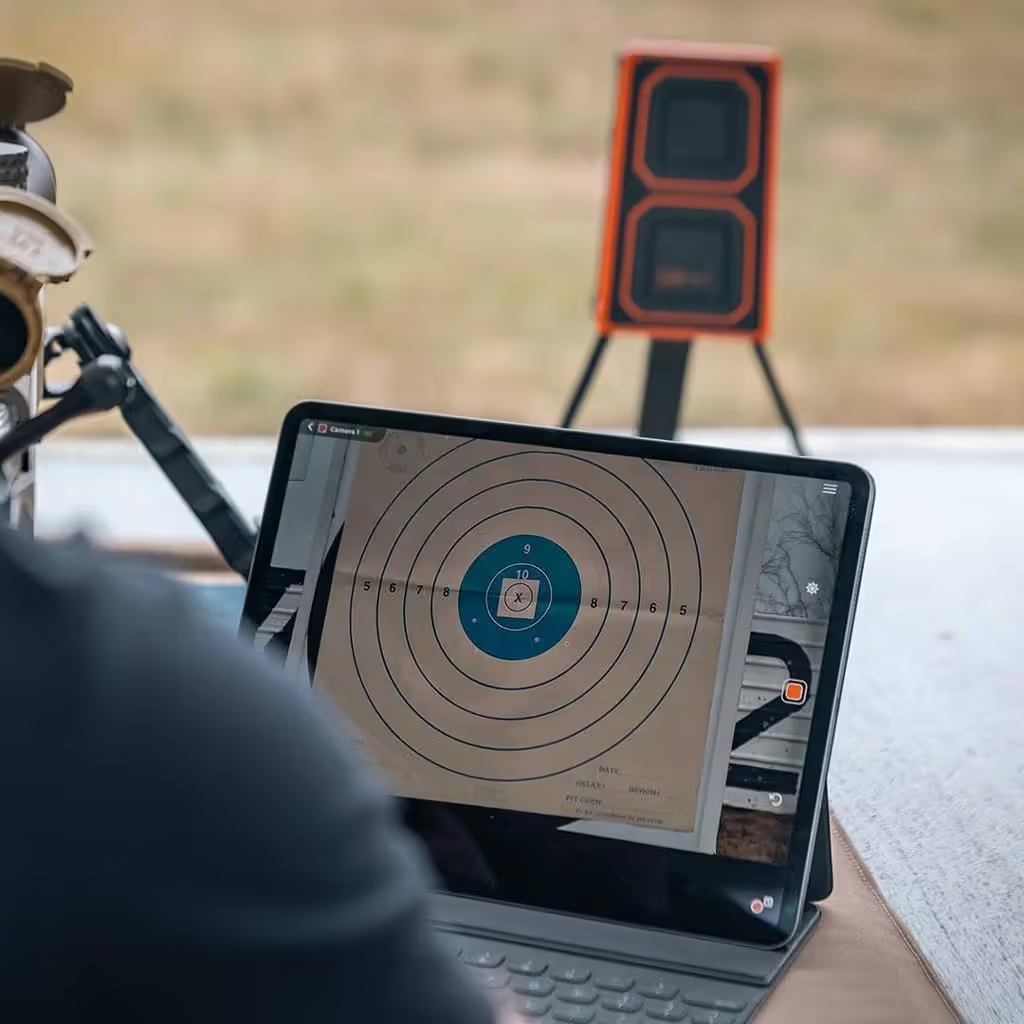
Smart paintball targets use pressure sensors, acoustic detectors, or optical recognition to register hits. When a paintball strikes the target surface, the system logs the impact location, calculates accuracy scores, and often triggers visual or audio confirmation.
Basic models feature LED arrays that light up hit zones. Immediate feedback during rapid-fire drills. Advanced versions map each impact to a digital grid, creating heat maps that show clustering patterns. Some targets reset automatically after each hit, while others require manual intervention or timer-based cycles.
Reactive targets add movement to the equation. Motorized systems can pop up randomly, swing laterally, or retreat after being hit. This unpredictability trains target acquisition speed and forces shooters to adjust aim on the fly rather than memorizing static positions.
Connectivity transforms individual targets into networked systems. Multiple units communicate wirelessly, enabling complex scenarios where hitting Target A causes Target B to activate, or missing within a time limit triggers a penalty sequence. This setup mimics tactical situations where target priority and timing matter as much as accuracy.
Simulators and Virtual Training
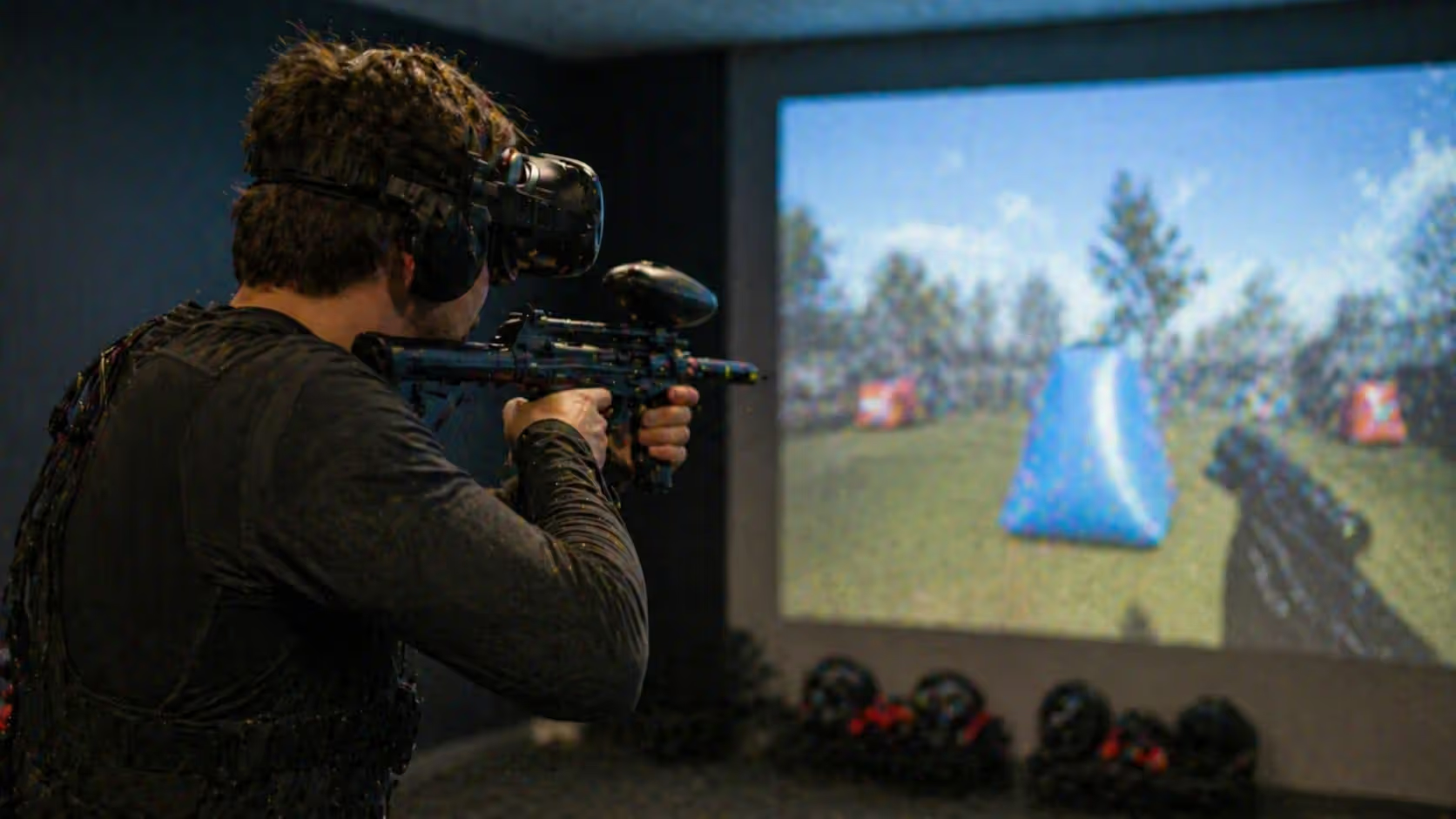
Paintball simulators project scenarios onto screens or VR headsets, tracking your marker's aim through infrared sensors or camera arrays. You hold your actual marker—sometimes modified with recoil simulation hardware—and engage virtual targets that behave according to programmed logic.
The advantage over live fire? Scenario variety. A simulator can present hostage situations, moving crowds, low-light conditions, or urban environments that would be impractical or unsafe to recreate physically. Software adjusts difficulty by changing target speed, visibility, or the consequences of missed shots.
Realism varies significantly. Budget simulators might display basic 2D targets with simple hit detection. Professional-grade systems render 3D environments with ballistic physics that account for paintball arc and velocity drop-off. Some incorporate haptic feedback vests that register when you've been "hit" by virtual opponents.
The trade-off is authenticity. No simulator perfectly replicates the physical sensation of firing, the environmental factors of outdoor ranges, or the adrenaline of facing live opponents. Simulators excel at cognitive training—threat identification, decision-making under pressure, tactical positioning—but need to be paired with live practice for complete skill development.
Author: Caleb Varden;
Source: lakestaytents.com
Automated Range Equipment
Ever tried running complex drills by yourself? It's tedious. Automated paintball training systems handle the logistics without requiring a dedicated range officer. Programmable controllers manage target sequences, lighting conditions, audio cues, and scoring across multiple lanes simultaneously.
Timer-based systems are the simplest form. You set intervals for target exposure, and the system cycles through predetermined patterns. More sophisticated setups use performance-based triggers: targets only appear after you've hit the previous one, or difficulty escalates if you're maintaining high accuracy.
Scoring automation removes subjective judgment. Instead of having someone count hits and call times, the system tracks everything electronically and displays results instantly. This matters for competitive training where small improvements need precise measurement, or for certification programs that require documented performance standards.
Remote operation through tablets or computers lets instructors modify drills mid-session. If a student struggles with left-side targets, the instructor can increase their frequency without stopping the exercise. This real-time adaptation keeps training challenging but achievable, maximizing improvement per session.
How Smart Targets Improve Accuracy
Sensor technology in modern targets detects not just whether you hit, but where and how consistently. Piezoelectric sensors measure impact force, helping distinguish solid hits from grazing shots. Optical sensors using infrared grids pinpoint strike location within millimeters, creating accuracy data far more detailed than visual inspection allows.
Feedback mechanisms close the training loop. Immediate confirmation—a light, sound, or vibration—reinforces correct technique at the moment of execution. Delayed feedback, like reviewing a session summary afterward, helps identify patterns that aren't obvious during rapid fire. Combining both creates faster skill acquisition than either approach alone.
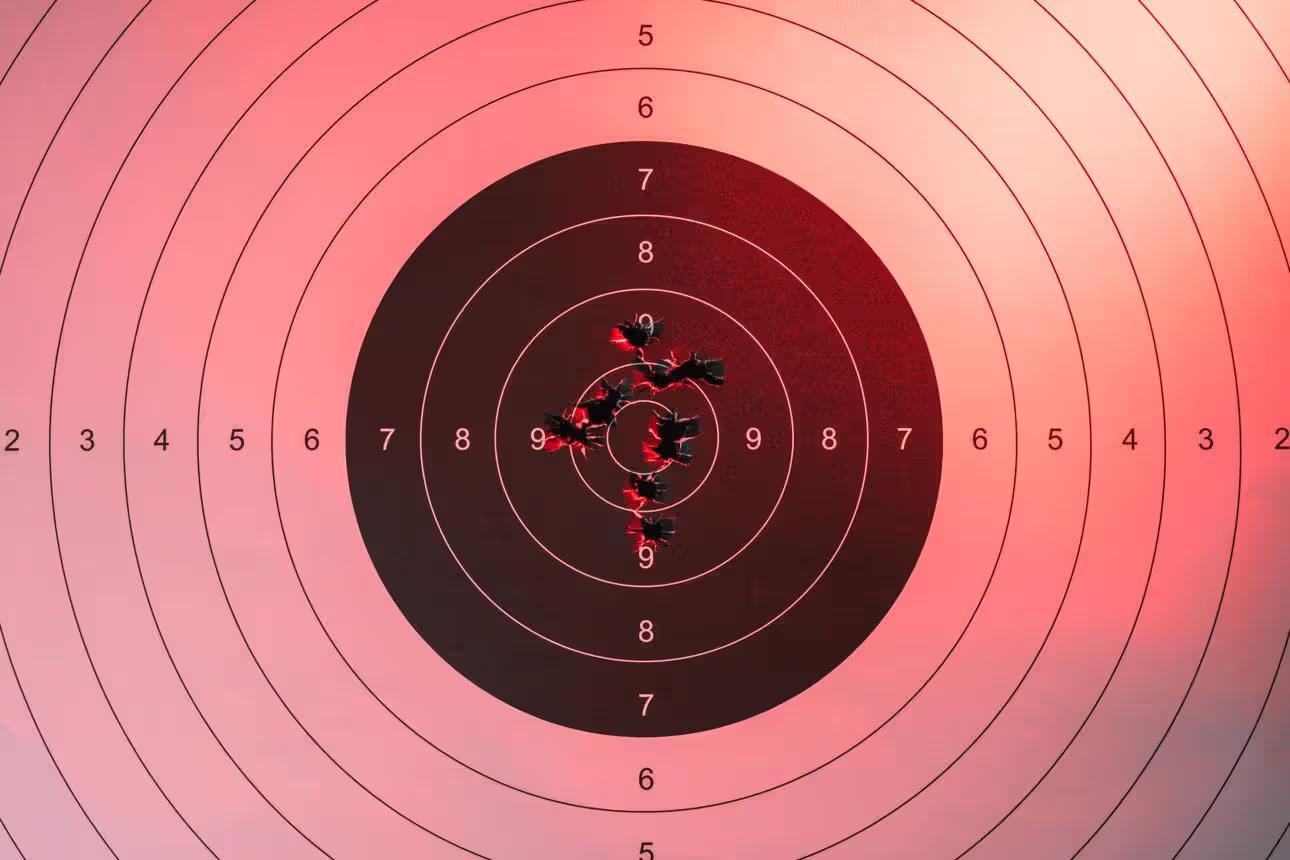
Scoring systems translate raw data into meaningful metrics. Simple hit percentages tell part of the story, but advanced systems calculate grouping tightness, track improvement trends, and compare your performance against baseline standards or other shooters. Some platforms use color-coded ratings that make progress visually obvious: red zones for weak areas, green for strengths.
Real-time data tracking during extended sessions reveals fatigue effects. You might maintain 80% accuracy for the first fifty shots, then drop to 60% as arm fatigue sets in. Recognizing this pattern lets you structure training to build endurance specifically, rather than just assuming you need more accuracy practice.
The psychological benefit matters too. Concrete numbers transform abstract feelings of improvement into measurable progress. Seeing your average grouping shrink from 8 inches to 5 inches over a month provides motivation that "I think I'm getting better" can't match.
Author: Caleb Varden;
Source: lakestaytents.com
Comparing Paintball and Airsoft Training Tech
Both sports use similar core technologies—electronic targets, hit sensors, simulation software—but the applications diverge because of how each sport actually works. Airsoft's smaller projectiles and higher velocities allow for more compact indoor ranges, while paintball's visible impact makes outdoor training more practical without electronic confirmation.
| Feature | Paintball Training Tech | Airsoft Training Tech |
| Average System Cost | $800–$5,000 for smart targets | $600–$4,000 for comparable systems |
| Accuracy Feedback | Visual impact plus electronic sensors | Primarily electronic detection |
| Portability | Heavier; targets need impact resistance | Lighter; less robust construction needed |
| Indoor/Outdoor Use | Primarily outdoor; indoor requires containment | Easily adaptable to both environments |
| Connectivity Options | Bluetooth, Wi-Fi, proprietary apps | Similar connectivity; broader software support |
| Maintenance Frequency | Higher; paint residue requires cleaning | Lower; minimal projectile residue |
Crossover equipment exists where the technologies converge. Many electronic target systems work with both paintball and airsoft by adjusting sensor sensitivity. Tactical simulators often include profiles for both marker types, letting facilities serve both communities without buying duplicate equipment.
Application differences emerge in scenario design. Airsoft leans heavily toward military simulation—close-quarters combat, room-clearing drills, that sort of thing. It's baked into the sport's culture. Paintball training equipment tends to focus on tournament-style scenarios with emphasis on speed and suppressive fire patterns.
The projectile visibility trade-off is significant. Paintball's splatter provides instant visual confirmation that doesn't require electronics, making it easier to train without technology when needed. Airsoft's lack of visible impact makes electronic feedback nearly essential for serious training, driving higher tech adoption rates in that community.
Choosing the Right Training Equipment
Skill level determines which features provide actual value versus unnecessary complexity. Beginners benefit most from simple systems that reinforce basic marksmanship: hit confirmation, shot counting, and basic accuracy scoring. Intermediate shooters gain from timing features and sequence drills that build speed. Advanced players need detailed analytics, programmable scenarios, and integration with performance tracking software.
Budget constraints force practical trade-offs. A single high-quality smart target with reliable sensors and good software costs $1,200–$2,500. That same budget could buy three basic electronic targets without networking capability. For solo practice, one sophisticated unit might deliver better training. For group sessions or teaching, multiple simpler targets provide more value.
Space requirements vary dramatically. A compact electronic target for indoor use might measure 18×24 inches and mount on any wall. A full automated range system needs 50+ feet of depth, multiple firing lanes, and often requires permanent installation. Measure your available space before selecting equipment—retrofitting rarely works well.
Portability matters if you train at different locations. Self-contained battery-powered targets that fit in a backpack enable practice anywhere with safe backstops. AC-powered units with network infrastructure? You're stuck installing them in one location and leaving them there. Consider how often you'll transport equipment versus leaving it installed.
Connectivity features add convenience but also complexity. App-controlled targets let you adjust settings from the firing line and automatically log sessions to the cloud. But they also require charged devices, stable connections, and software updates. Standalone systems with physical controls never lose connection but offer less flexibility and no automatic record-keeping.
Weather resistance is non-negotiable for outdoor equipment. Electronics exposed to rain, dust, and temperature swings need proper IP ratings—IP65 minimum for occasional outdoor use, IP67 for permanent installations. Indoor-only equipment costs less but fails quickly when exposed to elements.
Setting Up a Tech-Enabled Training Range
Author: Caleb Varden;
Source: lakestaytents.com
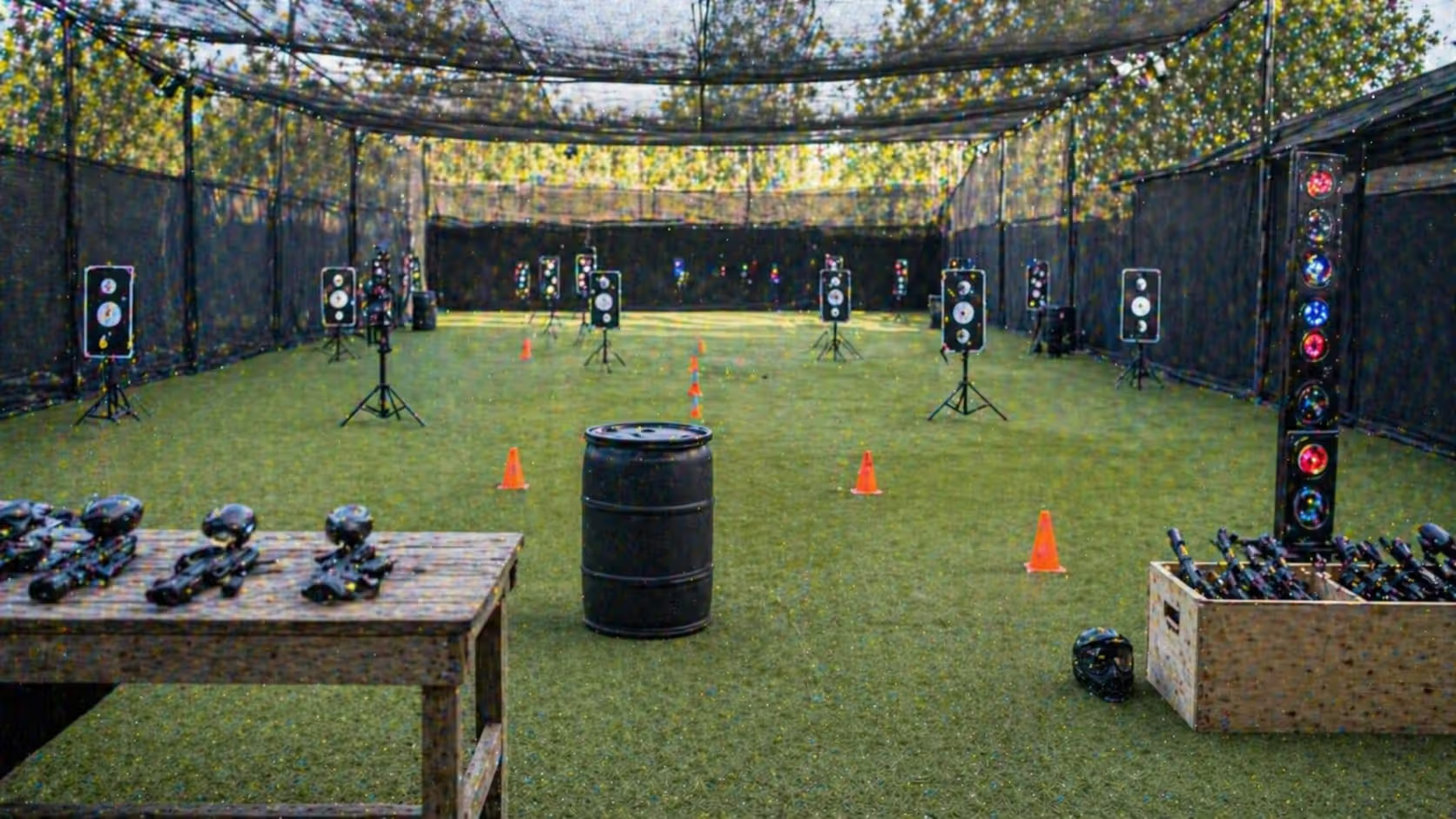
Space planning starts with safety zones. Electronic targets need adequate backstops just like traditional ones—technology doesn't stop paintballs. Calculate minimum distances based on your marker's velocity: 280 fps requires at least 30 feet to firing positions, with additional buffer zones for ricochets and misses. Factor in space for lateral movement if drills involve shooting while advancing or retreating.
Power requirements scale with system complexity. Battery-operated targets need charging stations and spare packs for extended sessions. AC-powered systems require weatherproof outlets positioned safely away from firing lines. Larger installations might need dedicated circuits to prevent breaker trips when multiple targets, lighting systems, and computers run simultaneously.
Target placement follows training objectives. Practicing static accuracy? Fixed positions at measured distances work best—I typically use 15, 25, and 40 feet. Dynamic drills need targets at varying heights and angles to simulate realistic engagement scenarios. Leave enough space between targets for the system to distinguish individual hits when multiple units fire simultaneously.
Integration with apps and software transforms isolated equipment into a training platform. Most modern systems use Bluetooth for local connections and Wi-Fi for cloud features. Position your control device—tablet or laptop—where it's visible from firing positions but protected from stray shots. Some instructors use wall-mounted tablets in protective enclosures; others prefer mobile setups on rolling stands.
Network reliability matters more than you'd expect. Intermittent connections cause missed data and frustration. For permanent installations, wired Ethernet to a dedicated router beats Wi-Fi every time. Stability matters more than speed here. Mobile setups benefit from cellular hotspots as backup when local Wi-Fi proves unreliable.
Lighting conditions affect optical sensor performance. Outdoor ranges need consistent lighting to prevent false readings from sun glare or deep shadows. Indoor facilities should use diffused overhead lighting rather than spotlights that create harsh contrasts. Some target systems include calibration routines that adjust for ambient light—run these at different times of day if your range has variable natural light.
Cable management prevents tripping hazards and equipment damage. Bury power and data cables where possible, or run them through protective conduits along walls. Wireless systems eliminate most cabling but introduce battery management and connection stability challenges.
We installed automated targets across our training facility in 2025, and the data changed everything. Players who thought they were consistent discovered they favored their strong side by 30%. Once they saw the numbers, improvement happened fast—within three weeks, most balanced out to within 10%. You can't fix what you can't measure.
— Marcus Chen
Frequently Asked Questions
Technology has shifted paintball training from subjective feel to objective measurement. The combination of smart targets, simulators, and automated range systems provides feedback that accelerates skill development and identifies weaknesses that manual observation misses. Whether you're a competitive player seeking tournament-level accuracy or a facility owner building a modern training program, electronic systems deliver measurable returns.
The key is matching technology to actual needs. A beginner doesn't require $10,000 worth of networked targets—a single quality smart target provides enough feedback to build fundamental skills. Conversely, advanced players plateau without detailed analytics that reveal subtle inconsistencies in their technique. Assess your current skill level, define specific improvement goals, and select equipment that addresses those gaps rather than chasing features you won't use.
Budget constraints shouldn't prevent adopting training technology. Even basic electronic targets at the $300–$500 range provide hit confirmation and shot counting that improves practice efficiency. As skills advance and budget allows, upgrade to systems with timing features, programmable drills, and performance tracking. Building a training setup incrementally often delivers better results than overspending on complex equipment before you've mastered the fundamentals.
The future of paintball training lies in data-driven improvement. Players who track their performance, analyze patterns, and systematically address weaknesses will continue pulling ahead of those relying solely on intuition and repetition. The equipment exists. The question is whether you'll use it to transform practice time into measurable progress.