Paintball Tactics and Strategy Guide

Content
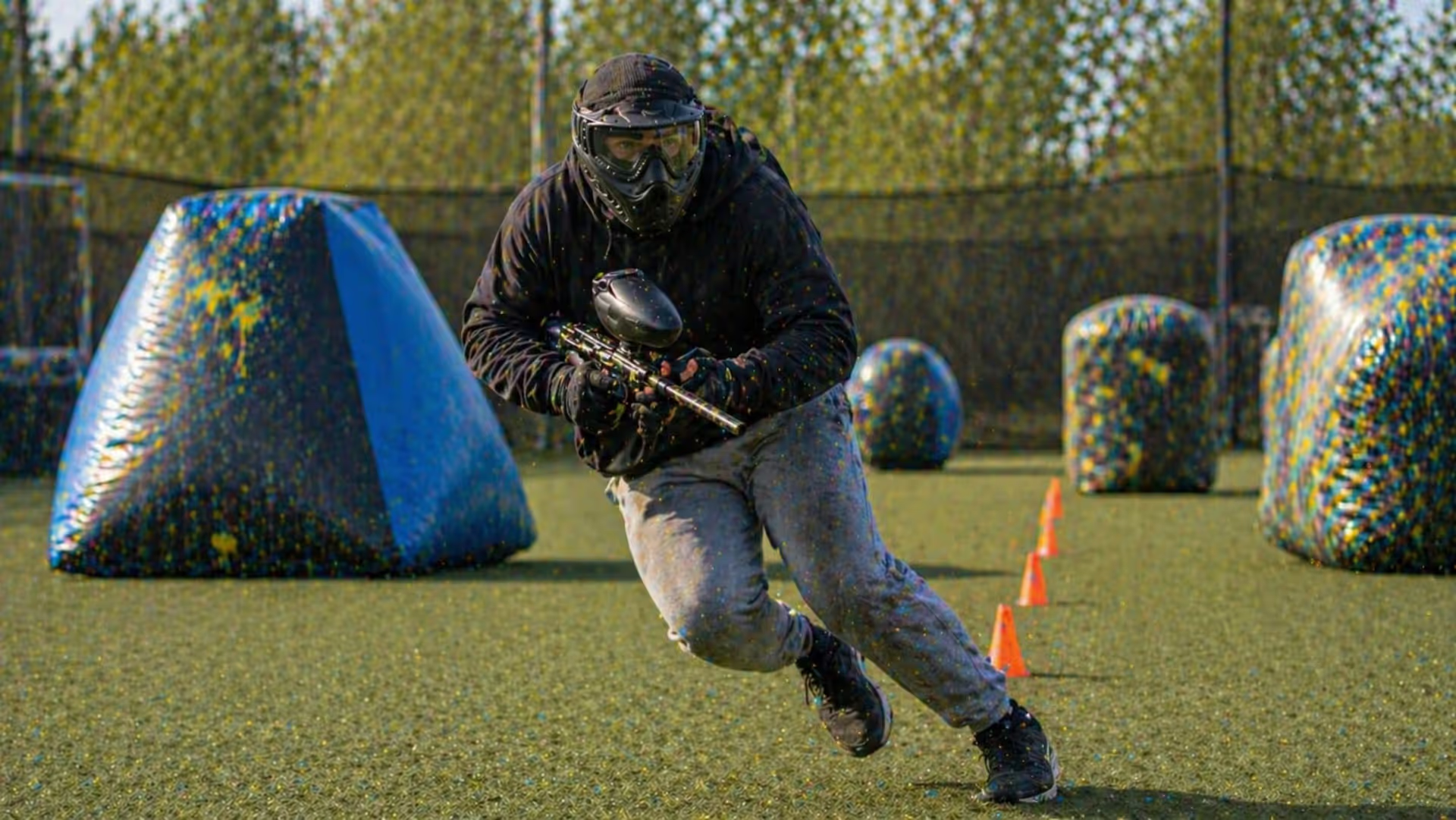
Quick reflexes won't save you when three opponents coordinate their advance while you're fumbling to reload. I've watched talented shooters get eliminated in the first two minutes because they played like it's Call of Duty instead of actual team-based strategy.
The difference between walking off the field covered in paint versus celebrating a win? Understanding movement patterns, controlling key terrain, and executing plans when everything's happening fast. Recreational woodsball and competitive scenario games both reward the same tactical thinking—just applied to different environments.
Here's what actually works when you're facing organized opposition. We'll cover role assignments that prevent your team from bunching up like targets, communication methods that don't fall apart under pressure, and movement techniques that get you from point A to point B without eating paintballs.
Ready to stop losing firefights you should've won? Let's go.
Understanding Tactical Roles in Paintball Teams
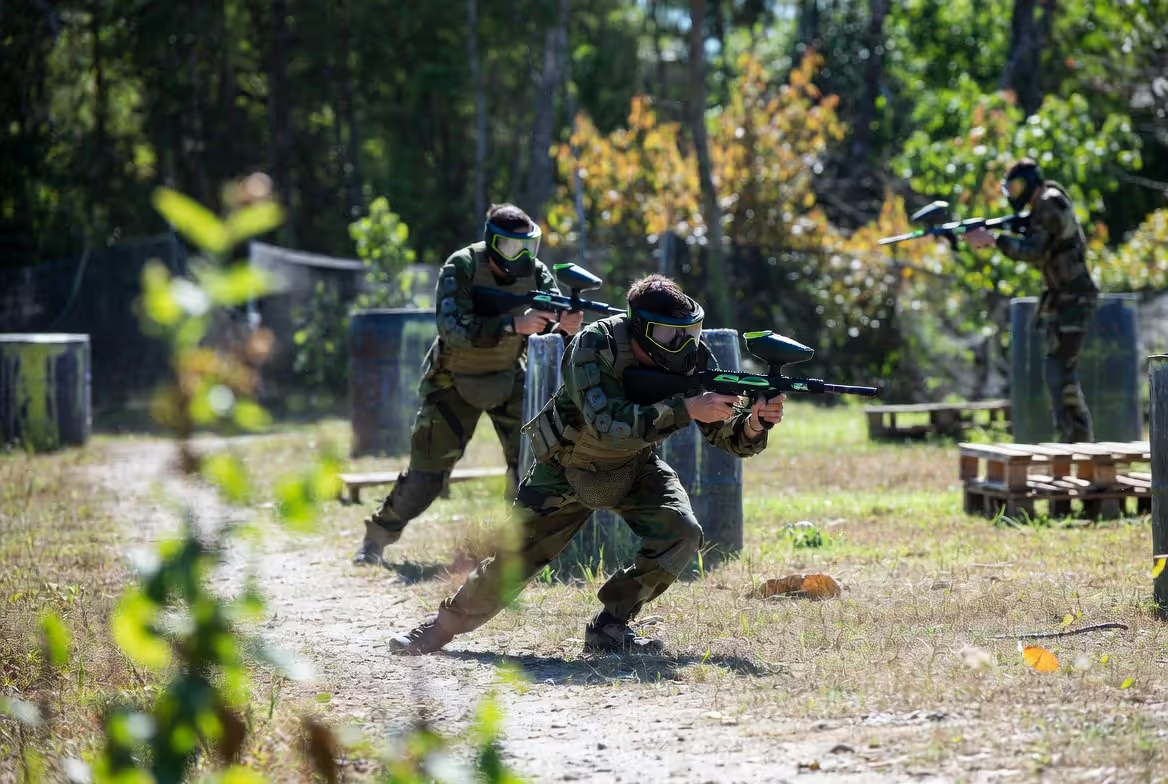
Your team needs structure, or everyone ends up doing the same thing while critical jobs go ignored. Paintball team tactics work when each player knows their lane and stays in it.
Front players get closest to where the action happens. These are your aggressive movers—the ones sprinting between bunkers, applying pressure, and initiating those flanking runs that catch opponents off-guard. Load them light. They need speed more than a hopper packed with 500 rounds. Their teammates provide covering fire while they're exposed between positions. What's their actual job? Push territory. Make opponents react instead of acting.
Mid players operate in that flexible middle zone between aggressive front work and supportive rear positions. They're your utility players—ready to reinforce a breakthrough or drop back when defense needs strengthening. Mid players carry moderate paint supplies and balance mobility against sustained fire capability. They're watching for gaps in enemy formations and calling out positioning changes that others might miss from their angles.
Back players anchor everything from rear positions where sightlines open up. They deliver suppression fire, track enemy movements, and coordinate team strategy during active matches. These players carry extra paint because accuracy matters more than sprint speed from back positions. They're identifying threats before anyone else sees them, directing teammate movements, and maintaining that big-picture awareness that keeps teams alive.
Role flexibility becomes crucial in three-player squads. You might rotate responsibilities based on terrain and evolving situations rather than sticking rigidly to positions. But this principle holds: someone pushes forward, someone provides support, someone maintains situational awareness.
Here's where teams screw up: front players holding back when they should capitalize on advantages, or back players abandoning their posts to chase eliminations. Stick to your role until circumstances clearly demand switching.
Author: Brandon Kesswick;
Source: lakestaytents.com
How to Use Suppression Tactics in Paintball
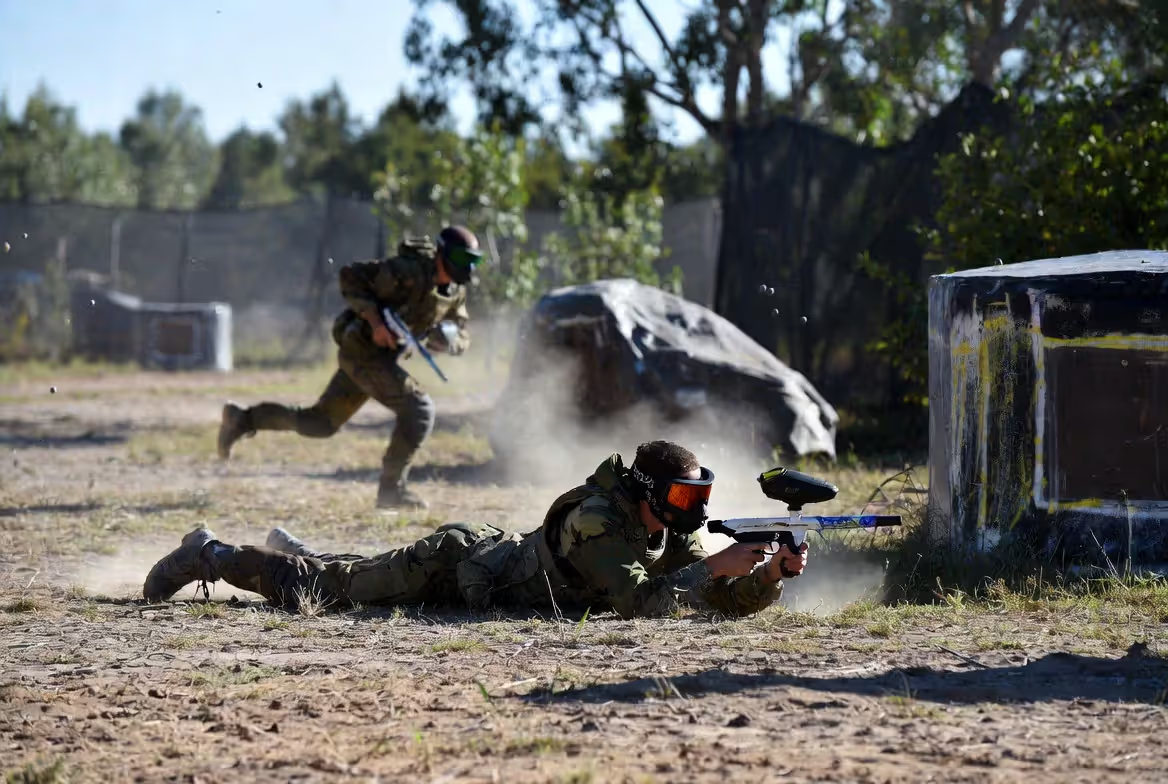
Suppression tactics paintball methods control where opponents can move and shoot. You're not necessarily trying to hit them—you're forcing them to keep their heads down while your teammates maneuver into better positions.
Effective suppression means consistent paint volume directed at or near enemy cover. Shoot at bunker edges, over the top, around the sides. You're creating a "cone of denial" where opponents risk elimination if they expose themselves to return fire or even just peek to observe your team's movements.
Timing beats paint quantity every time. A five-second burst every fifteen seconds often works better than continuous fire that empties your hopper in thirty seconds. Opponents learn to time their movements during your reload breaks, so vary your rhythm. Coordinate with teammates so someone's always maintaining pressure while others reload.
Target selection separates wasteful shooting from tactical suppression. Prioritize opponents threatening your advancing teammates or holding key positions. Suppressing a player already pinned in a corner accomplishes nothing if the real threat operates from a different angle.
Author: Brandon Kesswick;
Source: lakestaytents.com
Coordinating Suppression with Teammates
Suppression works when it's synchronized with movement. Standard sequence: one player initiates suppression fire while another begins advancing to new cover. As the moving player reaches their position, they signal readiness and the suppressor shifts targets or ceases fire.
Radio communication streamlines this: "Suppressing left bunker, move now" gives clear direction. Without radios, pre-arranged hand signals or simple verbal callouts work at shorter ranges. The moving player confirms arrival with "set" or "in position" so the suppressor knows when to adjust fire.
Three-player rotations create continuous pressure. Player A suppresses while Player B moves. Once Player B reaches cover, they suppress while Player C advances. Player A then moves forward, cycling continues. This leapfrog pattern maintains constant forward momentum while minimizing exposure time.
Don't over-suppress. If an opponent's completely pinned and poses zero threat, shift fire to more dangerous targets. Wasting paint on neutralized opponents leaves you vulnerable elsewhere.
Movement Strategies for Paintball
Movement determines who controls territory and creates opportunities. Static players eventually lose to opponents who maneuver effectively. Knowing when and how to move separates predictable targets from difficult opponents.
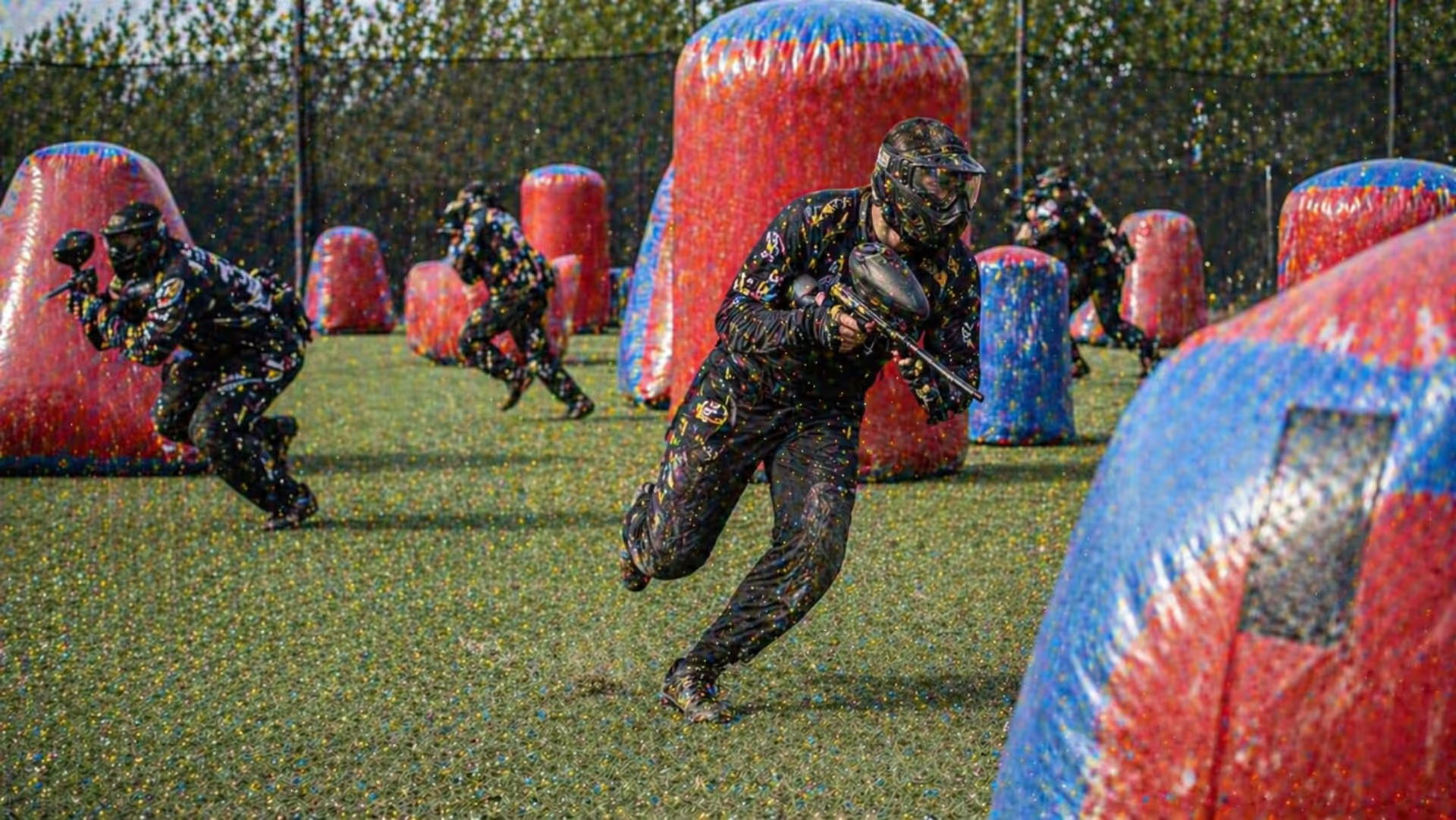
Aggressive pushes work when opponents are disorganized, low on paint, or distracted. Rush forward quickly using available cover, minimizing time in the open. Aggressive movement creates chaos that favors bold players over cautious ones. The risk? Running straight into prepared defenses or getting caught in crossfire from angles you didn't check.
Controlled advances involve methodical progression from cover to cover with teammates providing overwatch. Move during suppression windows, confirm each position is secure before the next player advances, maintain formation integrity. Slower than rushing but far less risky against organized opposition.
Terrain and opponent behavior dictate which approach fits. Against scattered defenders, push hard. Against entrenched positions with overlapping fields of fire, advance carefully.
Author: Brandon Kesswick;
Source: lakestaytents.com
Executing Effective Flanking Movements
Paintball flanking succeeds when opponents focus attention in one direction while threats develop from another angle. Basic flanking maneuvers require a fixing force that holds enemy attention and a flanking element that moves undetected to an advantageous position.
The fixing force doesn't need to push forward—they just need to appear threatening enough that opponents can't ignore them. Suppression fire, aggressive posturing, visible movement all work. Meanwhile, the flanking element moves quietly along routes offering concealment until reaching positions with clear shots at enemy sides or rear.
Timing the flank requires patience. Move too early and opponents spot you before reaching an effective position. Wait too long and the fixing force gets eliminated. Communication between elements prevents premature execution: "Flanking team moving now, keep them busy" followed by "in position, ready to engage."
Wide flanks take longer but offer better angles. Tight flanks execute faster but might not achieve true positional advantage. In woodsball, terrain features like creekbeds, thick brush, or elevation changes provide concealment for flanking routes.
Counter-flanking involves maintaining security on your own flanks through positioning and observation. Never let your entire team focus in one direction. Designate someone to watch vulnerable angles even during intense firefights.
Cover and Move Fundamentals
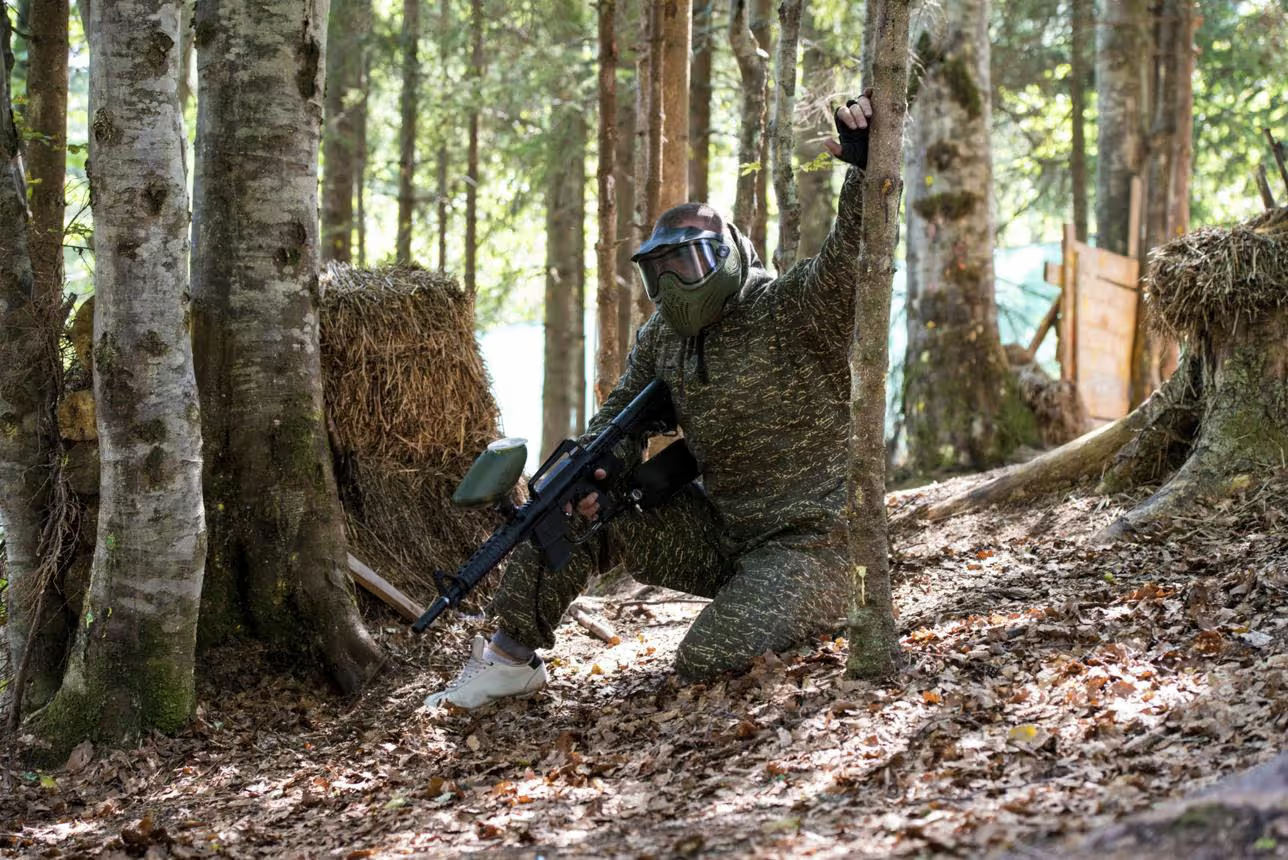
Paintball cover and move techniques minimize exposure during advances. The principle? Never leave cover without knowing your next position and having teammate support.
Before moving, identify your destination. Pick specific cover—that tree, that bunker, that terrain feature—not some general direction. Visualize your route and spot any danger areas where you'll be exposed. Check that teammates are ready to provide covering fire.
When you move, commit fully. Hesitant half-speed movement gets you eliminated. Sprint to your destination using the most direct route offering concealment. Stay low if possible, but speed matters more than perfect posture.
Upon reaching new cover, immediately assess threats from your new angle before signaling teammates. Your perspective has changed, and dangers invisible from your previous position might now be obvious. Call out what you see: "Two players right side, behind the double bunker."
Buddy teams execute cover and move efficiently. One player moves while the other watches their route and provides immediate covering fire if needed. Roles alternate with each bound forward. This creates rhythm and maintains continuous security.
Paintball Communication Systems That Win Games
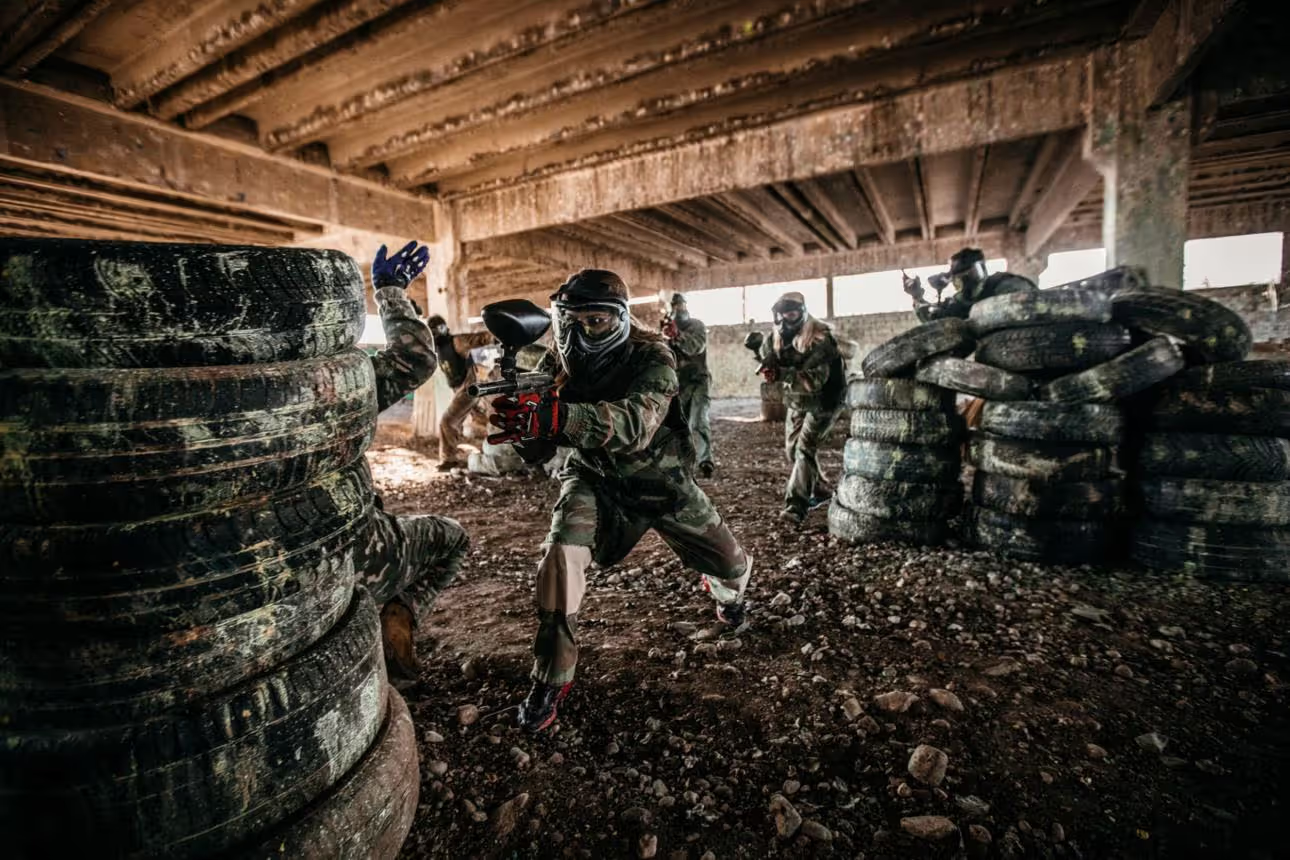
Paintball communication breaks down under stress without established protocols. Systems that work share three characteristics: simple, consistent, practiced before game day.
Radio discipline prevents communication chaos. Designate a primary channel for tactical information and keep transmissions brief. "Enemy moving left, three players" conveys essential information without clogging the channel. Save detailed discussions for breaks between matches.
Use player names or position identifiers: "Mike, check your right" works better than "somebody watch the right side." Acknowledge important messages with simple confirmations like "copy" or "roger" so the sender knows information was received.
Directional callouts require a reference system everyone understands. Clock positions work well: "Enemies at 2 o'clock" means right-front if 12 o'clock is directly ahead. Alternatively, use cardinal directions (north, south) if your team orients to terrain features before the match starts.
Landmark-based callouts reference visible features: "Three behind the red bunker" or "Sniper in the watchtower." This requires pre-game reconnaissance where teams identify and name key terrain features so everyone shares the same reference points.
Hand signals function when radios fail or silence is required. Standard military signals work fine—point to indicate direction, raised fist for stop, waving motion for advance. Keep signals simple and practice them so teammates recognize them instantly under pressure.
Information priority matters. Enemy positions and movements take precedence over everything else. "Contact front" stops other chatter immediately. Secondary information like paint levels or equipment issues wait for appropriate moments.
The most critical communication happens before shooting starts. Coordinating movement, assigning targets, synchronizing attacks—all require clear information exchange. Once firefights begin, communication becomes difficult and prior planning carries teams through.
Author: Brandon Kesswick;
Source: lakestaytents.com
Offensive Attack Strategies
Paintball attack strategies aim to eliminate opponents and capture objectives through coordinated action. Successful attacks combine multiple elements: reconnaissance, fire support, maneuver, and exploitation.
Breaking stalemates requires changing the tactical situation. Both teams holding strong positions with neither able to advance? Something must disrupt the balance. Options include: committing more players to one sector for local superiority, using smoke or distractions, or executing a deep flank threatening opponent rear areas.
The "base of fire and maneuver" approach concentrates firepower on enemy positions while a separate element moves to attack from an advantageous angle. The fire element doesn't need to eliminate opponents—they just keep them suppressed and focused in one direction while the maneuver element achieves positional advantage.
Coordinated assaults involve multiple players attacking simultaneously from different angles. This overwhelms defenders who can't engage all threats at once. Timing is critical: if attackers arrive sequentially rather than together, defenders eliminate them one by one. Use countdown timers or synchronized watches: "Attack at 10:15, thirty seconds."
Exploiting weaknesses requires recognizing when opponents make mistakes. Defenders bunching up in one area? The opposite flank becomes vulnerable. They spread too thin? Concentrate force at one point to achieve breakthrough. Watch for players who reload simultaneously, creating windows where return fire drops to zero.
Speed matters in exploitation. Once you identify a weakness, commit immediately before opponents recognize and correct their error. Hesitation allows defenses to reorganize.
Avoid attacking without clear objectives. "Push forward" without specific goals leads to disorganized movement and unnecessary casualties. Define what success looks like: "Capture the center bunker complex" or "Eliminate the players on the left side" gives teams concrete targets.
Defensive Positioning and Holding Territory
Paintball defense strategies and paintball positioning focus on making your team difficult to eliminate while maintaining the ability to counterattack. Strong defensive positions offer cover, good sightlines, and multiple fallback options.
Establishing strongpoints means selecting positions providing natural advantages. Elevation offers better observation and downward firing angles. Positions with solid cover on multiple sides protect against flanking attempts. Locations near boundaries or obstacles limit the directions opponents can attack from.
Avoid positions that look strong but create traps. A bunker with excellent frontal cover but no rear exit becomes a coffin if opponents flank successfully. Always maintain withdrawal routes so you can fall back under pressure rather than fighting to the last player.
Layered defense positions players at different depths. Forward positions detect enemy movements early and slow their advance. Middle positions provide the main line of resistance. Rear positions serve as final fallback points and prevent deep penetrations. If forward positions get overrun, middle and rear positions remain intact.
This depth prevents single breakthroughs from collapsing your entire defense. Opponents must fight through multiple positions, giving your team time to respond and counterattack. Single-line defenses fail when any point gets penetrated.
Reading opponent movements allows defenders to anticipate attacks. Watch for patterns: Do they always flank right? Do they bunch up before pushing? Opponents often repeat tactics that worked previously. Adjust positions to counter their preferred approaches.
Knowing when to fall back prevents unnecessary eliminations. If your position becomes untenable—surrounded, taking fire from multiple angles, about to be overrun—retreat to a better position rather than fighting until eliminated. Live players who fall back remain useful; eliminated players contribute nothing.
Counterattacks from defensive positions catch aggressive opponents overextended. As attackers push forward, they often lose formation cohesion and create gaps. Quick counterattacks through these gaps can eliminate several opponents before they reorganize. Recognize the moment when attackers are vulnerable and commit decisively.
Individual skill might win you a few eliminations, but tactics and teamwork win matches. The best shooters in the world lose to average players who communicate well and move as a unit.
— Ryan Greenspan
Woodsball and Military-Style Tactical Approaches
Woodsball tactics and military paintball tactics emphasize terrain usage, stealth, and small-unit coordination. The larger playing areas and natural cover of woodsball require different approaches than speedball's symmetrical layouts and inflatable bunkers.
Terrain exploitation means using natural features for concealment and protection. Depressions and ditches provide covered routes for movement. Thick vegetation offers concealment but remember—leaves and branches don't stop paintballs. Position behind trees and rocks for actual protection. Elevation provides observation advantages but also makes you visible from greater distances.
Water features often mark boundaries or create natural obstacles channeling movement into predictable areas. Position near these chokepoints to catch opponents as they navigate around them. Conversely, avoid obvious routes where defenders likely wait.
Patrol formations maintain security while moving through uncertain terrain. The wedge formation places the team leader at the front point with other players spread behind in a V-shape. This provides security to the front and sides while allowing quick response to contact. The file formation moves single-file for narrow trails but offers poor security—only the front player can effectively engage forward threats.
Regardless of formation, maintain spacing between players. Bunched-up teams get eliminated together by single ambushes. Proper spacing (5-10 meters depending on terrain and visibility) means opponents must engage multiple targets rather than eliminating everyone with one burst.
Ambush setups take advantage of woodsball's concealment opportunities. Position your team along likely enemy routes with overlapping fields of fire. Remain motionless and silent until opponents enter the kill zone—the area where your team can engage from multiple angles. Initiate ambushes when maximum enemy forces are in the kill zone, not when you spot the first opponent.
L-shaped ambushes position most of your force along the enemy's movement direction with a smaller element perpendicular at one end. This creates crossfire and prevents easy escape. The perpendicular element initiates contact, and the main force engages as opponents react.
Adapting military tactics requires understanding that paintball isn't combat. Military tactics emphasize survival and mission accomplishment; paintball emphasizes winning within game rules. Borrow principles like fire and maneuver, security during movement, and coordinated action, but avoid tactics that assume lethal weapons or military objectives.
Small-unit tactics translate well: bounding overwatch, immediate action drills for contact, and radio protocols all improve paintball team performance. However, paintball's faster pace and respawn options (in some formats) allow for more aggressive risk-taking than real military operations.
Offensive vs. Defensive Paintball Tactics Comparison
| Tactic Type | Best Situations | Key Techniques | Common Mistakes | Skill Level |
| Aggressive Rush | Disorganized opponents, time pressure, numerical advantage | Speed over cover, simultaneous multi-angle attack, overwhelming firepower | Rushing into prepared defenses, losing formation cohesion, inadequate reconnaissance | Intermediate |
| Flanking Maneuver | Static enemy positions, sufficient cover for approach, coordinated team | Fixing force plus flanking element, concealed movement, synchronized attack | Premature engagement, inadequate fixing force, predictable routes | Intermediate to Advanced |
| Suppression and Advance | Open terrain, need to gain territory, opponents in known positions | Coordinated fire and movement, leapfrog progression, communication | Over-suppressing neutralized threats, moving without cover, poor timing | Beginner to Intermediate |
| Layered Defense | Holding territory, numerical disadvantage, need to delay opponents | Multiple defensive lines, fallback positions, counterattack opportunities | Single-line defense, no withdrawal routes, defending untenable positions | Intermediate |
| Ambush | Woodsball, known enemy routes, element of surprise | Concealment, fire discipline, crossfire setup, patience | Initiating too early, poor positioning, inadequate kill zone coverage | Advanced |
| Base of Fire & Maneuver | Breaking stalemates, attacking strongpoints, military-style scenarios | Heavy suppression from one element while another maneuvers to advantage | Insufficient suppression, uncoordinated timing, maneuver element detected early | Advanced |
Frequently Asked Questions About Paintball Tactics
Mastering paintball tactics and strategy transforms random shooting into coordinated team performance. The fundamentals—clear roles, effective communication, disciplined movement, tactical positioning—apply whether you're playing casual woodsball or competitive scenarios.
Start by implementing basic communication and role assignments with your regular group. Practice cover and move techniques during recreational play before attempting complex maneuvers under match pressure. Study how successful teams coordinate their actions and adapt those principles to your team's strengths.
These tactical concepts provide frameworks for decision-making during matches. Recognize which situations call for aggressive attacks versus patient defense. Understand when to push advantages and when to consolidate positions. Most importantly, practice these tactics with your team until they become instinctive reactions rather than conscious decisions.
Improvement comes from reviewing each match honestly. What worked? What failed? How did opponents counter your tactics? Adjust your approaches based on results rather than assumptions. Teams that win consistently are those that learn from experience and continuously refine their tactical execution.
As former professional paintball player and coach Ryan Greenspan notes: "Individual skill might win you a few eliminations, but tactics and teamwork win matches. The best shooters in the world lose to average players who communicate well and move as a unit. Paintball is a team sport, and the team that executes better tactics usually walks off the field victorious."