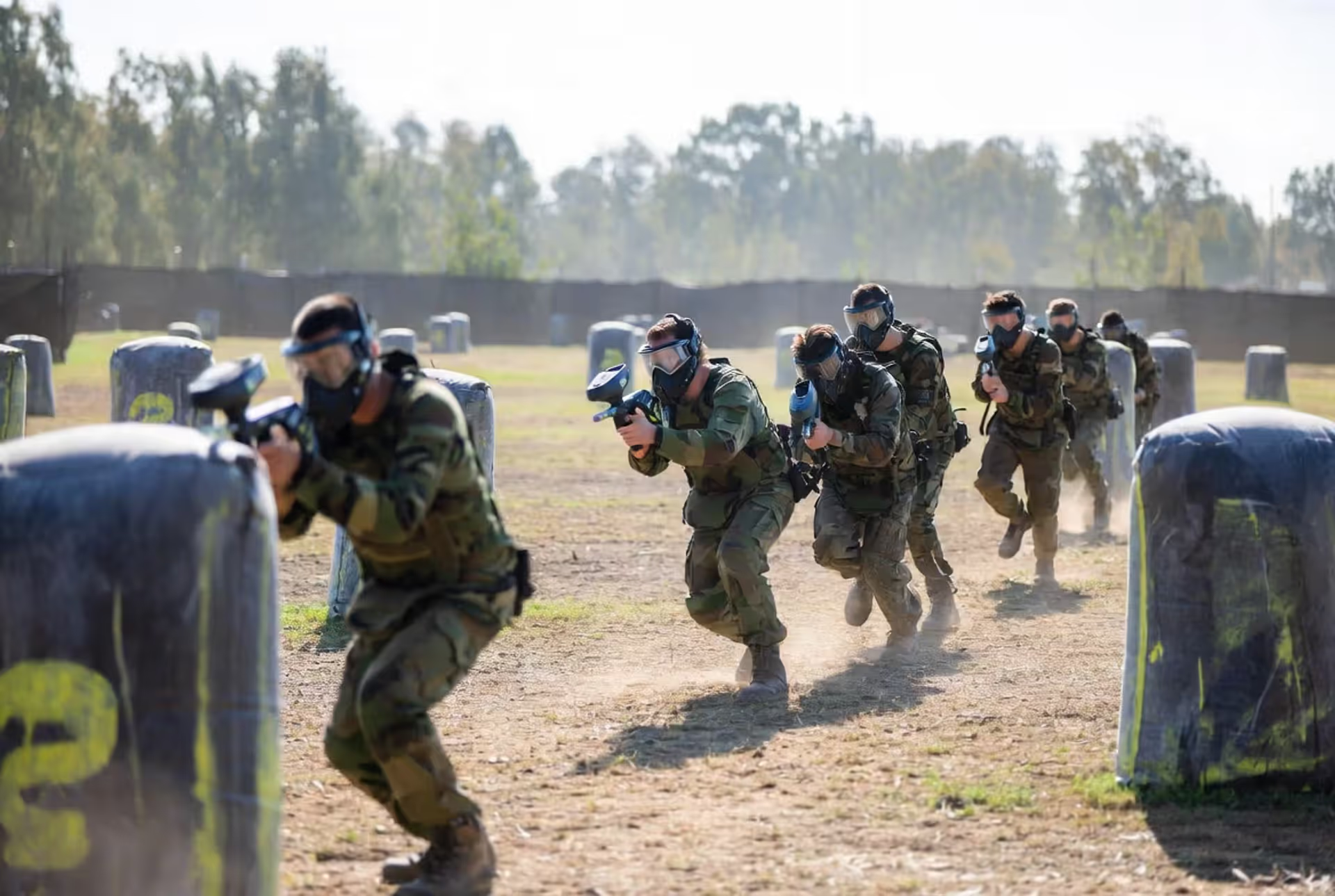
Paintball Training Exercises to Improve Your Game
Content
Paintball demands more than just good aim. The difference between walking off the field victorious and getting eliminated in the first minute often comes down to physical preparation. While gear and strategy matter, your body's ability to react, move, and sustain effort through multiple rounds determines how effectively you execute those strategies.
Most recreational players show up to the field without any structured preparation. They rely on natural athleticism and hope adrenaline carries them through. That approach works until you face opponents who've trained their reflexes, built sport-specific endurance, and practiced movement patterns until they become instinctive. Structured training exercises bridge that gap.
Why Physical Training Matters in Paintball
Paintball fitness drills directly translate to field performance in measurable ways. Your heart rate spikes during intense firefights, often reaching 160-180 beats per minute during tournament play. Without proper paintball conditioning, that elevated heart rate causes shaky hands, slower decision-making, and decreased accuracy.
Consider a typical speedball point lasting 90 seconds. You sprint to your bunker, hold a shooting lane while crouched, snap out repeatedly to check angles, then sprint to advance position. That sequence demands explosive power, isometric strength, cardiovascular endurance, and recovery—all within two minutes. Multiply that across 8-10 points in a match, and the physical demands become clear.
Fatigue affects accuracy more than most players realize. A study of competitive paintball players showed accuracy dropped by 34% after sustained physical exertion compared to fresh measurements. Your hands shake, your breathing disrupts your aim, and your focus narrows. Players who maintain conditioning hold their accuracy longer into matches.
Speed matters differently in paintball than in traditional sports. You're not running marathons or sprinting 100 meters. You're exploding from static positions, changing direction instantly, and maintaining stability while moving. That requires specific muscle recruitment patterns that regular gym workouts don't address.
Author: Logan Mercer;
Source: lakestaytents.com
How to Get Better at Paintball Through Reflex and Reaction Drills
Paintball reaction time separates players who trade eliminations from those who consistently win gunfights. The average human reaction time sits around 250 milliseconds, but paintball reflex training can reduce that to 180-200 milliseconds for sport-specific movements.
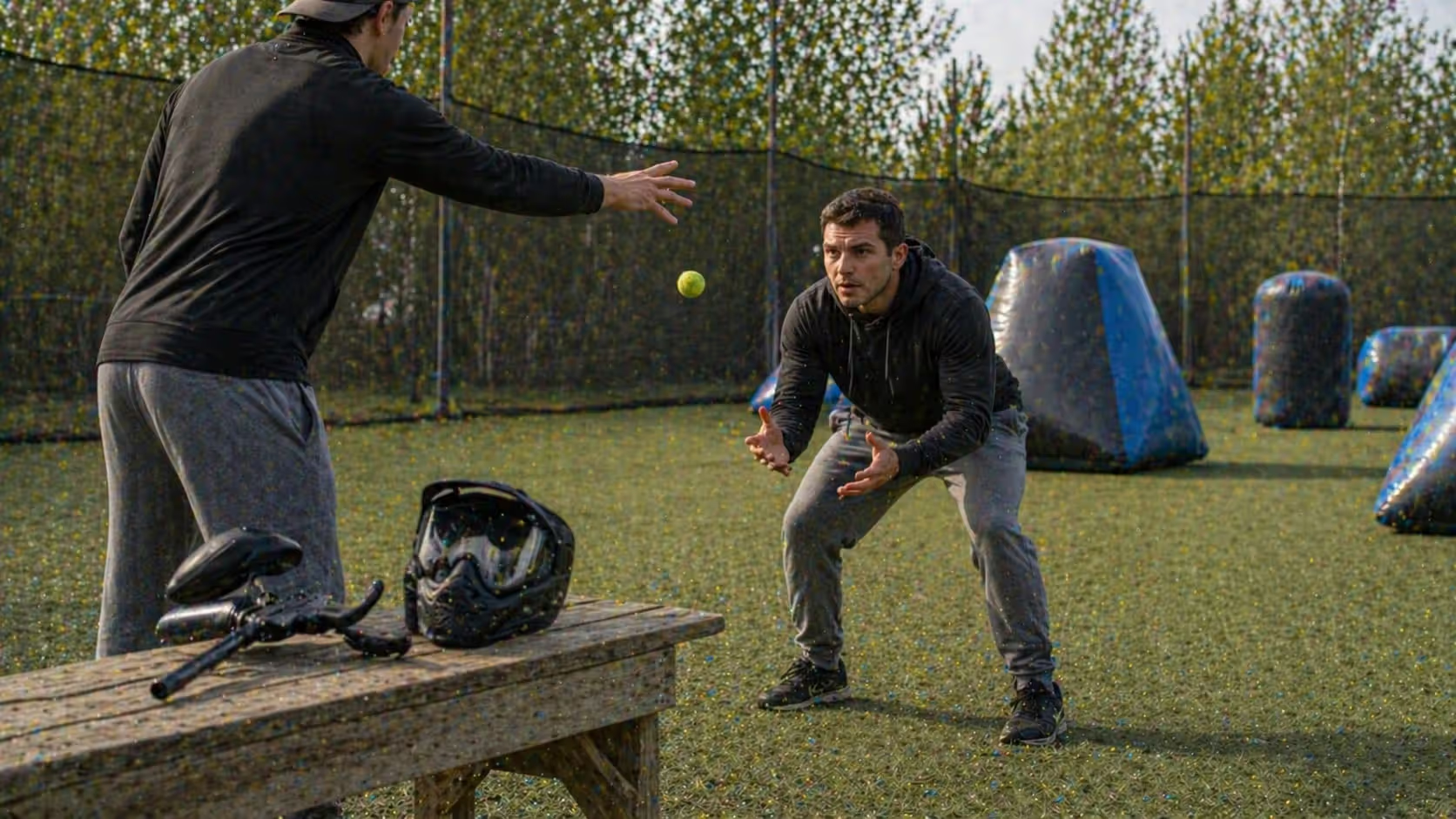
Ball drop drills build fundamental reaction speed. Have a training partner hold a tennis ball at shoulder height. When they release it, catch it before it hits the ground. Start with your hand at waist level, then progress to starting with your hand at your side. This simple drill trains your eyes to recognize movement initiation and your body to respond instantly. Perform 3 sets of 10 drops, alternating hands.
Light reaction drills translate more directly to paintball scenarios. Set up colored lights or use a partner with colored cards. Assign each color a specific movement—red means dive left, blue means snap right, green means drop prone. Your partner flashes colors randomly while you execute the corresponding movement as fast as possible. This trains decision-making under pressure, not just raw speed.
Snap shooting practice develops the specific reflex patterns you use in games. Set up a bunker or use a doorway. Start behind cover, then snap out to acquire and shoot a target in one fluid motion. Focus on minimizing the time you're exposed. Quality snap shooting happens in under 0.7 seconds from initial movement to trigger pull. Use a timer or have someone call out your exposure time.
Wall ball drills improve hand-eye coordination and tracking. Throw a tennis ball against a wall and catch it with one hand. Progress to alternating hands, then add movement—shuffle laterally while maintaining the catch rhythm. This builds the coordination needed to track opponents while moving between bunkers.
The key to paintball reflex training is specificity. Generic reaction drills help, but the best improvements come from movements that mirror actual game situations. Your body learns patterns, so practice the patterns you'll use on the field.
Author: Logan Mercer;
Source: lakestaytents.com
Paintball Agility and Movement Training Exercises
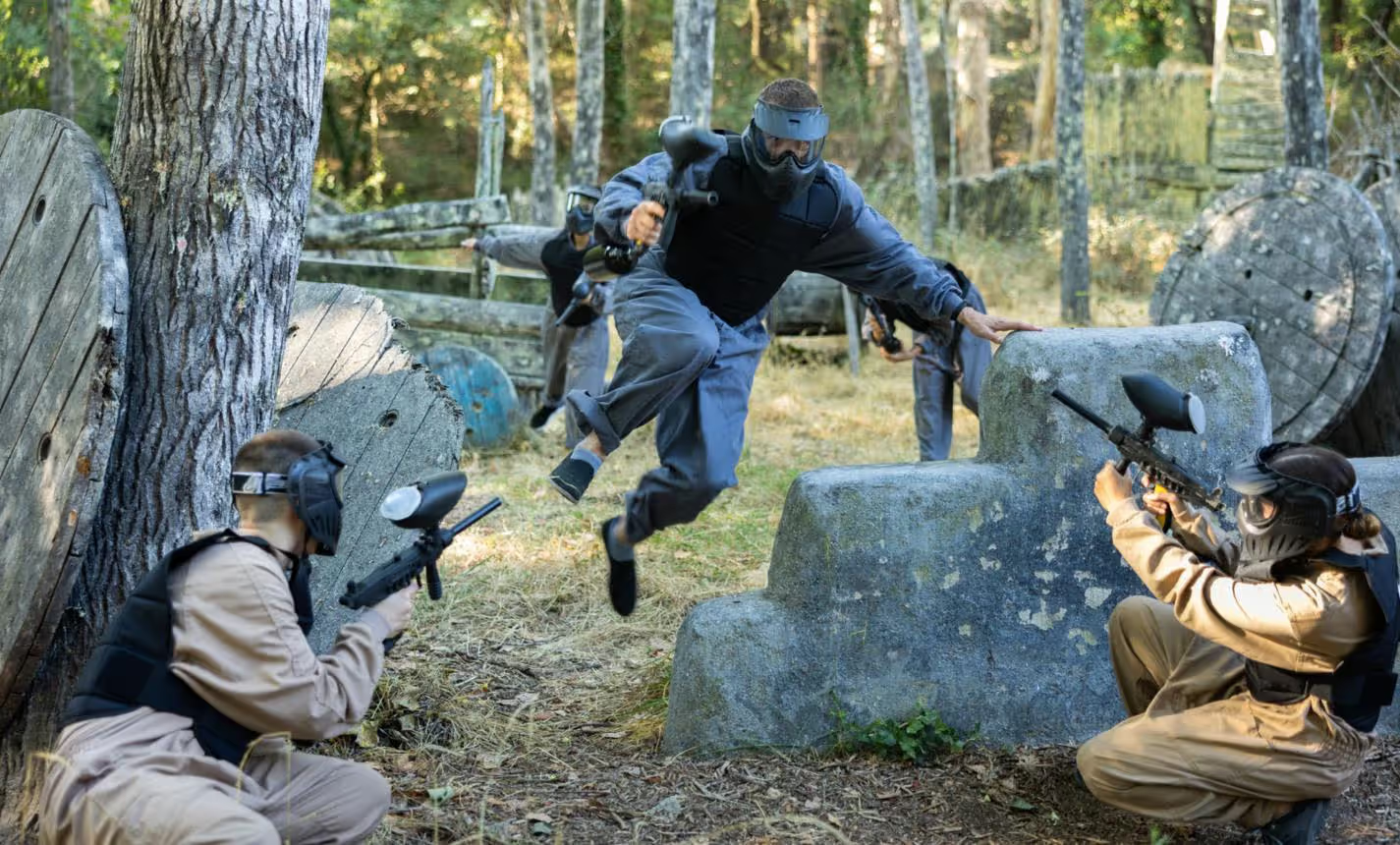
Paintball movement training focuses on explosive direction changes and maintaining stability during rapid transitions. Unlike linear sports, paintball requires constant lateral movement, sudden stops, and immediate acceleration from awkward positions.
Ladder drills build foot speed and coordination. Use an agility ladder or tape lines on the ground 18 inches apart. Practice various patterns: one foot in each square, two feet in each square, lateral shuffles, and the Ickey shuffle. Perform each pattern for 2-3 sets, focusing on quick ground contact. Your feet should barely touch before pushing off again.
Cone drills simulate bunker-to-bunker movement. Set up 5 cones in a W pattern, each 15 feet apart. Sprint to the first cone, plant and change direction to the second, continue through all five. This mirrors the acceleration, deceleration, and direction changes you make advancing across a field. Time yourself and track improvement weekly.
Lateral shuffle drills build the specific strength needed for moving between shooting positions. Mark two lines 10 feet apart. Start in an athletic stance—knees bent, weight on the balls of your feet, core engaged. Shuffle laterally between lines without crossing your feet. Perform 30-second intervals with 30 seconds rest, for 5 sets. This builds the hip and ankle stability crucial for maintaining accuracy while moving.
Box drills combine multiple movement patterns. Set up four cones in a 10x10 foot square. Sprint forward to cone 1, shuffle laterally to cone 2, backpedal to cone 3, shuffle to cone 4, then sprint back to start. This sequence trains the varied movement patterns you use during actual points. Perform 8-10 repetitions with full recovery between sets.
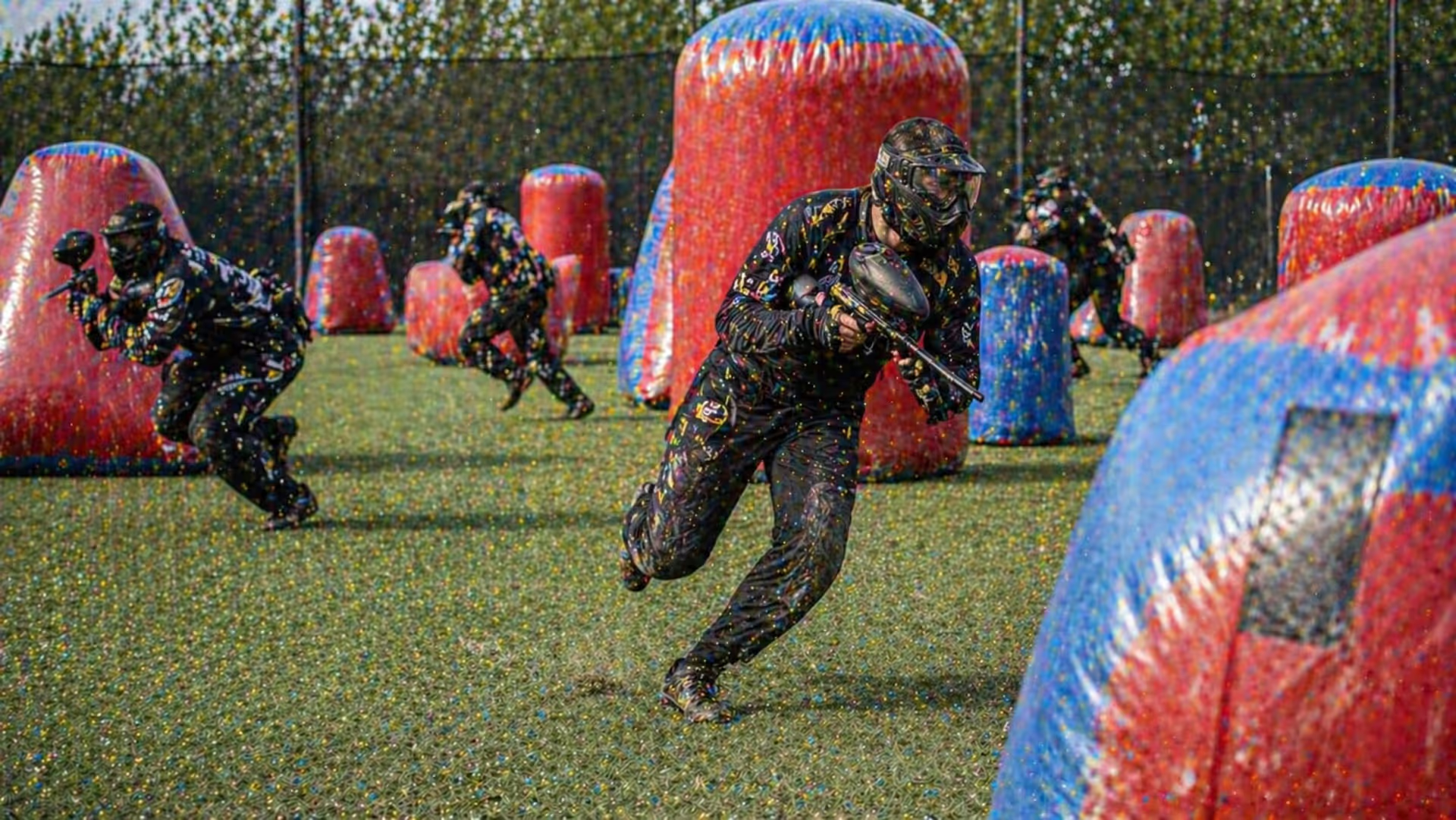
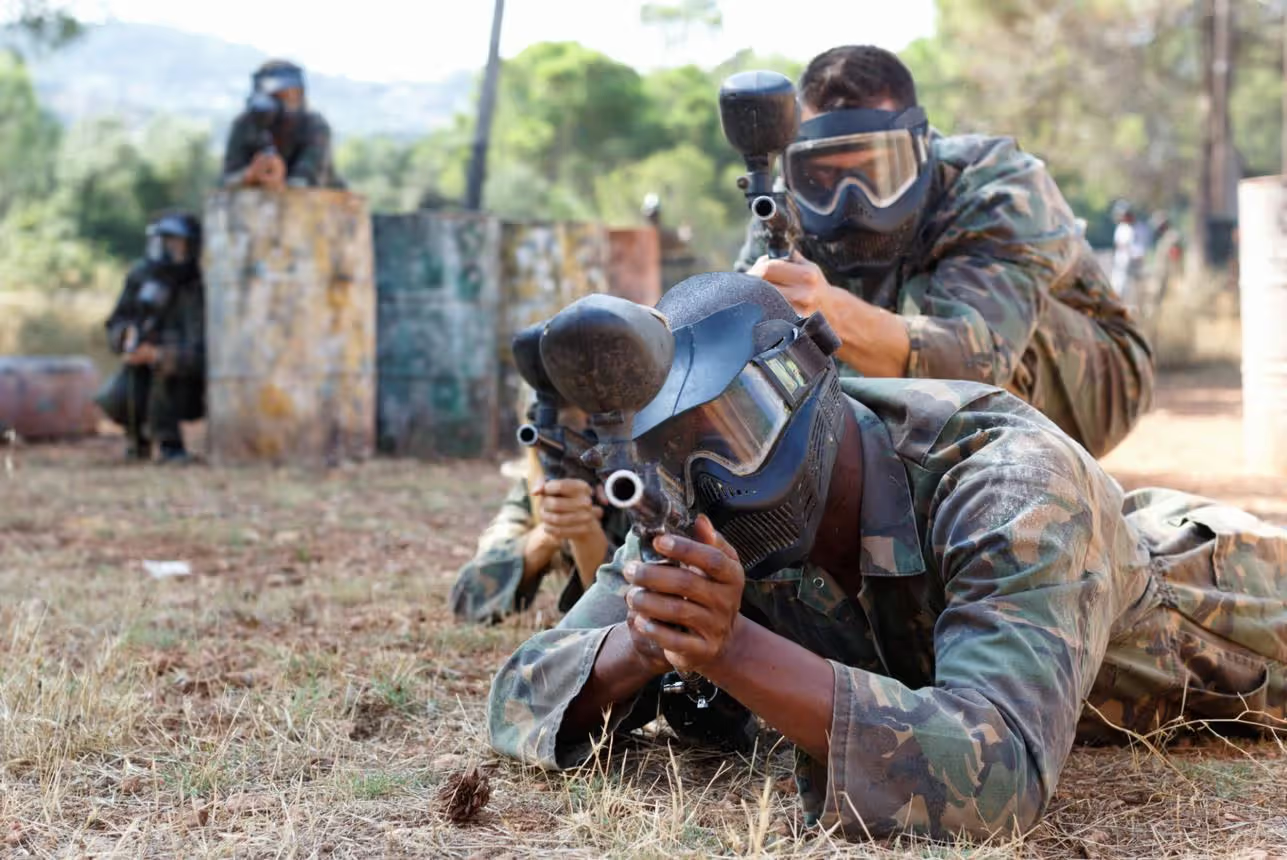
Bunker simulation drills add realism. If you have access to actual bunkers, practice diving, sliding, and posting up from various angles. Focus on minimizing your profile while maintaining the ability to shoot effectively. Practice both aggressive slides into bunkers and controlled movements when advancing under fire.
The difference between paintball agility training and general agility work is the emphasis on upper body stability during lower body movement. You need to move your feet quickly while keeping your marker on target. That split focus requires specific practice.
Author: Logan Mercer;
Source: lakestaytents.com
Conditioning and Fitness Drills for Paintball Endurance
A paintball workout should mirror the interval nature of actual gameplay. Matches consist of short, intense efforts followed by brief recovery periods. Traditional steady-state cardio helps, but sport-specific interval training delivers better results.
High-intensity interval training (HIIT) matches paintball's energy demands. Perform 30-second all-out sprints followed by 60 seconds of active recovery (walking or slow jogging). Complete 8-10 rounds. This trains your cardiovascular system to recover quickly between points while building the explosive endurance needed for sustained performance.
Bunker runs combine conditioning with movement practice. Set up a course with 4-5 bunkers spaced 30-40 feet apart. Sprint to bunker 1, perform 5 snap-outs (alternating sides), sprint to bunker 2, perform 5 more snap-outs, continue through all bunkers. Rest 90 seconds and repeat 4-6 times. This drill builds endurance while reinforcing movement patterns under fatigue.
Stair or hill sprints develop the explosive power needed for fast breaks off the start. Find a staircase with 20-30 steps or a hill with similar elevation. Sprint up at maximum effort, walk down for recovery. Perform 8-10 repetitions. The upward resistance builds leg power that translates to faster acceleration on flat ground.
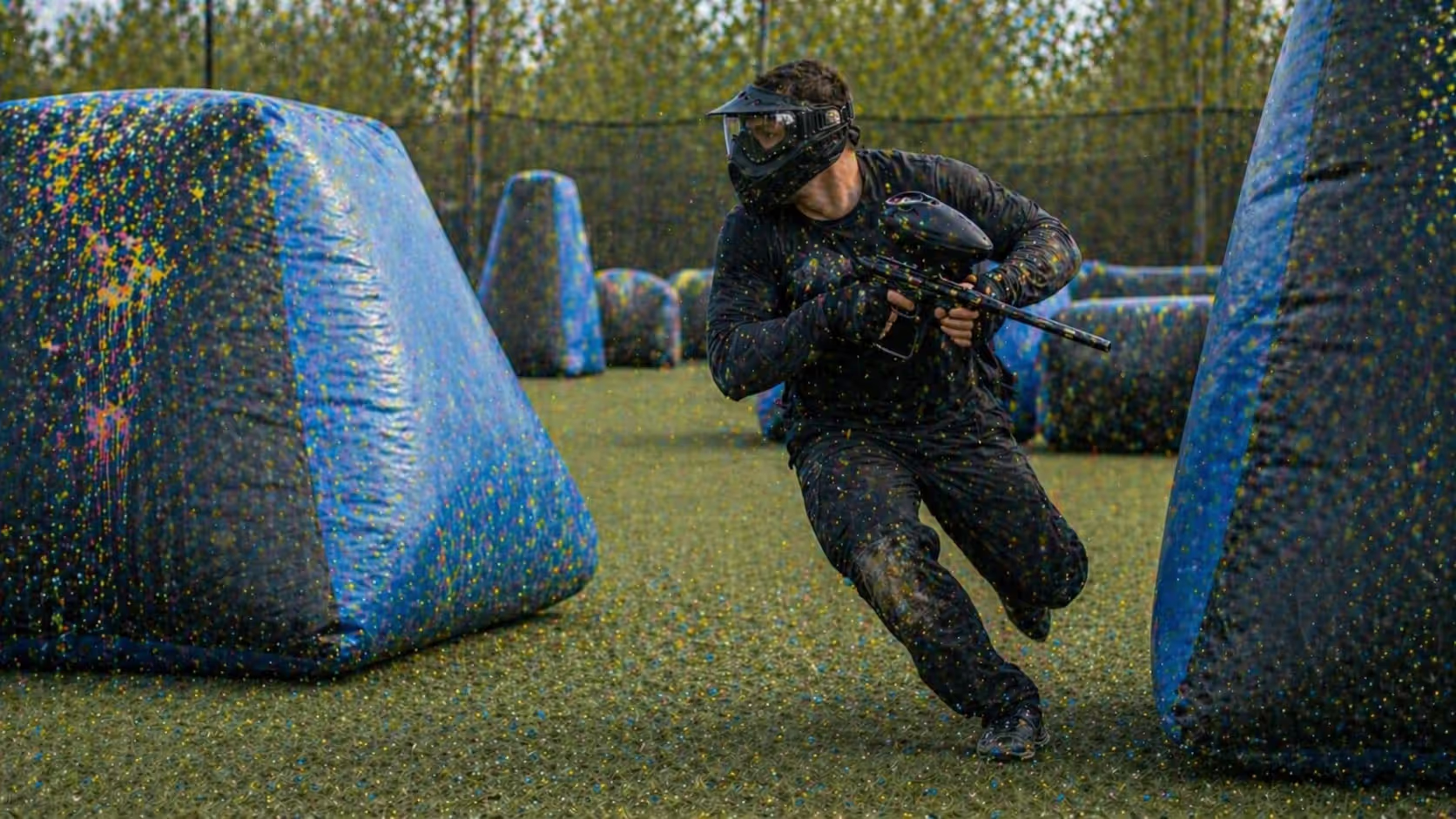
Circuit training builds muscular endurance specific to paintball positions. Create a circuit: 20 squats, 15 push-ups, 20 lunges (10 each leg), 30-second plank, 15 burpees. Complete the circuit with minimal rest between exercises, then rest 2 minutes and repeat 3-4 times. This builds the strength-endurance needed to hold positions and move effectively through long matches.
Core stability work prevents injury and improves accuracy. Strong core muscles stabilize your upper body during rapid movements, keeping your marker on target. Perform planks (front and side), dead bugs, Russian twists, and mountain climbers. Dedicate 10-15 minutes to core work 3-4 times weekly.
Recovery runs maintain aerobic base without excessive fatigue. Once or twice weekly, perform a 20-30 minute easy jog at conversational pace. This builds cardiovascular efficiency and aids recovery from harder training sessions.
The mistake many players make is training too hard too often. Paintball conditioning requires intensity, but it also requires recovery. Structure your training week with 2-3 high-intensity sessions, 1-2 moderate sessions, and adequate rest days.
Author: Logan Mercer;
Source: lakestaytents.com
Paintball Practice Drills for Skill Building
Paintball skill building combines physical training with technical practice. These paintball practice drills develop the specific skills that win gunfights and matches.
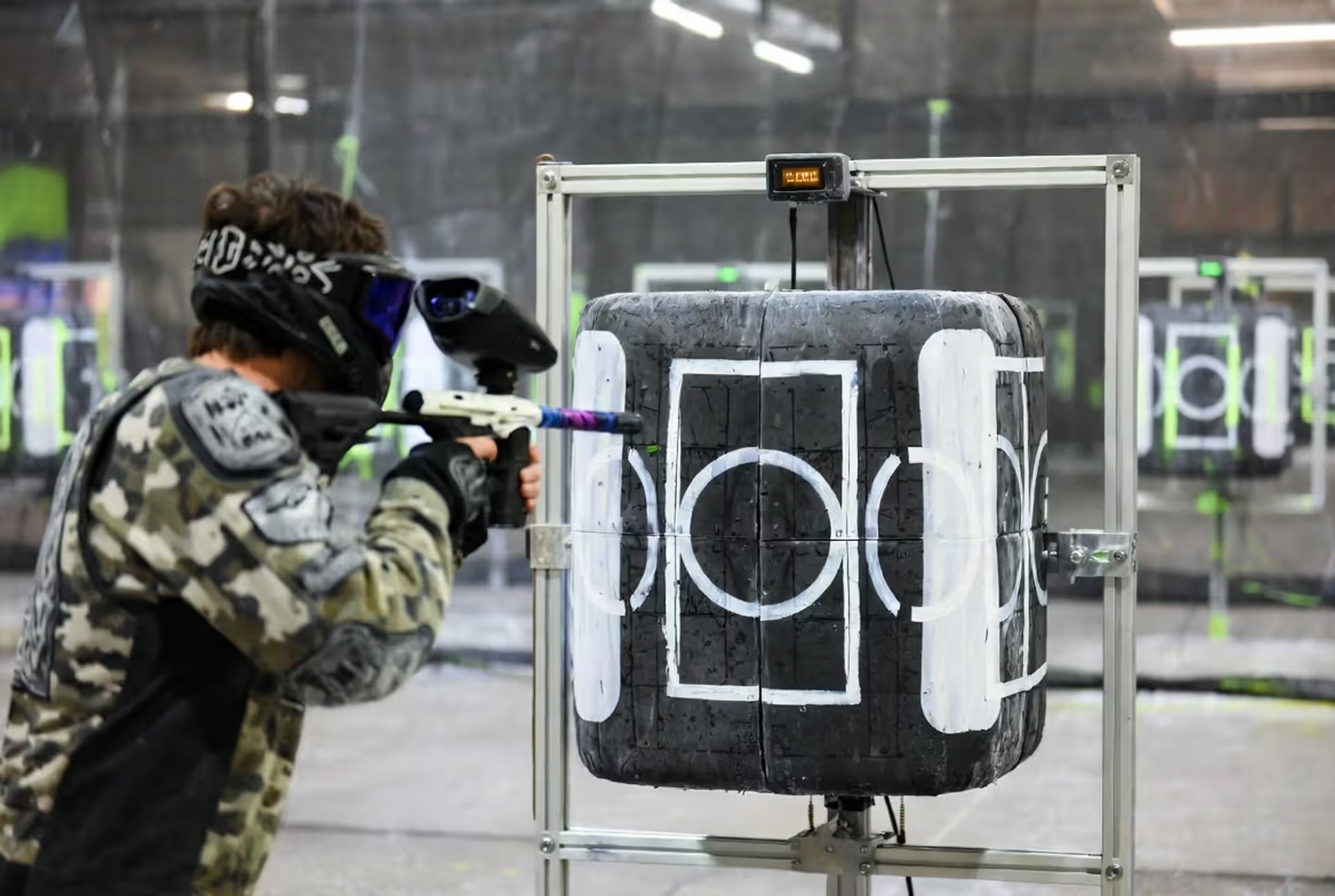
Target accuracy drills build fundamental shooting skills. Set up targets at various distances—15, 30, and 50 feet. From a stable position, shoot 10 rounds at each target, focusing on consistent trigger control and follow-through. Track your hit percentage and work to improve it before adding speed or movement. Accuracy under no pressure establishes the baseline for accuracy under game pressure.
Moving target drills add complexity. Have a partner move targets laterally or use a swinging target. Practice leading moving targets and timing your shots. This translates directly to shooting opponents running between bunkers.
Weak-hand shooting drills eliminate a common vulnerability. Most players favor one side, becoming predictable and limiting their angles. Practice snap shooting from your non-dominant side until it feels nearly as natural as your strong side. Spend 20% of your shooting practice on your weak side.
Communication drills build team coordination. Run scenarios where players must call out opponent positions, coordinate movements, and execute planned plays. Good communication often matters more than individual skill in team formats. Practice specific callouts until they become automatic under pressure.
Solo Practice Drills You Can Do at Home
Dry-fire practice builds muscle memory without paint or field access. Set up targets in your yard or garage. Practice your snap shooting motion, focusing on economy of movement. Work on minimizing unnecessary motion and reducing your exposure time. Perform 50-100 repetitions per session, 3-4 times weekly.
Visualization training improves decision-making and situational awareness. Mentally rehearse specific scenarios—breaking off the start, advancing under fire, trading eliminations. Visualization activates similar neural pathways as physical practice, reinforcing patterns without physical fatigue.
Grip strength training improves marker control and reduces fatigue. Use grip strengtheners or squeeze a tennis ball for 30-second intervals. Strong forearms and hands maintain accuracy during long shooting sequences.
Physical conditioning is what separates good players from great ones. When everyone's tired in the fourth point, your training makes the difference. I've seen talented players lose to less-skilled opponents simply because they couldn't maintain performance under fatigue.
— Marcus Davis
Team Drills for Tournament Prep
Walk-through drills establish team strategy without paint expense. Walk through your planned breakouts, communication sequences, and contingency plans. This builds shared understanding and reveals potential coordination issues before live practice.
Live scrimmages against varied opponents expose weaknesses and test strategies. Seek out teams with different playing styles—aggressive, defensive, methodical. Adapting to varied approaches builds flexibility and problem-solving skills.
Film review sessions identify mistakes and improvement opportunities. Record your practices and matches, then review them as a team. You'll spot positioning errors, communication breakdowns, and missed opportunities that weren't obvious during play.
Common Training Mistakes That Slow Your Progress
Overtraining one area while neglecting others creates imbalanced development. Players often focus exclusively on shooting practice while ignoring conditioning, or vice versa. Paintball requires multiple physical attributes working together. Structure your training to address reflex speed, agility, endurance, and technical skills proportionally.
Neglecting cardiovascular conditioning shows up painfully during tournaments. You might feel fine during weekend recreational play, but tournament schedules demand sustained performance across multiple matches in one day. Without adequate conditioning, your performance degrades rapidly after the first few points.
Poor form during drills reinforces bad habits. Speed and intensity matter, but not at the expense of proper technique. Practice movements correctly at moderate speed before pushing for maximum velocity. Your body remembers patterns—make sure they're the right patterns.
Skipping warm-ups increases injury risk and reduces performance. Cold muscles don't contract efficiently and are more prone to strains. Spend 10-15 minutes on dynamic stretching and light movement before training sessions. This prepares your body for intense effort and improves workout quality.
Not tracking improvement leaves you guessing about progress. Record key metrics—sprint times, drill completion speeds, accuracy percentages, conditioning benchmarks. Measurable data reveals what's working and what needs adjustment. Review your numbers monthly and adjust training focus accordingly.
Training without game context limits transfer to actual play. Drills build capacity, but you need to apply those capacities in game-like situations. Include scenario-based practice that combines multiple skills under pressure similar to real matches.
Inconsistent training yields inconsistent results. Sporadic intense training followed by long breaks prevents adaptation. Your body improves through consistent progressive stress. Three focused sessions weekly beats one exhausting session followed by two weeks off.
Paintball Training Exercise Comparison Table
| Exercise Type | Primary Benefit | Equipment Needed | Time Required | Skill Level |
| Ball Drop Drills | Reaction speed, hand-eye coordination | Tennis ball, partner | 10-15 minutes | Beginner |
| Ladder Drills | Foot speed, coordination, agility | Agility ladder or tape | 15-20 minutes | Beginner |
| Snap Shooting Practice | Reflex shooting, exposure minimization | Bunker/doorway, targets | 20-30 minutes | Intermediate |
| HIIT Sprints | Cardiovascular endurance, recovery | Open space, timer | 20-25 minutes | All levels |
| Cone Drills | Direction changes, explosive movement | 5 cones, open space | 15-20 minutes | Beginner |
| Bunker Runs | Sport-specific conditioning | Bunkers or markers, 40+ feet space | 25-30 minutes | Intermediate |
| Circuit Training | Muscular endurance, full-body strength | Bodyweight or basic equipment | 30-40 minutes | All levels |
| Moving Target Drills | Tracking, lead shooting | Moving targets, marker | 20-30 minutes | Intermediate |
| Wall Ball Drills | Hand-eye coordination, tracking | Tennis ball, wall | 10-15 minutes | Beginner |
| Box Drills | Multi-directional movement, transitions | 4 cones, timer | 15-20 minutes | Intermediate |
Frequently Asked Questions About Paintball Training
Structured training transforms paintball performance, but the structure itself matters as much as the exercises. Design your weekly schedule around varied training focuses, adequate recovery, and progressive difficulty increases.
A sample weekly structure for intermediate players: Monday—agility and movement drills (30 minutes) plus core work (15 minutes); Tuesday—HIIT conditioning (25 minutes); Wednesday—rest or light recovery activity; Thursday—reflex and shooting drills (40 minutes); Friday—circuit training (35 minutes); Saturday—field practice or scrimmage; Sunday—rest. Adjust intensity and volume based on your current fitness level and tournament schedule.
Track your progress systematically. Record completion times for drills, accuracy percentages, and subjective fatigue ratings. Review monthly to identify trends and adjust training focus. What gets measured gets improved.
Integrate your physical training with technical practice and strategic study. Physical capacity creates the foundation, but paintball success requires combining that capacity with skill, strategy, and teamwork. The players who improve fastest treat training as seriously as gameplay, maintaining consistency through both off-season preparation and in-season maintenance.
Start where you are, not where you think you should be. Beginners benefit more from consistent moderate training than sporadic intense efforts. Build your base over 4-6 weeks before adding high-intensity work. Listen to your body—persistent pain signals problems, not progress.
The investment in structured training pays dividends every time you step on the field. You'll move faster, shoot more accurately under pressure, and maintain performance when opponents fade. Those advantages compound over the course of matches and seasons, separating you from players relying solely on natural ability. Your training becomes your competitive edge.