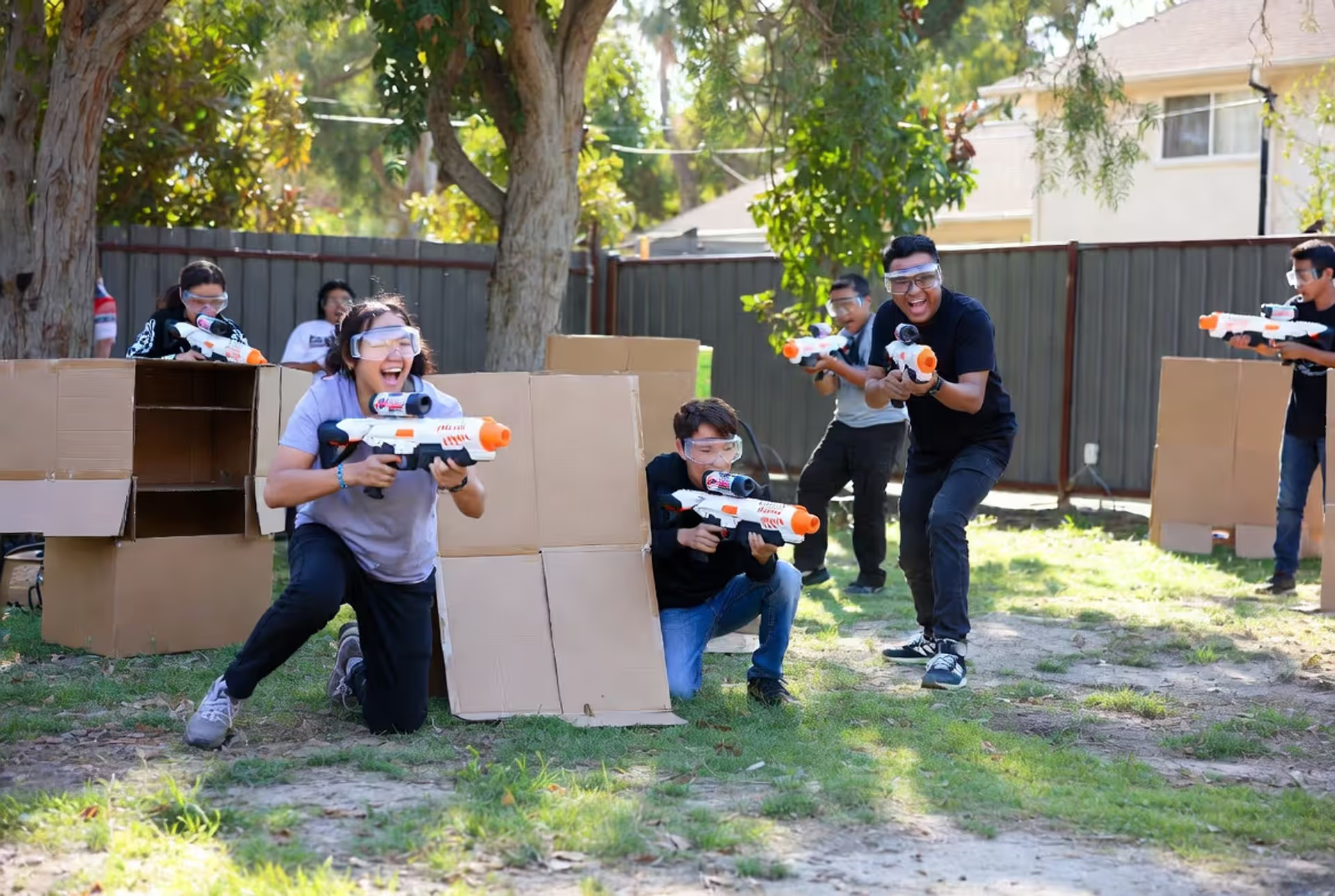
People playing gel blaster game in backyard wearing protective goggles
What Is a Gel Gun Blaster?

Content
You've probably seen them popping up at sporting goods stores or noticed neighborhood kids running around with them—gel blasters are taking over backyards across America. Think of them as paintball's less messy cousin that won't leave purple splatters all over your white fence.
These recreational shooters launch squishy, water-filled pellets that explode on contact, then basically vanish. No stained clothes. No hour-long cleanup sessions. Just grab your gear and start playing.
What makes gel blasters particularly appealing? They look surprisingly realistic, cost way less than you'd expect, and won't get you in trouble with neighbors complaining about paint-covered fences. Whether you're 14 or 40, there's probably a model that fits what you're after.
Before dropping cash on your first blaster, though, you'll want to know what actually makes these things tick, which style suits your needs, and how to avoid the rookie mistakes that turn fun Saturday afternoons into trips to urgent care.
Understanding Gel Blasters and How They Operate
So what is a gel gun, exactly? Picture a toy that shoots projectiles soft enough that they won't break windows but realistic enough that you'll want to check your local laws before buying one. That's the essence of what we're dealing with here.
The basic premise is simple—these devices propel hydrated gel ammunition at targets using spring tension, battery power, or compressed gas. What arrives at your doorstep needs some prep work (we'll get to that), but once you're set up, you've got a backyard battle system that actually works.
What Gel Ammunition Is Made Of
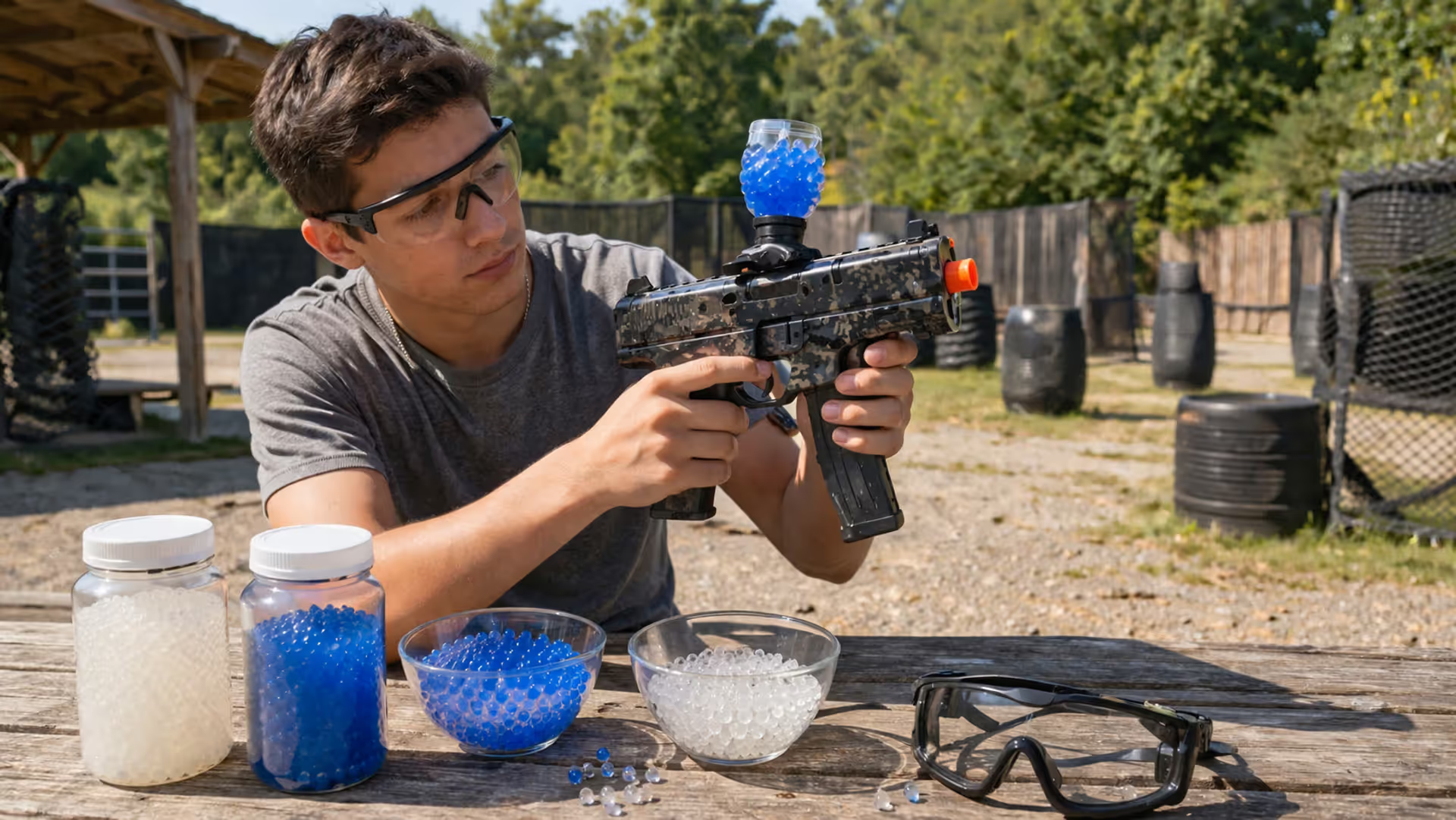
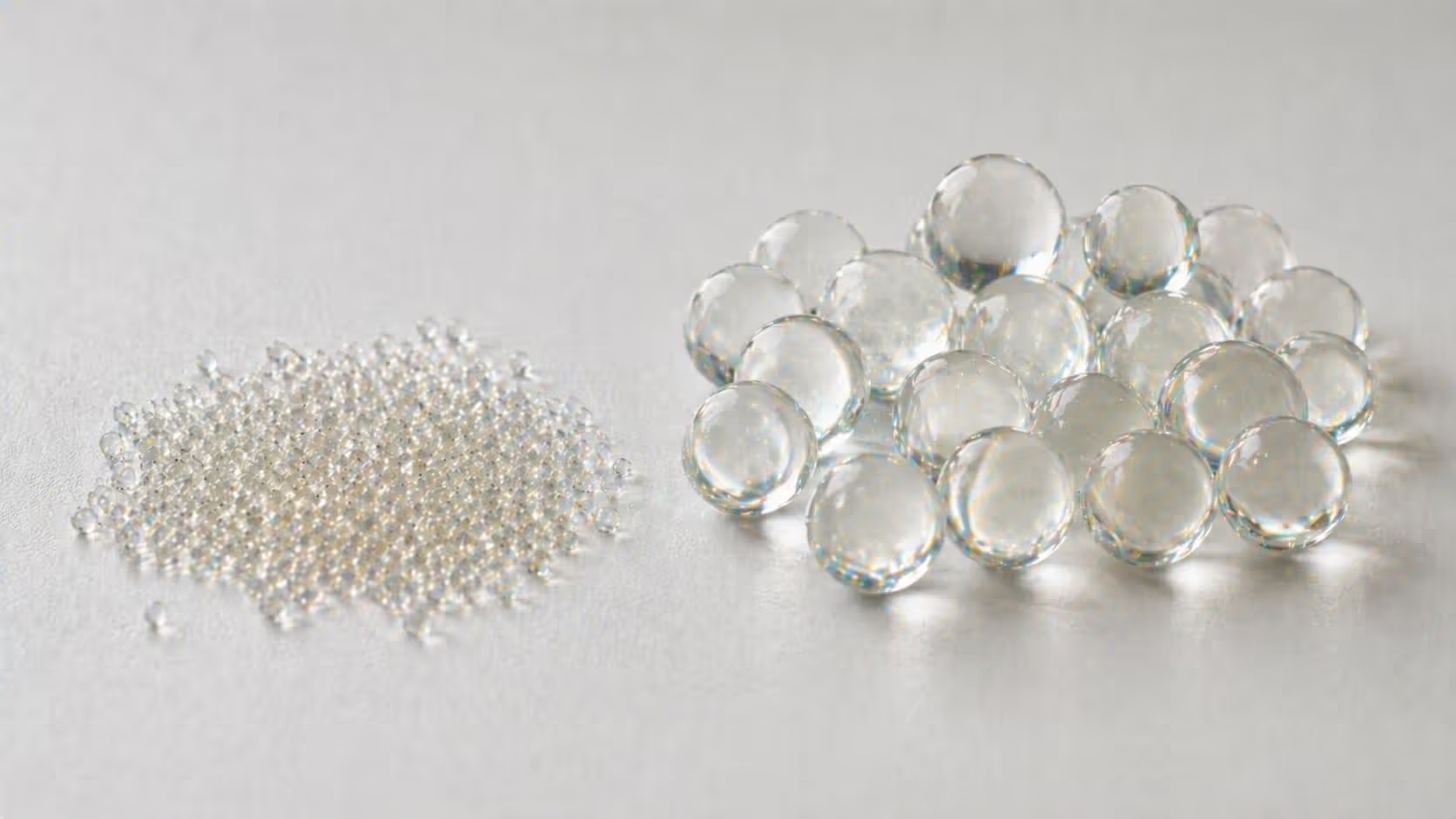
Here's where things get interesting. Those tiny hard beads you'll receive? They're sodium polyacrylate—yes, the same stuff that makes diapers absorbent and helps your garden retain moisture.
Author: Caleb Varden;
Source: lakestaytents.com
Fresh out of the package, they're about the size of peppercorns. Rock hard. Completely useless for shooting.
Drop them in a bowl of water for 3-4 hours, though, and they'll swell up to grape-sized orbs. Now they're ready. The transformation is honestly pretty cool to watch if you're into that sort of thing.
These soft gel gun projectiles end up being roughly 95% water after hydration. That's why they shatter on impact instead of bouncing off like plastic BBs. Hit someone's shirt, and the pellet just... disappears. Within minutes, whatever tiny fragments remain have dried up completely.
Paintballs leave those stubborn stains that survive multiple wash cycles. Gel balls? Your mom won't even know you were shooting in the backyard.
One mistake kills the experience faster than anything—not soaking your ammo long enough. Grab them after just an hour or two, and they're still too firm. You'll feel it when they smack your arm (ouch), and your blaster will jam constantly. On the flip side, leave them submerged overnight—like 8+ hours—and they become so fragile they'll break inside your barrel before even leaving the gun. Sweet spot is 3-4 hours. Set a timer.
How Gel Blasters Fire
Three propulsion methods dominate the market, each with its own quirks. Understanding these helps explain why that $20 pistol performs nothing like the $150 model your friend won't stop bragging about.
Spring-powered blasters are dead simple. You manually cock the slide, which compresses an internal spring—like pulling back a slingshot. Release the trigger, and that stored energy slams a piston through a cylinder. This creates an air burst that launches your gel ball down the barrel at 150-250 feet per second. One shot per cock. It's the reliable option that never needs batteries but gets exhausting during extended battles.
Electric models (called AEGs in hobby circles) changed the game completely. A rechargeable battery spins a motor connected to a gearbox. Pull the trigger, and that motor automatically cycles the compression system for you. Result? Semi-auto or full-auto fire without manually resetting anything. Most hold 200-400 rounds in gravity-fed hoppers attached to the top or side. These gel gun blaster units dominate competitive play for obvious reasons—superior firepower wins firefights.
Gas-powered variants take a different approach entirely. Small CO2 or green gas cartridges screw into the grip or magazine. Trigger pull releases pressurized gas that propels each round. The upside? More consistent velocity shot-to-shot, plus that satisfying recoil kick that makes them feel closer to actual firearms. The downside? Gas cartridges add ongoing cost, and cold weather tanks their performance (gas doesn't expand well when it's 40 degrees outside).
Types of Gel Blasters Available
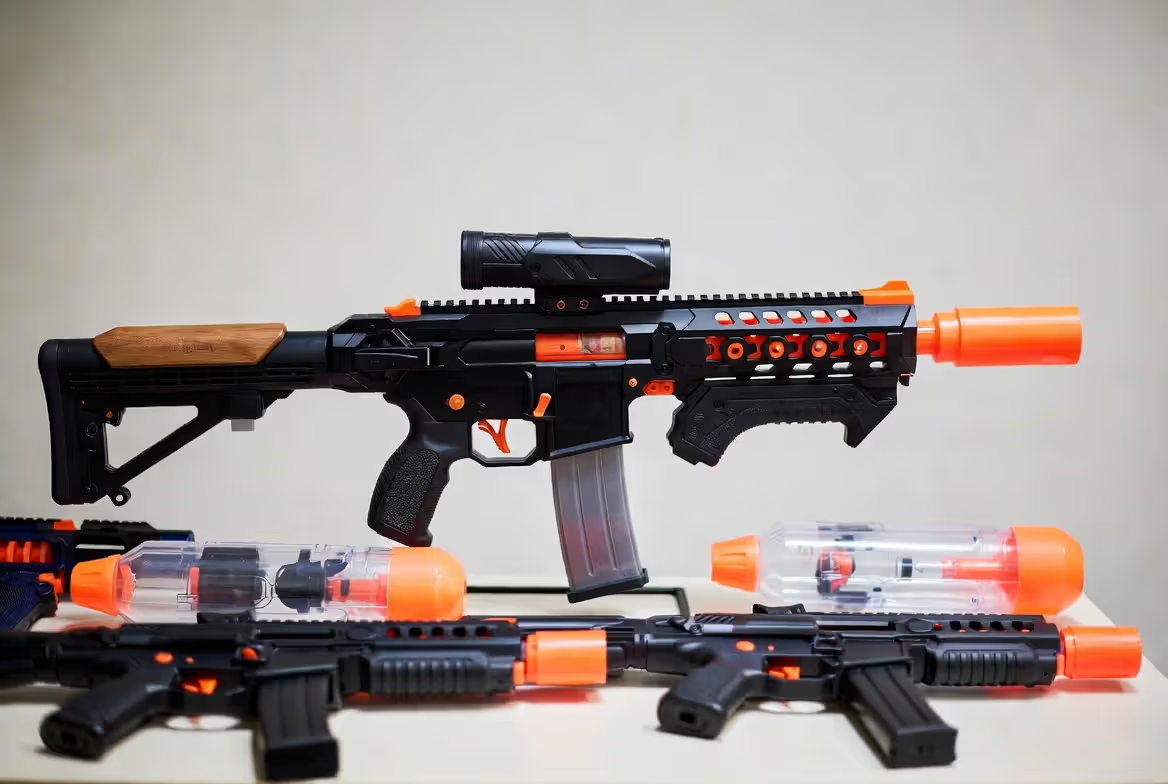
Walk into any gel blaster shop—or scroll through an online retailer's catalog—and you'll face dozens of options. Rifles, pistols, SMGs, even replica grenade launchers (yes, really). The variety can overwhelm first-time buyers pretty quickly.
Author: Caleb Varden;
Source: lakestaytents.com
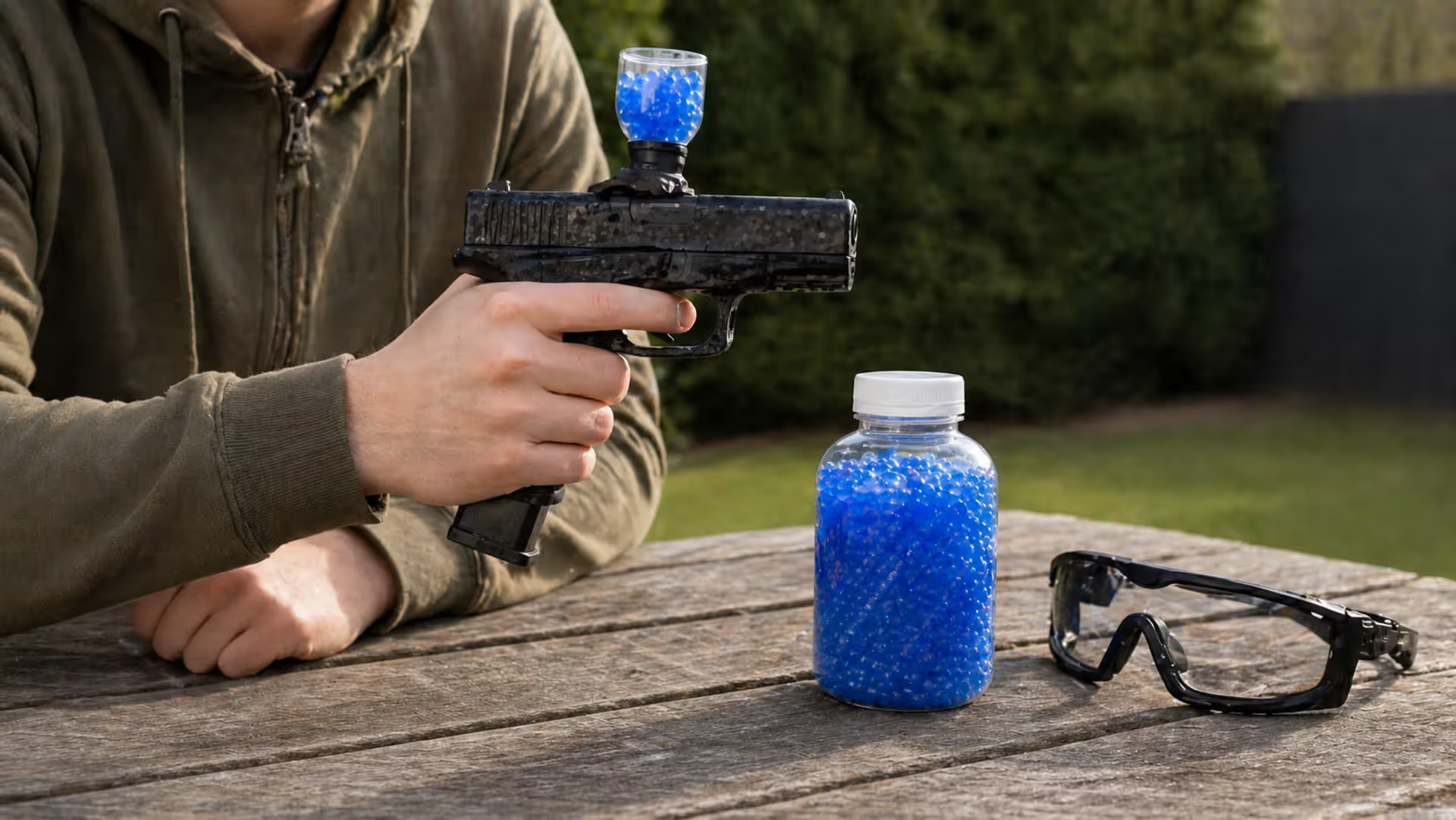
Pistol gel blasters make sense as starter options for most people. They're compact (6-8 inches typically), lightweight (under a pound), and affordable enough that you won't cry if your kid drops it in a pond. A gel blaster pistol works perfectly for close-range backyard games or as your backup when your primary rifle runs dry mid-match. Manufacturers create replicas of famous handgun designs—Glocks, Berettas, 1911s—so you can pick based on what looks coolest to you.
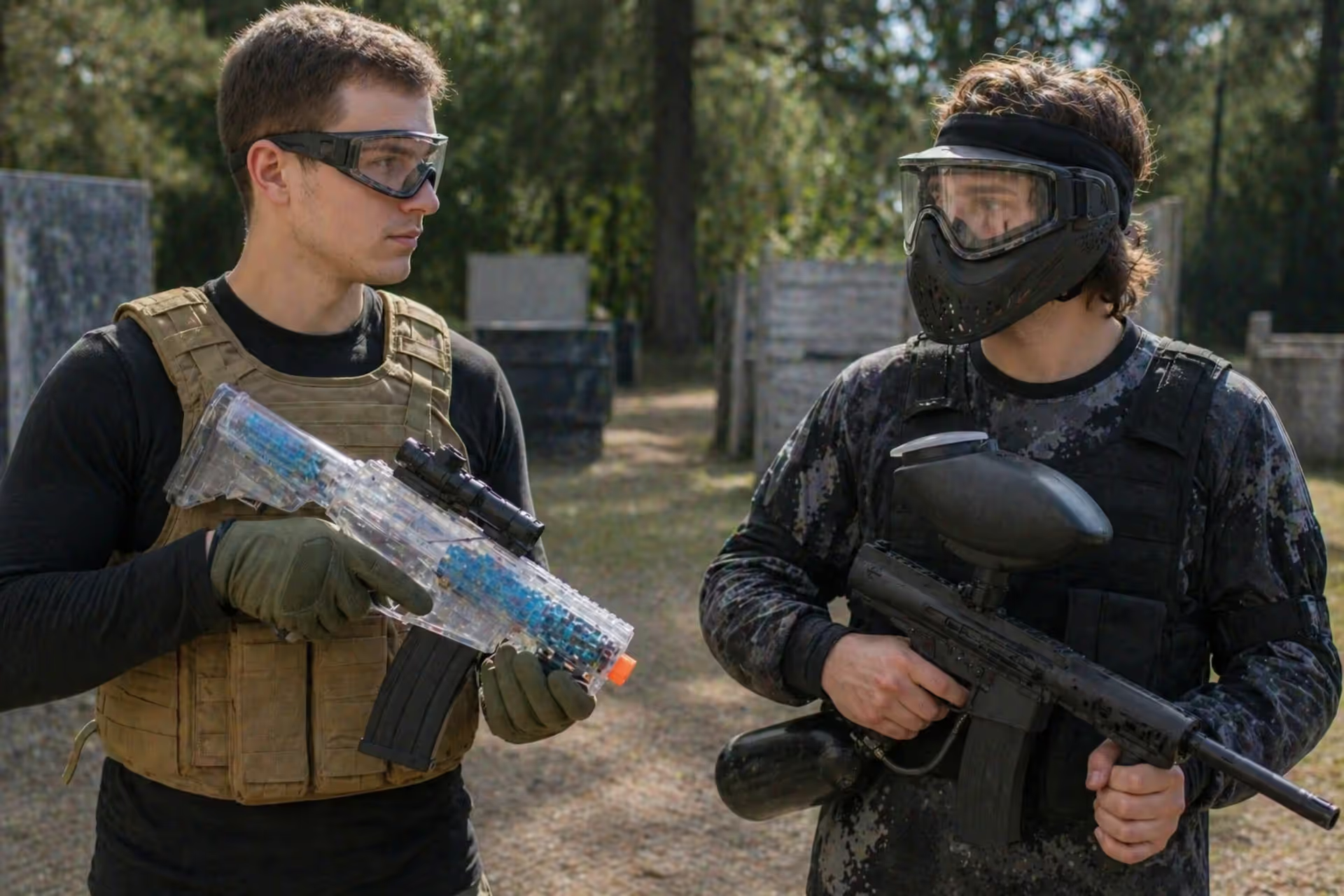
Rifles extend your effective range and ammunition capacity significantly. Full-length barrels improve accuracy past 40-50 feet. Adjustable stocks let you customize fit. Tactical rails accept lights, scopes, grips, and whatever other accessories you decide you absolutely need. During outdoor games where engagement distances stretch beyond 30 feet, rifles outperform pistols consistently.
Choosing between semi-auto and full-auto firing modes shapes your entire play style. Semi-auto—one trigger pull, one shot—promotes accuracy. You're forced to aim carefully instead of just hosing down the general area where you think someone's hiding. Full-auto unleashes 10-15 rounds per second, creating suppressive fire that pins opponents behind cover. It's incredibly fun until you realize you've burned through 300 gel balls in about 20 seconds. Most electric gel ball blaster pistol models include a selector switch for both modes, letting you adapt based on the situation.
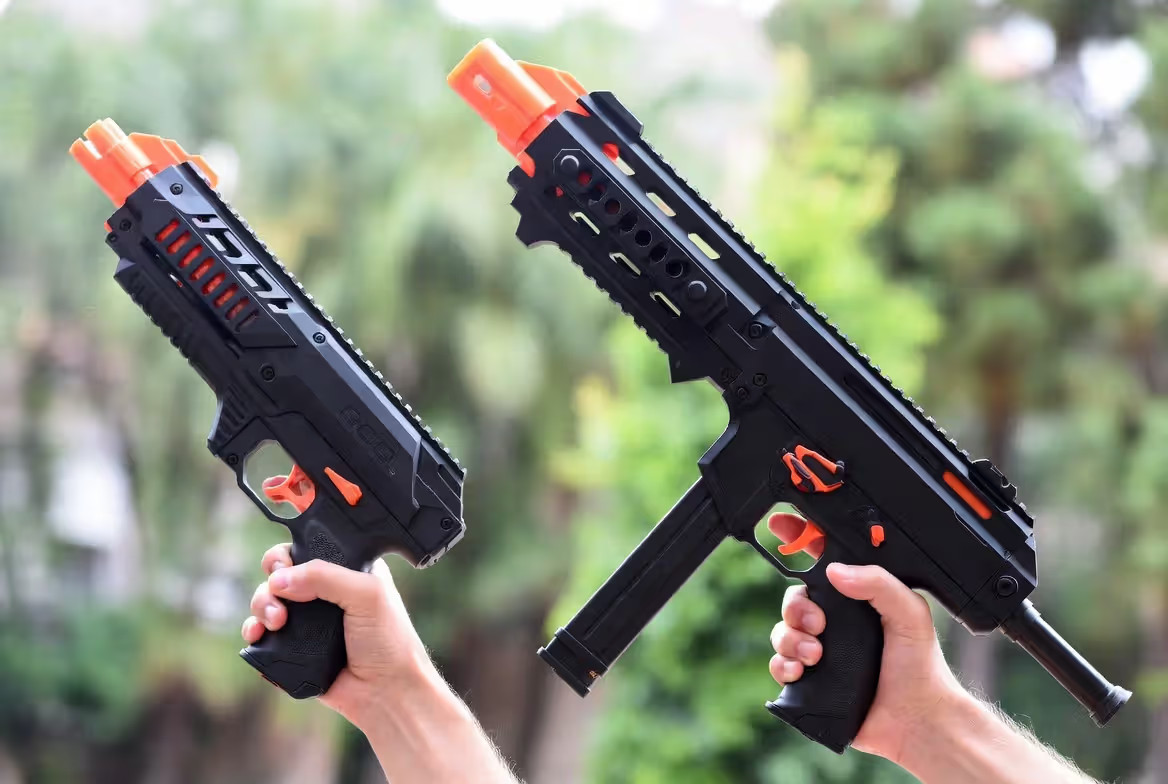
SMG-style compacts split the difference between pistols and rifles. Extended magazines, folding stocks, slightly longer barrels—they're gel blaster handgun variants designed for players who want rifle-like performance without the bulk. Think close-quarters combat scenarios where a full rifle feels unwieldy.
Gel Blaster Pistols vs. Other Handheld Models
Not all handheld gel blasters are created equal, and the distinctions matter more than you'd think when you're actually trying to win matches.
Author: Caleb Varden;
Source: lakestaytents.com
True pistols prioritize portability above everything else. They fit in holsters, stuff easily into backpacks, and draw quickly when you round a corner face-first into an opponent. Magazine capacity suffers though—you're looking at 50-100 rounds max. Effective range tops out around 40-50 feet before your shots start dropping unpredictably. The gel blaster handgun category includes both realistic replicas (if you're into that military simulation vibe) and sci-fi inspired designs (if you prefer a more futuristic aesthetic).
Compact SMG models sacrifice some portability for meaningful performance gains. Barrel length increases by a few inches. Grip frames expand to accommodate larger batteries. Magazine wells fit higher-capacity options. You're still operating one-handed if needed, but these orb guns deliver 15-20 additional feet of reliable range compared to standard pistols. They're the goldilocks option for many players.
Modified pistol platforms blur category definitions entirely. Start with a pistol frame, add an extended barrel kit, attach a stock conversion, and suddenly you've got something resembling a carbine. Manufacturers love these because they can sell one base model plus multiple upgrade packages. Consumers love them because they're customizable. Just know they won't fit standard pistol holsters anymore once you've added all those accessories.
| Feature | Spring-Powered Pistol | Electric Pistol (AEG) | Gas-Powered Pistol |
| Pros | Zero battery anxiety; works every single time; costs less than dinner for two | Semi and full-auto modes available; high fire rate keeps enemies pinned; performance stays steady across hundreds of rounds | Realistic kickback sensation; trigger response feels crisp and immediate; best accuracy in class |
| Cons | Your thumb gets tired cocking the slide; fire rate is painfully slow; magazine holds maybe 50 rounds | You will forget to charge it before game day; weighs more than spring models; motor whine announces your position | Gas cartridges run $2-3 each and last about 50 shots; stops working properly below 50°F; needs regular lubrication |
| Price Range | $15-$40 | $45-$120 | $60-$150 |
| Best Use Case | Testing whether you actually like this hobby; plinking at backyard targets; emergency backup weapon | Main weapon for serious players; all-day events; competitive leagues | Collection display pieces; realistic handling practice; experienced users who maintain their gear |
Power source determines everything about how your pistol performs and what it costs to operate long-term. Most beginners grab a spring model first, discover they're hooked, then upgrade to electric or gas within a few months.
Common Uses for Gel Guns
People buy gel blasters for more reasons than you might expect. Sure, backyard battles dominate, but that barely scratches the surface of what's happening in this growing hobby.
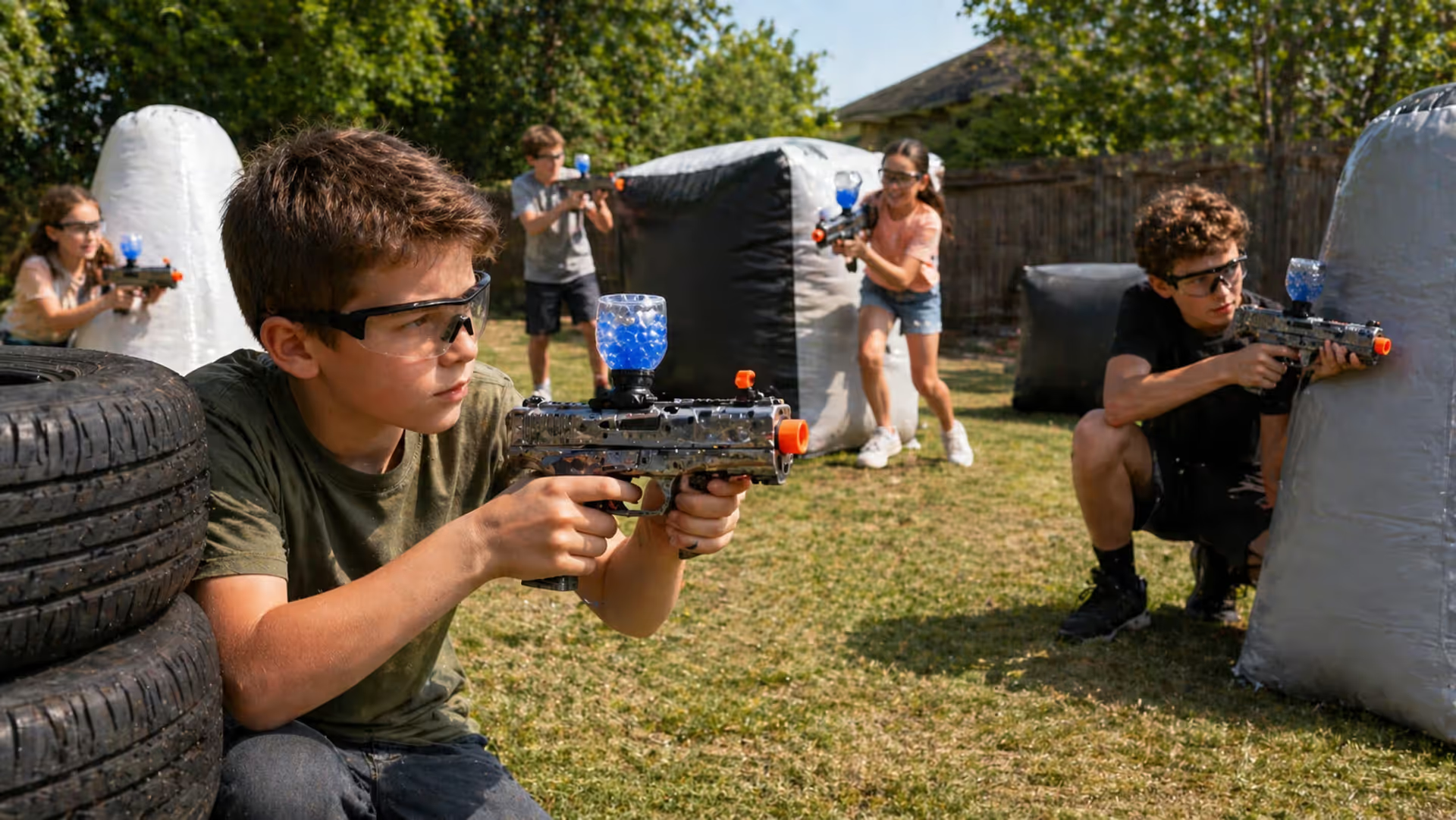
Backyard recreational use remains number one by a wide margin. Families create makeshift arenas using lawn furniture, stacked cardboard boxes, and those blue tarps from the hardware store. Kids and parents play together without the intimidation factor of paintball's harder impacts. A 10-year-old and their 40-year-old dad can face off on relatively equal footing, which doesn't happen with most sports.
Organized Gellyball leagues have exploded over the past few years. These aren't casual weekend games—we're talking structured tournaments with actual rulesets, referees, and championship trophies. Commercial gellyball gun facilities operate in at least 30 states now, offering arena rentals, equipment packages, and refereed matches. Some venues report 200+ participants showing up for weekend events. Regional championships award prize packages worth thousands of dollars. The competitive scene around gelly ball guns rivals what airsoft built over the past two decades.
Target shooting attracts the crowd that likes precision over chaos. Set up paper targets at various distances—15, 25, 40 feet—and work on accuracy fundamentals. Tin cans make satisfying "ping" sounds when hit. Reactive steel targets flip or spin on impact. The major advantage over traditional firearms training? Gel ammunition costs roughly $8-12 per 10,000 rounds. That's less than a single box of 9mm pistol ammo. You can shoot hundreds of rounds perfecting your technique without wincing at your credit card statement.
Some firearm instructors now incorporate gellyball guns into beginner safety courses. New shooters learn trigger discipline, sight alignment, and basic handling skills without the noise, expense, or psychological intimidation of live ammunition. It's a smart intermediate step between dry fire practice and range time.
Film production teams discovered gel blasters make excellent prop weapons. They look convincing on camera, projectiles are visible in flight (helpful for CGI reference), and there's zero chance of the catastrophic safety failures that occasionally plague blank-firing guns. Student films, YouTube action series, indie productions—they're all using gel blasters to achieve effects that would otherwise require expensive armorer supervision.
Don't discount the stress relief factor. Had a terrible day at work? Spend 20 minutes in your garage launching gel balls at a cardboard target. It's weirdly therapeutic. Way cheaper than therapy, too.
Safety Considerations When Using Gel Blasters
Let's be clear upfront—these aren't Nerf blasters. Treat them carelessly, and someone's getting hurt. The injuries might not be catastrophic, but "probably won't lose an eye" isn't exactly a ringing safety endorsement.
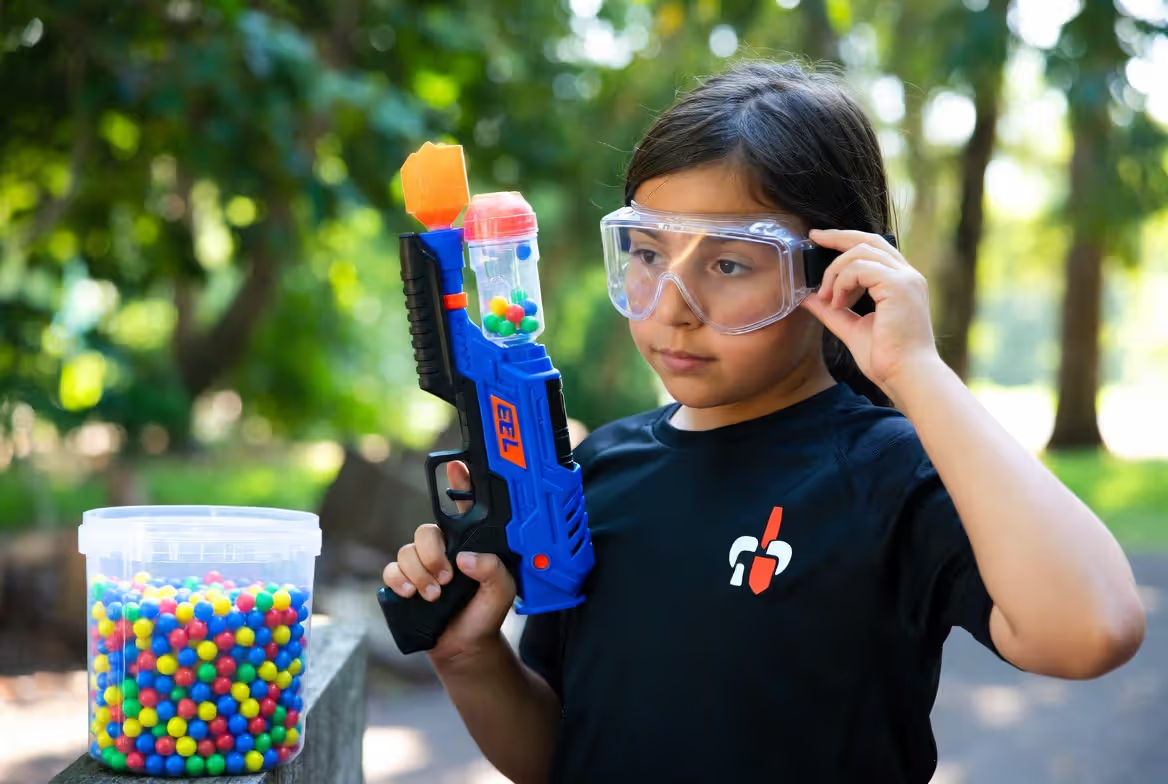
Eye protection isn't optional, negotiable, or "probably fine if we're careful." It's mandatory. Every single person within firing range needs ANSI Z87.1-rated safety glasses or full-seal goggles. A gel ball traveling at 200 fps carries enough energy to cause permanent vision damage. We're talking potential blindness from a toy that costs $30. Regular sunglasses don't cut it—frames have gaps that projectiles slip through. Prescription eyewear leaves your peripheral vision exposed. Get proper shooting glasses. They cost $10-15. Your eyesight is worth infinitely more.
Age recommendations vary wildly depending on who you ask. Most manufacturers print "12+" on the box. Some parents let 8-year-olds play under direct supervision. Others won't allow it until 14. Here's a practical test: if your kid can't keep their finger off the trigger until they're actually ready to shoot someone, they're not ready for a gel gun blaster. Period. That trigger discipline is non-negotiable. Kids who lack that impulse control end up shooting friends at point-blank range "by accident," and then everyone's crying.
Proper handling extends way beyond trigger discipline, though. Never aim at anyone not actively playing—even if you're 100% certain your blaster's unloaded. Establish clear play area boundaries before games start. Shooting toward windows, cars, or random passersby creates problems you don't want. When transporting blasters to playing fields, keep them in cases or bags. Many models look disturbingly realistic, and you don't want someone calling 911 because they saw you walking through a parking lot with what appears to be an assault rifle.
Close-range impacts hurt more than most people expect. Gel balls typically won't break skin, but shots under 10 feet definitely sting. You'll get welts. Possibly bruising, especially on exposed skin. Long sleeves and pants reduce discomfort significantly. Some players wear light tactical vests or padded shirts during intense competitive matches.
Players removing their goggles mid-game because of fogging—that's our biggest safety headache. Happens constantly. Someone's goggles fog up, they can't see, so they lift them to wipe the lenses. That's exactly when they catch a gel ball to the eye. Our rule is simple: if you need to adjust your gear, call timeout and walk to the designated safe zone. Your vision isn't worth rushing.
— Marcus Rodriguez
Games with multiple participants need a designated safety officer. Someone standing outside the play area with authority to stop everything if rules get violated or equipment malfunctions. This person can't be actively playing—they need clear sight lines to all participants. Games without supervision devolve into dangerous chaos surprisingly quickly.
Where to Buy Gel Blasters in the US
Shopping for a gel blaster pistol would be straightforward if not for the legal patchwork that makes this hobby more complicated than it should be. Where you live determines what you can buy and how you can use it.
Legal restrictions vary dramatically by state, and honestly, the situation keeps evolving. Most states currently allow gel blasters without special requirements—just buy and play. California, New York, and New Jersey enforce much stricter regulations. They often classify gel blasters as imitation firearms requiring orange barrel tips and restricting where you can display them publicly. Michigan and Rhode Island introduced legislation requiring background checks for purchases, similar to airsoft regulations. Illinois bans them within Chicago city limits while allowing them everywhere else in the state.
Before ordering anything, verify regulations at both state and city levels. Some homeowner associations prohibit gel blaster use even in states where they're completely legal. Violating these rules can result in confiscation, fines, or dramatically worse consequences if law enforcement mistakes your gel blaster for an actual firearm. That happens more often than you'd think.
Reputable retailers include established online specialists and physical sporting goods stores. Online vendors like GelBlasterHub, TacticalGelUSA, and OrbeeGuns stock wide selections with detailed specs and verified customer reviews. These companies provide warranty coverage and sell replacement parts—crucial benefits you won't get from random Amazon sellers operating out of warehouses in Shenzhen. Physical stores let you handle products before purchasing. Check the weight, test the trigger pull, see how magazines insert and release. You can spot cheap construction immediately when holding two models side by side.
Evaluating gel blaster quality requires looking past flashy marketing claims. Construction materials tell you everything. Higher-quality models use nylon-reinforced polymer or metal alloys rather than brittle ABS plastic that cracks under normal stress. Test the magazine release and charging handle—smooth operation without excessive rattling indicates better manufacturing tolerances. Read reviews specifically mentioning reliability after 5,000+ rounds. Some blasters perform beautifully for the first few hundred shots, then develop chronic feeding problems.
Battery and charger quality separates reliable electric blasters from fire hazards. Cheap chargers lack overcharge protection. They'll damage your batteries or—in rare but documented cases—cause fires. Look for smart chargers with automatic shutoff. Any gel ball blaster pistol package should specify battery capacity in milliamp hours (mAh). Anything below 1000mAh means you're recharging every 30-45 minutes during extended play sessions. That gets old fast.
Customer service and return policies protect your investment when something inevitably goes wrong. Reputable sellers offer 30-day minimum return windows and respond to technical questions within 24 hours. Avoid retailers with vague warranty language or those requiring customers to pay return shipping on defective products. Those policies exist to discourage returns, period.
Author: Caleb Varden;
Source: lakestaytents.com
Frequently Asked Questions About Gel Blasters
Gel gun blasters hit a sweet spot that paintball and airsoft never quite managed—realistic enough to feel exciting, affordable enough for regular use, and clean enough that you won't spend an hour scrubbing paint off your deck afterward.
Whether you're eyeing a compact pistol gel blaster for weekend backyard sessions or a fully-featured electric model for competitive Gellyball tournaments, success comes down to matching the right equipment to your actual needs. Don't overbuy. That $200 gas-powered replica with metal construction might look amazing, but it's overkill if you're just plinking at targets in your garage twice a month.
Start with quality eye protection—seriously, don't skip this—and properly hydrated ammunition. Learn good handling habits early, because sloppy technique gets harder to fix once bad patterns establish themselves. Respect local regulations even when they seem overly restrictive. The hobby's growth depends on responsible users preventing the horror stories that lead to blanket bans.
As gel blasters gain mainstream acceptance, expect expanded commercial playing facilities, improved reliability from manufacturers who've learned from early quality issues, and hopefully clearer regulatory frameworks that support safe recreational use. The technology keeps improving, prices keep dropping, and the community keeps growing. Jump in now while it's still relatively new and uncrowded.