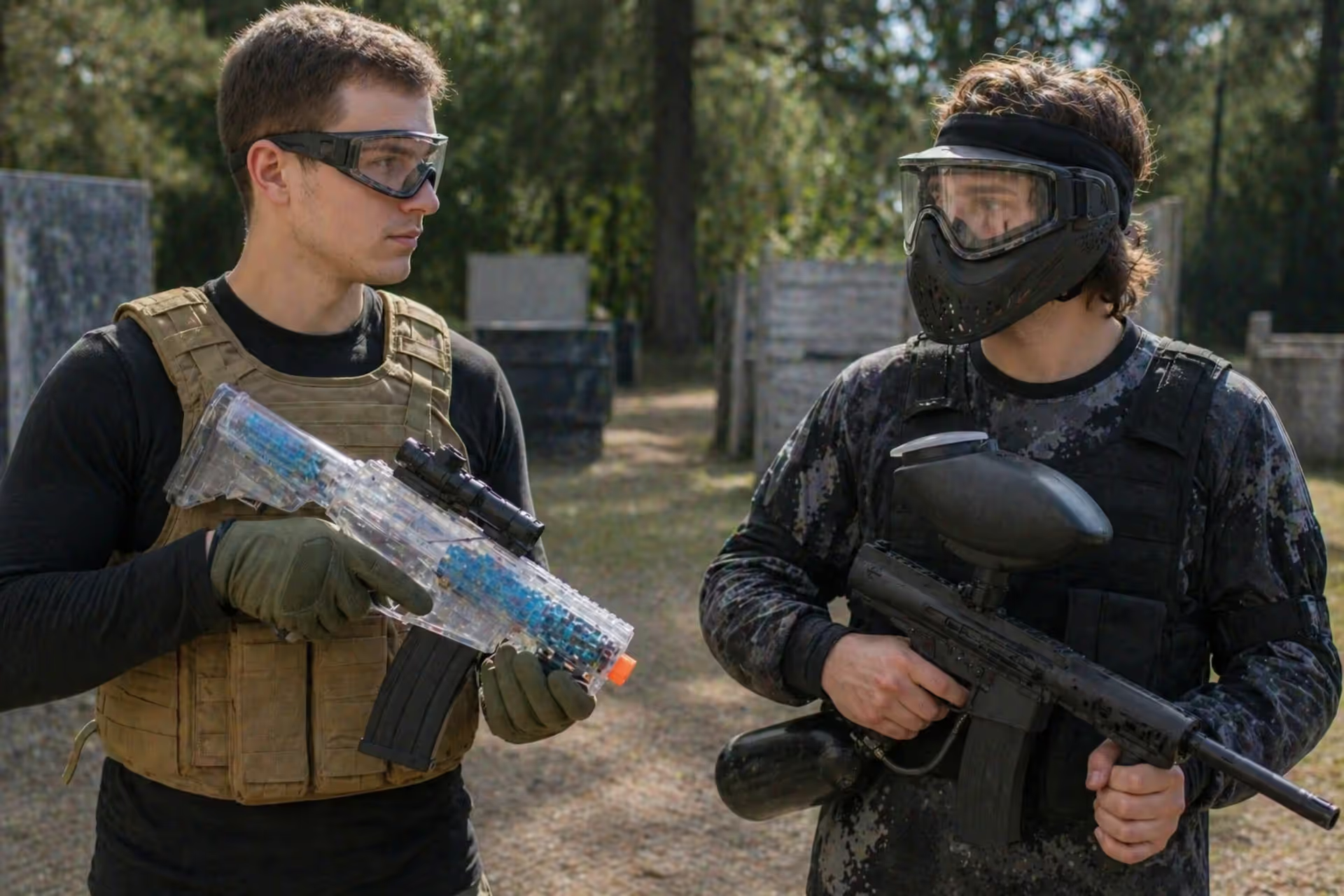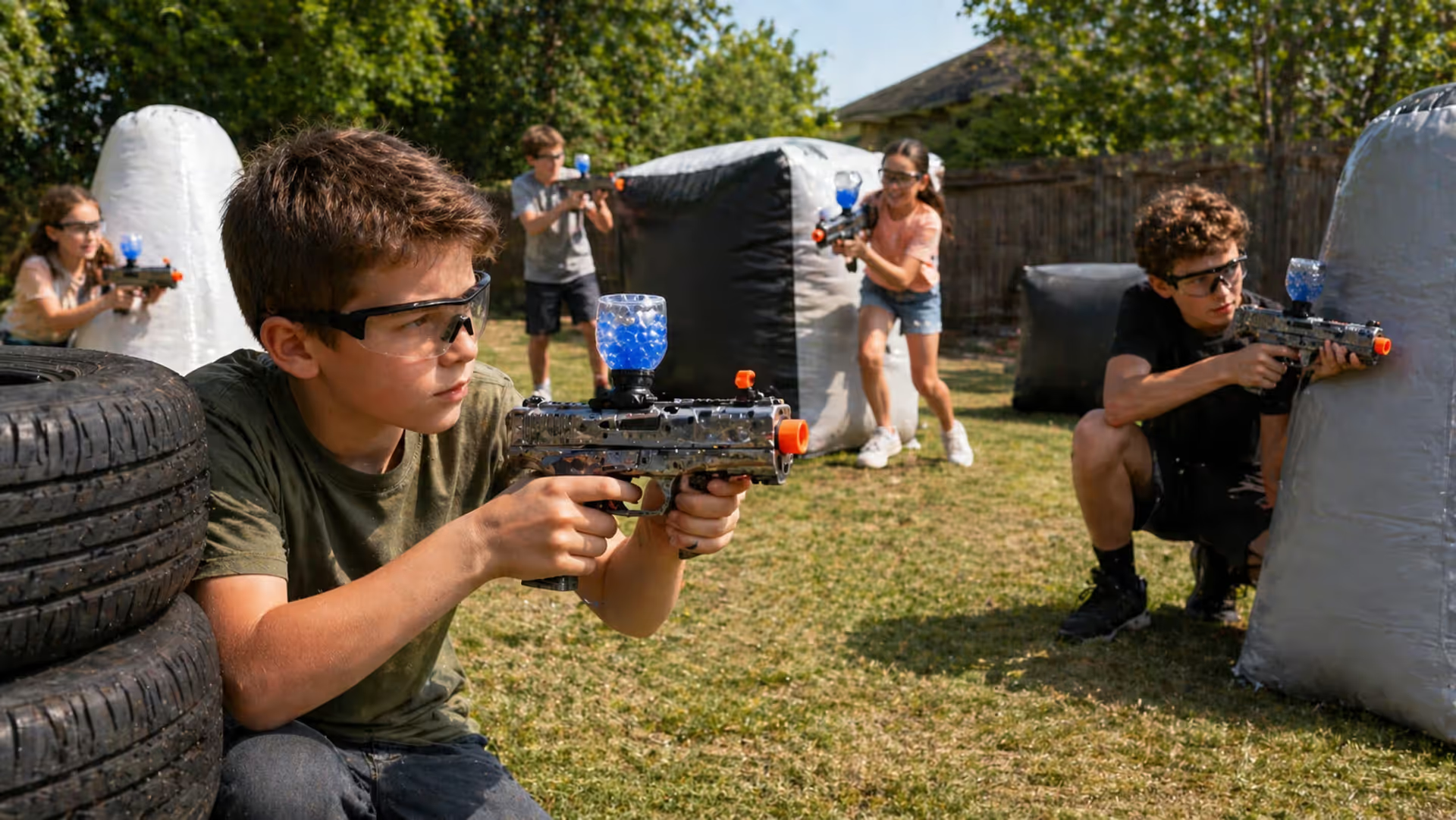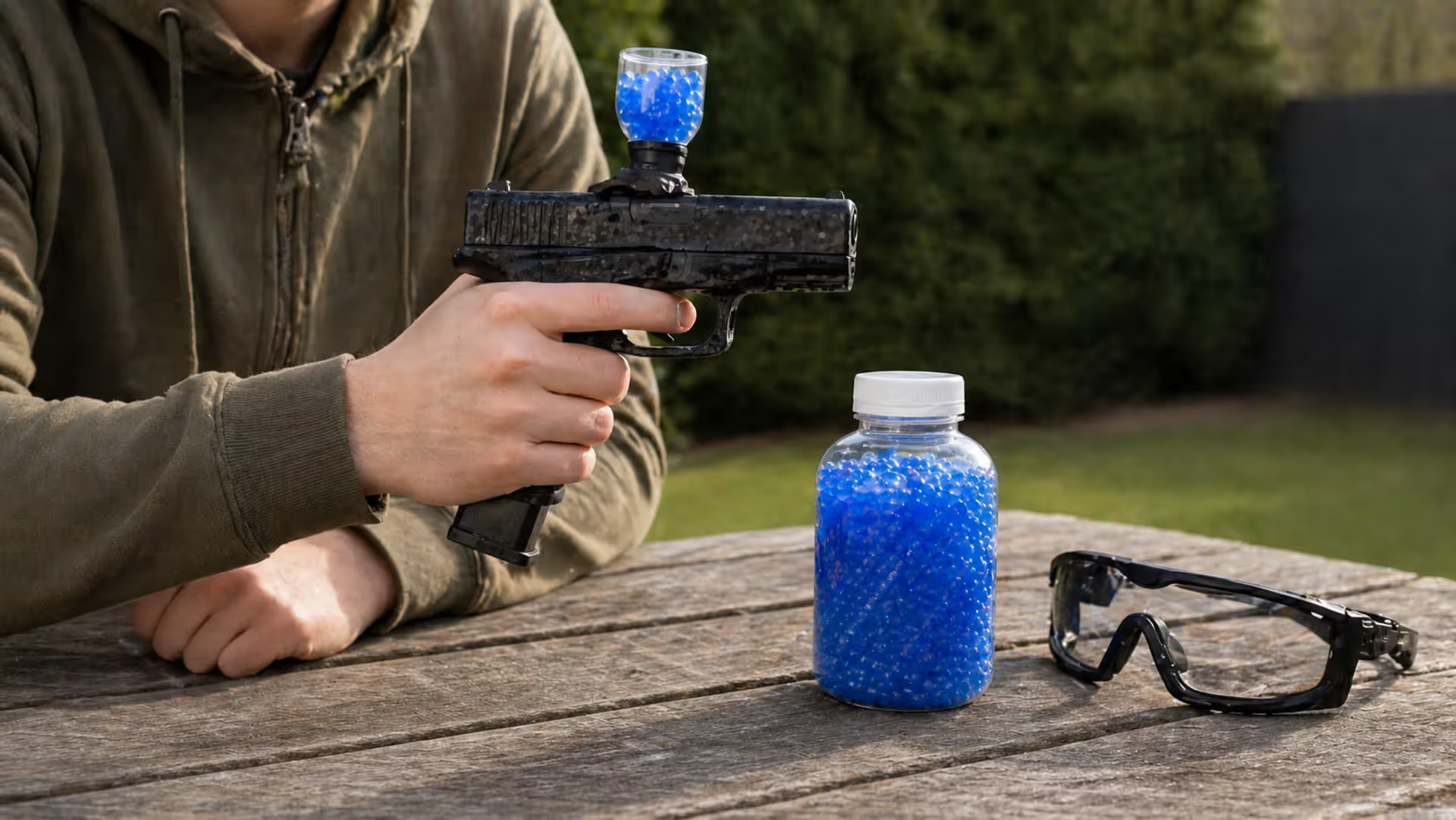
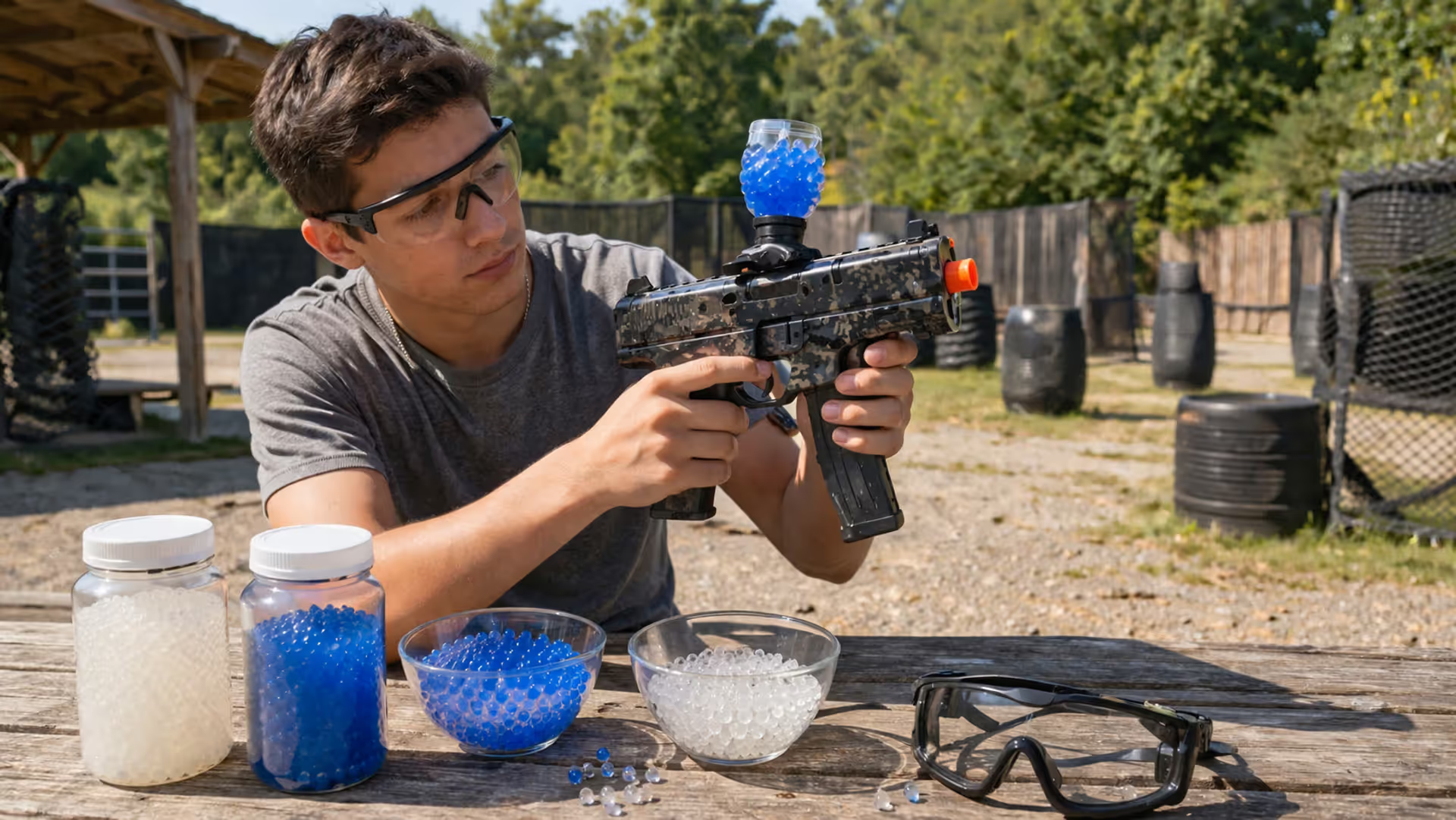
person holding gel blaster with gel balls and safety glasses outdoors
What Is a Gel Blaster?

Content
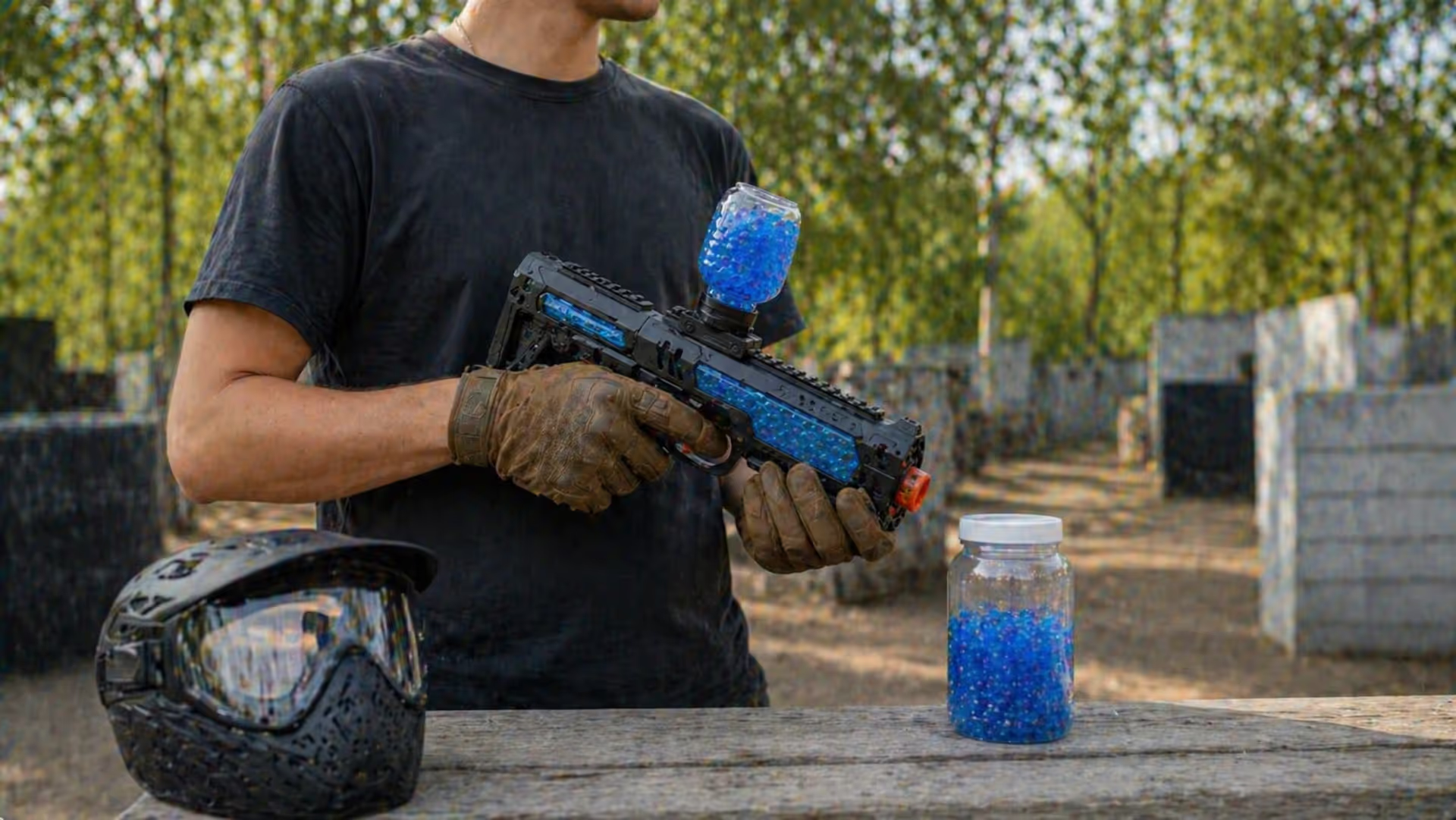
You've probably seen them at sporting goods stores or online—those toy guns that look almost real but fire squishy gel projectiles. Gel blasters exploded in popularity across the US starting around 2019, creating a middle ground nobody knew they wanted between Super Soakers and serious airsoft setups.
Here's what makes them different: instead of hard plastic pellets or messy paint, you're launching water-soaked polymer balls that burst on contact and basically disappear. Think of it as paintball's cleaner, gentler cousin. Before you jump in (or buy one for your teenager), let's break down exactly how these things work and whether they're right for your situation.
Gel Blaster Basics and Definition
At its core, a gel blaster shoots small spheres made from super-absorbent polymer—the same stuff in diapers, actually. When dry, these beads measure about 7-8mm across and feel hard as plastic pellets. Drop them in water for 3-4 hours, though, and they'll swell up to roughly 7.5-8mm while turning soft and gel-like.
The guns themselves? They're battery-operated toys that look like tactical replicas. Some resemble AR-15s, others mimic pistols, but they all share one purpose: recreational shooting that won't break your budget or leave welts all over your friends.
Here's where gel blasters shine practically. A bag containing 10,000 gel balls runs maybe $12. Your buddy with a paintball gun just paid $40 for 500 rounds. When someone tags you, there's no permanent stain ruining your favorite shirt—just a brief sting and some gel fragments that'll biodegrade in a month. BBs from airsoft guns stick around in your lawn forever; gel balls just... don't.
The whole phenomenon started in Asian and Australian markets before crossing the Pacific. By 2020, American retailers couldn't keep them in stock. Parents liked the lower pain factor. Budget-conscious players loved ammunition that costs literally pennies per hundred rounds.
Now for the legal headache. Most states treat these as toys—no different than Nerf guns legally. But New York? Banned. New Jersey? Also banned. Parts of California, particularly LA and San Francisco, have similar restrictions. Some cities require that bright orange barrel tip you see on toy guns. Others restrict public carry entirely.
The penalties aren't minor either. Get caught with one in the wrong jurisdiction and you're looking at confiscation plus fines starting at $500. Before ordering that slick replica online, spend fifteen minutes checking your local ordinances. Laws shifted in eight states just between 2024 and 2026, usually becoming stricter.
Unlike paintball markers that need CO2 tanks or airsoft guns firing hard 6mm plastic at 350+ FPS, gel blasters occupy this weird middle space. Less sting than paintball (we're talking rubber-band-snap level), cheaper than both alternatives, and cleanup involves basically nothing.
How Gel Blasters Fire Projectiles
The mechanics aren't rocket science, but understanding the sequence helps you troubleshoot when things inevitably jam.
Start with ammunition prep. Those rock-hard polymer beads need soaking—minimum three hours, ideally four. Room temperature water works fine. Cold water from the tap? Add an extra hour. Some players use warm water to speed things up, but go too hot and the beads get mushy.
Under-soak them and you'll get projectiles too small for the barrel, causing terrible accuracy. Over-soak past six hours and they become so soft they'll fragment inside the magazine before even reaching the barrel. You'll know you've hit the sweet spot when they feel like those squishy water beads kids play with.
Load your hydrated ammunition into the magazine—anywhere from 100 rounds on pistol mags to 400 on drum magazines. A spring inside pushes balls upward into a feed tube, staging them for action.
Author: Ethan Rowe;
Source: lakestaytents.com
Pull the trigger. That completes an electrical circuit from your battery to a small motor, typically drawing 15-25 watts. The motor spins a gear assembly inside what's called the gearbox (more on that shortly). These gears pull back a piston, compressing a spring behind it.
As the gears keep rotating, they release the piston. That compressed spring launches it forward fast—we're talking 0.1 seconds from trigger pull to shot. The piston compresses air in a cylinder, forcing it through a nozzle. This nozzle does two jobs simultaneously: grabs a gel ball from the feed tube and shoves it down the barrel using that compressed air burst.
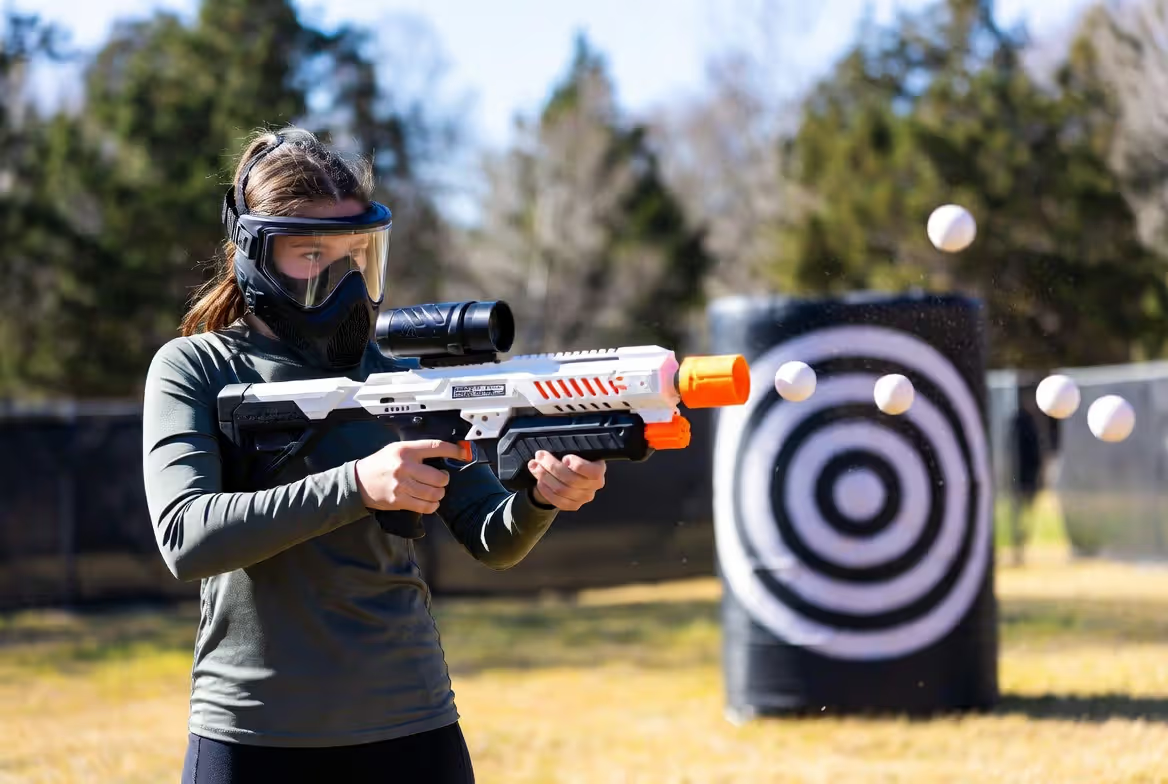
The barrel has a special mechanism (called hop-up) that puts backspin on the ball as it exits. This spin creates lift—same physics as a curveball in baseball—extending your range from maybe 40 feet to 70-80 feet.
After firing, the whole system resets automatically if you're holding the trigger (full-auto) or waits for your next pull (semi-auto). Rate of fire? Depends on your gearbox and battery, but 10-15 rounds per second is typical for stock electric models.
Total flight time from trigger to target at 60 feet: about half a second. Exit velocity usually sits between 150-250 feet per second, which sounds fast until you realize quality airsoft guns hit 350-400 FPS.
Key Internal Components
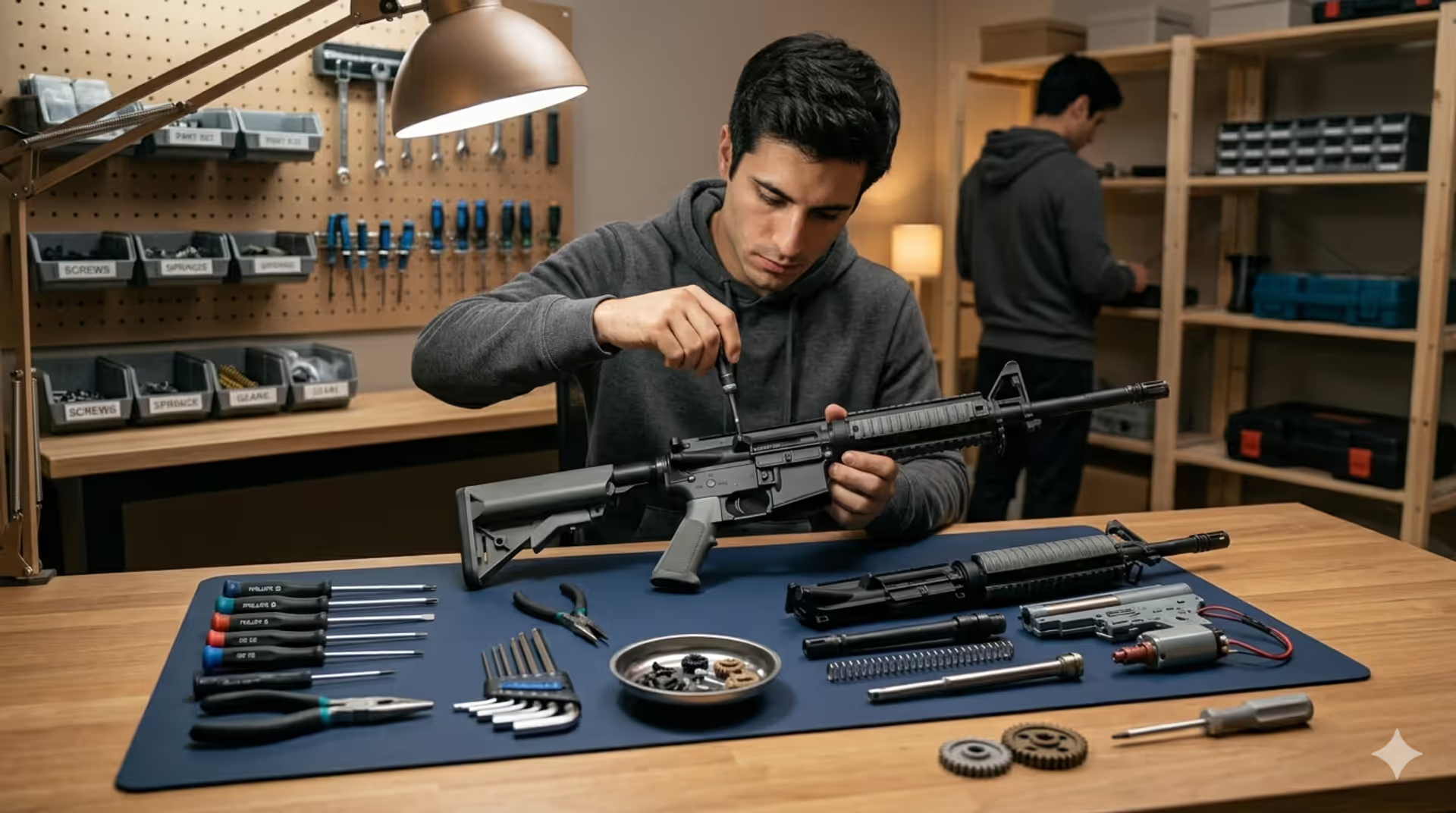
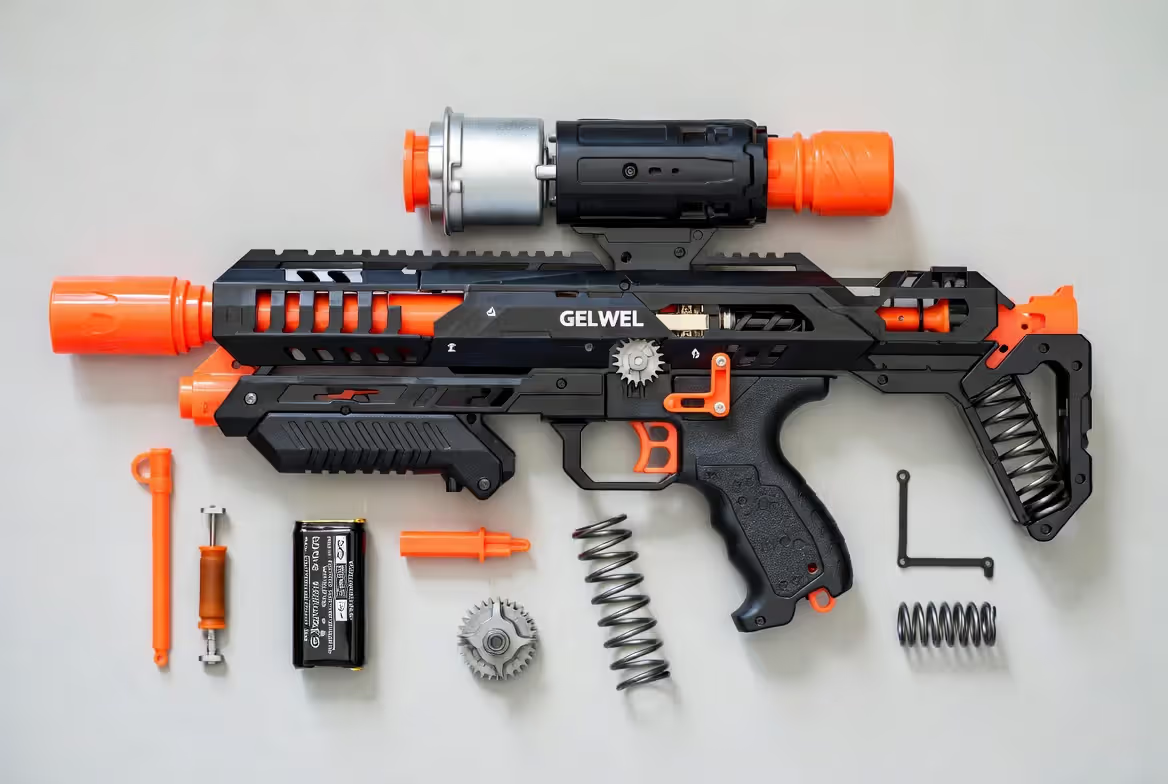
Pop open the gearbox housing and you'll find the heart of an electric gel blaster. Understanding these parts helps when something stops working at 9 PM before tomorrow's game.
Gearbox and Motor System
Think of the gearbox as a tiny transmission. Most gel blasters use three or four hardened steel gears that convert the motor's rotational speed into the back-and-forth piston movement that actually fires projectiles.
You'll see three main gear configurations in the wild:
Standard ratios (18:1 or 16:1 gearing) balance everything nicely. Not too fast, not too slow, and they'll run reliably on a basic 7.4V battery without stressing components. This is what comes in 90% of off-the-shelf blasters under $150.
High-speed setups (12:1 or 13:1) crank out 15-20 rounds per second when paired with decent batteries. They're fun until you realize they're generating heat and wearing down parts twice as fast. Great for competitive play, questionable for longevity.
High-torque gearing (22:1 or 24:1) sacrifices fire rate for pulling power. If you've upgraded to a stronger spring, these prevent your motor from burning out. They're also quieter. But you're getting maybe 8-10 rounds per second tops.
The motor itself spins at 20,000-30,000 RPM when actually working. Budget blasters ($50-80 range) use brushed motors that'll last maybe 200-300 hours before wearing out. Spend $150+ and you'll usually get a brushless motor good for 500-800 hours. That's the difference between one season and three seasons of weekend use.
Common failures? Stripped gears are number one, usually because someone forgot to lubricate. Silicone grease every 5,000-7,000 rounds keeps metal sliding smoothly. Skip it and those gear teeth will round off, leaving you with a motor that spins but doesn't fire. Second most common: piston teeth cracking when you've stuffed in a spring way too strong for the stock setup.
Also, don't throw an 11.1V battery into a blaster designed for 7.4V operation. You'll strip gears inside 2,000 rounds. Yeah, it shoots faster temporarily. Then it doesn't shoot at all.
Barrel and Hop-Up Mechanism
Two barrels exist on every gel blaster. The outer barrel you see? That's cosmetic and structural, giving you something to grip and mount accessories to. The inner barrel actually matters for performance.
Inner barrels run 200-350mm long depending on whether you've got a pistol or rifle-style blaster. Internal diameter sits at 7.5-8mm—just barely wider than your gel ball. Tighter bores (7.5mm) theoretically improve accuracy by reducing wobble, but they jam constantly if your gel balls aren't perfectly uniform. Most manufacturers settle on 7.8mm as the practical middle ground.
Material makes a difference over time. Aluminum barrels are lightweight but develop tiny scratches after a few thousand rounds, degrading accuracy. Brass offers smoother surfaces and holds dimensions better but adds weight to your front end. Premium competition blasters ($200+) often use stainless steel for maximum precision and durability.
Now for the hop-up—this component separates toys from functional recreational equipment. Sitting right where the barrel begins, a small rubber nub presses down on each gel ball's top surface as it passes. This creates friction that makes the ball spin backward (backspin). As the spinning ball flies through air, it generates upward lift through what physicists call the Magnus effect.
Adjustable hop-up lets you dial in perfect spin amount. Too little and your shots are dropping at 30-40 feet. Too much and they'll arc upward, lose velocity, then nosedive before reaching the target. Dialed correctly, you'll see flat trajectories out to 60-80 feet.
That rubber nub (sometimes called a bucking) wears down. After 10,000-15,000 rounds, you'll notice shots becoming inconsistent. Replacement costs $5-12 and takes maybe fifteen minutes with a screwdriver and YouTube tutorial. This is the maintenance item people skip, then wonder why their once-accurate blaster suddenly shoots like a drunken stormtrooper.
Author: Ethan Rowe;
Source: lakestaytents.com
Power Sources and Battery Types
Walk into most gel blaster scenarios and you'll see lithium polymer (LiPo) batteries everywhere. Some entry-level models still accept nickel-metal hydride (NiMH) packs, but LiPos dominate for good reasons.
7.4V LiPo packs are standard issue. Capacity ranges from 1,200-2,000mAh, getting you 800-1,500 shots depending on how trigger-happy you are. These balance performance against component wear, and they're cheap—$15-25 each. Most players buy two or three to rotate through game days.
11.1V LiPo batteries bump your fire rate up 20-30% and make trigger response noticeably snappier. They also accelerate wear on every moving part and generate heat that can warp plastic components. Only use these if your blaster specifically supports them or you've already upgraded to steel-tooth pistons and high-torque motors. Otherwise you're borrowing performance from your gearbox's future lifespan.
Battery placement varies wildly. Pistol-style blasters squeeze small 7.4V 1,000mAh packs into the grip, which works but limits play time. Rifle models hide larger batteries in the stock, handguard, or buffer tube (that thing sticking out the back). Competition setups sometimes use external battery pouches connected by wire—looks dorky but maximizes capacity without adding bulk to the blaster itself.
Charging requires a balance charger designed for LiPo chemistry. Never, ever use a standard wall charger meant for phones or power tools. LiPo cells can swell up, vent toxic gas, or literally catch fire if overcharged. Quality balance chargers run $20-40 and monitor individual cell voltages to prevent dangerous conditions.
Here's something most new users don't know: storage voltage matters hugely for battery life. Don't store LiPos at full charge. Instead, bring them down to 3.8V per cell (7.6V for 2S packs, 11.4V for 3S). Batteries stored fully charged degrade 30-40% faster, cutting total lifespan from 300-400 charge cycles down to maybe 200-250.
Gel Blaster vs Airsoft Comparison
Both platforms serve the weekend warrior crowd, but differences matter when you're choosing which ecosystem to join.
| Specification | Gel Blasters | Airsoft Guns |
| Ammunition | Water-swollen polymer spheres (break down naturally) | 6mm plastic pellets (standard versions don't degrade) |
| Muzzle Velocity | 150-250 feet/second | 300-400 feet/second (field rules differ) |
| Impact Sensation | Mild snap, rarely leaves marks | Noticeable sting, can welt at close distance |
| Ammunition Economics | $8-15 buys 10,000 shots | $15-25 buys 5,000 shots |
| Upkeep Requirements | Regular cleaning and greasing every 5,000 rounds | Frequent hop-up tweaking and barrel maintenance |
| Entry Cost | $40-200 gets you game-ready | $100-400 for reliable AEGs |
| State Regulations | Banned in NY, NJ, some CA municipalities | Usually permitted with orange tip; venue rules vary |
| Post-Game Cleanup | Gel pieces biodegrade on their own | Requires collecting BBs to avoid environmental issues |
The ammunition difference creates the biggest practical divide. Gel balls explode on impact and disappear. No hunting through grass for an hour collecting thousands of plastic pellets. This makes backyard games actually feasible—your neighbors won't find BBs in their garden for the next decade.
Pain levels vary by individual tolerance, but most players peg gel blaster impacts at 40-50% less painful than airsoft at equivalent ranges. Getting shot from 50 feet away feels like someone flicked you firmly with their finger. An airsoft BB from that distance? You'll have a red mark for hours.
Run the numbers if you shoot frequently. Someone burning through 500 rounds every weekend spends roughly $2-3 monthly on gel ammunition versus $6-8 for airsoft pellets. Over a year, that's $40-60 in savings—enough for another battery or a nice red dot sight.
Maintenance demands are comparable between platforms. Both need periodic cleaning, lubrication, parts replacement. Gel blasters require slightly more frequent barrel cleaning because gel residue builds up. Airsoft demands careful hop-up adjustment whenever you switch BB weights.
The legal landscape keeps shifting. Eight states changed their regulations between 2024 and 2026, mostly tightening restrictions. Several introduced legislation treating gel blasters identically to airsoft—orange barrel tips required, public carry prohibited. Check your current local laws, not what some forum post from 2023 says.
Gel blasters opened up recreational shooting to people who found paintball too messy or airsoft too painful. We tracked 35% growth in family participation since 2024, especially parents bringing kids aged 10-14 into the sport. The lower barriers—both financial and physical comfort—make these ideal for teaching basic shooting fundamentals before someone transitions to airsoft or other platforms.
— Marcus Chen
Types of Gel Blaster Mechanisms
Three power systems dominate the market, each with trade-offs worth understanding before you buy.
Spring-powered models work entirely mechanically. You manually pull back a charging handle or bolt, compressing a spring. Pull the trigger and that spring drives the piston forward, firing one shot. Then you cock it again.
These cost $25-50, need zero batteries, and function in any weather including freezing temperatures that kill battery performance. They're basically unkillable—no electronics to short out, no motors to burn out.
The downside? Rate of fire tops out at maybe 20-30 rounds per minute if you're really hustling. They suit younger kids learning the basics or budget buyers wanting something that just works. But competitive players find them laughably slow—you'll get overwhelmed in any serious engagement.
Electric blasters (borrowing design language from airsoft AEGs) own 75-80% of the market. These battery-powered guns automatically cycle after each shot, offering semi-auto or full-auto modes. Pricing spans from $60 for basic models up to $250 for competition gear with metal gearboxes and programmable trigger systems.
Electric models offer real versatility. Swap batteries in thirty seconds and keep playing. Upgrade paths include stronger springs, precision barrels, high-torque motors. The learning curve stays gentle—most people figure out operation in fifteen minutes.
Downsides center on battery dependency and electrical complexity. Dead battery mid-game means you're done until recharging. Water getting into electrical bits causes shorts, though quality models include sealed battery compartments and weather-resistant motor housings.
Gas-powered gel blasters use compressed CO2 cartridges or green gas (propane-based fuel) to launch projectiles. These replicate real firearm mechanics more accurately than electric versions, including slide blowback and realistic trigger pull. Expect to pay $120-300+ for full-metal replicas.
Gas systems deliver satisfying recoil simulation and authentic handling. Each trigger pull releases measured gas, cycling the slide or bolt mechanically. This feedback appeals to users prioritizing realistic training value over pure performance.
Temperature sensitivity kills gas blasters in cold weather, though. Performance drops 20-30% when ambient temperature falls below 60°F as gas pressure decreases. That 80-foot range in summer becomes 50-60 feet in winter. Operating costs also stack up—each 12-gram CO2 cartridge ($1-2) provides maybe 40-60 shots, making cost-per-round three to four times higher than electric setups.
Safety Considerations and Best Practices
Running gel blasters responsibly means following protocols that prevent injuries and legal trouble nobody wants.
Eye protection isn't optional—it's mandatory. Gel balls moving at 180-220 FPS can scratch your cornea, damage your retina, or permanently impair vision if they nail an unprotected eye. Everyone within 100 feet of active shooting needs ANSI Z87.1+ rated safety glasses or full-seal goggles.
Regular sunglasses don't cut it. Neither do prescription glasses. They lack side shields and might shatter on impact. Proper shooting glasses cost $12-30 and include anti-fog coating plus UV protection. Full-face masks ($25-45) add protection for teeth and nose—strongly recommended for anyone under 16.
Age recommendations depend on model power and supervision quality. Most manufacturers suggest minimum ages of 12-14 for electric blasters. Spring-powered models might work for supervised 10-year-olds. But velocity matters more than birthday count—blasters under 150 FPS present lower injury risk regardless of user age.
Keep supervising until users consistently demonstrate trigger discipline, muzzle awareness, and rule-following. New users often treat gel blasters casually because the projectiles seem harmless. Wrong mindset. Apply the same safety mentality you'd use for airsoft or paintball.
Velocity caps for organized games typically max out at 250 FPS outdoors and 200 FPS indoors. These limits balance effective range against safety margins. Some competitive leagues enforce minimum engagement distances (15-20 feet) for high-velocity models to prevent point-blank injuries.
Chronograph testing before events ensures compliance. Velocity can creep upward after spring upgrades or battery swaps. A blaster shooting 230 FPS with a 7.4V battery might hit 270 FPS with an 11.1V pack, exceeding field limits and creating liability issues.
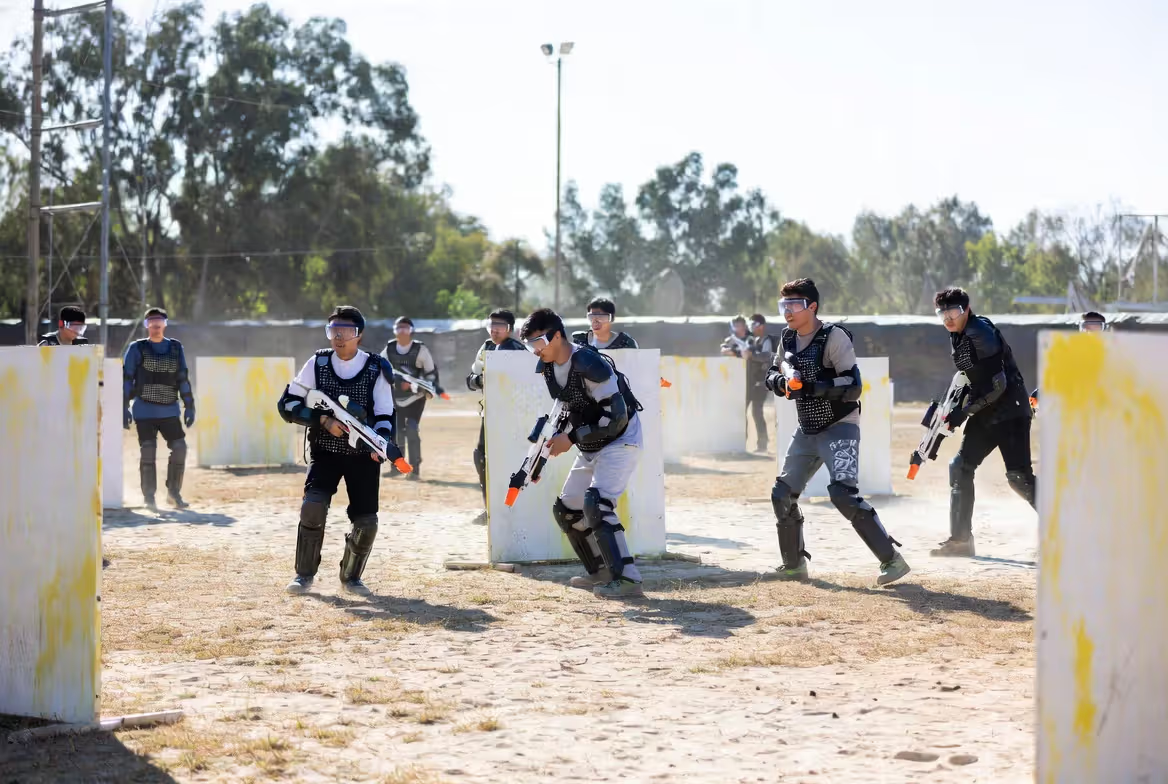
Playing locations need careful selection. Public spaces are off-limits—gel blasters can be mistaken for real firearms, triggering police responses and criminal charges. Residential backyards work if you've got full fencing and informed neighbors. Dedicated gel blaster fields exist in most metro areas now, offering structured play with insurance coverage and referee oversight.
Author: Ethan Rowe;
Source: lakestaytents.com
Never transport gel blasters visibly. Use opaque cases or bags, store them in your trunk rather than back seat. Several states impose serious penalties for brandishing replica weapons in public—fines starting at $200 and climbing past $1,000 for first offenses.
Gel balls biodegrade naturally within 4-6 weeks, but concentrated piles can temporarily smother grass or garden plants. Rotate playing areas to prevent dead spots from forming in your lawn.
Frequently Asked Questions About Gel Blasters
Gel blasters occupy an interesting sweet spot in recreational shooting. They're cheaper to operate than paintball, gentler than airsoft, and require virtually no cleanup after use. The mechanics—electric motor spinning gears that compress air to launch biodegradable projectiles—keep things simple enough for easy maintenance with basic tools.
Choosing between gel blasters and alternatives like airsoft comes down to priorities. If you value convenience, lower pain levels, and family-friendly operation, gel blasters make perfect sense. Players seeking maximum realism, longer effective range, or participation in established competitive circuits might prefer airsoft despite higher costs and cleanup hassles.
Safety practices remain critical regardless of platform choice. Quality eye protection, appropriate playing locations, and respect for local regulations prevent injuries and legal headaches. As the gel blaster market continues maturing, expect ongoing improvements in accuracy, durability, and performance that'll narrow gaps with established shooting sports while keeping the unique advantages that drove initial popularity.
Understanding how these devices actually function—from gel ball hydration mechanics through gearbox operation to hop-up adjustment—lets you maintain equipment properly, fix common problems, and make smart upgrade decisions. Whether you're doing backyard recreation, organized competition, or introducing younger family members to shooting fundamentals, gel blasters deliver a compelling mix of performance, affordability, and accessibility that keeps expanding their presence in American recreational culture.