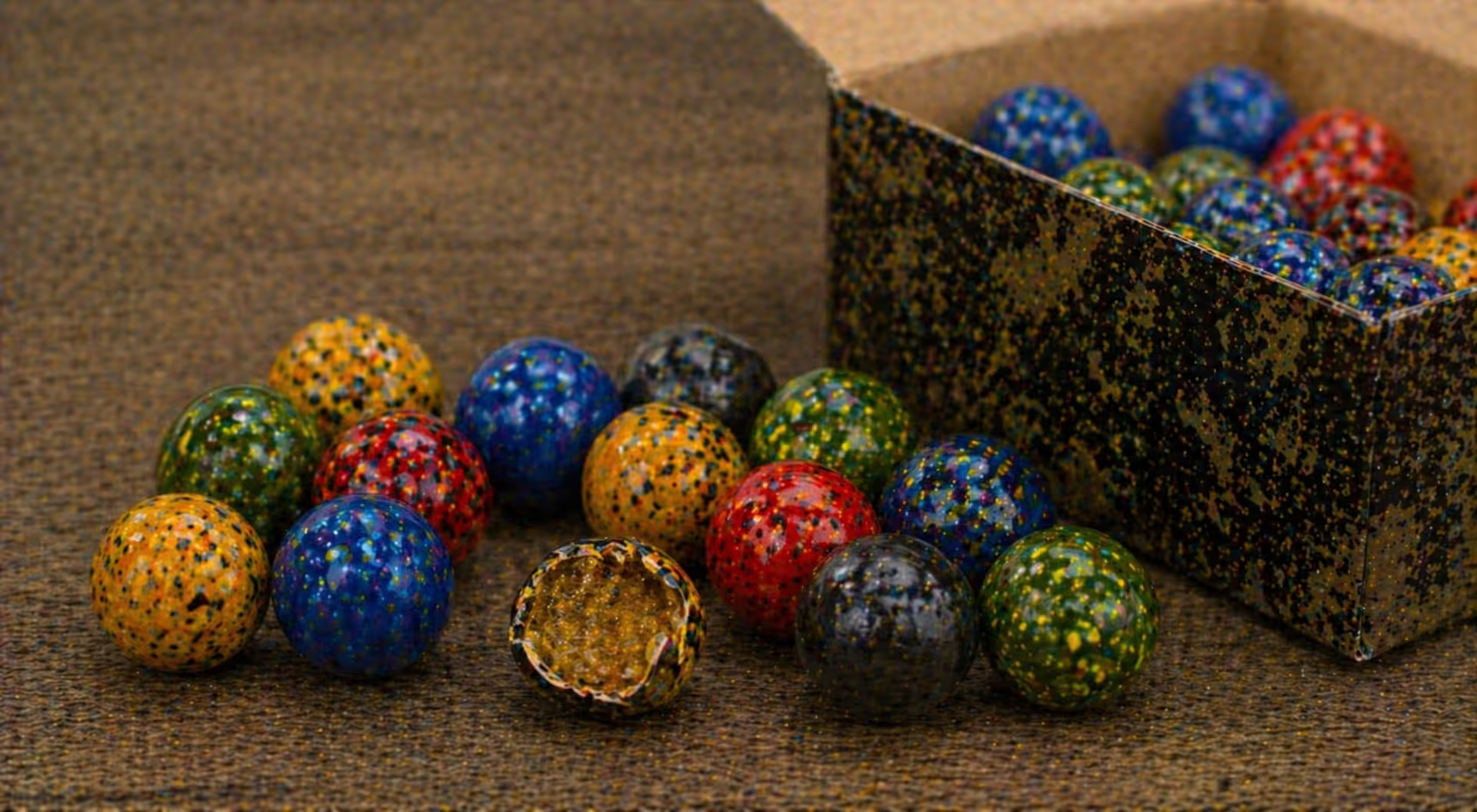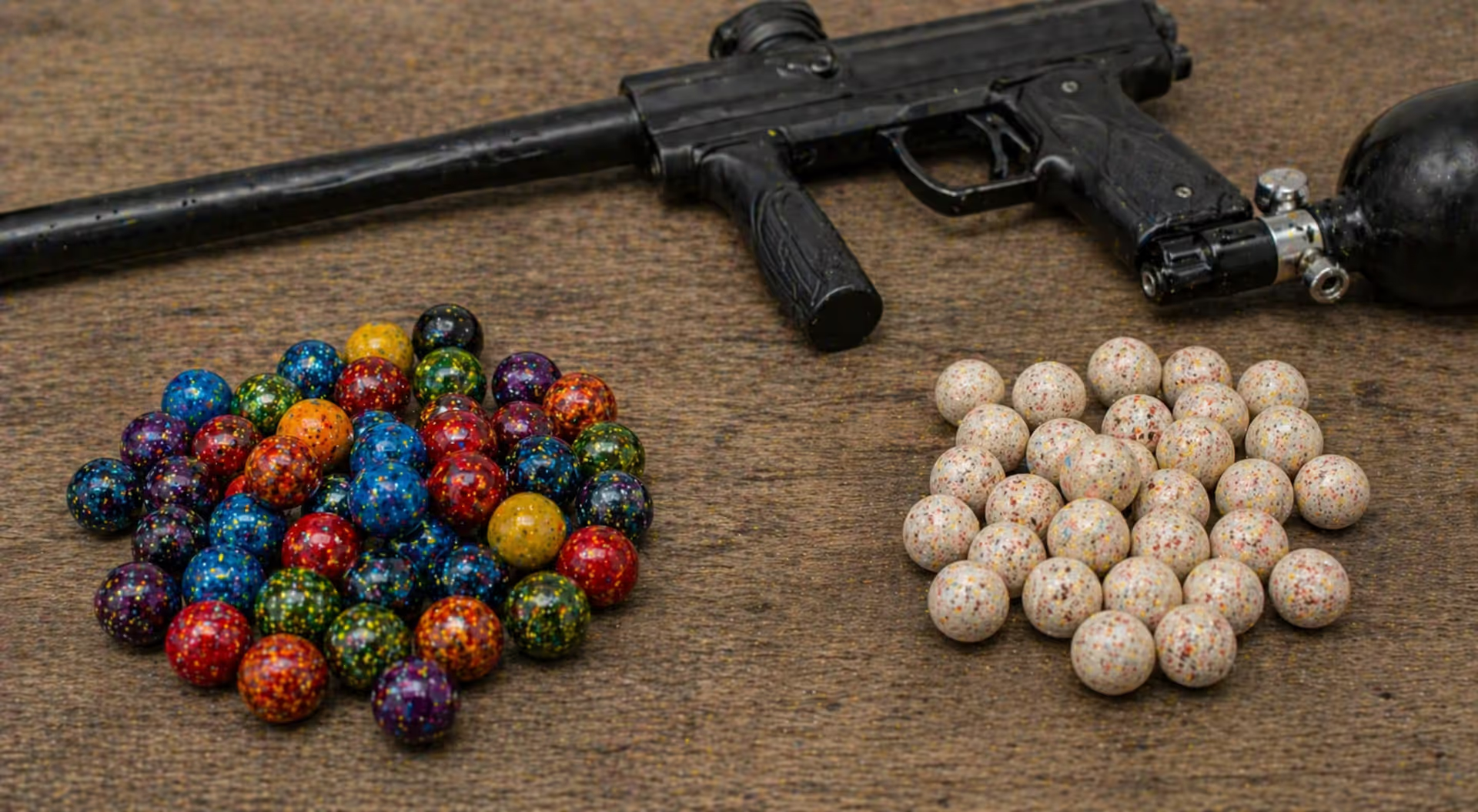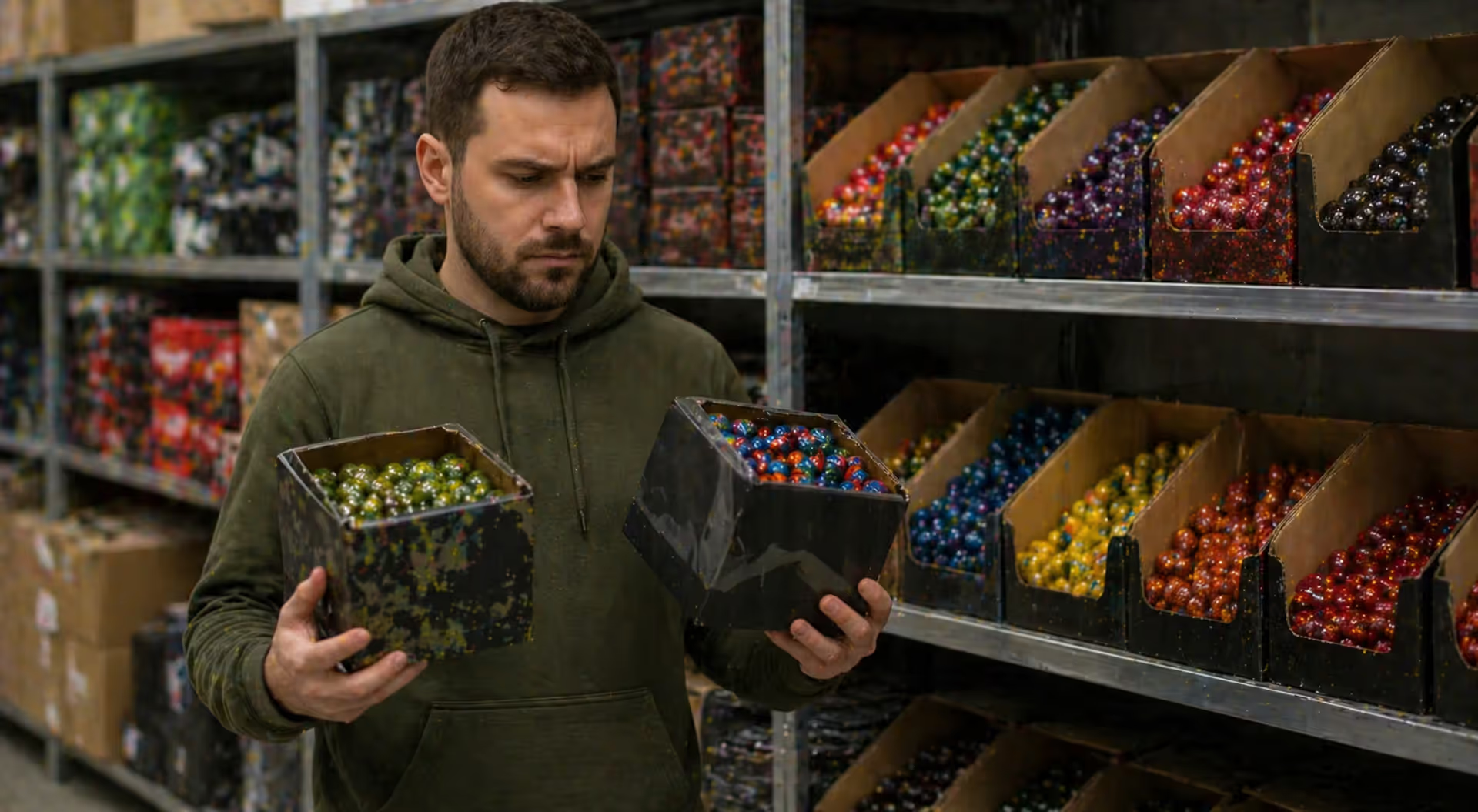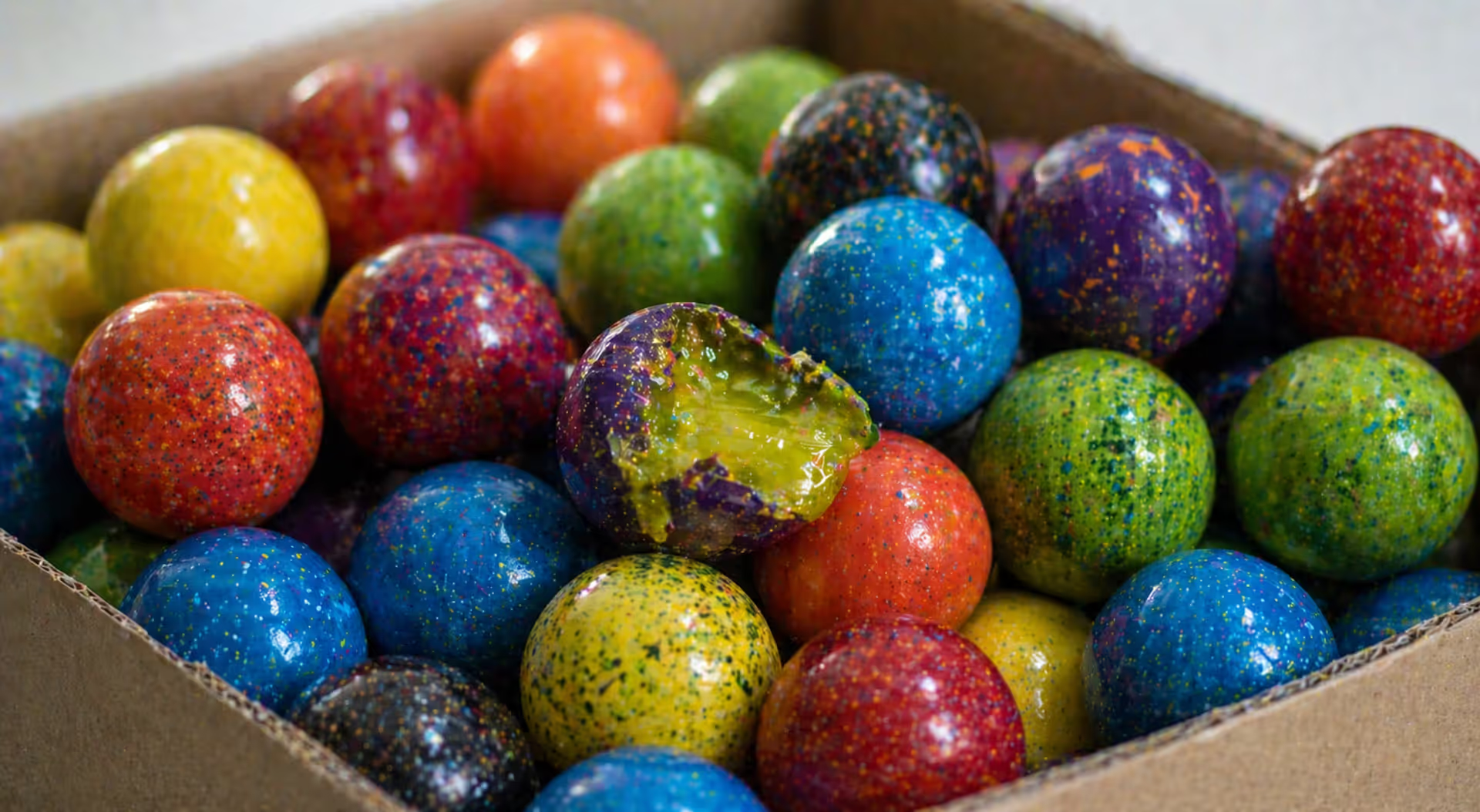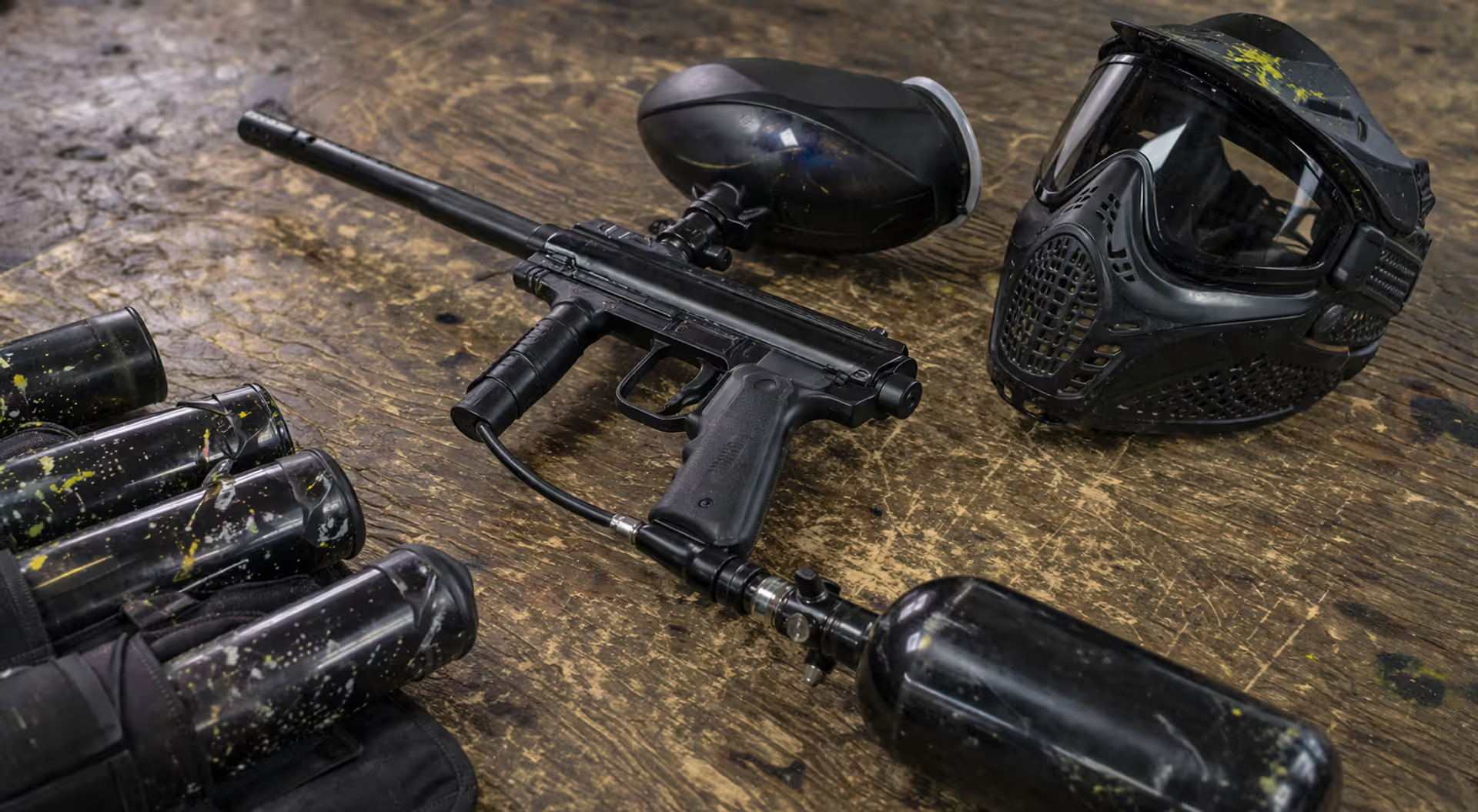
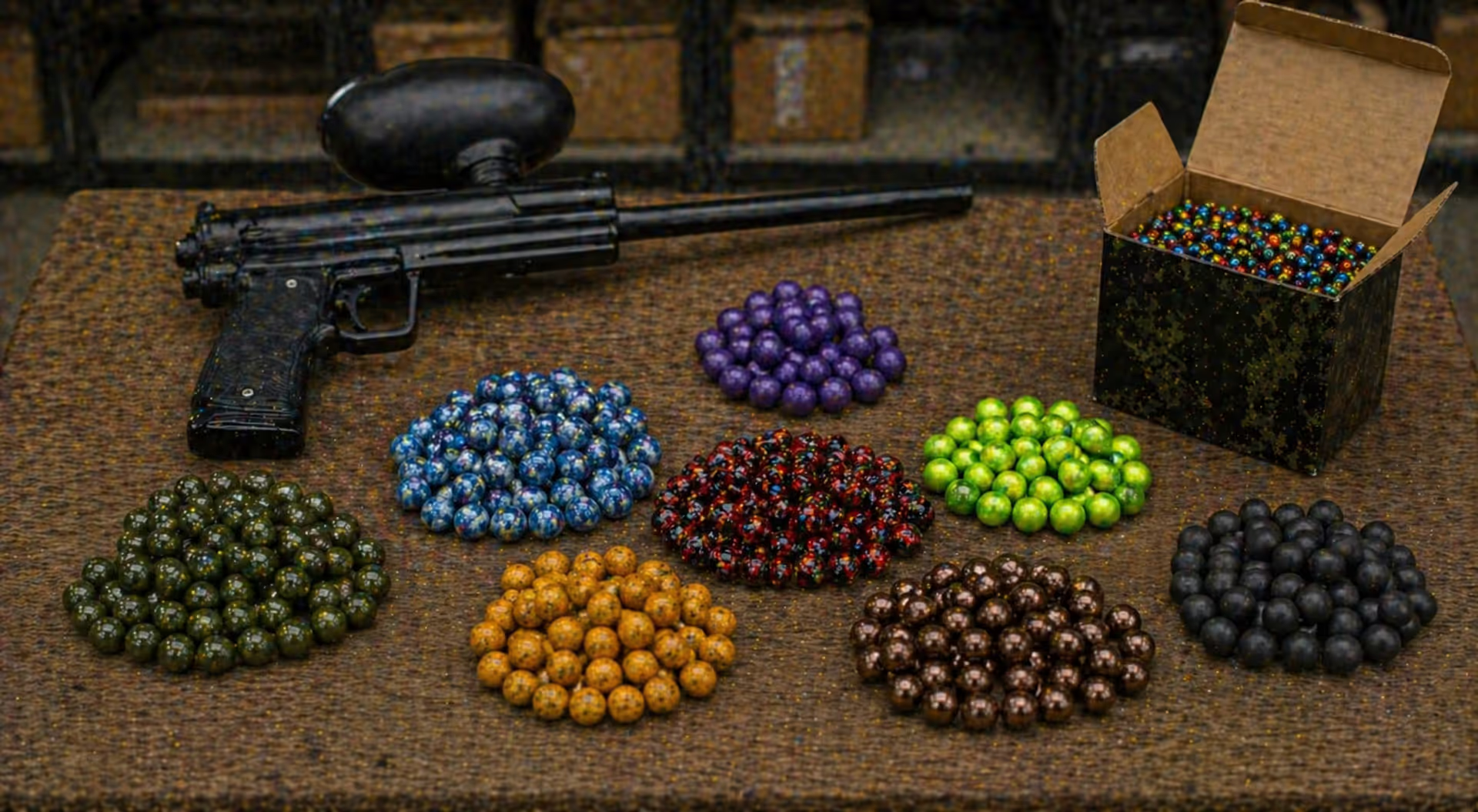
different types of paintballs and gear laid out showing variety and selection
Types of Paintballs Guide

Content
Most players grab whatever paintballs their local field sells without thinking twice. Then they wonder why shots curve left after 60 feet, or why their hopper sounds like a popcorn machine mid-game. The paintball you load matters—sometimes as much as the marker you're shooting.
Here's what happens when you mismatch ammo to conditions: barrel breaks coat your internals in sticky goo. Bounces rob you of eliminations you earned. Dimpled rounds fly like knuckleballs. Understanding what separates a $25 case from an $85 case (beyond the price tag) changes how you play.
What Are Paintballs and How They're Made
Two parts make up every paintball: gelatin on the outside, colored liquid inside. Think of the shell like a dissolvable medicine capsule—same food-grade gelatin, different application.
Manufacturers create shells using rotary die machines that form two gelatin hemispheres. Picture a massive Pez dispenser operation. These halves get filled with liquid (polyethylene glycol mixed with vegetable oil, food dye, and proprietary additives), then pressed together at the seam. The whole process happens fast—quality lines produce thousands per minute.
You'll find .68 caliber most commonly (17.3mm across). Low-impact fields use .50 or .43 caliber for younger players. Those smaller rounds hurt less but also limit your effective range.
Quality control separates premium from junk. Shell thickness, how round each ball is, fill consistency—manufacturers obsess over these three factors. Top-tier brands keep measurements within 0.001 inches. Budget producers? They're happy if paintballs are merely sphere-ish.
Shell thickness creates a Goldilocks problem. Too thick means bounces instead of breaks. Too thin means your loader becomes a paint mixer. Getting it just right depends on production environment—temperature and humidity shift gelatin properties during manufacturing. That's why paintballs from the same pallet can shoot differently in July versus November.
Author: Caleb Varden;
Source: lakestaytents.com
Paintball Categories by Use
Recreational and Practice Paintballs
Practice paint costs less because manufacturers care less about perfection. Shells run thicker to survive getting tossed around in truck beds and basement storage. The fill uses cheaper, goopier liquid that's harder to wash out but won't drain your wallet.
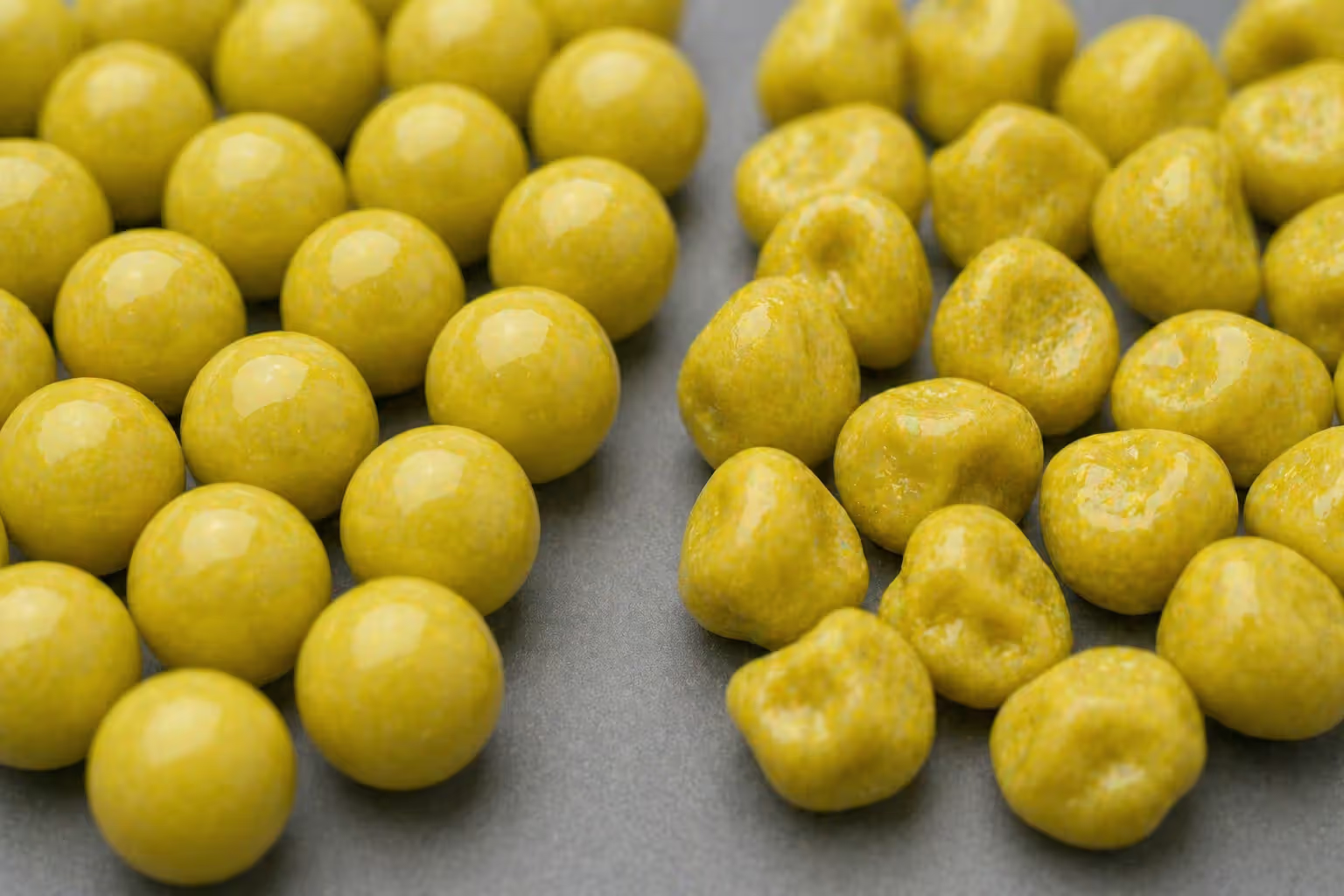
Roundness? Forget about it. You'll see visible seam lines, occasional dimples, slight ovals. Past 50 feet, these balls do whatever they want—hook left, dive right, drop like stones. For plinking cans in your backyard, who cares? For anything competitive, it's a nightmare.
Cases run $20-35. Compare that to $50-80 for mid-grade, and the appeal becomes obvious. Just don't kid yourself about accuracy. I've watched players burn through 200 rounds trying to hit a target at 70 feet with practice paint, then nail it in three shots after switching to better ammo.
Author: Caleb Varden;
Source: lakestaytents.com
Tournament-Grade Paintballs
Tournament paint comes from climate-controlled facilities where technicians actually reject misshapen rounds. Shells get engineered thin and brittle—designed to pop on jerseys while surviving 30 balls-per-second feeding rates.
Fill formulas change seasonally. Winter blends stay brittle when it's 40°F outside. Summer versions resist getting mushy during August heat waves. Serious players refrigerate their tournament paint before events (let it warm up before shooting to avoid condensation issues).
Why spend double? Consistency. Every shot behaves like the last one. That predictability lets you focus on angles and timing instead of guessing where your paint will actually go.
The difference between mid-grade and tournament paint isn't just accuracy—it's consistency. With premium paintballs, you know exactly how each shot will behave. That predictability lets you focus on strategy instead of compensating for erratic ammo.
— Marcus Chen
Outdoor vs. Indoor Paintballs
Outdoor play beats up your paint. Longer shots, weather changes, hitting bushes, bouncing across dirt—shells need extra toughness. You'll want brighter fill colors too. Yellow, orange, pink show up clearly against trees and grass.
Indoor arenas flip the requirements. Shorter ranges (rarely over 40 feet), stable temperature, padded bunkers. You can use fragile tournament paint that'd shatter outdoors. Fill color matters less inside, though lighter shades pop better against dark walls.
Weather creates chaos outdoors. Humidity softens shells. Cold makes them brittle. Smart players check forecasts and adjust accordingly. I've switched paint mid-day when afternoon heat turned morning's perfect conditions into a break-fest.
Paintball Quality Levels Explained
Three tiers dominate the market. Each serves different needs (and budgets).
Budget paint sacrifices everything for cost. Shells measure anywhere from .683 to .688 caliber—massive variance that kills accuracy. Roundness deviates several thousandths of an inch. These work fine for casual backyard stuff or barrel breaking-in. Don't expect tight groups. Shell thickness runs high to survive shipping abuse. You're paying $20-35 per case.
Mid-grade occupies the sweet spot. Tolerances tighten to .681-.684 caliber, fitting barrels better. Shells are moderately brittle—fragile enough to mark opponents, tough enough for most hoppers. Roundness improves dramatically, giving you predictable flight to 75-80 feet. This is where recreational players should live. $40-60 per case.
Tournament paint represents manufacturing precision. Tolerances hit .679-.682 with minimal spread. Every ball gets weighed and measured. Shell brittleness gets calibrated for specific velocity ranges (usually 280-290 fps). Roundness approaches perfect spheres. Fill formulas are proprietary, engineered for marking and washability. $65-90 per case.
| Quality Tier | Price Range | Shell Thickness | Roundness Tolerance | Best For | Common Brands |
| Budget/Practice | $20-35/case | Thick (0.004-0.005") | ±0.008" deviation | Backyard games, target practice | Valken Graffiti, JT Splat Master |
| Mid-Grade | $40-60/case | Medium (0.003-0.004") | ±0.004" deviation | Weekend play, scenario events | Valken Redemption, Empire Marballizer |
| Tournament | $65-90/case | Thin (0.002-0.003") | ±0.001" deviation | Competitive tournaments | GI Sportz 4-Star, Valken Fate, Empire Ultra Evil |
Shell brittleness affects more than target marking. Overly brittle rounds explode in aggressive hoppers or during full-auto bursts, creating barrel breaks that force field cleanings. Insufficient brittleness means bounces, especially when velocity drops at range. Quality manufacturers test across temperature ranges and velocity settings to nail the sweet spot.
Author: Caleb Varden;
Source: lakestaytents.com
Paintball Shell Colors and What They Mean
Shell color serves mostly aesthetic purposes. The gelatin base accepts food-safe dyes easily, so manufacturers produce virtually any color. Players pick based on team colors, visibility preferences, or personal taste. Performance-wise? Color doesn't change how paint flies or breaks.
White Paintballs
White shells pop in low-light and indoor play. The bright surface helps you track shots mid-flight, adjusting aim in real-time. White also shows quality issues clearly—dirt, dimples, defects become obvious before loading.
The drawback? White screams your position in wooded outdoor fields. Players running stealth-heavy scenarios often avoid white shells, preferring options that blend with foliage. But for arena play? White dominates.
Black Paintballs
Black shells offer minimal flight visibility—tactical advantage in certain outdoor situations. Opponents get fractionally less warning when they can't track incoming rounds easily. Dirt and paint residue also hide better on black shells, keeping your ammo looking cleaner.
You'll struggle tracking your own shots, though. Makes range estimation and accuracy adjustment harder. Drop a black paintball on dark turf and good luck finding it. Lost ammo adds up over time.
Pink and Specialty Color Paintballs
Pink shells gained popularity through charity events and breast cancer awareness games. Beyond that, you'll find blue, green, orange, yellow, purple, even multi-color swirls. These specialty shells function identically to standard colors—dye doesn't affect gelatin properties.
Some players match shell to fill color for visual effect. Others deliberately mismatch for unique marking patterns. Tournament rules rarely restrict shell colors, though individual fields might have preferences or requirements.
| Shell Color | Flight Visibility | Common Uses | Advantages | Drawbacks |
| White | Very high | Indoor arenas, night games | Track shots easily, spot defects | Visible in woods |
| Black | Very low | Outdoor tactical play | Opponents see less warning | Can't track your shots well |
| Pink | High | Charity events, personal choice | Unique look, good visibility | Less common, limited selection |
| Yellow/Orange | Extremely high | Outdoor, training drills | Maximum visibility | May conflict with team colors |
| Multi-color | Varies | Casual recreational play | Eye-catching appearance | No tactical benefit |
Paintball Fill Colors and Their Purpose
Fill color operates separately from shell color. Liquid inside gets dyed any shade imaginable—yellow, pink, orange, blue, green, purple, plus specialty UV-reactive formulas that glow under black light.
Fill's job? Creating visible marks when shells break. Bright colors (yellows, oranges, pinks) show against most surfaces. Darker fills like blue or purple work on light clothing but disappear against dark jerseys or dirt.
Washability separates quality from garbage. Good paintballs rinse clean with cold water, leaving zero permanent stains. Cheap stuff uses dyes that set into fabric, especially when heated. Always test new brands on old gear before risking expensive jerseys.
UV-reactive fills add excitement to night games or black-light arenas. These formulations contain fluorescent compounds that glow bright under UV illumination, making hits unmistakable in darkness. Trade-off? Higher cost and sometimes tougher cleanup compared to standard fills.
Fill thickness affects marking patterns. Thinner fills spread readily on impact, creating larger visible marks. Thicker fills spread less dramatically but resist misting during flight—reducing false hits from spray. Tournament organizers sometimes specify viscosity requirements for fairness.
Does fill color influence referee calls? Players swear certain colors get noticed more easily. Pink and yellow remain popular in competitive play, possibly because they contrast well against most backgrounds. Scientific evidence? None. But perception drives purchasing decisions anyway.
How to Choose the Right Paintball Ammo
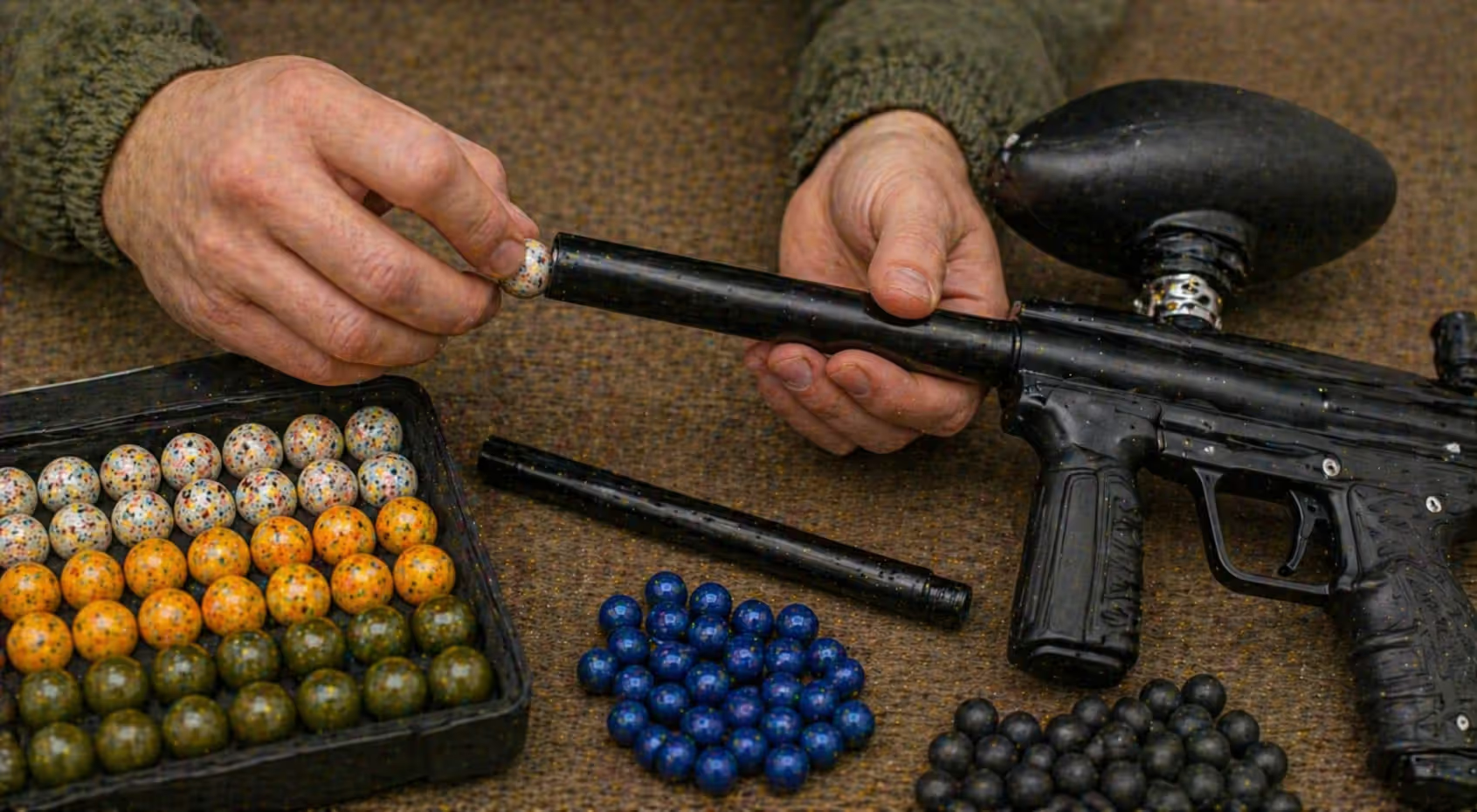
Start with your marker's specifications. Most modern markers handle .68 caliber sized .679-.684 inches, but check your barrel bore. Proper paint-to-barrel match creates slight resistance when you blow through the barrel with a ball inside—not rolling freely, not requiring force. Wrong sizing kills accuracy and increases breaks.
Field conditions dictate shell toughness needs. Outdoor fields with brush and rough terrain demand tougher shells. Indoor arenas with smooth hoppers and close ranges accommodate fragile tournament options. Weather dominates outdoor decisions—humidity requires thicker shells, cold needs formulations that stay brittle below freezing.
Budget constraints matter. Shooting 500 rounds per session? Tournament paint at $80 per case costs $0.16 per shot. Practice paint at $30 drops that to $0.06 per shot. For high-volume recreational play, mid-grade offers the best cost-performance ratio. Save tournament paint for events where accuracy decides outcomes.
Skill level influences choice more than players admit. Beginners benefit from forgiving mid-grade paint that breaks reliably without requiring perfect barrel matches or delicate handling. Advanced players can leverage tournament consistency to maximize accuracy advantages. Premium paint won't make you better—it just removes one variable.
Storage conditions affect longevity. Sealed cases in climate-controlled spaces (60-70°F, moderate humidity) maintain quality for months. Opened bags deteriorate faster as moisture softens shells. Never store paintballs in hot cars, garages, or direct sunlight. Heat causes dimpling and sticking. If your paintballs show flat spots or feel tacky, they're done.
Author: Caleb Varden;
Source: lakestaytents.com
Marker operating pressure matters for shell selection. High-pressure markers (800+ psi) may need slightly thicker shells to prevent barrel breaks. Low-pressure systems (150-300 psi) work better with fragile tournament options. Modern electro-pneumatic markers with gentle bolts can handle the most delicate paint. Mechanical blowbacks need tougher stuff.
Match paintball quality to event importance. Weekend recreational games? Mid-grade works fine. Regional tournament? Invest in premium. Breaking in equipment or practicing snap-shooting? Practice-grade saves money without sacrificing training value.
FAQ
Selecting appropriate paintballs involves balancing quality, cost, and conditions rather than blindly buying the cheapest or most expensive option. Practice rounds serve their purpose for high-volume recreational shooting. Tournament paint delivers consistency serious competitors need. Most players find mid-grade provides best overall value for regular play.
Match shell and fill characteristics to your specific situation—outdoor conditions, marker specifications, skill level all influence which paint performs best. Proper storage extends paintball life and maintains performance, protecting your investment regardless of quality tier.
The right paintball choice won't transform your game overnight. The wrong choice creates unnecessary frustration. Invest in quality appropriate to your needs, store ammo properly, focus on fundamentals that actually improve performance. Your accuracy will reflect the difference.