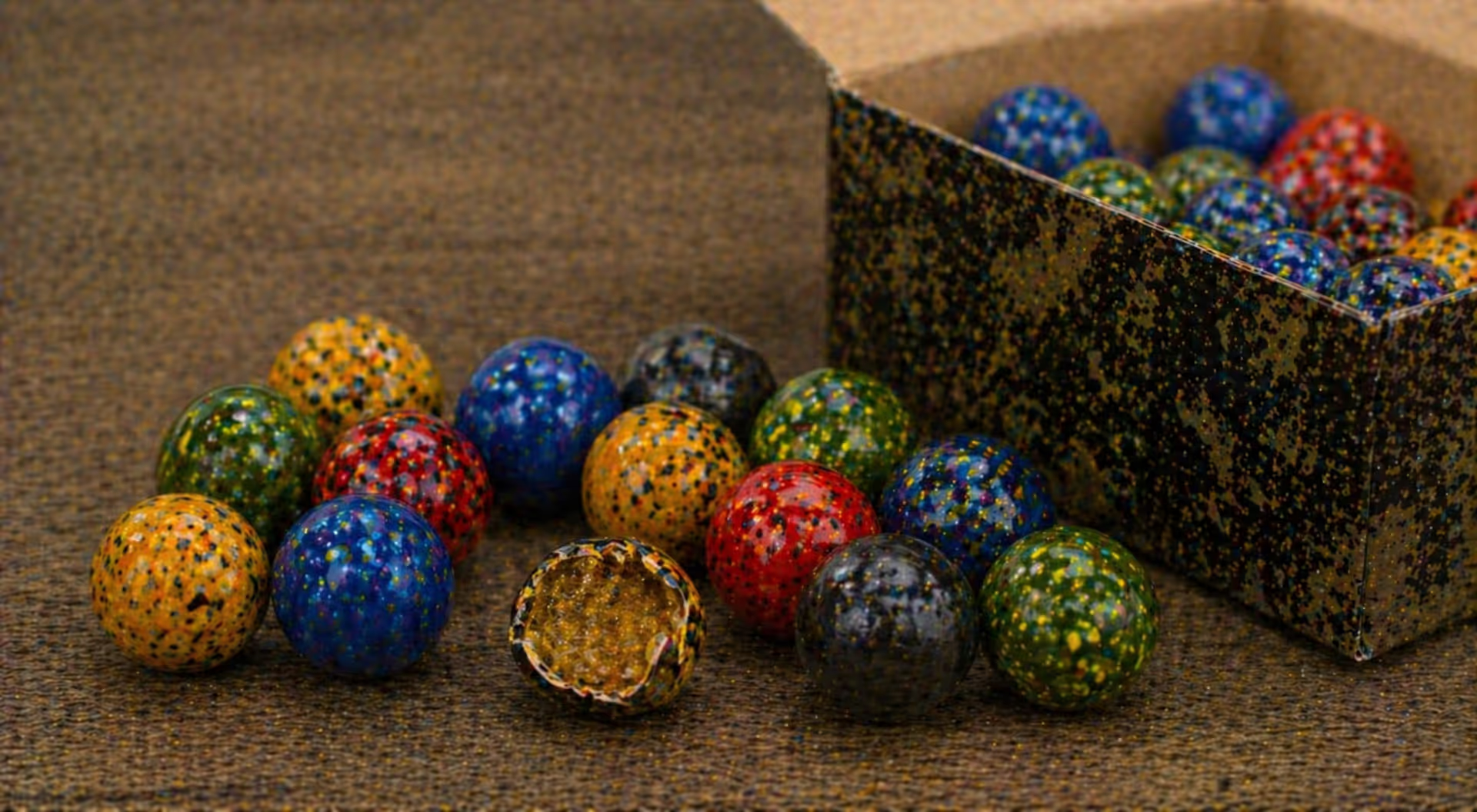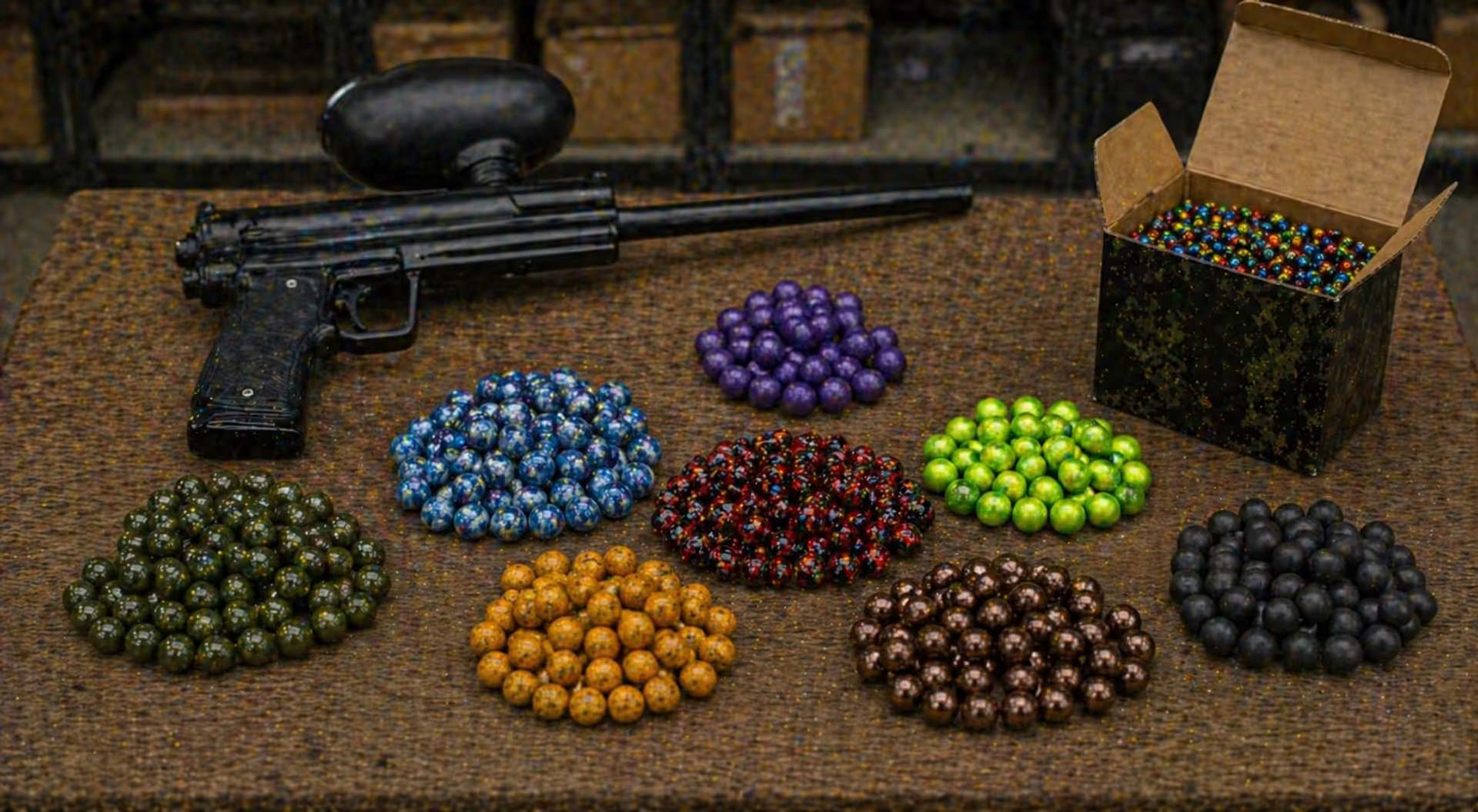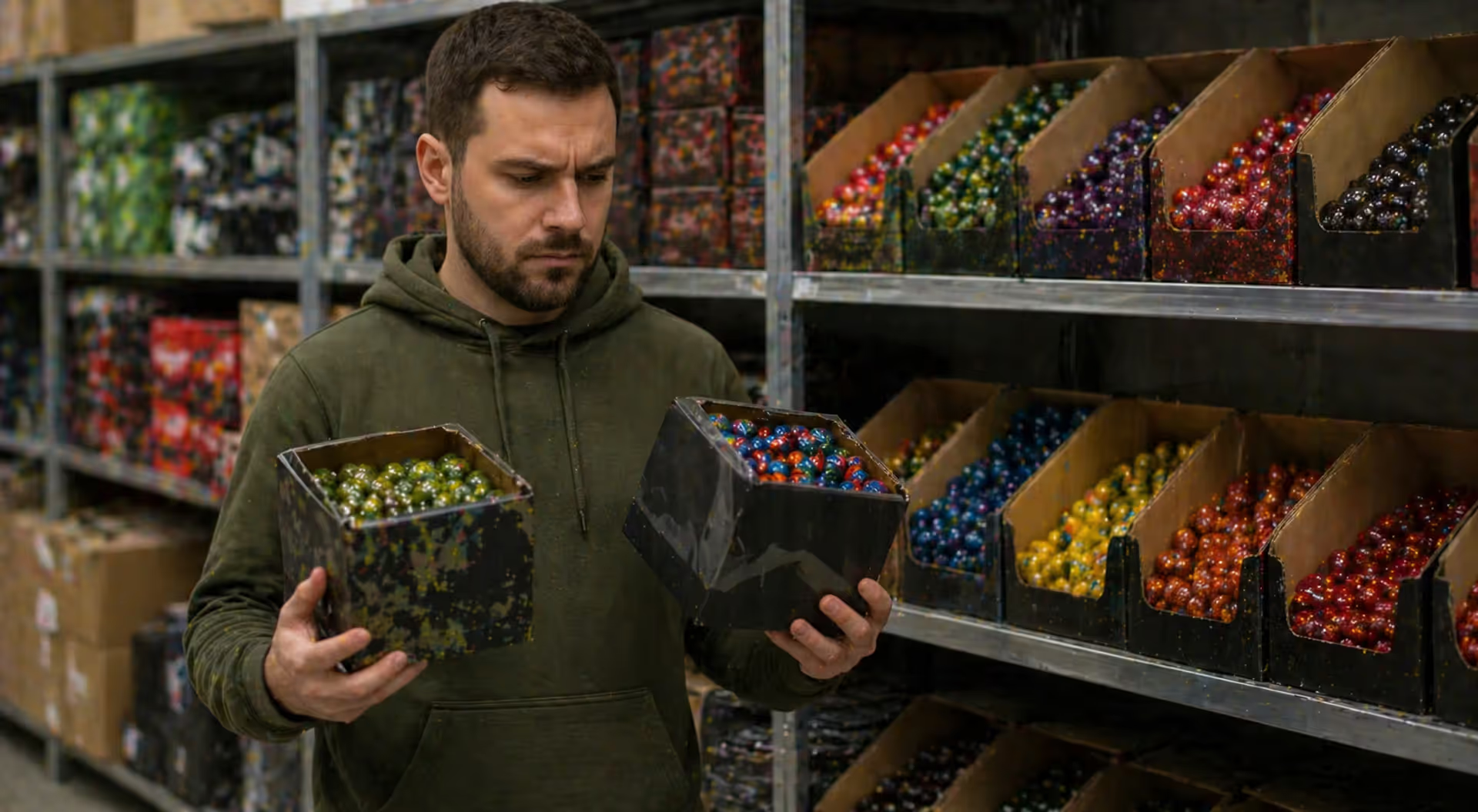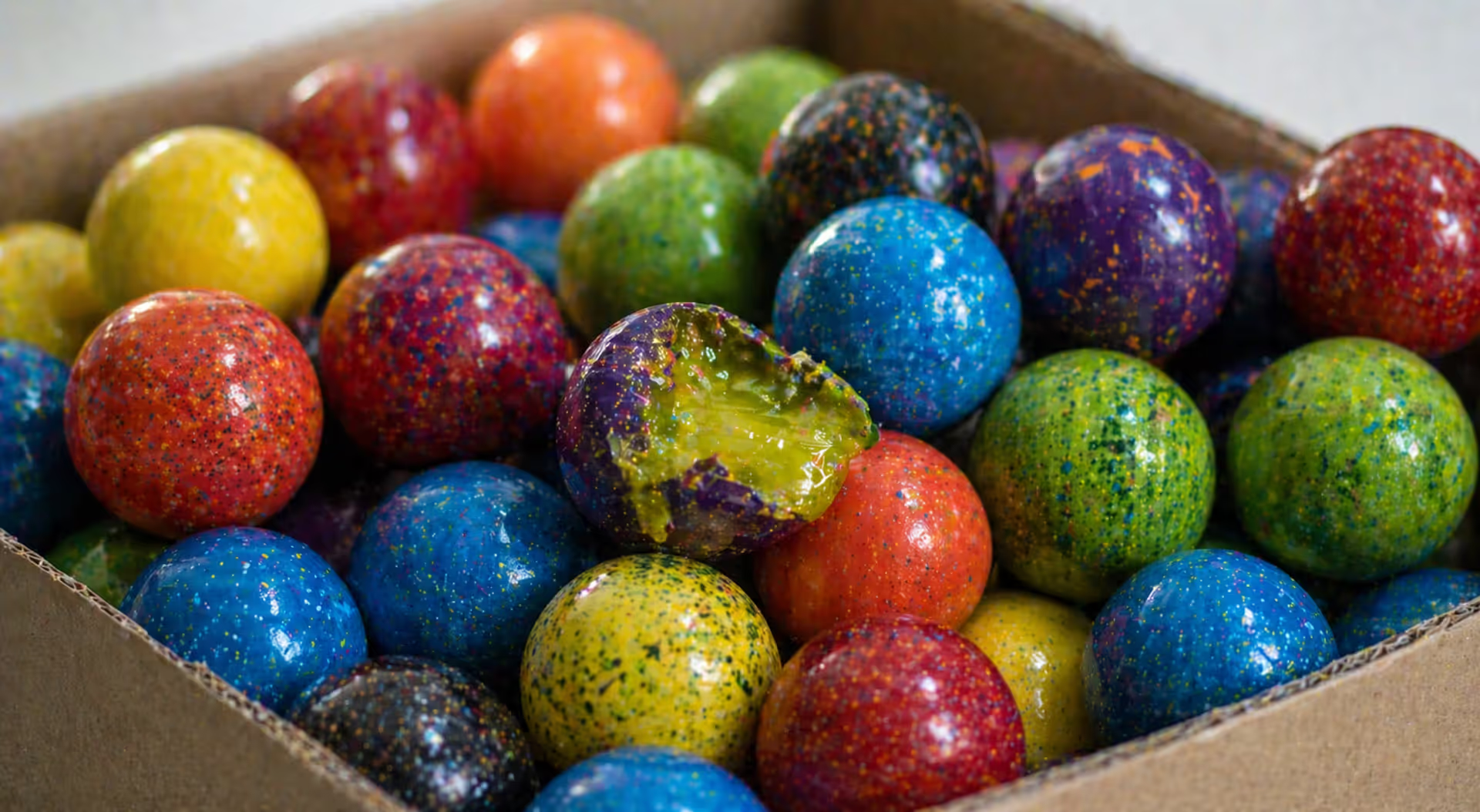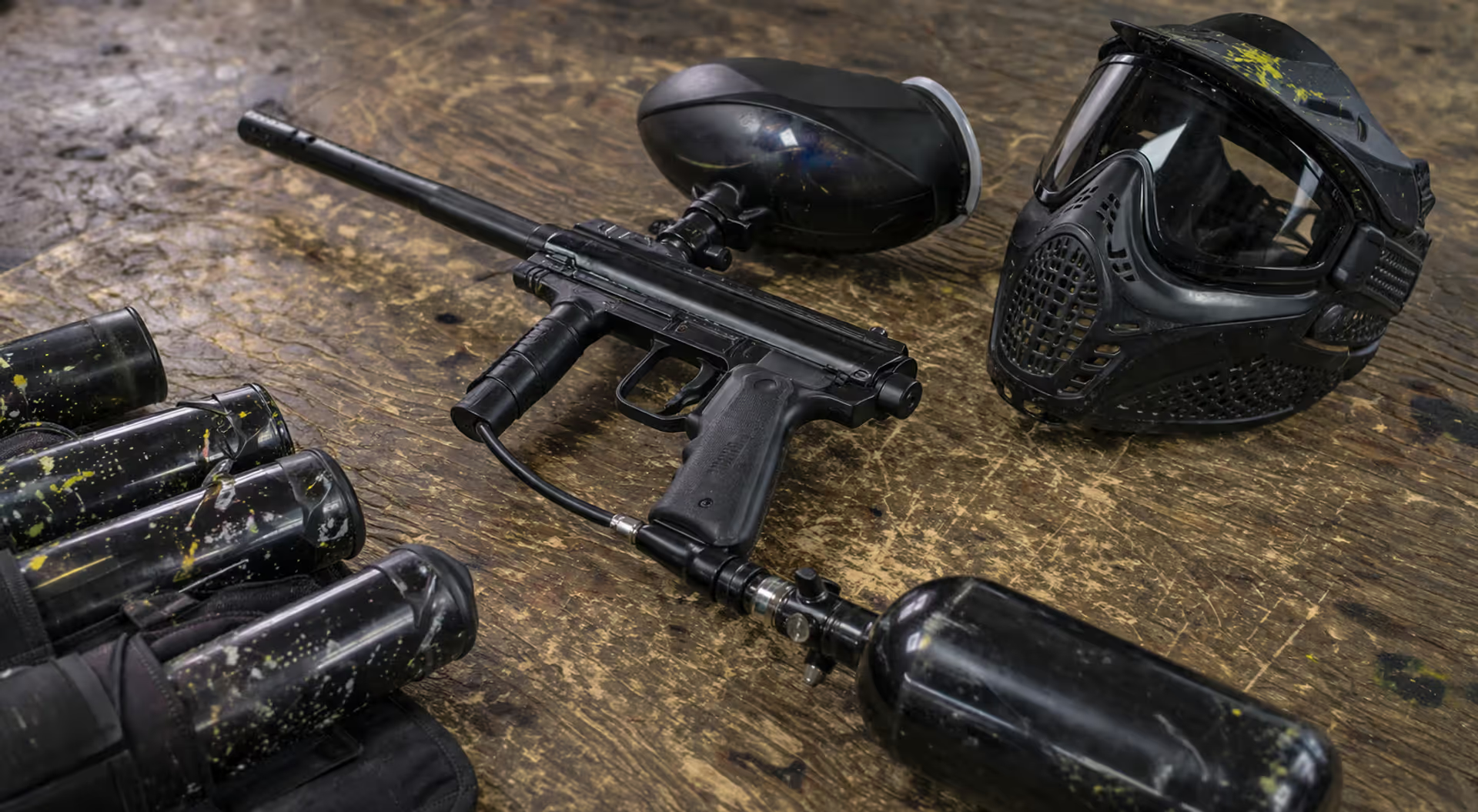
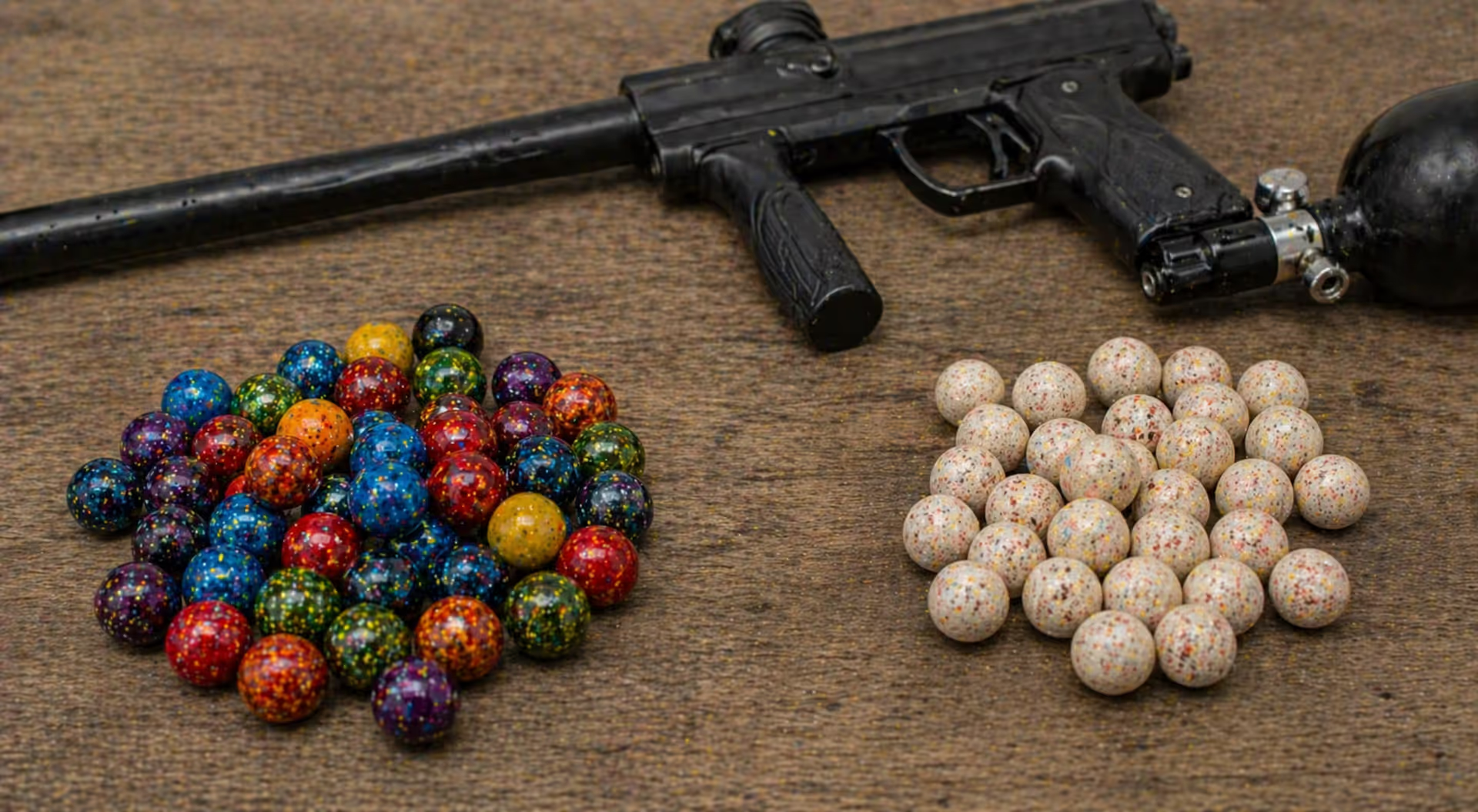
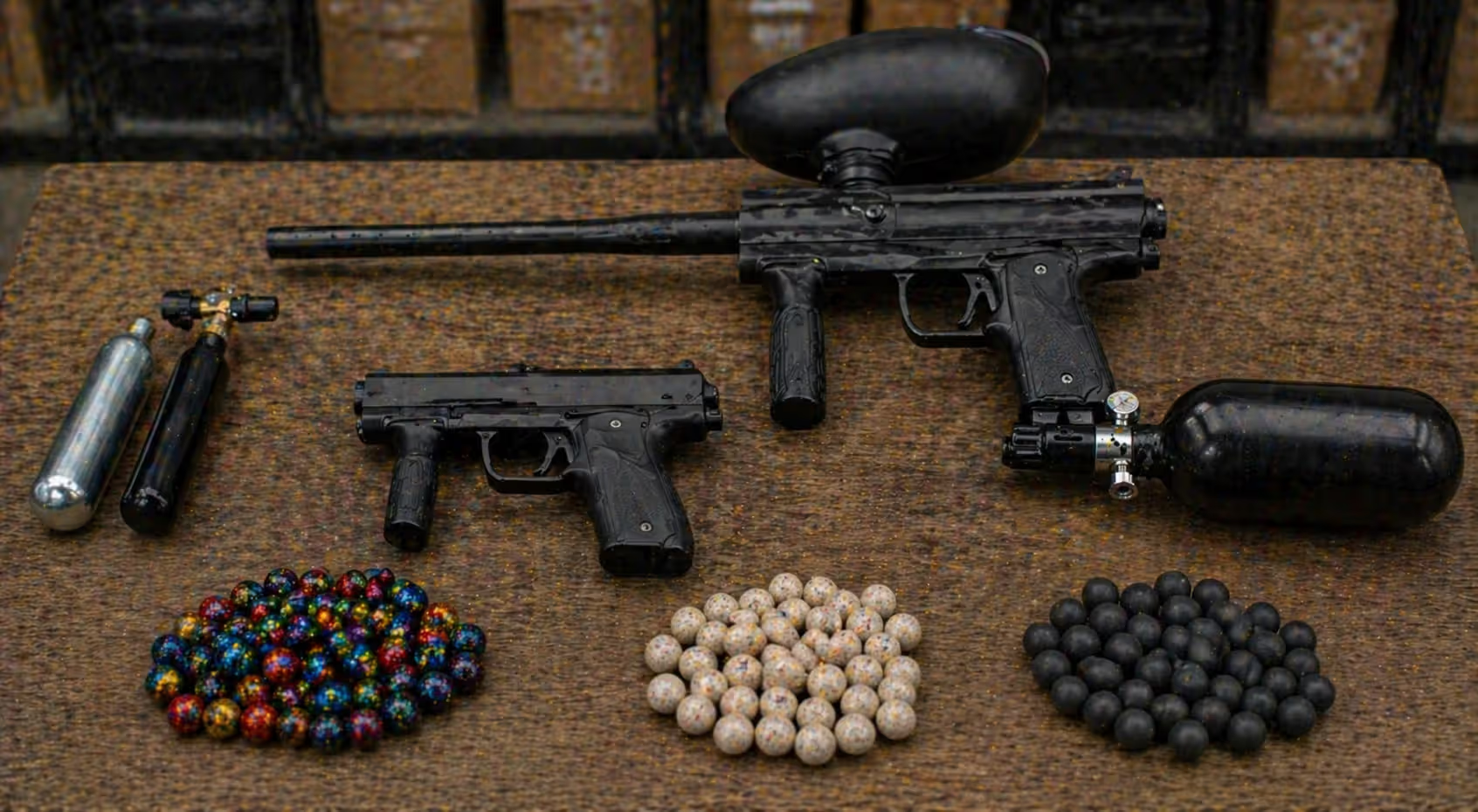
comparison of standard paintballs and pepper balls on table with marker
Pepper Balls for Paintball Gun Guide

Content
If you've ever wondered whether your paintball marker could do double-duty as a home defense tool, you're not alone. Pepper balls—those specialized rounds packed with irritant powder instead of colorful paint—started showing up in civilian hands around 2018, though law enforcement had been using them for crowd control since the early 2000s. Here's what makes them different: crack open a standard paintball and you'll find polyethylene glycol mixed with food dye. Break open a pepper ball and you're releasing PAVA (pelargonic acid vanillylamide) or OC (oleoresin capsicum)—the same stuff that makes habanero peppers unbearable, but in concentrated powder form.
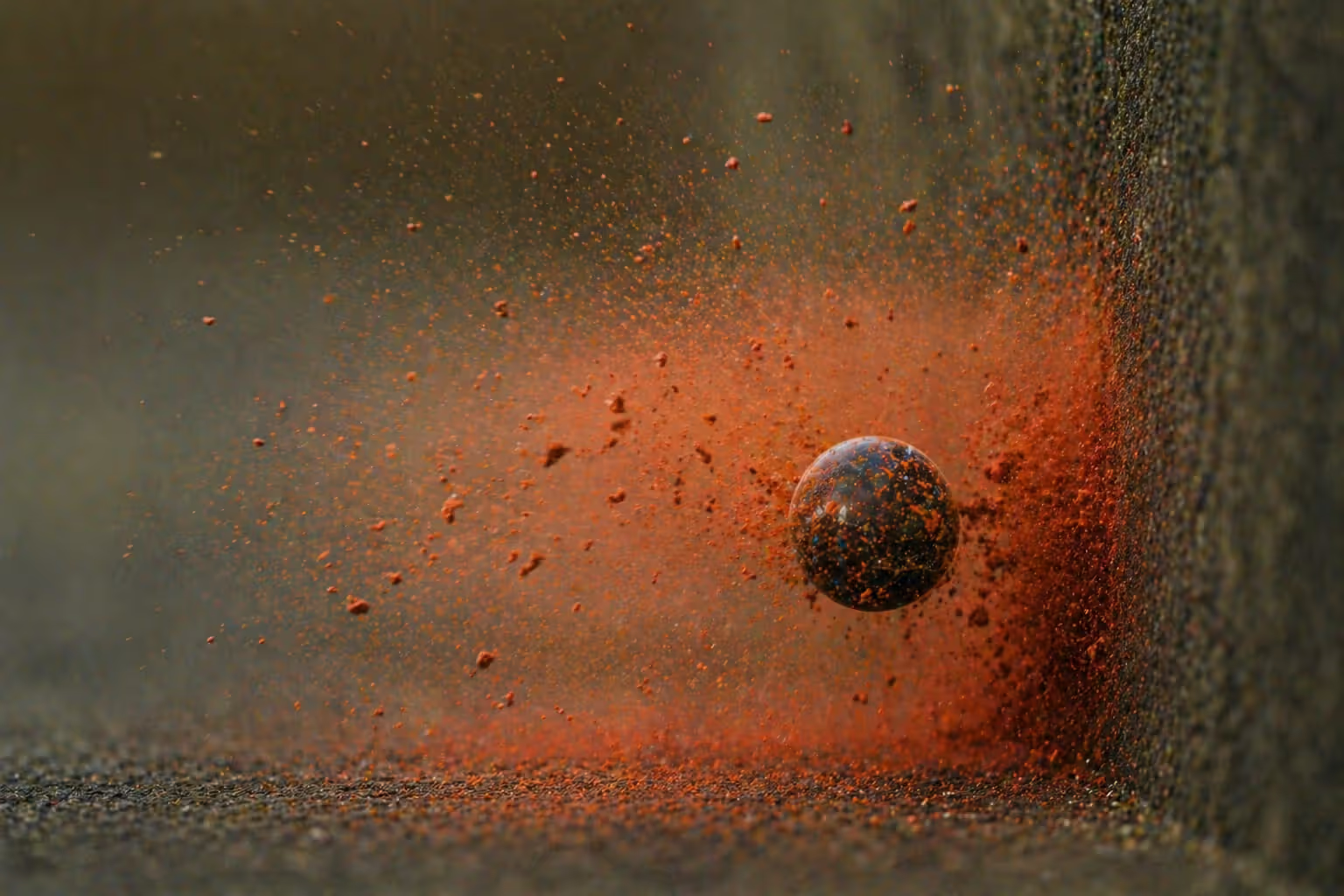
The mechanics are straightforward. Your marker fires the round at 250-280 feet per second. The brittle gelatin shell—engineered thinner than recreational paintballs—shatters on impact with clothing, skin, or any solid surface. Out bursts a cloud of white-to-tan powder, spreading roughly 5-12 feet depending on whether you're indoors, whether there's wind, and how humid the air is. That powder hits someone's eyes and respiratory system, triggering what feels like extreme burning. Coughing starts immediately. Eyes slam shut involuntarily. Most people experience peak discomfort within 30 seconds, with effects lasting anywhere from 15 to 45 minutes.
What you won't get is permanent damage—that's the "less-lethal" part. The irritation fades completely once the powder is flushed away or metabolized. Compare this to a standard paintball hit: sure, you'll feel the sting and wear a bruise, but you can keep functioning. Get hit with a pepper ball and continuing any task becomes exponentially harder when you can't see clearly and every breath makes you cough.
Both types use .68 caliber dimensions, so they'll feed through the same markers. But recreational paintballs are built tough enough to survive the hopper without breaking, yet soft enough to burst satisfyingly against bunkers and jerseys. Pepper balls go the opposite direction—more brittle shells that crack reliably even against softer targets like a sweatshirt or bare arm, guaranteeing the payload disperses.
What Are Pepper Balls and How Do They Work
Two chemical compounds dominate the pepper ball market. PAVA is synthetic, created in laboratories to replicate the burn of natural capsaicin but with better consistency. You won't find batch-to-batch variation like you might with pepper extracts. It's also more stable over time—properly stored PAVA rounds maintain potency for 2-3 years without significant degradation. OC comes from actual peppers, concentrated and measured in Scoville Heat Units. Law enforcement versions hit 2-5 million SHU, while civilian products typically max out around 2 million SHU due to regulatory considerations and liability concerns.
When a pepper ball leaves your marker's barrel, it's carrying about 10-13 joules of kinetic energy. That's enough force to fracture the shell but not enough to penetrate skin (unlike rubber bullets, which we'll cover later). The moment of impact is crucial—the shell must break cleanly to release the powder. Partial breaks or intact shells that bounce off are duds, delivering nothing but a mild sting.
The powder particles range in size. Anything under 10 microns becomes airborne easily and stays suspended for several minutes. These microscopic particles are what get inhaled and cause respiratory distress. Larger particles—20 to 100 microns—settle faster but stick to skin, hair, and clothing, causing prolonged irritation until washed off. This is why someone hit with a pepper ball continues experiencing effects even after moving to fresh air; they're carrying contaminated particles with them.
Your body interprets capsaicinoids as heat—not actual temperature, but the same pain signals your nerves send when touching something hot. This triggers neurogenic inflammation: blood vessels dilate, mucus production increases, and your eyes try to flush out the "threat" by producing tears. Your bronchial tubes may constrict slightly, making breathing feel labored. None of this causes tissue damage; it's your body overreacting to a false alarm.
Author: Logan Mercer;
Source: lakestaytents.com
Recovery timeline varies by individual sensitivity and exposure level. Direct facial hits produce stronger reactions than torso strikes where powder dispersal is the primary mechanism. Most people hit their symptom peak around the 30-second mark, then begin gradual improvement. By 20 minutes, most can function reasonably well. By 45 minutes, symptoms have largely resolved. Athletes and individuals with higher pain tolerance don't recover faster—the chemical reaction is involuntary—but they may cope with the discomfort more effectively.
Here's something recreational paintball manufacturers don't worry about: dimensional tolerances. Standard paintballs measure .68 caliber ±0.010 inches because that slop doesn't matter for backyard games. Pepper balls need tighter specs—typically ±0.005 inches—because feeding malfunctions during a home defense scenario aren't acceptable. Every round must chamber smoothly, fire reliably, and break on target. That precision costs money, which explains part of the price difference.
Storage requirements tell another story. Toss a bag of recreational paintballs in your garage and they'll be fine for years, maybe getting a bit dimpled in extreme heat. Try that with pepper balls and you'll find swollen shells, degraded irritant potency, and possible feeding issues within 12 months. They need climate control—50-80°F—and low humidity. Think of them like medication with an expiration date, not sporting goods.
Types of Less-Lethal Paintball Ammunition
Pepper Spray Paintball Rounds
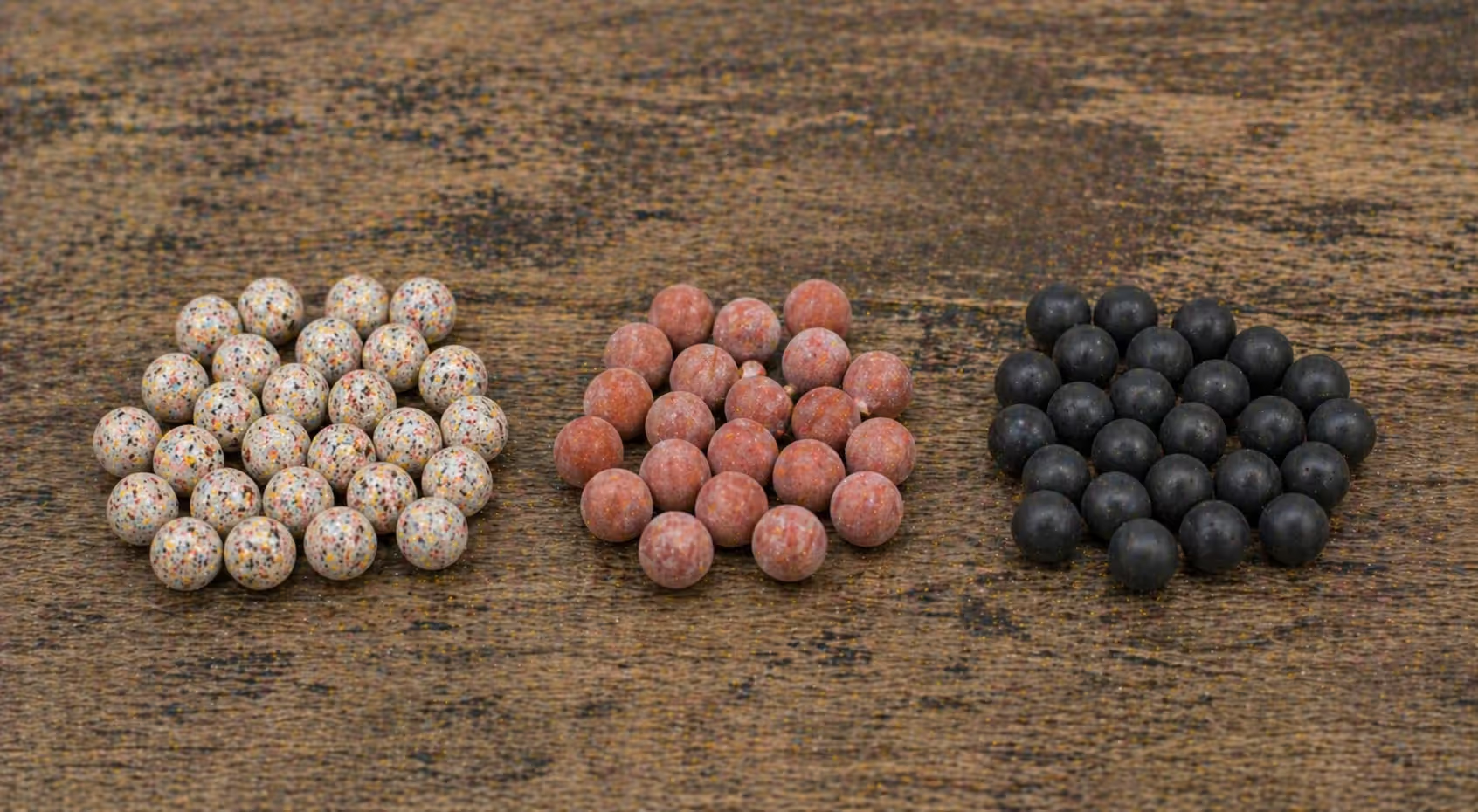
Live rounds containing actual irritants are what most people mean when they say "pepper balls." You'll find them color-coded orange or red, though some manufacturers use pink or yellow—just never white or clear, which indicate inert fills. The 1-3% concentration found in civilian products sounds low until you remember we're talking about compounds measured in millions of Scoville units. A jalapeño pepper rates 2,500-8,000 SHU. We're playing in a completely different league here.
Effective range is where things get interesting. Your marker might chronograph at 280 fps, giving you a theoretical range of 100+ feet. But practical defensive range? That's 20-50 feet. Closer than 20 feet and you're risking serious welts or even eye injury from kinetic impact alone—remember, these aren't foam darts. Beyond 50 feet, accuracy drops off and you might get incomplete shell breaks, wasting expensive ammunition without creating useful irritant clouds.
Wind becomes your enemy at distance. A 10 mph crosswind deflects a .68 caliber projectile about 3-4 inches at 40 feet. Aim center mass and you might hit shoulder or miss entirely. Headwinds blow dispersed powder back toward you—extremely problematic if you're trying to defend your position. Tailwinds help, but they also carry the cloud past your target faster, reducing exposure time.
Cost is the elephant in the room. At $1.50-$3.00 per round, a 50-round practice session costs $75-$150. Compare that to recreational paintballs at $1.50-$4.00 per 100-count bag. This economic reality means most pepper ball owners fire maybe 10-20 live rounds total—a handful for initial familiarization, then annual function checks to verify stored ammunition hasn't degraded. Everything else is done with training rounds.
Practice Pepper Rounds
Inert training rounds solve the cost problem by filling identical gelatin shells with harmless powders—talcum, cornstarch, even powdered chalk. You get the same visual feedback (a cloud of white or colored dust), the same ballistic trajectory, and the same muscle memory development, all for $0.30-$0.60 per round.
Quality matters enormously here. Cheap practice rounds might use thinner shells that break too easily, or heavier fills that fly differently than live ammunition. You want training rounds that match your defensive loads in every measurable way: weight within 0.1 grams, diameter within 0.002 inches, shell brittleness that produces the same break threshold. Otherwise you're training with one projectile and defending with another—a recipe for surprise malfunction when it matters.
Some training rounds add bright pigments—blue, green, even fluorescent pink—to help you see dispersal patterns during outdoor practice. This visual feedback is valuable for understanding how wind affects your powder cloud, how far the irritant spreads, and where it settles. Shoot a few rounds in your hallway (with proper ventilation) and you'll discover how much powder bounces back in enclosed spaces.
The psychological gap is unavoidable. During practice, your buddy playing the role of home intruder takes a hit, sees the powder cloud, and—if he's a good training partner—simulates incapacitation. But he's not actually experiencing the panic-inducing sensation of suddenly being unable to see or breathe normally. That's a limitation no training round can overcome. Some professional courses address this with voluntary exposure exercises: controlled exposure to actual pepper spray (not balls) in tiny amounts, just enough to understand the real effects. Not pleasant, but educational.
Author: Logan Mercer;
Source: lakestaytents.com
Rubber Ball Options
Solid rubber or dense polymer projectiles represent a completely different approach—purely kinetic impact, zero chemical irritation. These weigh 2-3 times what a standard paintball weighs, and they don't break on impact. Instead, they deliver blunt force trauma. Think getting punched rather than getting sprayed.
When does this make sense? Aggressive dog situations top the list. A charging pit bull or territorial rottweiler doesn't care about pepper spray—their eyes tear up, sure, but pain tolerance and predatory drive often override discomfort. A rubber ball to the ribs or haunch delivers immediate feedback they understand. Wildlife control is similar: bears, coyotes, even aggressive deer respond better to impact than irritants.
Property defense scenarios where chemical contamination is unacceptable also justify rubber balls. Imagine defending a pharmaceutical clean room or food processing facility—pepper powder settling on surfaces would mean costly decontamination. Rubber balls let you address threats without creating secondary problems.
But we're talking significantly higher injury risk. Impact energy above 15 joules can fracture ribs, and these projectiles often exceed that threshold. Head strikes risk skull fractures or traumatic brain injuries. Neck hits can crush the trachea. Eye strikes cause permanent blindness. This is why most manufacturers explicitly recommend rubber balls only for trained users who understand target zones (below the shoulders, avoiding joints and organs) and accept the legal liability of deploying what's essentially a pain compliance tool.
Effective range compresses to 15-30 feet—distances where you can reliably hit the zones you're aiming for. Unlike pepper balls where a near-miss still creates useful dispersal, rubber balls either strike the target or don't. There's no area effect, no lingering deterrent. You need accuracy under pressure.
| Type | Active Ingredient | Purpose | Effective Range | Relative Cost |
| Pepper Spray Rounds | PAVA or OC capsaicinoids (1-3% civilian concentration) | Incapacitate human threats through respiratory/ocular irritation | 20-50 feet optimal (beyond 50 feet accuracy degrades) | $1.50-$3.00 per projectile |
| Practice Rounds | Cornstarch, talc, chalk dust (completely inert) | Develop accuracy and muscle memory without chemical exposure costs | Matches live rounds (20-50 feet) | $0.30-$0.60 per projectile |
| Rubber Balls | None—relies entirely on kinetic impact energy | Deter animals or specialized security without chemical contamination | 15-30 feet (requires accurate shot placement) | $0.75-$1.25 per projectile |
Legal Considerations for Pepper Ball Use in the US
Federal law stays out of the pepper ball game entirely. No ATF classification, no explosives designation, nothing in the controlled weapons database. That hands the regulatory ball to states and cities, creating a patchwork you'll need to navigate yourself.
Most states treat pepper balls like they treat handheld pepper spray—legal for adults, restricted or prohibited for minors and felons, and subject to reasonable force standards during deployment. But "most states" doesn't mean "all states," and the exceptions can land you in legal trouble.
California Penal Code Section 22810 regulates "tear gas weapons," and district attorneys in Los Angeles, San Francisco, and Sacramento have successfully argued that pepper balls fall under this definition. You can own them, but deployment without justification can bring assault charges. Massachusetts gets trickier—the state requires a Firearms Identification Card for pepper spray devices over certain concentrations, but enforcement regarding paintball-delivered systems varies by jurisdiction. Boston PD has made arrests; Western Massachusetts typically hasn't bothered.
New York City (not the whole state, just the five boroughs) requires permits for self-defense spray devices, and municipal code §10-131 has been applied to pepper ball systems in several documented cases since 2021. You might beat the charges eventually, but you'll spend money on lawyers first. New Jersey restricts civilian possession of chemical irritants to products under certain volume thresholds—again, legal interpretation regarding paintball delivery systems isn't settled.
Washington D.C. and Illinois require registration for pepper spray, though how this applies to delivery systems remains murky. Chicago, Philadelphia, and certain Wisconsin counties maintain local ordinances more restrictive than their state laws. Here's the practical advice: before buying a pepper ball system, search "(your city) pepper spray laws" and "(your city) less-lethal weapons ordinances." Spend 30 minutes reading municipal code. Call your local police non-emergency line and ask directly.
Justified use standards mirror other force options. You can deploy pepper balls when facing imminent threat of unlawful force—someone breaking down your door, advancing toward you with a weapon, cornering you in a parking garage. You cannot deploy them during verbal arguments, against trespassers who are leaving, or in situations where you can safely retreat (in states with duty-to-retreat laws). The force must be proportional: pepper balls against an unarmed teenager stealing packages from your porch probably won't meet legal scrutiny.
Civil liability is where things get expensive. Criminal charges require the prosecutor to prove beyond reasonable doubt that your use wasn't justified. Civil lawsuits only require preponderance of evidence—51% likelihood. The person you hit can sue for medical bills (emergency room visits for respiratory distress run $500-$2,000), lost wages, pain and suffering, and emotional distress. Even if you win, legal defense costs $10,000-$50,000. Document everything: call 911 immediately after any defensive use, preserve video footage if available, photograph the scene, and get witness statements. Treat it as seriously as a defensive firearm discharge.
Special populations face additional hurdles. Convicted felons in most states cannot possess any weapon, including less-lethal systems. Domestic violence restraining orders often include weapons restrictions that courts have interpreted to include pepper balls. Minors can't purchase pepper ball systems in most jurisdictions and may not legally possess them without parental supervision. Employers need to consider workers' compensation implications—if an employee deploys pepper balls and a customer gets injured, who's liable? Some states require special insurance riders for businesses using less-lethal security measures.
Self-Defense and Security Applications
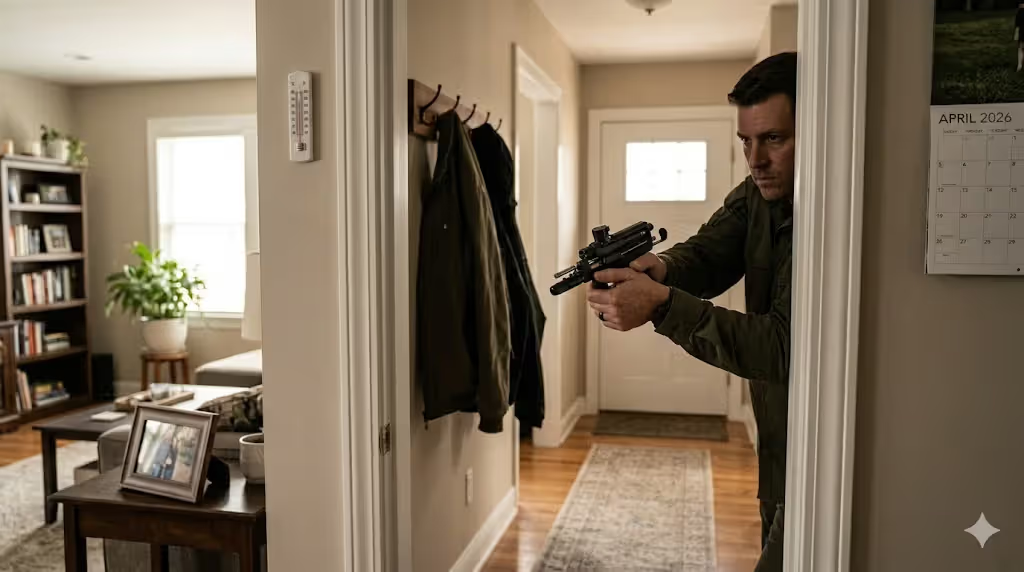
Home layouts naturally create the 15-40 foot engagement distances where pepper balls excel. Your bedroom to the hallway entrance: 25 feet. Living room to the front door: 30-35 feet. Kitchen to the back sliding door: 20-25 feet. These aren't rifle distances requiring precision marksmanship—they're "aim center mass and pull the trigger" ranges.
The tactical advantage over handheld spray is obvious. You maintain separation from the threat. An intruder at your bedroom door stays at your bedroom door while you're positioned behind your bed frame with a clear line of fire. With handheld spray, you'd need to close to 6-12 feet, putting you within grabbing distance. That proximity is terrifying, and it's why many people freeze instead of deploying defensive tools.
But let's acknowledge the hard truth: pepper balls don't guarantee compliance. A methamphetamine user mid-psychosis might barely register the pain. Someone in an adrenaline-fueled rage may push through the discomfort. Individuals with significant pain tolerance—combat veterans, athletes, people who've built up tolerance through previous exposure—will still feel the effects but can often continue functioning. You're buying time and creating opportunities, not flipping an "off switch" on human threats.
Author: Logan Mercer;
Source: lakestaytents.com
Real-world home defense scenarios from 2022-2024 show success rates around 70-80% for pepper balls creating sufficient deterrence that intruders fled. The remaining 20-30% required additional intervention—retreating to hardened positions, deploying backup defensive tools, or waiting for police arrival while the compromised intruder searched the home. These statistics come from insurance claim reports and police incident reports compiled by the Personal Defense Network, not manufacturer marketing materials.
Business applications have exploded since 2023, particularly among small retailers in Philadelphia, Portland, Oakland, and Chicago—cities experiencing high property crime rates but where armed security isn't economically feasible. A pepper ball pistol mounted in a quick-access safe behind the counter costs $400-$600 upfront plus maybe $150 annually in ammunition refreshes. Compare that to contract security at $3,000-$5,000 monthly. Owners can train themselves and trusted employees in 4-8 hours versus the extensive background checks and liability insurance required for armed guards.
Gas stations, convenience stores, and cannabis dispensaries (which face federal banking restrictions that make traditional security systems problematic) have been particularly enthusiastic adopters. The visible presence of a pepper ball launcher often deters attempts—potential robbers recognize the technology and understand the consequences of pushing forward.
Agricultural applications solve problems lethal force can't. A rancher in Montana dealing with wolves near livestock can't legally shoot them (endangered species protections), but pepper balls drive them off effectively. Rural homeowners in Colorado and New Mexico use them against bears that have learned to open dumpsters and break into sheds. The 30-50 foot standoff distance means you're not trying to spray a 400-pound black bear from 10 feet away, which sounds absolutely terrifying because it is.
Here's what civilians get wrong about pepper balls—they think 'less-lethal' means 'just as effective but safer.' That's not the relationship. Pepper balls are compliance tools that work when the subject decides the pain isn't worth continuing their current behavior. Against someone truly committed to hurting you, someone high on PCP or in a psychotic break, you might get reduced effectiveness. They're outstanding for creating escape opportunities and buying time for barriers or backup, but they're not magic fight-stoppers. You need layers: pepper balls, physical barriers, escape routes, and a plan for what happens if the pepper balls don't achieve the desired effect.
— Marcus Hendricks
Range performance depends heavily on conditions. That 25-40 foot optimal range assumes calm air indoors or light wind outdoors. Introduce 10 mph crosswinds and your accuracy at 40 feet drops noticeably—projectiles drift 3-5 inches. Headwinds above 15 mph risk blowing dispersed powder back into your face, especially indoors where confined spaces create turbulence. Heavy rain prevents proper powder dispersal; the irritant clumps and falls instead of aerosolizing.
Temperature extremes cause mechanical issues. Below 32°F, gelatin shells become brittle and sometimes burst inside the marker or during feeding. Above 90°F, shells soften and can deform in the hopper, causing jams. CO2 propellant also becomes less efficient in cold weather—cartridges that deliver 30-40 shots at 70°F might only give you 15-20 shots at 30°F.
Indoor deployment creates persistent contamination. The powder doesn't vanish after 45 minutes—it settles on carpets, furniture, curtains, and HVAC intakes. You might be breathing irritant particles at low levels for hours or even days after a discharge until proper cleaning is completed. This is why pepper balls work best as thresholds defenders—you're protecting a position (bedroom, office, safe room) and the contaminated space is where you're preventing the threat from entering.
How to Choose the Right Pepper Ball System
Purpose-built pepper ball pistols versus converted recreational markers represents your first decision point. Dedicated defense pistols like the Byrna HD or PepperBall TCP look like oversized handguns, weigh 1-2 pounds loaded, and hold 5-8 rounds. They're designed for quick deployment from nightstand safes or under-counter mounts. Operation is intuitive—point and pull trigger, no adjusting hoppers or checking velocity settings.
Converted recreational markers—a Tippmann A5 or Empire Axe fitted with pepper balls—give you 20+ round capacity and faster follow-up shots. But they're bulkier (3-4 pounds, 18-24 inches long), require more training to operate under stress, and need velocity adjustments to stay in the safe 250-280 fps range. The advantage comes if you're defending larger properties or commercial spaces where higher capacity justifies the added complexity.
.68 caliber is standard for 95% of applications. Ammunition is widely available, markers are plentiful, and the projectile carries enough irritant payload to be effective. Some manufacturers offer .50 caliber systems marketed as "more compact," which is true—the markers are 20-30% smaller and lighter. But .50 caliber ammunition selection is limited, and the smaller projectiles carry 40-50% less powder, reducing cloud size and effectiveness. Only choose .50 caliber if concealment or extremely limited storage space is the priority.
.43 caliber systems exist primarily for international markets where regulations restrict larger calibers. They're inadequate for serious defensive use—underpowered, carrying minimal payloads, with limited range and accuracy.
| Factor | What to Look For | Why It Matters |
| Marker Type | Defense-specific pistol (simple, compact, 5-8 rounds) vs. recreational marker conversion (complex, bulky, 20+ rounds) | Pistols work better for home defense where simplicity under stress matters; converted markers suit commercial security where higher capacity offsets added training requirements |
| Caliber | .68 caliber standard (skip .50 and definitely avoid .43) | Widest ammunition availability, proven effective payload delivery, universal parts and accessory compatibility |
| Propellant | 12g CO2 cartridges (convenient) vs. compressed air tanks (cost-effective long-term) | CO2 cartridges are grab-and-go simple but cost $1-$2 each for 30-40 shots; compressed air requires filling equipment but drops per-shot cost to pennies |
| Capacity | 5-8 rounds adequate for home defense; 15-20+ rounds for commercial/property security | Higher capacity reduces reload stress but increases marker size and weight—balance against your specific scenario needs |
| Velocity Adjustment | User-adjustable velocity controls (critical for converted markers) | Lets you tune for optimal shell rupture without excessive kinetic injury risk; essential for legal compliance in jurisdictions with fps limits |
| Manufacturer Support | Established companies with US-based customer service and parts inventory | Ensures you can get replacement parts, warranty service, and compatible ammunition years after purchase—avoid unknown importers |
Shelf life isn't theoretical—it's a practical limitation you'll face. Manufacturers stamp production dates on packaging (look for a Julian date code, typically 4-5 digits). From that date, you've got 24-36 months of guaranteed full potency IF you maintain proper storage conditions. Room temperature (65-75°F) and low humidity (below 50% RH) are ideal. Basement storage works in most climates; garage storage is risky unless climate-controlled.
Watch for degradation signs: shells that look swollen or deformed, visible condensation inside plastic packaging, and discoloration (fresh rounds are uniform in color; old rounds develop blotchy patches). Every 6-12 months, pull a couple of rounds from your stock and function-test them—fire at cardboard to verify proper rupture and visible powder cloud. If shells bounce off without breaking or produce weak dispersal, it's time to replace your entire batch.
Reputable manufacturers matter enormously. PepperBall Technologies pioneered the civilian market and maintains the most extensive product line, though at premium prices ($500-$700 for pistols). Byrna Technologies has captured significant market share since 2020 with aggressive pricing ($300-$400 for comparable systems) and strong customer support. Mission Less Lethal focuses on converted markers and bulk ammunition sales, popular with commercial users.
Avoid unbranded imports from Amazon sellers or GunBroker listings that don't specify manufacturer. These no-name rounds might cost $0.80 instead of $2.00, but quality control is nonexistent. Underfilled shells, inconsistent irritant potency, premature breaks during feeding—all reported issues with cheap imports. Spending $100 on quality ammunition is better than spending $50 on junk that fails when you need it.
Total cost of ownership includes factors beyond purchase price. Entry-level pepper ball pistol: $300-$400. Initial ammunition purchase (100 live rounds, 200 practice rounds): $200-$300. CO2 cartridges (initial supply of 20): $20-$30. Proper storage containers and safety gear: $50-$100. First year total: $570-$830.
Annual recurring costs depend on practice frequency. Shooting 50 practice rounds monthly plus replacing 50 live rounds annually (due to expiration): $200-$250. CO2 for that practice volume: $30-$40. Years 2-5 annual cost: $230-$290.
Author: Logan Mercer;
Source: lakestaytents.com
Safety Protocols and Training Requirements
Treat these like weapons because they are weapons. Sure, "less-lethal" sounds friendly, but tell that to someone who takes a pepper ball to the eye at 15 feet—they're facing potential permanent vision damage. Basic firearms safety rules apply without modification: muzzle always points in safe directions, finger stays outside trigger guard until you've decided to fire, know what you're shooting at and what's behind it, assume every marker is loaded until you personally verify otherwise.
Storage separates responsible owners from liability nightmares waiting to happen. Markers live in locked containers—quick-access safes work great for home defense applications ($100-$200 for biometric models). Remove CO2 cartridges when storing; leaving them installed slowly leaks gas and can damage valve seals. Separate your live rounds from practice rounds using different colored storage bins—I've seen too many range videos where someone grabbed the wrong ammo and created a decontamination situation during what was supposed to be casual practice.
Climate-controlled storage for ammunition isn't optional. A closet in your climate-controlled living space beats garage storage in Phoenix (summer temperatures exceeding 110°F) or Minneapolis (winter temperatures below 0°F). Ammunition manufacturers recommend 50-80°F and under 60% relative humidity. Throw desiccant packets (the little "DO NOT EAT" packets from shoe boxes) into your ammo containers to control moisture.
Training emphasis belongs on realistic scenarios, not static target shooting. Sure, spend your first session learning basic accuracy—set up cardboard at 20, 30, and 40 feet, understand how much drop and drift your marker produces. Then shift to scenario-based drills. Practice drawing from your storage location (safe, nightstand drawer, wherever you keep the marker) and engaging a target while moving to cover. Run low-light drills—most home invasions happen at night. Practice shooting from unconventional positions: prone behind your bed, around doorframes, while backing down hallways.
Movement matters enormously. Standing stationary and trading shots with an intruder is Hollywood nonsense. Real defensive use combines shooting with tactical repositioning toward hardened positions—bedrooms with locking doors, bathrooms without windows, anywhere that creates barriers between you and threats. Practice shoot-and-move drills: engage target, displace to new position, engage again. This builds muscle memory that might save your life when adrenaline makes fine motor skills difficult.
Monthly practice sessions of 20-30 rounds maintain proficiency without breaking the bank. That's $6-$18 in practice ammunition plus maybe $2-$3 in CO2—completely affordable compared to defensive firearms practice where 50 rounds of quality defensive ammunition runs $30-$60.
Decontamination knowledge is critical because accidents happen. Someone picks up the wrong container, loads live rounds for practice, and suddenly everyone's having a bad day. If powder hits you or others, immediately move to fresh air—outdoors or near open windows with fans blowing out. Don't touch your face; you'll spread contamination from hands to eyes and make things worse.
Strip off contaminated clothing—don't pull shirts over your head through the contaminated area; cut them off if necessary. Bag the clothes in plastic to prevent secondary exposure to whoever does laundry. Rinse affected skin with cool water for 15-20 minutes minimum. Cool water, not hot—heat opens pores and drives irritant deeper. Don't use soap yet; it can trap particles against skin. Just water flow for the first 15-20 minutes.
Face and eye flushing requires patience. Position your face so water flows from inside corner of the eye outward, preventing contamination of the unaffected eye if only one got exposed. Blink repeatedly to help flushing action. Remove contact lenses if you wear them—irritant particles can get trapped underneath. After initial water flushing, you can use gentle soap (baby shampoo works) to remove residual particles from skin and hair.
Skip the folk remedies. Milk doesn't neutralize capsaicinoids better than water—it's a myth that won't die. Oils and lotions trap irritant against skin and extend exposure; avoid them until you're thoroughly decontaminated. Baking soda solutions, though popular in some online forums, provide no proven benefit over plain water and risk chemical reactions that might worsen irritation.
Severe reactions require medical attention. Difficulty breathing beyond 30 minutes, chest pain or tightness, symptoms that worsen rather than improving, or any signs of allergic reaction (throat swelling, full-body hives, dizziness) mean call 911 immediately. Pre-existing respiratory conditions—asthma, COPD, emphysema—increase risk of serious complications from pepper exposure.
Know when NOT to deploy pepper balls. Never use them for "teaching lessons" to trespassers or annoying neighbors—that's assault. Don't fire at people who are fleeing or no longer threatening you—pursuit and retaliation aren't legally defensible. Avoid use when innocent people are in the line of fire or downwind; irritant clouds don't discriminate between good guys and bad guys. Don't deploy in enclosed spaces if you also need to occupy those spaces—you'll contaminate your own defensive position.
Consider your own vulnerabilities. Asthma sufferers deploying pepper balls indoors risk triggering their own attacks from residual airborne particles. People with severe allergies might react to even low-level exposure from contaminated surfaces. If you've got respiratory issues, pepper balls might not be the right choice for your defensive needs—consider alternatives like kinetic impact tools or improving your physical barriers.
Formal training availability varies by region. Defensive firearms training facilities in Texas, Florida, Arizona, and other gun-friendly states increasingly offer pepper ball courses (4-8 hours, $150-$300). These cover legal use-of-force, system operation, accuracy fundamentals, scenario drills, and decontamination procedures. If no local options exist, several national instructors offer traveling courses—check the International Association of Law Enforcement Firearms Instructors (IALEFI) directory for certified less-lethal trainers.
Home-based training works for basic proficiency but can't replicate stress inoculation. Set up a practice area (garage, basement, or outdoor space at least 30 feet deep) with cardboard targets at varied distances. Run drawing drills, accuracy exercises, and movement patterns. Film yourself to identify problems—you'll spot issues you don't feel while shooting. But understand that backyard practice can't reproduce the adrenaline dump, tunnel vision, and decision-making chaos of actual defensive encounters.
Frequently Asked Questions