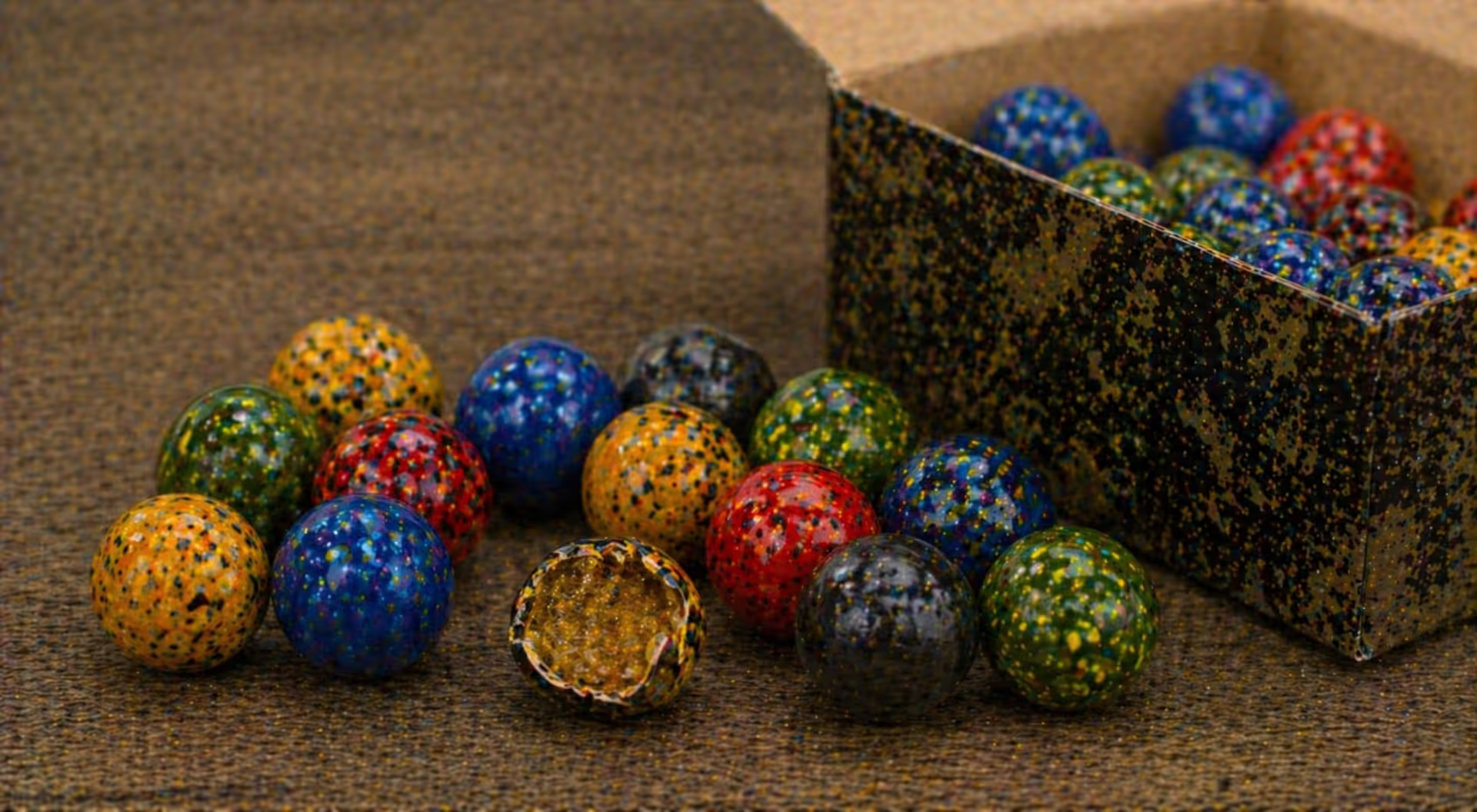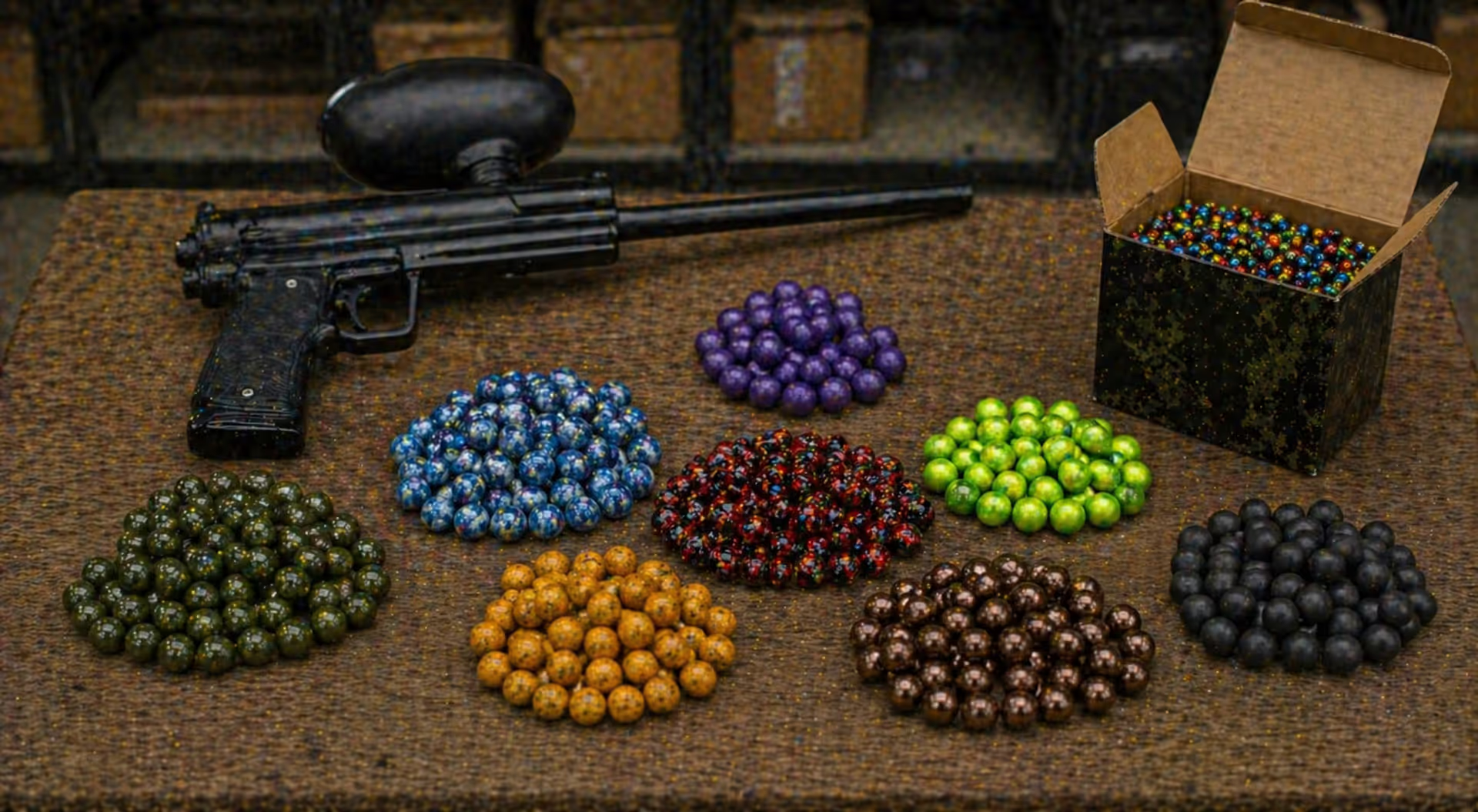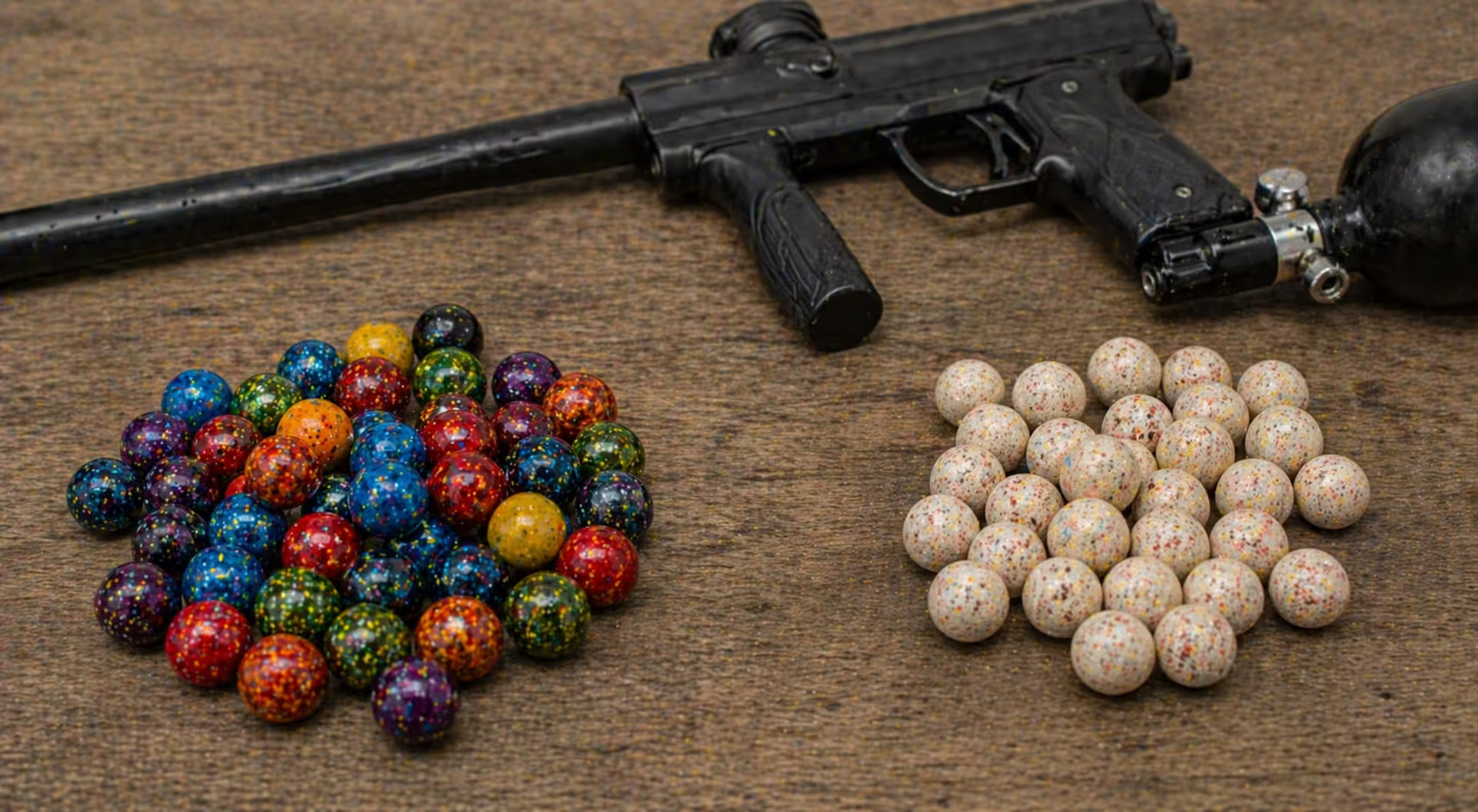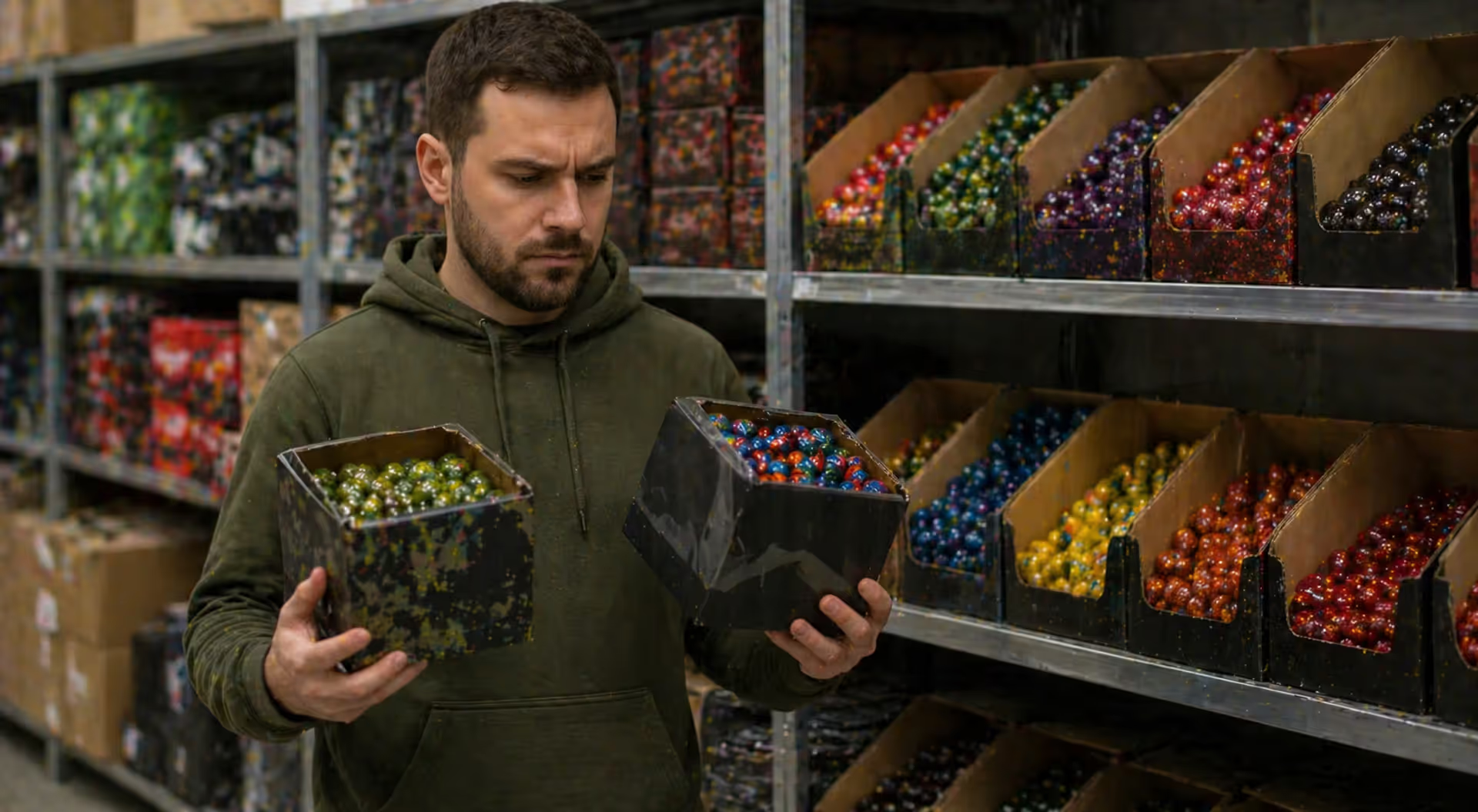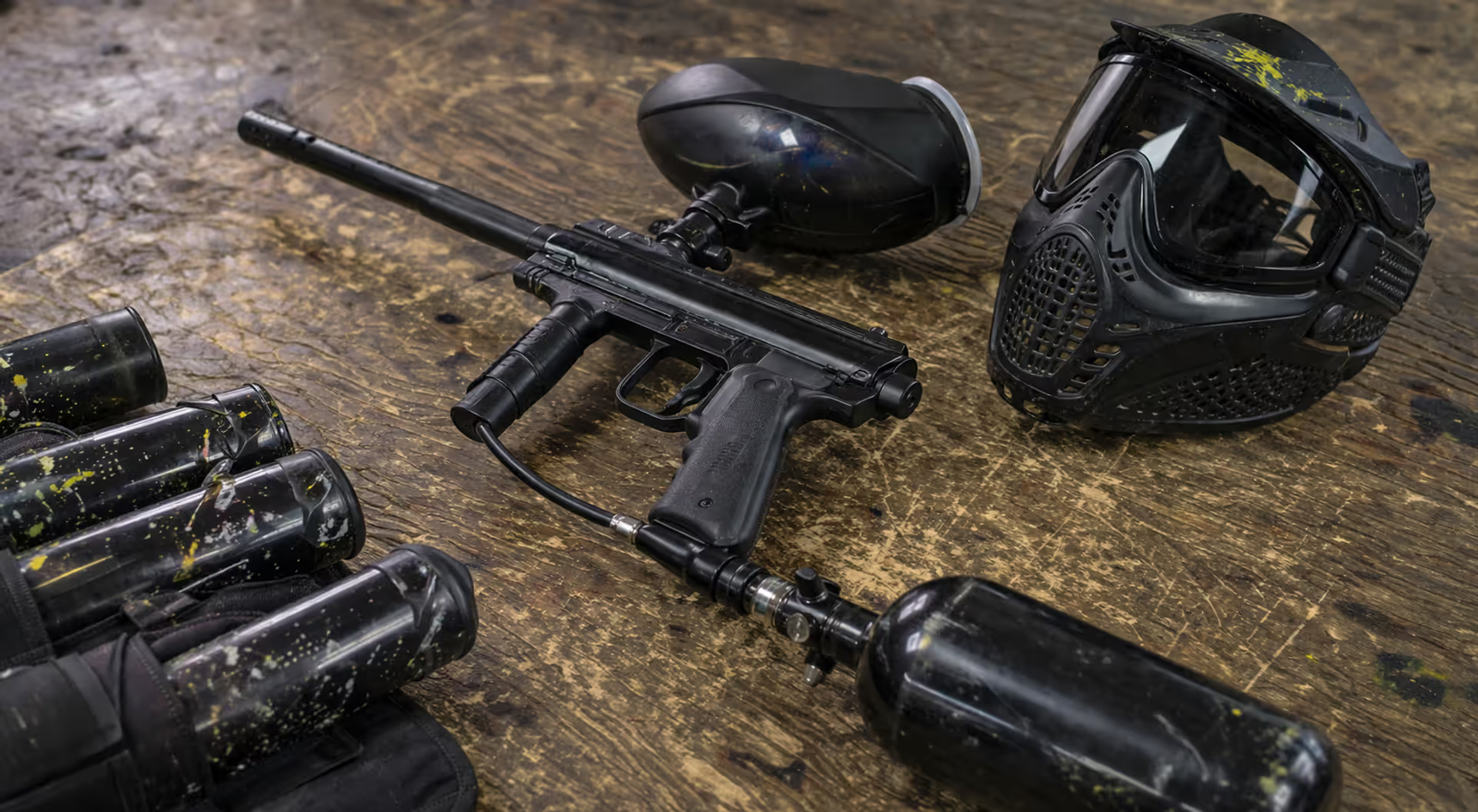
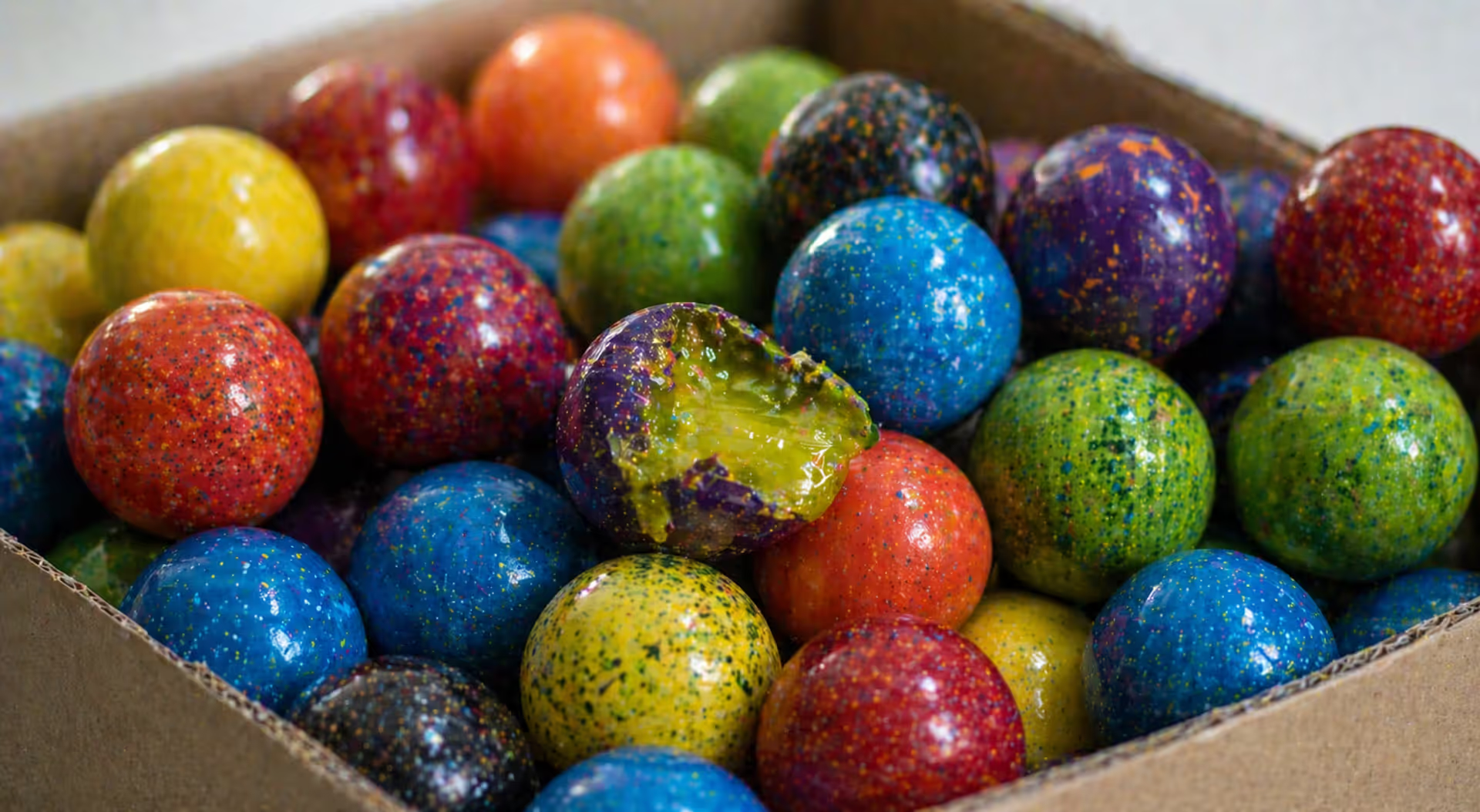
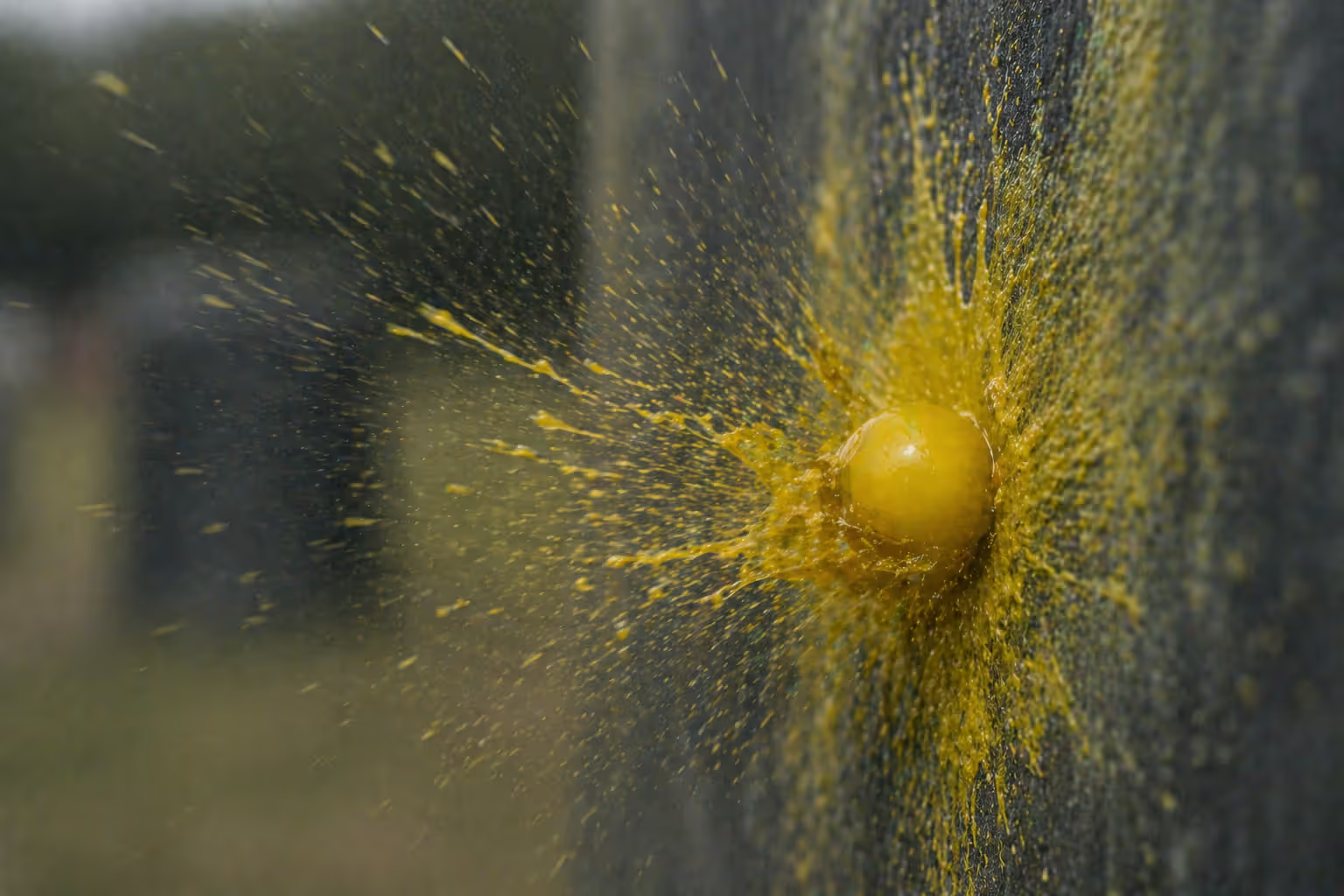
close up of paintballs with one broken showing internal fill
Paintball Paint and Fill Types Explained

Paintballs are precision-engineered projectiles designed to break on impact, leaving a visible mark while keeping players safe. Understanding what's inside these gelatin spheres—and why different fill types exist—helps players, field operators, and parents make informed decisions about equipment, cleanup, and performance expectations.
The composition of paintball fill has evolved significantly since the sport's early days in the 1980s. Modern formulations balance impact visibility, washability, environmental safety, and consistent break characteristics. Whether you're concerned about laundry stains, choosing between oil and water-based fills, or troubleshooting bounces during play, the chemistry and construction of paintballs directly affect your experience on the field.
What Are Paintballs Made Of?
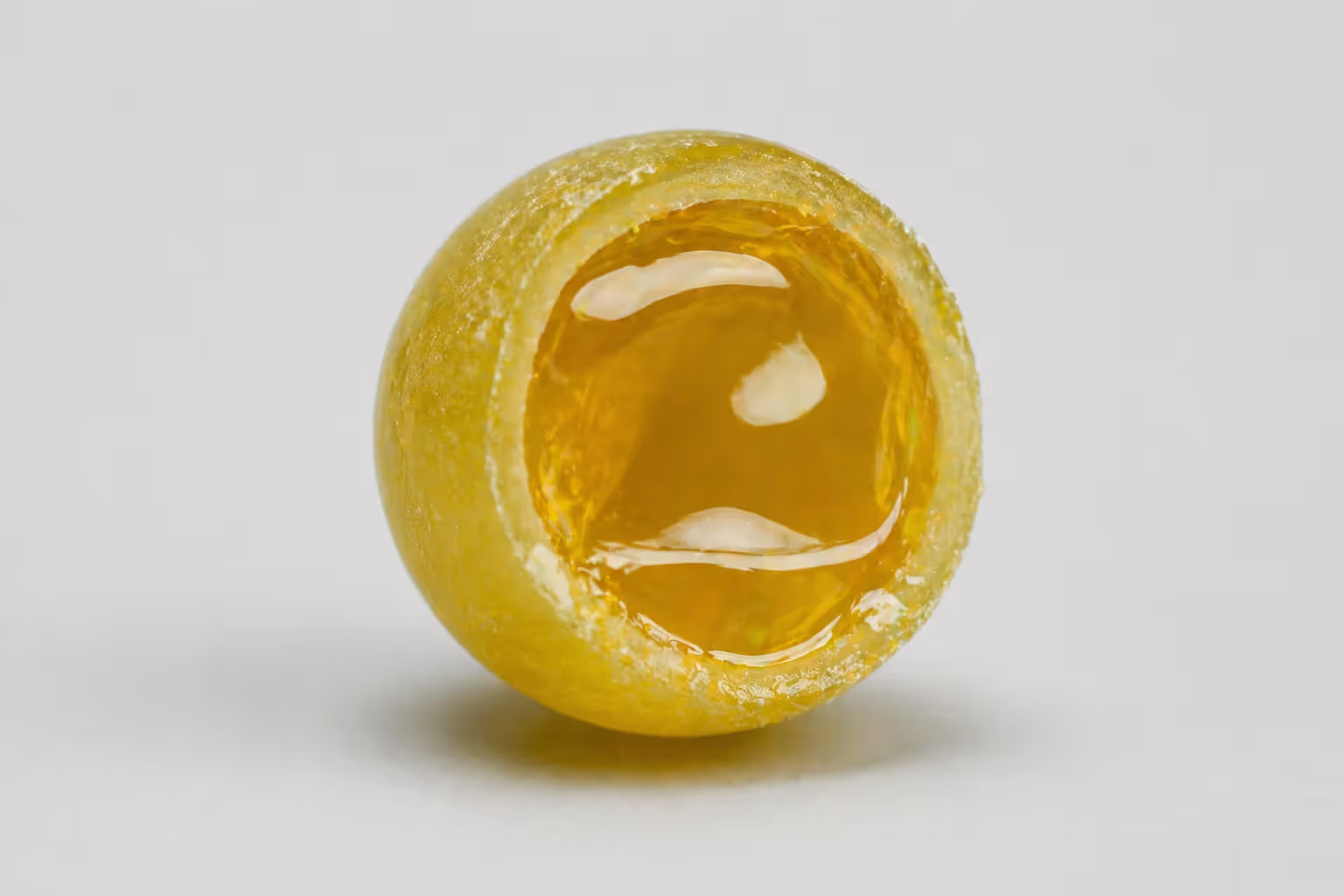
A paintball consists of two primary components: a gelatin shell and a liquid fill. The outer shell is manufactured from food-grade gelatin—the same material used in pharmaceutical capsules and cooking. This gelatin is derived from animal collagen, typically pork or beef, though vegetarian alternatives exist in specialty markets. The shell wall thickness typically ranges from 0.25 to 0.35 millimeters, calibrated to withstand barrel friction and flight stress while breaking reliably on target impact.
The gelatin shell manufacturing process involves mixing gelatin powder with water, plasticizers (like glycerin or sorbitol), and sometimes preservatives. This mixture is heated, then formed into two hemispheres using rotary dies. The fill liquid is injected into one hemisphere before the two halves are joined and sealed through a brief heating process. The seam where hemispheres meet represents the weakest structural point—which is exactly what manufacturers want for predictable breaking.
Paintball fill composition centers on polyethylene glycol (PEG) as the base carrier liquid. PEG is a non-toxic polymer compound approved by the FDA for use in food, cosmetics, and medications. The fill also contains water, dye pigments for color, and small amounts of vegetable oil or mineral oil depending on the formulation type. Some manufacturers add calcium carbonate or other mineral compounds to adjust density and improve shell-breaking characteristics.
Author: Ethan Rowe;
Source: lakestaytents.com
The fill must meet specific viscosity requirements—thick enough to create visible splatter marks but fluid enough to flow through manufacturing equipment and not separate during storage. Temperature affects viscosity significantly: paintballs stored in cold environments become brittle and may break in the hopper, while excessive heat can soften shells and cause dimpling or deformation.
Modern paintball fill contains no actual paint. The term "paint" is a holdover from the sport's origins when forestry workers used oil-based marking capsules to tag trees for logging. Today's formulations are specifically engineered to be biodegradable, non-toxic, and removable from most surfaces with water.
Oil Fill vs Water Based Paintball Fill
The distinction between oil fill paintballs and water based paintball fill determines washability, environmental impact, and field performance characteristics. Both types use polyethylene glycol as the primary carrier, but the ratio of oil to water creates meaningful differences.
Oil-based fills contain higher concentrations of mineral oil or vegetable oil—typically 15-30% of the total fill volume. This oil content makes the fill more hydrophobic, meaning it repels water and penetrates fabric fibers more readily. Oil fill paintballs were the industry standard through the 1990s and early 2000s because they produced more vibrant colors and left highly visible marks on targets. The oil helped suspend pigment particles evenly, preventing color separation during storage.
Water-based fills reverse this ratio, using 70-85% water with only trace amounts of oil for pigment suspension. These formulations emerged in response to environmental concerns and player demand for easier cleanup. Water based paintball fill relies more heavily on PEG and glycerin to maintain proper viscosity without excessive oil content.
Author: Ethan Rowe;
Source: lakestaytents.com
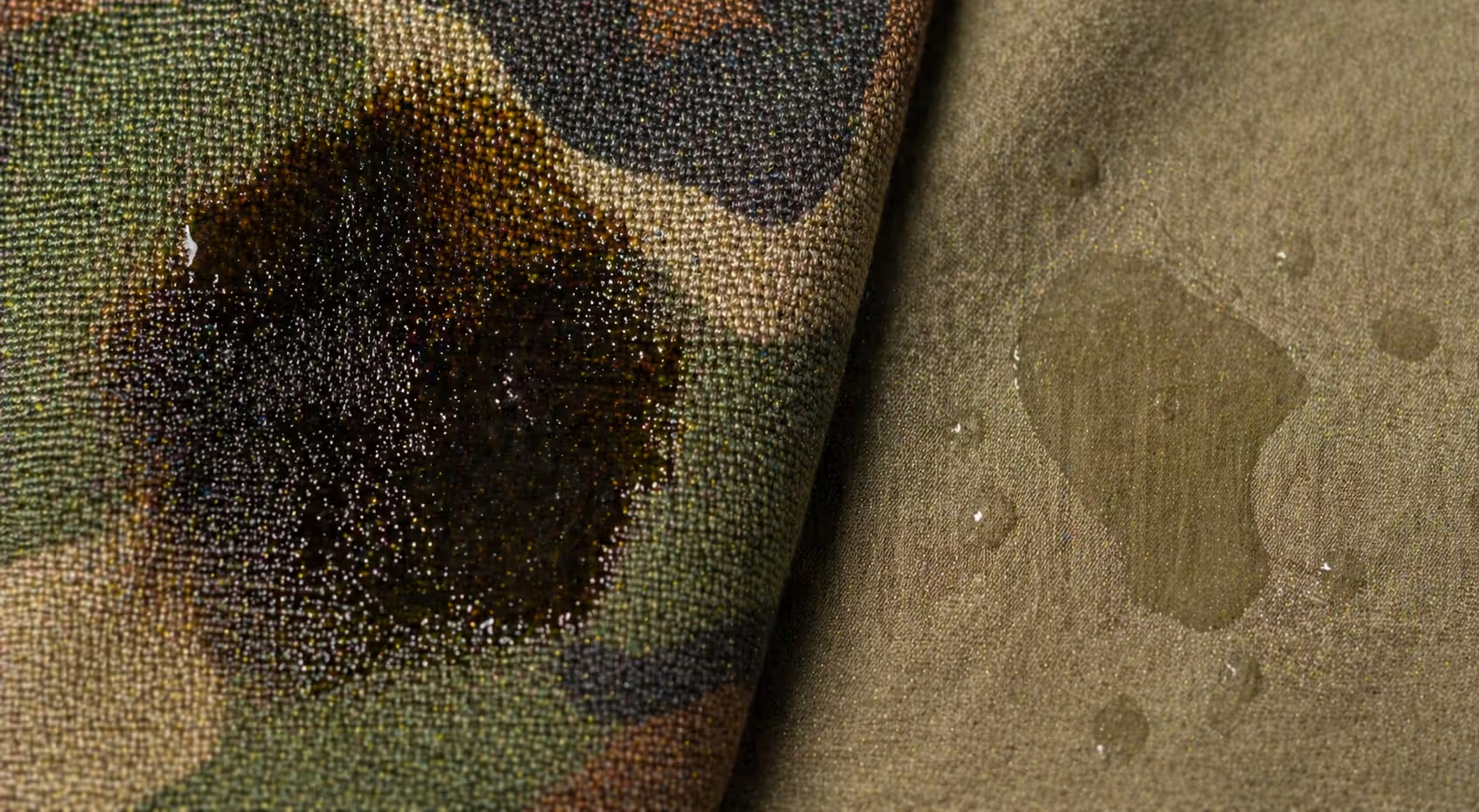
Performance differences become apparent during play. Oil fill paintballs typically produce brighter, more saturated splatter marks because oil-based dyes have superior color intensity. The oil content also helps fills spread on impact, creating larger visible marks. However, oil fills are notoriously difficult to remove from clothing and can leave permanent stains on synthetic fabrics if not treated quickly.
Water-based fills sacrifice some color vibrancy for practical benefits. They rinse from clothing more easily, cause fewer permanent stains, and break down faster in outdoor environments. The reduced oil content means water-based fills are less likely to cause slippery conditions on playing surfaces—a safety consideration for indoor fields and speedball arenas.
Temperature stability differs between the two types. Oil-based fills maintain more consistent viscosity across temperature ranges, making them preferred for outdoor fields in variable weather. Water-based fills can become slightly more viscous in cold conditions, occasionally affecting break quality at temperatures below 45°F.
| Fill Type | Composition | Washability | Performance | Best Use Cases |
| Oil Fill | 15-30% mineral/vegetable oil, PEG, water, dye | Difficult; requires pre-treatment and hot water | Vibrant marks, consistent breaks, better cold-weather performance | Tournament play, scenario games, fields prioritizing mark visibility |
| Water Based | 70-85% water, PEG, trace oils, dye | Easy; rinses with cold water in most cases | Adequate marks, environmentally friendly, safer for gear | Recreational play, rental operations, youth programs, indoor facilities |
Most recreational fields and rental operations switched to water-based fills by 2020. Tournament-grade paintballs still commonly use oil-based formulations because competitive players prioritize mark visibility and consistent performance over easy cleanup. Some manufacturers now offer hybrid formulations attempting to balance both priorities.
Is Paintball Paint Washable?
The washability of paintball paint depends primarily on fill type, fabric composition, and how quickly you treat the stain. Water-based fills wash out of cotton, polyester, and cotton-blend fabrics with standard cold-water laundering in most cases. Oil-based fills require more aggressive treatment and may leave permanent discoloration on certain materials.
For water-based paintball stains on clothing, rinse the affected area with cold water immediately after play if possible. The water-soluble dyes and PEG base dissolve readily, and most color will flush out with simple rinsing. Machine wash in cold water with regular detergent—avoid hot water for the first wash, as heat can set any remaining pigment. Most water-based stains disappear completely after one or two wash cycles.
Oil fill paintballs present more challenge. The oil content allows dye molecules to penetrate deeper into fabric fibers, and water alone won't remove the stain. Pre-treat oil-based stains with a degreasing dish soap or a dedicated stain remover containing surfactants. Work the treatment into the fabric, let it sit for 15-30 minutes, then wash in the hottest water safe for that fabric type. Synthetic fabrics like polyester and nylon are particularly prone to permanent staining from oil-based fills because the oil bonds with the petroleum-based fibers.
Paintball fill washes off skin easily regardless of type. The gelatin shell fragments and fill liquid rinse away with soap and water. Some players experience temporary skin staining from darker dye colors (red, purple, dark blue), but this fades within 24-48 hours with normal bathing. Players with sensitive skin should wash exposed areas promptly to avoid minor irritation from prolonged contact with PEG or dye compounds.
Gear washability varies by material. Nylon pod packs, harnesses, and tactical vests clean easily with water-based fills—often a simple hose-down suffices. Oil-based fills may require detergent and scrubbing. Goggles and masks should be rinsed immediately after play regardless of fill type, as dried fill can scratch lenses during subsequent cleaning attempts.
One common mistake is using hot water on fresh paintball stains before removing the oil content. Heat sets oil-based stains permanently by helping the oil polymerize into fabric fibers. Always start with cold water and degreasing treatment for oil-based fills.
Professional paintball jersey manufacturers typically treat fabrics with stain-resistant coatings that help repel both oil and water-based fills. These treated fabrics make cleanup significantly easier but wear out over time with repeated washing. After 20-30 wash cycles, even treated fabrics become more susceptible to staining.
How Paintballs Break and Splatter
Paintball shell break mechanics involve a precise balance of structural integrity and controlled failure. When a paintball strikes a surface at typical velocities (280-300 feet per second), the impact force exceeds the gelatin shell's tensile strength, causing rupture. The fill liquid then spreads across the impact surface, creating the characteristic splatter mark that confirms a hit.
The break quality depends on several interrelated factors. Shell thickness uniformity matters most—inconsistent wall thickness creates weak spots that cause premature breaks in the barrel or hopper, or excessive strength that causes bounces. Premium paintballs undergo quality control screening to eliminate balls with thickness variations exceeding 0.02 millimeters.
Impact angle affects break probability significantly. Paintballs striking perpendicular to a surface (90-degree angle) break most reliably because impact force distributes evenly across the shell. Glancing impacts at shallow angles may cause bounces even with properly manufactured paintballs, as the force vector partially deflects along the surface rather than compressing the shell directly.
Surface hardness creates a critical variable. Paintballs break more consistently against rigid surfaces (bunkers, walls, hard ground) than against soft materials (loose clothing, padded gear, soft ground). This explains why players wearing multiple layers or baggy clothing experience more bounces—the fabric absorbs and distributes impact energy, reducing the peak force that breaks the shell.
Author: Ethan Rowe;
Source: lakestaytents.com
Temperature dramatically affects break characteristics. Cold paintballs (below 50°F) become brittle, and shells may shatter on firing or break prematurely from normal handling. The gelatin loses flexibility as temperature drops, shifting from controlled rupture to fragmentation. Conversely, warm paintballs (above 85°F) develop softer shells that may dimple, deform, or fail to break on soft impacts.
Barrel-to-paint sizing influences break quality indirectly. A paintball that fits too loosely in the barrel experiences inconsistent acceleration and may tumble during flight, increasing the likelihood of glancing impacts and bounces. Oversized paintballs create excessive barrel friction, raising the risk of barrel breaks from compression stress before the ball even leaves the marker.
Splatter patterns reveal information about impact dynamics. A symmetrical, circular splatter indicates a clean perpendicular break with good shell integrity. Asymmetric or elongated splatters suggest angled impacts or shell defects. Minimal splatter with shell fragments but little fill spread indicates either very brittle shells (cold paintballs) or low-viscosity fill that runs off the surface rather than adhering.
Bounces occur when impact energy falls below the shell's rupture threshold. This happens with glancing angles, excessive distance (velocity drops below 200 fps), impacts on soft surfaces, or shells with above-specification thickness. Players sometimes deliberately shoot through light brush or netting to "wipe" paintballs before they reach opponents—the initial impacts weaken shells so subsequent hits break more easily, though this practice violates rules in organized play.
Barrel breaks result from excessive compression during firing. Causes include oversized paintballs forced through undersized barrels, brittle shells from cold storage, or defective shells with weak seams. A barrel break coats the inside of the barrel with fill, dramatically reducing accuracy and velocity until cleaned. This is why serious players carry barrel squeegees and check paintball-to-barrel fit before play.
Paintball Fill Colors and Dye Composition
Paintball fill color serves functional and aesthetic purposes. The dye composition affects visibility against different backgrounds, helps referees and players identify hits, and allows field operators to track which paint formulations are in use. Modern paintball dyes are water-soluble, non-toxic compounds derived from food-grade colorants.
The most common fill colors include yellow, orange, pink, red, blue, purple, green, and white. Yellow and orange offer maximum visibility against natural outdoor backgrounds—green vegetation, brown dirt, and gray structures. These colors reflect light strongly and remain visible even in bright sunlight or shadowy wooded areas. Tournament organizers often require bright fill colors to eliminate disputes about whether hits occurred.
Pink and red fills show well against most surfaces but can be harder to distinguish on certain red or brown backgrounds. Blue and purple fills provide good contrast on lighter-colored clothing and structures but may blend into shadows or dark backgrounds. Green fill is generally avoided in outdoor play because it camouflages against foliage, though some scenario game producers use it intentionally for specific team identification.
White fill presents unique characteristics. It shows exceptionally well on dark clothing and surfaces but disappears against light-colored gear or structures. Some manufacturers produce white fill specifically for night games with UV-reactive dyes that glow under black light, creating dramatic visibility in low-light environments.
The dye ingredients typically include FD&C (Food, Drug, and Cosmetic) approved colorants—the same dyes used in food products, cosmetics, and medications. Common dyes include FD&C Yellow #5 (tartrazine), FD&C Red #40 (allura red), FD&C Blue #1 (brilliant blue), and combinations thereof to create secondary colors. These dyes are water-soluble and designed to break down when exposed to sunlight and moisture.
Pigment concentration affects both color intensity and washability. Higher pigment loads create more vibrant marks but increase staining risk, particularly with oil-based fills. Lower pigment concentrations wash out more easily but may produce marks that are harder to see at distance. Manufacturers balance these factors based on intended use—recreational fills typically use lower pigment loads, while tournament paints use higher concentrations.
Some specialty fills incorporate UV-reactive or glow-in-the-dark compounds for night play. These formulations add phosphorescent or fluorescent compounds to standard dye bases. Under UV light or after exposure to bright light, these fills emit visible light, creating enhanced visibility in darkness. The additives are still non-toxic and washable, though they may increase cost by 30-50% compared to standard fills.
Fill color does not affect flight performance or accuracy in any measurable way. The dye molecules are dissolved in the fill liquid and contribute negligible mass. However, players sometimes perceive performance differences based on color—a psychological effect rather than a physical one. Blind testing consistently shows no correlation between fill color and accuracy, velocity, or break characteristics.
Field operators sometimes use specific fill colors to identify different paint grades or batches. A field might stock yellow fill for rental markers and pink fill for premium tournament paint, allowing staff to quickly identify which paint a player is using. This practice helps prevent disputes about paint quality and ensures players receive the product tier they paid for.
The evolution from oil-based to water-based fill formulations represents the paintball industry's commitment to environmental responsibility without sacrificing performance. Modern water-based fills deliver 95% of the mark visibility of oil-based paints while reducing environmental persistence by 70% and improving washability dramatically. The key breakthrough was developing PEG-based carriers that maintain proper viscosity and dye suspension with minimal oil content.
— Marcus Chen
Common Problems with Paintball Shell Quality
Shell quality issues cause performance problems ranging from minor annoyances to complete marker malfunctions. Understanding these defects helps players identify substandard paint and adjust storage practices to maintain paintball integrity.
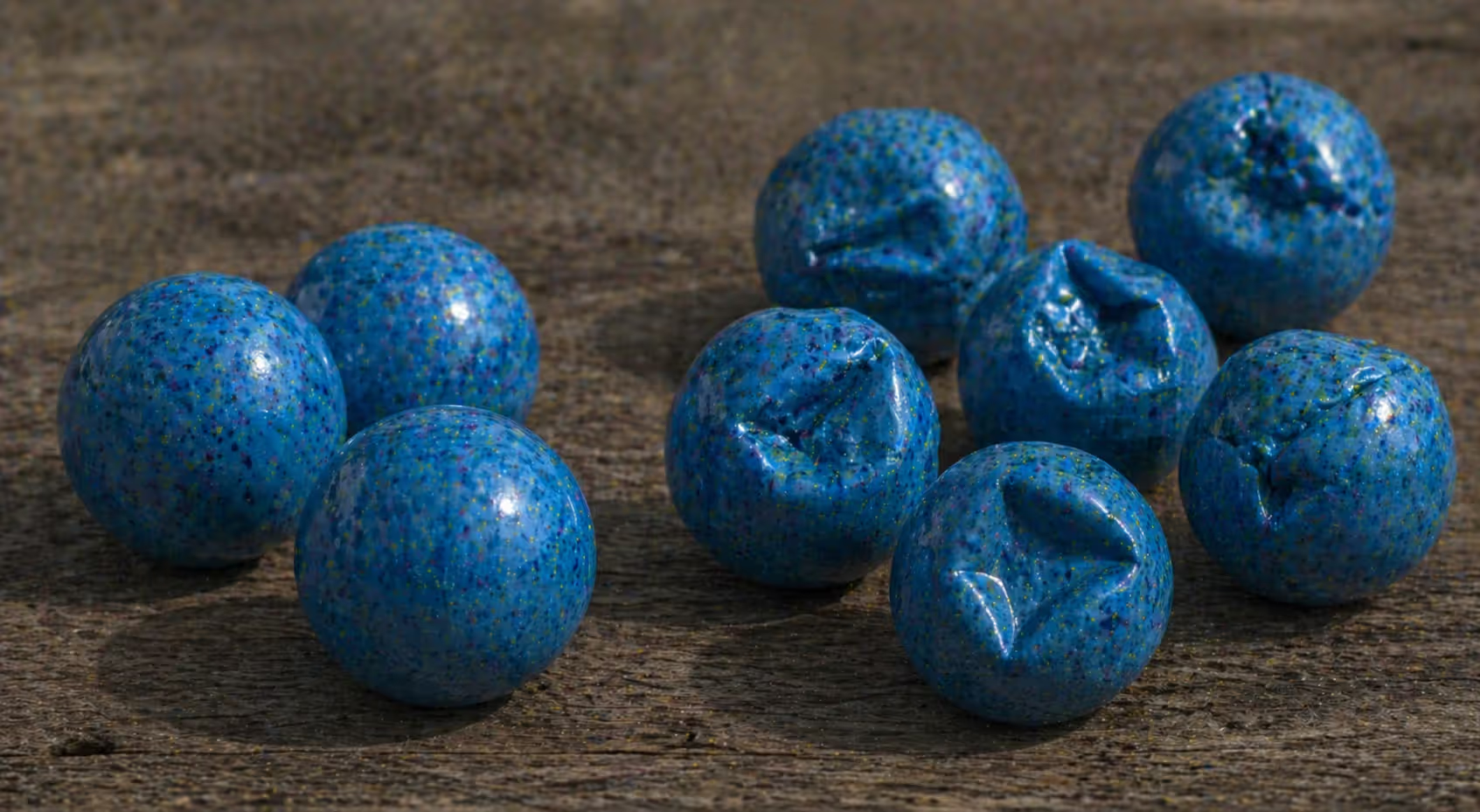
Dimpling occurs when paintballs develop small indentations or flat spots on the shell surface. This happens when paintballs remain stationary under pressure for extended periods—the weight of paintballs above compresses those below, and the gelatin shell deforms. Dimpled paintballs fly erratically because the surface irregularities disrupt airflow, causing unpredictable curves and reduced accuracy. Rotating paintball storage containers every few weeks prevents dimpling, as does storing paint in smaller quantities that reduce compression weight.
Shell brittleness results from improper storage temperature or age. Gelatin shells lose moisture over time, becoming stiff and fragile. Brittle shells break from normal handling, shatter in hoppers from vibration, or fragment on firing. Storage in air-conditioned environments (below 70°F with controlled humidity around 50%) extends shell life, while hot, dry conditions accelerate moisture loss. Most manufacturers recommend using paintballs within six months of production for optimal performance.
Seam separation represents a manufacturing defect where the two shell hemispheres don't bond properly. Weak seams cause paintballs to split open during loading, feeding, or firing, creating messes without marking opponents. This defect usually affects entire production batches, so if multiple paintballs from the same box show seam problems, the entire batch is suspect. Reputable manufacturers accept returns for defective batches.
Shell thickness inconsistency creates unpredictable break characteristics. Some balls break in the barrel while others bounce off targets, even from the same box. This variability indicates poor manufacturing quality control. Premium paintballs undergo automated inspection systems that measure shell thickness at multiple points and reject balls outside specification. Budget paintballs often skip this step, resulting in higher defect rates.
Overfilled or underfilled paintballs affect both flight and break quality. Overfilled balls experience higher internal pressure, making shells more prone to premature breaks. Underfilled balls have air pockets that cause wobbling during flight and may not break reliably on impact due to reduced internal pressure. Proper fill volume leaves minimal air space—typically less than 5% of internal volume.
Author: Ethan Rowe;
Source: lakestaytents.com
Storage temperature swings cause the most preventable quality problems. Paintballs stored in car trunks, garages, or outdoor sheds experience daily temperature cycles that stress shells through repeated expansion and contraction. Each cycle weakens the gelatin structure and accelerates moisture loss. Players who store paint in climate-controlled environments report significantly fewer quality issues.
Exposure to direct sunlight degrades both shells and fill. UV radiation breaks down gelatin proteins and can cause dye degradation or fill separation. Paint stored in clear plastic bags or containers should be kept away from windows and direct light. Most manufacturers package paintballs in opaque bags specifically to prevent light exposure.
One rule of thumb: if paintballs don't roll smoothly across a flat surface or feel sticky to the touch, quality has degraded. Fresh, properly stored paintballs should be dry to the touch (though slightly tacky is normal), uniformly round, and roll straight without wobbling. Any deviation suggests storage problems or manufacturing defects.
FAQ
Understanding paintball paint and fill types transforms how you approach equipment selection, maintenance, and field performance. Water-based fills dominate recreational play for practical reasons—they wash out easily, reduce environmental impact, and meet the needs of most players. Oil-based fills remain relevant in competitive settings where mark visibility and cold-weather consistency matter most.
The washability question has a straightforward answer: modern water-based formulations rinse from clothing and skin with minimal effort, while oil-based fills demand more aggressive treatment but still clean up with proper technique. Neither type poses health risks, and both meet industry safety standards.
Break quality depends more on storage conditions and manufacturing consistency than fill type. Keep paintballs in stable, moderate temperatures, use fresh paint within six months of purchase, and match paint grade to your marker's capabilities. These practices prevent most common problems—barrel breaks, bounces, and accuracy issues.
Fill color serves visibility and identification purposes without affecting performance. Choose colors that contrast with your playing environment and meet field requirements. The dye composition uses food-grade ingredients that break down naturally and wash away cleanly.
Quality shell construction matters more than most players realize. Dimpling, brittleness, and thickness inconsistencies cause more performance problems than fill formulation differences. Invest in reputable brands with consistent quality control, and store paint properly to maintain shell integrity.
Whether you're outfitting a rental operation, competing in tournaments, or playing weekend recreational games, matching paint type to your specific needs ensures better performance and easier cleanup. The paintball industry has refined fill formulations significantly over the past decade, delivering safer, more environmentally responsible products without sacrificing the core experience that makes paintball engaging.