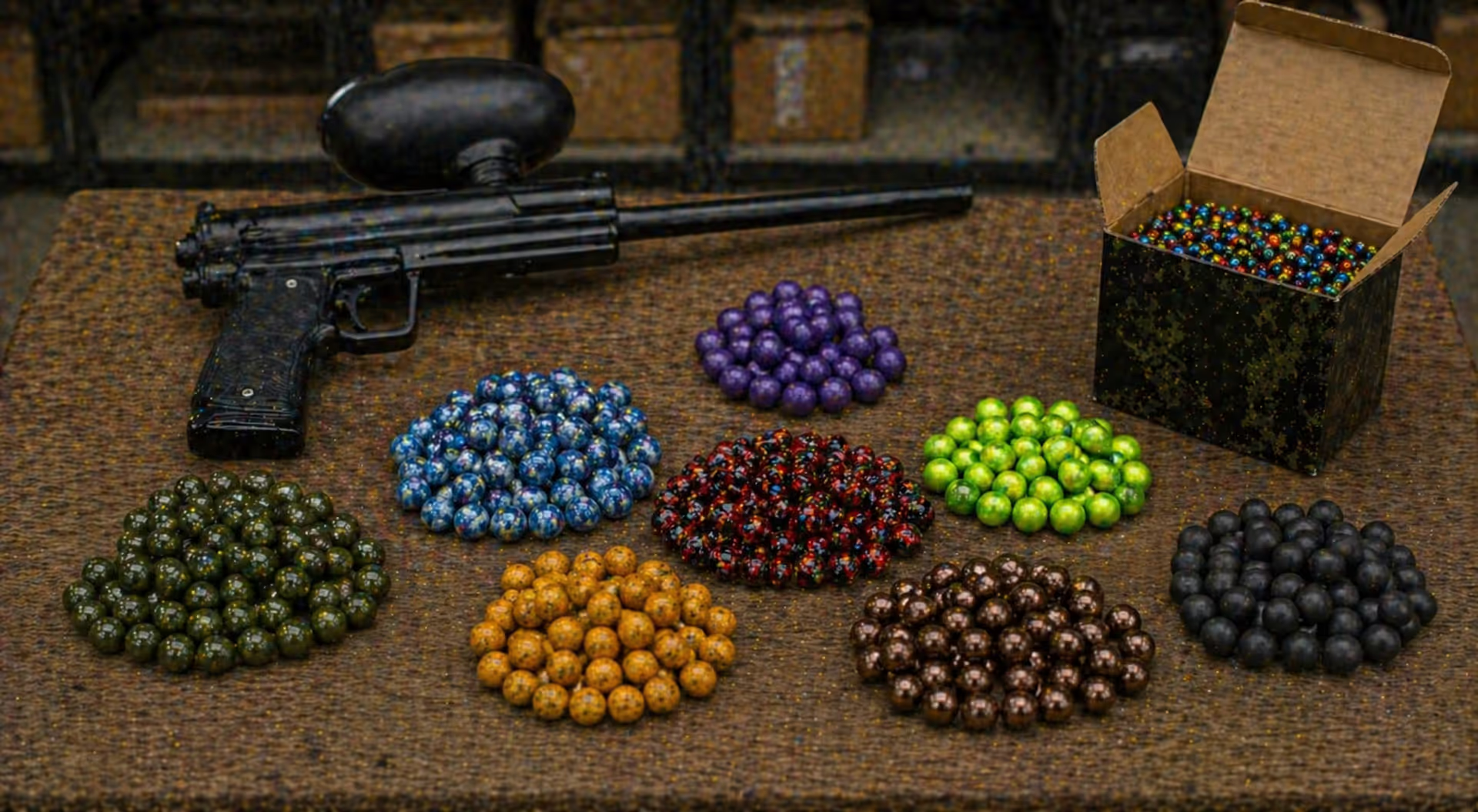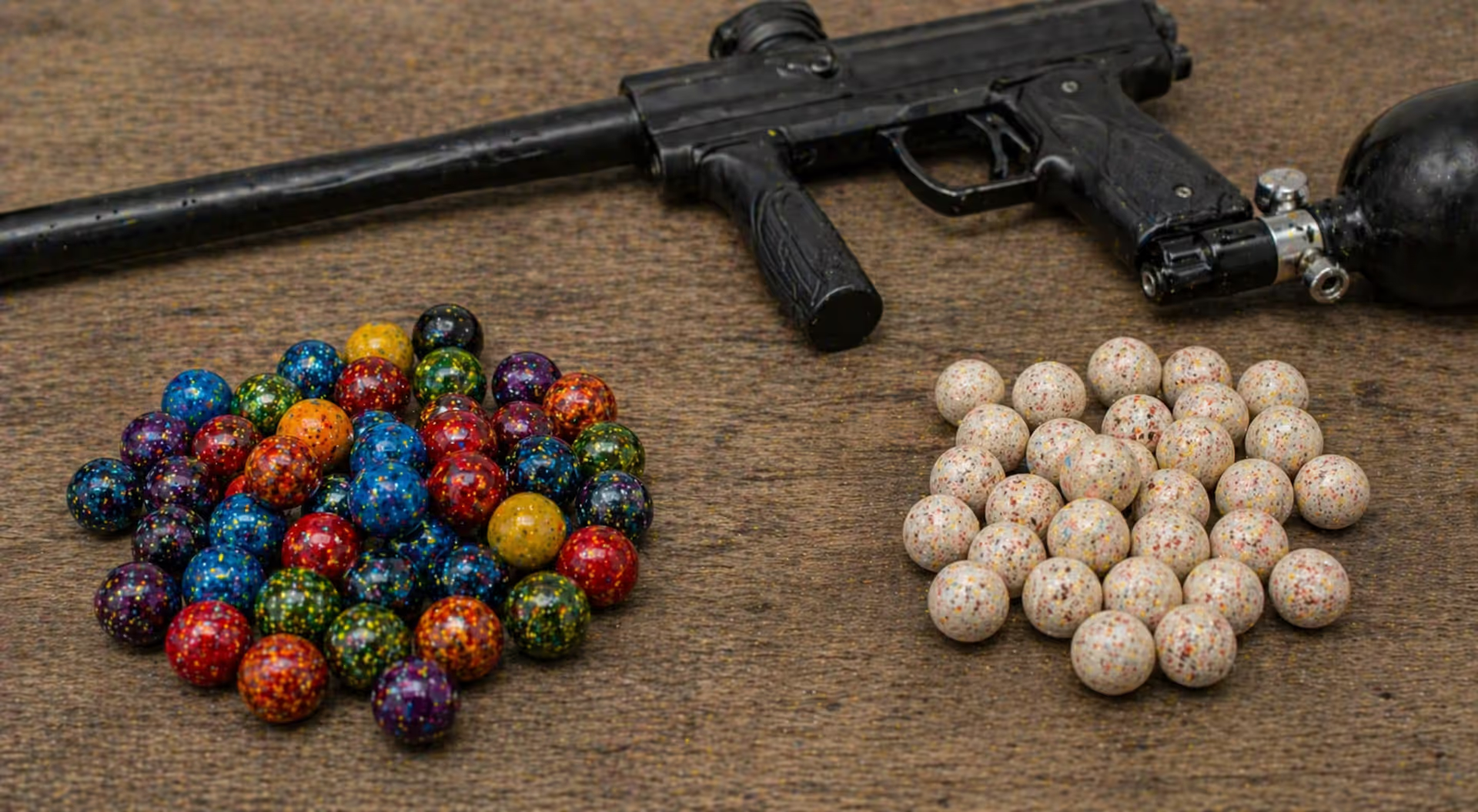
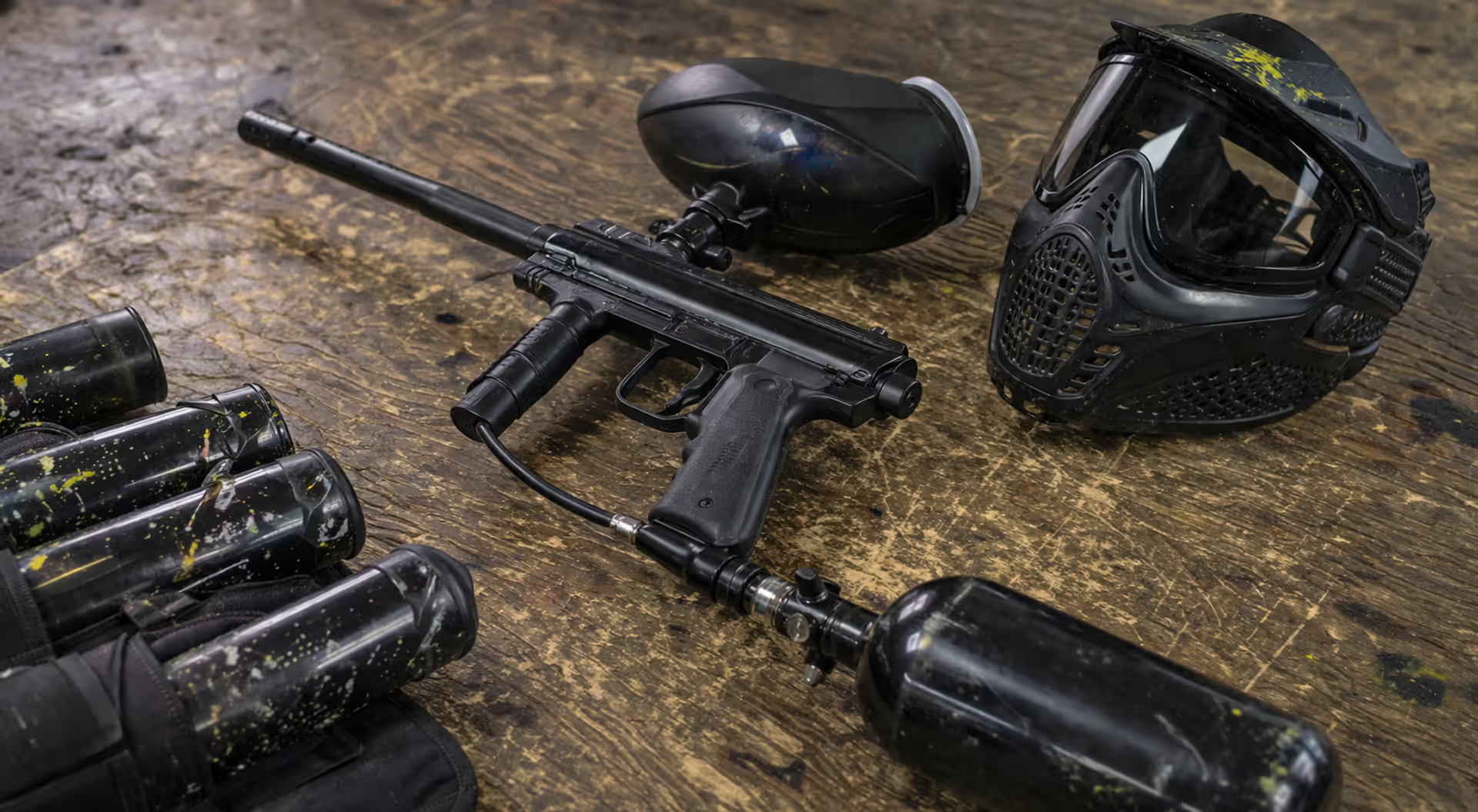
paintball marker with CO2 tank attached on table with gear
Paintball Gun CO2 Guide

Content
Carbon dioxide has powered paintball markers since the sport's earliest days, offering an affordable and accessible propellant system that millions of players still rely on. Understanding how CO2 works, what equipment you need, and when it makes sense over other options will help you make smarter choices about your setup.
What Is CO2 and How Does It Power Paintball Guns
Carbon dioxide exists in a unique state inside your paintball gun co2 system. When compressed into a tank at typical room temperature, CO2 becomes a liquid. This liquid state allows you to store far more propellant in a small container than you could with a gas alone.
When you pull the trigger, a small amount of liquid CO2 escapes into the marker's valve system. The sudden drop in pressure causes the liquid to instantly vaporize into gas—a process that releases energy. This expanding gas creates the pressure needed to push the paintball down the barrel at velocities typically between 280 and 300 feet per second.
The phase change from liquid to gas happens extremely fast, which is why CO2 can deliver consistent power shot after shot. However, this same phase change causes a cooling effect. Rapid firing can actually freeze components inside your marker, which we'll address later.
Pressure inside a CO2 tank varies with temperature. A full tank at 70°F typically holds around 850 PSI, but this can swing from 600 PSI on cold days to over 1,000 PSI in summer heat. This temperature sensitivity distinguishes CO2 from compressed air systems and affects performance in ways every player should understand.
Types of CO2 Containers for Paintball Guns
Disposable 12-Gram CO2 Cartridges
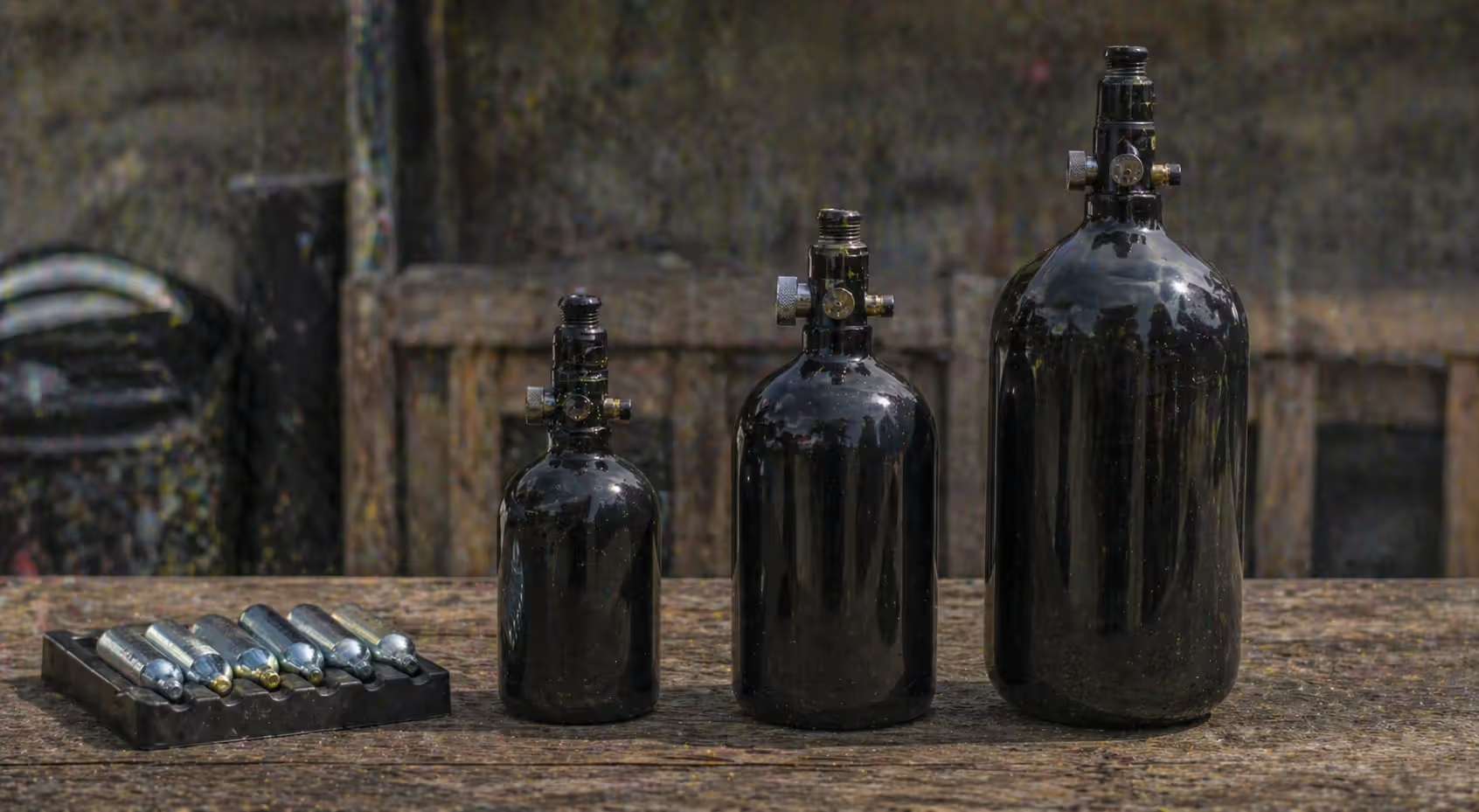
The 12 gram co2 paintball cartridge represents the most compact power source available. These small, threaded cylinders screw directly into pistol-style markers or attach via an adapter on some pump guns. Each cartridge typically delivers 20 to 30 shots depending on your marker's efficiency.
Paintball co2 cartridges work well for casual backyard games or as emergency backup power. They're sold in multi-packs at sporting goods stores, making them easy to find. The main drawback is cost per shot—buying individual cartridges becomes expensive compared to refillable tanks if you play regularly.
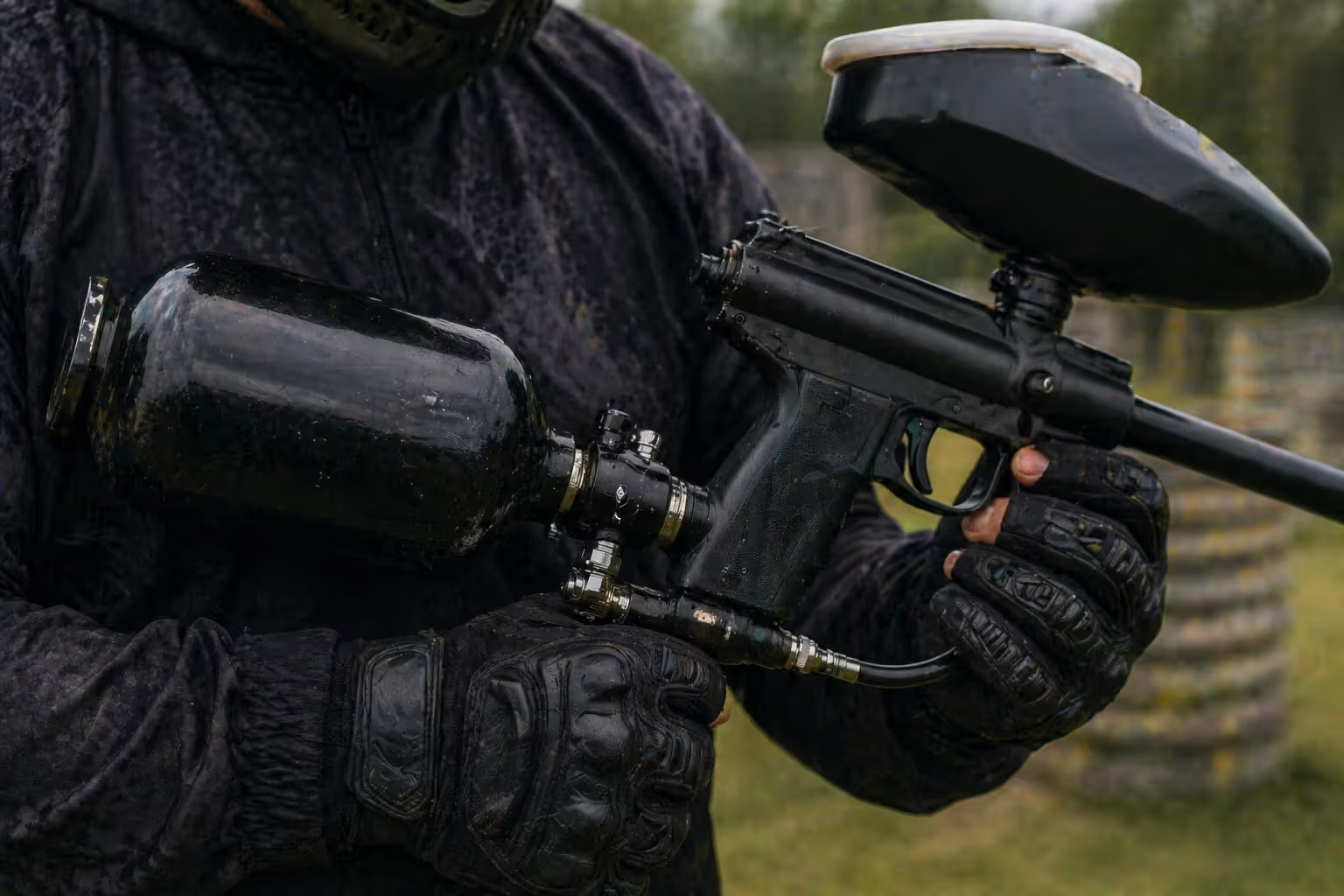
Author: Brandon Kesswick;
Source: lakestaytents.com
Some rental markers at fields use these cartridges because they're simple to swap between players. If you're using a pistol marker or a lightweight pump gun for woodsball, the co2 cartridge paintball option keeps your setup minimal.
Refillable CO2 Tanks (12 oz, 20 oz, 24 oz)
A co2 tank for paintball gun use comes in several standard sizes, measured by weight capacity rather than volume. The most common sizes are:
- 9 oz tanks: Compact option for pistols and lightweight markers, providing 400-500 shots
- 12 oz tanks: Good balance for recreational players, delivering 600-700 shots
- 20 oz co2 tank: The standard for most players, offering 1,000-1,200 shots per fill
- 24 oz tanks: Maximum capacity for tournament play or extended scenarios
These tanks feature a pin valve that opens when threaded into your marker's ASA (air source adapter). The tank itself is just an aluminum bottle with a brass valve assembly. Most have a burst disk—a safety device that releases pressure if the tank overheats beyond safe limits.
Refilling a tank costs between $3 and $5 at most paintball fields or sporting goods stores with CO2 equipment. Some dive shops and welding supply stores also offer refills. The investment in a refillable tank pays for itself after just a few outings compared to buying disposable cartridges.
Author: Brandon Kesswick;
Source: lakestaytents.com
CO2 Canisters vs Tanks (terminology clarification)
You'll hear both "paintball co2 canister" and "tank" used interchangeably. Technically, they're the same thing—pressurized containers holding liquid CO2. Some manufacturers use "canister" in their marketing, but "tank" remains the more common term among players.
The word "cartridge" specifically refers to the small 12-gram disposable units. If someone mentions a co2 canister for paintball gun applications, they're talking about the refillable aluminum bottles, not the tiny threaded cartridges.
How CO2 Paintball Guns Work
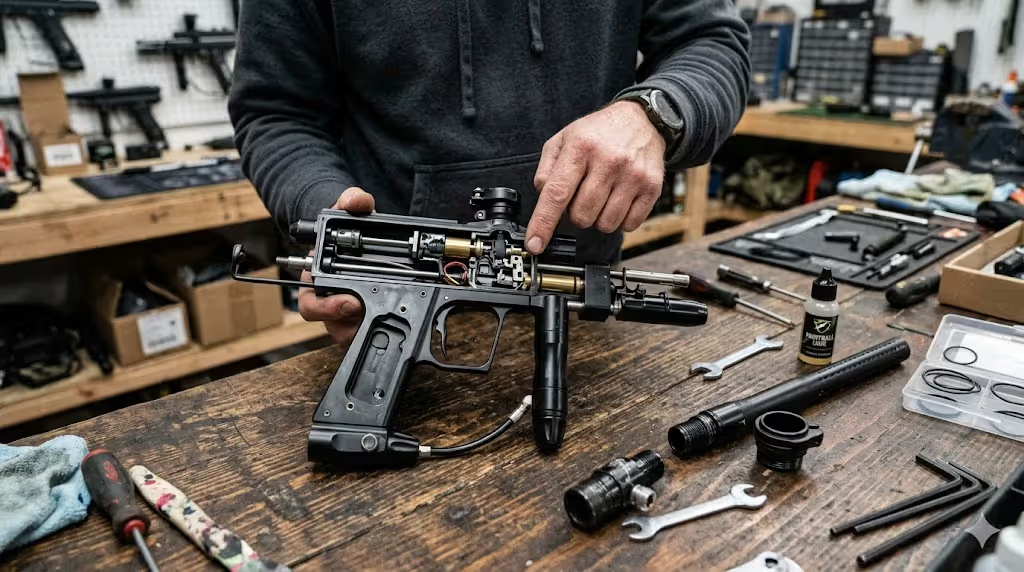
Understanding the firing cycle helps you diagnose problems and maintain your equipment properly. Here's what happens in the fraction of a second between pulling the trigger and the paintball leaving the barrel.
Step 1: Trigger activation
Pulling the trigger releases a sear or opens a valve, depending on your marker's design. This allows CO2 to flow from the tank into the marker's internal passages.
Step 2: Liquid CO2 enters the expansion chamber
A small volume of liquid CO2 rushes into a chamber where pressure drops dramatically. The liquid instantly vaporizes, creating a surge of gaseous CO2 at high pressure.
Step 3: Gas pressure builds behind the paintball
The expanding gas fills the space behind the paintball, which sits in the breech. Pressure builds until it overcomes the friction holding the ball in place.
Step 4: Paintball accelerates down the barrel
Gas pressure pushes the paintball forward, accelerating it through the barrel. As the ball moves, gas escapes around it and through barrel porting, gradually reducing pressure.
Step 5: Valve resets
After firing, a spring or gas pressure closes the valve, stopping CO2 flow. The marker is ready for the next shot.
Author: Brandon Kesswick;
Source: lakestaytents.com
Blowback markers use some of the CO2 to cycle the bolt backward, automatically loading the next paintball. More advanced markers use electronic solenoids to control gas flow with precision timing. Regardless of the specific mechanism, all how co2 paintball guns work follows this basic principle: controlled release of expanding gas.
The key component regulating this process is the expansion chamber or valve system. Better markers include regulators that smooth out pressure fluctuations, improving shot-to-shot consistency. Budget markers often lack this refinement, which is why you'll notice more velocity variation.
CO2 vs Compressed Air for Paintball Guns
The debate between co2 vs air paintball gun setups comes down to understanding the trade-offs. Neither is universally "better"—each suits different situations.
Compressed air, also called High Pressure Air (HPA) or nitrogen, remains a gas at all temperatures and pressures used in paintball. This fundamental difference eliminates the phase-change cooling effect that affects CO2. HPA tanks store air at 3,000 or 4,500 PSI, then regulate it down to the 800 PSI or lower that markers need.
| Feature | CO2 | Compressed Air (HPA) |
| Operating pressure | 600-1,100 PSI (varies with temperature) | 800 PSI output (regulated from 3,000-4,500 PSI) |
| Shot consistency | Moderate; velocity drops during rapid fire | Excellent; minimal velocity variation |
| Temperature sensitivity | High; performance drops in cold weather | Low; consistent across temperature ranges |
| Cost per fill | $3-5 per tank | $3-5 per tank (requires special compressor) |
| Initial investment | $20-40 for tank | $50-200 for tank |
| Marker compatibility | Works with most mechanical markers | Required for high-end electronic markers |
| Maintenance requirements | Replace O-rings annually; no hydro testing | Hydro test every 3-5 years; minimal O-ring service |
CO2 wins on upfront cost and availability. Nearly every paintball field can fill CO2 tanks, while HPA requires a special high-pressure compressor. If you're playing with a basic mechanical marker a few times per year, CO2 makes perfect sense.
HPA becomes essential for tournament play or when using electronic markers with delicate solenoid valves. The consistent pressure prevents damage to sensitive components and delivers the shot-to-shot accuracy competitive players demand.
Temperature impact tells the real story. On a 90°F summer day, your CO2 tank might deliver hot shots that break paint in the barrel. On a 40°F day in early spring, that same tank will struggle to maintain velocity. HPA performs identically in both conditions.
For recreational players using mechanical markers, CO2 remains a practical choice that keeps costs down. But once you move to electropneumatic guns or start competing, the consistency of HPA becomes non-negotiable. The freeze-up issues alone will cost you eliminations in tournament play.
— Marcus Chen, Head Referee
Choosing the Right CO2 Setup for Your Marker
Compatibility comes first. Check your marker's manual or manufacturer website to confirm CO2 support. Some electronic markers explicitly prohibit CO2 because the pressure spikes and liquid slugs can damage solenoids. Planet Eclipse, Dye, and other high-end manufacturers typically require HPA for their tournament-grade guns.
For mechanical blowback markers—Tippmann 98 Customs, Spyder models, and similar workhorses—CO2 works perfectly fine. These markers were designed around CO2 and handle its quirks without issue.
Tank size depends on your play style. Scenario and woodsball players who might go hours between refills benefit from a 20 oz co2 tank. Speedball players who refill between games can use smaller 12 oz tanks to reduce weight. If you're running a pistol marker as a backup, stick with 12-gram cartridges or a compact 9 oz tank.
Budget considerations matter for new players. Starting with CO2 keeps initial costs low while you're still learning whether paintball will become a regular hobby. You can always upgrade to HPA later and sell your CO2 tank used.
Refill access in your area might make the decision for you. If the nearest paintball field is an hour away and doesn't offer CO2 fills, you'll waste time and gas money. Call ahead to confirm what services local fields provide.
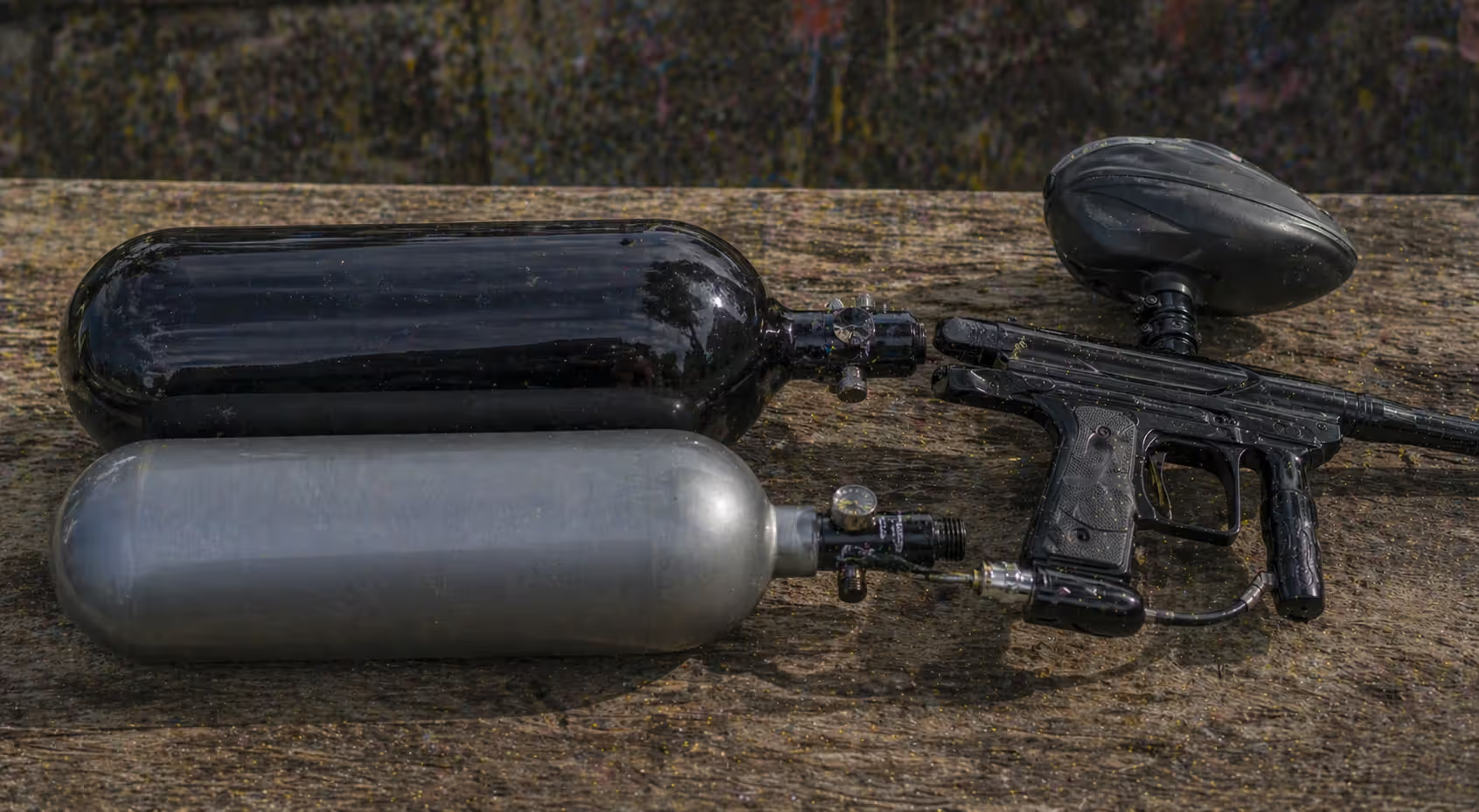
A paintball co2 adapter becomes necessary in specific situations. Some markers designed for 12-gram cartridges can accept refillable tanks with the right adapter. These typically screw into the marker's cartridge port and provide a standard ASA threading for a tank. The adapter adds a few ounces of weight but saves money over buying cartridges constantly.
Author: Brandon Kesswick;
Source: lakestaytents.com
Common Problems with CO2 Paintball Systems
Freeze-up during rapid fire is the most frequent issue. When you're shooting fast, liquid CO2 doesn't have time to fully vaporize before the next shot. This liquid can freeze O-rings, causing leaks, or freeze the valve itself, stopping the marker from firing. The solution is pacing your shots or installing an anti-siphon tube inside the tank, which draws from the gas layer rather than the liquid at the bottom.
Inconsistent velocity frustrates players trying to dial in their chronograph readings. CO2's temperature sensitivity means your velocity will drift as the tank warms or cools. Shooting twenty balls rapidly will cool the tank and drop velocity. Letting it sit in the sun will raise velocity. This isn't a defect—it's physics. The only real fix is switching to HPA.
Leaks around the tank connection usually indicate a worn O-ring in your marker's ASA. These small rubber rings create the seal between tank and gun. Replace them annually or whenever you notice hissing. Keep a spare O-ring kit in your gear bag—they cost a few dollars and save the day when you're at the field.
Liquid CO2 entering the marker happens when you shoot with the tank tilted too far forward or fire too rapidly. Some liquid makes it past the valve and into your marker's internals. This can damage seals and cause wild velocity spikes. Anti-siphon tanks prevent this by positioning the pickup tube to draw from the gas layer.
Velocity creep describes velocity increasing over the first few shots after the marker has sat idle. The CO2 warms slightly from ambient temperature, raising pressure. Most fields require chronographing after your marker has been sitting, then rechecking after you've fired a hopper of paint to catch this issue.
Pin valve problems occur when the tank's pin valve doesn't seat properly or gets debris on the seal. You'll hear a loud hiss when threading the tank in. Unscrew the tank, wipe the pin valve clean, and check for damage. If the valve stem is bent or the O-ring is cut, the tank needs professional service—don't try to fill it.
Frequently Asked Questions About Paintball CO2
CO2 remains a practical propellant choice for recreational players using mechanical markers. The low equipment cost, widespread refill availability, and compatibility with entry-level guns make it the default option for many new players. Understanding how temperature affects performance, choosing the right tank size for your play style, and knowing when CO2's limitations require upgrading to HPA will help you make informed decisions about your setup.
Start with CO2 if you're playing casually with a mechanical marker. Pay attention to how it performs in different weather conditions and during rapid fire. As your skills develop and you consider upgrading equipment, factor in whether your new marker requires HPA. The knowledge you've gained about CO2 systems—how they work, common problems, and maintenance needs—applies to paintball gear generally and will serve you well regardless of which propellant you ultimately choose.