Paintball Drills and Movement Training Guide
Content
Movement separates players who get eliminated in the first thirty seconds from those who dominate the field. While marker accuracy and gear matter, your ability to move efficiently under fire determines whether you survive engagements or spend most of the game watching from the sidelines.
Why Movement Training Matters in Paintball
Raw shooting skills mean nothing if you can't position yourself to take the shot. Players who master movement control the tempo of matches, force opponents into defensive positions, and create opportunities for their teammates.
Poor movement gets you eliminated. Standing upright while transitioning between bunkers, moving in predictable patterns, or failing to change elevation exposes you to incoming paint. Advanced players exploit these mistakes ruthlessly.
Movement training improves three critical areas: survival time on the field, accuracy during dynamic play, and team coordination. Players who drill movement patterns develop muscle memory that functions under pressure. When paint flies overhead and your heart rate spikes, trained movement becomes automatic.
The difference shows immediately in positioning drills. Beginners telegraph their intentions, move slowly between cover, and present large target profiles. Trained players compress their movement windows, vary their timing, and position themselves to maximize angle advantages while minimizing exposure.
Footwork and Agility Fundamentals
Your stance determines how quickly you can react. Start with feet shoulder-width apart, knees bent, weight distributed on the balls of your feet. This athletic position lets you explode in any direction without wasted setup time.
Lateral movement requires different mechanics than forward running. Practice side-shuffling while maintaining your marker's sight picture. Your feet should never cross during lateral movement—crossing creates a moment of instability where you can't change direction or absorb impact from uneven terrain.
Direction changes separate average players from elite ones. The ability to plant and redirect without losing speed or balance lets you evade incoming paint and exploit gaps in opponent positioning. Practice hard cuts at various angles, focusing on the push-off leg's power generation.
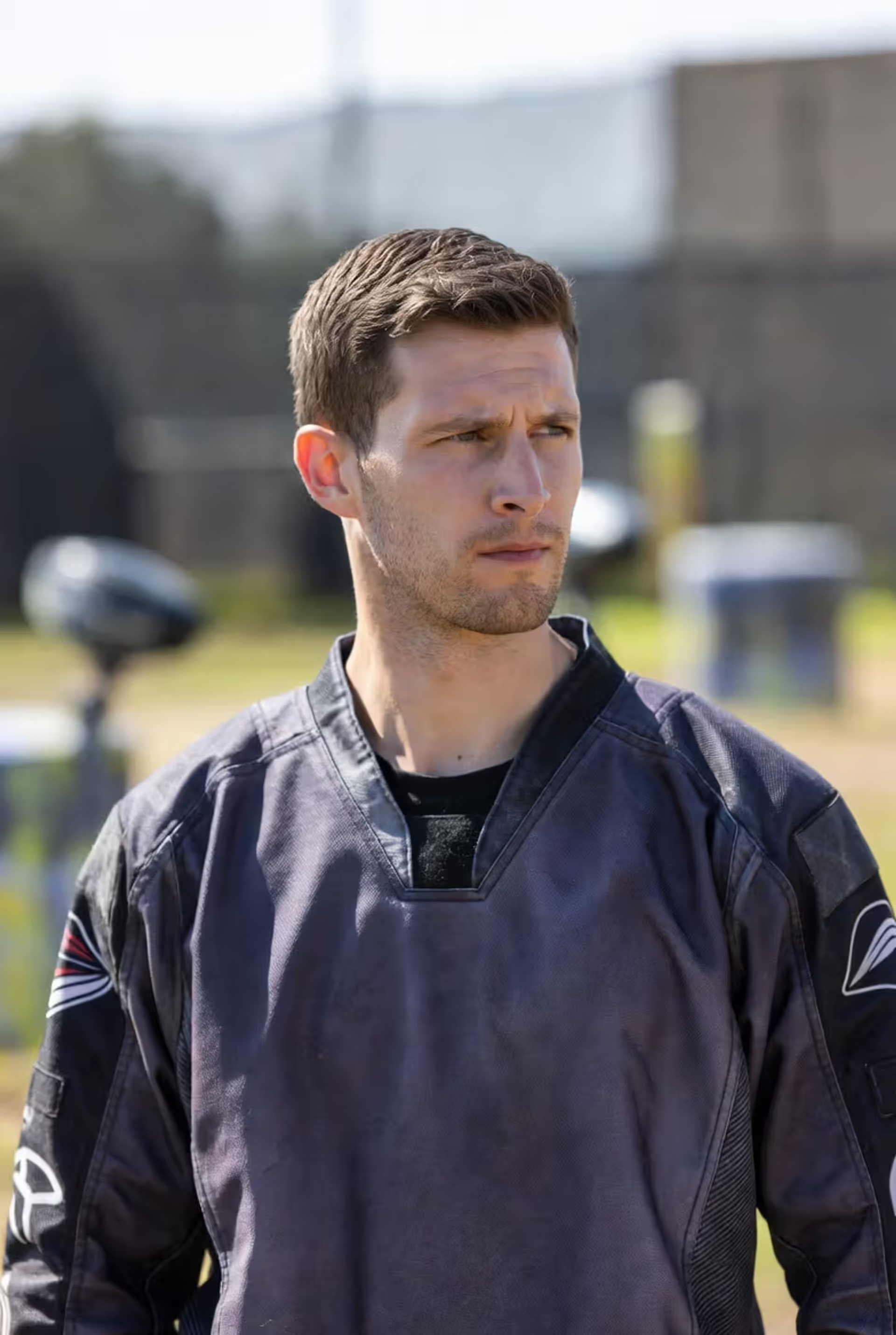
Author: Ethan Rowe;
Source: lakestaytents.com
Low Stance Movement Drills
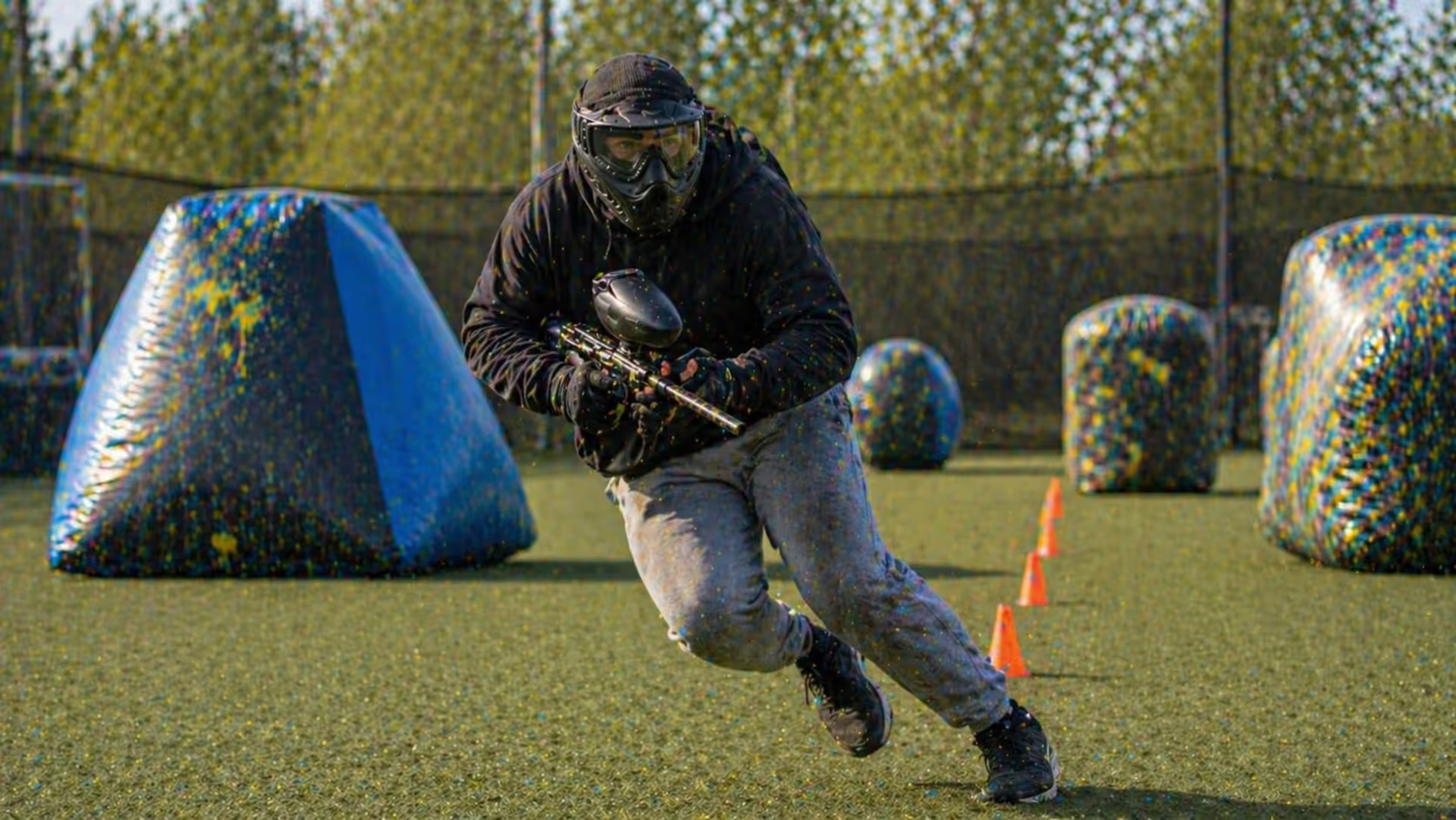
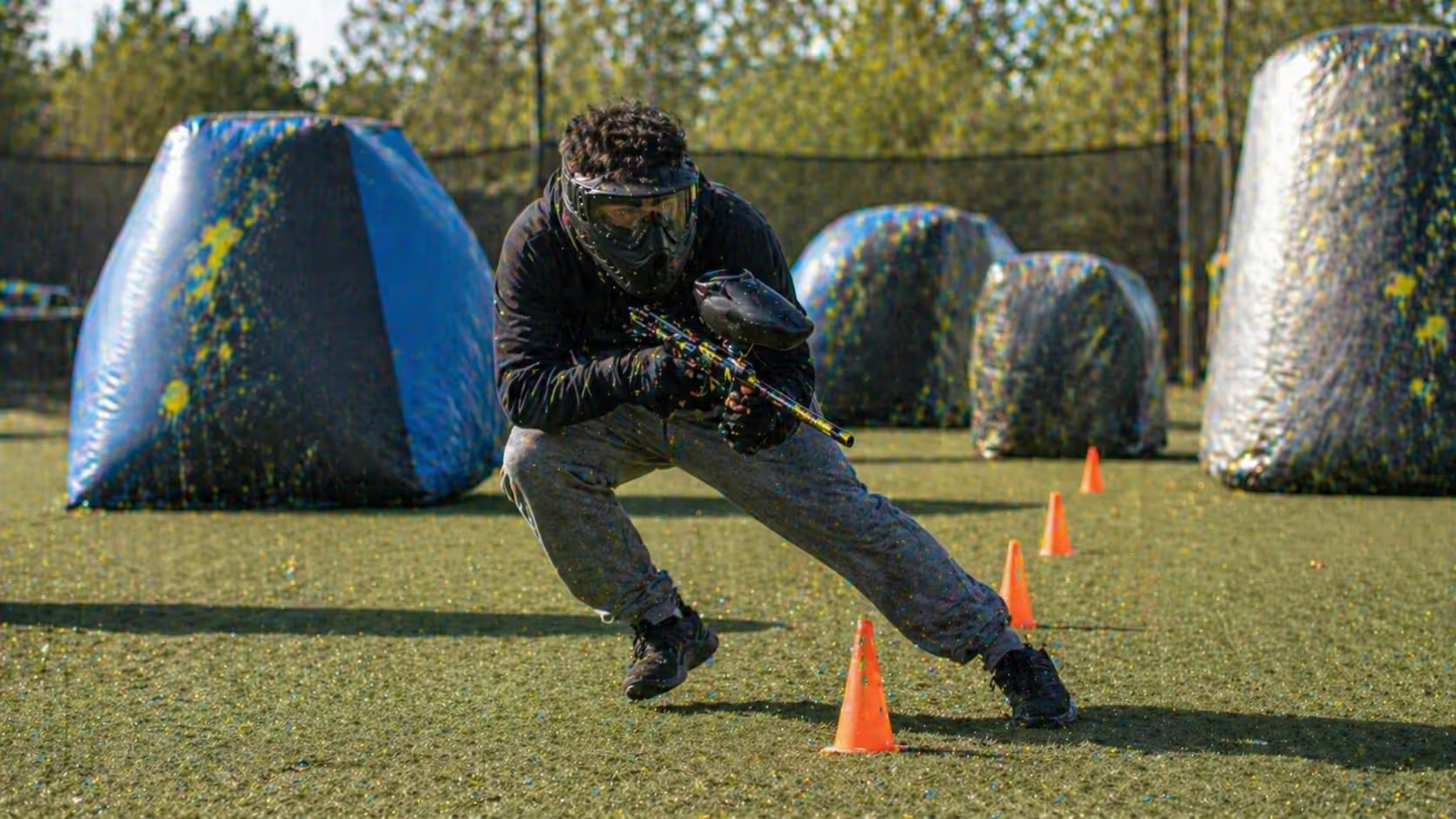
Set up five cones in a line, spaced three feet apart. Move laterally through the cones while keeping your head below an imaginary line at four feet. This forces you to maintain a low profile while moving, building the leg strength and balance needed for field play.
Progress to figure-eight patterns around two cones placed ten feet apart. Maintain your low stance throughout the pattern, accelerating out of each turn. Time yourself and track improvement weekly. Most players see significant speed gains within three weeks of consistent practice.
Add a marker to the drill once your movement feels smooth. Keep the marker pointed downfield while executing the pattern. Your upper body should remain stable while your legs handle directional changes—this separation lets you maintain aim while evading.
Crossover Step Techniques
Crossover steps generate maximum speed when you need to close distance quickly or retreat from an advancing opponent. Unlike shuffling, crossovers involve crossing your trailing leg in front of your lead leg, creating longer strides.
Practice crossovers along a straight line for twenty feet, then plant and return using the opposite lead leg. Focus on keeping your torso facing forward—rotating your shoulders wastes time and telegraphs your movement to opponents.
Combine crossovers with snap shooting by placing a target at the end of your movement path. Execute three crossover steps, plant, and snap to the target. This simulates the common scenario of moving to a new bunker and immediately engaging an opponent.
Author: Ethan Rowe;
Source: lakestaytents.com
Snap Shooting and Bunker Movement Drills
Snap shooting—the technique of briefly exposing yourself to take a shot before returning to cover—requires precise timing and body control. The entire exposure should last under one second, giving opponents minimal time to acquire and shoot you.
Start with static snap drills. Position yourself behind a bunker with a target visible to one side. Practice popping out, acquiring the target, and returning to cover in a single fluid motion. Count "one-thousand-one" in your head—if you're exposed longer than that count, you're moving too slowly.
Your eyes should locate the target before you move. Many beginners pop out, then search for their target while exposed. Instead, memorize the target's position, visualize your sight picture, then execute the snap with your aim already aligned.
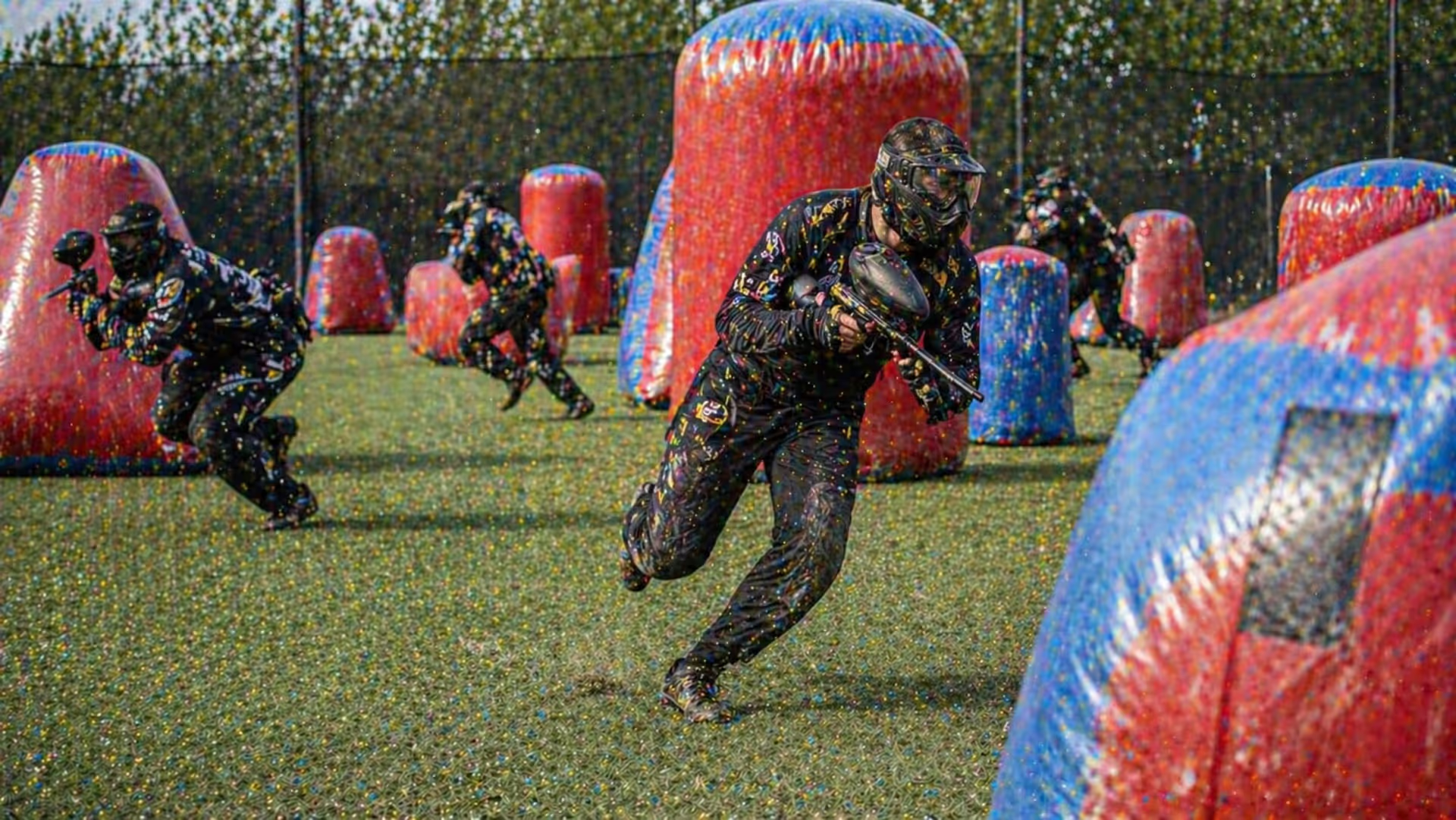
Bunker-to-bunker movement combines sprinting with snap shooting. The critical moment occurs when you reach your new bunker—you're vulnerable until you establish position and assess threats. Practice your approach angle to minimize exposure during the transition.
Set up two bunkers fifteen feet apart with a target positioned to threaten the movement path. Sprint from bunker one to bunker two, focusing on your final three steps. Decelerate smoothly, plant your outside foot, and rotate into the bunker rather than slamming into it. Immediately snap to the target.
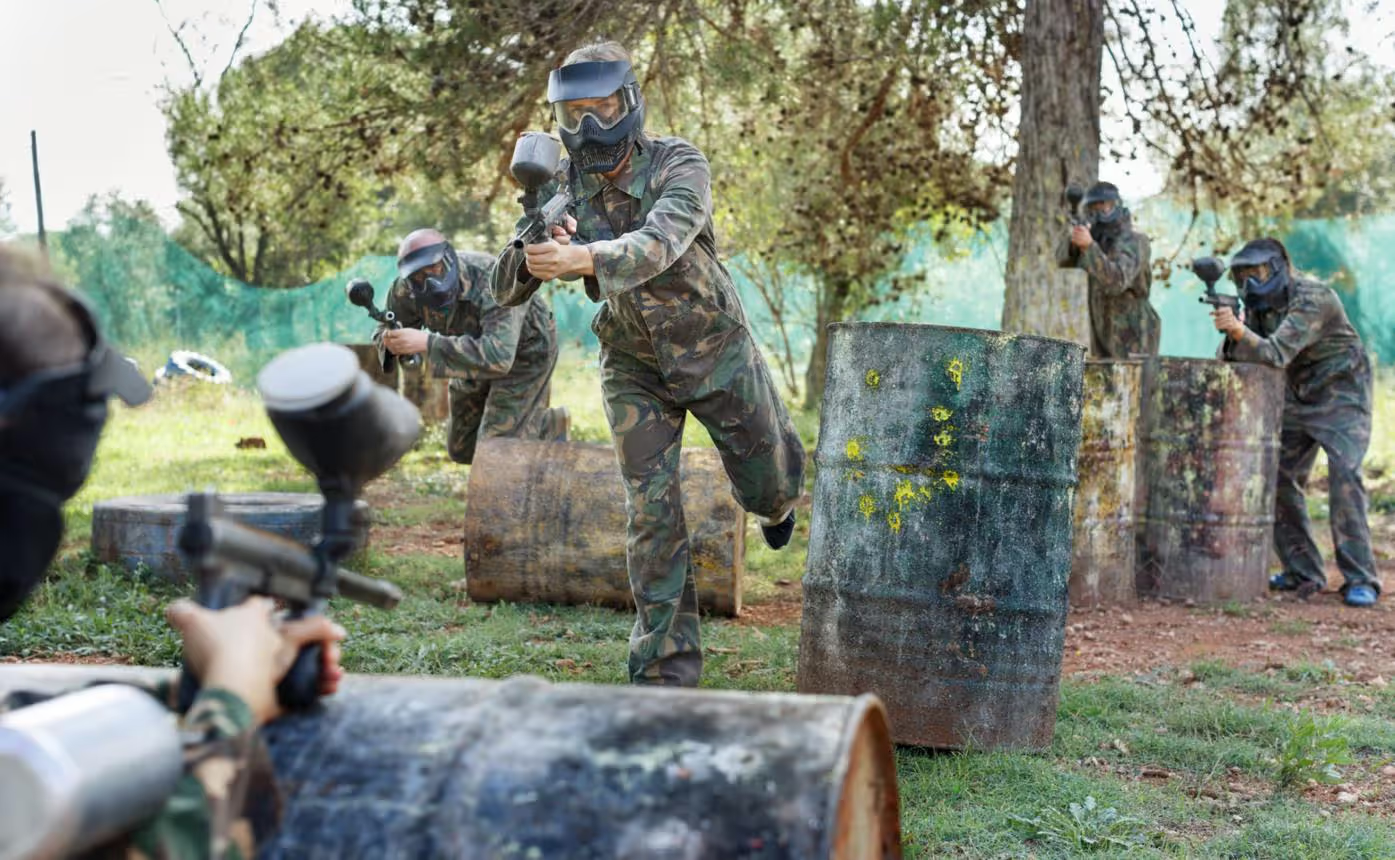
Progressive drill sequences build complexity. Start with uncontested movement, then add a training partner who shoots at you (with reduced velocity paint) during transitions. The pressure changes everything—movements that felt smooth during solo practice often fall apart when paint flies toward you.
Time your bunker moves to coincide with teammate suppression. Practice three-count movement: your teammate shoots, you count "one-thousand-one, one-thousand-two, one-thousand-three" while sprinting, then slide into your new position. This rhythm helps coordinate team advances.
Author: Ethan Rowe;
Source: lakestaytents.com
Running and Gunning Techniques
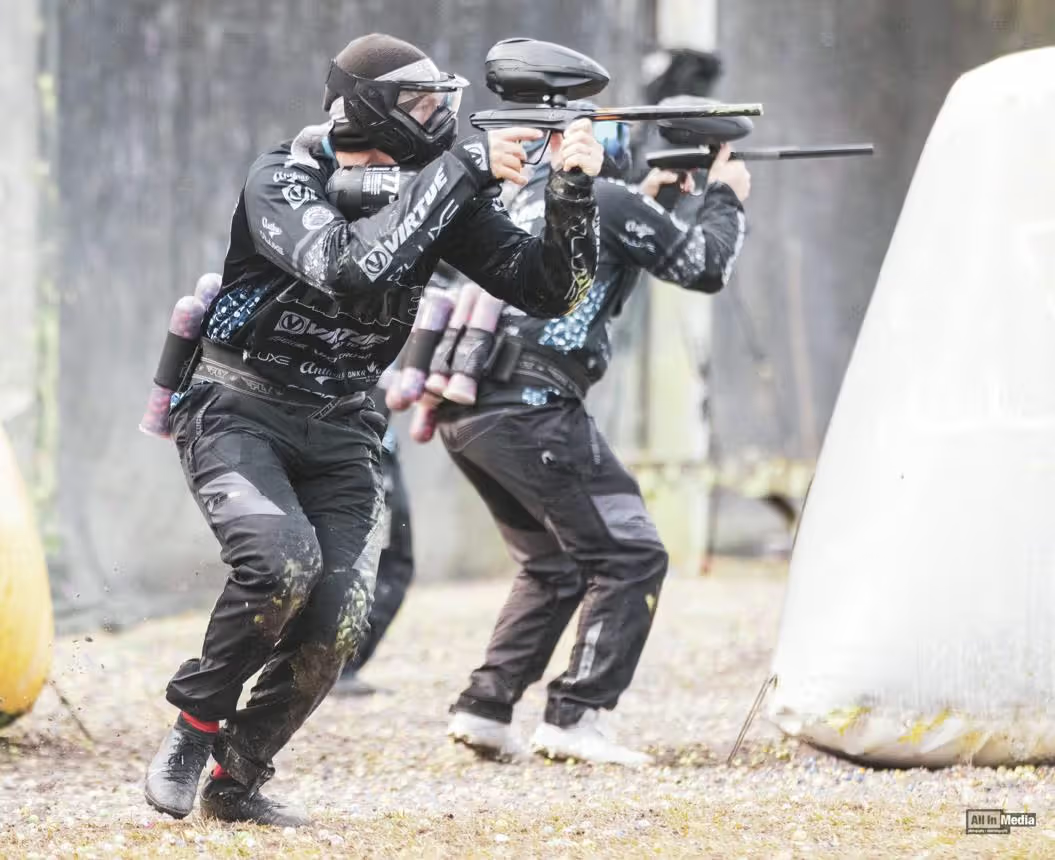
Moving while maintaining accuracy requires different mechanics than stationary shooting. Your marker becomes an extension of your core, absorbing movement from your legs while your upper body provides a stable shooting platform.
The key is separating upper and lower body movement. Your legs generate speed and handle terrain, while your torso remains level and your arms control the marker. Imagine a glass of water balanced on your head—your legs can move frantically, but the water shouldn't spill.
Target acquisition on the move demands peripheral vision skills. You can't stare at your target while navigating obstacles and monitoring threats. Practice scanning techniques where your eyes constantly cycle between your movement path, primary targets, and potential threats.
Speed control matters more than maximum speed. Running at 80% capacity lets you maintain accuracy and react to unexpected threats. Players who sprint at full speed can't adjust when opponents pop from unexpected angles or terrain changes force quick direction shifts.
Partner drills develop moving suppression skills. One player advances while shooting at designated targets, while their partner observes and calls out hit accuracy. Switch roles every two minutes. Most players discover their moving accuracy drops 40-60% compared to stationary shooting—this drill quantifies the gap and tracks improvement.
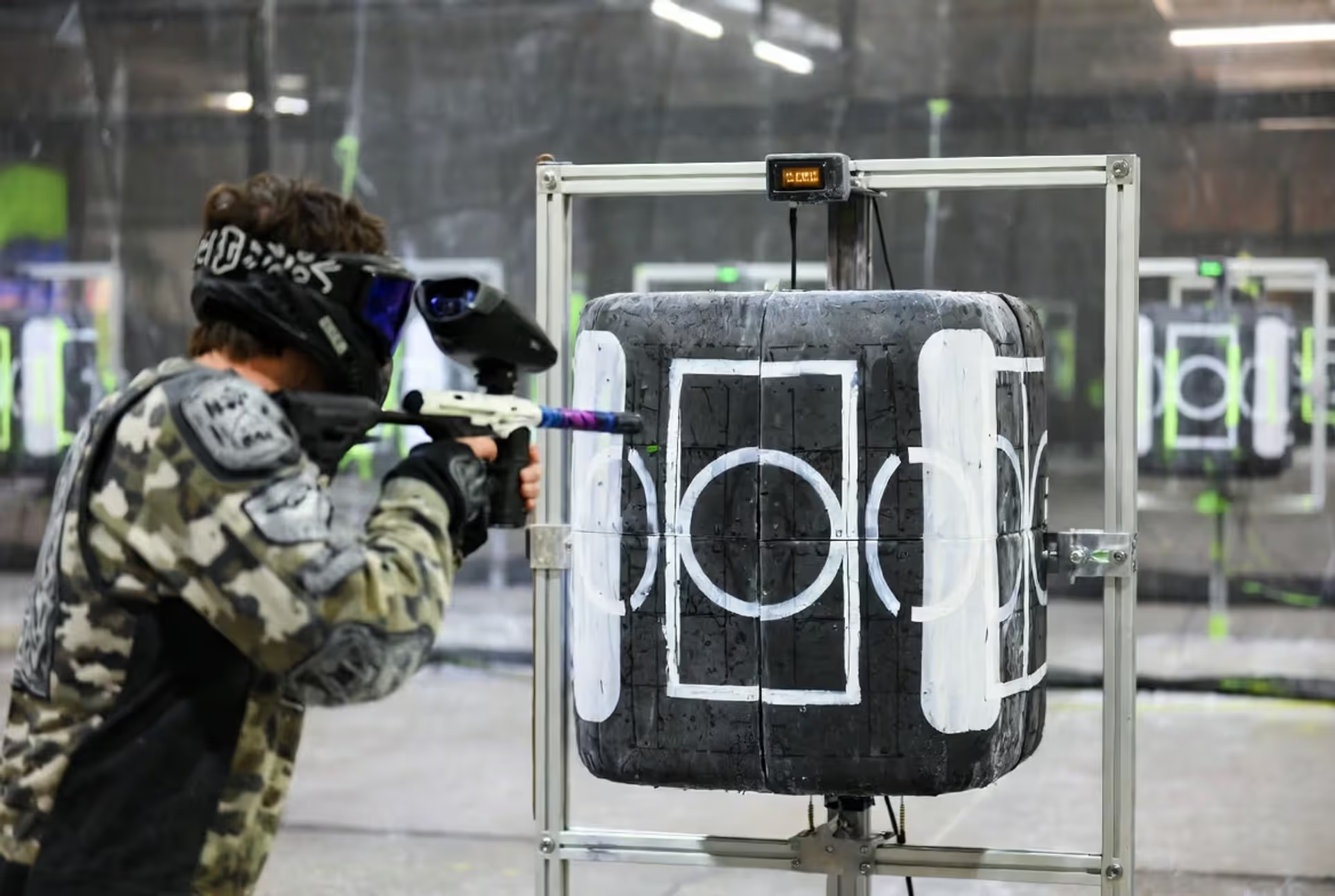
Set up a course with four stations, each featuring a target. Sprint from station to station, taking two shots at each target before moving to the next. Time the complete course and count hits. Effective running and gunning means maintaining at least 50% accuracy while completing the course in under twenty seconds.
Movement isn't just about speed—it's about controlled aggression. Players who master movement drills can dictate engagements, choosing when to push and when to hold. That decision-making ability, backed by trained movement patterns, separates good players from great ones.
— Alex Fraige
Speed and Evasion Training Methods
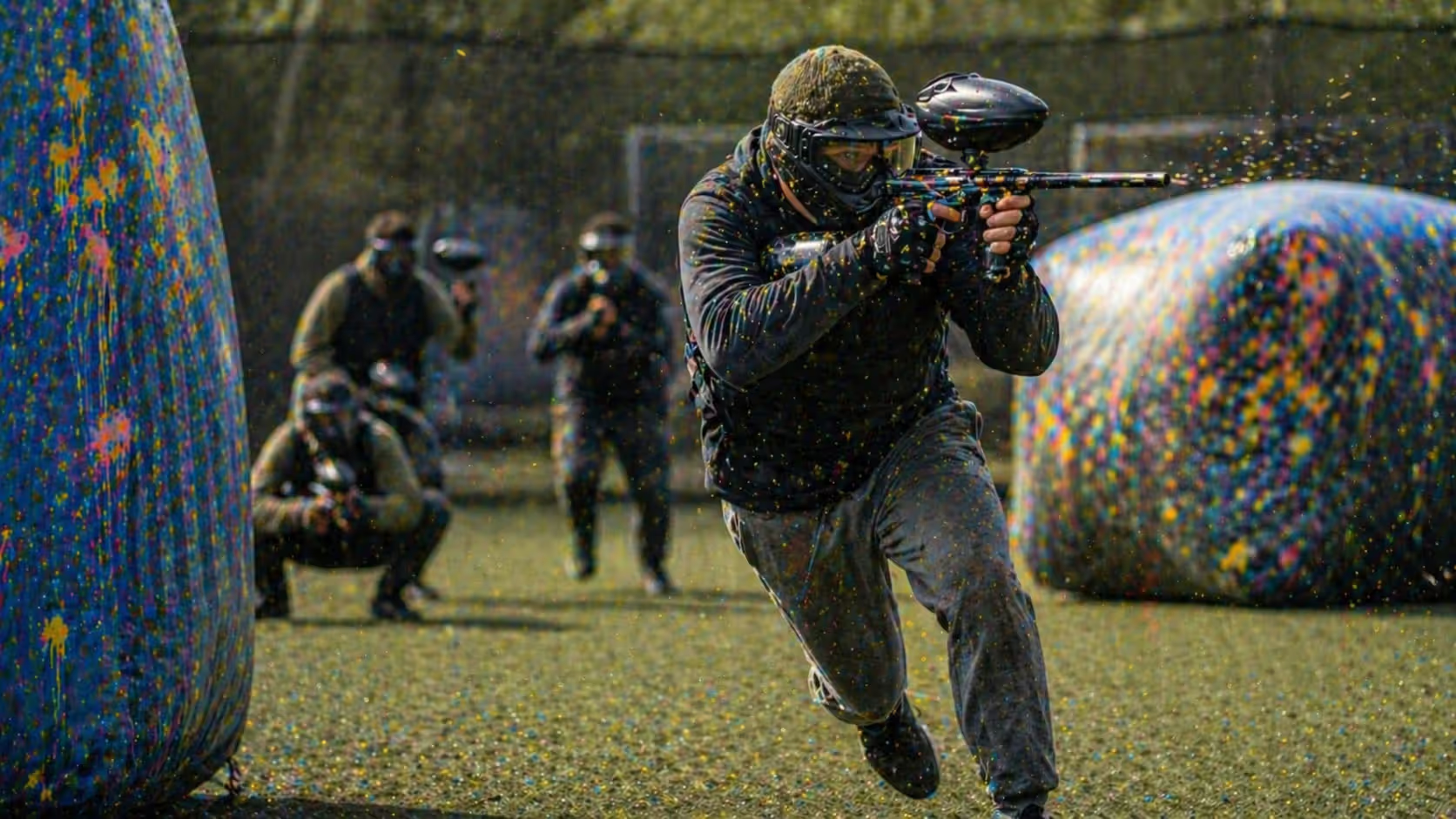
Reaction time determines whether you successfully break to your bunker or get eliminated during the opening seconds. Reaction drills compress your response window, training your body to explode from static positions instantly.
Partner reaction drills work effectively. Stand in your ready position while a partner holds a ball. When they drop it, sprint five yards before the ball bounces twice. This creates a measurable reaction challenge—you either beat the bounce or you don't.
Dodging patterns should never repeat. Predictable movement gets you shot. Practice random direction changes by having a partner call out directions ("left," "right," "drop") while you move downfield. Your body should react before your conscious mind processes the command.
Break-out speed drills simulate game starts. Position yourself at a starting bunker with your target bunker marked forty feet away. Practice your break fifty times in a session, focusing on explosive first steps and maintaining your low profile throughout the sprint. Most players reach their target bunker 0.3-0.5 seconds faster after dedicated break-out training.
Sliding techniques extend your movement options but carry injury risk. Only practice slides on appropriate surfaces—grass or turf, never hard-packed dirt or concrete. Start with slow-speed slides, gradually increasing velocity as your technique improves.
The baseball slide works best for paintball—one leg extended, the other tucked beneath you, hands holding your marker across your chest. Practice without paint first, focusing on smooth weight transfer and controlled deceleration. Poor slides result in twisted ankles, knee injuries, or broken markers.
Diving should be your last resort, not your primary movement technique. The risk of injury and equipment damage outweighs the benefits in most situations. If you practice diving, use proper padding and land on your chest/stomach, never your side. Keep your marker elevated to prevent barrel strikes on the ground.
Author: Ethan Rowe;
Source: lakestaytents.com
Positioning and Tactical Movement Drills
Reading the field means understanding angles, dead zones, and sight lines before you move. Walk fields before playing, identifying which bunkers offer the best protection and firing angles. Visualization helps—imagine where opponents might position themselves and plan your movement accordingly.
Angle optimization drills teach you to maximize cover while maintaining the ability to shoot. Stand behind a bunker and practice finding positions where you can see opponents but they have minimal target area on you. Small position adjustments—six inches left or right—dramatically change your exposure.
Communication-based movement exercises require verbal coordination. Practice calling out your movements to teammates: "Moving to the dorito," "Sliding to the snake," "Pushing the fifty." Clear communication prevents friendly fire and enables teammates to provide covering fire.
Team coordination drills build trust and timing. Set up a three-person movement sequence where each player's advance depends on their teammate's position. Player one moves and establishes fire, player two advances while player one provides cover, player three moves while players one and two suppress. This leapfrog pattern mirrors competitive play.
Game scenario simulations provide the most realistic training. Set up common field situations—defending a flag station, executing a coordinated push, holding a key bunker against multiple attackers. Run each scenario multiple times, adjusting tactics based on outcomes.
Common Movement Training Mistakes to Avoid
Overcommitting to moves kills more players than poor accuracy. Once you start a movement, you can't stop mid-sprint without presenting an easy target. Before moving, confirm your path is clear and your destination offers adequate cover. The best movement is the one you don't have to make.
Poor posture and balance errors compound under pressure. Players who train with sloppy form develop bad habits that persist during games. If you can't maintain proper form during drills, slow down until you can. Speed without control accomplishes nothing.
Neglecting off-field conditioning limits your movement potential. Paintball demands explosive power, endurance, and flexibility. Incorporate sprint intervals, agility ladder work, and mobility exercises into your training routine. Players with strong physical foundations learn movement skills faster and execute them more reliably under fatigue.
Training without purpose creates busy work, not improvement. Each drill session should target specific weaknesses or build on existing strengths. Track your performance metrics—sprint times, accuracy percentages, reaction speeds—and structure training to improve measurable outcomes.
Practicing alone has limits. Movement drills need pressure to reveal weaknesses. Training partners provide realistic opposition, feedback on your patterns, and motivation to push harder. Join local practice groups or organize regular training sessions with your team.
Equipment familiarity matters. Practice in the same gear you'll wear during games. Your movement changes significantly when wearing a pod pack loaded with paint versus practicing in athletic shorts. Train in realistic conditions to build accurate muscle memory.
Frequently Asked Questions
Movement training transforms paintball performance more reliably than any equipment upgrade. Players who dedicate time to structured drill progressions develop the speed, agility, and tactical awareness that dominate games. Start with fundamental footwork patterns, progress to snap shooting mechanics, and gradually incorporate complex skills like running and gunning.
Consistency matters more than intensity. Four focused 45-minute sessions per week outperform occasional marathon training days. Track your metrics, identify weaknesses, and structure drills to address specific gaps in your movement repertoire.
The physical skills—sprinting, sliding, direction changes—represent only half the equation. Tactical movement requires reading opponents, understanding angles, and coordinating with teammates. Combine individual drill work with team practice to develop both dimensions.
Remember that movement training carries injury risk. Progress gradually, use appropriate safety equipment, and practice dangerous techniques like diving only under controlled conditions. The goal is improving your game, not spending weeks recovering from preventable injuries.
Your next tournament performance depends on the work you put in today. Set up cones in your backyard, grab a training partner, and start drilling. The players who consistently outmaneuver you aren't more talented—they've simply invested more time in structured movement training.