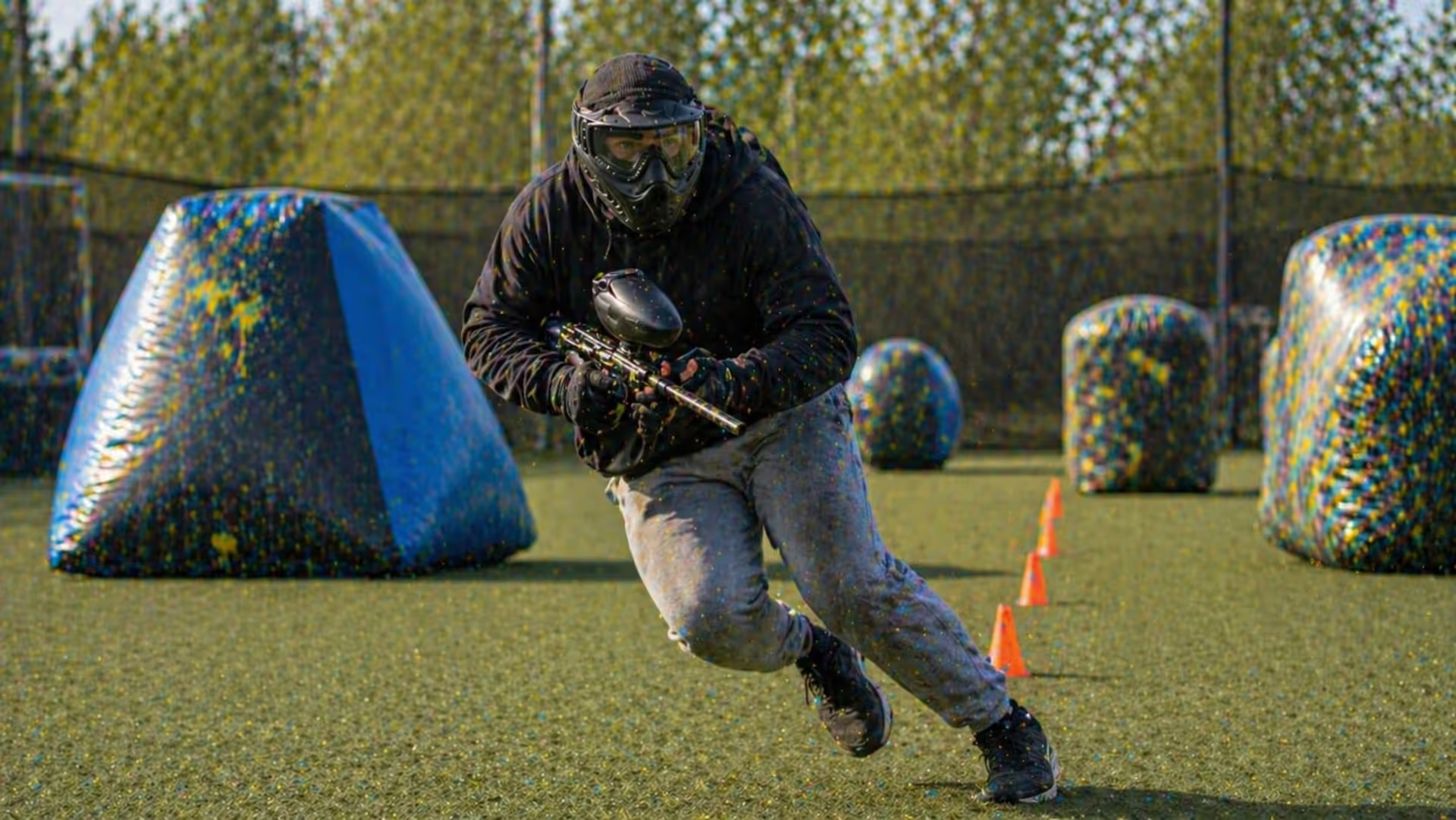
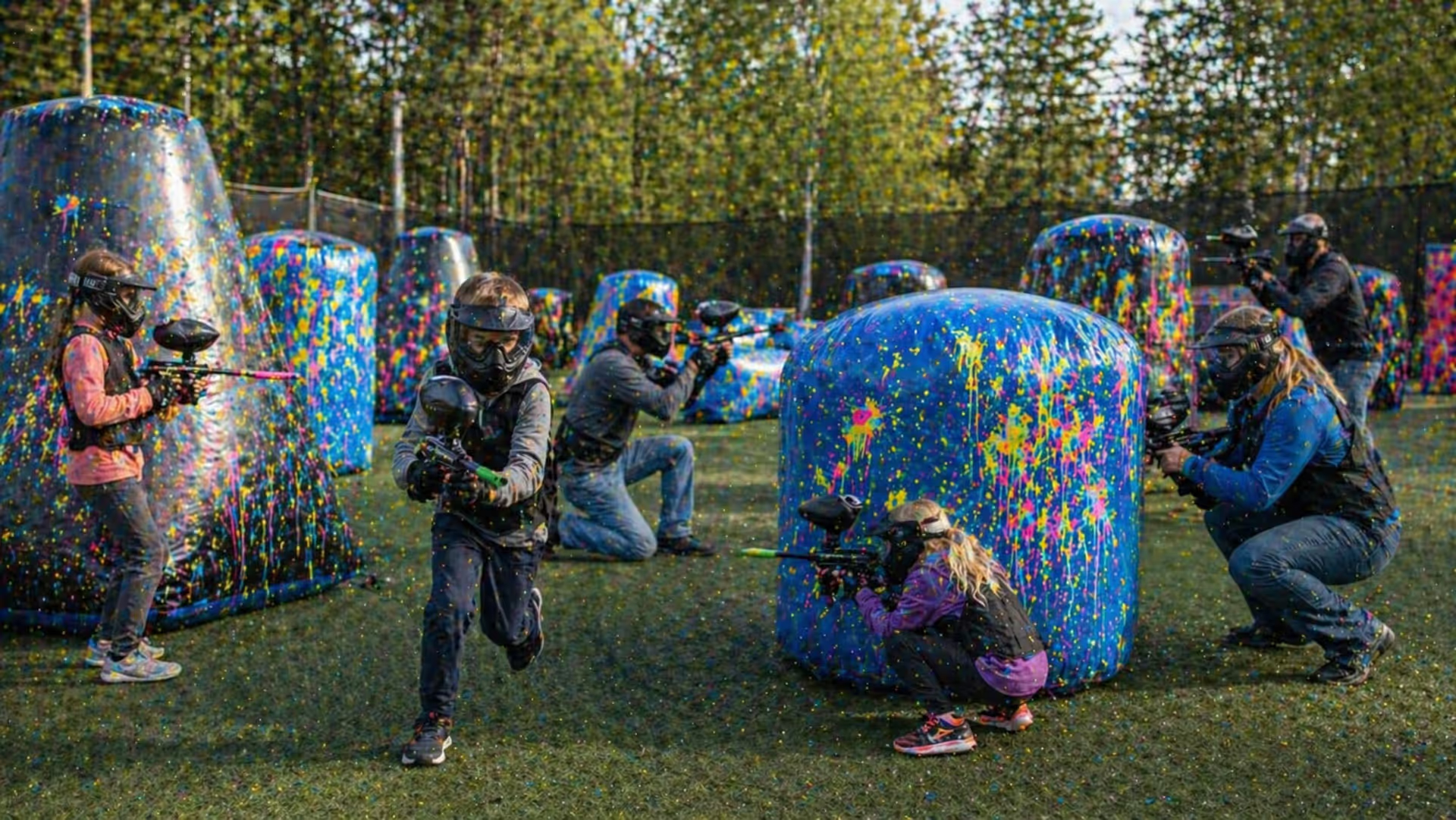
Low impact paintball for families
Low Impact Paintball Guide

Content
Parents hunting for outdoor activities that get kids moving face a tricky balance—enough excitement to beat screen time, but not so intense that someone ends up in tears. Traditional paintball? That's usually a hard pass for families with younger children. The welts, the intimidation factor, the fear of serious pain—it's kept countless kids off the field.
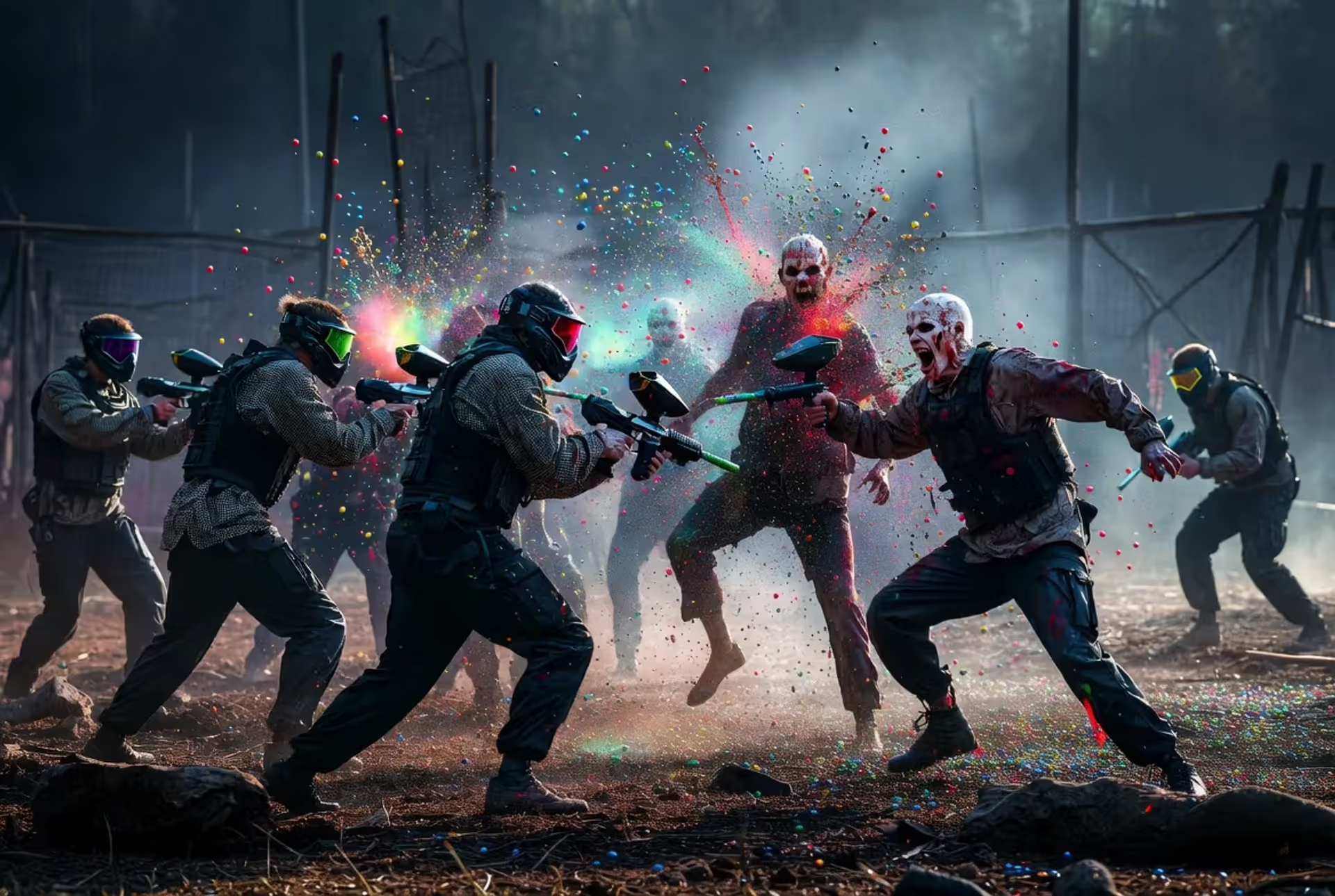
Enter low impact paintball, which flips that script. You get the same tactical gameplay, the same rush of competition, but without the aftermath that has parents applying ice packs and rethinking their weekend choices. Since rolling out in the early 2010s, this format has taken root at hundreds of U.S. facilities, many carving out dedicated fields just for low impact games.
The secret? Simple physics. Smaller paintballs flying slower hit with dramatically less force. No gimmicks, no false advertising—just basic kinetic energy principles working in your favor.
What Is Low Impact Paintball?
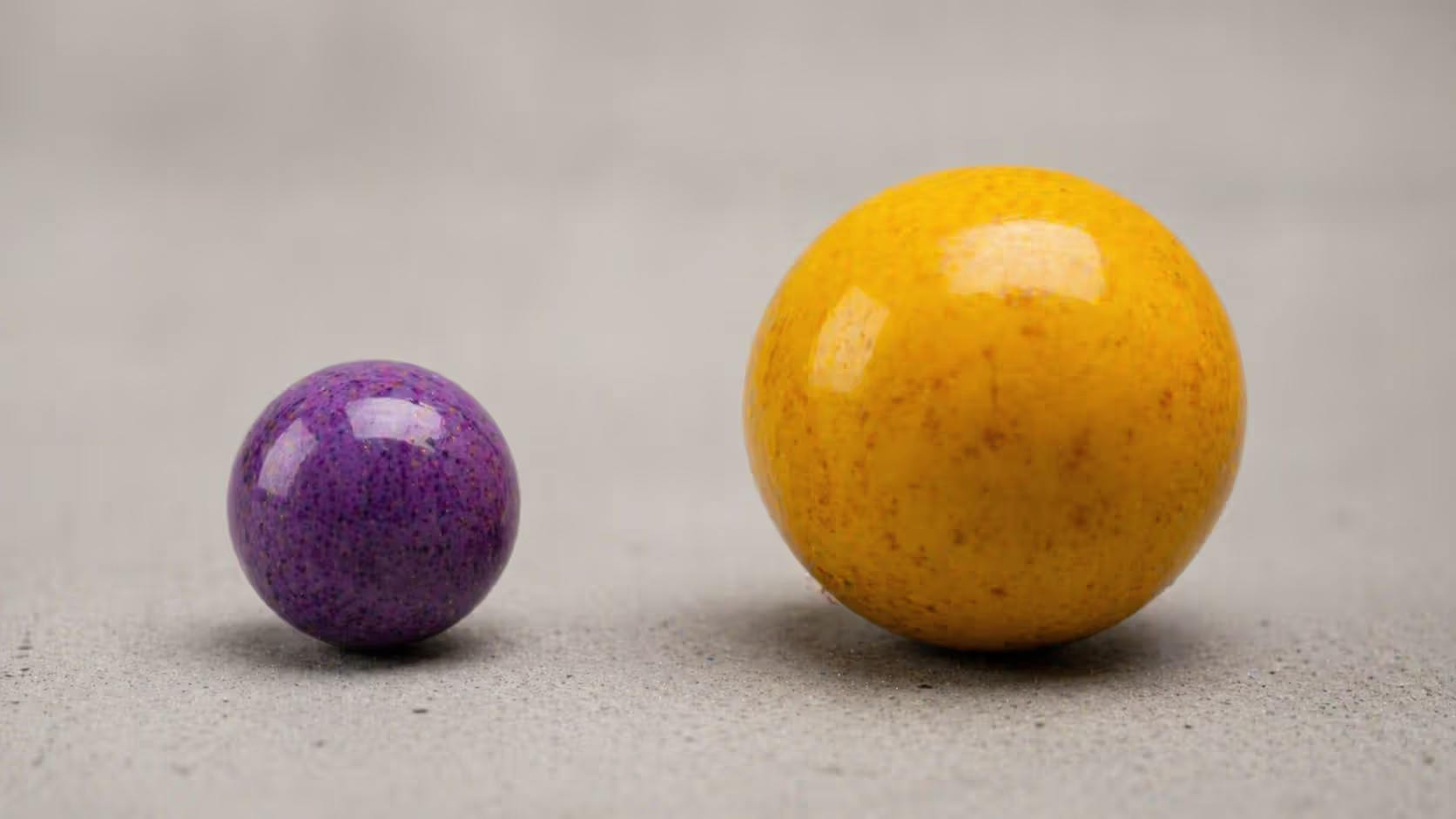
Here's the technical breakdown: low impact paintball swaps the standard .68 caliber rounds for .50 caliber paintballs. Think of a marble versus a larger shooter marble—that's roughly the size difference we're talking about.
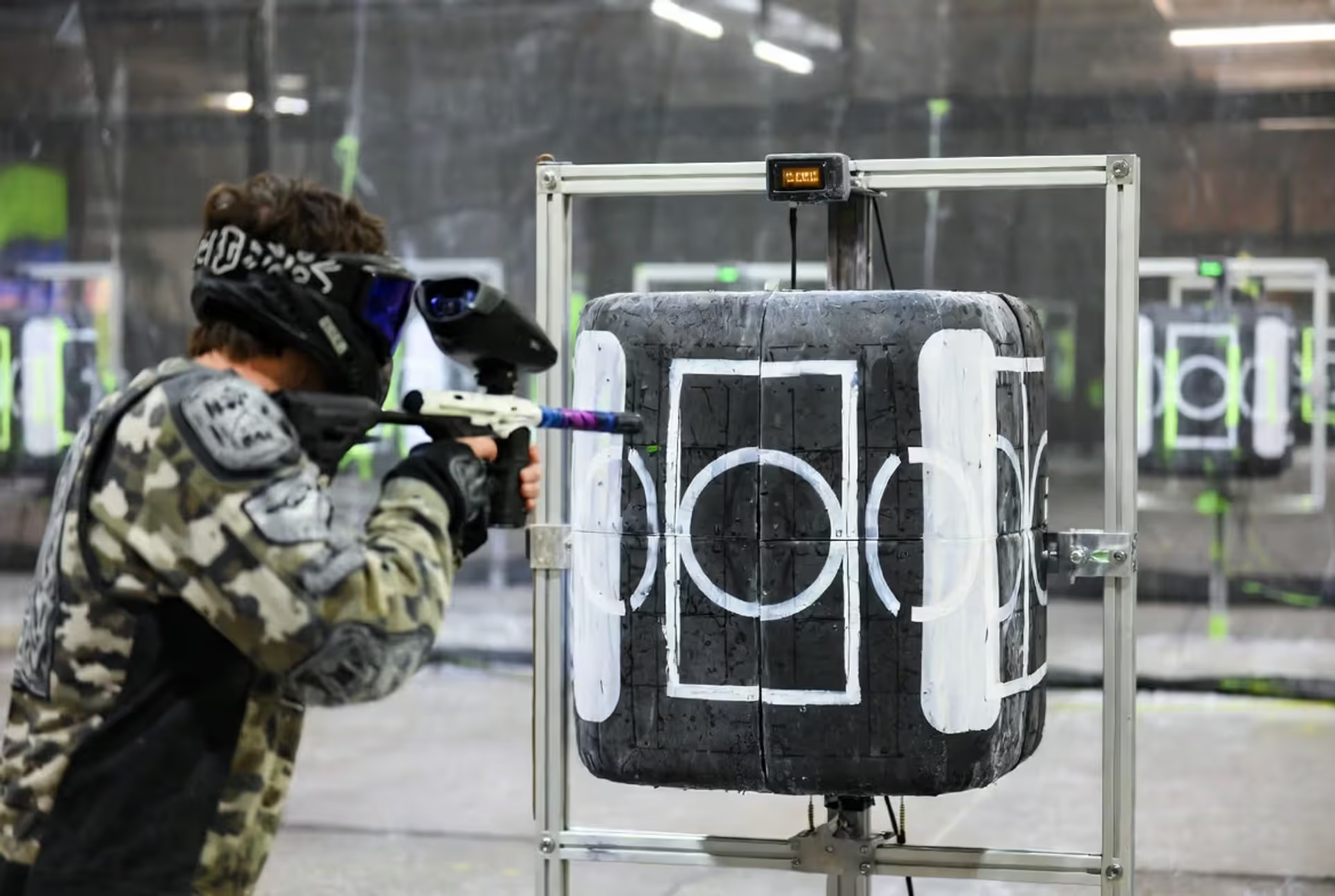
But size tells only part of the story. A .50 cal paintball weighs about half what a .68 cal round does. Fields running low impact sessions also dial down marker velocity to 200-250 feet per second instead of the 280-300 fps you'll find in regular games.
Why does this matter? Remember kinetic energy from high school physics? The formula is KE = ½mv², where mass and velocity determine impact force. Standard .68 caliber paintballs traveling at 280 fps clock in around 12-13 joules of energy at impact. Drop down to .50 caliber at 220 fps and you're looking at roughly 5-6 joules—less than half the punch.
That energy difference? You'll feel it immediately. Or rather, you'll feel a lot less of it.
Manufacturers didn't just shrink paintballs and call it a day. The .50 caliber format required building entirely new markers with narrower barrels. You can't load these smaller rounds into your standard paintball gun and expect anything good to happen. This separation actually helps—it keeps performance consistent and prevents anyone from accidentally mixing incompatible equipment.
The paintballs themselves use identical formulation to regular ones. Gelatin shells, non-toxic water-based dye inside, same satisfying splat when they break. They mark hits just as clearly. The tradeoff? Effective range drops to 80-100 feet versus the 120-150 feet you'd expect from .68 caliber. For fields designed around low impact play, this range limitation never becomes an issue.
Author: Brandon Kesswick;
Source: lakestaytents.com
Does Low Impact Paintball Hurt?
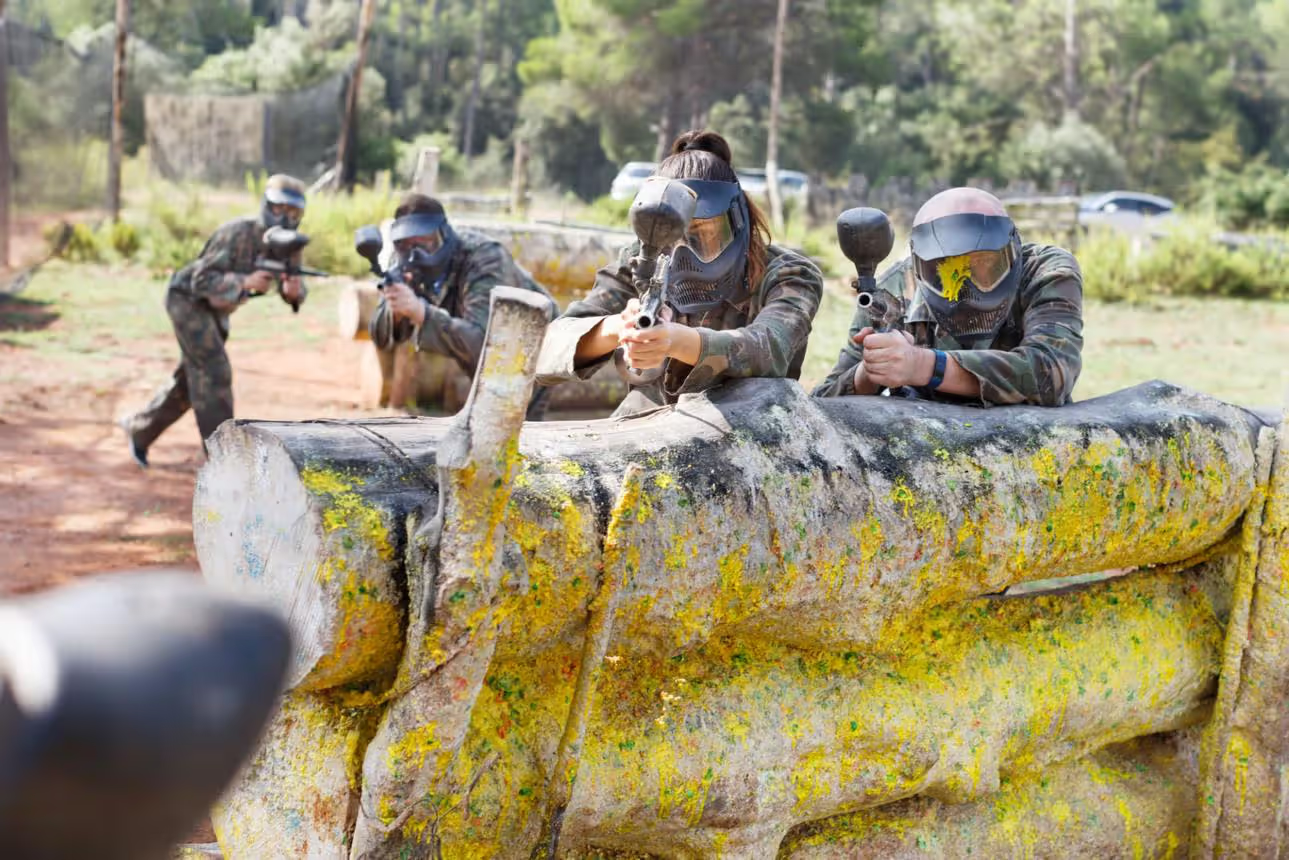
Let's get real—anyone who claims paintball is completely painless is selling you something. Low impact paintball does sting. But here's the distinction that matters: imagine someone snapping a thick rubber band against your arm versus getting whacked with a ruler. Both hurt momentarily, but there's a world of difference in intensity.
Most players describe low impact hits as a sharp pinch that fades within seconds. The surprise often bothers first-timers more than actual pain. Your brain registers "I've been hit!" before you consciously process the sensation.
Distance changes everything. A paintball that's traveled 60 feet has shed considerable velocity. It might feel like a gentle poke. That same paintball from 20 feet? Yeah, you'll notice. It won't leave you hobbling, but you'll definitely feel it in the moment.
Body location creates huge variance too. Hits on your chest or back, especially over clothing? Barely register. The fleshy part of your arms and legs? Mild sting. Inner arms, hands, neck, or hitting the same spot twice in quick succession? Those produce the sharper sensations that make you wince.
People who've played both formats consistently rate low impact at a 2 or 3 on a 10-point pain scale, with regular paintball landing somewhere between 5 and 7. Kids who lack that comparison point usually describe getting hit as "surprising" or "kind of stings for a second" rather than painful.
Weather throws another variable into the mix. Cold temperatures make paintball shells brittle. They shatter more readily on impact, which sounds good until you realize fragmented shell pieces can sometimes sting more than a clean break. Summer heat softens shells, creating more bounces—those don't break, but they also hurt less.
Bruising? Uncommon but possible. You might see small red marks that disappear within a day or two. Players with fair skin or those who take repeated hits in one spot occasionally show minor discoloration. Proper clothing and protective gear cut this risk substantially.
Author: Brandon Kesswick;
Source: lakestaytents.com
Age Requirements and Safety for Youth Players
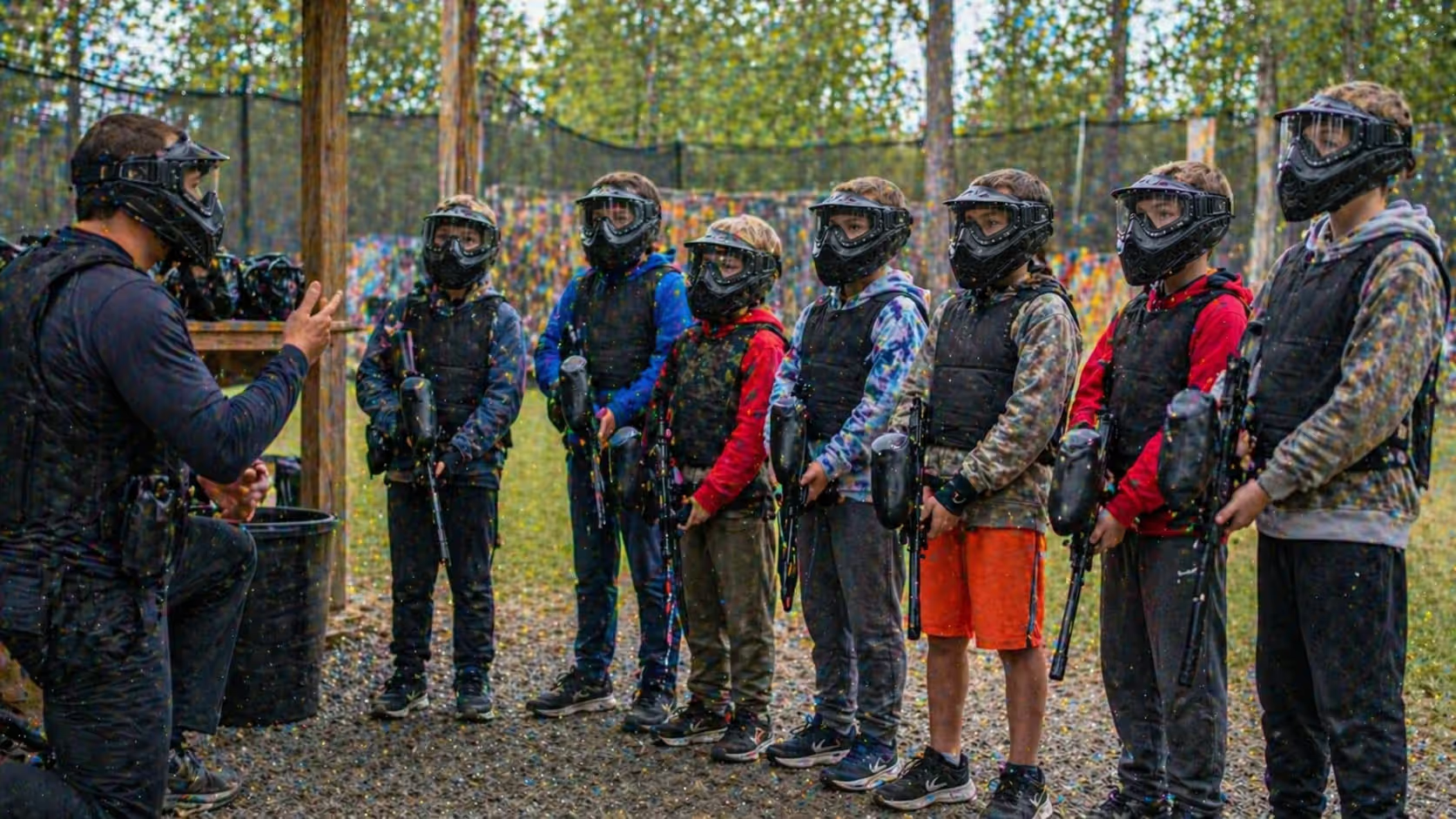
Walk into most low impact facilities and the minimum age posted will read somewhere between 6 and 8 years old. But smart operators look past arbitrary age cutoffs. They're assessing whether your child can physically manage a 4-5 pound marker, whether they'll actually follow safety instructions when excited, and whether they have the stamina to wear a mask while moving around for 15-20 minute game rounds.
An athletic 7-year-old who plays soccer and follows rules? Probably ready. A hesitant 10-year-old who struggles with instructions in chaotic environments? Maybe needs another year.
The physical bar sits pretty low. Can your child pull a trigger repeatedly? Grip the marker with both hands? Aim while keeping both eyes open? Walk across uneven ground while carrying equipment? That's basically it. Kids participating in organized sports generally clear these requirements without issue.
Safety briefings at legitimate facilities cover the non-negotiables: barrel plugs stay inserted until you're on the field, masks stay on at all times during play, chronograph checks verify velocity limits, boundaries must be respected. The mask rule gets enforced with zero exceptions—eye injuries from paintball impacts can cause permanent damage. Staff don't care how foggy your mask gets or how badly you need to adjust it. Off the field first, every single time.
Younger players often need hands-on supervision. Many venues require kids under 10 to have an adult actually playing alongside them, not just watching from the staging area. This isn't about hovering—it's about having immediate support when equipment jams, emotions run high, or safety questions arise. Some places structure this positively, offering parent-child packages that frame participation as family bonding rather than babysitting duty.
Medical considerations stay straightforward. Kids with asthma should bring their rescue inhaler and alert staff—physical exertion plus mask wearing can trigger symptoms. Children with bleeding disorders or taking blood thinners need physician clearance before playing, since even low impact carries some bruising risk. The general rule? If your child is cleared for PE class, they can handle low impact paintball.
Author: Brandon Kesswick;
Source: lakestaytents.com
Low Impact Paintball Guns and Gear for Kids
Youth-oriented low impact markers prioritize three things: light weight, dead-simple operation, and reliability. No complicated electronics, no adjustable firing modes, no features that require a manual to understand. Pull trigger, paintball comes out. That's the desired complexity level.
These guns typically weigh 3-4 pounds empty. They use mechanical firing systems—compressed air or CO2 pushes a paintball down the barrel when you squeeze the trigger. Stocks run shorter and grip frames size down to fit smaller hands and shorter arm spans. Some include adjustable stocks that extend as kids grow. Hoppers hold 100-200 rounds, balancing adequate ammunition against top-heavy weight issues.
Price-wise, new entry-level markers start around $120-150. Mid-range options with smoother operation and better air efficiency climb to $300-400. The used market can slash costs by 30-50%, though buyers should check O-rings, inspect barrels for damage, and verify the marker holds pressure before handing over cash.
Choosing the Right Paintball Gun for Your Child
First-time buyers should obsess over reliability, not features. Fewer moving parts mean less that can malfunction mid-game—nothing kills a kid's enthusiasm faster than equipment that constantly jams. Models like the Tippmann Stormer Elite and Valken Gotcha have earned reputations for taking abuse and continuing to function.
How a marker balances in your child's hands trumps raw weight specifications. A properly balanced 4.5-pound gun feels lighter during actual play than a front-heavy 4-pounder. If possible, have your kid shoulder different models at a shop. Comfort during a five-minute test translates directly to whether they're still having fun an hour into play.
Here's the smart money move though: start with rentals. Fields charge $15-25 per session for complete rental packages—marker, hopper, air tank, and mask. This lets kids confirm they actually enjoy paintball before you drop several hundred dollars on equipment that might end up in the garage after one use. I've seen that happen more times than I can count.
Author: Brandon Kesswick;
Source: lakestaytents.com
Essential Protective Gear
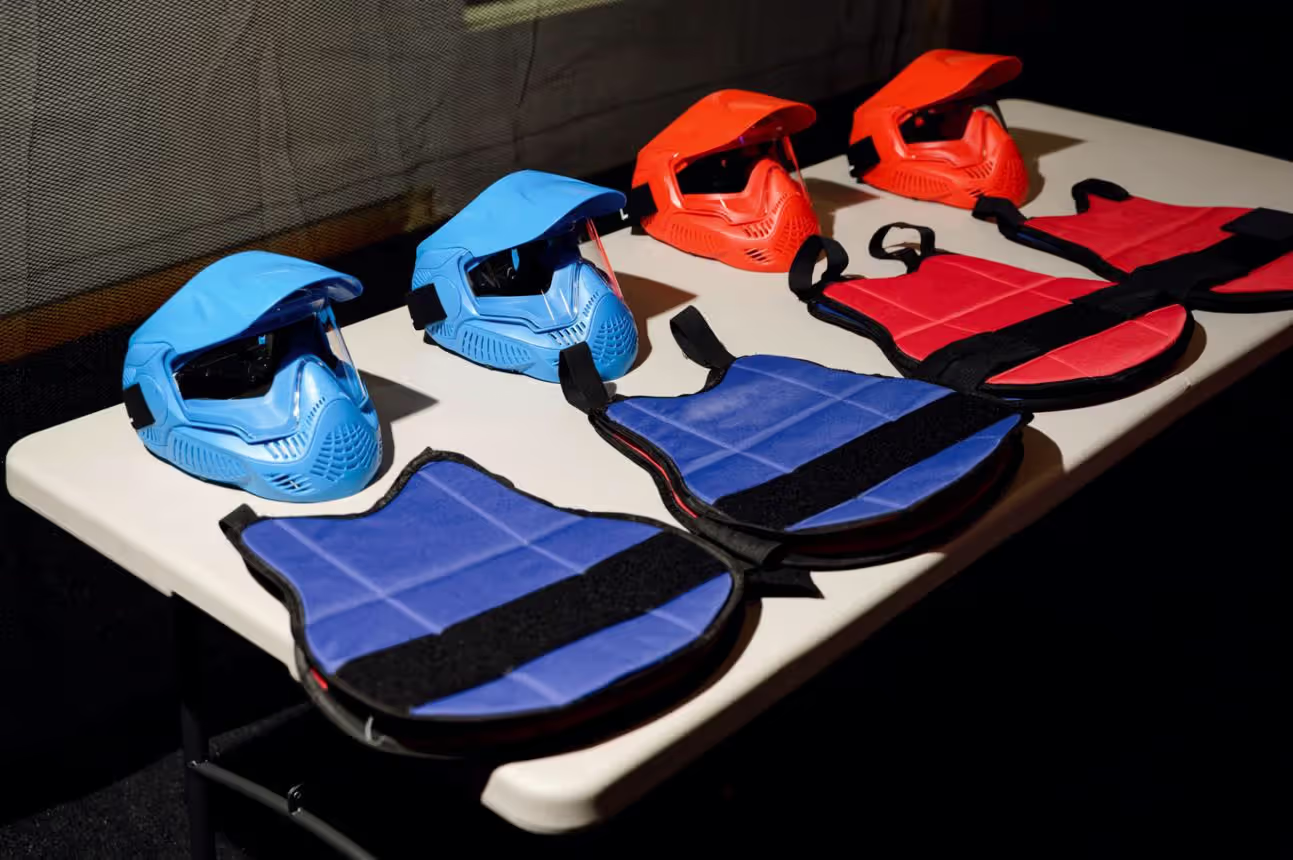
The mask matters more than everything else combined. Period. Low impact-specific masks often weigh less and size smaller than standard paintball masks, but the lens protection stays identical. You're looking for ASTM-certified polycarbonate that can take point-blank impacts without cracking.
Proper fit means foam touches your face continuously with no gaps, the strap holds everything secure without giving you a headache, and you can see clearly to both sides. Thermal lenses—that's two lens layers with air between them—will save you from the fog-induced frustration that ruins many first experiences. Budget $40-70 for a quality youth mask.
Beyond masks, chest protectors ($25-40) make sense for younger or more anxious players. They provide as much psychological comfort as physical protection. Gloves ($15-25) prevent finger and knuckle hits, which rank among the few spots where even low impact paintballs consistently sting. Neck protectors ($10-20) shield another sensitive area where hits hurt disproportionately.
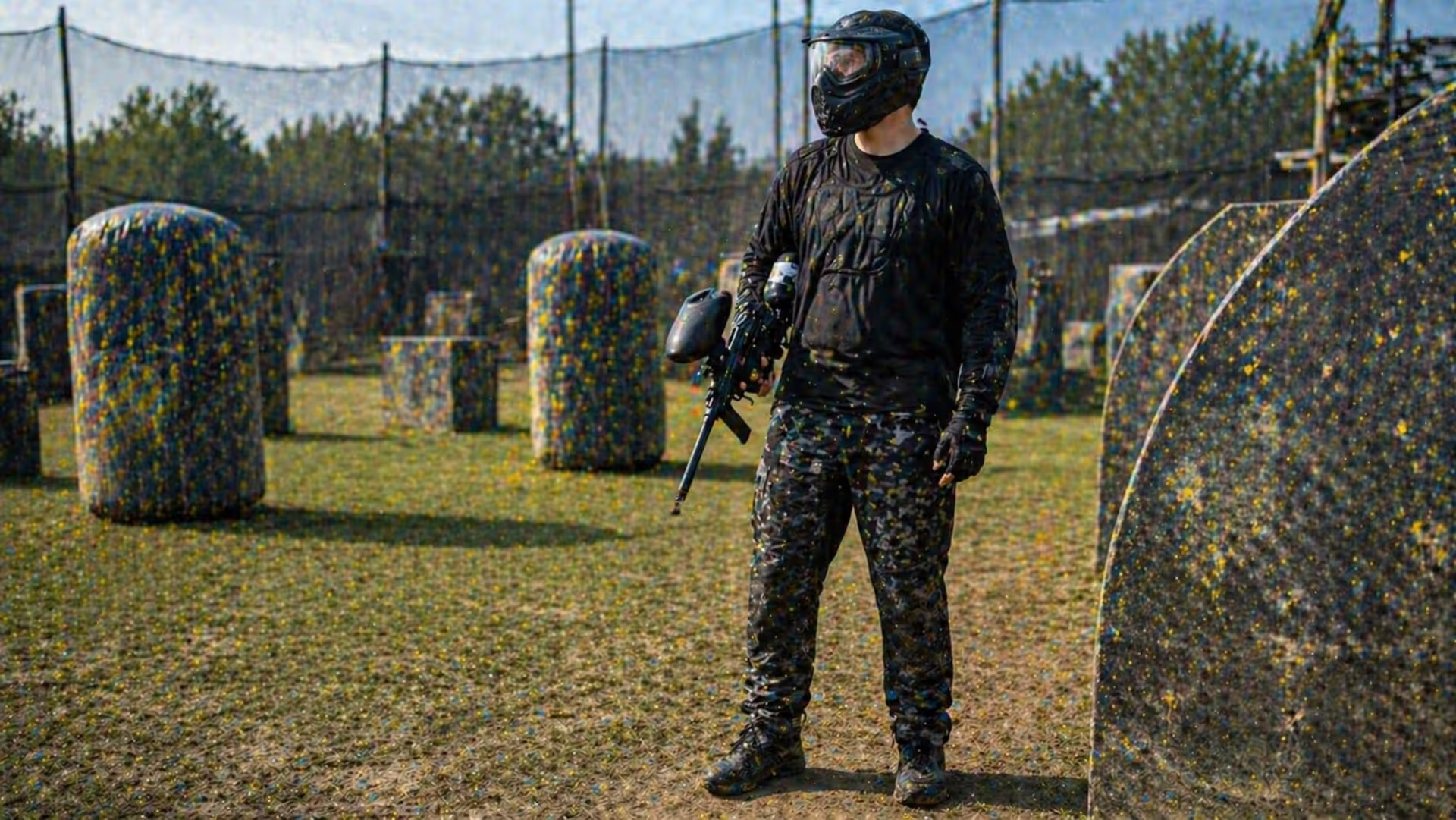
For clothing, long sleeves and long pants eliminate exposed skin where hits sting most. Loose athletic wear allows movement while creating an air gap that absorbs impact. Skip anything baggy enough to snag on obstacles. Avoid camouflage if you're playing with young kids—patterns that blend too well make it harder for referees to monitor everyone's safety.
Family Paintball: Planning Your First Visit
Finding low impact facilities requires more specific searching than just "paintball near me." Try ".50 caliber paintball" or "low impact paintball" plus your city name. Not every paintball venue has adopted this format—probably fewer than half nationwide offer it.
Facility websites should clearly spell out whether they run low impact games, what age minimums apply, and whether you need reservations. But call anyway. Ask if low impact games use dedicated fields or share space with regular paintball sessions (dedicated fields are better for young kids). Confirm what equipment the facility provides. Ask about minimum group sizes—some places require 6-8 players, while others will group small families with other parties.
Your first session kicks off with a 15-20 minute safety briefing covering marker operation, rules, field boundaries, and game objectives. Staff then hand out equipment, help with adjustments and sizing, and run chronograph checks to verify markers shoot within safe velocity ranges. The first game usually runs shorter than subsequent rounds while everyone gets comfortable.
Block out 2-3 hours total. Check-in and waiver signing eats 15 minutes, safety briefing and gear fitting takes another 20, then you'll play 3-4 rounds of 15-20 minutes each with breaks between. Many venues offer additional rounds for purchase if everyone's still energized.
Pricing varies wildly. Basic packages start around $25-30 per person covering equipment rental and 200-300 paintballs. Mid-tier packages ($40-50) bump you to 500 paintballs and sometimes include upgrades like anti-fog masks or padded vests. Private group bookings for 10+ players often deliver better per-person value.
Group composition affects enjoyment dramatically. Mixing teenagers with 8-year-olds creates lopsided games unless staff actively manages team balance. The best experiences come from age ranges within 3-4 years of each other, or situations where older players consciously dial back aggression and support younger participants.
Low Impact vs. Regular Paintball: Key Differences
| Specification | Low Impact Format | Standard Format |
| Caliber | .50 | .68 |
| Feet Per Second | 200-250 | 280-300 |
| Joules at Impact | 5-6 | 12-13 |
| Usual Age Minimum | 6-8 years | 10-12 years |
| Pain Rating (1-10 scale) | 2-3 | 5-7 |
| Marker Price Range | $120-400 | $150-500 |
| Cost Per 500 Paintballs | $40-50 | $30-40 |
| Best Suited For | Children, families, nervous beginners, casual players | Teenagers, adults, competitive players, experienced players |
The two formats maintain separate equipment ecosystems. Low impact markers won't fire .68 caliber paintballs, and standard markers can't shoot .50 caliber rounds. This separation prevents dangerous mixing that could create safety issues.
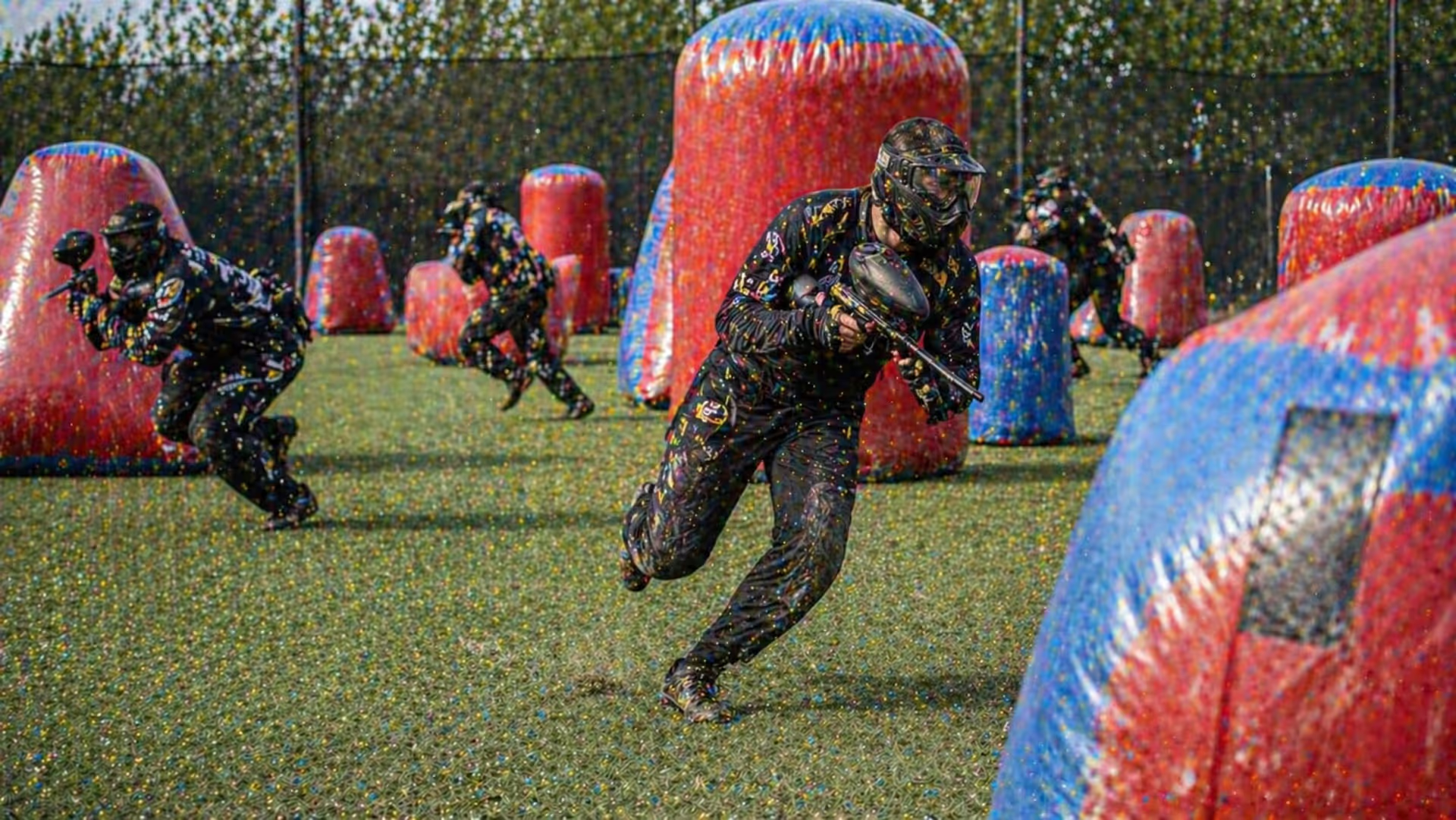
Game formats transfer perfectly between variants. Capture the flag, elimination rounds, attack/defend scenarios, and narrative-driven games all function identically regardless of paintball size. The tactical elements—using cover effectively, communicating with teammates, executing flanking maneuvers—remain unchanged. What differs is intensity and impact sensation, not strategy.
Competitive paintball exists almost exclusively in the standard .68 caliber format. Tournament circuits, professional teams, serious scenario events—they all use regular equipment. Low impact serves recreational purposes. Players who catch the competitive bug typically transition to standard paintball as they age.
Over the long term, .68 caliber actually costs less despite hitting harder. The larger market means lower per-round paintball prices. Frequent players burning through 1,000+ rounds per outing will save $10-20 on ammunition with standard format. Equipment selection and aftermarket accessories also favor .68 caliber due to decades of market development.
Low impact paintball represents genuine progress in making tactical sports accessible to younger age groups. The physics check out—reduced projectile mass and velocity equal significantly lower impact force. From a developmental standpoint, we see children building confidence, learning teamwork, and engaging in vigorous physical activity within controlled environments. Injury rates compare favorably to other recreational youth sports like soccer or basketball—primarily minor bruises and occasional twisted ankles from terrain. The key ingredients are proper supervision, enforced safety protocols, and age-appropriate equipment sizing.
— Dr. Michael Chen
Frequently Asked Questions About Low Impact Paintball
Low impact paintball resolves the fundamental tension that's kept many families away from tactical sports. You want excitement without intimidation, active competition without next-day regret, shared experiences without tears. The format delivers authentic gameplay—paintballs that splatter on impact, the rush of outmaneuvering opponents, the satisfaction of coordinated teamwork—while removing the fear factor that comes with harder-hitting versions.
Setting realistic expectations matters. This isn't laser tag. This isn't video games with physical props. Paintballs sting on impact, games demand physical effort, and not every child will love the experience. But for families seeking outdoor entertainment that builds confidence and creates lasting memories, low impact paintball offers something compelling that didn't exist 15 years ago.
Starting with rental equipment at an established facility minimizes both risk and financial commitment. A single session reveals whether your family's enthusiasm justifies return visits or equipment purchases. Worst case scenario? You spend $150-200 on an afternoon that doesn't click. Best case? You discover an activity providing years of weekend adventures and memorable milestone celebrations.
Low impact options now exist across most of the United States—most families live within an hour of a facility offering it. Entry barriers have dropped, equipment has improved dramatically, and the player community keeps expanding as word spreads about accessibility. Whether you're celebrating a birthday, building team skills, or simply hunting for something beyond another movie or restaurant meal, low impact paintball delivers experiences screens cannot replicate.