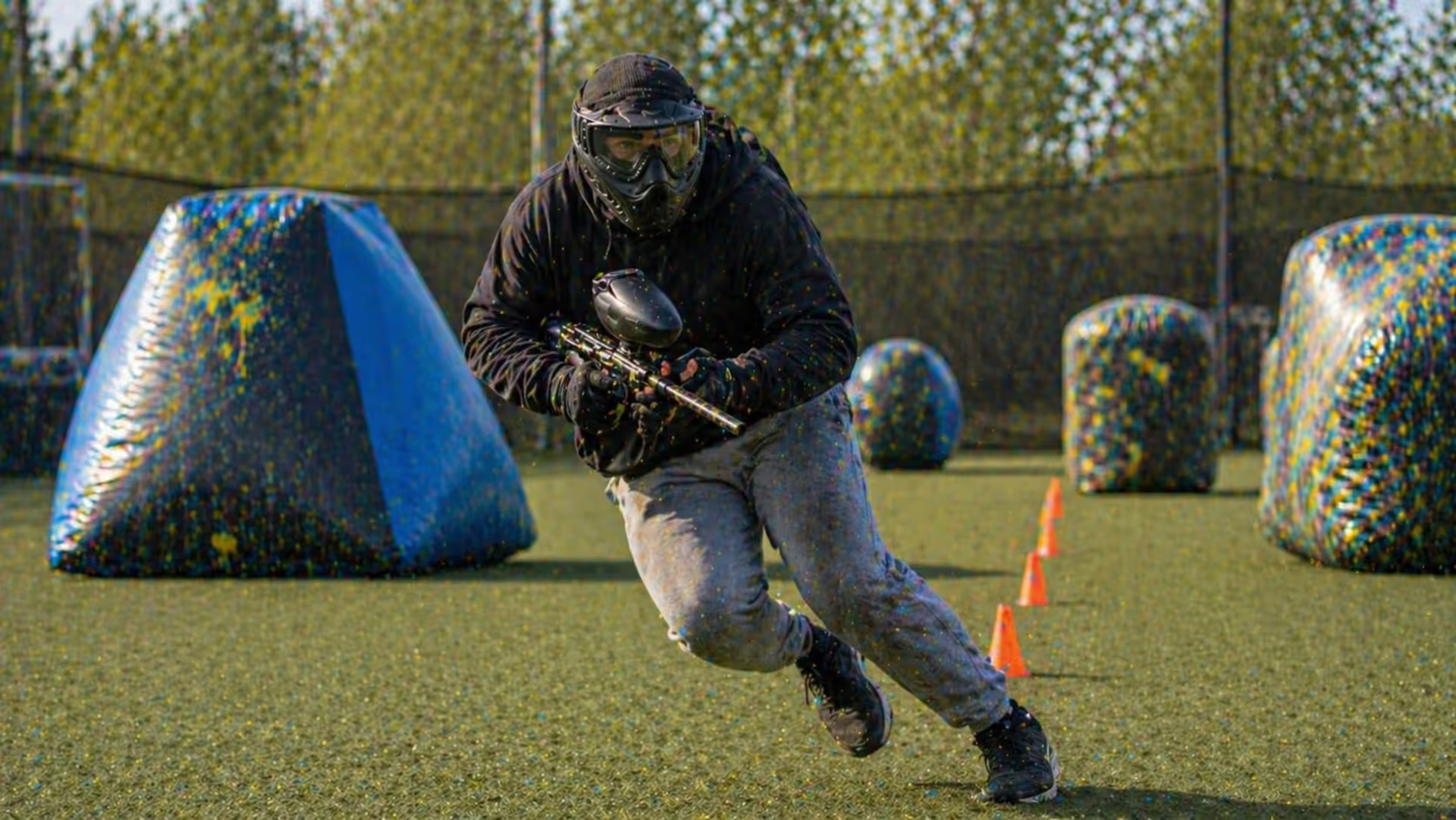
How to Improve Paintball Accuracy on the Field?

Content
Missing shots costs you eliminations, wastes paint, and reveals your position. Yet most recreational players never learn the fundamentals that separate accurate shooters from those who spray and pray. The difference between hitting your target and watching paint sail harmlessly past comes down to technique, practice, and understanding how paintball markers actually work.
Why Most Players Miss Their Shots
Walk onto any recreational field and you'll see the same patterns: players firing full-auto from unstable positions, jerking their markers after each trigger pull, and blaming their equipment when shots go wide. The real problems run deeper.
Flinching ranks as the number one accuracy killer. When you anticipate the marker's kick and the sound of firing, your body tenses and pulls the barrel off target microseconds before the ball leaves. New players do this constantly, but even experienced players develop subtle flinches they don't notice.
Poor stance compounds the problem. Standing straight up with feet together creates an unstable shooting platform. Your body sways, your marker wobbles, and each shot lands somewhere different. Add in the tendency to lean backward when firing—trying to stay behind cover—and your accuracy drops even further.
Rushing shots feels natural during the adrenaline rush of a game. Someone pops up, you snap your marker toward them and start firing before you've actually aimed. You might send twenty balls downrange, but if none of them are properly aimed, you've just wasted paint and given away your position.
Equipment issues matter more than most players realize. A barrel-to-paint mismatch causes balls to bounce around inside the barrel, exiting at inconsistent angles. Dirty bolt assemblies create velocity fluctuations. Old, deformed paint shoots like a knuckleball. These problems stack up, making accurate shooting nearly impossible regardless of your technique.
Proper Paintball Shooting Technique Fundamentals
Stance and Body Position
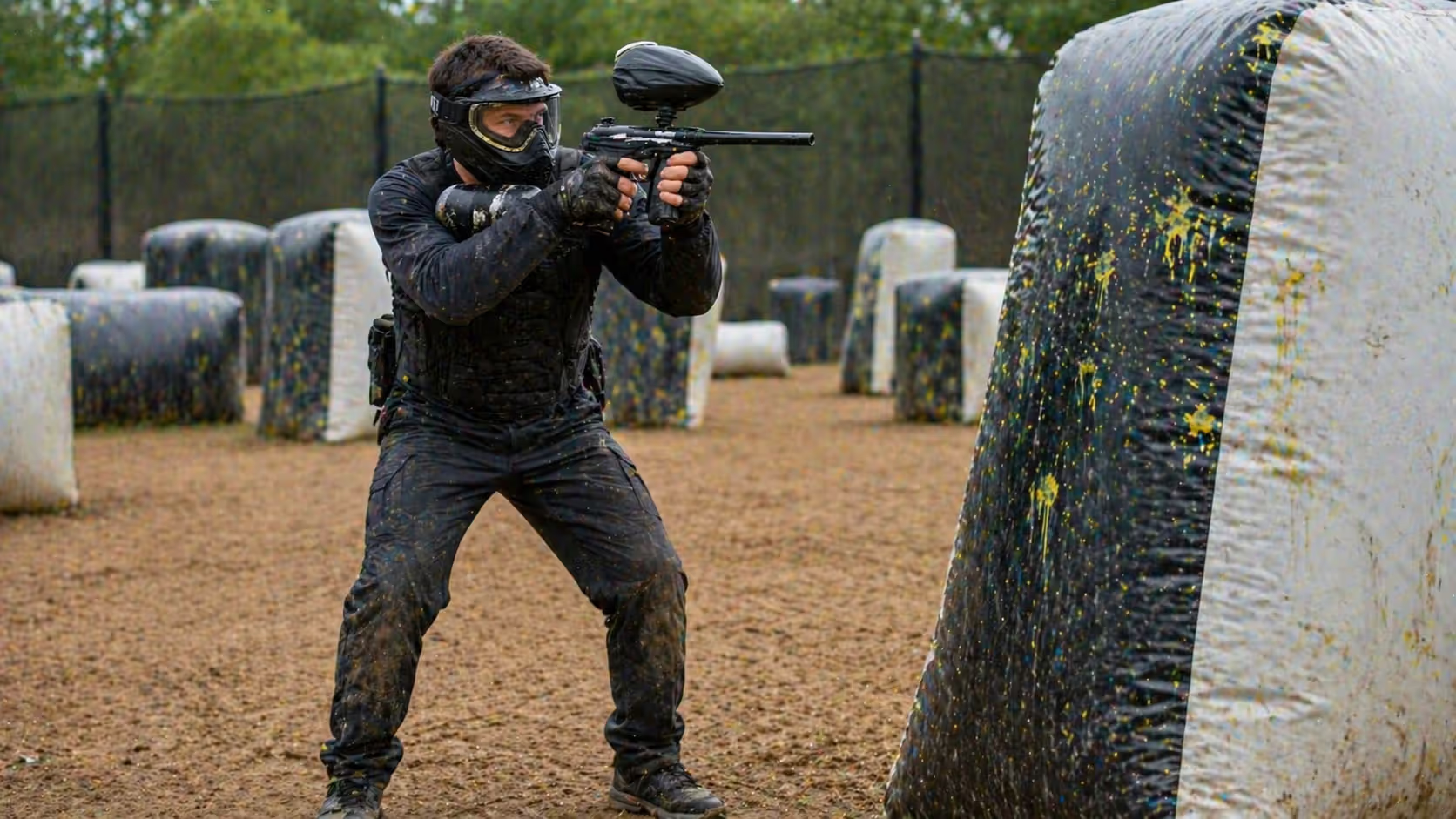
Your foundation determines everything else. Start with feet shoulder-width apart, knees slightly bent, weight distributed evenly. This athletic stance absorbs movement and keeps you stable whether you're standing, kneeling, or crouching behind a bunker.
Lean forward slightly from the hips—not the waist. This aggressive posture helps manage recoil and keeps your center of gravity over your feet. When you need to shoot around cover, push your body weight into the bunker rather than leaning away from it. The bunker becomes part of your stable platform.
Keep your shooting-side elbow down and tucked. Chicken-winging your elbow out creates muscle tension that transfers shake into your marker. Your support arm should be bent, pulling the marker back into your shoulder pocket. This push-pull tension between arms creates a stable triangle that resists movement.
Author: Brandon Kesswick;
Source: lakestaytents.com
Grip and Marker Control
Grip pressure matters more than grip strength. Choking your marker with a death grip guarantees shaky shooting. Instead, hold firmly enough to control the marker but relaxed enough that your hands don't tire after thirty seconds.
Your trigger hand does the fine work. Wrap your fingers around the grip with your trigger finger resting on the trigger face—not jammed deep into the trigger guard. The trigger should break with steady pressure from the pad of your finger, not a jerking pull from the joint.
Your support hand controls the foregrip and stabilizes the marker. Pull it back into your shoulder while pushing forward with your trigger hand. This opposing pressure keeps the marker steady and helps you track moving targets smoothly.
Breathing and Trigger Control
Breathing affects accuracy more than most players realize. Taking shallow, rapid breaths during intense moments causes your chest and shoulders to move, which transfers directly to your marker. Before taking a shot, exhale halfway and hold briefly. Your body stabilizes, giving you a one-to-two-second window of maximum steadiness.
Trigger control separates accurate shooters from everyone else. Slapping the trigger jerks the entire marker. Instead, apply smooth, progressive pressure straight back. The shot should almost surprise you—you know it's coming, but you're not anticipating the exact moment.
For semi-auto shooting, reset the trigger completely between shots. Riding the trigger (keeping pressure on it) leads to inconsistent break points and jerky shooting. Each trigger pull should be deliberate and controlled, even during rapid fire.
The biggest mistake I see is players trying to shoot fast before they learn to shoot smooth. Smooth is accurate, and accurate is fast. Master the fundamentals at slow speed, then gradually increase your pace while maintaining perfect technique. Speed without accuracy just makes you run out of paint faster.
— Marcus Thompson
Aiming Methods That Actually Work
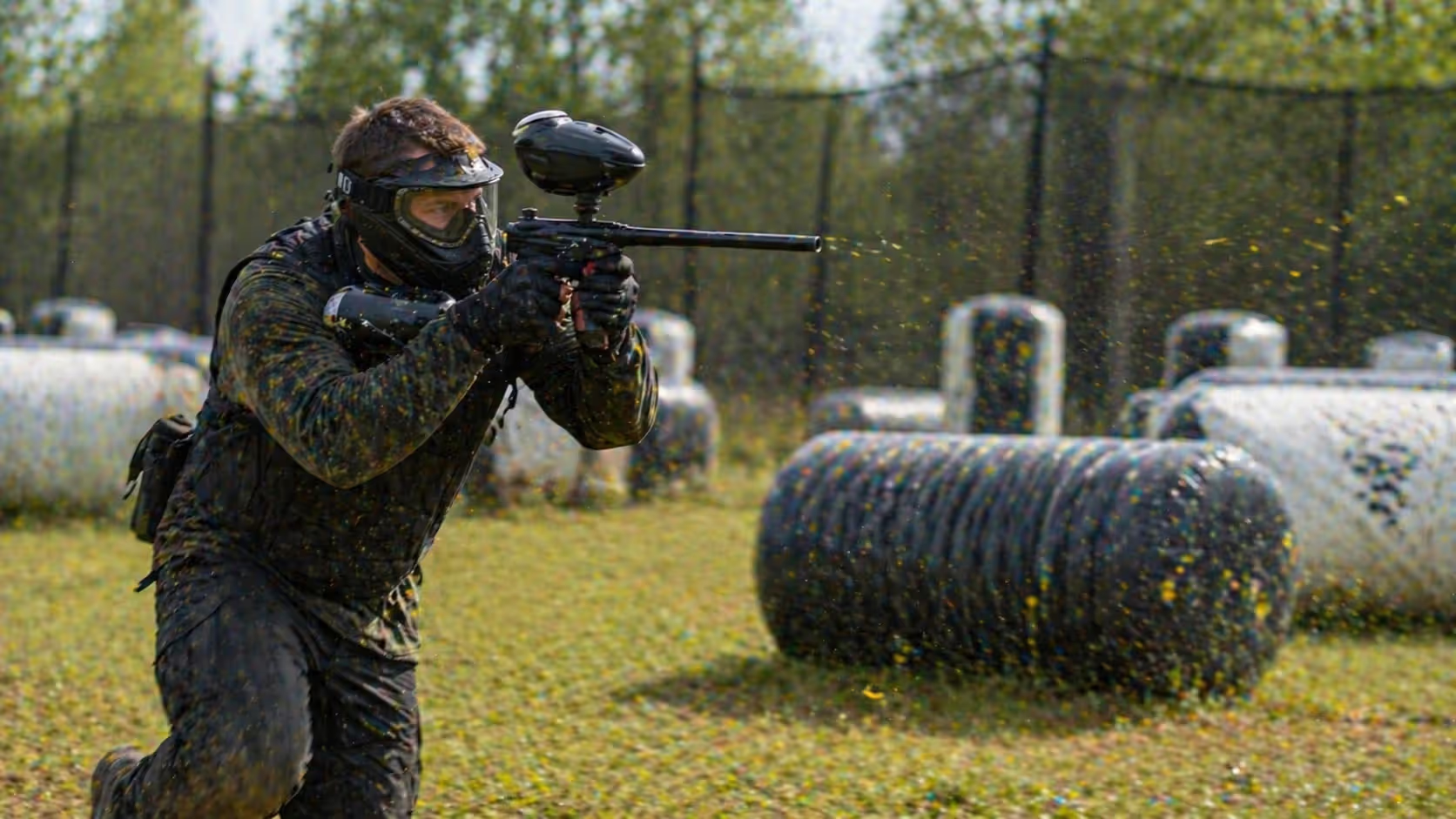
Paintball markers don't have traditional sights for good reason—you're shooting a sphere that arcs significantly over distance. Forget about precision sight pictures and learn to point-shoot effectively.
Start with marker awareness. Your eyes should focus on the target, not your barrel or hopper. The marker becomes an extension of your arms, and you develop an intuitive sense of where it's pointing. This happens through repetition, not by staring at your equipment.
Use the top of your hopper as a reference point. When the hopper sits level in your peripheral vision, you know your marker is roughly horizontal. For close shots (20-40 feet), point the hopper directly at your target's center mass. The ball will hit slightly low, usually catching them in the torso or legs.
For medium range (40-80 feet), you need to account for arc. Raise your point of aim to the target's head or just above. The ball will arc up and come down on their torso. Wind complicates this—a crosswind at 60 feet can push your shot two feet off target. Watch where your first shot goes and adjust immediately.
Tracking moving targets requires leading them—aiming where they're going, not where they are. At 50 feet, a player running perpendicular to you needs about two feet of lead. Rather than trying to calculate this consciously, practice following runners with your marker and firing when your brain says "now." Your subconscious handles the math better than your conscious mind.
Paintball sighting works best when you shoot with both eyes open. Closing one eye reduces depth perception and peripheral vision. Keep both eyes on the target and let your brain merge the images naturally.
Author: Brandon Kesswick;
Source: lakestaytents.com
Paintball Accuracy Drills You Can Practice Today
Structured practice builds muscle memory faster than random shooting. These drills target specific skills and show measurable improvement.
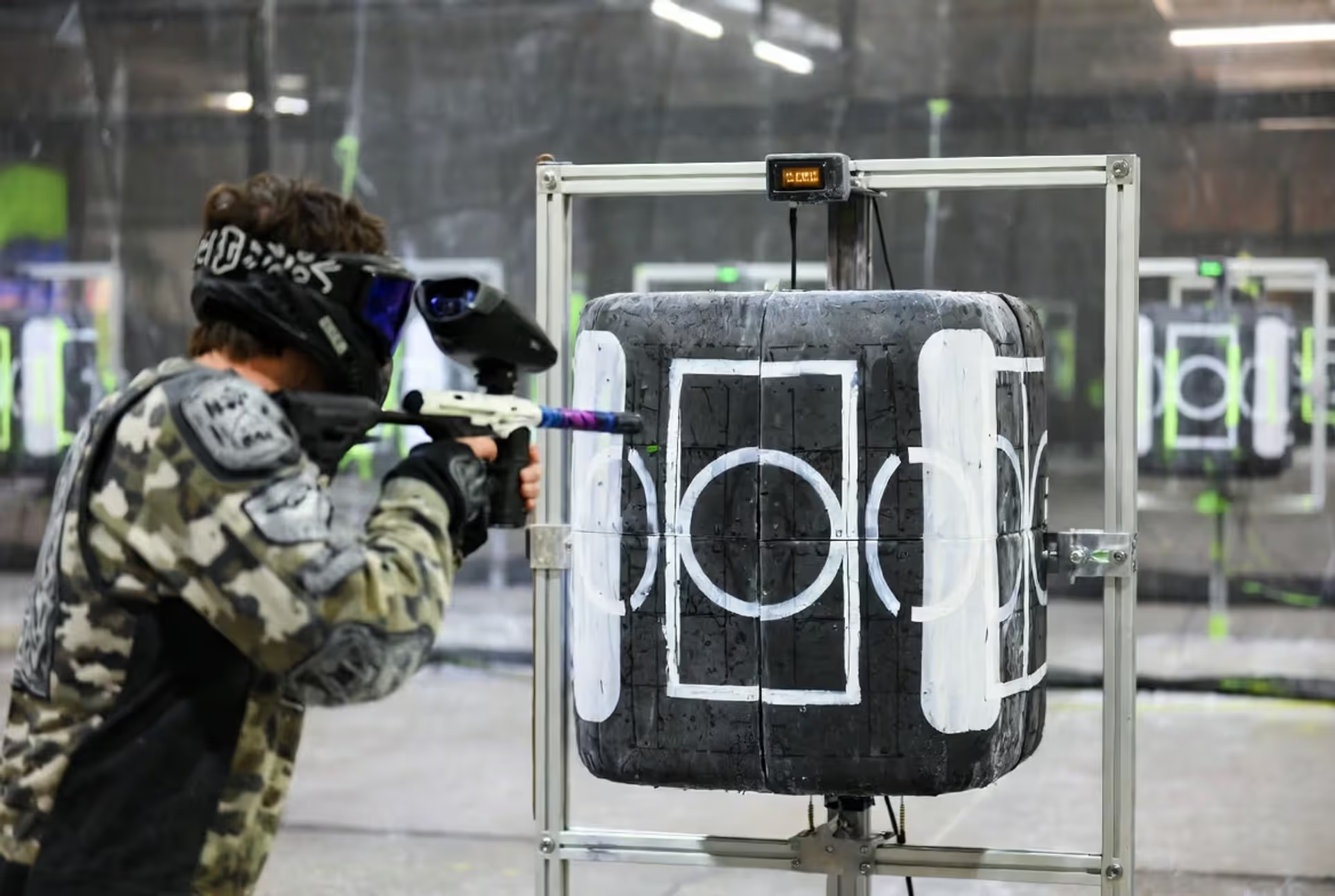
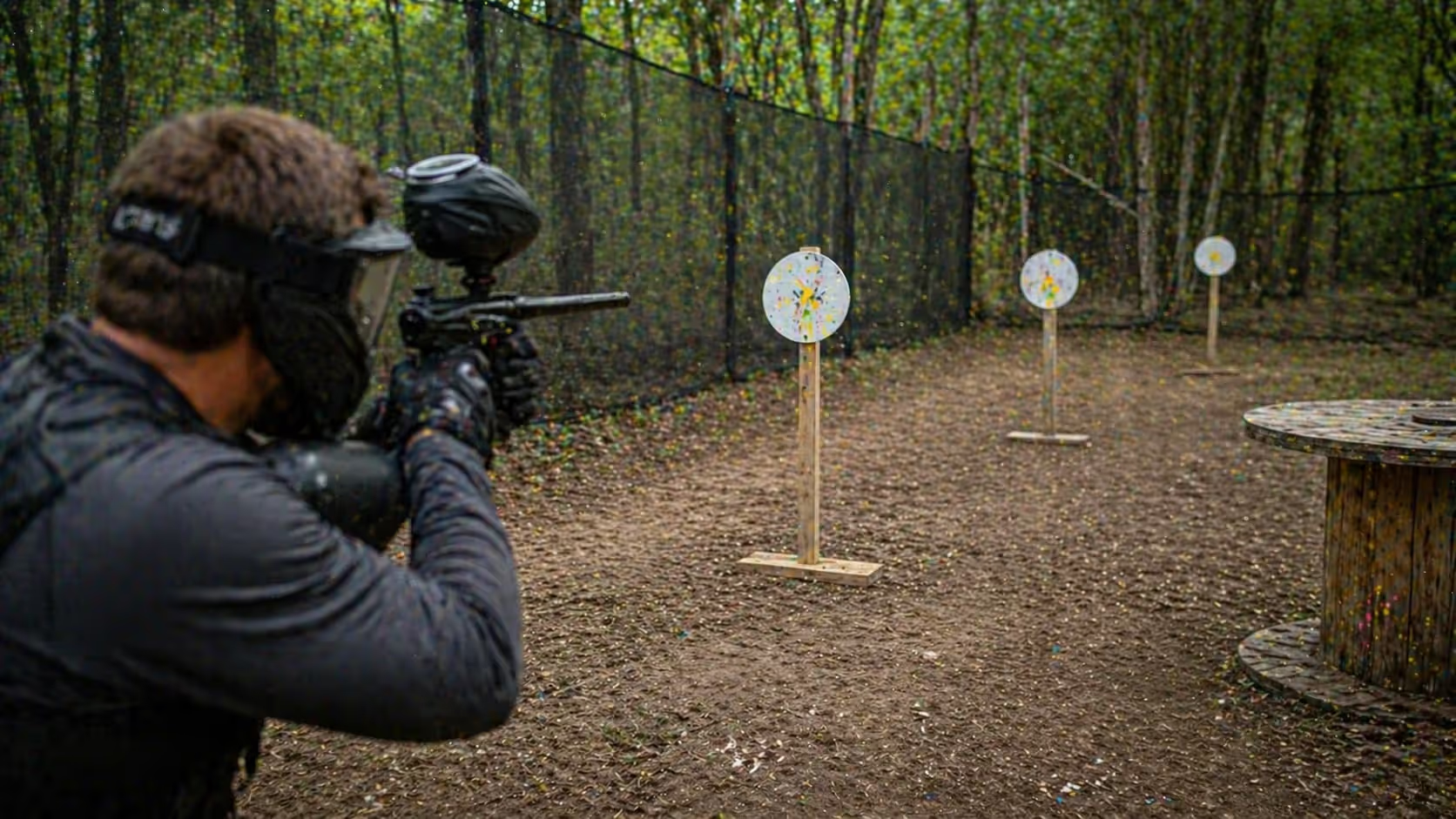
Stationary Target Practice: Set up paper plates or cardboard targets at 30, 50, and 70 feet. Fire five shots at each target, focusing entirely on technique rather than speed. Mark where each ball hits. Your goal is a 12-inch group at 50 feet. Once you can do this consistently, add a timer and gradually reduce your shooting time while maintaining accuracy.
Snap Shooting Drills: Start behind a bunker with your marker in a ready position. On a timer or partner's signal, snap out, acquire your target, fire two controlled shots, and snap back to cover. This drill builds the muscle memory for quick, accurate shooting during games. Begin slowly, prioritizing smooth movement and accurate shots over speed. Most players snap out fine but jerk their shots because they're rushing.
Moving Target Drills: Have a partner walk perpendicular to you at various distances while you track them with your marker. Call "bang" instead of shooting (saves paint) when you think you'd hit them. Your partner confirms whether you were leading correctly. Once you're consistently accurate, switch to live fire with them wearing full gear.
Bunker-to-Bunker Exercises: Set up two bunkers 40-60 feet apart. Practice moving from one to the other while maintaining awareness of a target. Stop, establish your stance, and take an accurate shot before moving again. This replicates real game situations where you need to shoot accurately immediately after movement.
Trigger Control Training: Without paint or air, practice dry-firing at targets while focusing solely on trigger pull. Watch your barrel—it shouldn't dip or jerk when the trigger breaks. Ten minutes of daily dry-fire practice builds trigger control faster than shooting thousands of rounds.
Author: Brandon Kesswick;
Source: lakestaytents.com
| Drill Name | Skill Level | Time Needed | Equipment Required | Primary Focus Area |
| Stationary Target Practice | Beginner | 15-20 min | Targets, 100 rounds | Stance, breathing, sight picture |
| Trigger Control Training | Beginner | 10-15 min | Marker only (no paint/air) | Smooth trigger pull, no flinching |
| Snap Shooting Drills | Intermediate | 20-30 min | Bunker, target, 150 rounds | Speed + accuracy combination |
| Moving Target Drills | Intermediate | 25-35 min | Partner, 200 rounds | Leading targets, tracking |
| Bunker-to-Bunker Exercises | Advanced | 30-40 min | Multiple bunkers, 200 rounds | Shooting after movement, game scenarios |
Equipment Adjustments for Better Accuracy
Technique matters most, but equipment tuning makes good shooters great.
Barrel Selection: Longer barrels don't improve accuracy—they just make your marker harder to maneuver. A 14-16 inch barrel provides adequate length for consistent velocity without the bulk of an 18-inch barrel. Focus on barrel bore size instead.
Paint-to-Barrel Match: This matters enormously. Paint should roll smoothly through your barrel with minimal resistance but no rattling. Too loose and balls wobble during exit. Too tight and you'll chop paint or experience velocity spikes. Buy a barrel kit with multiple bore sizes (0.679-0.689) and match your barrel to your paint each day.
Velocity Settings: Chronograph your marker and set velocity to 280-285 fps. Higher velocity doesn't mean better accuracy—it means balls break on twigs and bunkers instead of bouncing. Consistent velocity matters more than high velocity. If your chronograph readings vary by more than 10 fps shot-to-shot, you have a maintenance issue.
Hopper Consistency: A quality electronic hopper feeds paint consistently without chopping or causing double-feeds. Gravity hoppers work for casual play but introduce feeding delays that disrupt your rhythm. The slight weight increase of an electronic hopper is worth the reliability.
Marker Maintenance: Clean your bolt assembly after every playing day. Dirt and old lubricant cause velocity fluctuations and bolt stick, both of which destroy accuracy. Use paintball-specific lubricant—not WD-40 or general-purpose oil. Check your o-rings monthly and replace any that look worn or flattened.
Common Paintball Shooting Mistakes to Avoid
Over-Shooting: Firing ten balls when two would work wastes paint and reduces accuracy. Each shot after the first two comes from a less stable position as recoil accumulates. Fire controlled pairs, assess, then fire again if needed.
Poor Trigger Discipline: Keeping your finger on the trigger while moving or scanning for targets leads to accidental discharges. Rest your trigger finger along the frame until you've identified a target and decided to shoot. This also prevents you from jerking shots when surprised.
Wrong Paint Quality: Bargain paint costs less for a reason—it's less round, less consistent, and more likely to break in your barrel. Tournament-grade paint flies straighter and breaks more reliably on target. The accuracy improvement justifies the extra cost, especially for competitive players.
Ignoring Wind and Distance: Paintballs are light spheres with terrible ballistic coefficients. A 10 mph crosswind at 70 feet pushes your shot significantly off target. Watch where your first shot goes and adjust your aim accordingly. Don't assume you'll hit where you're aiming—verify and correct.
Shooting Through Brush: Paint deflects easily. A small twig 20 feet in front of you can send your shot three feet off target. Clear your shooting lanes or reposition rather than hoping balls will thread through obstacles.
FAQ
Improving paintball accuracy isn't about buying expensive equipment or firing more paint. It comes down to mastering fundamental shooting technique, practicing deliberately, and understanding how paintballs actually fly. Start with your stance and grip, develop smooth trigger control, and practice the specific drills that build muscle memory. Match your paint to your barrel, maintain your equipment, and avoid the common mistakes that waste paint without hitting targets.
Most players see dramatic improvement within three practice sessions once they focus on technique instead of volume of fire. The player who fires two accurate shots beats the player who sprays ten wild ones every time. Accuracy gives you confidence to take shots that matter, conserves your paint for crucial moments, and turns you into the player opponents worry about. Put these techniques into practice, drill the fundamentals until they're automatic, and watch your elimination rate climb while your paint consumption drops.