First paintball experience for kids
How Old Do You Have to Be to Play Paintball?

Content
You've got a birthday party to plan, or maybe your kid won't stop bugging you about trying paintball. Either way, here's the deal: age rules for paintball are all over the map. One field down the road might let your 10-year-old play. Drive twenty minutes in the other direction? They'll turn away anyone under 14. And that's before we even talk about what your state says versus what your city allows.
I've seen frustrated families show up at fields only to get turned away because they didn't check the age policy first. Thirty-minute drive wasted, disappointed kids in the backseat. Let's make sure that doesn't happen to you.
Standard Age Requirements for Paintball in the US
Here's what you'll find at most paintball parks across America: they'll let kids play starting around age 10 to 12. Why that range specifically? It comes down to whether they offer special equipment for younger players.
Parks that accept 10-year-olds usually run what they call "low-impact" games. The markers shoot smaller paintballs—.50 caliber instead of the standard .68 caliber ones. That translates to about half the sting when you get hit. Kids who'd normally cry from a regular paintball might just shrug off these lighter ones.
Twelve is the magic number for most fields, though. By middle school age, kids can generally handle the standard equipment without modifications. They're strong enough to hold the marker steady, coordinated enough not to trip over themselves, and—hopefully—mature enough to keep their mask on when a ref isn't staring directly at them.
Then you've got your 18-and-over fields. These are rarer but definitely exist, especially near college towns or at facilities that serve beer. Insurance companies get twitchy about mixing alcohol and minors, so some operators just draw a hard line at adult-only admission.
The age cutoffs aren't random numbers pulled from thin air. Field owners look at injury statistics, equipment sizing charts, and frankly, years of watching which kids handle the experience well versus which ones end up crying in the parking lot. A scrawny 9-year-old struggling with a 3-pound marker is a safety problem waiting to happen.

Author: Caleb Varden;
Source: lakestaytents.com
Age Limits by State and Local Regulations
There's no federal paintball czar setting rules for the whole country. Each state does its own thing, and then cities and counties pile on their own restrictions.
California might say 10 is fine statewide, but good luck finding a field in San Francisco that'll accept anyone under 12. New York allows 10-year-olds by state law, but New York City banned anyone under 16 from playing within city limits entirely. Meanwhile, Texas has no state law whatsoever—every field makes up their own rules.
City councils love adding their own regulations too. Your county might be totally fine with paintball for 10-year-olds, but if you live in an incorporated city within that county, you could be dealing with completely different rules.
| State | Minimum Age | Parental Consent Allowed | Notes |
| California | 10 years | Yes, signed waiver needed | Fields sometimes take 8-year-olds for low-impact only |
| Texas | No state rule | Field decides | 10-12 is typical at most parks |
| Florida | 10 years | Yes, parent on-site | Certain counties bump it to 12 |
| New York | 10 years | Yes, notarized waiver | NYC bans under-16 play completely |
| Pennsylvania | 10 years | Yes | Individual fields often go higher |
| Illinois | 12 years | Yes | Chicago-area parks lean toward 14+ |
| Ohio | No state rule | Field decides | Expect 10-12 at commercial parks |
| Georgia | 10 years | Yes | Under-13 needs parent present whole time |
| North Carolina | 10 years | Yes | Some parks require 12 anyway |
| Michigan | 10 years | Yes, guardian signs | Insurance rules affect individual venues |
| Arizona | No state rule | Field decides | Desert parks commonly start at 10 |
| Washington | 10 years | Yes | King County mandates extra safety briefing under-12 |
| Massachusetts | 12 years | Yes, in-person only | Boston fields frequently require 14 |
| Virginia | 10 years | Yes | Military-style fields sometimes want 12+ |
| Colorado | No state rule | Field decides | Mountain parks typically allow 10+ |
Call ahead. Seriously. Don't trust what you read online last year or what your neighbor said their cousin did. Regulations change, insurance policies shift, and fields adjust their rules based on whatever happened during their last busy weekend.
Paintball Venue Types and Their Age Restrictions
Where you play matters as much as how old you are.
Commercial Paintball Fields
These are your professional operations—the places with liability insurance, trained staff, and equipment rentals. They're also the most predictable in terms of age policies.
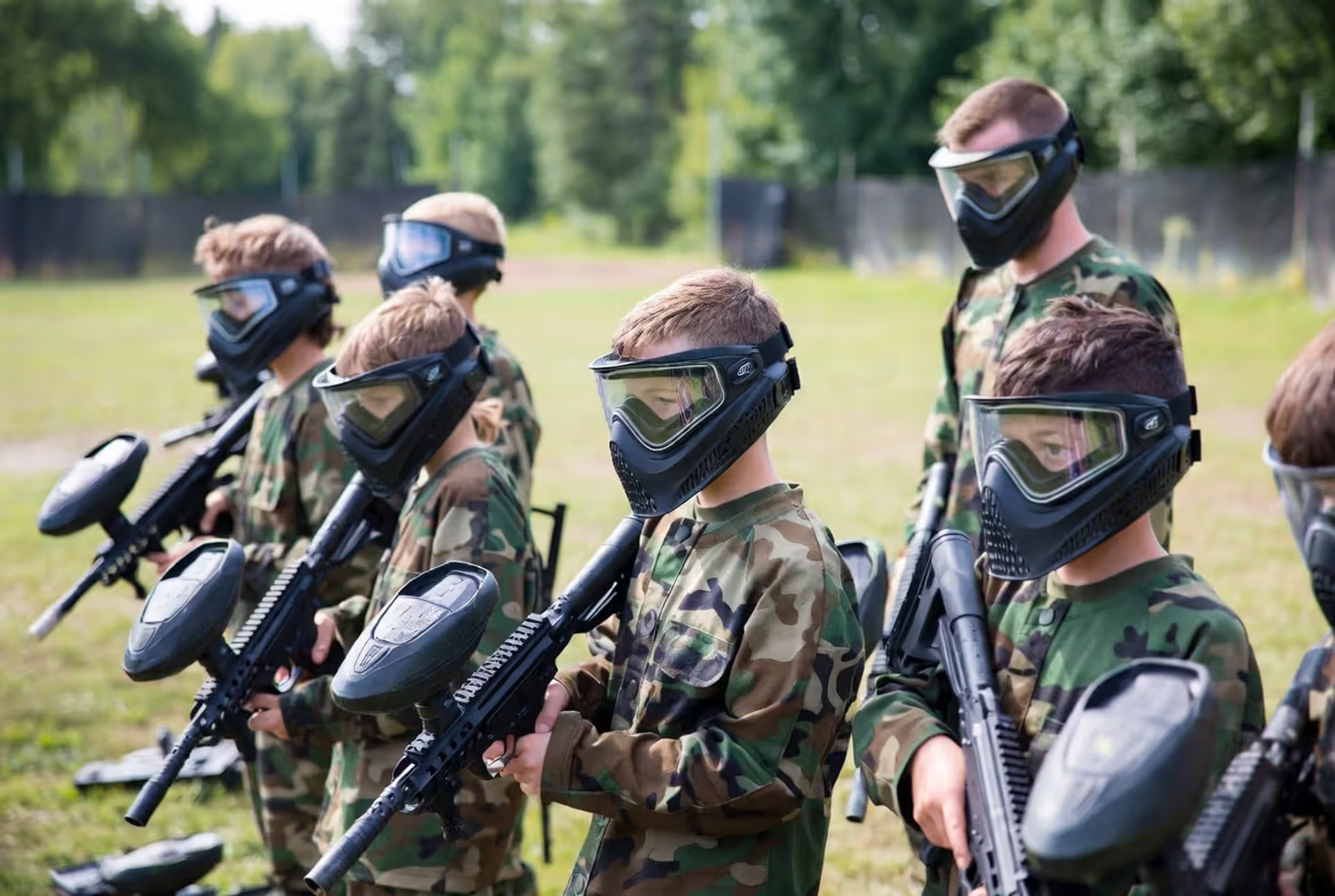
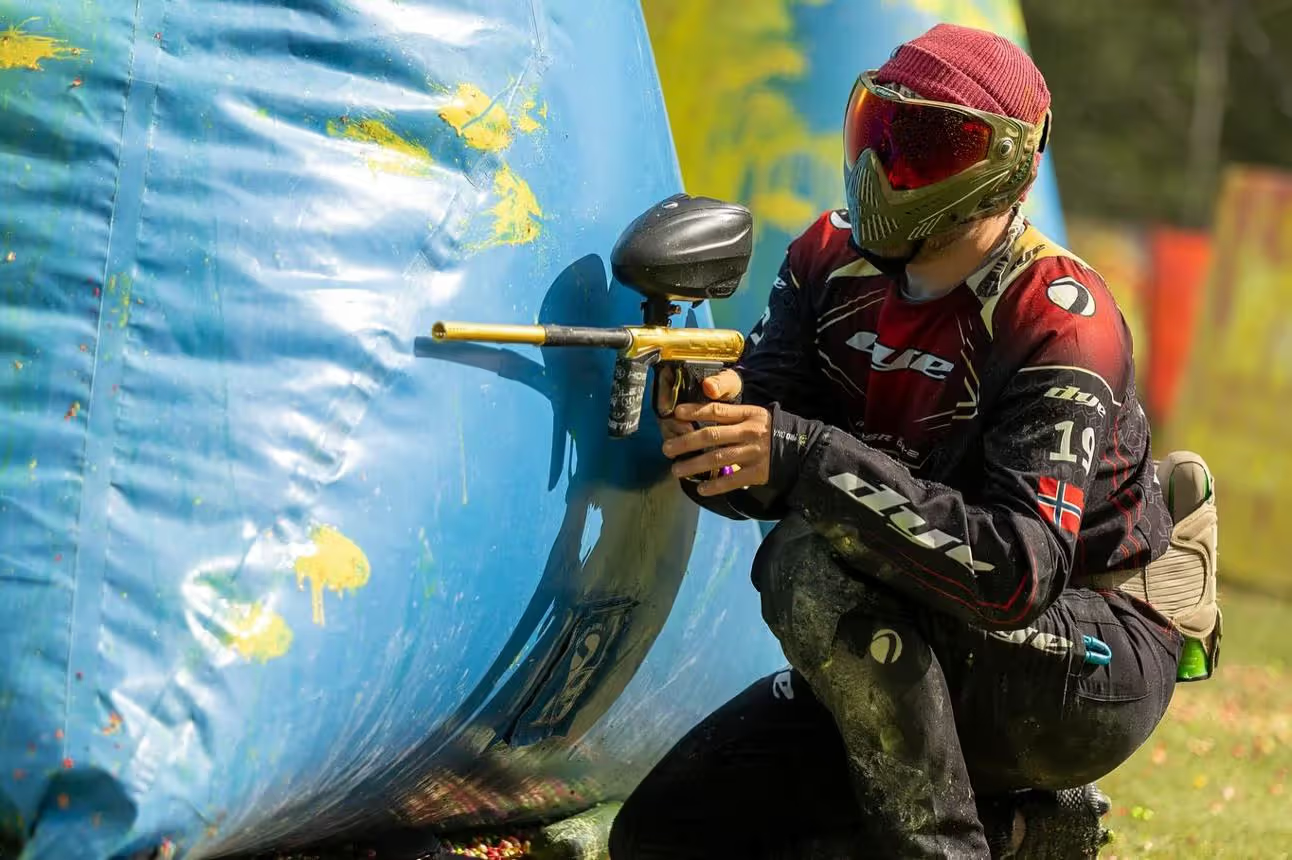
Most commercial parks cluster around that 10-12 age minimum we talked about earlier. They've got the infrastructure to accommodate younger players: kid-sized chest protectors, adjustable markers, low-impact zones separated from the main fields. You'll pay extra for this setup, but at least you know your 10-year-old won't be dodging paintballs fired by a 200-pound former college athlete.
Referees at these places actually do their jobs. They'll stop games if kids start getting reckless, enforce the "mask stays on" rule like their life depends on it (legally, it kind of does), and generally keep younger players from doing something stupid. Birthday party packages usually include a dedicated staff member who sticks with your group the whole time, which is worth its weight in gold when you've got eight sugar-buzzed 11-year-olds running around.
Author: Caleb Varden;
Source: lakestaytents.com
Private and Backyard Paintball
Technically legal on your own property in every state. Practically? That's where things get complicated.
No law stops you from letting your 8-year-old play paintball in your backyard. You're the parent, it's your property, do what you want. But understand what you're signing up for: your homeowner's insurance almost certainly won't cover paintball injuries. Someone gets hurt? You're paying medical bills out of pocket.
Neighbors will complain. Not might—will. Paintballs make noise. They also fly farther than you think, and when one smacks Mrs. Henderson's vinyl siding at 280 feet per second, you'll be having an uncomfortable conversation.
If you're dead-set on backyard paintball, at least follow the same safety rules commercial fields use. That means ASTM-certified masks (not just "protective eyewear"), chronographing your markers to ensure they're shooting under 280 fps, and setting up actual boundaries so paintballs don't escape into the neighbor's yard. Adult supervision isn't optional—it's the only thing standing between "fun afternoon" and "lawsuit."
Parental Consent and Waiver Requirements
Every commercial field in America will hand you a waiver if your kid is under 18. This waiver is basically a legal document saying "I acknowledge paintball involves getting shot with projectiles, and I promise not to sue when my kid comes home with bruises."
Some states let you sign these at home and bring them in. Others require you to show up in person with photo ID. New York and a handful of other states want the signature notarized, which means you're finding a notary public before you can play. Bigger fields keep notaries on staff during weekends, but smaller operations might not have this service.
Can your 17-year-old sign their own waiver? Depends where you live. Most states say no—18 is the cutoff for signing liability waivers. A few states allow 16- and 17-year-olds to sign independently, though the field might still require parental consent anyway because their insurance company demands it.
And no, you can't send your kid with their cool uncle or your sister-in-law. Fields want signatures from legal guardians only. They'll check ID against the name on the waiver. I've watched staff turn away grandparents, adult siblings, and family friends who weren't legally authorized to sign. Bring the actual parent or legal guardian, or bring notarized paperwork proving guardianship.
Safety Considerations for Younger Players
Author: Caleb Varden;
Source: lakestaytents.com
Age limits exist because getting shot hurts, and younger kids handle pain differently than teenagers or adults.
A paintball traveling at 280 feet per second packs enough punch to sting through clothing. On bare skin, it'll leave a welt. Adults shrug this off. Ten-year-olds might not. I've seen kids tough it out and have a blast. I've also seen kids take one hit, burst into tears, and refuse to come out of the safe zone.
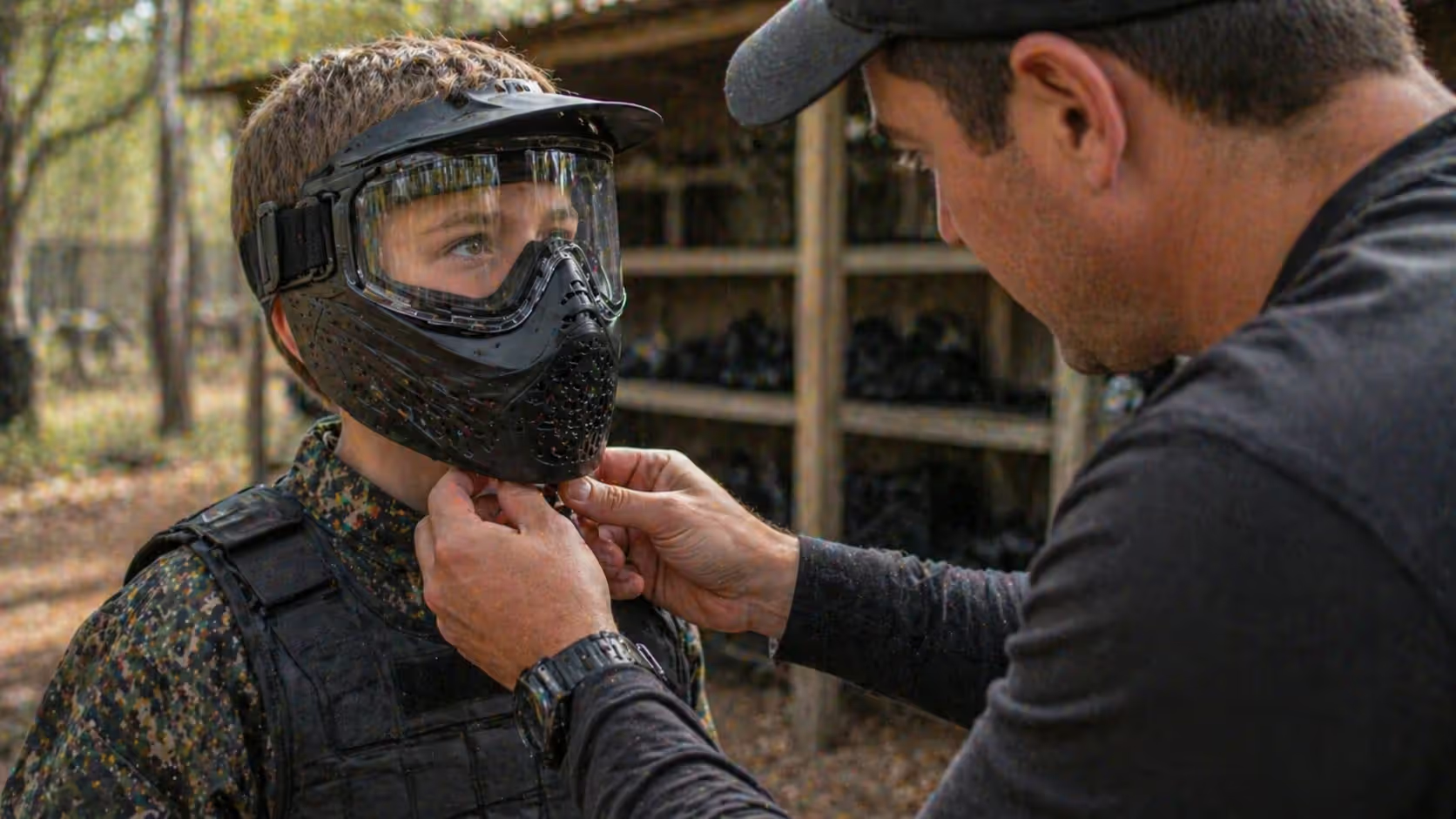
Equipment fit matters more than you'd think. Standard paintball masks are designed for adult-sized heads. Put one on a small-framed 10-year-old and you'll get gaps around the edges or a mask that slips down and blocks their vision. Either scenario is dangerous. Markers weigh 2-4 pounds when loaded—not heavy for an adult, but enough to make younger kids struggle with aim and control.
Following safety rules requires impulse control that younger brains are still developing. "Never remove your mask in the playing area" seems simple, but refs will tell you the biggest offenders are kids under 12. They get fog on their lens, or the strap feels uncomfortable, or they just forget in the heat of the moment. One kid takes their mask off at the wrong time, and you've got a potential eye injury.
That's why fields running youth games keep more refs per player. With adults, one ref per 10-15 players works fine. Kids under 12? Better have one ref for every 6-8 players, which costs more money and partly explains why some fields simply refuse to deal with younger age groups.
We set our minimum at 10 after tracking incidents for five years. Younger than that, we kept seeing kids overwhelmed—not injured, just unable to enjoy themselves. The noise freaked them out, or the first hit sent them into panic mode. At 10 and up, especially with the right equipment, they have amazing experiences. This isn't about excluding anyone. It's matching the activity to what kids can actually handle.
— Marcus Chen
What Happens If You're Under the Minimum Age
Got a 7-year-old who desperately wants to play? You've got options, just not traditional paintball.
Low-impact paintball accepts kids as young as 8 at some fields. These use the .50 caliber markers we mentioned earlier—lighter projectiles, less pain, equipment sized for smaller bodies. The tradeoff is range and accuracy. Low-impact paintballs don't fly as far or as straight, which changes gameplay significantly. It's still paintball, just a gentler introduction to the sport.
Splatmaster takes it even further down. These spring-powered markers (not gas-powered like real paintball guns) shoot tiny, low-velocity paintballs designed for ages 6-10. The impact barely registers. You're basically playing tag with paint-filled pellets. Kids love it, but it's not going to satisfy a 12-year-old who wants the real experience.
Airsoft presents an interesting alternative. The guns shoot lightweight plastic BBs instead of paint. Less impact pain, different tactical feel, but you lose the visual confirmation of hits that makes paintball so satisfying. Age restrictions for airsoft vary—sometimes they're more lenient than paintball, sometimes stricter. Eye protection is absolutely non-negotiable since BBs can cause serious eye injuries.
Laser tag removes physical impact entirely. No pain, no projectiles, no age restrictions worth mentioning. The tactical gameplay is similar—teams, objectives, shooting opponents—but without any of the physical intensity that makes paintball unique. Many paintball facilities now run laser tag operations specifically to capture the under-10 market.
Or you could just wait. Seriously. A kid who's barely tall enough to meet the age requirement often has a worse time than one who's waited another year or two. Better to have a fantastic first experience at 12 than a traumatic one at 10 that puts them off paintball forever.
Frequently Asked Questions
Paintball age requirements aren't consistent across the country—they vary by state law, local ordinance, and individual field policy. Most commercial facilities accept players starting at 10-12 years old, with parental waivers required for anyone under 18. Signing procedures for those waivers differ by location, ranging from simple signatures to notarized documents.
These restrictions aren't arbitrary bureaucracy. They reflect real concerns about equipment fit, pain tolerance, physical development, and safety rule compliance. Younger kids face legitimate challenges that older players handle without thinking twice.
If your child falls below local age minimums, consider low-impact alternatives, wait until they're old enough, or explore related activities like laser tag that work for all ages. Before planning any paintball outing, call the specific venue to verify their current policies, waiver requirements, and any special accommodations they offer. Five minutes on the phone prevents wasted trips and disappointed kids—trust me, it's worth the effort.