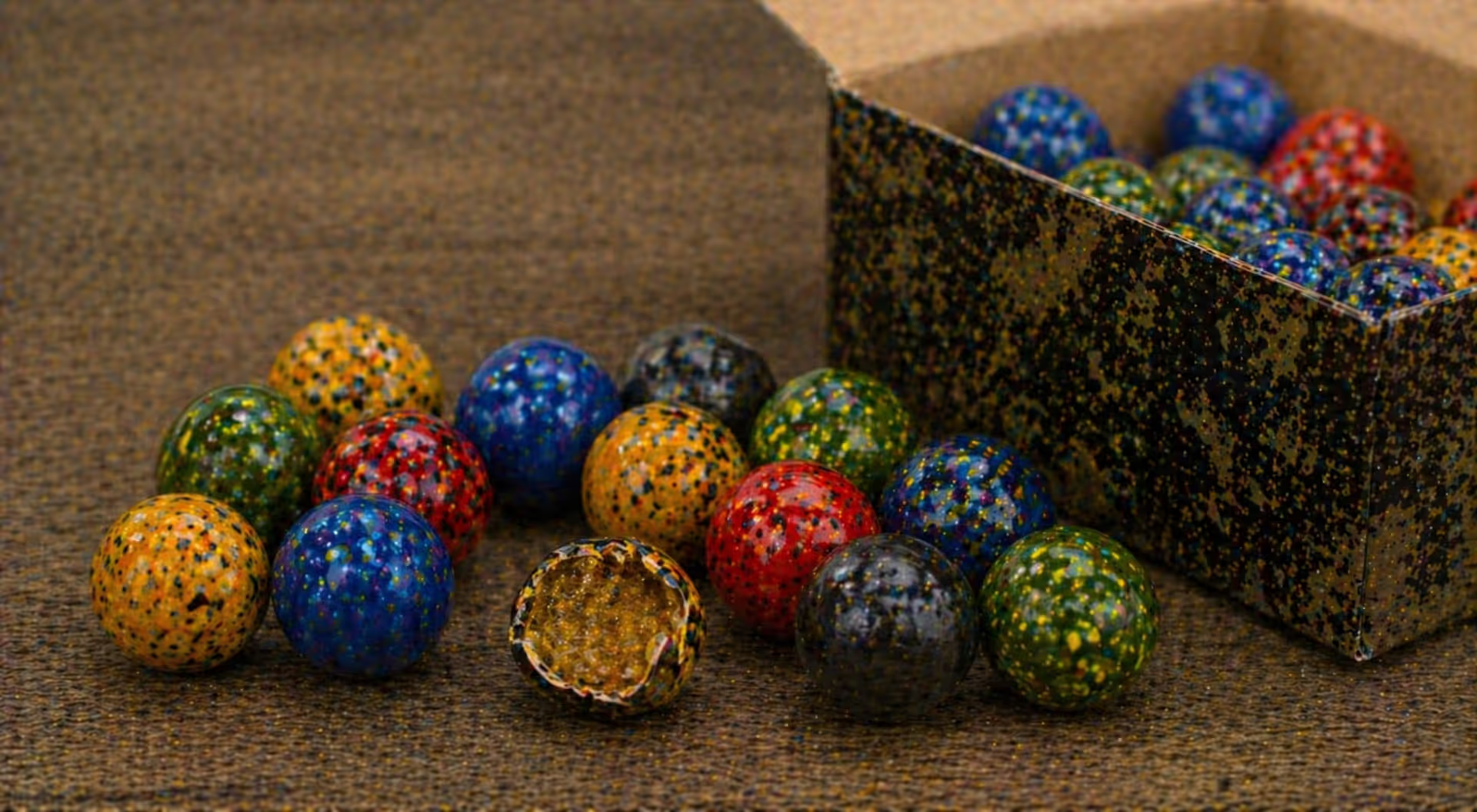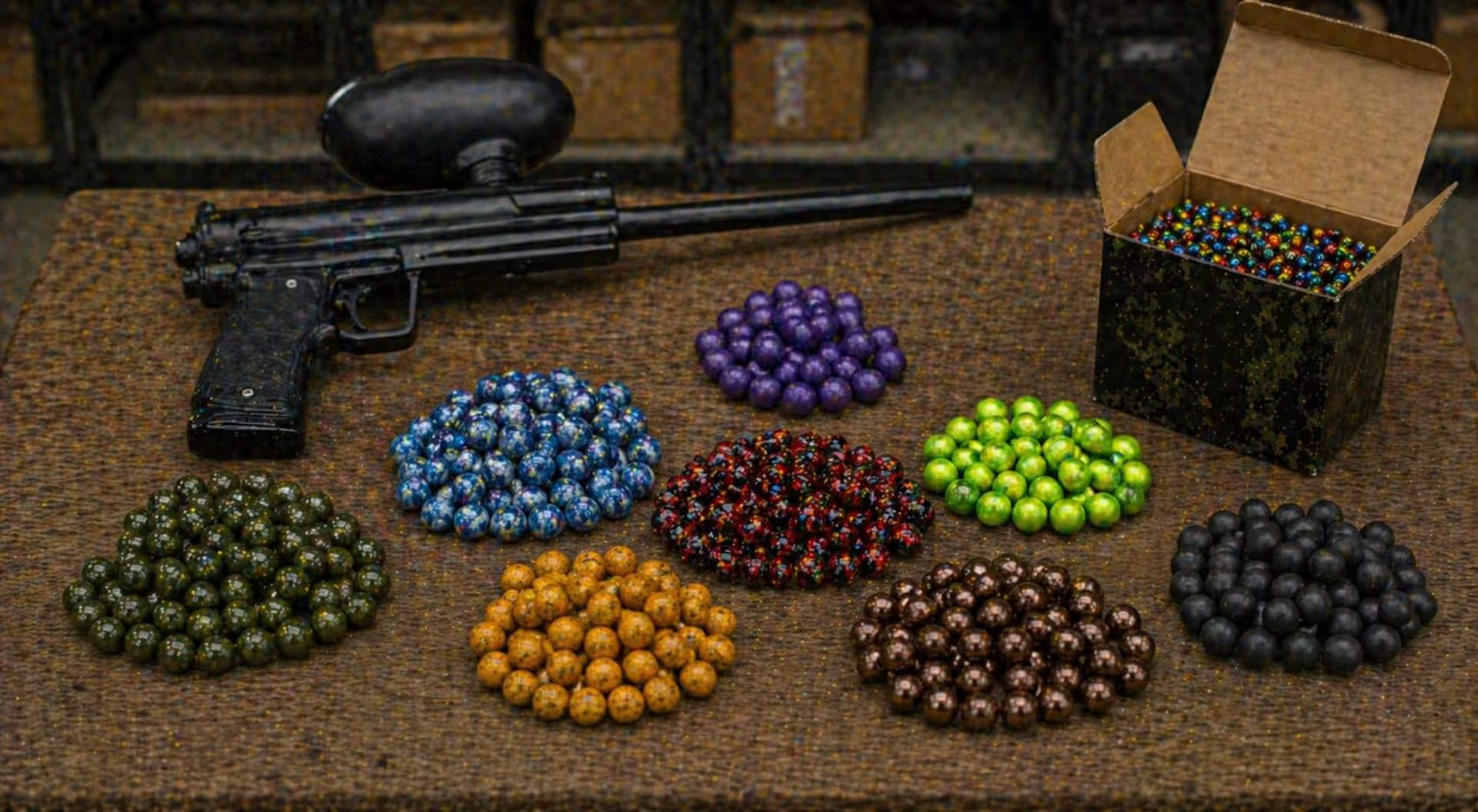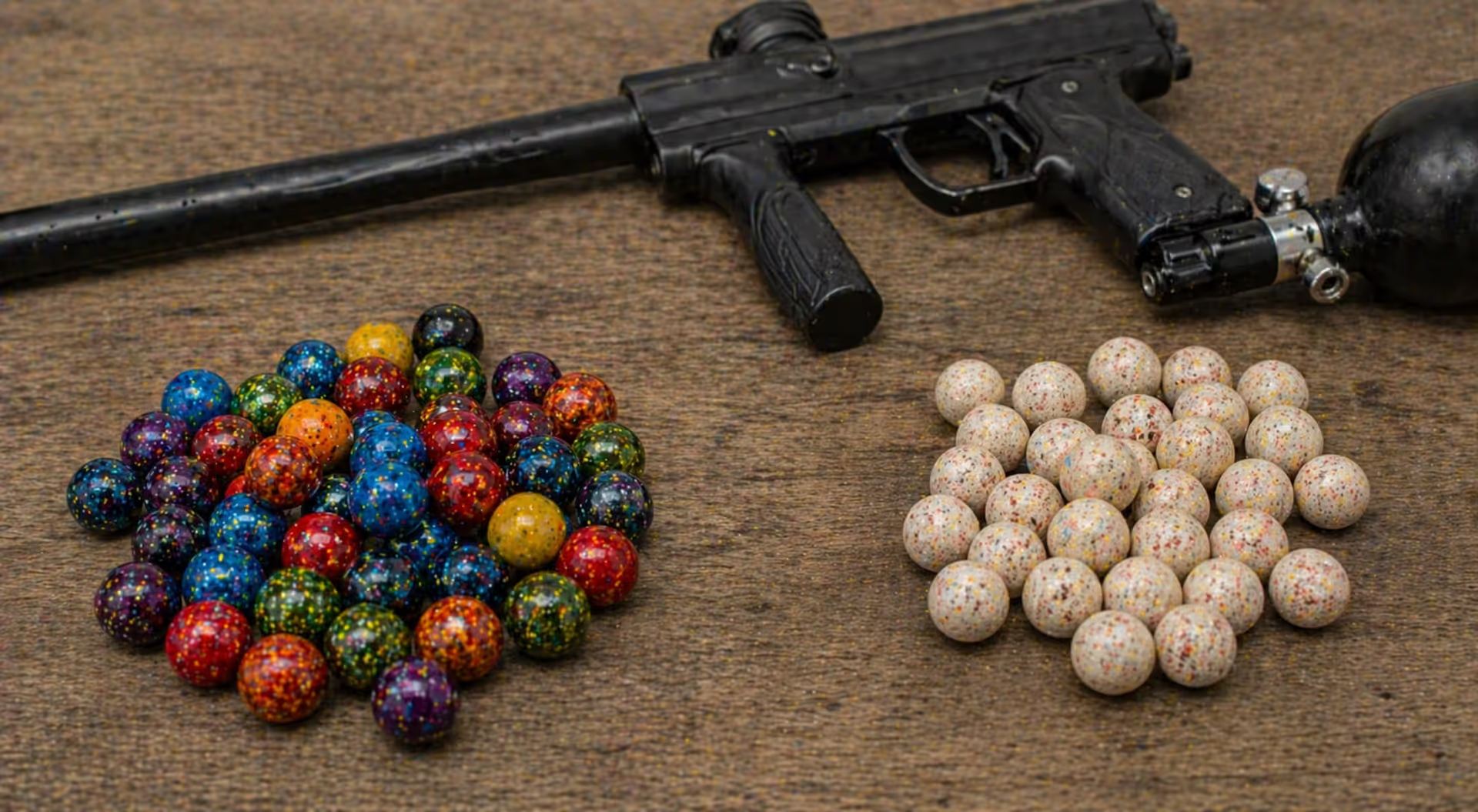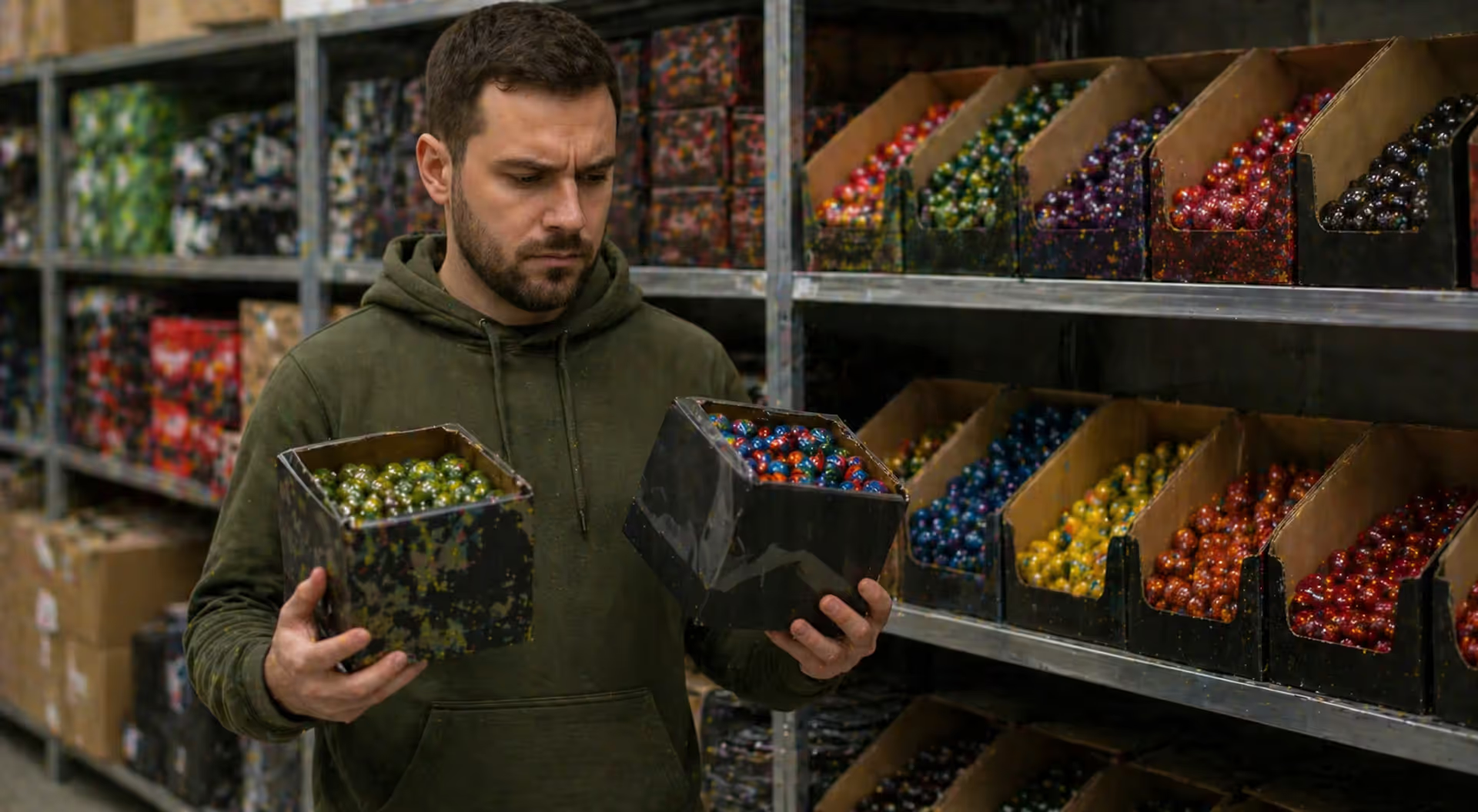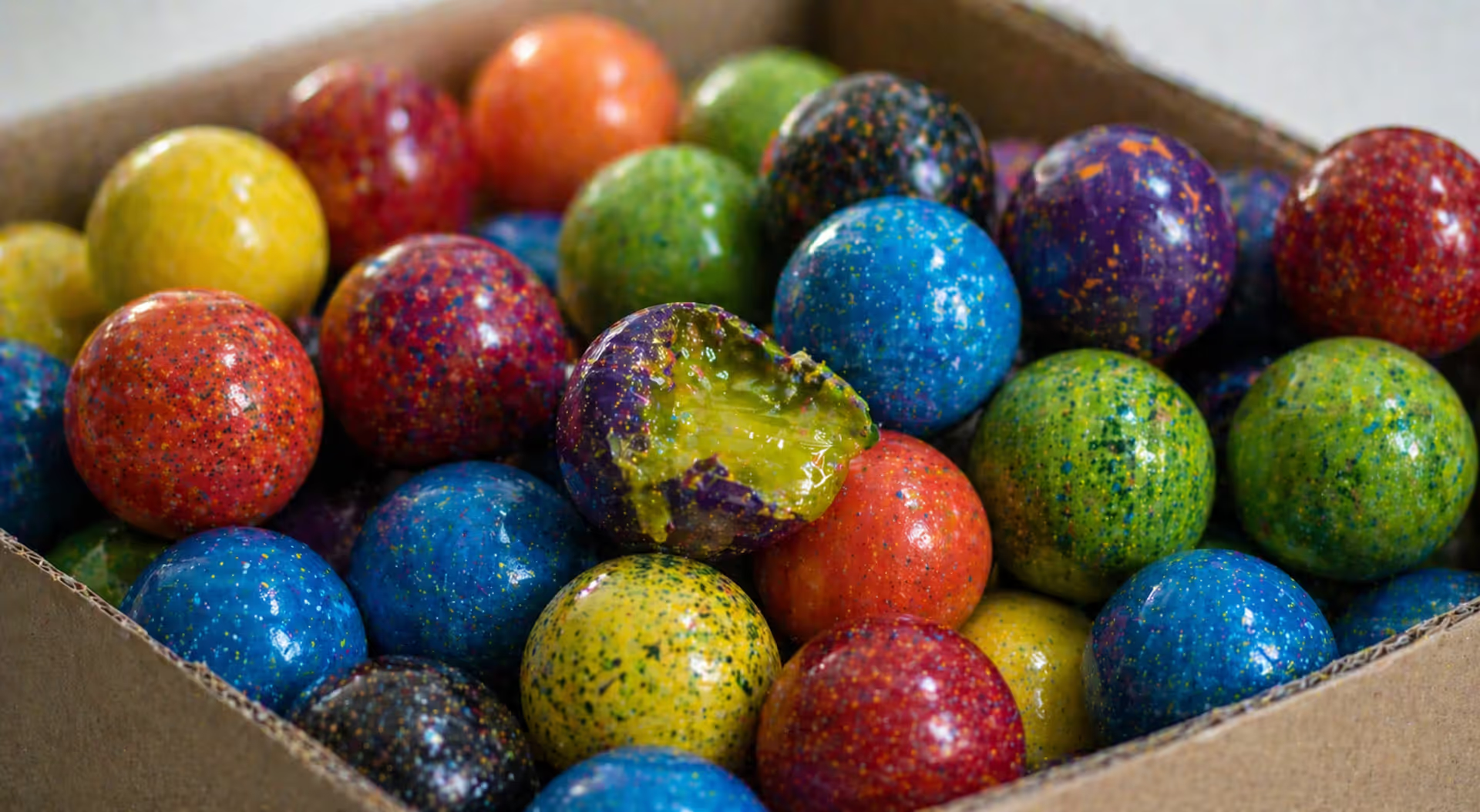
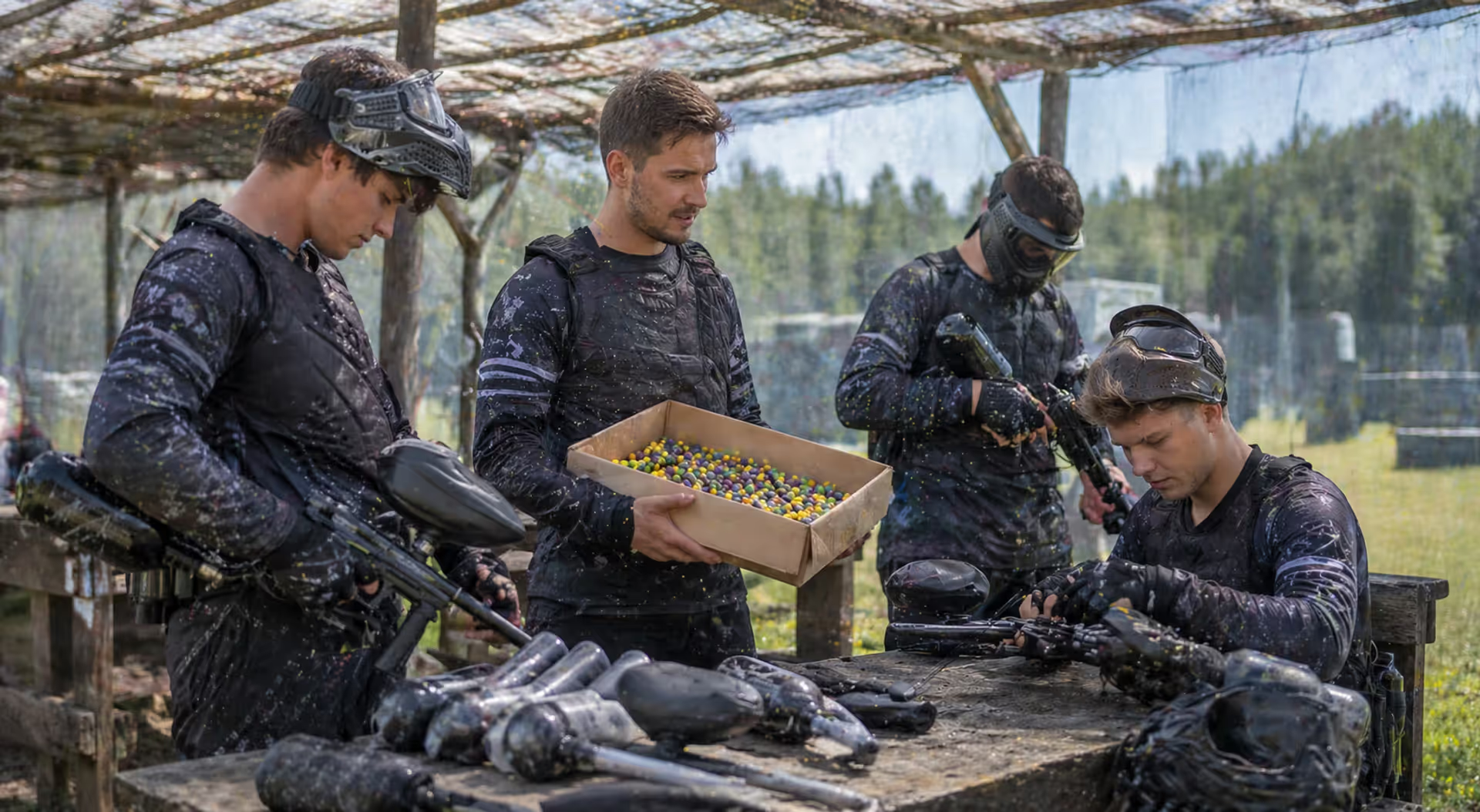
paintball players preparing gear and checking paintball supply before game
How Many Paintballs Do I Need for a Game?

Content
First-timers usually make one of two mistakes: they either pack like they're heading into a weeklong siege, or they show up with barely enough ammo to last through lunch. I've watched countless beginners burn through their entire stash by 11 AM, then spend the rest of the day rationing shots like they're worth gold.
Here's what actually happens: recreational players shoot anywhere from 200 to 500 paintballs during a typical afternoon session (we're talking 3-4 hours). Now, if you're the type who sprays paint like a firehose or you're diving into speedball tournaments, you'll easily go through 1,000 to 2,000 rounds. Maybe more if you're really going hard.
Getting this number right isn't just about saving cash—though that matters too. It's about not sitting on the sidelines watching everyone else have fun because you ran dry halfway through the best game of the day.
Average Paintball Usage by Player Type
Your shooting habits say everything about how many paintballs you'll actually need. Some players take three deep breaths before squeezing off a single shot. Others? They're holding down the trigger like they're auditioning for an action movie.
Take first-time players. They'll go through maybe 100-200 paintballs per hour, tops. Why so little? They're figuring out which end of the marker to point where. They're hiding behind bunkers wondering if that rustling sound is a person or just wind. They hesitate. A lot. Three hours of play? You're looking at 300-600 rounds, and that's generous.
Once you've played a few times, that number creeps up. Intermediate players hit 150-300 rounds hourly. They've stopped flinching every time someone shoots near them. They know when saving ammo makes sense and when to light someone up. Four hours on the field translates to 600-1,200 paintballs disappearing from their pack.
Then you've got the aggressive players—the ones providing covering fire while their team advances, the ones who aren't afraid to empty a pod to keep an opponent pinned. They're burning 300-500+ paintballs every hour. Two thousand rounds for an extended session? Normal day for them.
Tournament speedball players exist in a different universe entirely. Ten minutes of game time can consume 500-800 paintballs. Their markers are cranked up, they're constantly shooting to control lanes, and standing still means getting lit up. It's paintball on fast-forward.
Author: Logan Mercer;
Source: lakestaytents.com
Here's what catches people off-guard: paintball isn't like going to a shooting range where you fire 50 careful rounds and call it a day. Paintballs fly crooked. Markers aren't rifles. You need volume to hit anything, and suppressive fire matters more than precision. Nobody warned you about that part, did they?
Paintball Consumption by Game Format and Duration
The type of game you're playing changes everything. Woodsball scenario games and speedball tournaments might as well be different sports when it comes to ammo consumption.
Recreational Play (2–4 hours)
Standard weekend sessions at commercial fields work like this: you play a short game (10-20 minutes), catch your breath, refill your pods, maybe grab some water, then head back out. You'll cycle through 6-12 separate matches during a half-day visit.
Most recreational players shoot 150-300 paintballs per hour in this format. All that downtime between games—walking back to staging areas, swapping war stories, adjusting gear—it cuts down your actual trigger time. Four hours at the field? Figure on 600-1,200 paintballs for casual play.
Commercial fields have this number dialed in. They'll sell you a package with 500 paintballs, knowing full well you'll be back at the shop buying another bag or two once you've loosened up and gotten competitive. Smart business, honestly.
Author: Logan Mercer;
Source: lakestaytents.com
Scenario and Tournament Games
Scenario events flip the script completely. These massive games run for hours with 50+ players per side, objectives to capture, and actual storylines. How much you'll shoot depends entirely on your role. Playing sniper or scout? Maybe 300-400 paintballs across six hours of sneaking around. Assigned to assault squads attacking enemy bases? You could blast through 2,000+ rounds.
Speedball tournaments represent the absolute ceiling of paintball consumption. Five to ten minutes of non-stop chaos where you're firing constantly just to control your side of the field. One match can eat up 300-600 paintballs. A full tournament day with 8-10 matches? Bring 3,000-5,000 rounds minimum, or you'll be begging teammates for spares.
Here's the breakdown across different formats:
| Game Format | Average Rounds/Hour | Typical Duration | Total Paintballs Needed |
| Recreational Woodsball | 150-250 | 3-4 hours | 500-1,000 |
| Speedball Practice | 400-600 | 2-3 hours | 1,200-1,800 |
| Scenario/Big Game | 200-400 | 4-8 hours | 1,000-3,000 |
| Tournament Speedball | 600-800 | Full day (multiple matches) | 3,000-5,000 |
| Casual Backyard | 100-200 | 2-3 hours | 300-600 |
Woodsball gives you longer play for less money. Speedball delivers concentrated intensity but you'll pay for every second of it in paint costs.
Understanding Paintball Packaging and Pod Capacity
Paintballs come in specific quantities that actually make sense once you understand how hoppers and pods work.
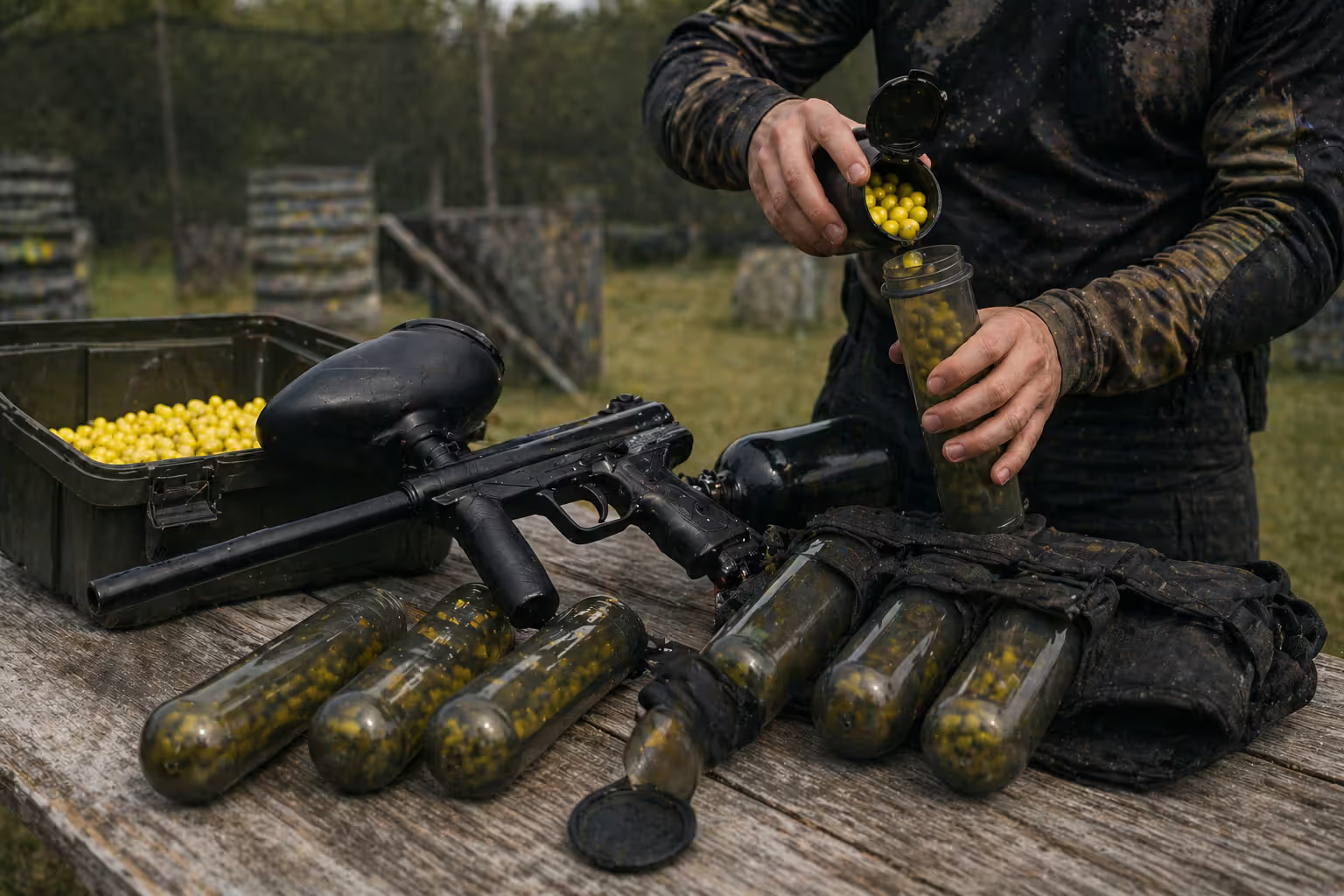
Your hopper—that bulbous container sitting on top of your marker—holds 200 paintballs. Doesn't matter if it's a basic gravity-fed model or a fancy electronic one that force-feeds at 20 balls per second. Capacity stays at 200.
Pods are those cylindrical tubes clipped to your harness. Standard pods hold 140 paintballs each. Most harnesses accommodate 4-8 pods depending on size. Load up a full hopper plus four pods? You're carrying roughly 760 paintballs onto the field.
Retail packaging follows these standards:
- Bags: 500 or 1,000 paintballs
- Boxes: 2,000 paintballs (called a "case" in paintball speak)
- Bulk cases: 4,000 paintballs (two cases bundled)
Let's do the math on a 500-round bag. That'll fill your hopper twice with enough left over for one pod. A full 2,000-round case? That's plenty for tournament play or a full day of aggressive recreational shooting.
Author: Logan Mercer;
Source: lakestaytents.com
Smart players fill their hopper and all their pods before game one, then top off between matches. Nobody carries their entire stash onto the field—1,000+ paintballs gets heavy fast, and you'll be sucking wind halfway through the game.
Pod capacity matters more during scenario games. You might be stuck on the field for 45 minutes with no resupply, so players pack 6-8 pods. Recreational games are shorter with frequent breaks, so 2-4 pods handles it.
Is 500 Paintballs Enough for a Day of Play?
This question shows up constantly in paintball forums, and honestly? It depends what you mean by "a day of play."
Absolute beginners playing 2-3 hours: Yeah, 500 paintballs usually works. You'll shoot conservatively, take breaks between games because you're gassed, and probably finish with some leftover. First-timers rarely blast through everything.
Intermediate players planning 4 hours: You're cutting it close with 500. Plan on buying another 200-500 rounds, especially if the competition heats up or games run longer than expected. Don't count on finishing with much left.
Aggressive players or full-day sessions: 500 paintballs disappears in 90 minutes to two hours, max. You'll need 1,000-1,500 minimum, and that's conservative.
Tournament or speedball: You'll shoot 500 paintballs during warmups and practice. Serious competitors pack 2,000+ for competition days. Anything less and you're rationing ammo, which never ends well.
Real-world example: four guys show up for a bachelor party, each buying the beginner special with 500 paintballs included. Three of them finish fine. The fourth guy—the competitive one providing cover fire and going aggressive—runs out after six games and shells out for another 500-round bag. This exact scenario plays out every single weekend at fields across the country.
Fields love that 500-round package. It hits a psychological sweet spot—affordable enough to not scare off beginners, but light enough that most players will buy more. They've got your consumption patterns figured out to the last paintball.
How to Estimate Your Paintball Needs Before You Go
Want an actual number instead of vague ranges? Here's how you calculate it.
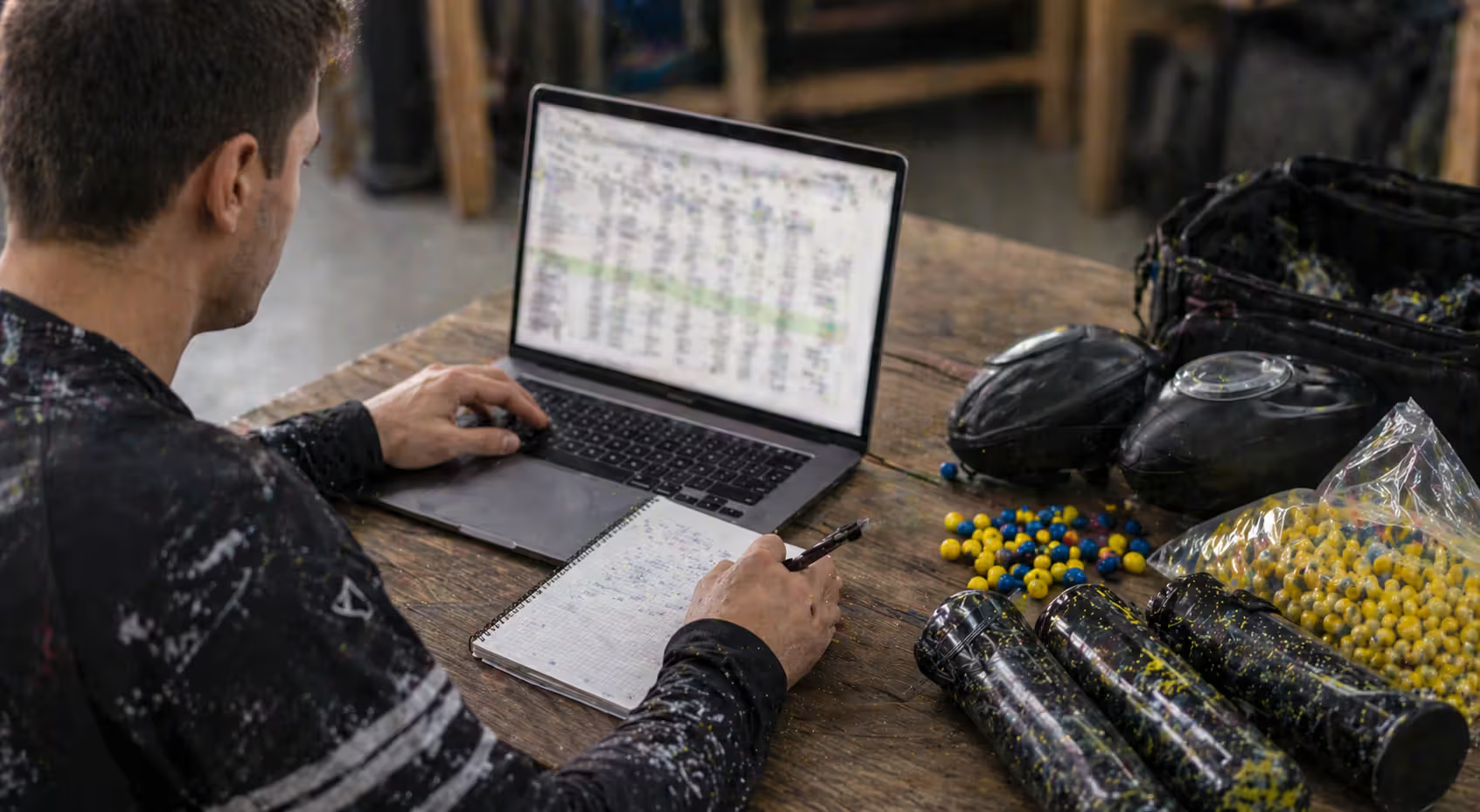
Step 1: Figure out real game time
Count shooting time, not total visit time. A four-hour trip includes safety briefings, bathroom breaks, refilling pods, and standing around between games. Actual play time? More like 2.5-3 hours.
Step 2: Be honest about your playing style
- Conservative/defensive: 150 rounds per hour
- Moderate/balanced: 250 rounds per hour
- Aggressive/offensive: 400 rounds per hour
- Tournament/competitive: 600+ rounds per hour
Step 3: Do the basic math
Hours multiplied by consumption rate. Let's say 3 hours × 250 rounds = 750 paintballs.
Step 4: Add buffer room
Bump it up 20-30% because you'll probably get more aggressive as the day goes on. That 750 becomes 940 paintballs—round up to 1,000 to keep the math simple.
Step 5: Check field requirements
Some fields force you to buy their paintballs. Others let you bring your own (BYOP fields). This affects your entire purchasing strategy.
Quick reference for different scenarios: - First-time player, half day: 500 paintballs - Recreational regular, half day: 800-1,000 paintballs
- Experienced player, full day: 1,500-2,000 paintballs - Tournament competitor: 3,000-5,000 paintballs
Everyone makes the same mistake: they calculate based on careful, measured play, then get caught up in the moment and start shooting three times as much. Better to have leftover paintballs than sitting out the final push because your pods are empty.
Author: Logan Mercer;
Source: lakestaytents.com
Cost Considerations When Buying Paintballs
Where you buy paintballs matters as much as how many you buy. Price differences are significant.
What fields charge (2026 pricing): - 500 paintballs: $25-$40 - 1,000 paintballs: $45-$70 - Full case (2,000): $80-$120
Online or sporting goods stores: - 500 paintballs: $15-$25 - 1,000 paintballs: $25-$40 - Full case (2,000): $40-$70
Fields charge more, but you're paying for convenience, climate-controlled storage, and quality assurance. Commercial fields operate on slim margins—paintball sales keep the lights on and the fields maintained.
Field-only paint rules: Most commercial operations require buying their paintballs. This isn't a cash grab—it prevents equipment damage from garbage-quality paint and ensures consistent performance. Try sneaking in outside paint and you'll get kicked out. They check.
BYOP fields: These places charge higher admission but let you bring your own ammunition. Makes sense for high-volume shooters using 1,500+ paintballs. For casual players? The math often favors just buying field paint.
Quality affects price: - Recreational grade: $40-$60 per case—thicker shells, less accurate, but good enough for woodsball - Mid-grade: $60-$80 per case—better accuracy, cleaner breaks, noticeable improvement
- Tournament grade: $80-$120+ per case—premium fill, perfect spheres, tournament-legal, best performance
Budget comparison for six players planning a bachelor party paintball day:
Scenario one (field paint): $35 per 500 rounds, everyone shoots 750 paintballs average = $315 total for paintballs.
Scenario two (BYOP field): $40 admission vs. $25 regular admission, but paintballs cost $25 per 500 rounds = $240 admission + $225 paintballs = $465 total.
Field paint wins here. BYOP only makes sense when you're shooting massive volumes.
New players always ask me how many paintballs they need, and I tell them this: buy 500 to start, and you'll know by game three whether you need more. The conservative players finish the day with extras. The aggressive ones are buying their second bag by lunch. There's no shame in either—it's about finding your style and budgeting accordingly.
— Marcus Chen
Storage tip worth mentioning: buying bulk for multiple trips? Keep those paintballs somewhere climate-controlled. Heat and humidity wreck the shells—they'll dimple, swell, or go brittle. Proper storage gets you 3-4 months. Poor storage? They'll fail within weeks.
Frequently Asked Questions About Paintball Ammo
Figuring out paintball quantities comes down to three factors: game format, your shooting style, and how long you're playing. Beginners spending 2-3 hours on recreational fields typically need 500-800 paintballs. Experienced players tackling full-day sessions should pack 1,500-2,000 rounds. Tournament competitors? Don't show up with less than 3,000 paintballs.
Start with 500 paintballs for your first visit. Track what you actually shoot, then adjust for next time. Add that 20-30% buffer for moments when adrenaline kicks in and suddenly you're shooting like you're in a John Wick movie instead of playing casual woodsball.
Money matters here—field paintballs cost more but guarantee quality and support the facility you're playing at. Calculate your total costs (admission, rentals, ammo) before committing to a play date. Groups can often negotiate package deals that bring down per-person costs significantly.
Most important thing? Bring enough paintballs to actually enjoy yourself. Constantly rationing shots because you're worried about running out kills the fun. Having a few extras left over beats watching the final game from the sidelines because you went dry at the worst possible moment.