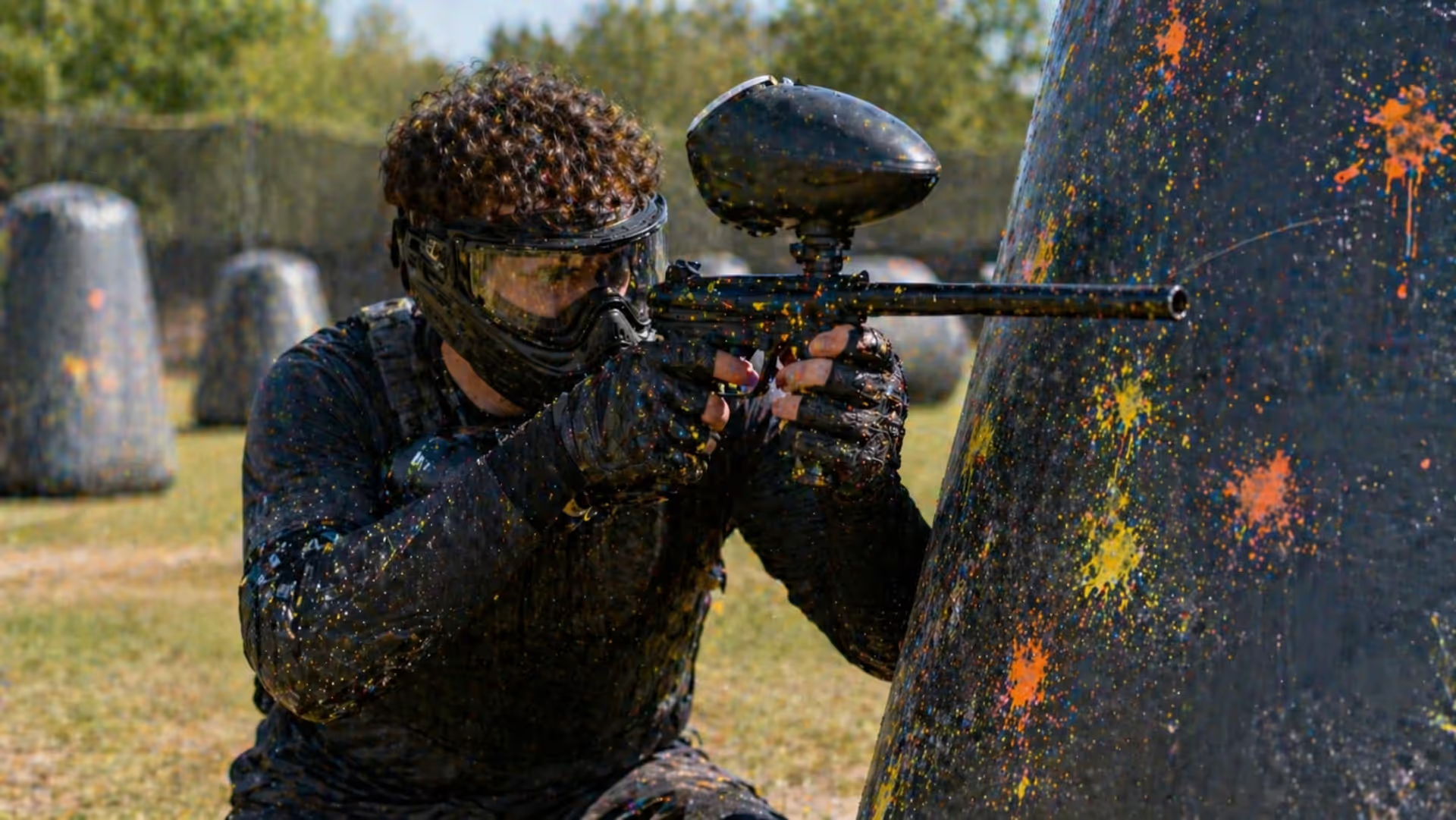
paintball player holding marker ready to shoot on field
How Fast Do Paintballs Travel?

Content
Paintball markers launch gelatin capsules filled with water-soluble dye at speeds that balance competitive gameplay with player safety. Understanding velocity isn't just about satisfying curiosity—it directly affects accuracy, paint breakage, and whether you walk away with bruises or welts. Fields enforce strict limits, and every player needs to know what those numbers mean and why they matter.
Standard Paintball Velocity Ranges
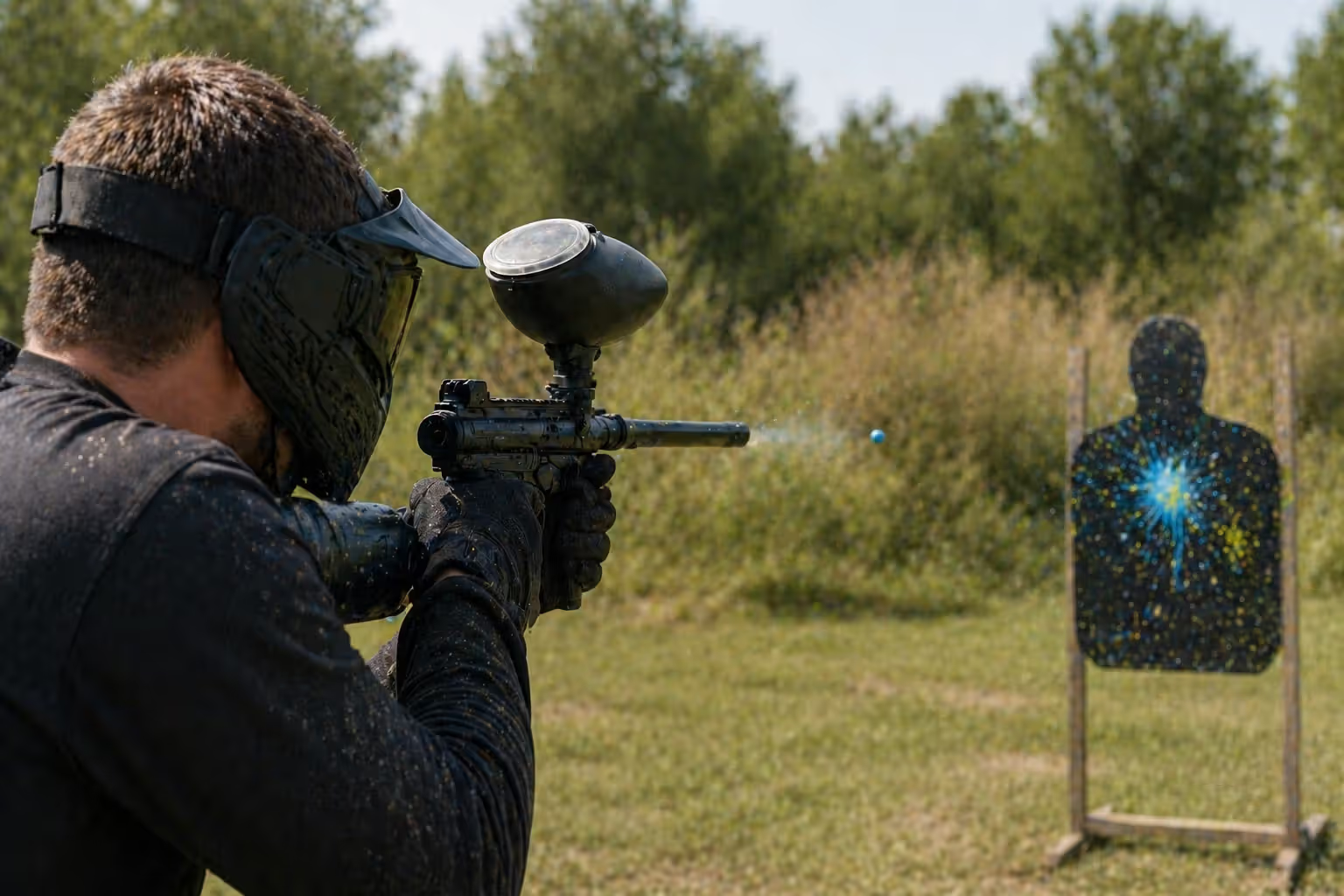
Most recreational paintball markers fire at 280 feet per second (FPS), which translates to roughly 191 miles per hour. That's the industry standard ceiling, not a target speed. In practice, fields often cap velocity between 260 and 280 FPS depending on game format and insurance requirements.
Stock markers straight from the manufacturer typically arrive set between 250 and 270 FPS. This gives players headroom to adjust without immediately exceeding limits. Tournament setups run closer to the maximum—professional leagues allow 280 FPS for woodsball formats, while speedball competitions sometimes permit 285 FPS with specific paint grades.
Muzzle velocity describes the speed at which a paintball exits the barrel. Unlike firearms, paintball projectiles decelerate rapidly due to their light weight and spherical shape. A ball traveling 280 FPS at the muzzle drops to approximately 240 FPS at 50 feet and continues losing speed as air resistance takes effect.
Comparing formats reveals interesting patterns. Magfed markers using First Strike rounds—fin-stabilized projectiles—maintain velocity longer than traditional round paint, but fields still enforce the same FPS caps at the barrel. Pump players often dial down to 260 FPS for better efficiency and reduced recoil between shots.
The 191 MPH figure sounds extreme until you consider the mass involved. A paintball weighs roughly 3 grams—about the same as a penny. That low mass combined with rapid deceleration means the kinetic energy dissipates quickly, which is precisely why paintball remains relatively safe compared to other projectile sports.
Author: Caleb Varden;
Source: lakestaytents.com
Industry Speed Limits and Safety Regulations
The 280 FPS standard emerged from decades of field data and insurance actuarial tables. This limit represents the threshold where paintballs consistently break on impact without causing tissue damage beyond superficial bruising. Push past 300 FPS, and you enter territory where paint bounces more often and impacts leave lasting marks.
Field-specific limits vary based on terrain and player proximity. Indoor arenas frequently cap velocity at 260 FPS because engagement distances shrink to 20–30 feet. Outdoor woodsball fields with 100-foot sightlines might allow 280 FPS. Scenario games with minimum engagement distances sometimes permit 300 FPS for designated marksman roles, but only with mandatory 50-foot standoffs.
Insurance carriers drive many velocity policies. Liability coverage often includes clauses requiring chronograph testing and documented enforcement. Fields that fail to maintain velocity standards risk losing coverage or facing premium increases after injury claims. That's why referees check markers multiple times per day rather than just during morning registration.
Speed regulations exist because physics doesn't care about intentions. A 3-gram projectile at 280 FPS carries approximately 3.5 joules of energy. At 350 FPS—a level some players attempt through modification—that same ball delivers 5.8 joules, enough to crack goggles or cause eye injuries if protective equipment fails.
The National Paintball Players League and other sanctioning bodies publish velocity guidelines annually. These documents specify testing procedures, paint quality requirements, and penalties for violations. Professional players caught shooting hot face game suspensions and team fines. Recreational fields handle violations by requiring immediate adjustment or ejecting repeat offenders.
Some venues implement tiered systems. Players with electronic markers might face 270 FPS caps due to higher rates of fire, while pump and mechanical users get the full 280 FPS allowance. This approach balances the cumulative impact risk when one player can launch 15 balls per second versus three.
How Paintball Speed Is Measured
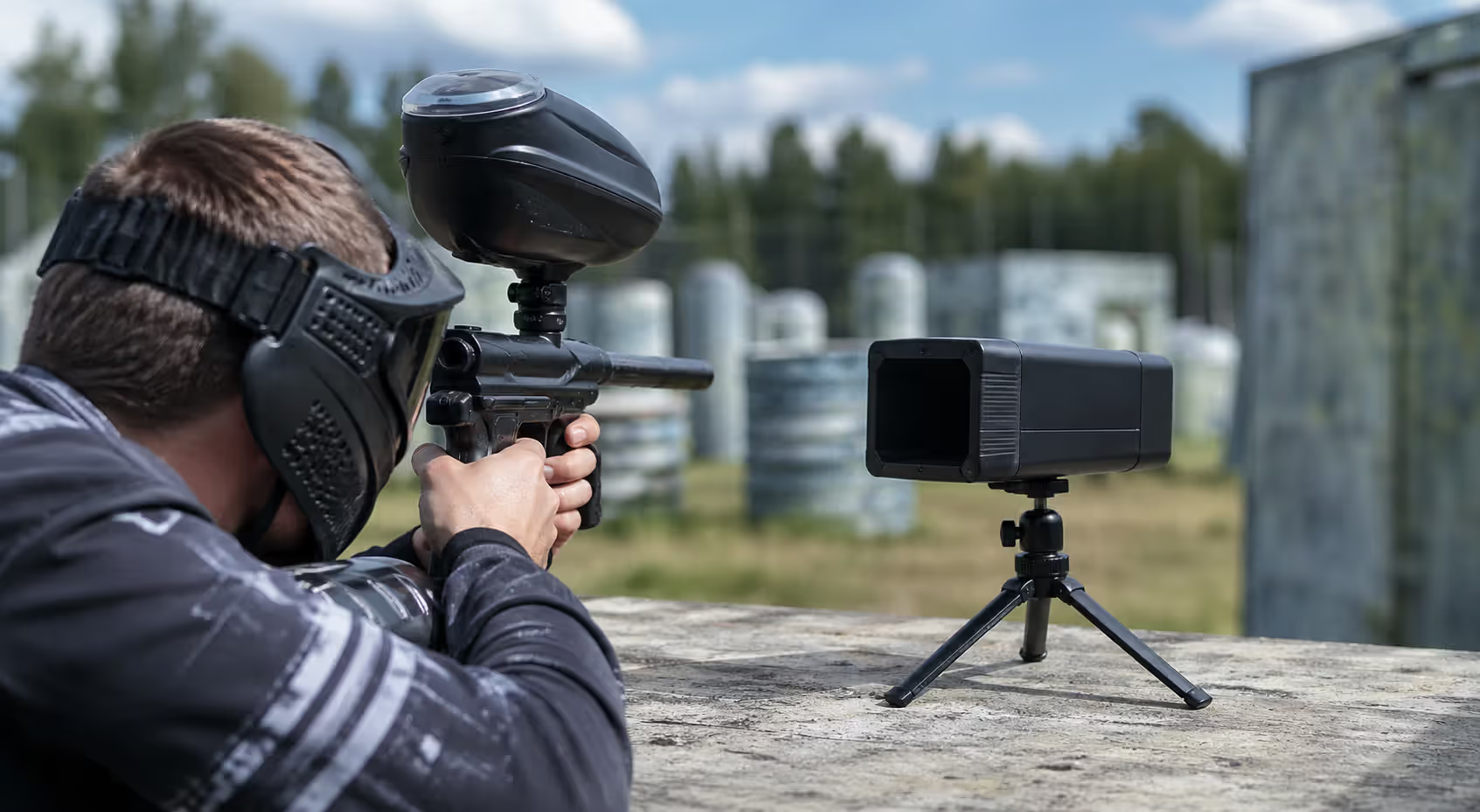
Chronographs use optical sensors or radar technology to calculate velocity. The device measures the time a paintball takes to pass between two sensors positioned a known distance apart, then converts that interval into feet per second. Modern units display results in FPS, meters per second, or joules depending on regional preferences.
Reading results requires understanding margin of error. A quality chronograph accurate to ±2 FPS still means your 280 FPS reading could actually be 282 FPS. That's why experienced players aim for 275–278 FPS, building in a safety buffer for temperature fluctuations and air pressure variations throughout the day.
Testing occurs at multiple checkpoints. Morning chronograph happens before players enter the field—referees fire three shots through your marker and average the results. Random spot checks continue during gameplay, especially after breaks when players might adjust regulators. Post-game testing catches anyone who cranked velocity mid-session hoping to avoid detection.
Accuracy factors include paint-to-barrel match and chronograph calibration. Oversized paint in a tight barrel creates friction that lowers velocity readings. Undersized paint allows gas blowby, reducing efficiency and creating inconsistent speeds. Referees account for this by testing with field paint rather than whatever you brought from home.
Author: Caleb Varden;
Source: lakestaytents.com
Proper chronograph technique matters. Hold the marker steady, 6–12 inches from the sensor array. Tilting or moving during the shot skews readings. Fire at a consistent rate—rushing shots on an electronic marker can show lower FPS than your actual gameplay velocity due to air system recovery time between shots.
Environmental conditions affect readings too. Direct sunlight on the chronograph sensors can cause false readings. Wind blowing across the sensor path creates turbulence that registers as velocity changes. Quality fields use chronograph stations with protective housings to minimize these variables.
Factors That Affect Paintball Velocity
Air pressure is the primary velocity control. High-pressure air (HPA) systems use regulators to control output pressure—increase the regulator setting, and velocity climbs. CO2 systems are less consistent because carbon dioxide transitions between liquid and gas states based on temperature, causing velocity swings of 20–30 FPS between shots.
Barrel length shows diminishing returns after 12 inches. Longer barrels don't increase velocity significantly because paintballs accelerate in the first 8–10 inches, then friction begins slowing them down. A 16-inch barrel might shoot 5 FPS slower than a 12-inch barrel on the same marker with identical pressure settings.
Paint quality directly impacts muzzle velocity through bore matching. Fresh paint with thick shell walls accelerates more efficiently than old, swollen paint that deforms in the breech. Professional players carry multiple barrel backs sized .675 to .689 inches to match daily paint batches. A proper match can add 10–15 FPS compared to a loose fit.
Temperature swings create velocity changes. HPA systems gain roughly 1.5 FPS per 10-degree Fahrenheit increase. CO2 is more dramatic—a tank sitting in a hot car can spike velocity by 40+ FPS, while cold weather drops pressure so severely that markers barely cycle. Smart players chronograph after their equipment reaches field temperature, not immediately after pulling it from a climate-controlled vehicle.
Author: Caleb Varden;
Source: lakestaytents.com
Marker tuning involves multiple adjustment points. Electronic markers offer dwell settings that control how long the solenoid valve stays open. Longer dwell times allow more air per shot, increasing velocity but reducing shots per tank. Mechanical markers use spring tension and hammer weight to regulate valve timing. Even small changes—half a turn on a velocity adjuster—can shift FPS by 15–20 points.
Maintenance affects consistency more than peak velocity. Worn bolt o-rings leak air, causing velocity to drop and vary shot-to-shot. Dirty regulators stick, creating pressure spikes. A well-maintained marker holds velocity within 5 FPS across a full tank, while neglected equipment might swing 30 FPS as tank pressure drops.
Kinetic Energy and Impact Force
Paintball kinetic energy follows the formula KE = ½mv², where mass (m) is in kilograms and velocity (v) is in meters per second. A standard 3-gram paintball at 280 FPS (85.3 m/s) carries 10.9 joules. For comparison, that's roughly equivalent to getting snapped with a thick rubber band—painful but not dangerous with proper protection.
Impact force depends on the contact area and deformation time. Paintballs spread their energy across approximately 0.5 square inches during the 2–3 milliseconds it takes to break. This distributed impact is why paintball hurts less than a projectile with the same energy concentrated in a smaller area, like an airsoft BB.
Safety distance considerations change the equation. At point-blank range—under 10 feet—even a 260 FPS paintball can cause serious injury to unprotected skin. The ball hasn't had time to decelerate, and the full kinetic energy transfers in a concentrated impact. That's why fields enforce minimum engagement distances and ban "bonus balling" (shooting eliminated players at close range).
Protective equipment is rated for specific energy levels. ASTM-certified paintball goggles must withstand impacts of 15 joules without lens penetration or frame failure. That provides a safety margin above the 10.9 joules delivered by a 280 FPS shot. Cheap recreational eyewear lacks this certification and has failed catastrophically in documented incidents.
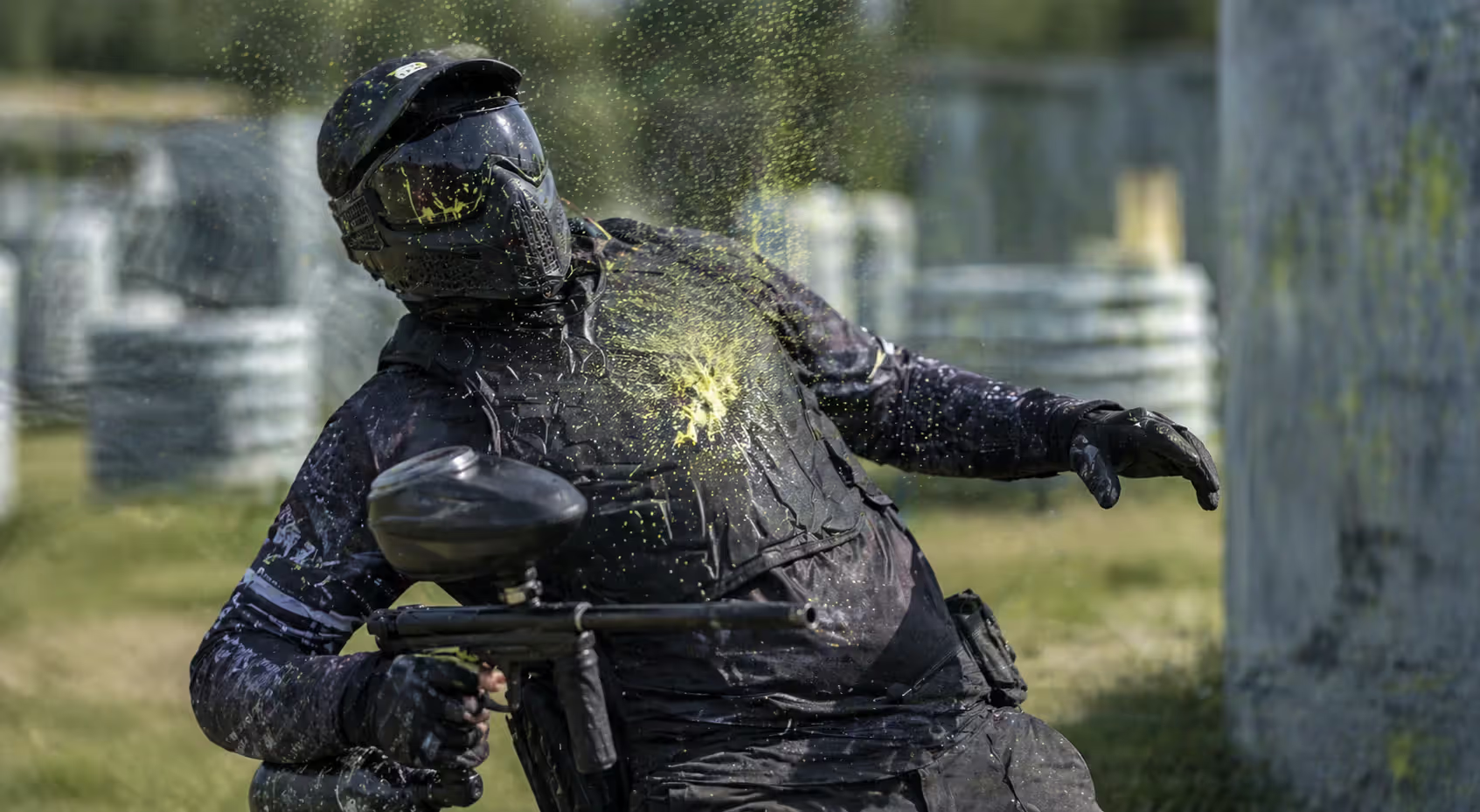
Different body areas tolerate impact differently. Shots to padded areas—chest, shoulders, thighs—rarely cause more than temporary discomfort. Hits to bony areas like knuckles, elbows, or the top of the head hurt disproportionately because there's less tissue to absorb energy. Neck shots are particularly painful and why many players wear neck guards despite them not being mandatory.
The velocity-distance relationship provides natural safety buffers. By the time a paintball travels 100 feet, it's lost 20–25% of its muzzle velocity. Long-range shots sting less than close encounters, which is why woodsball fields with longer engagement distances can safely run higher velocity limits than close-quarters speedball arenas.
Author: Caleb Varden;
Source: lakestaytents.com
Adjusting and Maintaining Legal FPS
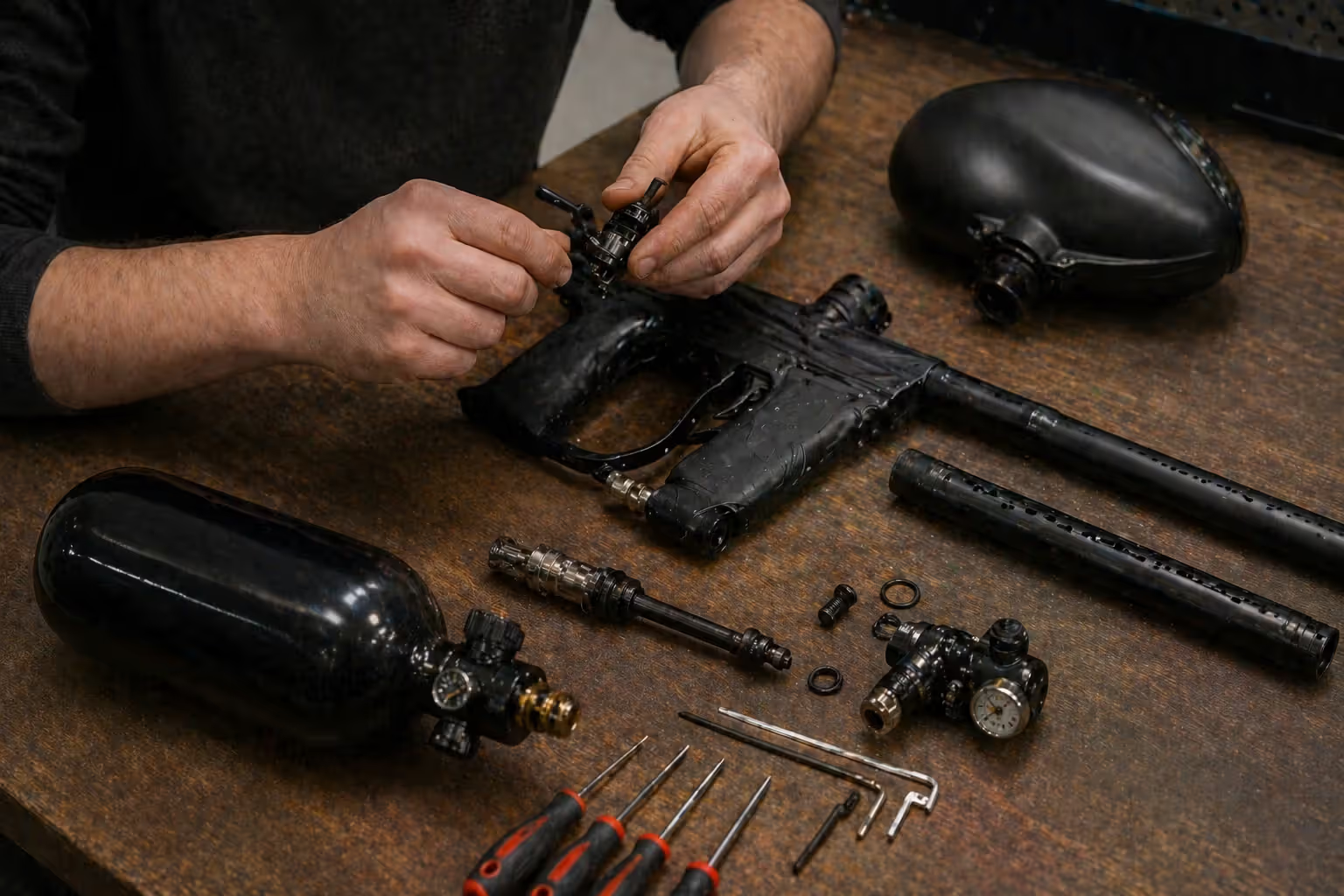
Most markers feature a velocity adjuster—either an external knob or an Allen key access point near the air source. Turning clockwise typically increases velocity, counterclockwise decreases it. Make adjustments in quarter-turn increments, then fire three shots through a chronograph to check results. Rushing this process leads to overshooting the target and wasting time backtracking.
Electronic markers require menu navigation. Access the settings screen, locate the dwell or pressure adjustment, and modify in small steps. Some high-end markers auto-adjust velocity using internal chronographs, but you still need to verify with the field's chronograph since that's the official measurement.
Troubleshooting high readings starts with air pressure. If your marker shoots 310 FPS despite the velocity adjuster being turned all the way down, your regulator output pressure is too high. Adjust the regulator—usually located where the air tank connects to the marker—to lower the pressure feeding the firing chamber.
Low velocity problems often trace to air leaks or worn components. Listen for hissing around o-rings and fittings. Check the tank output pressure with a gauge—if it's below 450 PSI on an HPA system, you need a refill. Weak valve springs or damaged bolt seals prevent proper air transfer, requiring parts replacement.
Pre-game preparation should happen the night before. Charge batteries, clean the bolt assembly, inspect o-rings, and lubricate moving parts with paintball-specific oil. Morning-of adjustments are for fine-tuning, not major repairs. Players who show up with non-functioning equipment hold up chronograph lines and miss game rotations.
Seasonal adjustments matter in regions with temperature extremes. If you dialed in your marker at 85°F in summer, it'll shoot 15–20 FPS slower during a 40°F autumn session. Keep an Allen key set in your gear bag for quick adjustments. Experienced players know their marker's temperature sensitivity and proactively adjust before chronographing.
Projectile Velocity Comparison
Understanding paintball speed in context helps illustrate why current regulations exist and how the sport compares to similar activities.
| Projectile Type | Velocity (FPS) | Velocity (MPH) | Approximate Energy (Joules) |
| Paintball (standard) | 280 | 191 | 10.9 |
| Airsoft BB (0.20g) | 350–400 | 239–273 | 1.5–2.0 |
| Nerf Elite dart | 70 | 48 | 0.3 |
| MLB fastball | 132 | 90 | 148 |
| Tennis serve (pro) | 220 | 150 | 58 |
| First Strike round | 280 | 191 | 11.2 |
| Arrow (compound bow) | 300–350 | 204–239 | 80–120 |
The table reveals why paintball occupies a middle ground—fast enough for effective range and accuracy, slow enough that protective equipment can reliably prevent serious injury.
We've seen what happens when fields get lax about chronograph enforcement. One incident with a hot gun can put a player in the hospital and a field out of business. The 280 FPS limit isn't arbitrary—it's the result of injury data collected across thousands of fields over thirty years. Players sometimes complain that their marker shoots flatter at 300 FPS, which is true, but that extra 20 FPS doubles the risk of goggle failure in a direct hit. No competitive advantage is worth someone losing an eye.
— Marcus Chen
Chen's experience reflects industry-wide attitudes toward velocity management. Safety regulations exist because the alternative—higher velocity with increased injury rates—makes insurance impossible and gives legislators reasons to restrict or ban the sport entirely.
Frequently Asked Questions About Paintball Speed
Paintball velocity sits at the intersection of performance and safety. The 280 FPS standard provides effective range and accuracy while keeping kinetic energy within levels that protective equipment can reliably handle. Understanding how speed is measured, what factors influence it, and how to maintain legal limits separates responsible players from those who create safety hazards.
Temperature changes, air pressure adjustments, and equipment maintenance all affect muzzle velocity. Smart players build safety margins into their settings rather than pushing limits. The few extra feet of range gained by shooting 295 FPS instead of 275 FPS isn't worth the risk of equipment failure, field ejection, or injuring another player.
Fields enforce velocity regulations because insurance requirements and injury prevention demand it. Chronograph testing isn't bureaucratic hassle—it's the system that allows paintball to exist as an accessible sport rather than an activity banned by liability concerns. Every player who takes velocity limits seriously contributes to the sport's long-term viability.
Whether you're buying your first marker or competing at championship level, velocity management remains fundamental. Learn your equipment's adjustment points, understand how environmental factors affect performance, and chronograph religiously. The 191 MPH speed of a paintball is impressive, but staying within regulated limits is what keeps everyone on the field and out of the emergency room.