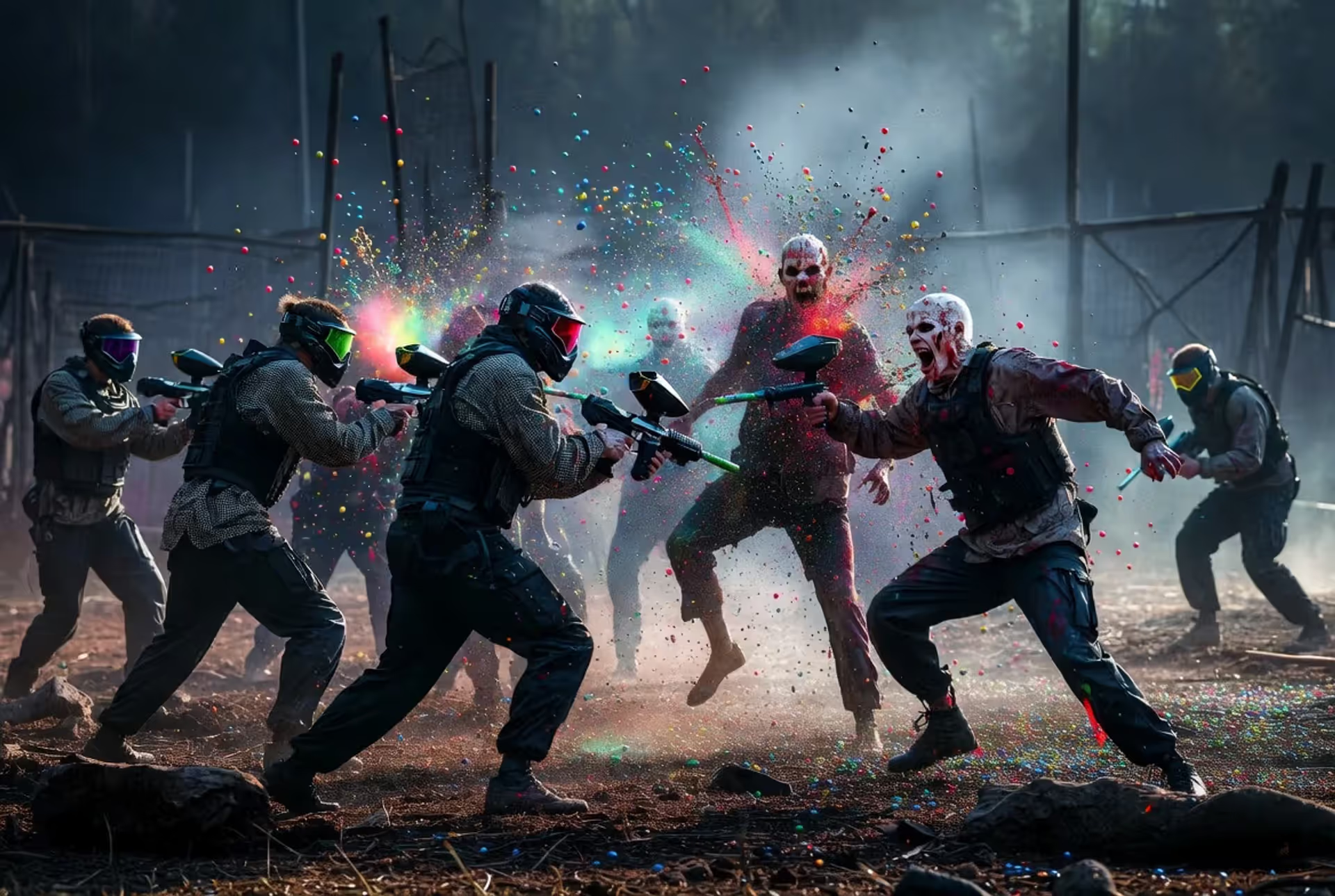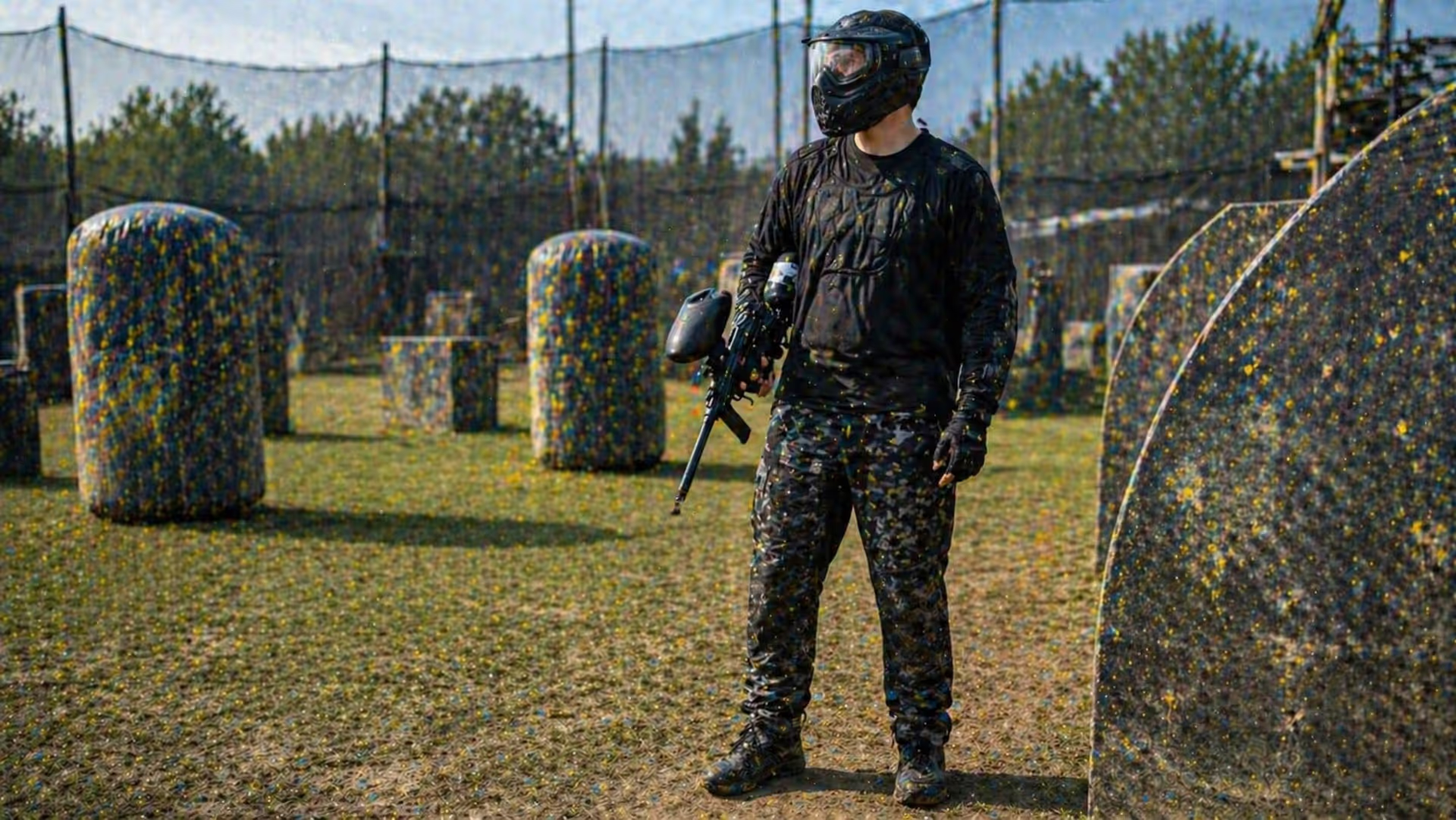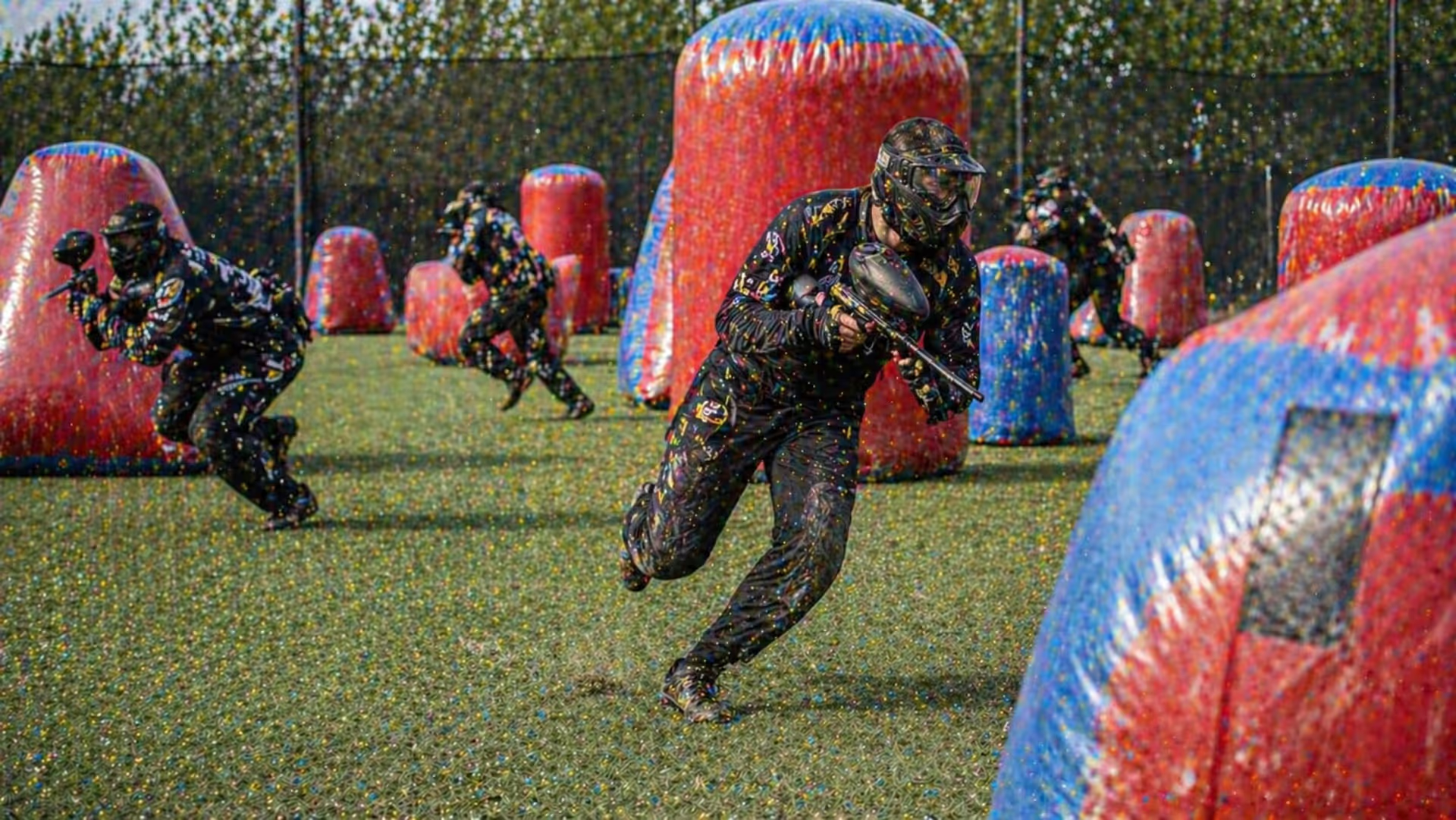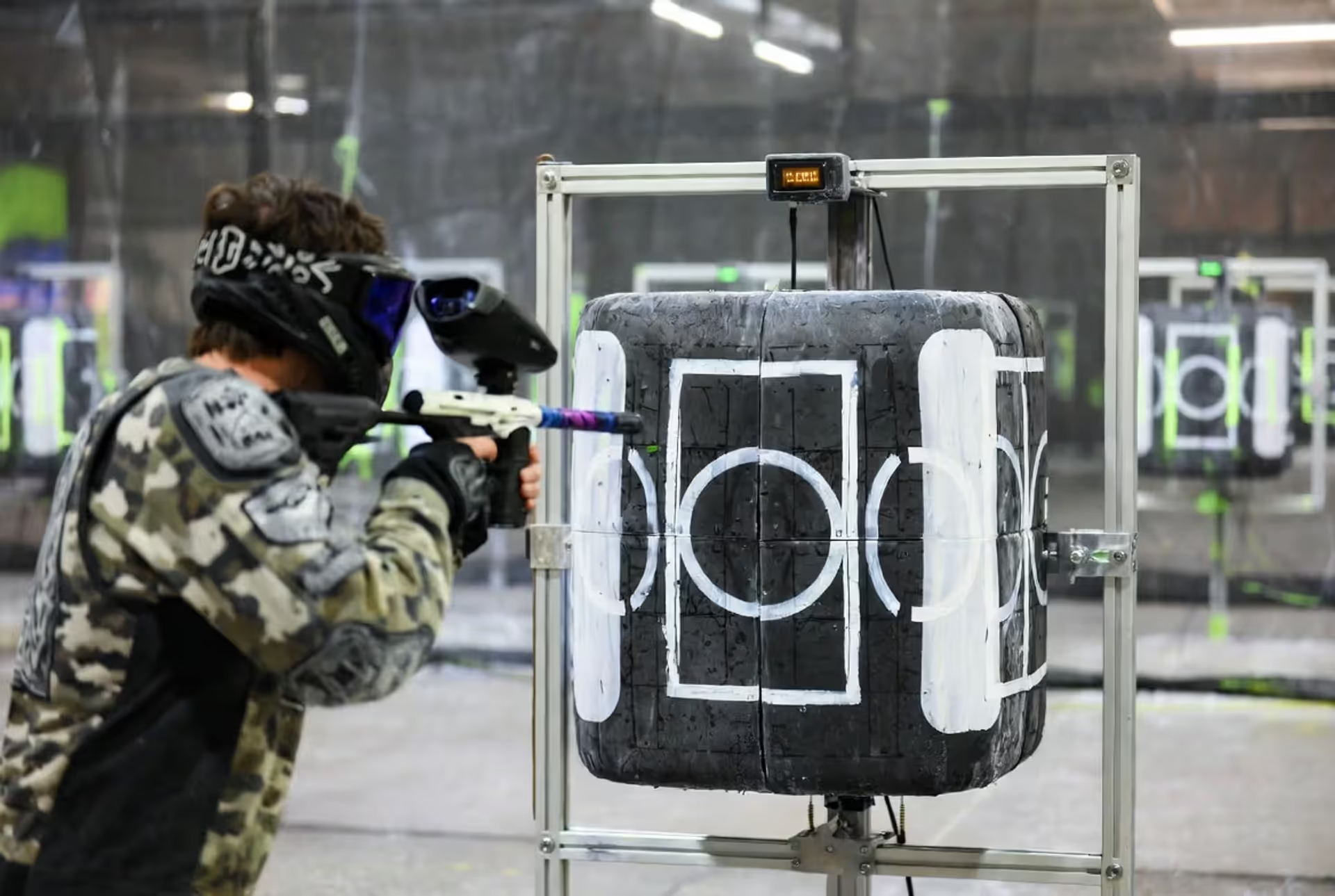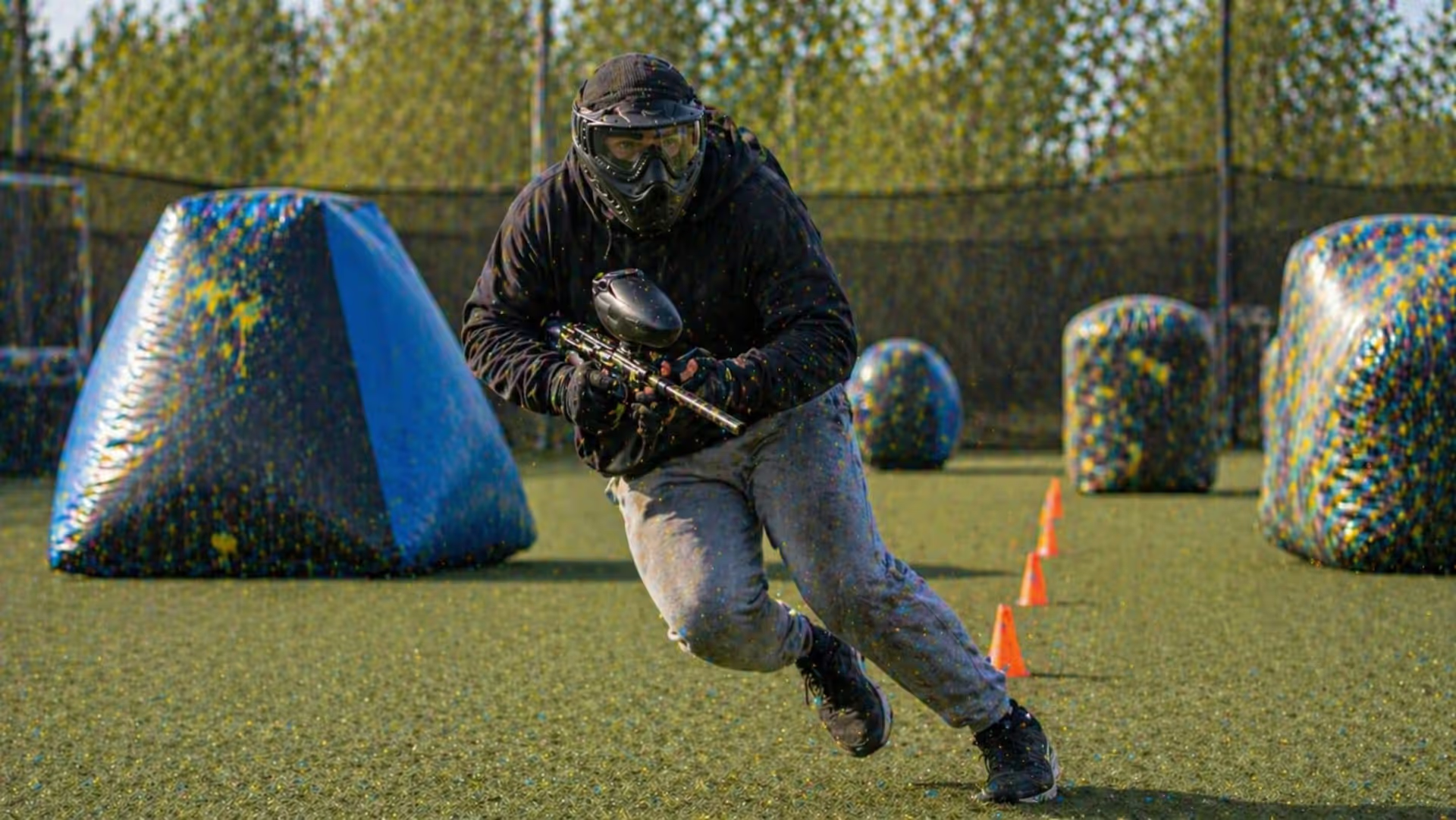
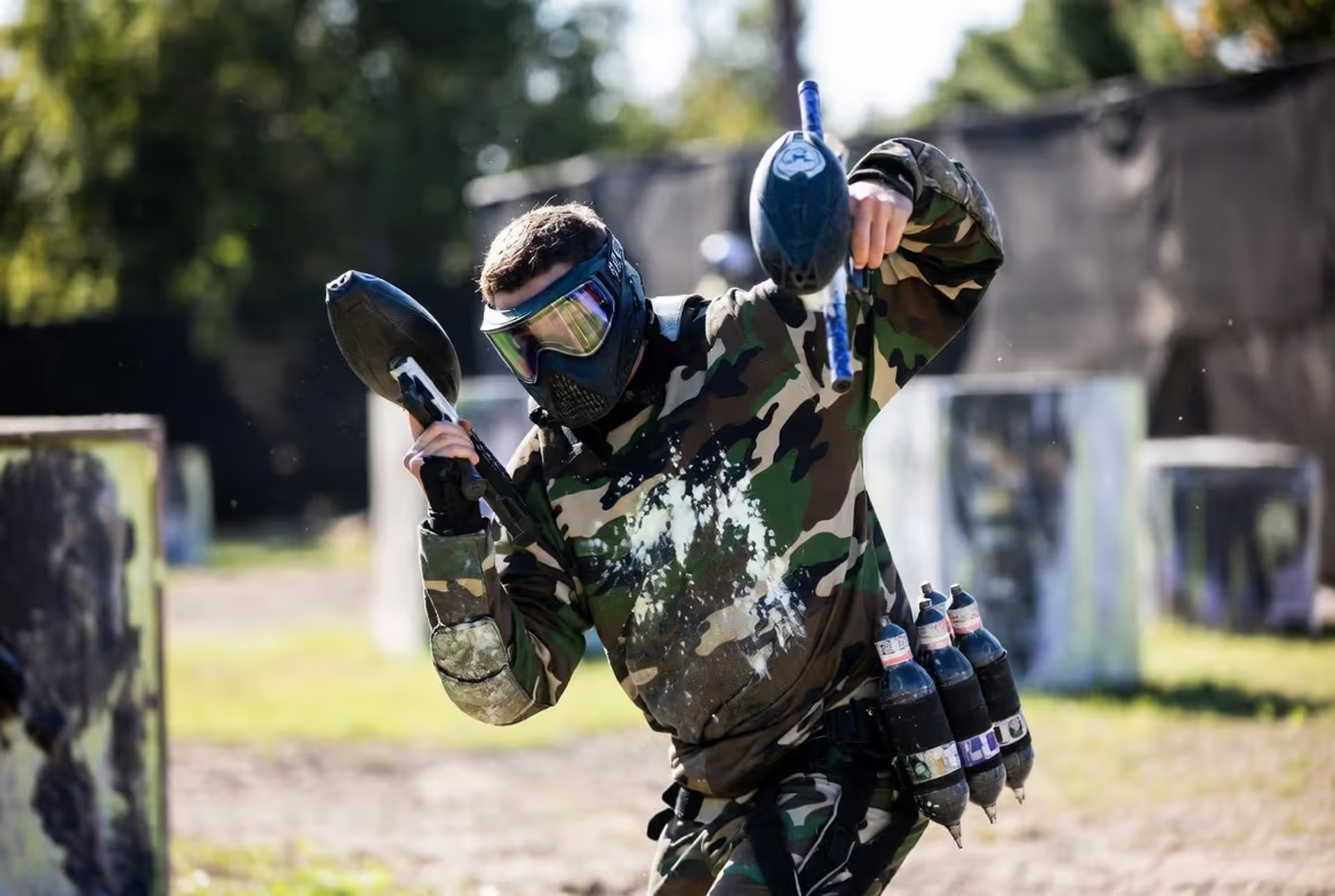
The moment before the hit
Does Paintball Hurt When You Get Hit?

Content
Before your first paintball game, you're probably wondering if you'll limp off the field covered in painful welts. Here's the truth: yes, it hurts—but probably not how you're imagining it.
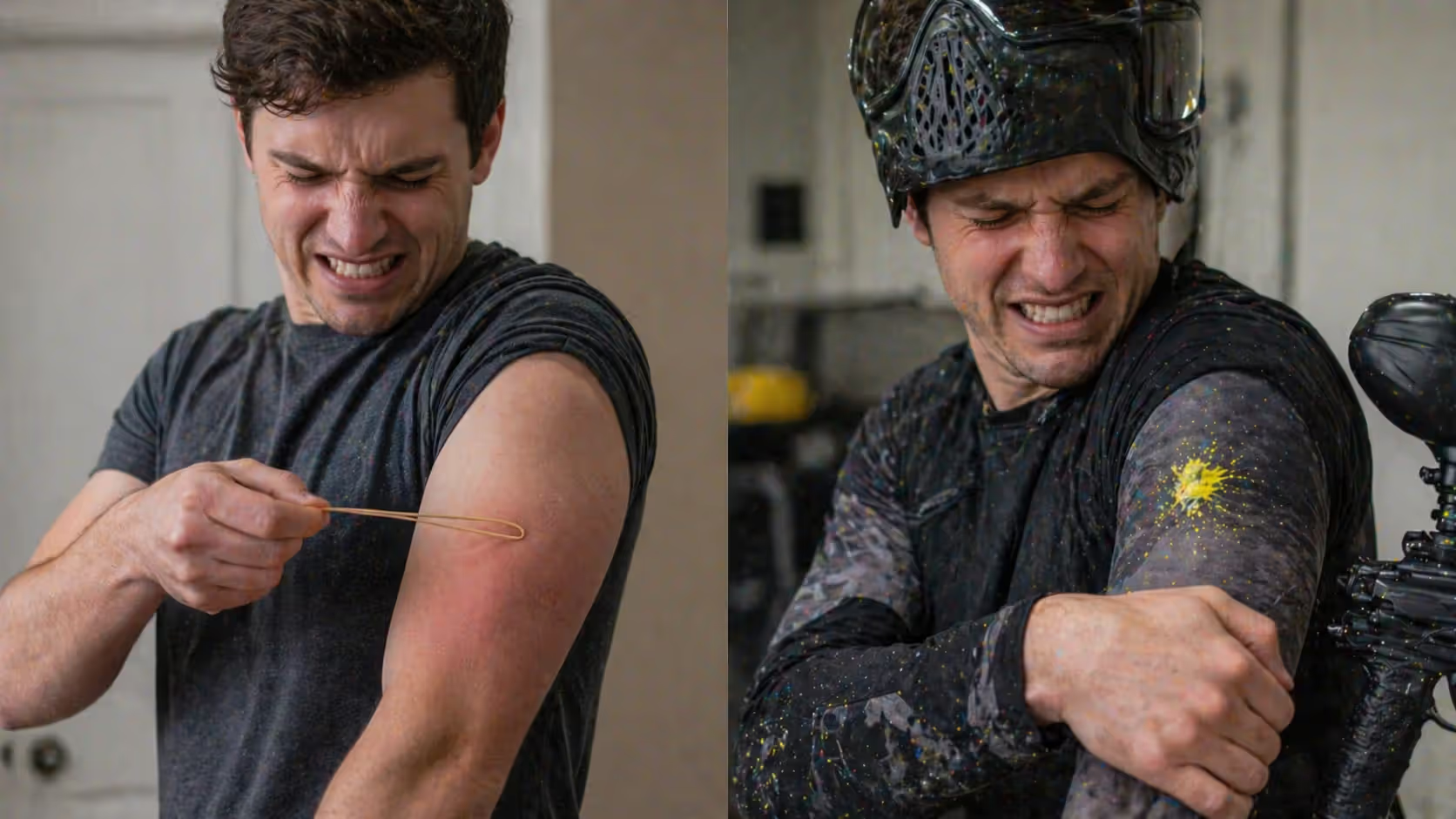
Think about the last time someone flicked your arm hard, or when you accidentally snapped yourself with a thick rubber band. That's pretty close to what most paintball hits feel like. There's a quick sting, maybe some throbbing for a minute, then you're back in the
Will you feel something when a paintball smacks you at 280 feet per second? Absolutely. Will it ruin your day? Not even close. Understanding what affects how much each hit stings helps you prepare both mentally and physically.
What Getting Hit by a Paintball Actually Feels Like
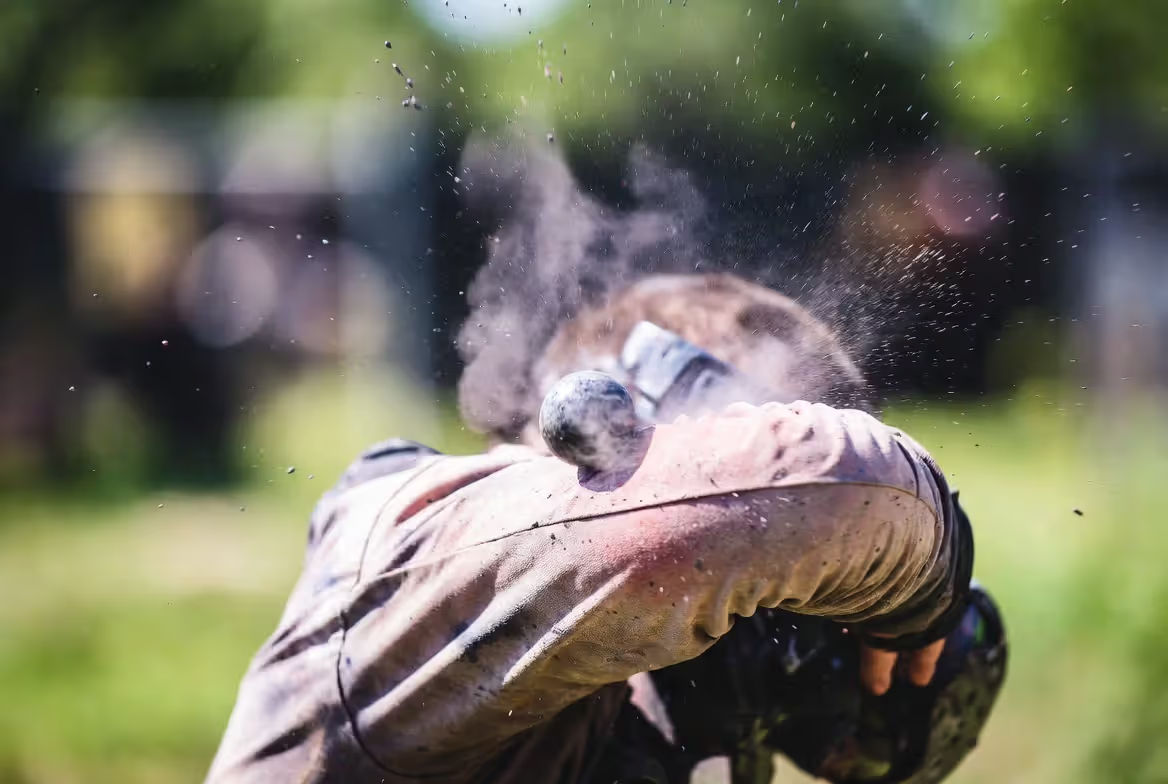
Your first hit happens faster than you can process it. There's this sudden focused pressure—like someone jabbed you with two fingers—then a sharp sting that makes you go "ow!" for about three to five seconds. After that? A warm, throbbing feeling that fades while you're scrambling behind the next bunker.
Here's what's actually happening: the gelatin shell smacks your skin and shatters, which surprisingly absorbs some of the impact. Your nerve endings fire off their "hey, something just hit us!" signal. Blood rushes to the spot. The whole sequence wraps up in under two minutes for most hits.
Location changes everything, though. Take a paintball to your thigh or shoulder, and you'll barely slow down—those muscled areas cushion the blow like built-in padding. But catch one on your knuckles, spine, or hipbone? You'll remember that for a while. Thin skin stretched over bone with nothing to absorb the impact turns a routine hit into something that actually stings.
The worst spots? Definitely your hands and fingers if you're not wearing gloves. Also your ribs, the knobby parts of your spine, and anywhere around your neck and collarbone. Getting hit there makes you instantly regret every gear decision that led to that moment.
Temperature throws a weird variable into the mix. When it's cold out and the paintballs get brittle, they sometimes shatter into these sharp little fragments that can actually hurt worse than a clean break. Fresh paint at room temperature splits cleanly and spreads the force out. Old, dimpled paintballs that've been sitting in someone's garage since last season? Those fly weird and hit unpredictably.
Distance matters more than anything else. A shot from 50-60 feet barely registers through a decent hoodie. Something from 10 feet away—which shouldn't happen at any field worth playing at—will definitely leave a mark and might even break skin. That's exactly why good fields enforce minimum engagement distances around 15 to 20 feet.
Author: Brandon Kesswick;
Source: lakestaytents.com
How Bad Does Paintball Hurt Compared to Other Activities
Everyone's pain tolerance is different, but comparing paintball to everyday experiences gives you a realistic baseline.
Most players put paintball somewhere between a 3 and 6 on a scale where 10 means you're heading to the emergency room. Let's break that down with stuff you've probably felt before:
- Thick rubber band snap: Almost identical to an average paintball hit on your arm or leg
- Bee sting: Actually worse than paintball because of the venom and how long it keeps hurting
- Touching a hot pan briefly: Sharper pain initially but over quicker
- Hard pinch from an annoying sibling: Pretty much the same as a close-range paintball hit
- Stubbing your toe on furniture: Way worse, and you're mad about it for the next hour
- Getting a flu shot: Similar quick sting, though paintballs spread across a bigger area
- Touching sunburned skin: Less intense than paintball initially, but that sensitivity lasts for days
The pain doesn't stick around, which makes a huge difference. You're not nursing a sore ankle or pulled muscle for the rest of the week. It hurts right when it happens, then it's done. Most players completely forget about hits within minutes once their adrenaline kicks in and they're focused on tagging opponents.
Kids handle it way better than parents expect. Ten-year-olds playing with properly regulated markers at decent fields rarely complain past their first surprise hit or two. Adults who spend the whole drive to the field worrying about pain? They tense up, which actually makes everything feel worse.
Here's the good news: you build tolerance fast. Your first hit feels worst because you don't know what to expect. By your third or fourth, you've mentally adjusted. After an hour of intense play, some hits barely register. Your body and brain adapt remarkably quick.
Author: Brandon Kesswick;
Source: lakestaytents.com
Paintball vs Airsoft Pain: Which Hurts More
Players argue about this constantly, but the physics tell a clear story. The comparison gets tricky because you're dealing with completely different types of projectiles that create distinct sensations.
| Factor | Paintball | Airsoft |
| Velocity Range | 280-300 FPS | 350-400 FPS |
| Weight Per Shot | 3.0-3.5 grams | 0.20-0.25 grams |
| Energy on Impact | 12-14 joules | 1.5-2.0 joules |
| Contact Surface | ~0.44 sq inches | ~0.03 sq inches |
| How It Feels | Blunt thump | Sharp pinpoint sting |
| Leaves Bruises | Moderate to high chance | Low chance unless very close |
| Pain Level | 4-6/10 | 3-5/10 |
Paintballs pack way more punch—we're talking six to eight times the kinetic energy of airsoft BBs. That extra mass behind each shot creates legitimate blunt force trauma. Airsoft BBs, though? They concentrate all their (much smaller) energy into a tiny point, which creates this different stinging sensation.
Talk to people who play both sports regularly, and they'll describe paintball as getting thumped and airsoft as getting poked with something sharp. Paintball leaves visible welts and bruises way more often because of that energy transfer. Airsoft rarely causes visible marks except when someone breaks the minimum engagement distance rule on sensitive skin.
Distance changes which one hurts more. Past 75 feet, those lightweight airsoft BBs lose velocity way faster than paintballs. At long range, paintball maintains enough oomph to make you feel it. Up close under 20 feet, both sting pretty good, but paintball's extra mass gives it the edge in the pain department.
What you're wearing matters too. On bare skin, airsoft's concentrated impact point can feel sharper and more irritating—like getting snapped with a small, high-speed pebble. Through a sweatshirt or jacket, paintball's greater energy punches through the layers better. Airsoft BBs sometimes slip through loose fabric weaves without much effect; paintballs always announce their arrival.
The general consensus among crossover players: paintball wins the pain competition, but not by some massive margin. Neither sport hurts so bad you can't handle it when you're wearing decent safety gear and playing at fields that actually enforce their rules.
Author: Brandon Kesswick;
Source: lakestaytents.com
Factors That Make Paintball Hurt More or Less
Several variables combine to determine whether each hit barely registers or leaves you cursing behind a bunker.
Distance and Velocity
Most fields cap velocity at 280 FPS, with some allowing up to 300 FPS. Those speed limits exist specifically because every 10 FPS jump translates to noticeably harder impacts that cross from "competitive sport" into "why does this hurt so much" territory.
Distance provides natural pain reduction. Paintballs lose roughly 1 FPS for every foot they travel because air resistance constantly slows them down. Fire a shot at 280 FPS from 80 feet out, and it's only hitting around 200 FPS—that difference between leaving a bruise and barely leaving a mark. That's why long-distance shots sometimes just bounce off without breaking while close shots guarantee you'll see evidence later.
Every reputable field chronographs markers before you play. Players who mess with their equipment to shoot hotter risk getting permanently banned and might face legal problems if they hurt someone. Never, ever play at fields that don't check velocities. That's how people get actually injured.
Body Part Hit
Your body basically comes with its own pain map based on anatomy. More muscle, fat, or loose skin equals better natural padding. Bone sitting close to the surface equals ow.
Barely hurts: Thighs, butt, upper arms, chest for guys, anywhere with good natural cushioning
Medium pain: Forearms, calves, shoulders, muscled back areas
Really hurts: Hands, fingers, feet, neck, ears, spine, ribs, hipbones, groin (obviously)
Headshots happen all the time, and your mask handles them fine, but hits to the back or top of your head can ring your bell through the padding. Fields require barrel covers in safe zones because an accidental point-blank discharge to an unmasked face causes the kind of injuries that end up in medical journals.
Women consistently report chest hits as particularly painful, which is exactly why female-specific chest protectors aren't just recommended—they're essential. Guys find groin shots memorable enough that athletic cups, while not mandatory, make a lot of sense if you play aggressively.
New players build up this fear of excruciating pain, but 95% of them are surprised by how manageable it is. The anticipation is usually worse than the actual hit. We see kids as young as 10 playing without complaints. The key is proper gear and understanding what to expect.
— Mark Thornton
Protective Gear and Clothing
Your clothes are basically armor layers that stack for damage reduction.
A single t-shirt blocks maybe 15-20% of impact force. Add a long-sleeve underneath, and you're up to 35-40% reduction. Throw on a hoodie or actual padded paintball jersey, and torso hits become these dull thumps you barely notice.
Dedicated paintball gear includes: - Compression shirts with foam: Built-in padding at ribs, spine, shoulders - Slide shorts: Protect hips and thighs when you're diving into bunkers - Full-finger gloves: Absolutely essential (fingerless gloves are basically asking for knuckle shots) - Chest protectors: Critical for women, smart for anyone worried about torso impacts - Neck protection: Stops those painful collarbone and throat hits cold
Skip loose, baggy clothes even though more fabric seems like better protection. Loose clothing channels paintballs into gaps or creates pockets where paint splatter confuses whether you're actually hit.
Jeans or thick cargo pants beat athletic shorts every time. Some players borrow soccer shin guards for extra leg protection. Boots or high-tops protect ankles better than low sneakers that leave that whole area exposed.
Paint Quality and Temperature
Fresh, quality paintballs break clean on impact, spreading force across the rupture. Old paint with dimples or weird shapes creates unpredictable results—bouncing when it should break, sometimes breaking in your barrel before it even shoots.
Temperature extremes mess with paint integrity. Below 50°F, paint gets brittle and shatters into sharp fragments that can sting worse than normal. Above 85°F, paint softens up, bounces more often, but also breaks in your hopper while you're loading.
Store your paint at room temperature whenever possible. Field paint costs a few bucks more but it's fresher and better maintained than discount paint you find online. Those savings aren't worth dealing with accuracy problems and potentially worse impacts from irregular shells.
Common Paintball Bruises and Injuries
Author: Brandon Kesswick;
Source: lakestaytents.com
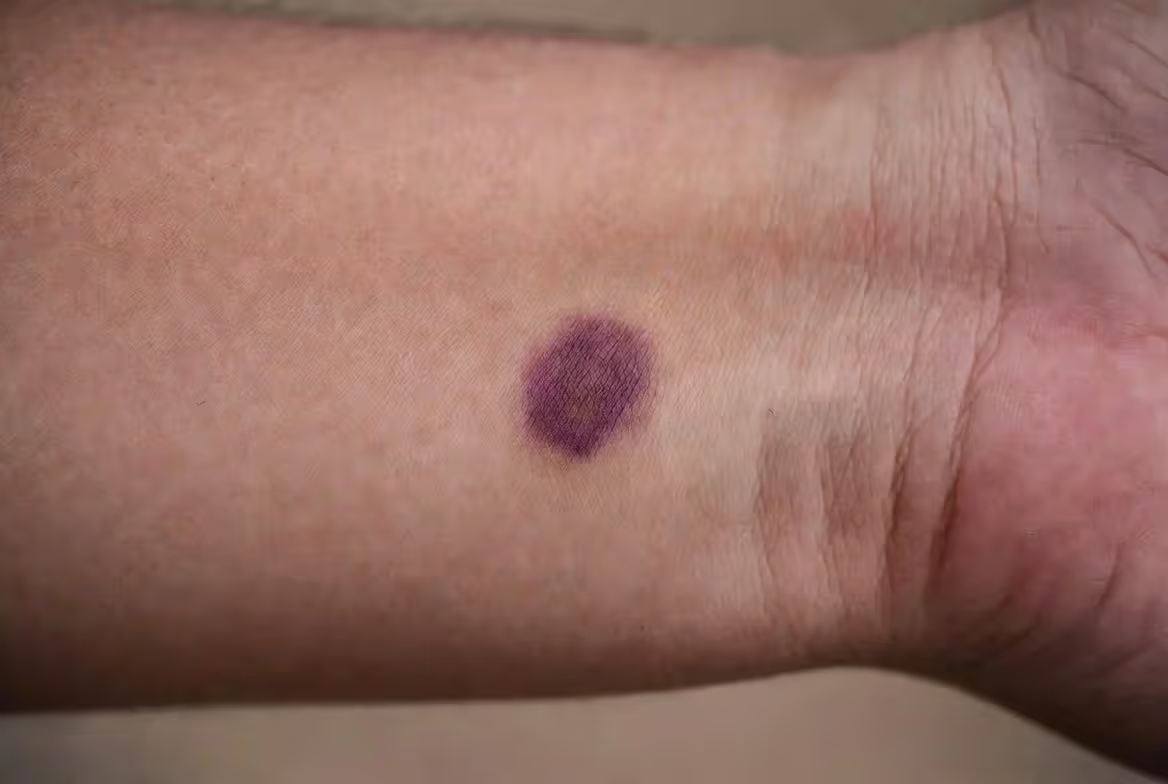
Most hits leave zero visible evidence. When marks do show up, you're looking at small, circular bruises roughly quarter-to-half-dollar sized.
Bruising depends on impact force, location, and your personal physiology. Fair-skinned people bruise more visibly than darker complexions. Anyone taking blood thinners or with certain medical conditions bruises easier than average.
Typical bruises appear 2-6 hours after you finish playing and stick around 3-7 days. They cycle through colors—red to purple to that yellow-green healing shade. Most players wear their bruises like badges of honor and compare battle damage in the parking lot.
Welts—those raised, swollen impact marks—happen with harder hits, especially at close range. They usually calm down within 24-48 hours. Ice applied right after playing cuts down swelling and discoloration significantly.
Worst-case scenarios at regulated fields remain pretty rare:
- Broken skin: Happens at very close range or from illegally hot markers; needs immediate cleaning to prevent infection
- Eye injuries: Almost always occur when players remove masks during active play—seriously, never take your mask off on the field
- Deep contusions: Muscle tissue bruising from repeated hits to the same spot
- Sprains and strains: Usually from running, diving, and quick movements rather than the paintball impacts themselves
Actual serious injuries needing medical attention are uncommon. A 2025 study tracking paintball injuries found 92% involved minor bruising or welts, 6% involved sprains or strains from physical activity, and only 2% required professional medical evaluation.
Get medical help if you experience: - Vision changes after getting hit near (not directly on) your masked eyes - Severe swelling that doesn't improve after 24 hours - Infection signs (increasing redness, warmth, pus) at impact sites - Pain lasting beyond 48 hours - Breathing difficulty after chest hits (super rare, but possible with underlying conditions)
How to Reduce Pain When Playing Paintball
Smart preparation cuts discomfort way down without sacrificing the authentic experience.
Before you show up: - Take ibuprofen 30-60 minutes early to reduce inflammation (if your doctor says it's fine) - Drink plenty of water—dehydration makes you more sensitive to pain - Eat a decent meal 1-2 hours beforehand; low blood sugar tanks your pain tolerance - Stretch to prevent muscle strains that hurt way worse than paintball impacts
What to wear: - Base layer: Compression shirt and pants or moisture-wicking athletic stuff - Middle layer: Long-sleeve shirt plus jeans or tactical pants - Outer layer: Hoodie, paintball jersey, or tactical vest - Extremities: Full-finger gloves, high socks, boots or sturdy sneakers - Extra consideration: Padded compression gear protecting chest, ribs, thighs
During the game: - Keep moving—standing still makes you an easy target for repeated hits - Use cover smartly—minimize how long you're exposed - Stay aware—hits you don't see coming somehow feel worse - Control your breathing—tension amps up pain perception - Call yourself out quickly when hit—taking extra shots while walking off adds unnecessary pain
After you finish: - Ice any impact sites within 30 minutes to minimize bruising - Take a warm shower to relax everything - Apply arnica gel or cream to bruised spots - Keep drinking water to help tissue recovery - Stretch again to prevent being sore tomorrow
Your mindset matters: Players who approach paintball confidently and accept minor discomfort have way better experiences than those who obsess over potential pain. Anticipation creates anxiety that makes every sensation feel amplified.
First-timers should probably start with woodsball (outdoor, scenario-based) rather than speedball (tournament-style arena). Woodsball typically means longer shooting distances and more cover, translating to fewer close-range hits. Speedball moves faster with more frequent, closer impacts that hurt more.
Frequently Asked Questions About Paintball Pain
Paintball hurts, but it's manageable, temporary, and honestly part of what makes the sport exciting. Most impacts rate 3-6 on a 10-point pain scale—think firm rubber band snap or hard pinch territory. The initial sting lasts seconds, then most players adapt quickly as adrenaline and competitive focus override minor discomfort.
Key factors affecting pain: distance (farther is better), impact location (muscle beats bone), protective gear (layers work), and paintball quality (fresh beats old). Shots from regulation distances to well-padded body areas barely register. Close-range hits to bony areas like hands or ribs create memorable stings you'll talk about later.
Compared to airsoft, paintball delivers more kinetic energy and causes more visible bruising, but neither sport produces unbearable pain when played with appropriate safety measures and proper fields. The anticipation almost always exceeds the reality. First-timers consistently report being surprised by how manageable it feels once they actually take that first hit.
Smart preparation—layered clothing, quality protective gear, hydration, mental readiness—transforms paintball from potentially painful into exciting and adrenaline-filled where minor discomfort becomes part of the thrill rather than something that stops you from playing. Thousands of players across all ages enjoy paintball every weekend precisely because the pain-to-fun ratio heavily favors fun.