Airsoft vs Paintball Guide

Content
If you're standing at the crossroads between airsoft and paintball, you're probably drowning in opinions from forums, YouTube videos, and that one friend who swears their choice is obviously superior. Here's the thing—both sports will get your heart racing and your tactical brain working overtime, but they scratch completely different itches.
I'm going to walk you through the real differences that matter: how much getting shot actually stings, what you'll spend on a random Saturday, and whether you're the type who needs physical proof you tagged someone or if you trust people to play fair. By the end, you'll know which one fits your budget, pain threshold, and personality.
Key Differences Between Airsoft and Paintball
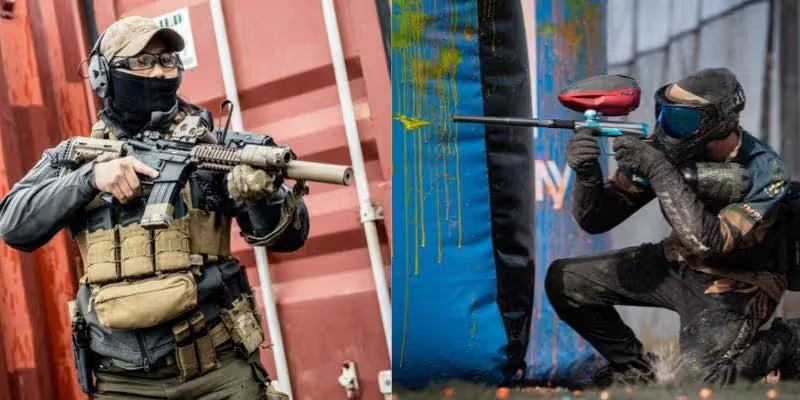
Let's start with what you're actually shooting. Airsoft fires 6mm plastic pellets from guns that look and feel like their real-steel counterparts—we're talking working charging handles, realistic weight distribution, and magazine release buttons in the right spots. Paintball launches .68 caliber gelatin spheres packed with water-based dye that splatter on contact.
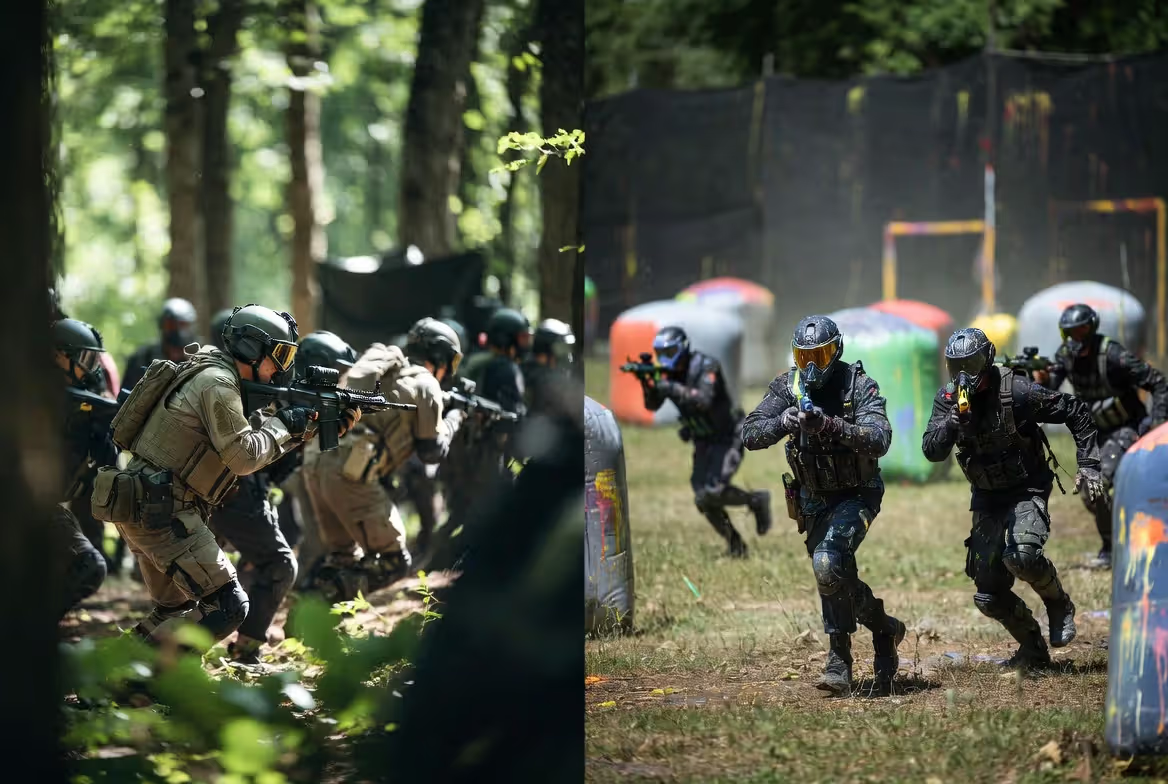
That single difference—plastic versus paint—ripples through everything else. When you show up at an airsoft field, you might find a mock Middle Eastern village complete with two-story buildings, rusted cars, and shipping containers. Players look like they stepped out of a military catalog: MultiCam fatigues, plate carriers with MOLLE webbing, and weapon replicas so accurate that some airsofters spend hours researching which optic a Navy SEAL would actually mount on their MK18.
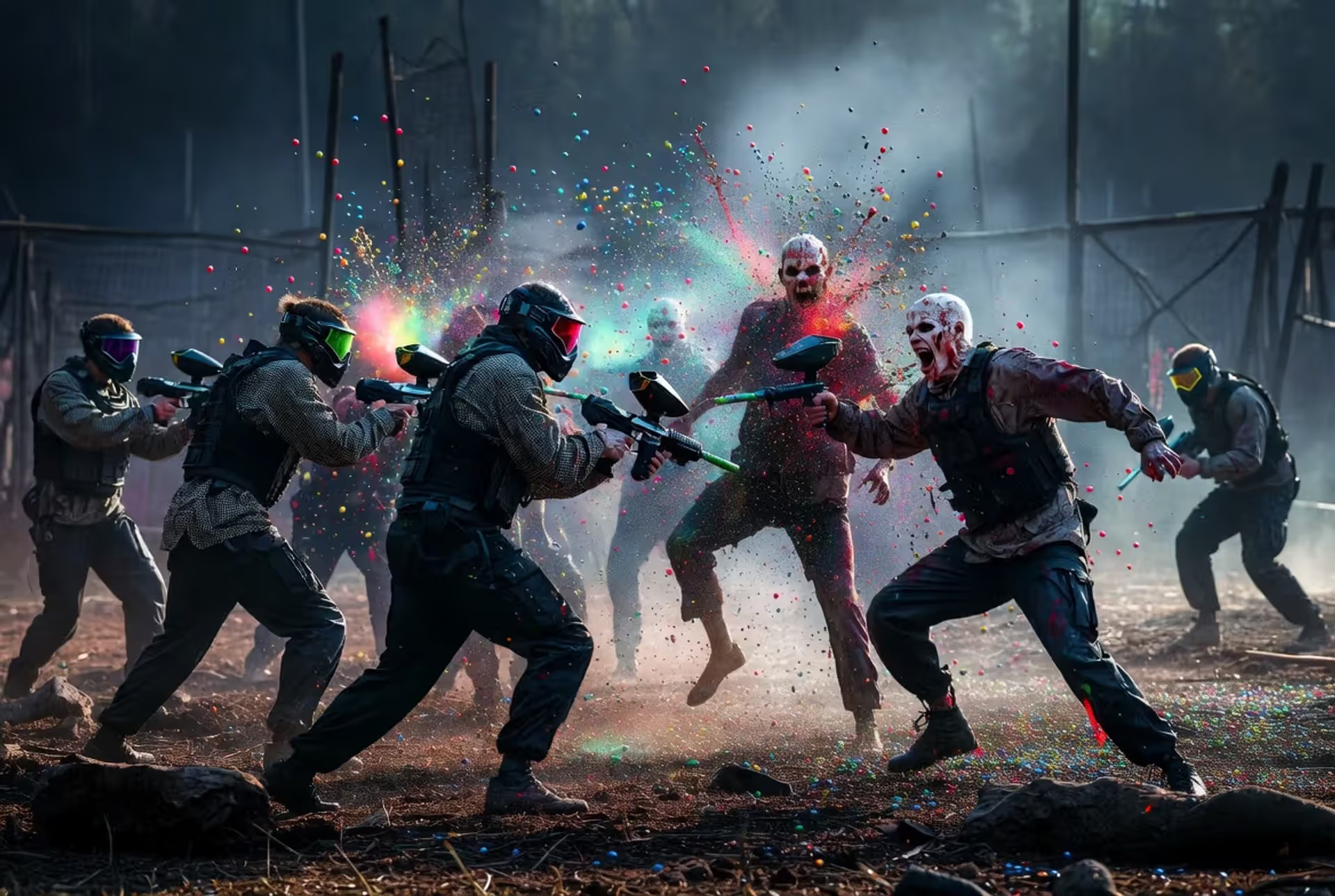
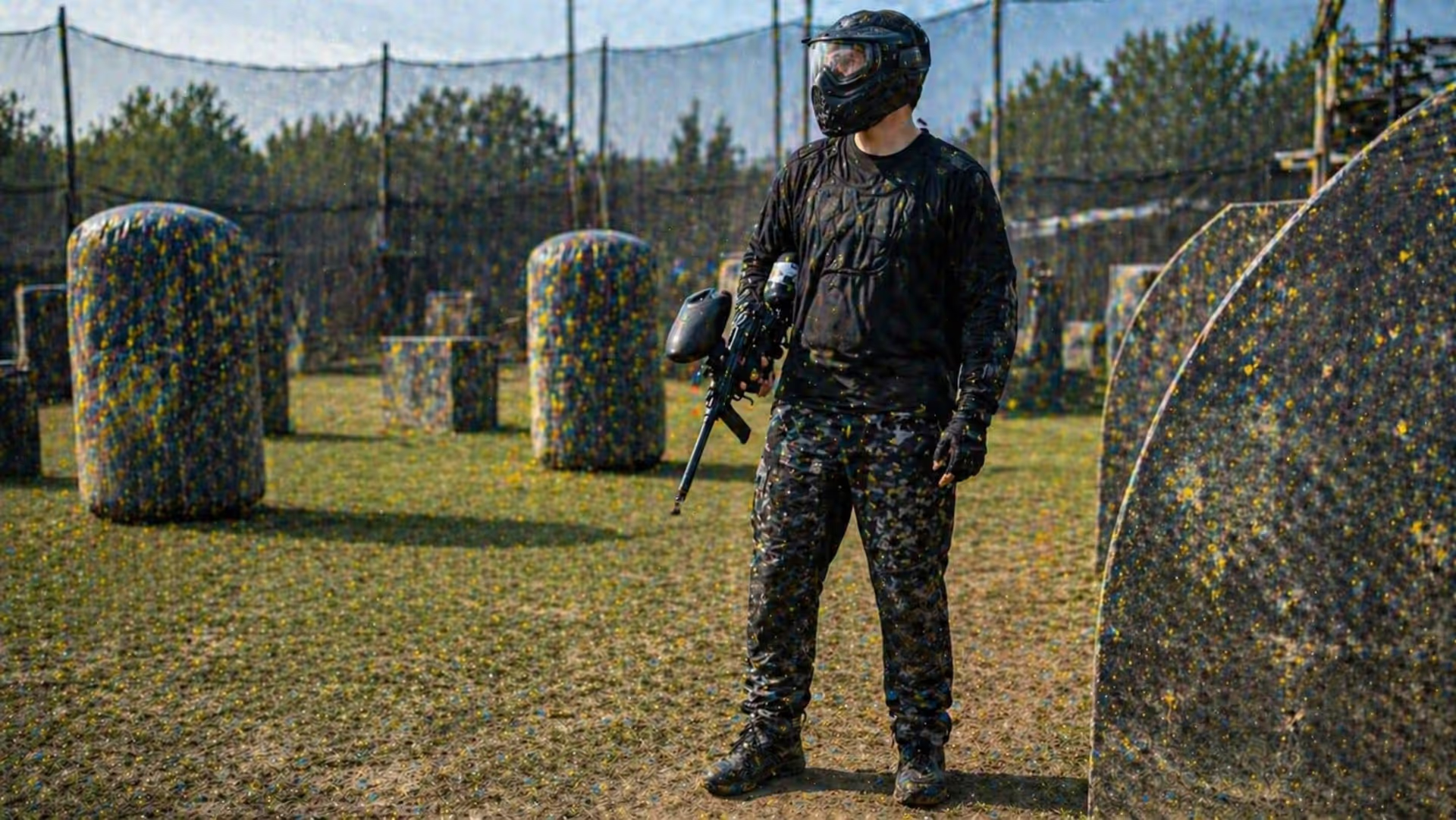
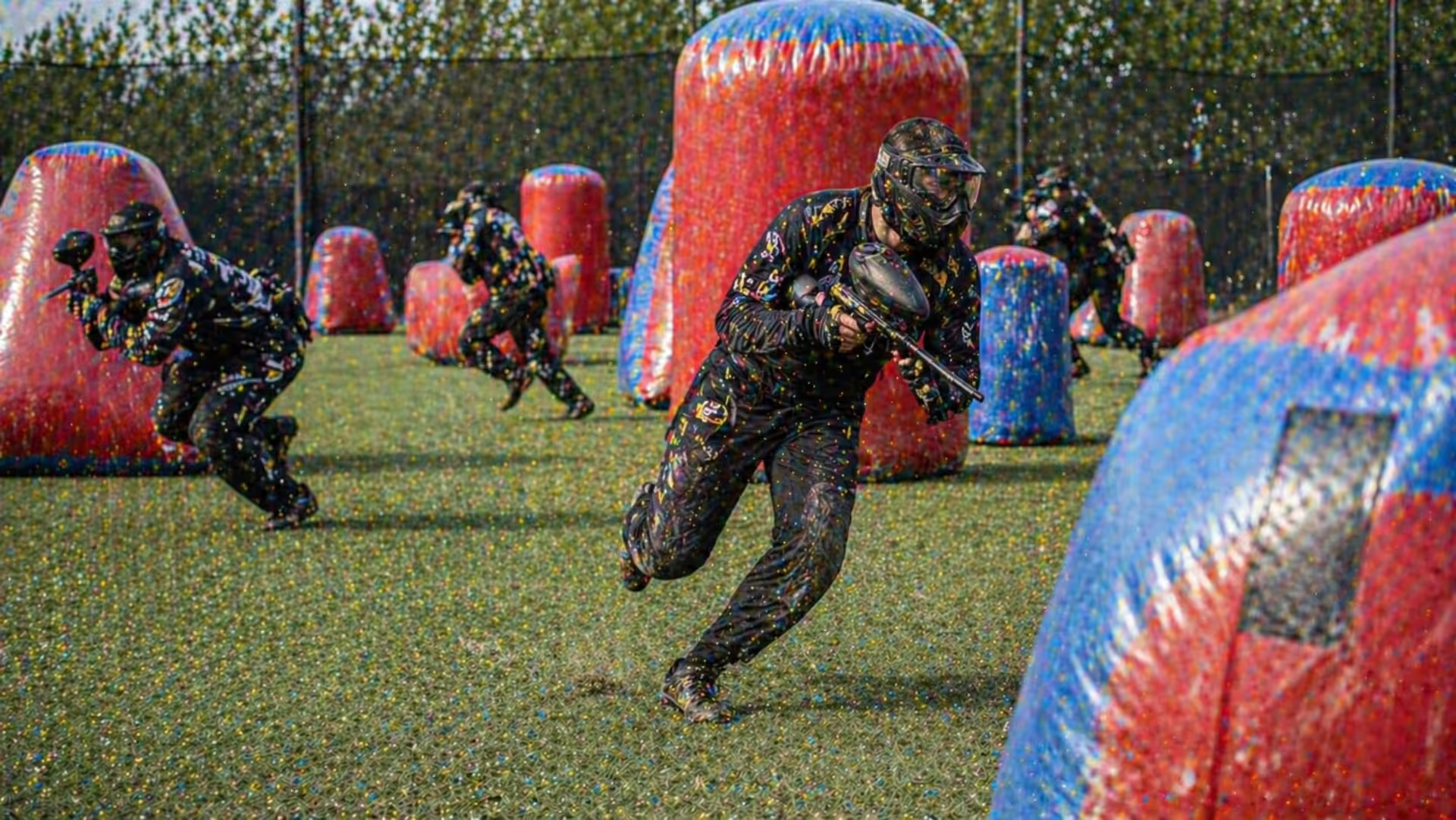
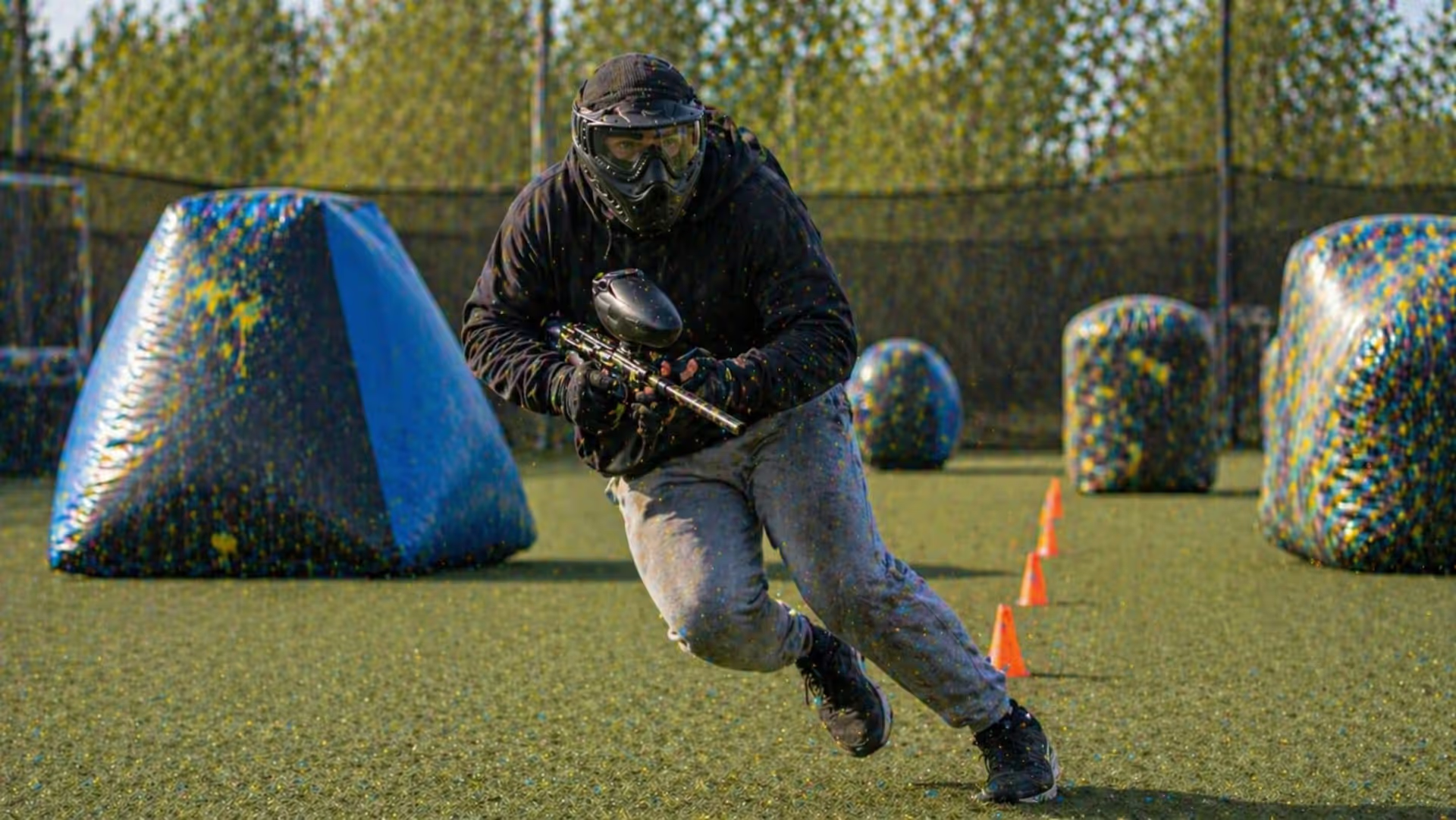
Paintball fields? They range wildly. Tournament speedball courses look like inflatable obstacle courses painted in neon colors—designed for maximum visibility and fast gameplay. Woodsball fields use natural terrain with wooden forts and tire bunkers. Big scenario games sometimes roll out actual decommissioned military vehicles as props.
The equipment demands differ in practical ways. Your airsoft gun feeds BBs from a magazine just like a real firearm. Your paintball marker needs a gravity-fed hopper sitting on top (holding 200+ paintballs) and a compressed air tank bolted to the back. Airsoft players typically wear shooting glasses or goggles since BBs won't shatter facial bones. Paintball mandates full-seal masks because a paintball to the face at 280 fps can crack teeth or worse.
Here's where things get philosophical: hit calling. Airsoft runs on trust. A BB doesn't leave evidence, so when you feel that sting, you're expected to yell "Hit!" and walk off the field. This honor system works surprisingly well in established communities where regulars know each other. Paintball eliminates the debate entirely—if you've got a paint splatter bigger than a quarter, you're out. No arguments, no "I don't think that counted."
The airsoft and paintball shooting mechanics work differently too. Most airsoft rifles use electric gearboxes (AEGs) that cycle automatically, feeding BBs at 300-400 feet per second. Paintball markers use regulated compressed air or CO2 to launch paintballs at similar speeds, but that heavier projectile behaves differently in flight—more arc, less range, but more satisfying visual feedback when it connects.
Author: Ethan Rowe;
Source: lakestaytents.com
Does Airsoft or Paintball Hurt More
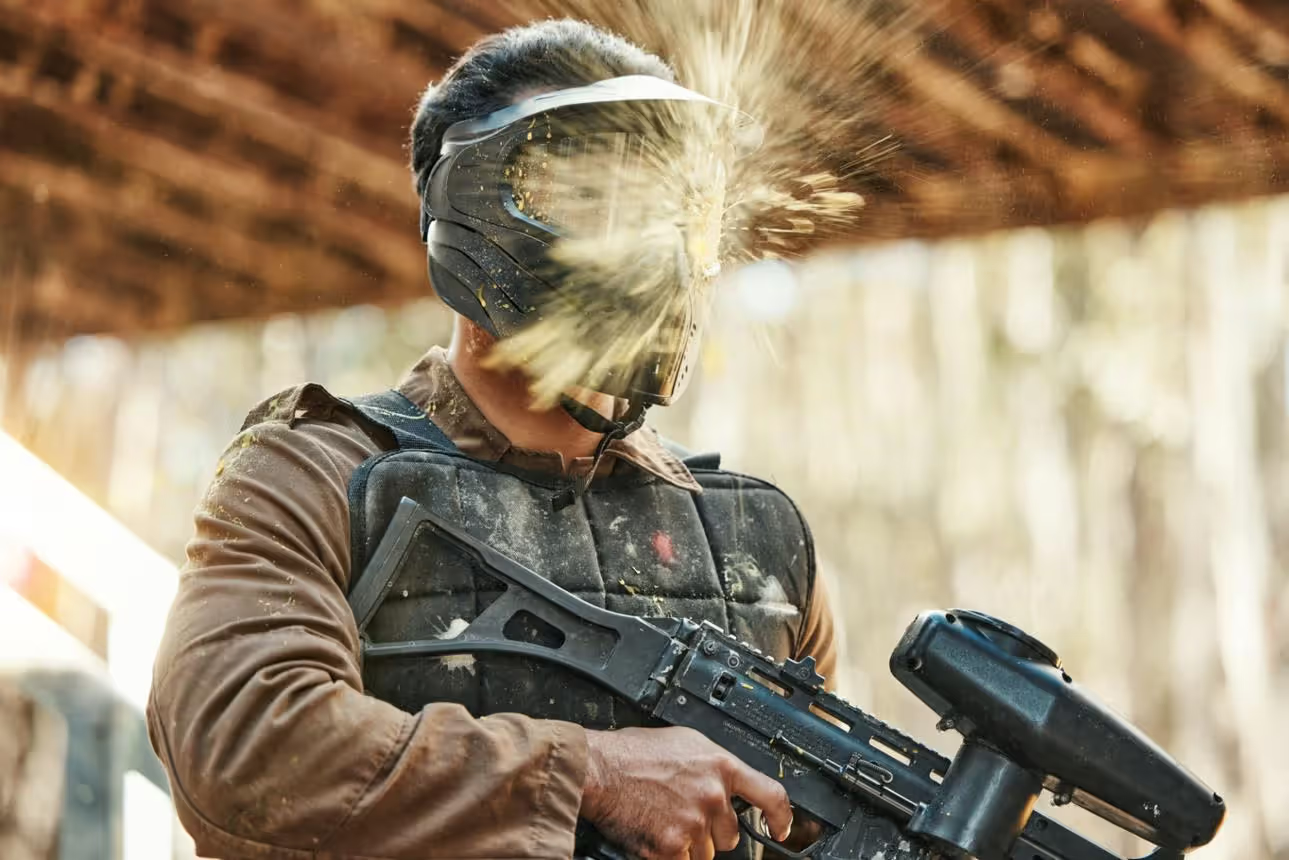
Let's cut to the question everyone asks first: which one hurts worse? Paintball wins—or loses, depending on how you look at it. Getting drilled by a paintball feels like someone snapped a thick rubber band against your skin at maximum tension. You'll feel it instantly, probably yell something unrepeatable, and likely spot a welt or bruise later that evening.
Airsoft stings more than it hurts. Think bee sting that's over in five seconds. The 0.20-gram BB hits with a sharp pinpoint sensation that makes you flinch, but fifteen seconds later you've forgotten about it. Close-range shots under 20 feet can break skin on sensitive areas like your neck or the back of your hand, though that's uncommon with proper minimum engagement distances.
The math explains it: a paintball weighs roughly 3 grams versus airsoft's 0.20 grams. Fifteen times the mass hitting at similar velocities means significantly more energy transfer. A paintball spreads that impact over a wider area as it bursts, while an airsoft BB concentrates everything into a tiny point—so you get different sensations even though paintball delivers more actual force.
Distance changes everything. A paintball from 100+ feet might bounce off your jacket without breaking. From 15 feet, it'll leave a purple bruise the size of a quarter. Airsoft BBs shed energy faster because they're so light—long-range hits feel like raindrops, while point-blank shots from upgraded guns can genuinely hurt.
Does airsoft hurt more than paintball? In standard circumstances, no. But context matters more than you'd think. I've seen a 500 fps airsoft sniper rifle with 0.40-gram BBs drop players who claimed they preferred airsoft because it "doesn't hurt." Meanwhile, recreational paintball at lower velocities with a thick hoodie becomes fairly manageable.
What hurts worse paintball or airsoft also depends on where you take the hit. Paintballs spreading impact can actually feel less awful on bony areas like elbows or knees compared to a BB striking directly on bone. But paintball impacts to fatty tissue create deeper bruising that aches for days. Airsoft welts typically fade overnight.
Temperature plays a surprising role. Winter paintball hurts less because cold makes the shells brittle—they shatter more easily on clothing and equipment rather than your body. Airsoft performs consistently across temperatures, though gas-powered replicas lose power in freezing weather.
Protection requirements reflect these realities. Paintball facilities won't let you play without an ASTM-rated full-face mask that protects your eyes, ears, mouth, and nose. Period. Remove it in the active play area and you're ejected. Airsoft mandates ANSI Z87.1 rated eye protection at minimum. Many players add mesh lower face masks after catching a BB to the teeth, but technically you can play with just shooting glasses. Don't, though—dental work costs more than a $15 mesh mask.
Author: Ethan Rowe;
Source: lakestaytents.com
Cost Comparison: Equipment and Gameplay
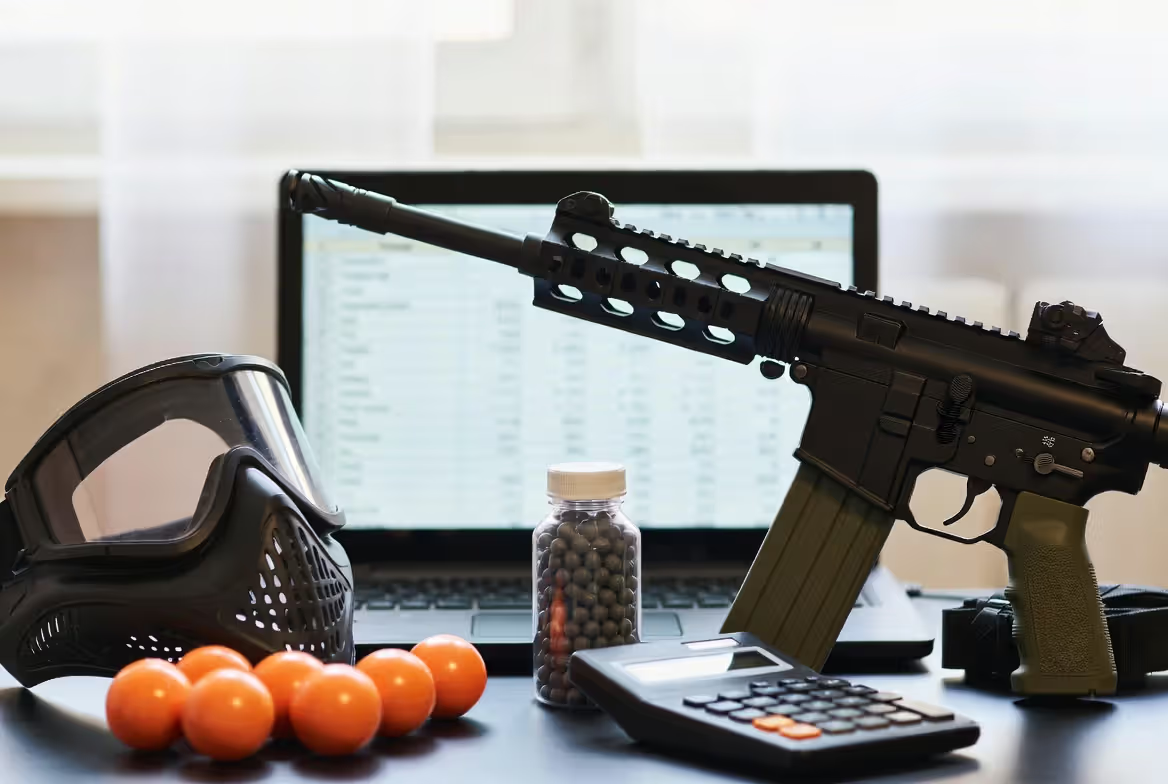
Money talks, so let's break down what you'll actually spend. Airsoft presents a lower barrier to entry. You can grab a decent G&G Combat Machine AEG for $150, toss in $40 for quality eye protection, $25 for a chest rig, and $15 for BBs and a battery. You're field-ready for around $230. Mid-tier setups run $400-700 once you want better internals, a red dot sight, and extra magazines. Hardcore players drop $1,500+ building custom guns with upgraded gearboxes, MOSFETs, and tight-bore barrels.
Paintball asks for more upfront. An entry-level Tippmann or Empire marker costs $180-220. Add a thermal anti-fog mask ($80-120), electronic hopper ($40-70), compressed air tank ($60-90), and your first case of paint ($50-70). You're looking at $450-550 minimum. Tournament-grade electronic markers from Planet Eclipse or Dye start at $600 and climb past $2,000 for top-shelf models.
The real financial difference emerges with ammunition. A bottle of 5,000 quality airsoft BBs costs $12 and lasts me four or five game days. Paintballs cost $50-70 per case of 2,000 rounds. Aggressive players burn through a case in one session. Even casual paintballers use 300-600 rounds per day—that's $10-20 in paint alone. Competitive speedball players shooting 10+ balls per second can empty a case in under four minutes of actual gameplay.
Field fees vary by region, but most airsoft venues charge $20-30 for all-day admission. Paintball fields typically run $30-45, sometimes bundling rental gear and a partial case of paint. Indoor CQB facilities for either sport command premium rates of $35-60 because overhead costs run higher.
Here's a different way to visualize the financial comparison:
| What You're Comparing | Airsoft | Paintball |
| Ammo type | 6mm plastic spheres | Gelatin shells with colored fill |
| Spending per session | $22-32 including field access | $55-90 with field fee and paint |
| Impact intensity (subjective 1-10) | 3-5 depending on distance | 6-8 with clothing |
| Maximum useful range | 150-200 ft with quality guns | 80-120 ft in practice |
| Getting started (complete kit) | $230-370 | $450-650 |
| Post-game washing | None needed | Moderate dye removal |
| Confirming hits | Players call their own | Visible paint splatter |
Maintenance tells another story. Airsoft guns need occasional cleaning, maybe replace some o-rings annually, and keep batteries charged. Budget $40-80 yearly unless you break something expensive. Paintball markers demand cleaning after every session because dried paint gums up internals. O-rings wear faster from paint shell debris. Air tanks require hydro-testing every 3-5 years at $50-100. Figure $120-200 in annual maintenance if you play regularly.
Do the yearly math. Playing twice monthly, an airsofter spends roughly $600-850 annually on field fees, BBs, replacement parts, and maybe a new gun accessory. That same frequency for paintball runs $1,300-1,800 because paint consumption dominates expenses. Play weekly and paintball costs can hit $3,000+ per year while airsoft might reach $1,200.
Author: Ethan Rowe;
Source: lakestaytents.com
Gameplay Experience and Strategy
Step onto a milsim (military simulation) airsoft field and you're basically on a movie set. Players communicate through radio headsets using actual military brevity codes. You might spend twenty minutes slowly advancing through woods using hand signals, then suddenly find yourself in a fifteen-minute sustained firefight over a checkpoint. Some big events run continuously for 24-40 hours with respawn systems, medic rules, and objectives that shift based on which team controls what territory.
The honor system shapes everything. Without paint marks proving hits, players must call themselves out. Sounds sketchy, right? Somehow it works. Tight communities police themselves—cheat a few times and you'll catch a reputation that gets you banned. Most airsofters value integrity over winning because the sport attracts people who genuinely care about realism and fairness. Sure, you'll occasionally run into someone who doesn't feel hits, but it's less common than you'd expect.
Paintball embraces a totally different mindset. Speedball tournaments feature seven-minute scrambles where players sprint to bunkers, lay down cover fire, and aggressively push opponents off key positions. Communication happens constantly—"You've got one moving snake side!" Woodsball slows things down but keeps that aggressive DNA. You can't hide after taking a hit, so players take calculated risks knowing paint doesn't lie.
That objective verification removes arguments but also removes something else: the psychological weight of calling yourself out. There's something honorable about admitting you got hit when nobody else knows for sure. Paintball trades that for indisputable fairness, which enables competitive leagues, professional referees, and prize pool tournaments. You can build an actual athletic career in competitive paintball. Airsoft lacks that structured competitive ladder.
Game modes overlap but feel different in execution. Both sports run capture-the-flag, king-of-the-hill, and elimination rounds. Airsoft adds narrative-driven scenarios where you might play as PMCs extracting a VIP or insurgents defending weapon caches. Some events incorporate light role-playing—you're assigned a specific military occupational specialty with unique objectives. Paintball keeps things simpler: eliminate opponents, control territory, capture objectives. Less storytelling, more athletic competition.
Weapon variety heavily favors airsoft. You'll see designated marksman rifles, belt-fed support weapons, sniper rifles with minimum engagement distances of 100 feet, and backup pistols. Each weapon class plays differently with field-specific rules. Paintball markers fall into fewer categories: mechanical, electronic, pump-action, and magfed. They all basically do the same thing at different rates of fire.
Engagement range gives airsoft a tactical advantage. Quality AEGs consistently hit torso-sized targets at 175 feet. Upgraded platforms reach 250+ feet. Paintball accuracy drops noticeably past 90 feet because spherical projectiles with seams don't fly straight. This fundamental difference affects tactics—airsoft supports designated marksmen providing overwatch while teammates maneuver. Paintball demands closing distance and overwhelming opponents with volume of fire.
Communities attract different personalities. Airsofters tend toward military history buffs, gun enthusiasts who can't or won't own real firearms, and people who obsess over authenticity. You'll meet guys who spent months tracking down the correct model flashlight for a 2004 Rangers impression. Paintball draws competitive athletes, people who love fast-paced team sports, and those who prioritize measurable skill over authenticity. Tournament paintball players drill constantly, watch match footage, and train like they're preparing for a championship—because they are.
Choosing paintball or airsoft often comes down to whether you want to feel like a soldier or compete like an athlete.
Author: Ethan Rowe;
Source: lakestaytents.com
How Airsoft and Paintball Compare to Other Activities
Gel Blasters vs Paintball and Airsoft
Gel blasters shoot hydrated gel balls that burst on impact, sitting somewhere between water balloons and airsoft BBs in concept. They've blown up in Australia and parts of Asia, now creeping into American markets as a budget-friendly option.
Comparing gel blaster vs paintball reveals dramatic cost differences. Gel ammunition runs about $18 per 10,000 rounds—compare that to paintball's $55 for 2,000 rounds. Cleanup barely exists since gel balls are 95% water and evaporate within hours. Pain levels fall well below both competitors, making this genuinely playable for younger kids without parents worrying about welts.
The tradeoffs? Gel blasters feel like toys because they basically are. Effective range maxes out around 65 feet on a calm day. Wind turns gel balls into unpredictable confetti. The blasters themselves lack the weight and realism of airsoft replicas or the mechanical satisfaction of a paintball marker. Most serious tactical sports players see gel blasters as gateway equipment—fine for introducing eight-year-olds to the concept, less interesting for adults seeking legitimate competition.
Legal status creates headaches too. Some states treat gel blasters like airsoft guns. Others ban them outright or classify them as actual firearms requiring licenses. California particularly struggles with this—gel blasters look realistic enough that police encounters have ended badly. Research local laws thoroughly before ordering one.
Laser Tag Compared to Paintball and Airsoft
Laser tag eliminates physical projectiles entirely, using infrared emitters and sensor vests. You shoot light, receive electronic feedback, and respawn automatically after a timeout.
The laser tag or paintball decision breaks down simply. Laser tag works indoors regardless of weather, costs nothing for ammunition, welcomes all ages without pain concerns, and provides balanced equipment for fair matches. Commercial facilities maintain consistent gear quality and offer slick scoring systems.
What's missing? Everything physical. Getting "hit" means your vest chirps and your gun stops working temporarily. No impact. No consequence beyond points. This removes the visceral stakes that make projectile sports compelling. You can't instinctively duck when there's nothing actually flying at you.
Paintball and laser tag serve completely different needs. Laser tag works for corporate team-building events, young kids' birthday parties, and situations where litigation risk matters more than authenticity. Some facilities offer paintball laser tag combinations, but they're separate experiences appealing to separate audiences.
Tactical sports enthusiasts rarely consider laser tag a legitimate substitute. Without realistic equipment, outdoor environments, and physical stakes, it feels more like an arcade game than a sport. That's not a criticism—laser tag excels at what it does. It just doesn't scratch the same itch as actually shooting projectiles at people who are shooting back.
Which Should You Choose: Paintball or Airsoft
Here's my decision framework based on what actually matters:
Start with realism versus competition. Dream about clearing rooms in full kit with an M4 replica that weighs exactly like the real thing? Airsoft delivers that fantasy. Want to compete in tournaments with objective scoring and potential sponsorships? Paintball built that infrastructure.
Consider your relationship with pain. Be honest with yourself. If you bruise easily or genuinely dislike physical discomfort, airsoft makes more sense. If you played contact sports and don't care about welts, paintball's impact won't bother you.
Calculate your playing frequency. This matters more than people realize. Planning to play most weekends? Airsoft's low ammunition cost saves hundreds annually. Only getting out once per month? Paintball's higher per-session cost becomes manageable.
Examine your trust issues. Sounds weird but it's legitimate. Can you accept that some players won't call hits and move on? Airsoft requires that mindset. Need absolute proof your shot connected? Paintball's paint marks provide it.
Check what's actually available nearby. I've seen people commit to a sport they barely preferred because the closest field for their "favorite" sits 90 minutes away while the "second choice" runs fifteen minutes from home. You'll play more often when it's convenient—and playing regularly beats playing your theoretical favorite sport twice per year.
Think about the collecting angle. Airsoft offers hundreds of realistic replicas spanning decades of military history. You can build an armory of AKs, ARs, SCARs, and obscure Eastern Bloc rarities. Paintball markers offer less visual variety though you can customize them mechanically.
Indoor versus outdoor preference matters. Airsoft includes many climate-controlled CQB facilities perfect for year-round play. Paintball leans heavily outdoor with some indoor speedball exceptions.
Don't underestimate social factors. Playing with established friends beats joining strangers even if the sport isn't your top pick. If your friend group already commits to one sport, that should heavily influence your decision.
Budget-conscious beginners might test the waters with airsoft given the lower financial commitment. Less risky to discover you don't actually enjoy tactical sports when you've spent $250 instead of $500. Those with disposable income seeking immediate competitive structure could jump straight into paintball.
Some players eventually enjoy both—airsoft for immersive weekend milsim events, paintball for competitive speedball practice. The skills transfer reasonably well though the different hit-calling systems require mental adjustment.
Airsoft attracts people chasing that operator fantasy. They want authentic gear and realistic weapons. Paintball players come for competition and that undeniable satisfaction when paint explodes on a target. I've never seen one group convince the other they're wrong. They're after fundamentally different experiences. Smart players try both and pick whatever makes them want to come back next weekend.
— Mike Richardson
Frequently Asked Questions
Both sports deliver legitimate tactical experiences, just aimed at different priorities. Airsoft brings military authenticity, manageable costs, and equipment variety for players craving realism who trust others to play honestly. Paintball offers competitive structure, verifiable hit confirmation, and rapid-fire action for those wanting measurable results without worrying about expensive ongoing costs.
Your choice should reflect personal factors: available budget, pain sensitivity, preference for realism over competition, and what fields exist within reasonable driving distance. Testing both sports through rental equipment makes sense before dropping serious money on personal gear.
The tactical sports world welcomes newcomers into both communities. Whichever direction you choose, you'll discover dedicated players, evolving strategies, and the satisfaction of outdoor team activity that gets you off screens. Pick the sport matching your interests, invest in legitimate safety gear first, and focus on developing skills rather than buying expensive equipment immediately. The right choice? It's whichever one keeps bringing you back weekend after weekend genuinely enjoying yourself.