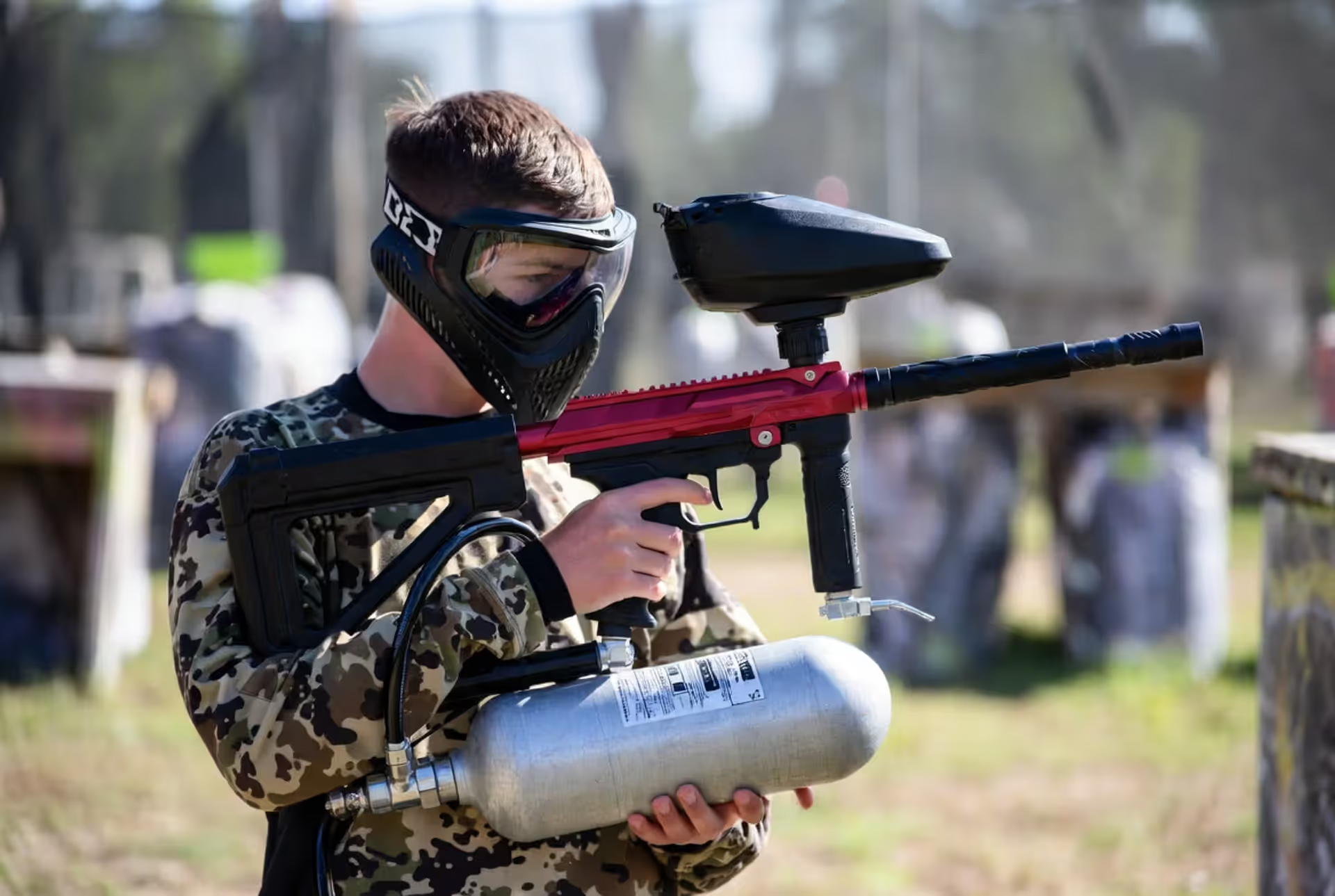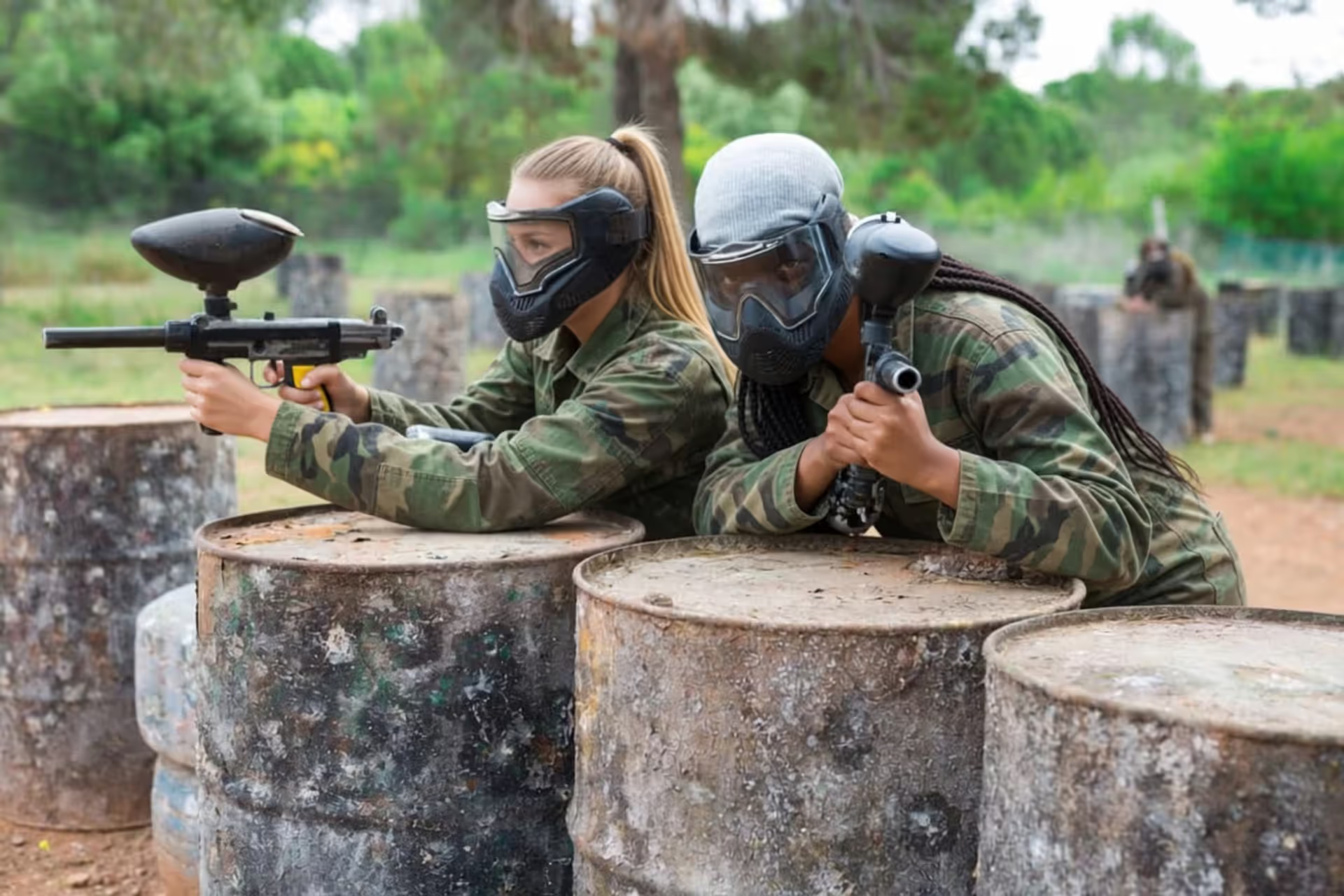
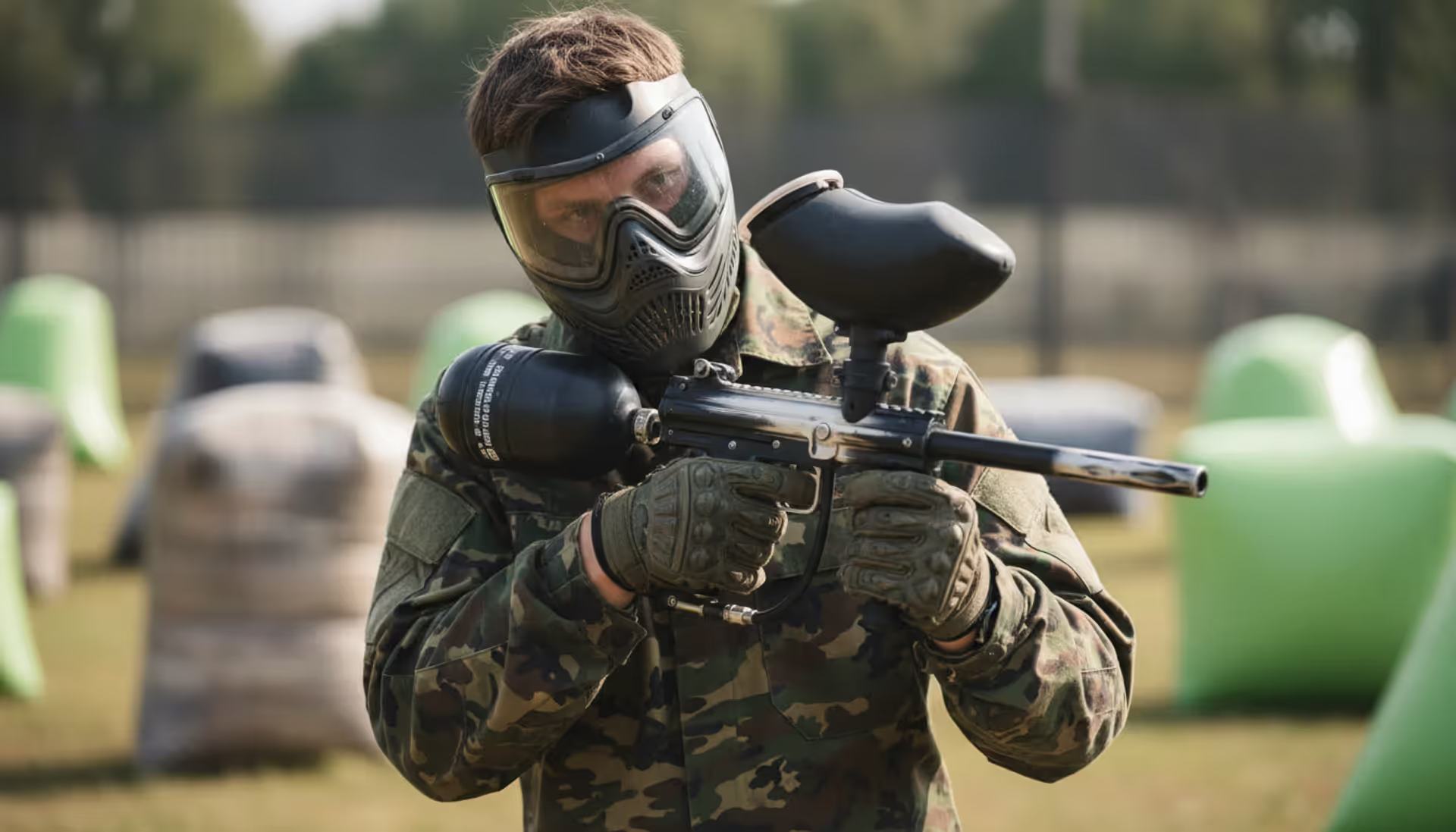
Paintball player holding marker with CO2 tank on outdoor field
Where to Refill Paintball CO2 Tanks?

Content
Finding a reliable spot to refill your paintball CO2 tank shouldn't feel like a scavenger hunt. Whether you're a weekend warrior or a serious player logging dozens of games per season, knowing your refill options saves time, money, and the frustration of showing up to the field with an empty tank.
Most paintball tanks fall into two categories: CO2 and high-pressure air (HPA). Each requires different equipment and expertise to refill safely. The good news? Refill locations are more common than you might think, ranging from your local paintball field to industrial suppliers you've probably driven past without realizing they service recreational tanks.
This guide covers where to find refill services, what to expect during the process, how much you'll pay, and whether setting up a home refill station makes sense for your playing frequency.
Types of Paintball Tank Refill Options
Before hunting for a refill location, understand what type of tank you're carrying. Using the wrong refill method can damage your equipment or create safety hazards.
CO2 vs HPA Tanks
CO2 tanks store carbon dioxide in liquid form under pressure. When you pull the trigger, liquid CO2 converts to gas and propels the paintball. These tanks typically hold 9, 12, 16, or 20 ounces and work well in warmer climates. Temperature fluctuations affect performance—rapid firing in cold weather can cause pressure drops and inconsistent velocity.
HPA tanks (also called compressed air or nitrogen tanks) store air at 3,000 or 4,500 PSI. They deliver more consistent performance across temperature ranges and don't suffer from the liquid-to-gas conversion issues that plague CO2. HPA systems require a high-pressure compressor or cascade system for refills, which means fewer locations offer this service compared to CO2.
Your marker's manual specifies which system it supports. Some older mechanical markers only handle CO2, while most electronic markers require HPA to protect sensitive components from temperature swings and liquid surges.
Author: Logan Mercer;
Source: lakestaytents.com
Screw-In vs Pin Valve Tanks
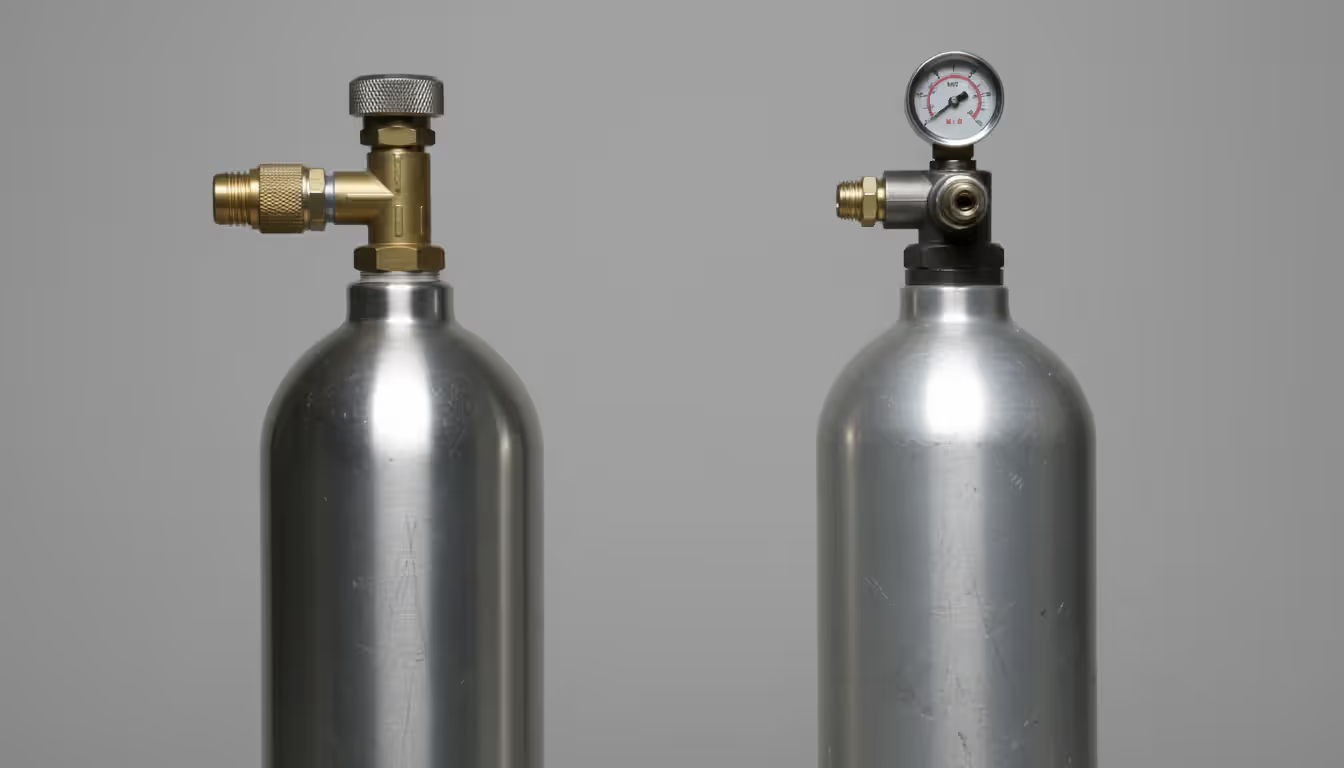
CO2 tanks come with two valve types. Screw-in tanks (also called CGA 320 valves) thread directly into your marker or use an adapter. Pin valve tanks feature a protruding pin that gets depressed when connected, similar to a bike tire valve. Most modern paintball equipment uses screw-in valves, but older rental gear might still use pin valves.
This matters for refills because not every station stocks adapters for both types. Call ahead if you're using a pin valve tank—some locations refuse to service them due to the additional equipment required.
Where to Get Your Paintball CO2 Tank Refilled
Refill availability varies by region, but these five location types cover most areas across the United States.
Sporting Goods Stores
Major chains like Dick's Sporting Goods and Academy Sports + Outdoors often provide CO2 refills at stores with paintball sections. Not every location offers this service—call your nearest store before making the trip. Stores that do refill typically charge $3-6 per fill and can handle standard 9-20 oz tanks.
The advantage here is convenience during regular shopping hours. The downside? Staff expertise varies wildly. Some locations treat paintball as a minor department, and you might encounter employees unfamiliar with proper fill procedures or safety checks.
Paintball Fields and Pro Shops
Dedicated paintball facilities almost always offer refill services for both CO2 and HPA tanks. Fields need these systems for their rental equipment and customers, so they've invested in proper compressors and bulk CO2 storage.
Expect to pay $3-5 for CO2 refills and $5-10 for HPA fills. Many fields offer unlimited air packages—pay $20-30 annually and refill as often as you want when visiting their facility. This pays for itself after 4-6 visits if you're a regular player.
Pro shops attached to fields typically provide faster service than general sporting goods stores. Staff know the equipment, perform proper safety checks, and can spot expired tanks or damaged valves that should be replaced.
Welding Supply Stores
Airgas, Praxair, and local welding suppliers maintain bulk CO2 for industrial applications. Many accept walk-in paintball tank refills, though some locations have policies against filling recreational equipment due to liability concerns.
Pricing runs $4-8 per fill. The main benefit is extended hours—many welding suppliers open early and close later than paintball fields. You'll also find these locations in rural areas where dedicated paintball shops don't exist.
Bring proof of your tank's last hydrostatic test date. Welding suppliers take certification seriously and won't fill expired tanks.
Fire Extinguisher Service Companies
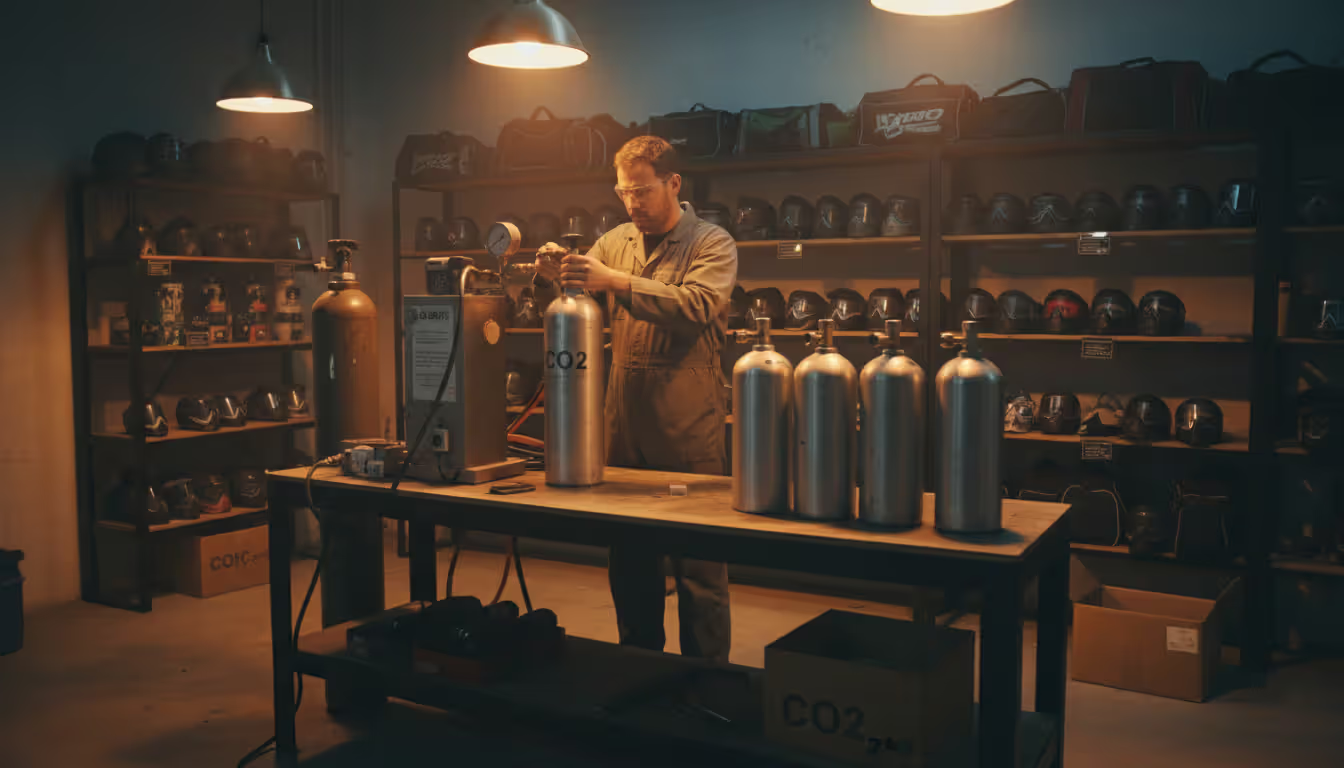
Companies that service and recharge fire extinguishers frequently work with CO2 systems. Some accept paintball tanks as a side service. This option works best in smaller cities where specialized paintball shops are scarce.
Costs vary significantly—anywhere from $5 to $15 depending on whether they view it as a quick favor or a specialty service. Call several companies in your area to compare prices and policies.
Author: Logan Mercer;
Source: lakestaytents.com
Dive Shops
Scuba diving shops maintain high-pressure compressors for filling dive tanks, which means they can fill HPA paintball tanks. Most won't touch CO2 tanks since they don't stock bulk CO2 for their primary business.
HPA fills at dive shops typically cost $8-12. Hours tend to be limited—many dive shops operate Thursday through Sunday to align with weekend diving trips. Some shops require you to leave your tank for filling rather than providing while-you-wait service.
| Location Type | Average Cost | Pros | Cons | Availability |
| Paintball fields | $3-5 (CO2), $5-10 (HPA) | Expert staff, both tank types, membership deals | Limited to field hours, may require admission | High in metro areas, limited in rural regions |
| Sporting goods stores | $3-6 (CO2 only) | Convenient hours, multiple locations | Inconsistent staff knowledge, CO2 only | Moderate nationwide |
| Welding supply shops | $4-8 (CO2 only) | Extended hours, rural availability | Some refuse recreational tanks, CO2 only | High in industrial areas |
| Fire extinguisher services | $5-15 (CO2 only) | Available in small cities | Inconsistent pricing, not all locations participate | Low to moderate |
| Dive shops | $8-12 (HPA only) | High-quality compressors, proper pressure | Limited hours, HPA only, higher cost | Moderate in coastal areas |
How to Refill a Paintball CO2 Tank at a Fill Station
Walk into a paintball field or sporting goods store with your empty tank. The technician will first inspect the tank's exterior for dents, rust, or valve damage. They'll check the hydrostatic test date stamped on the tank—DOT regulations require CO2 tanks to be tested every five years, and no legitimate shop will fill an expired tank.
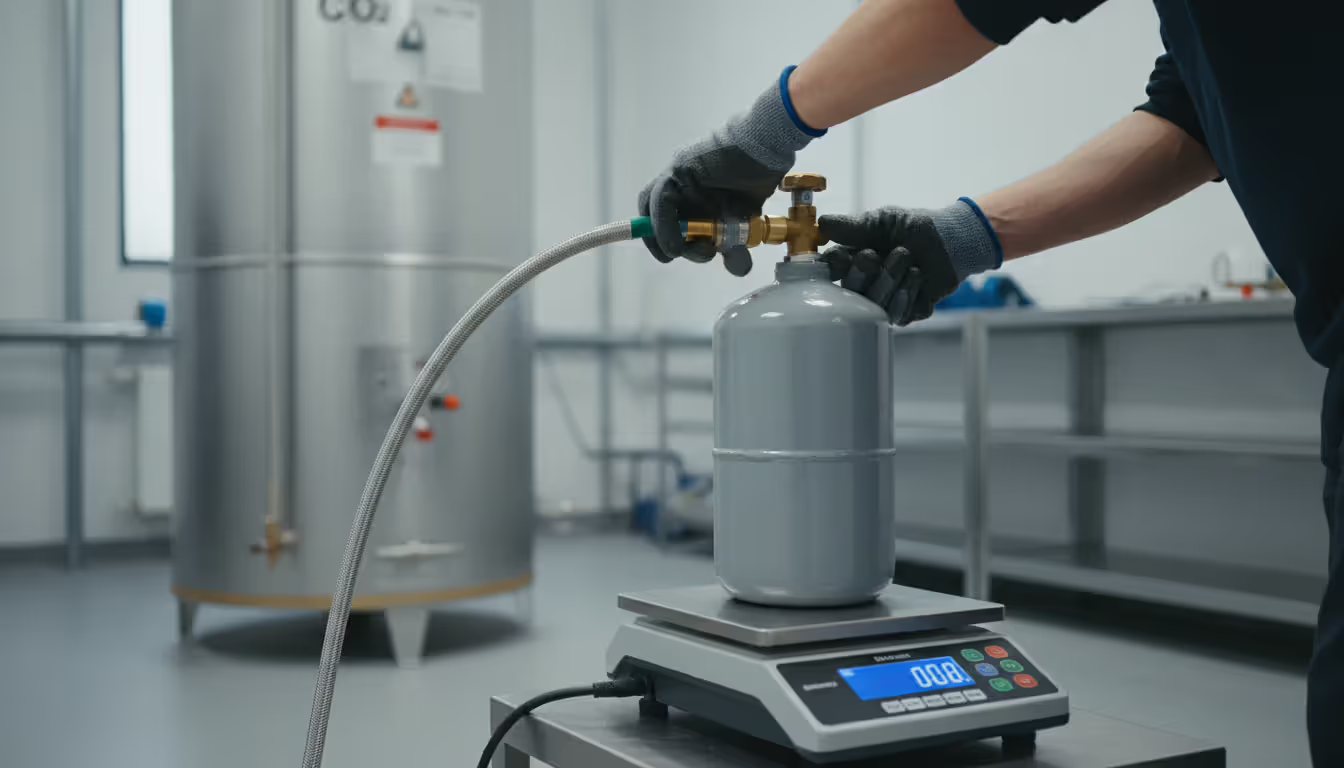
The technician weighs your empty tank on a scale. CO2 tanks have a tare weight (empty weight) stamped on them. By weighing the current tank and comparing it to the tare weight, they determine how much CO2 to add. A 20 oz tank should weigh approximately 20 ounces more than its tare weight when full.
The tank connects to a bulk CO2 system via a fill adapter. The technician opens the valve slowly, allowing liquid CO2 to flow into your tank. This takes 30-90 seconds depending on tank size. They'll periodically check the weight to avoid overfilling, which can damage the burst disk or create dangerous pressure levels.
Once filled to the proper weight, the technician disconnects your tank and checks the valve for leaks using soapy water or an electronic leak detector. You'll hear a brief hiss during disconnection—this is normal as residual pressure equalizes.
The entire process takes 2-5 minutes per tank. Bring your tank's original paperwork if it's new, as some shops want to verify the test date for tanks without clear stampings. Arrive at least 30 minutes before closing time—many shops stop accepting refills near the end of their shift to avoid rushing the safety checks.
Author: Logan Mercer;
Source: lakestaytents.com
Paintball Tank Refill Costs and What Affects Pricing
CO2 refills range from $3 to $8 depending on location type and regional market. HPA refills cost more—$5 to $12 per fill—because of the expensive compressor equipment required and higher electricity costs to generate 3,000-4,500 PSI.
Tank size affects pricing at some locations. A 9 oz tank might cost $3 while a 20 oz tank runs $5 at the same shop. Other locations charge a flat rate regardless of size, which benefits players using larger tanks.
Membership programs at paintball fields dramatically reduce per-fill costs for frequent players. Paying $25 for unlimited annual air makes sense if you visit that field six or more times per year. Some fields extend the benefit to all locations in their chain, which works well if you travel between cities for tournaments.
Bulk refill packages offer another discount option. Buy a punch card for ten fills and pay $25-40 instead of $3-5 per visit. This saves 15-30% compared to individual refills.
Regional variations matter more than you'd expect. Urban areas with multiple paintball fields see competitive pricing around $3-4 for CO2. Rural areas with one supplier might charge $6-8 for the same service. Coastal regions with higher operating costs tend toward the upper end of the price range.
| Tank Size | CO2 Refill Cost | HPA Refill Cost | Refills per Year (avg) | Annual Cost |
| 9 oz CO2 | $3-5 | N/A | 12-15 | $36-75 |
| 20 oz CO2 | $4-6 | N/A | 8-12 | $32-72 |
| 48/3000 HPA | N/A | $5-8 | 10-15 | $50-120 |
| 68/4500 HPA | N/A | $6-10 | 8-12 | $48-120 |
Players who compete in tournaments or practice weekly should calculate their annual refill costs. If you're spending $80-120 per year on refills, a home setup might pay for itself within two seasons.
Home Paintball CO2 Refill Setup
Setting up a home fill station requires upfront investment but cuts per-fill costs to nearly zero if you play frequently. The setup differs significantly between CO2 and HPA systems.
Equipment Needed for a Paintball Fill Station
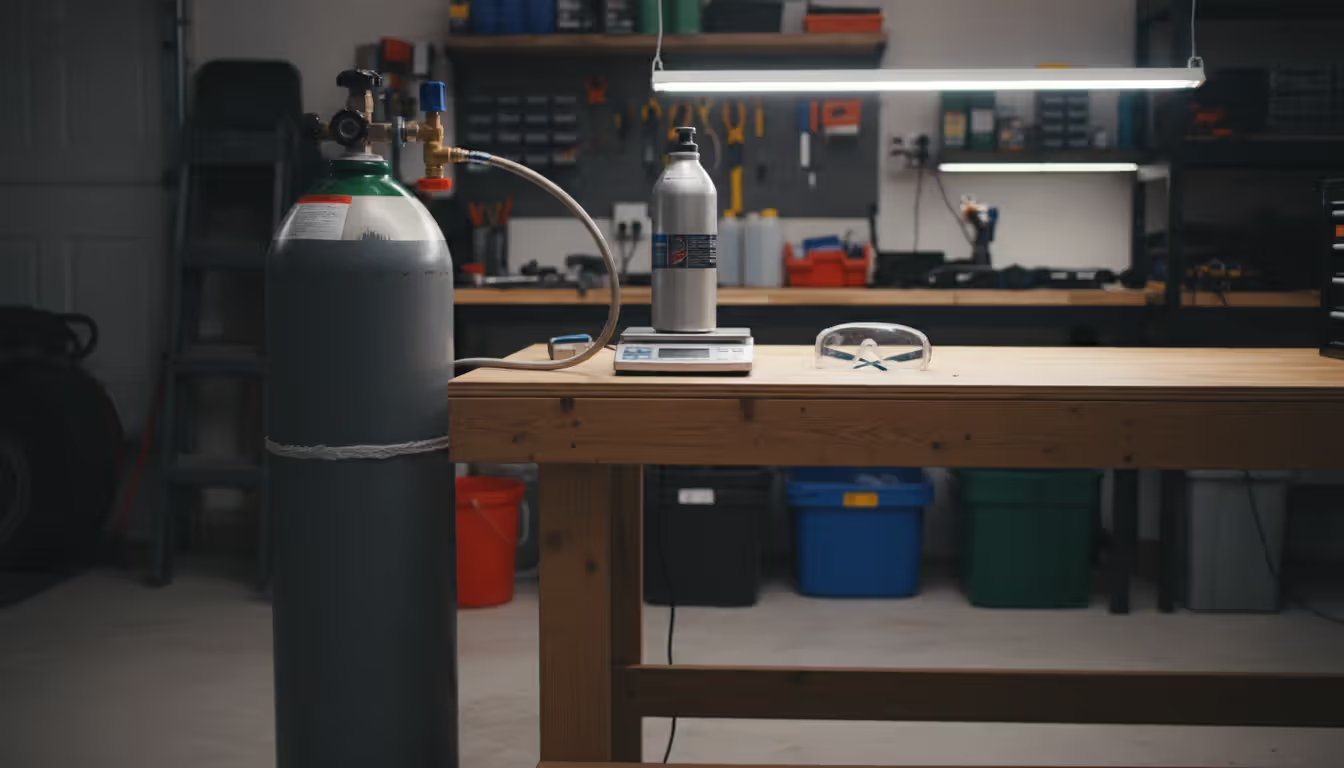
For CO2 refills, you need a bulk CO2 tank (typically 20-50 lb capacity), a fill adapter with a bleed valve, and a digital scale accurate to 0.1 oz. The bulk tank costs $80-150 to purchase or $20-30 per year to lease from a welding supplier. Refilling a 20 lb bulk tank costs $15-25 and provides enough CO2 for 30-40 paintball tank fills.
The fill adapter runs $25-50 depending on quality. Cheaper adapters lack precision bleed valves, making it harder to hit the exact target weight. A good digital scale costs $20-40—don't use a bathroom scale, as you need accuracy within a tenth of an ounce to avoid overfilling.
Safety equipment includes a ventilated filling area (CO2 displaces oxygen in enclosed spaces) and safety glasses. Some players add a fill station stand to secure tanks during filling, preventing spills or tip-overs.
Total startup cost for CO2: $150-250. After that, you're paying $15-25 every few months for bulk tank refills instead of $4-6 per paintball tank.
Author: Logan Mercer;
Source: lakestaytents.com
Paintball Tank Refill Compressor Requirements
HPA systems require substantially more investment. You need a high-pressure compressor rated for 3,000-4,500 PSI. Entry-level compressors suitable for paintball start around $1,200-1,800. These units take 15-30 minutes to fill a 68/4500 tank from empty.
Better compressors in the $2,500-4,000 range fill faster and require less maintenance. Commercial-grade units used by paintball fields cost $5,000-12,000 but handle continuous use and fill multiple tanks simultaneously.
You'll also need a fill whip (the hose and gauge assembly that connects the compressor to your tank), which runs $50-150. Moisture filters are essential—water vapor in compressed air causes rust and damages tank internals. Budget $100-200 for a quality filter system.
Electricity costs add up. Compressors draw 15-20 amps during operation. Filling two 68/4500 tanks per week costs roughly $5-8 monthly in electricity at average US rates.
The math only works for serious players or groups. If you're filling tanks for yourself and 3-4 friends who play weekly, a $2,000 compressor pays for itself in 18-24 months compared to paying $8 per fill at a shop. Solo players spending $80 annually on refills won't break even for 20+ years.
Legal considerations vary by state. Most states don't regulate home CO2 filling, but some municipalities restrict high-pressure compressor operation in residential areas due to noise. Check local codes before purchasing equipment.
Common Paintball Air Tank Refill Mistakes to Avoid
Overfilling ranks as the most common and dangerous mistake. CO2 tanks include burst disks designed to rupture if pressure exceeds safe limits. Overfilling can blow the burst disk immediately or weaken it, causing failure during gameplay. Always use a scale and fill to the manufacturer's specified weight, not "a little extra" for more shots.
Using expired tanks violates DOT regulations and creates real safety risks. The hydrostatic test date appears stamped on the tank shoulder. If the last test occurred more than five years ago (three years for some aluminum HPA tanks), the tank needs recertification before refilling. Playing with an expired tank that fails during use can cause serious injury.
Mixing CO2 and HPA equipment causes immediate problems. Never attempt to fill a CO2 tank using an HPA compressor or vice versa. The systems operate at different pressures and use incompatible fill mechanisms. You'll damage equipment at minimum, potentially causing a dangerous pressure release.
Skipping visual inspections before refilling leads to filling damaged tanks. Check for dents, deep scratches, rust, or corrosion before every fill. Any visible damage means the tank needs professional inspection or replacement. A compromised tank wall can fail catastrophically under pressure.
Choosing fill stations based solely on price sometimes means choosing inexperienced operators. A shop charging $2 per fill might be cutting corners on safety checks, using uncalibrated scales, or employing untrained staff. Pay the extra dollar or two for a reputable location with knowledgeable technicians.
The biggest mistake I see is players ignoring hydro dates because they don't want to pay for recertification. A hydrostatic test costs $25-40, but it might reveal internal corrosion or metal fatigue that could cause a catastrophic failure. That test could literally save your life or someone else's on the field
— Marcus Chen
Frequently Asked Questions About Filling Paintball Tanks
Getting your paintball CO2 tank refilled doesn't require specialized knowledge once you understand the basic options. Paintball fields offer the most reliable service with expert staff and equipment for both CO2 and HPA systems. Sporting goods stores and welding suppliers provide convenient alternatives for CO2 tanks, though availability and expertise vary by location.
Pay attention to your tank's hydrostatic test date and never fill an expired tank regardless of how inconvenient the timing. The recertification cost is minimal compared to the safety risks of using compromised equipment.
For players hitting the field 15+ times per year, calculate whether a home fill station makes financial sense. CO2 setups pay for themselves quickly, while HPA compressors only make sense for serious players or groups splitting the cost.
Keep your tank in good condition, choose reputable fill locations, and you'll spend less time worrying about air supply and more time playing.