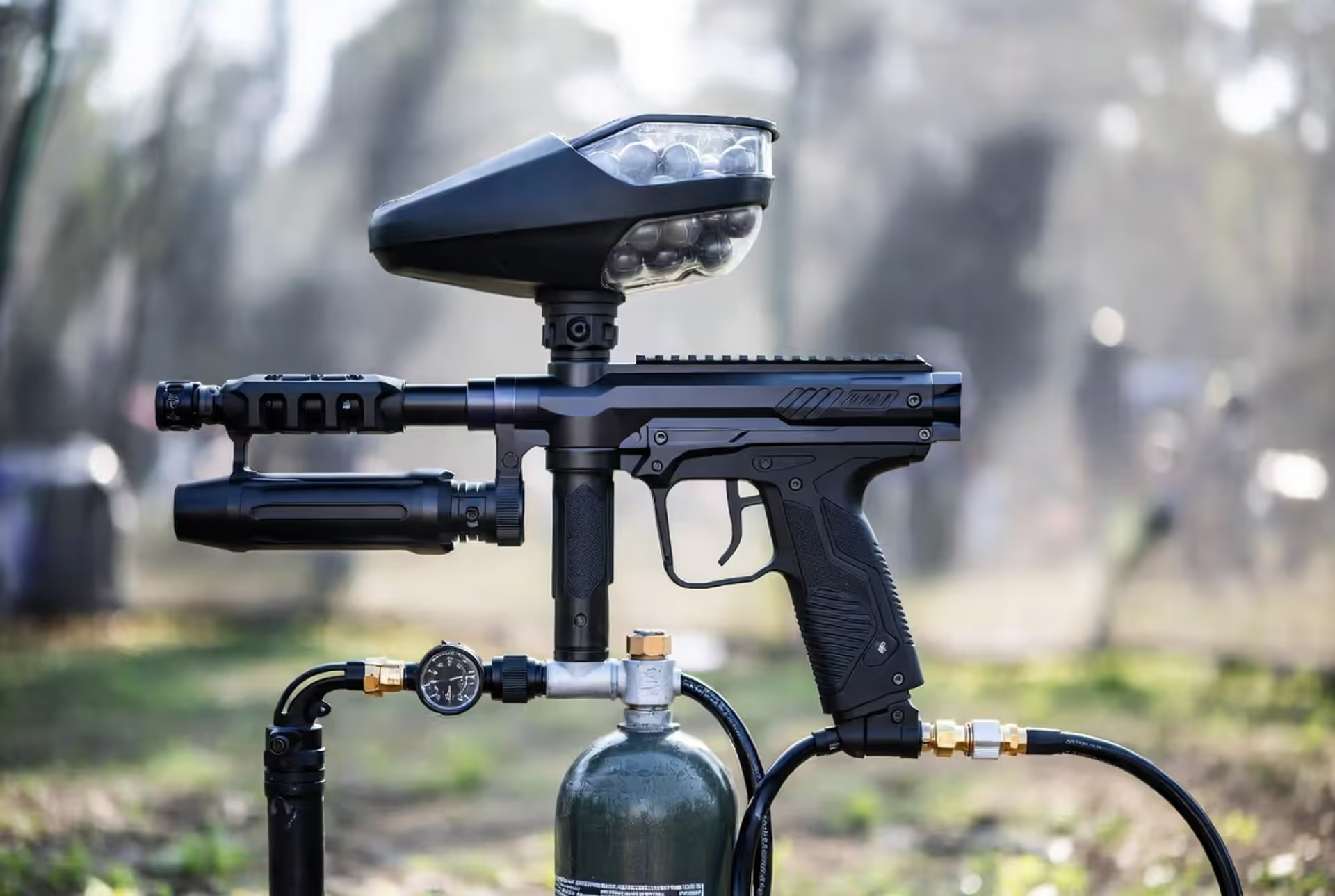
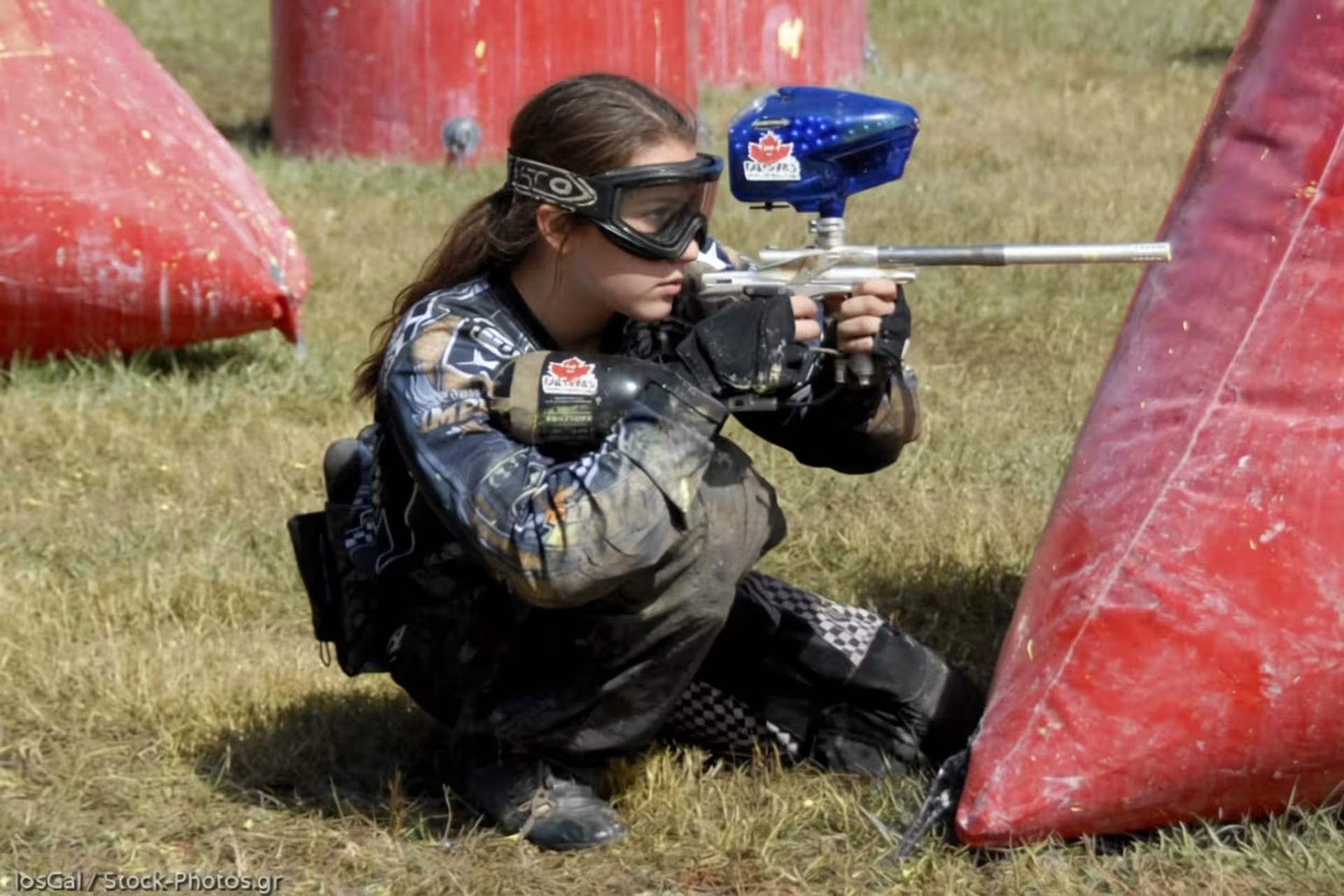
Ready to reload under pressure
Paintball Pods Guide

Content
Nothing feels worse than hearing your hopper rattle empty while three opponents are pushing your bunker. You're reaching for your next reload, but there's nothing there—game over. That's why serious players, even weekend warriors, wouldn't dream of stepping onto the field without loaded paintball pods ready to go.
What Are Paintball Pods and Why You Need Them
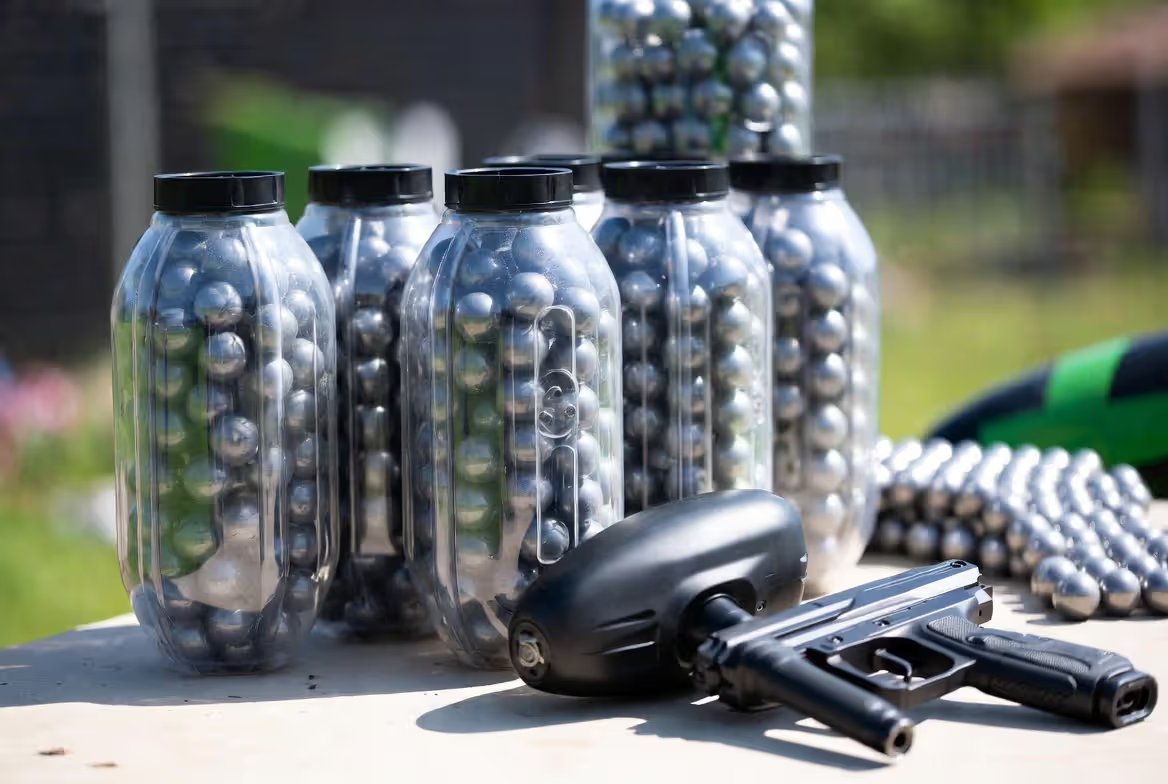
Think of paintball pods as spare magazines, but for your marker. These clear or smoked plastic tubes hold anywhere from 100 to 140 paintballs each, sealed with a spring-loaded cap that flips open when you press it. Pop the top, dump the contents into your hopper, toss the empty tube, and you're back in action—the whole process takes maybe five seconds if you've practiced.
Standard pods measure around 7-8 inches in length with roughly 2.5-inch width. You'll see two main capacities at pro shops: 140-round tubes (what most adult players use) and 100-round versions (popular with younger players or anyone running lighter gear). The spring mechanism inside the lid keeps everything sealed until you deliberately push the release—no accidental spills while you're sprinting between bunkers.
Here's the reality check: your hopper might hold 200 rounds if it's completely full. That sounds like plenty until you're laying down suppressive fire for a teammate. Thirty seconds of sustained shooting? That's your hopper gone. Now multiply that by a 15-minute game or a scenario mission lasting two hours. Without pods clipped to your belt, you'd spend more time jogging back to the staging area than actually playing.
Tournament speedball players typically reload twice per point, sometimes three times in extended battles. I've watched divisional players burn through six pods (840 rounds) in a single competitive match. In woodsball scenarios, you might be stationed 300 yards from the nearest refill point. Good luck making that trek without getting eliminated while your squad holds position.
Beyond storage, pods serve weird secondary purposes veterans discover over time. Empty tubes make surprisingly effective decoys—toss one behind a bunker to draw fire while you move. The rattling sound of pods knocking together in your pack also gives away opponent positions if they're careless. Small details, but they matter.
Author: Logan Mercer;
Source: lakestaytents.com
Types of Paintball Pod Carrying Systems
You've got three basic options for hauling pods around the field. Each comes with specific advantages and annoyances you'll discover quickly once you start playing.
Pod Packs and Harnesses
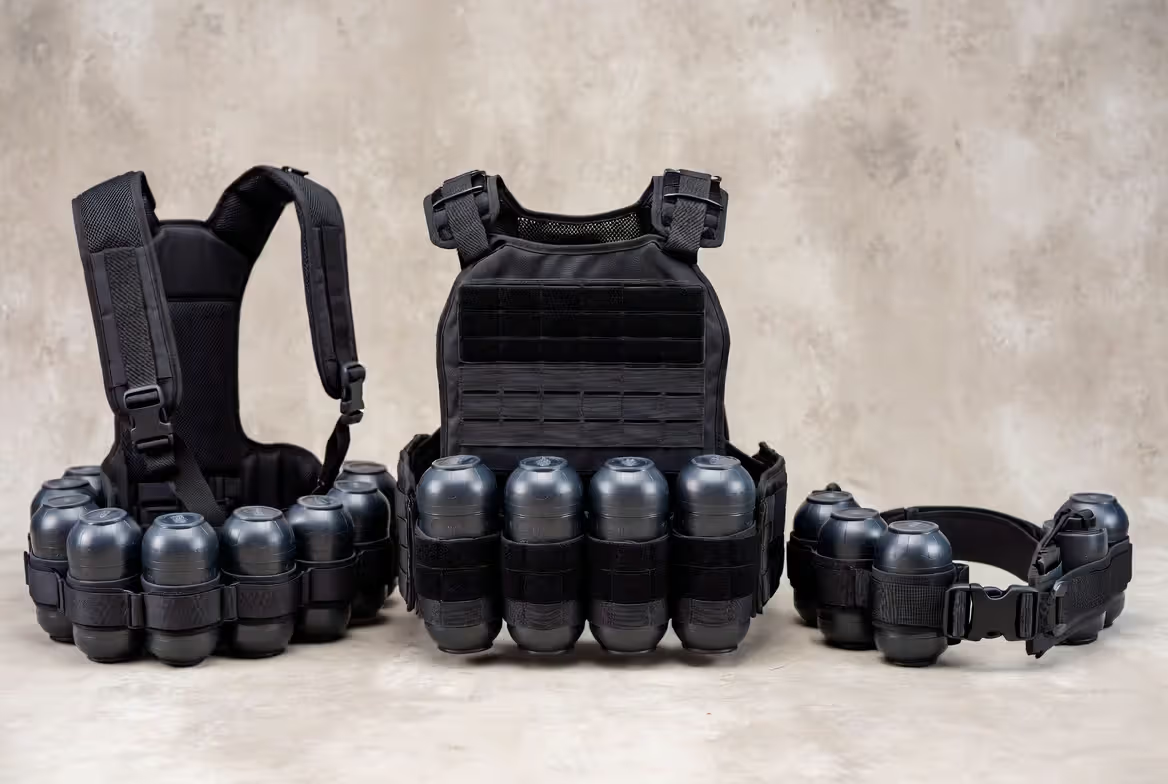
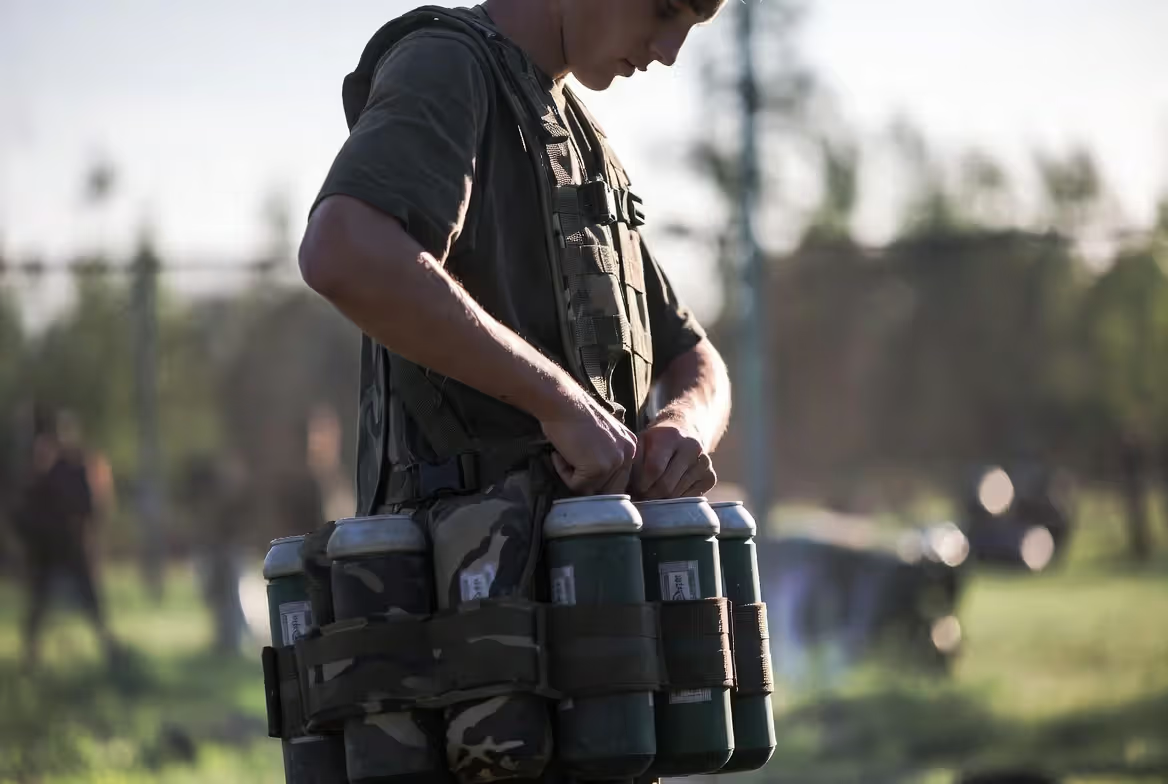
A paintball pod pack wraps around your waist like a wide belt, holding anywhere from 2 to 8 individual tubes in elastic or rigid holsters. This is what probably 80% of players use, from beginners to professionals, because the design just works.
Quality harnesses grip each pod firmly enough to prevent bouncing during sprints but release cleanly when you yank upward. Better models incorporate ejection systems—basically, pulling the pod upward triggers a mechanism that pops it free instead of forcing you to wrestle it out of tight elastic. When you're trying to reload while someone's shooting ropes at your bunker, that two-second difference matters tremendously.
The weight distribution makes sense too. Spreading six loaded pods around your waist balances everything naturally rather than pulling on your shoulders or flopping around. You barely notice it after the first few points. Premium tournament pod packs add padded backing (prevents bruising during dives), moisture-wicking fabric (because you'll sweat), and quick-release buckles (for pulling the whole thing off between games without fumbling with straps).
The downside? Bulk around your midsection. Aggressive players sliding into bunkers sometimes catch their pack on edges or corners. Cheaper harnesses also rotate during running, forcing constant repositioning that breaks concentration.
Author: Logan Mercer;
Source: lakestaytents.com
Pod Belts
A paintball pod belt strips everything down to basics—a sturdy nylon belt with 2-4 attached pouches. That's it. No complex retention systems, no padding, minimal weight.
Scenario players love these for long-duration missions where every ounce counts. If you're patrolling a 50-acre woodsball field for an hour, the streamlined profile keeps you mobile without excess gear bouncing around. Many belts feature MOLLE webbing or attachment points for tactical pouches, letting you add barrel swabs, Allen keys, or a backup air tank.
The obvious limitation: capacity maxes out around four pods, maybe five if you really load it up. Most recreational players shooting 500-600 rounds per session manage fine with that. Tournament competitors burning through 1,500+ rounds? Belts won't cut it. Retention isn't as sophisticated either—pods bounce more during running since you're relying on simple elastic loops rather than engineered retention systems.
Pod Vests and Tactical Carriers
The paintball pod vest category covers chest rigs, tactical carriers, and military-style load-bearing equipment adapted for paintball. Pods mount vertically across your chest or along shoulder straps instead of around your waist.
These shine in scenario games where you're hauling radios, pyrotechnics, role-playing props, or extra equipment beyond standard pods. The MOLLE webbing lets you customize configurations extensively—one player might run four pods plus a radio pouch, another might carry two pods and six utility pouches. Milsim enthusiasts appreciate the authentic tactical aesthetic too.
For speedball? Vests create problems. Chest-mounted pods interfere with getting tight behind bunkers and make you a bigger target. Reloading requires reaching across your body instead of smoothly pulling from your hip—slower and more awkward. The shoulder-distributed weight also fatigues faster compared to waist-mounted systems during all-day tournaments.
Vests make sense for specific roles: scenario commanders coordinating teams, support gunners carrying smoke grenades, magfed players needing extensive gear beyond typical pod capacity.
How to Choose the Right Pod Pack for Your Play Style
Author: Logan Mercer;
Source: lakestaytents.com
Five factors determine whether a pod harness will serve you well or drive you crazy every weekend.
Figure out actual capacity requirements before buying. Speedball tournament players easily shoot 1,500 rounds per event day, which demands 6-pod minimum capacity. Recreational woodsball sessions where you're firing maybe 500 rounds across three hours? A 3-4 pod setup handles that comfortably. Pump players might only shoot 150-200 rounds total, making a simple 2-pod belt perfect. Count your paint consumption over several weekends to establish real patterns rather than guessing.
Fit trumps features every single time. I've seen players drop $80 on premium 6-pod harnesses that constantly shift and rotate, then switch to $35 basic 4-pod packs that stay locked in place. Result? They're faster with the cheaper gear. Adjustability matters, but also pay attention to where pods actually sit on your specific body. Shorter players (under 5'6") often find standard harnesses position rear pods nearly out of reach. Taller players (over 6'2") need extended belt lengths that entry-level packs sometimes don't provide.
Mike Paxson, head coach of San Diego Dynasty, puts it bluntly: "New players waste money buying expensive gear that doesn't fit their body type, then wonder why they're slower than teammates using basic equipment. Load up pods, wear the harness for 20 minutes, run around, practice slides and reloads. Do that before handing over your credit card. The right fit makes you faster than any brand name."
Speedball and woodsball requirements diverge significantly. Tournament players need maximum capacity in minimal bulk—slim profiles that won't snag bunker edges during breakouts and slides. Woodsball players can tolerate bulkier systems if they add utility for tools, squeegees, or accessories. Speedball harnesses prioritize quick-eject mechanisms above everything. Woodsball players often prefer rock-solid retention that won't accidentally drop pods when crawling through brush or climbing obstacles.
Budget ranges from $15 basic belts up to $85 professional harnesses. Entry-level players should target mid-range options ($35-50) offering decent retention and adjustability instead of bottom-shelf products that fail after three weekends. You can upgrade later once you've identified specific preferences through experience. Premium harnesses justify their cost for serious competitors through durability and marginal speed advantages, but recreational players honestly won't notice enough difference to warrant spending double.
Consider integration with other gear you're already running. Some pod packs conflict with certain chest protectors or tactical vests. If you're wearing a plate carrier or battle vest, verify your pod harness fits comfortably underneath or over it without creating pressure points that'll bruise you up.
Pod Fillers and Refilling Systems
Manually pouring paint from bags directly into tubes works, technically. It's also slow, messy, and increases breakage from dropped balls bouncing across tables.
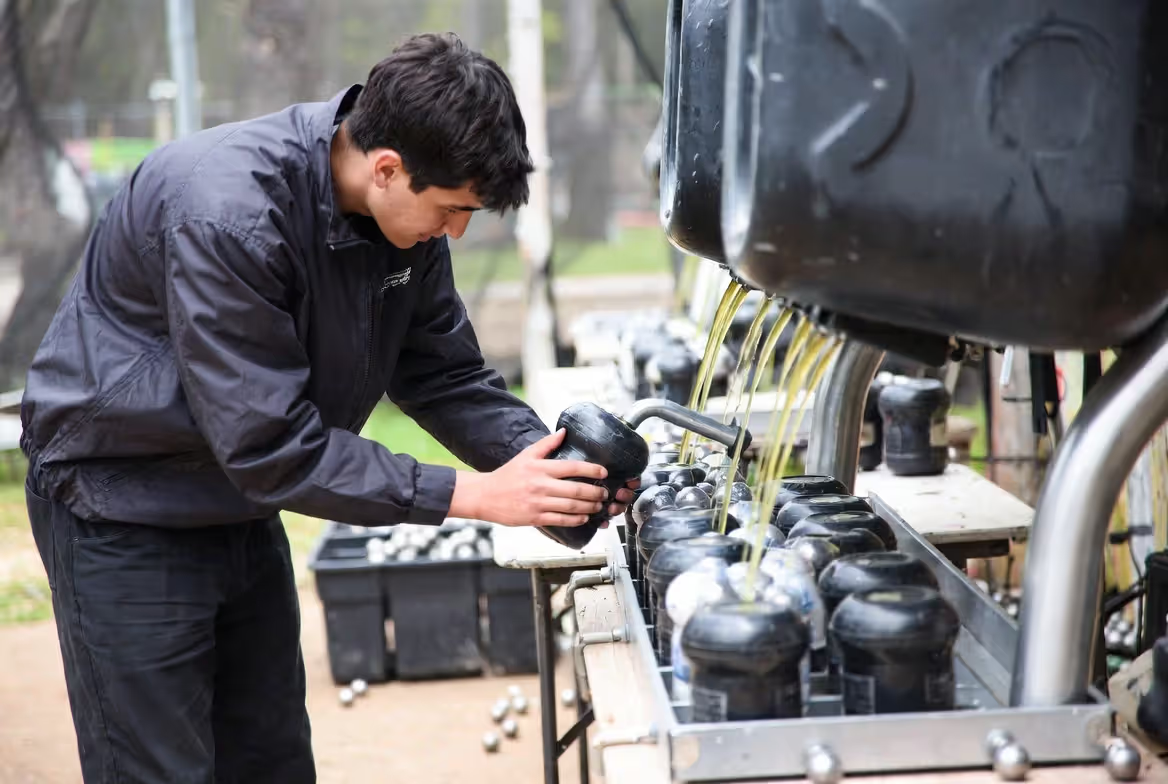
A paintball pod filler streamlines everything through funnel systems that guide paintballs smoothly while filtering broken shells and shell fragments. Basic fillers are essentially wide-mouth funnels sitting atop your pod—simple $10-15 accessories preventing the frustration of watching paintballs bounce everywhere while you're rushing between games.
Author: Logan Mercer;
Source: lakestaytents.com
Premium pod filling stations go further. These contraptions hold multiple pods simultaneously, using gravity-fed hoppers to fill 4-6 tubes in the time manual methods handle one. Competitive teams depend on these at tournaments where turnaround between matches runs under 10 minutes. Filling eight pods manually might consume five minutes with constant spillage; a quality filling station completes the job in maybe 90 seconds.
That time advantage compounds across all-day events. Shaving 3-4 minutes off prep between each match gives you more time to hydrate, discuss strategy with teammates, and rest—factors directly impacting performance in later games when everyone's exhausted.
Field practices matter as much as equipment. Always inspect pods for cracks before filling; damaged tubes leak inside your harness, creating slippery messes that contaminate remaining pods. Wipe lids clean between fills so dirt doesn't jam spring mechanisms mid-game.
Never overfill pods beyond rated capacity. Cramming 150 rounds into a 140-capacity tube seems clever until the lid won't properly seal, spilling paint during your first sprint downfield. Underfilling by 5-10 rounds actually improves reliability since paintballs get slight room to shift without jamming the spring mechanism.
Your loader runs empty faster than you think, especially under pressure. The players who stay in the game aren’t just better shooters—they’re the ones who plan their reloads before the first ball is fired. Pods aren’t extra gear, they’re what keeps you playing instead of walking off the field.
— Ryan Greenspan
Best Paintball Pod Pack Options by Category
The market floods you with dozens of harness options. These recommendations reflect proven performance across different player categories and budgets based on what actually holds up.
Entry-level players should examine the Valken Crusade or Tippmann Sport Series harnesses. Both deliver 4-pod capacity with basic elastic retention for $25-35. They lack fancy features but provide reliable function for casual players still figuring out whether they'll commit to regular play. Durability runs 1-2 seasons with weekly use before elastic loosens noticeably.
Mid-range performance packs like the HK Army Eject or Bunker Kings Supreme offer outstanding value for developing players. Priced $45-60, these incorporate ejection systems, improved padding, and reinforced stitching extending lifespan to 3-4 seasons. Capacity options (4-pod or 5-pod configurations) accommodate growing paint consumption as skills develop. Most competitive amateur players settle here permanently since performance essentially matches professional gear.
Tournament-grade harnesses include the Bunkerkings Strapless V4 and HK Army Zero-G 2.0. These $70-85 systems prioritize weight reduction and reload speed through engineered materials and precision retention mechanisms. Professional players gain measurable advantages from refined ergonomics, but recreational players honestly won't notice enough difference to justify doubling their investment.
| Brand/Model | Pod Capacity | Price Range | Material/Durability | Best For |
| Valken Crusade | 4+3 | $25-30 | Nylon with basic elastic | Beginners and casual weekend players |
| HK Army Eject | 4+3+4 | $50-60 | Reinforced nylon with ejection system | Intermediate tournament competitors |
| Bunkerkings Supreme | 4+3 or 5+4 | $55-65 | Padded mesh with dual retention | Players crossing between woodsball and speedball |
| Bunker Kings Strapless V4 | 4+3+2 | $75-85 | Lightweight composite with pro retention | Professional speedball athletes |
| Valken V-TAC | 4+3 | $35-40 | Tactical nylon with MOLLE compatibility | Scenario and milsim enthusiasts |
The "+3" or "+4" notation indicates smaller pockets designed for tools, squeegees, or collapsed empty pods instead of full paint capacity.
Common Mistakes When Buying Pod Holders
Buying wrong capacity leads the list of regrettable purchases. New players frequently assume more pods automatically equals better performance, then discover 8-pod harnesses feel like wearing a tractor tire around their waist. Start conservative—upgrading capacity later is easy, but making an oversized harness comfortable is impossible.
The opposite problem catches budget-conscious players. Purchasing a 2-pod belt to save $20 seems reasonable until you're walking off the field every 10 minutes for refills while teammates question your commitment. Match capacity to realistic consumption, not optimistic assumptions about paint conservation.
Ignoring fit and adjustability creates persistent frustration. Harnesses designed for average adult males often fit terribly on different body types. Women and younger players particularly struggle with one-size-fits-all designs positioning pods awkwardly or shifting constantly. Adjustable systems cost slightly more but accommodate body changes and gear adjustments over time.
Overlooking durability in favor of low prices backfires fast. A $15 harness failing after three weekends actually costs more long-term than a $45 option lasting multiple seasons. Examine stitching quality, buckle materials, and elastic thickness. Thin elastic and plastic buckles signal short lifespans.
Not matching gear to play style wastes money and hampers performance. Speedball players buying tactical vests, or woodsball players choosing ultra-slim race harnesses—both end up replacing gear once they understand format-specific demands. Research what experienced players in your preferred format actually use instead of buying based on appearance or brand hype.
FAQ About Paintball Pods and Carriers
Selecting appropriate paintball pod systems directly impacts field effectiveness more than most players initially realize. Start by honestly assessing paint consumption, play format preferences, and budget constraints instead of buying based on appearance or what professional players use. A properly fitted 4-pod harness outperforms an uncomfortable 6-pod system every single time.
Focus on fundamentals: secure retention preventing dropped pods during slides, comfortable weight distribution for all-day wear, and capacity matching actual needs. Mid-range harnesses offer outstanding value for most players, delivering professional features without premium pricing.
Test different systems with loaded pods before committing to purchases. Run, slide, and practice reloads verifying the harness stays positioned correctly under realistic conditions. Once you've found the right setup, proper maintenance extends its lifespan across multiple seasons while ensuring reliable performance when games get intense.
Your pod system represents one of paintball's most fundamental equipment choices. Get it right, and you'll forget you're wearing it—exactly how essential gear should function.