Choose the marker that fits your game
How to Choose the Right Paintball Marker?

Content
Your paintball marker determines how you'll experience every game—whether that's weekend recreation with friends or high-stakes tournament competition. Get this choice wrong, and you're stuck with equipment that frustrates you every time you step on the field. Get it right, and you'll barely think about your gear because it just works. Here's how to cut through the marketing noise and find a marker that actually fits how you play.
What Is a Paintball Marker and How Does It Work
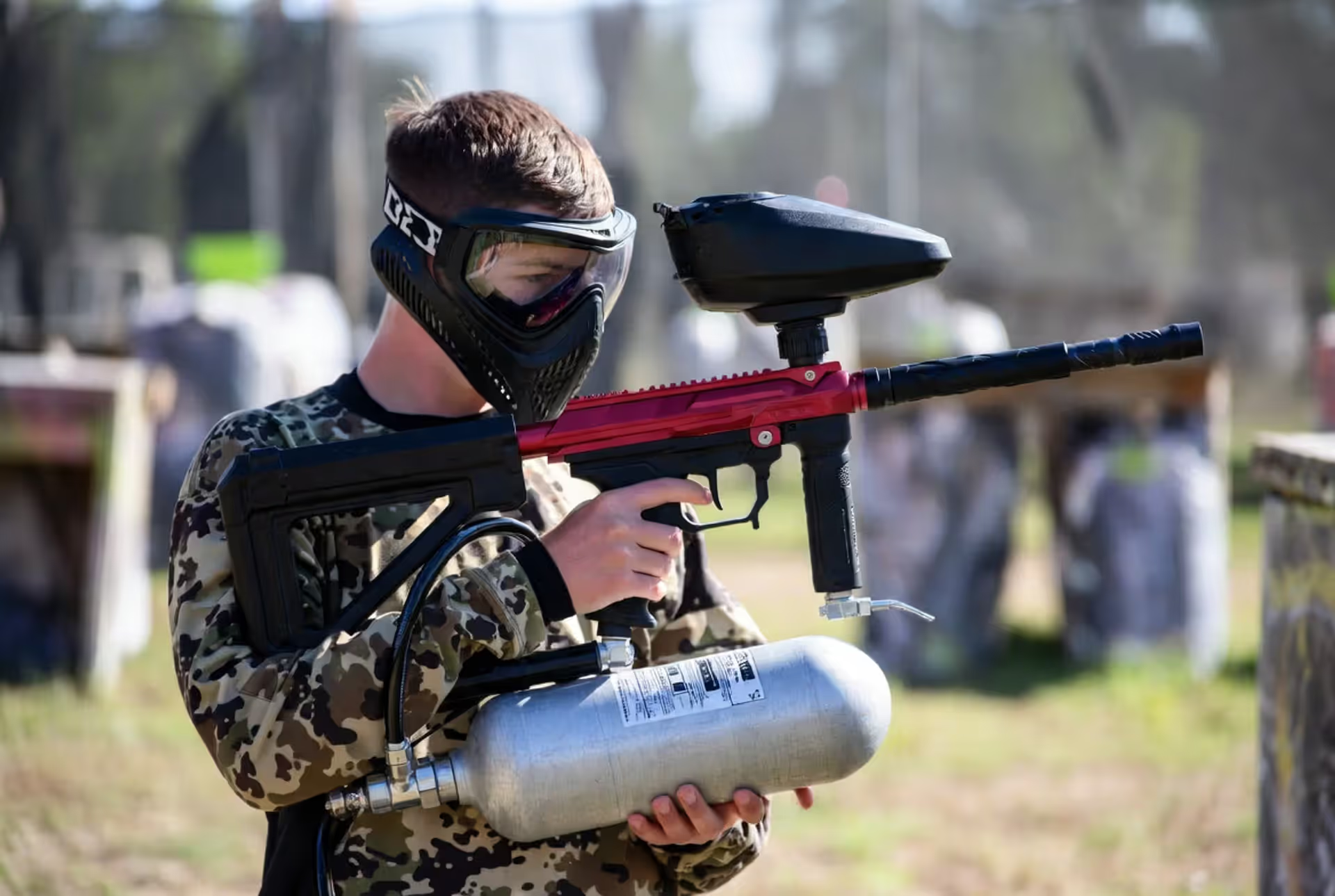
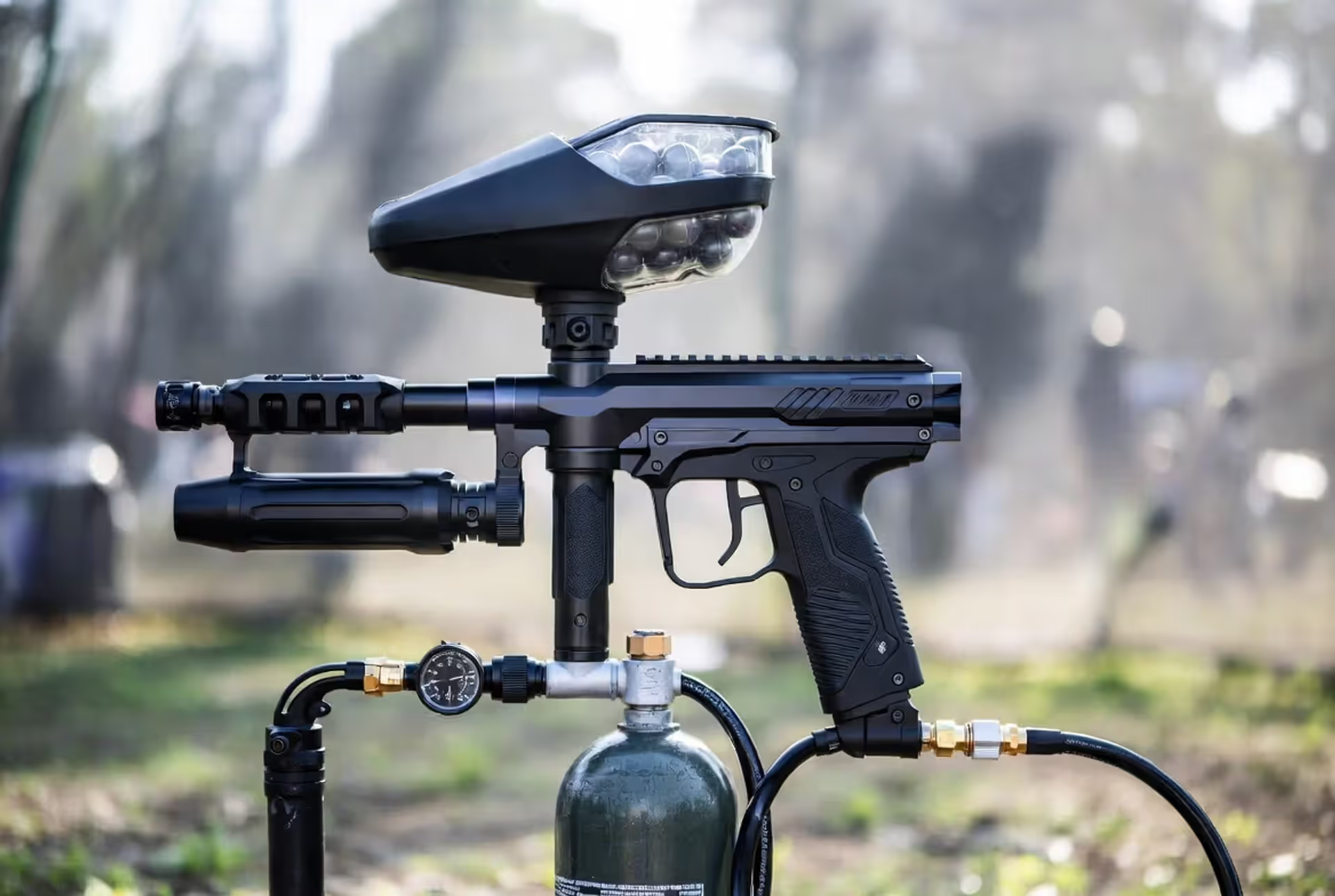
Think of a paintball marker as a precision air cannon designed to launch gelatin capsules filled with washable dye. The term "marker" replaced "gun" in the industry's vocabulary decades ago—partly for better public perception, mostly because these devices mark opponents with paint rather than firing projectiles meant to cause harm.
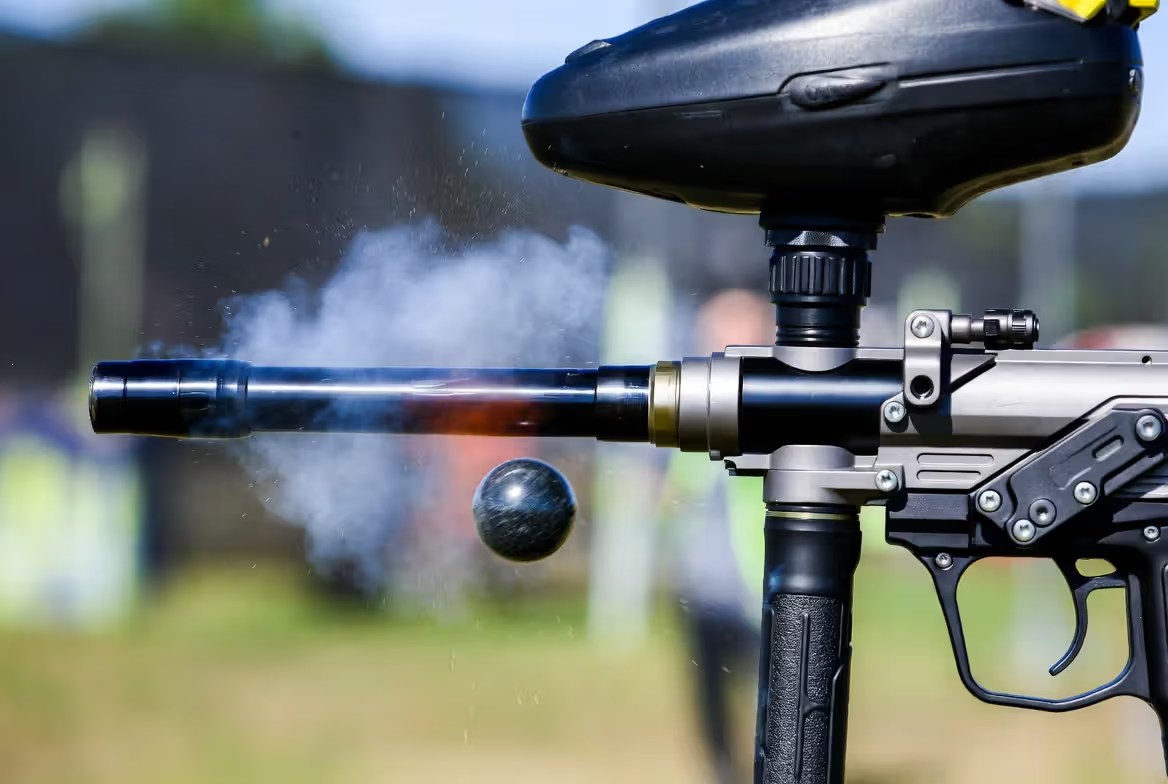
The mechanics center on controlled pneumatic power. Compressed air or CO2 sits in a tank attached to your marker, waiting under pressure. Pull that trigger, and you're activating a valve system that releases a precise burst of gas into the chamber where a paintball has been loaded. That gas expansion happens fast—like uncorking champagne—and the paintball accelerates down the barrel. Fields regulate this velocity to 280 feet per second, measured with chronographs before you play.
Different firing systems handle this process in distinct ways. Pump markers? You're working a handle back and forth manually between each shot, building pressure and loading the next round yourself. It's like operating a bolt-action compared to other styles. Semi-automatic mechanical versions harness your trigger squeeze through a system of springs and metal components—the trigger motion physically moves a hammer that whacks open the gas valve, fires the shot, then springs back into position for your next pull.
Electronic versions replace those mechanical hammers with computer-controlled solenoid valves. Circuit boards interpret your trigger pull as an electrical signal, telling a solenoid to open for precisely timed gas release. You get programmable features, faster cycling, and trigger pulls so light they barely require pressure.
Gas source matters more than most beginners realize. High-pressure air (HPA) systems maintain steady pressure whether it's 40°F or 95°F outside, which means your shots stay consistent. CO2 works—it's cheaper upfront—but temperature swings cause pressure fluctuations. That translates to velocity changes and inconsistent accuracy when you're playing in actual outdoor conditions.
Author: Ethan Rowe;
Source: lakestaytents.com
Types of Paintball Markers Explained
The market splits into several categories that affect everything from how you move on the field to what you'll spend on ammunition.
Mechanical vs. Electric Paintball Markers
Mechanical markers run entirely on physics. Your finger provides the force that moves physical parts—trigger, sear, hammer, spring—in sequence until gas releases and fires the paintball. There's something satisfying about feeling each component engage when you pull that trigger. These markers shrug off dirt, moisture, and temperature extremes. Drop one in mud, rinse it off, and keep shooting.
Maintenance stays straightforward because you're dealing with visible parts. No cryptic error codes or circuit board diagnostics. Tournament divisions for mechanical-only play keep these markers relevant in competitive paintball, while recreational players appreciate the lower purchase price and inexpensive repairs.
The limitation shows up in sustained fire. Even practiced fingers max out around 8-10 paintballs per second, and each pull requires deliberate finger pressure. After a few hours of play, your trigger finger knows it's been working.
Electronic markers flip this equation. A nine-volt battery powers a microprocessor that controls when the solenoid valve opens. Your trigger becomes an electrical switch rather than a mechanical lever, requiring maybe a quarter-ounce of pressure. Shoot 15+ balls per second if you want (and your field allows it).
Here's where terminology gets confused: calling these "automatic paintball guns" oversimplifies things. True fully-automatic fire—hold the trigger and continuously shoot—is banned at practically every field and tournament. Modern electronics offer ramping (the marker assists your pulls once you hit a certain speed) and response modes (fires on both trigger pull and release). These modes keep firing rates controllable while reducing finger fatigue.
The trade-offs? You're maintaining batteries, protecting circuit boards from impacts, and dealing with more sensitivity to paint quality. Brittle paint shatters in the breech when cycling at high speeds, a problem called "chopping" that mechanical markers rarely encounter.
Author: Ethan Rowe;
Source: lakestaytents.com
Mag Fed vs. Hopper Fed Systems
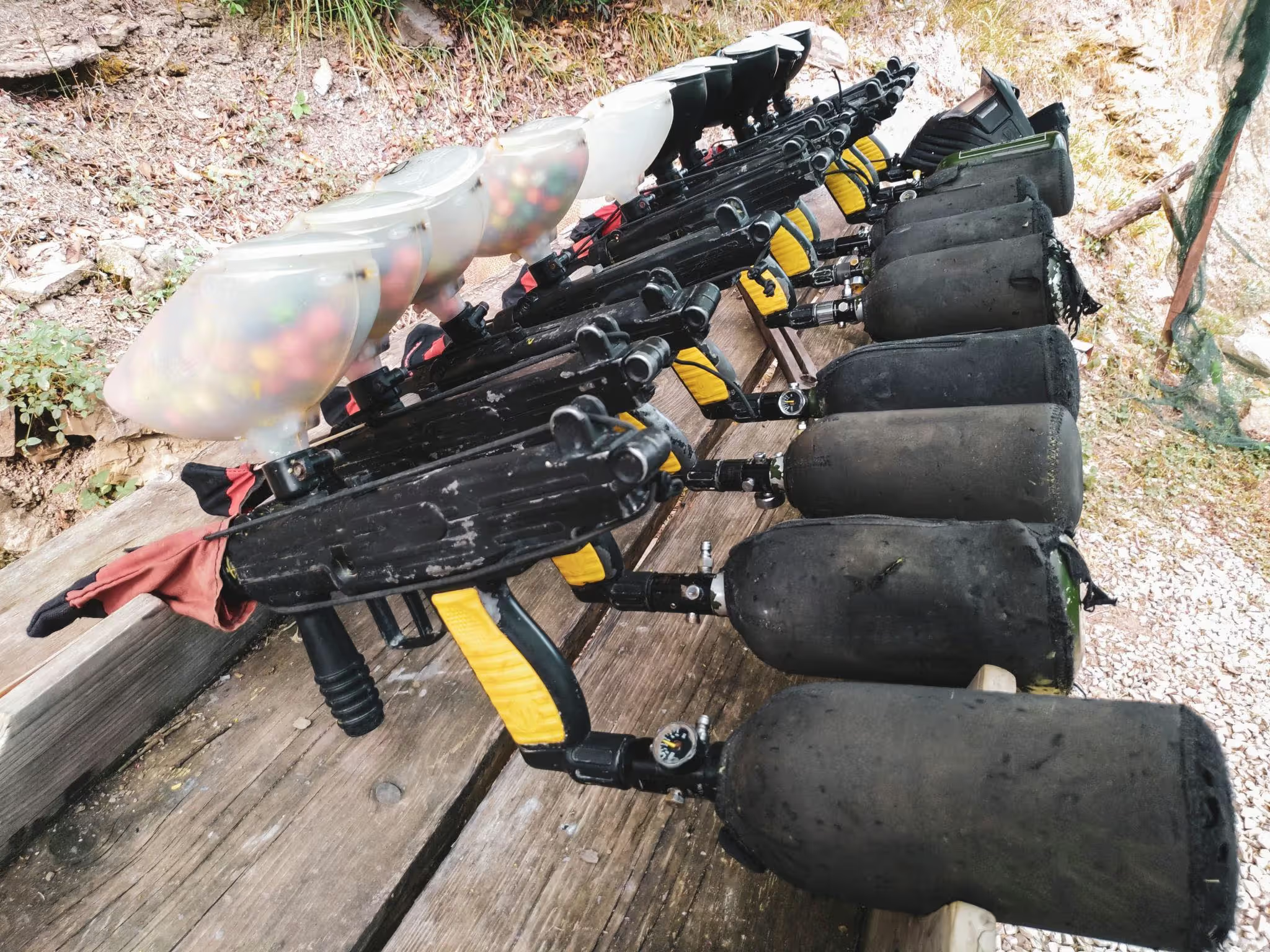
Traditional hopper-fed markers mount a container on top holding 200+ paintballs. Gravity or motorized feeding pushes balls into the breech between shots. You're essentially carrying a reservoir that lets you shoot continuously until you've burned through your entire supply. Reloading means dumping another 140-round pod into your hopper every few minutes during heavy firefights.
Magazine-fed systems changed the gameplay dynamic entirely. These mag fed paintball guns accept spring-loaded magazines carrying 10-20 rounds, just like firearms. You're swapping fresh magazines throughout the game, carrying extras in pouches on your tactical vest.
Why limit yourself to 20 rounds? Mag-fed play emphasizes different skills. You're counting shots mentally, choosing when to engage more carefully, and thinking about ammunition conservation. The format attracts players chasing military simulation realism—scenarios that feel tactical rather than arcade-style.
The hardware benefits show up in projectile options. Mag-fed markers handle first-strike rounds, which are fin-stabilized projectiles that fly significantly straighter and reach out to 150+ feet with usable accuracy. Standard round paintballs tumble and curve after about 80 feet. First-strike compatibility gives mag-fed players reach advantages in woodsball, though those specialty rounds cost 3-4 times more than regular paint.
Hopper-fed remains dominant in speedball tournaments where suppressive fire and paint volume create tactical advantages. Mag-fed shines in scenario events and woodsball where the realistic handling matters more than maximum rate of fire.
Paintball Markers for Beginners
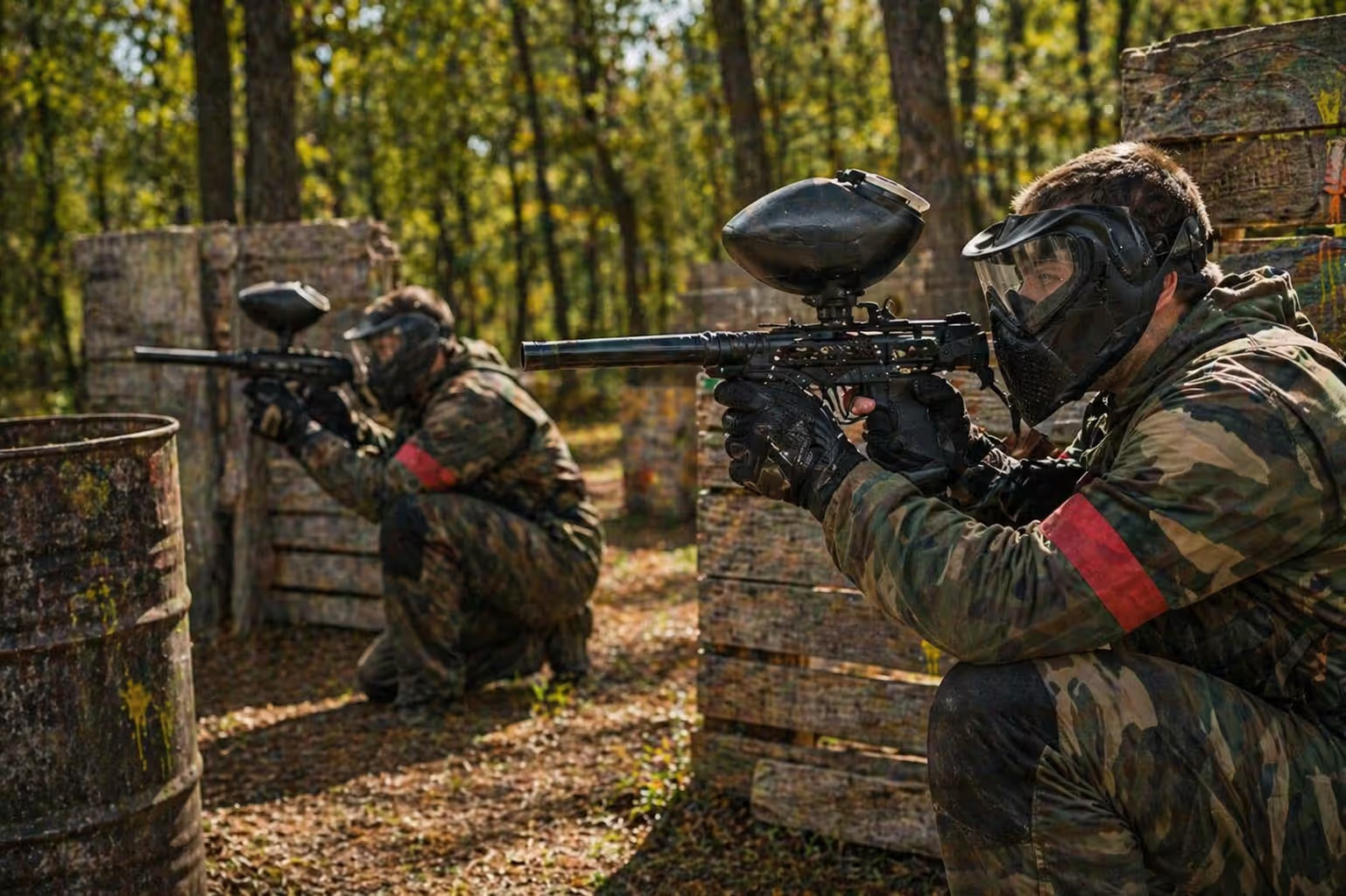
Starting players need gear that won't quit on them while they're still learning to check blind spots and communicate with teammates. The best beginner paintball marker is whichever one you can field-strip, clean, and reassemble without consulting YouTube tutorials every time.
Mechanical semi-automatics in the $150-$300 bracket make sense for your first purchase. You're getting proven reliability without the complexity of keeping batteries charged or understanding firing mode programming. These platforms teach you trigger control, paint-to-target skills, and basic troubleshooting—the fundamentals that carry over to any marker you'll use later.
Look for tool-less breakdown as a priority feature. Markers that separate into barrel, body, and grip frame by hand (maybe with one captured pin) mean you can clear a paint break or wipe down the bolt between games without carrying a toolkit. When you're new and breaks happen more frequently because you're still learning proper handling, this accessibility matters.
Weight distribution affects you more during actual play than in the store. Hold that marker in shooting position for two full minutes before buying. Feels fine? That's one game. You'll carry it for 4-5 hours during a typical day of recreational play. Front-heavy designs cause your arms to shake when aiming after extended periods. Balanced markers—weight centered around your front hand—let you hold steady through afternoon sessions.
Standardized parts keep you from getting locked into proprietary upgrades. Verify the barrel uses Autococker or A5 threading (the two most common standards), the ASA (air source adapter) accepts any standard tank, and replacement parts are available from multiple suppliers. This prevents situations where you need a $45 proprietary part when a $12 standard component would work on a different platform.
Budget holistically: $400-$500 covers your marker, a thermal-lens mask (never compromise here—fogging ruins games), a basic electronic hopper, and a 48/3000 HPA tank. That's a complete beginner setup. Spending $350 on just the marker while using a $15 gravity-feed hopper creates performance bottlenecks.
The best beginner paintball gun comes from established manufacturers with track records. Avoid the newest "revolutionary" designs without user reviews. Stick with platforms that have been refined over multiple production years. These represent proven reliability rather than experimental features.
Author: Ethan Rowe;
Source: lakestaytents.com
Tournament-Grade Paintball Markers
Competitive paintball prioritizes different performance markers than casual weekend play. Shot consistency determines whether your paint stream goes where you're aiming or scatters unpredictably.
High-end tournament paintball guns maintain velocity consistency within 3-5 feet per second between shots. Budget markers fluctuate 15-20 fps, which shows up as vertical stringing when you're shooting lanes. This consistency comes from precision bore machining (tolerances within thousandths of an inch), better valve engineering, and quality control that rejects components recreational markers would accept.
Rate of fire caps at 10.5 balls per second in most tournament rulesets, though specific leagues vary. What separates tournament markers isn't theoretical maximum speed—it's maintaining smooth, consistent cycling at competition rates for sustained periods. Poor bolt design causes shoot-down, where your rate of fire decreases the longer you hold the trigger. You start at 10 bps, drop to 7, then 5 as gas routing inefficiency compounds. Quality markers maintain their cycling rate.
Electronic operation dominates tournament fields because microprocessors deliver consistent timing regardless of how you abuse the trigger. Mash it, feather it, or pull at irregular intervals—the electronics smooth out your input into consistent firing cycles. Mechanicals require disciplined trigger technique to maintain performance.
Air efficiency directly impacts your tournament viability. You need 10-15 pods (140-round capacity) from a standard 68 cubic inch, 4500 psi tank. Calculate it: that's 1,400-2,100 shots per fill. Poor efficiency means you're running to fill stations between points, risking shortages during back-to-back matches, and spending extra on larger tanks to compensate.
Ergonomics become critical when you're shooting thousands of rounds during practice days. Fore-grip positioning, trigger reach adjustment, and overall balance affect how steady you can hold your shooting platform during rapid strings. Tournament markers feature tool-less adjustment—loosen one lever and slide the grip frame forward or back until it fits your hand geometry.
Expect to spend $800-$1,500 for new tournament-grade markers. That price buys refined engineering from manufacturers who sponsor pro teams and iterate designs based on competitive feedback. Used market gems exist—a well-maintained three-year-old flagship from Planet Eclipse or Dye outperforms new $400 markers because the core technology hasn't fundamentally changed.
Key Features to Consider Before Buying
Specific features determine whether a marker frustrates you or feels like an extension of your playing style.
Firing mode options range from basic semi-auto to ramping and burst configurations. Beginners only need semi—one trigger pull, one paintball. Intermediate players benefit from ramping modes once you're playing competitively; these assist your trigger pulls once you reach 5-6 pulls per second, making it easier to maintain suppressive fire without developing hand cramps. Full-auto modes exist on some markers but find yourself banned from most fields.
Barrel performance involves quality, bore matching, and length optimization rather than just buying the longest available. Fourteen to sixteen inches works optimally for most situations—longer barrels don't increase velocity (that's regulated by your tank pressure), they just add front-end weight. Barrel bore should match your paint. Paintballs measuring .685 inches need a .685-.687 bore. Oversized paint in undersized barrels breaks messily; undersized paint rattles and flies erratically.
Air efficiency varies based on valve engineering and operating pressure. Spool-valve markers (smoother, quieter operation) consume more gas per shot than poppet-valve designs (efficient but slightly louder). If you're playing scenario games with limited fill opportunities, efficiency matters significantly. Speedball with fills between every match? Less critical, though better efficiency means lighter, smaller tanks.
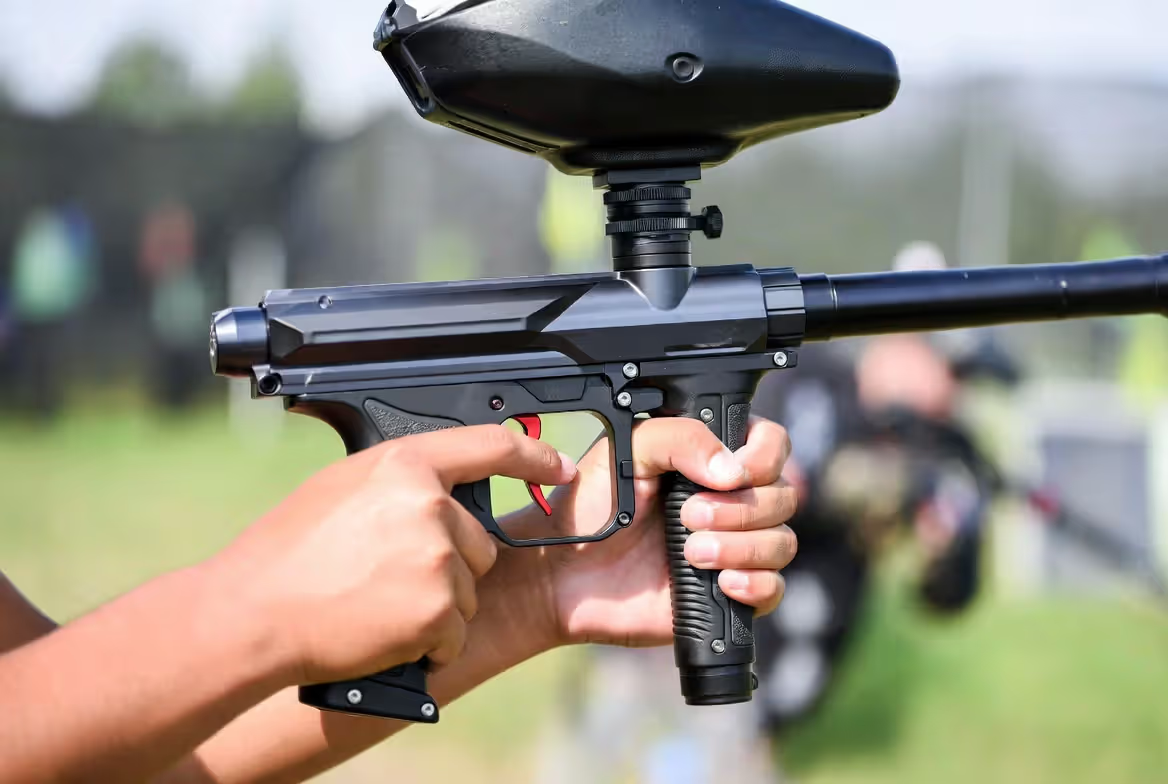
Weight and balance affect your shooting endurance more than specifications suggest. Shoulder the marker and sweep it left-right rapidly, like tracking a running opponent. Does the weight feel stable or does momentum pull you off target? Hold it in shooting position while counting to sixty. Hands getting tired? Imagine multiplying that by hours of gameplay.
Upgrade potential extends how long a marker stays relevant in your gear bag. Some platforms—Autococker-based designs, Tippmann A5s, Planet Eclipse Ego/Geo lines—have enormous aftermarket support. Barrels, bolts, circuit boards, grips, and even body kits let you transform performance. Others are essentially sealed systems where your upgrade path hits dead ends quickly.
Maintenance intervals vary dramatically between designs. Some markers need lubrication and o-ring inspection every 5-6 cases of paint. Others run 20+ cases between service. Check manufacturer specs and user forums for real-world maintenance experiences before committing to a high-maintenance platform you'll resent servicing.
Author: Ethan Rowe;
Source: lakestaytents.com
Common Paintball Marker Mistakes to Avoid
Even players with years of experience make purchasing decisions they regret within months.
Overspending as a beginner happens constantly. You see a $1,200 tournament marker and think it'll make you shoot better immediately. It won't. Fundamentals matter infinitely more than equipment in your first year. That money serves you better split between a solid $250 mechanical marker, a premium thermal mask, comfortable pod pack, and cases of paint for practice. More paint through a basic marker teaches you more than less paint through a flagship.
Ignoring maintenance requirements leads to performance degradation and catastrophic failures. Every marker—even "maintenance-free" models—requires regular cleaning, proper lubrication, and o-ring replacement. If you're not willing to spend 20 minutes after each playing day maintaining equipment, choose the most maintenance-friendly option available rather than the coolest-looking model that needs constant attention.
Mismatching marker type to play style creates immediate frustration. Buying an electronic speedball marker when you're exclusively playing woodsball means hauling unnecessary weight and protecting fragile electronics in rough terrain for features you never use. Conversely, bringing a pump marker to your first speedball tournament against players shooting 10 balls per second puts you at a ridiculous disadvantage unless you're deliberately seeking that challenge.
Compatibility assumptions bite you when accessories don't fit. Barrel threading comes in different standards—Autococker, Spyder, A5, Shocker, Ion. Not all hoppers fit all feed necks. Some markers require specific tank sizes to balance properly. Verify thread patterns, feed neck compatibility, and tank positioning before buying accessories or you'll accumulate incompatible parts.
Mask neglect in favor of marker upgrades represents backwards priority. Your mask affects literally every shot you take—fogged lenses mean missed targets regardless of your marker's capabilities. Tunnel vision, poor peripheral awareness, and constant fogging from inadequate ventilation sabotage your performance. Spend at least as much on your mask as your marker. Preferably more.
Aesthetic purchasing leaves you with gorgeous equipment that underperforms. Custom anodizing, milling patterns, and limited-edition colorways look fantastic in photos. They don't improve accuracy, consistency, or reliability. Prioritize function absolutely first, then find functional markers in finishes you like. Don't sacrifice performance for appearance.
The biggest mistake I see new players make is buying the marker their favorite pro uses without understanding why that pro chose it. Tournament players need specific features for speedball that are irrelevant or even disadvantageous in recreational play. Start with reliability and simplicity, master the fundamentals, then upgrade based on your actual playing style rather than marketing hype.
— Jake Morrison, Head Instructor
Comparison of Paintball Marker Types
| Marker Type | Best For | Price Range | Skill Level | Maintenance Level | Rate of Fire |
| Mechanical Pump | Woodsball, recreational outings, improving fundamental skills | $150-$400 | Beginners through advanced | Minimal | 1-2 bps |
| Mechanical Semi-Auto | New players, casual weekend games, mechanical tournaments | $150-$500 | Beginners to intermediate | Low to moderate | 8-10 bps |
| Electronic | Tournament competition, serious recreational players | $300-$1,500 | Intermediate to advanced | Moderate | 10-15+ bps |
| Mag Fed | Military simulation, woodsball scenarios, tactical events | $200-$600 | Any skill level | Moderate | Depends on design |
Frequently Asked Questions
Selecting the right paintball marker requires honest assessment of how you'll actually spend time on the field. Playing monthly recreational games with friends? That reliable mechanical marker serves you infinitely better than an expensive electronic model that mostly collects dust between outings. Committed to tournament competition? Investing in proven electronic platforms pays off through improved performance and competitive confidence.
Start by identifying your primary format—speedball, woodsball, scenario, or milsim. This single decision narrows whether you need hopper-fed or mag-fed, electronic or mechanical. Set a realistic complete budget covering all necessary gear, not just the marker alone. Prioritize reliability and how equipment fits your hands over feature lists you might never explore.
Test markers whenever opportunities arise. Many fields rent mid-grade equipment that lets you experience different platforms before spending your own money. Talk with experienced players at your local field about what performs well in your specific conditions—humidity, temperature, and typical game formats all influence ideal marker characteristics.
The best paintball marker is ultimately the one you'll use consistently. A $300 marker that fits your hands naturally, operates without constant troubleshooting, and matches your playing format will outperform a $1,200 flagship that stays home because it doesn't match your actual needs. Make an informed decision based on realistic self-assessment, maintain whatever you buy properly, and you'll spend weekends playing instead of troubleshooting.