Choosing the right paintball tank
How to Choose the Right Paintball Tank?

Content
Your paintball tank determines whether you'll nail that elimination shot or watch your velocity drop at the worst possible moment. I've seen tournament players lose entire matches because they grabbed the wrong tank that morning.
Here's what actually matters: shot-to-shot consistency, how many balls you can fire before refilling, and whether the tank feels like lugging around a boat anchor. The difference between CO2 and HPA isn't just technical—it's the gap between adjusting your velocity every hour versus forgetting your tank exists. Getting the size wrong means either excessive weight or embarrassing mid-game refill walks.
What Is a Paintball Tank and How Does It Work
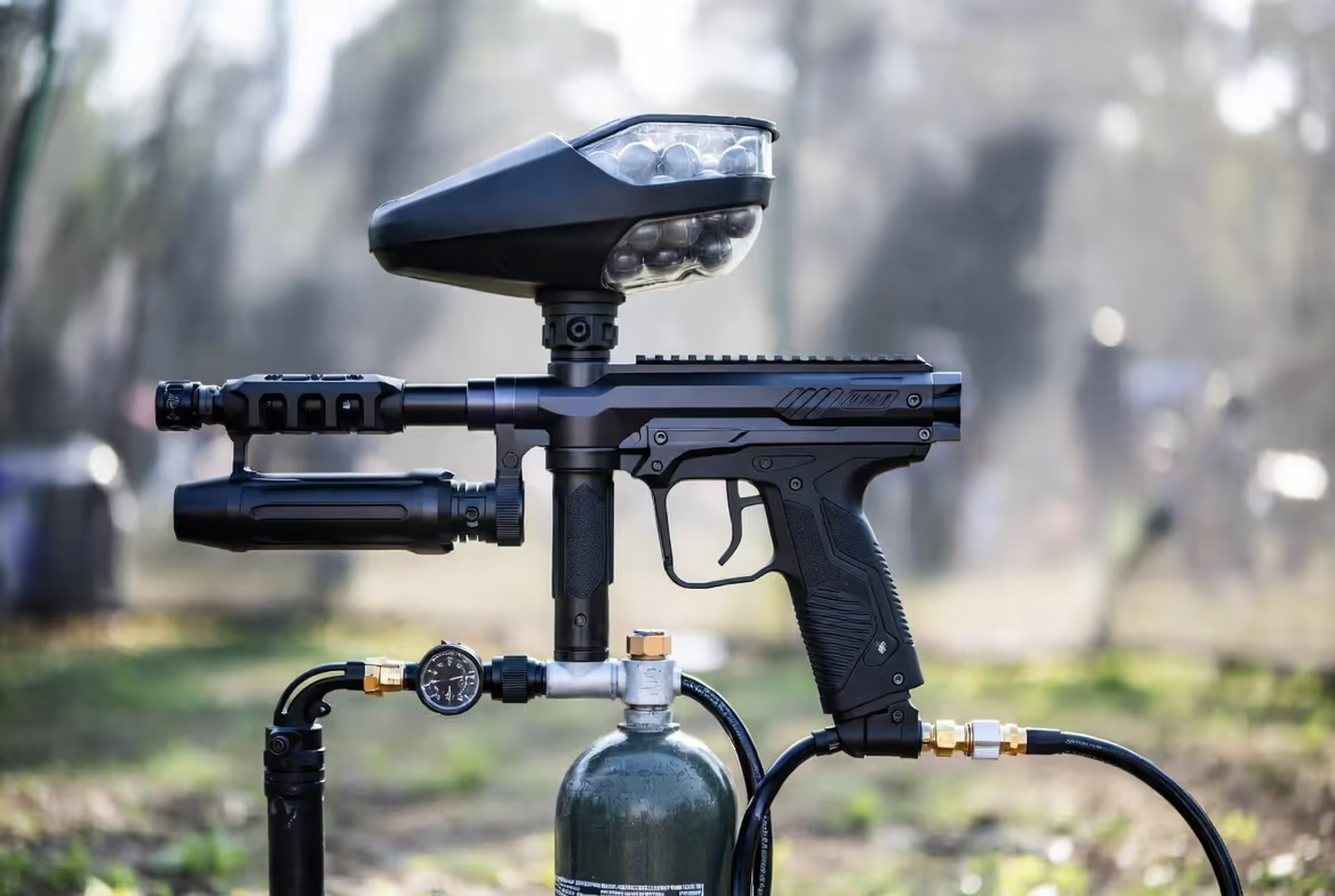
Think of your paintball gas tank as a miniature air compressor strapped to your marker. Pull the trigger, and compressed gas rushes out, shoving the paintball down your barrel at 280 feet per second. The whole cycle—from trigger pull to paintball exit—takes maybe 10 milliseconds.
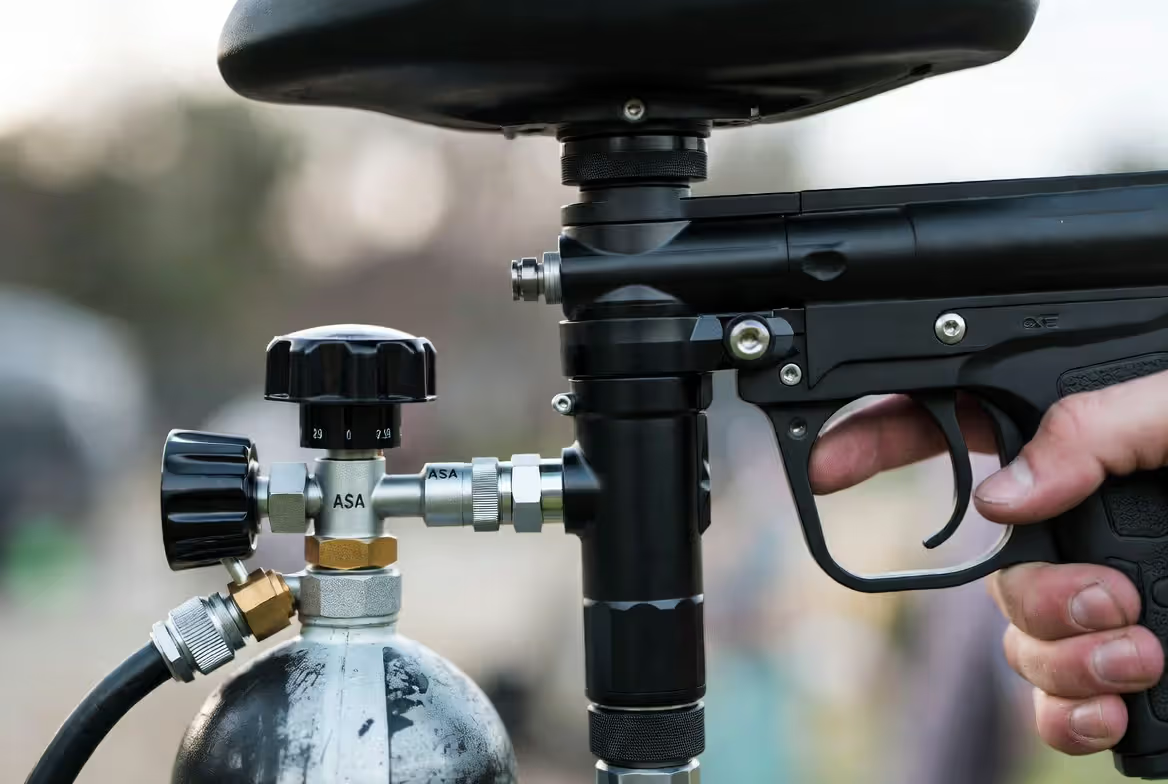
Your marker connects to the tank through an ASA (Air Source Adapter), which is just a threaded mount with an on/off valve. Every modern tank packs a built-in regulator because raw tank pressure runs between 3,000 and 4,500 PSI—way too much for your marker's internals. That regulator drops pressure to around 800-850 PSI, which is what most electronic markers want to see.
Skip the regulator and you're looking at blown O-rings, cracked solenoids, and paintballs screaming out at 400+ FPS. Fields will ban you after the first chronograph check.
You've got two real options for paintball air tanks: CO2 sitting in there as liquid, or HPA storing straight compressed air. CO2 changes from liquid to gas when you shoot. HPA stays gas the entire time. That fundamental difference ripples through everything—temperature response, consistency, maintenance schedules.
Author: Ethan Rowe;
Source: lakestaytents.com
CO2 vs HPA Paintball Tanks
How CO2 Tanks Work
Inside your co2 paintball tank, you've got liquid carbon dioxide under 800-900 PSI at normal temps. Fire your marker and some liquid instantly vaporizes into gas, creating the pressure burst that cycles your bolt. Here's the catch—vaporization speed depends entirely on temperature. Hot summer day? Pressure spikes. November morning? Good luck getting consistent shots after your first pod.
Basic paintball co2 tanks are dead simple: metal bottle, pin valve, done. Fancier versions include anti-siphon tubes—little pipes that prevent liquid CO2 from getting sucked into your marker. Why does that matter? Liquid CO2 hitting your valve freezes everything instantly. You'll see white frost on your marker and feel O-rings turning brittle.
How HPA Tanks Work
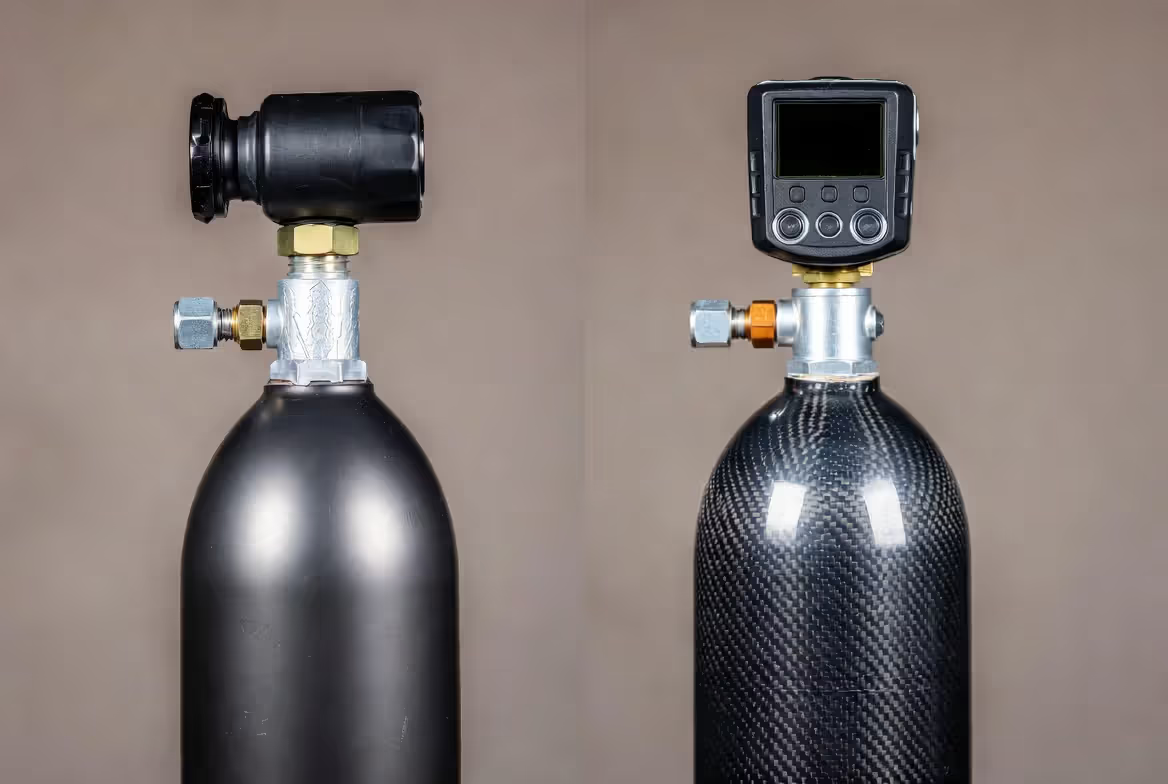
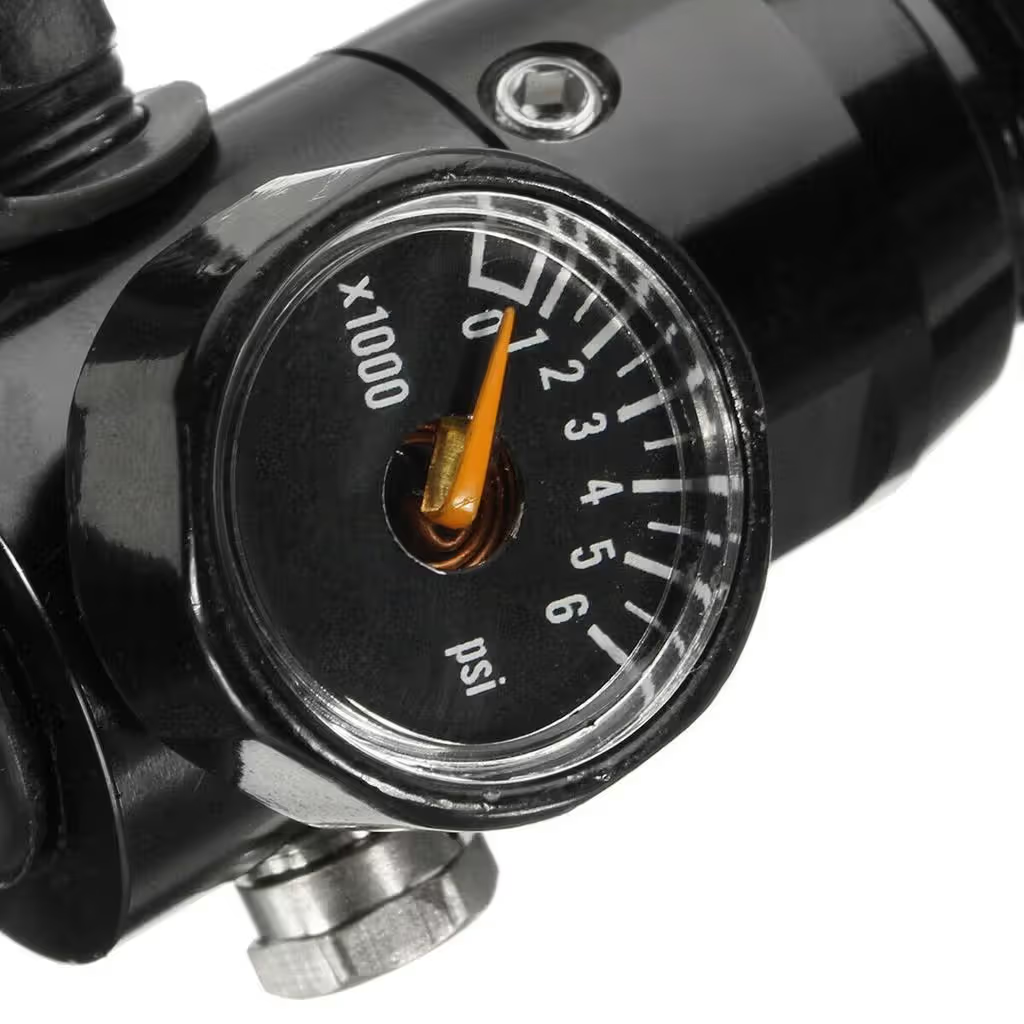
An hpa paintball tank compresses ambient air (or pure nitrogen—same difference for our purposes) up to 3,000 or 4,500 PSI. No liquid, no phase changes, just highly compressed gas. Every HPA tank includes its own regulator built into the valve assembly. You'll see an output gauge showing remaining pressure, usually an adjustable knob (preset at factory), and a fill nipple.
The regulator does the heavy lifting. Whether your tank reads 4,500 PSI or 1,500 PSI, output stays locked at 800 PSI. The gas doesn't care about temperature because it's not converting states—it's just expanding through the regulator.
Construction uses either aluminum bottles or carbon fiber wraps over aluminum liners. The valve assembly threads into the bottle, regulator sits inline, and a burst disk provides safety relief if internal pressure somehow exceeds safe limits.
Author: Ethan Rowe;
Source: lakestaytents.com
Performance Differences
Want consistency? The nitrogen paintball tank wins every time. I've chronographed markers with CO2 that shot 275 FPS at 9am and 315 FPS by 2pm on the same fill. Meanwhile, HPA holds within 5-10 FPS variation across 1,000+ shots. You'll adjust velocity once and forget about it.
Shot count tells another story. HPA squeezes 10-15% more shots from equivalent capacity because there's no energy waste on phase transition. A 68ci HPA tank filled to 4,500 PSI typically delivers 1,000-1,200 shots depending on your marker's efficiency. A 20oz CO2 tank—roughly similar physical size—tops out around 800-900 shots before it's done.
| Feature | CO2 Tanks | HPA Tanks |
| Pressure Range | 800-900 PSI (stored as liquid) | 3,000-4,500 PSI (compressed gas) |
| Velocity Consistency | Temperature dependent, varies ±40 FPS | Stable within ±10 FPS |
| Cold Weather Performance | Struggles below 60°F | Unaffected by temperature |
| Entry Price | $20-$50 | $50-$250+ |
| Ongoing Maintenance | Replace if damaged, no testing | Hydro testing every 3-5 years |
| Average Shots | 800-900 (20oz) | 1,000-1,200 (68ci) |
| Weight Factor | 2-3 lbs loaded | 2-4 lbs (carbon fiber lighter) |
| Best Use Cases | Indoor fields, casual play | Tournament play, all conditions |
Understanding Paintball Tank Sizes and Capacity
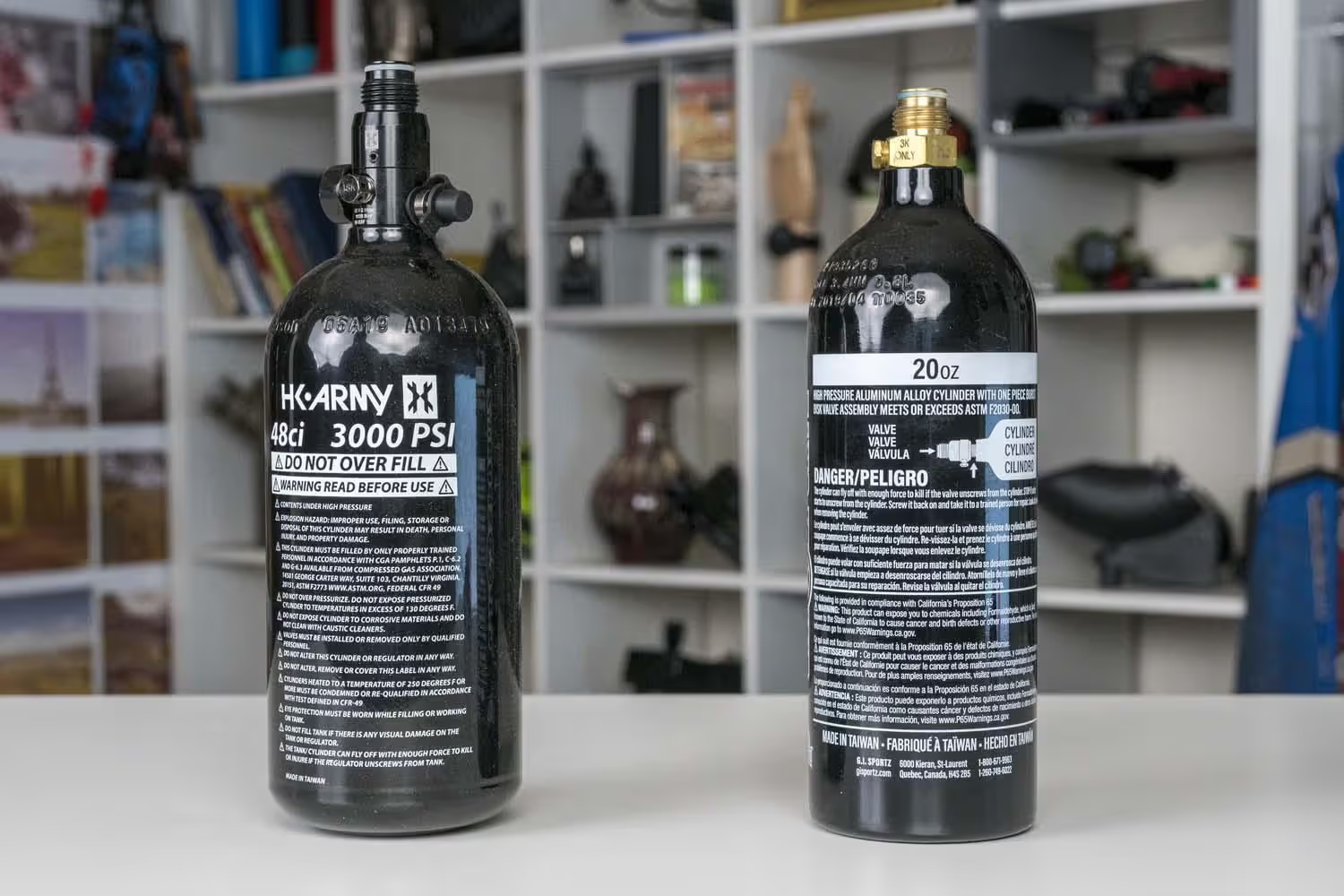
Paintball tank sizes use cubic inches (ci) for HPA, ounces for CO2. A 68ci tank contains 68 cubic inches of internal volume for holding compressed air. A 20oz CO2 tank holds 20 ounces of liquid CO2. Don't try comparing these numbers directly—they measure completely different things.
Shot counts vary wildly based on four factors: tank size, fill pressure, marker efficiency, and how trigger-happy you are. Efficient tournament markers might deliver 18-20 shots per cubic inch. Old blowback markers? Maybe 10-12 shots per cubic inch. Multiply your tank size by your marker's efficiency and you'll get a ballpark estimate.
Here's a 48ci tank filled to 4,500 PSI: expect 500-700 shots with most markers. Fine for recreational play, but tournament players burn through that in one aggressive point. Speedball demands 68ci minimum because you're laying lanes and snapping corners constantly. Woodsball players who take deliberate shots can rock a 48-50ci tank all day without refilling.
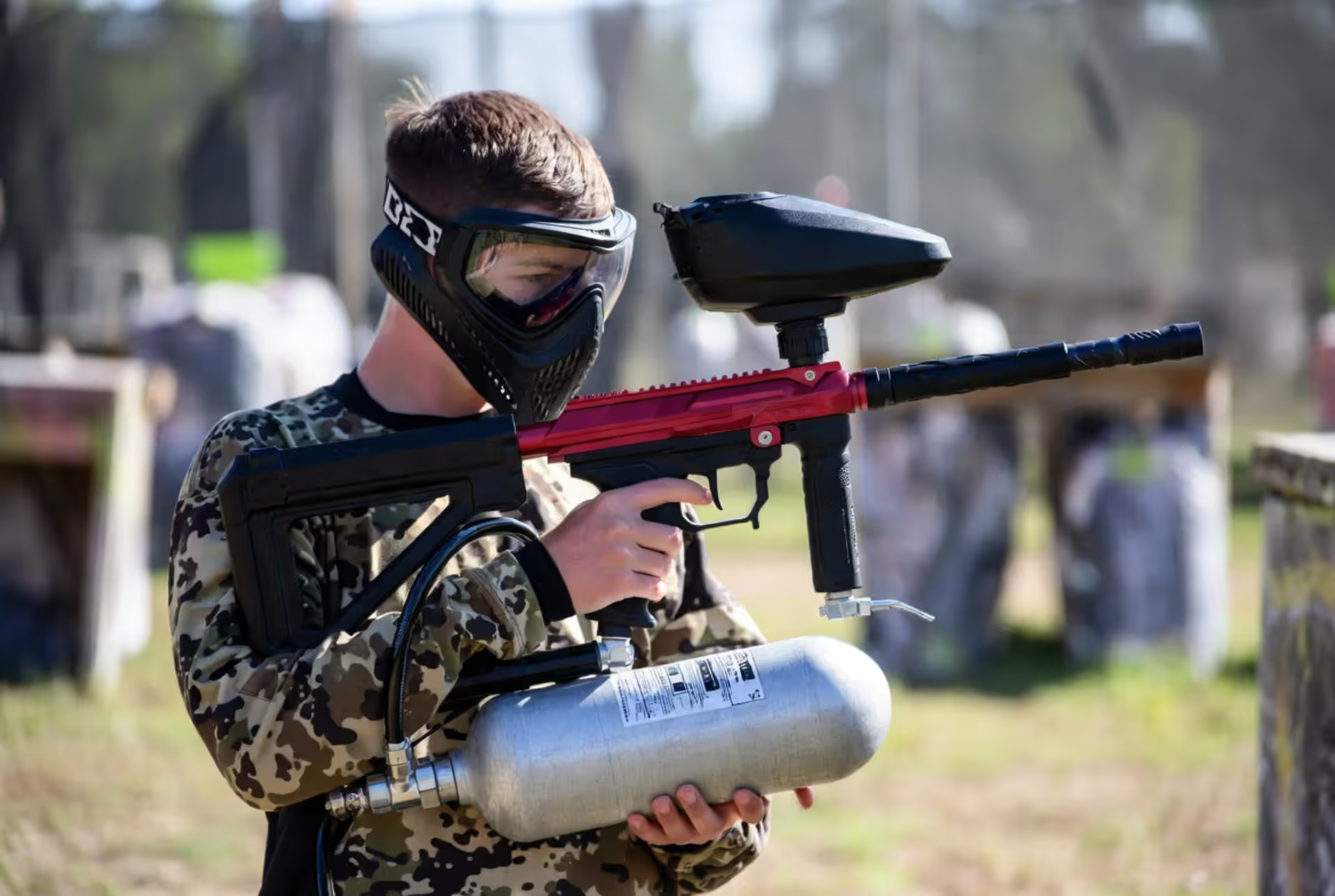
Physical dimensions matter more than most players realize. That 90ci tank extends 6-8 inches behind your ASA. Try diving into a tight dorito bunker with that setup—you'll smack the tank on everything. Shorter players (under 5'6") usually find 68ci tanks hit their comfort sweet spot.
Capacity Breakdown by Size:
- 48-50ci: Gets you 500-700 shots, weighs around 2 pounds filled, perfect for renters and monthly casual players
- 68ci: Delivers 900-1,200 shots, industry standard size, balances capacity with manageable bulk for competitive play
- 77ci: Provides 1,100-1,400 shots, adds 2-3 inches length over 68ci, popular with back players who stay stationary
- 90ci: Maxes out at 1,300-1,600 shots, heavy and long, scenario players and those who hate refill walks
Author: Ethan Rowe;
Source: lakestaytents.com
Carbon Fiber vs Aluminum Paintball Tanks
Weight separates these materials immediately. An aluminum paintball air tank holding 68ci at 4,500 PSI tips the scale around 3.5-4 pounds. Same capacity in a carbon fiber paintball tank? You're looking at 2-2.5 pounds. Shave off 1.5 pounds and your shoulder thanks you after an eight-hour scenario game.
Carbon fiber construction wraps high-strength fibers around an aluminum or composite liner, creating a pressure vessel that handles 4,500 PSI without the weight penalty. You'll pay $150-$300 depending on manufacturer and size. Aluminum tanks run $50-$120 but max out at 3,000 PSI for most models. That pressure difference costs you roughly 30% of your shot capacity.
Durability swings back toward aluminum. Drop a carbon fiber tank on concrete and you might crack the wrap. Bang it repeatedly against bunkers and you're shortening its lifespan. Aluminum tolerates casual abuse—though deep dents still mean pulling it from service. I've seen rental aluminum tanks survive treatment that would retire carbon fiber versions twice over.
Here's the decision matrix: Playing tournaments every weekend? Carbon fiber's weight savings become crucial during rapid position changes. Playing monthly rec ball? Aluminum delivers better value and survives accidental drops without drama.
The biggest mistake I see is players buying undersized tanks to save weight, then running out of air mid-game and missing critical eliminations. A properly sized HPA tank matched to your marker's efficiency and your playing style is the foundation of consistent performance. Don't cheap out on your air supply—it affects literally every shot you take.
— Marcus Chen, Professional Paintball Player and Equipment Specialist
Common Mistakes When Buying a Paintball Air Tank
Grabbing a tank without checking your marker's pressure requirements creates instant headaches. Some entry-level markers need low-pressure input around 450-550 PSI. Standard HPA regulators pump out 800 PSI. Connect the wrong tank and you're either spiking velocity dangerously high or damaging your marker's internals. Check your manual before buying.
Used paintball tanks seem like bargains until you check hydro dates. HPA tanks need hydrostatic testing every 3-5 years depending on DOT classification. Find a tank listed for $80 that expires in four months? Add $30-40 for hydro testing and suddenly it's not such a deal. The born date gets stamped on the shoulder—look for month/year format and calculate testing deadlines before purchasing.
Overspending on premium features wastes money for casual players. Beginners don't need $250 carbon fiber tanks with adjustable regulators and custom anno jobs. A basic $100 aluminum 68ci tank shoots paintballs identically. Save the fancy gear for when you're playing competitively and the weight difference actually matters.
Choosing based on looks instead of actual needs frustrates players constantly. That compact 48ci tank looks slick on your marker, but speedball players will refill after every other point. Meanwhile, strapping a 90ci tank on a pump marker for woodsball adds pointless weight when you're shooting 150 balls per session.
Paintball Tank Safety and Maintenance
Author: Ethan Rowe;
Source: lakestaytents.com
Federal DOT regulations require hydrostatic testing on aluminum HPA tanks every three years, carbon fiber every five years. The test involves filling your tank with water, pressurizing it beyond normal operating limits, and measuring how much the tank expands. Excessive expansion means failure—and failed tanks get destroyed on the spot. Testing runs $30-50 at paintball shops or dive shops.
Find your tank's born date stamped on the shoulder near the valve. Look for formats like "06/22" indicating June 2022 manufacture. Add three years for aluminum, five for carbon fiber, and mark your calendar. Fields refuse to fill expired tanks, and using one violates federal transportation regulations.
Storage location affects how long your tank lasts. Keep paintball tanks somewhere climate-controlled, away from direct sunlight and heat sources. Leaving tanks in hot cars all summer increases internal pressure and accelerates O-ring degradation. Store tanks partially filled or empty for long periods—constant maximum pressure wears seals faster.
Fill station safety prevents serious injuries. Always inspect the tank O-ring before connecting to a fill station. Worn O-rings can blow out during filling, turning your tank into a missile. Fill slowly, maybe 30-45 seconds for a full fill. Rapid filling generates significant heat from gas compression, potentially weakening tank materials over years of abuse.
Maximum lifespan hits 15 years for most HPA tanks, stamped as an expiration date right on the bottle. After that date, no amount of hydro testing extends service—retire the tank regardless of condition. Plan replacement costs as tanks approach this deadline.
Frequently Asked Questions
Your tank choice ripples through every aspect of field performance—velocity consistency, refill frequency, mobility during games. HPA systems outperform CO2 across nearly all conditions, delivering stable output regardless of temperature and more shots per fill. Most players moving past rental equipment should jump straight to HPA.
Tank sizing should reflect actual playing style, not guesswork. Speedball demands 68ci minimum for sustained lane shooting. Woodsball and pump players often manage perfectly well with 48-50ci tanks that reduce carried weight. Don't undersize to save a few ounces—running dry during critical moments costs games.
Carbon fiber tanks cut weight substantially but require careful handling and larger initial investment. Aluminum provides durability and value for recreational players who prioritize function over features. Always verify hydro testing dates on used tanks, and remember that all HPA tanks expire after 15 years regardless of testing results.
Start with a quality 68ci HPA tank from established manufacturers. This provides enough capacity for most playing situations while remaining manageable in size and weight. Adjust to different sizes after you've actually played enough to understand your specific needs rather than speculating from forum posts.