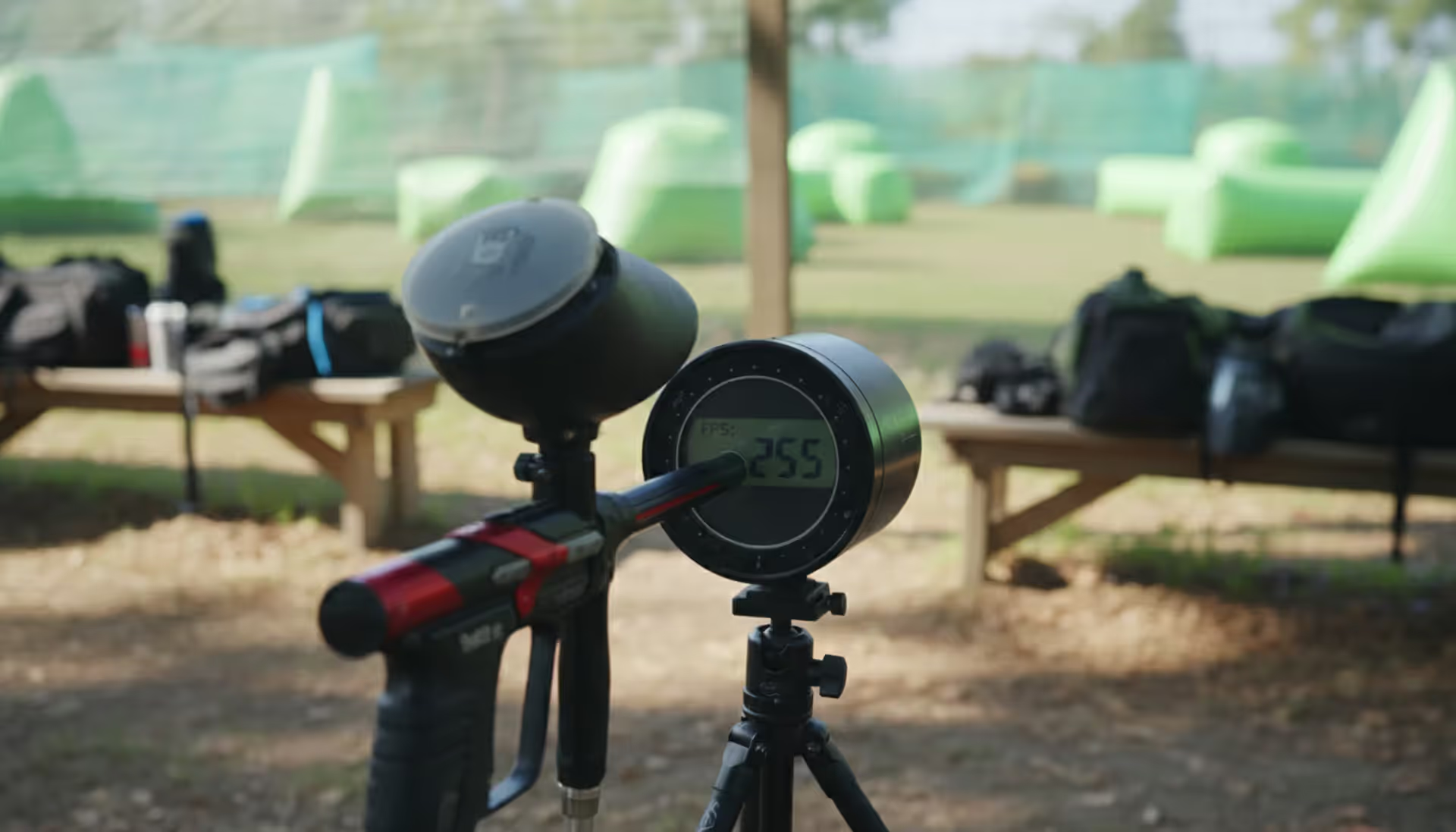
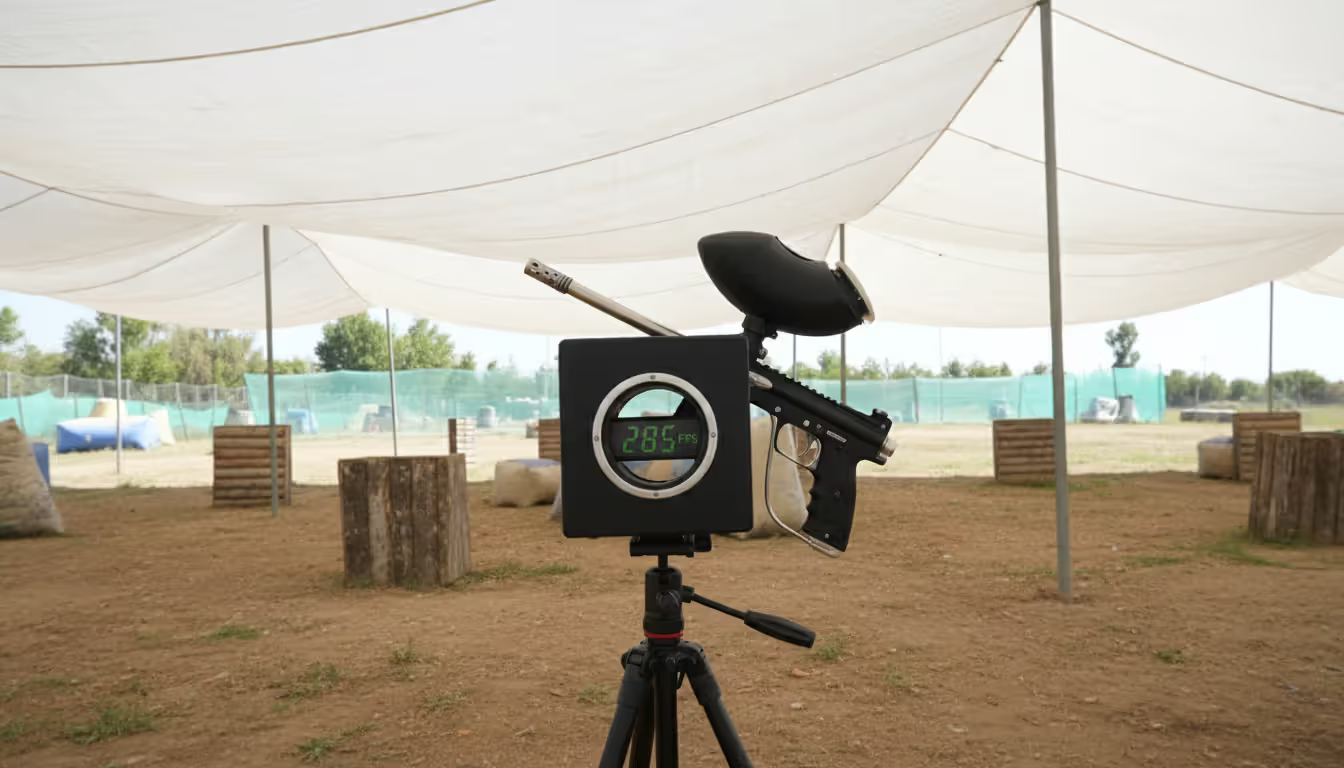
Paintball chronograph mounted on tripod at outdoor staging area with marker aimed at sensor and inflatable bunkers in background
What Is a Paintball Chronograph?

Content
Ever had a ref pull you aside before a game to shoot through a weird box with sensors? That's a paintball chronograph, and it's checking whether your marker's firing velocity stays within safe limits. The device measures how fast paintballs leave your barrel—expressed in feet per second (FPS)—using either optical sensors or radar technology.
Here's how optical models work: two infrared beams sit a precise distance apart inside the chronograph. When your paintball breaks the first beam, then the second, the device calculates speed based on travel time between the two points. Radar versions bounce radio waves off the moving paintball, similar to how cops clock speeders on highways.
You'll see readings pop up on a digital display—usually individual shot speeds plus a running average. Fields typically mount their chronographs on tripods near staging areas, though you can buy compact versions that slip into a gear bag pocket. And yeah, you actually need to use these things. Not because some rule says so, but because nobody wants to explain to their mom why they came home with a welted face or worse.
Why Paintball Speed Matters for Safety and Gameplay
Let's cut through the safety lecture stuff. Paintballs hurt at 280 FPS—that's by design. They're supposed to sting enough that you know you got hit. But crank that velocity past 300 FPS? Now you're looking at broken skin, serious bruising, and eye injuries that can cause permanent damage.
Most recreational fields cap velocity at 280 FPS. Some push it to 300 FPS if their insurance allows and they're feeling generous. Tournament organizers usually stick with 280 FPS for divisional play, though a few pro leagues permit 285 FPS when specific paint grades are used. These numbers didn't appear out of thin air—they're drawn from decades of injury data and what insurance companies will actually cover.
Fields running "hot" markers don't just risk player safety. They risk their entire operation. One serious injury from an over-velocity marker, and their liability coverage evaporates faster than CO2 on a winter day. That's why chronograph stations aren't optional at legit facilities.
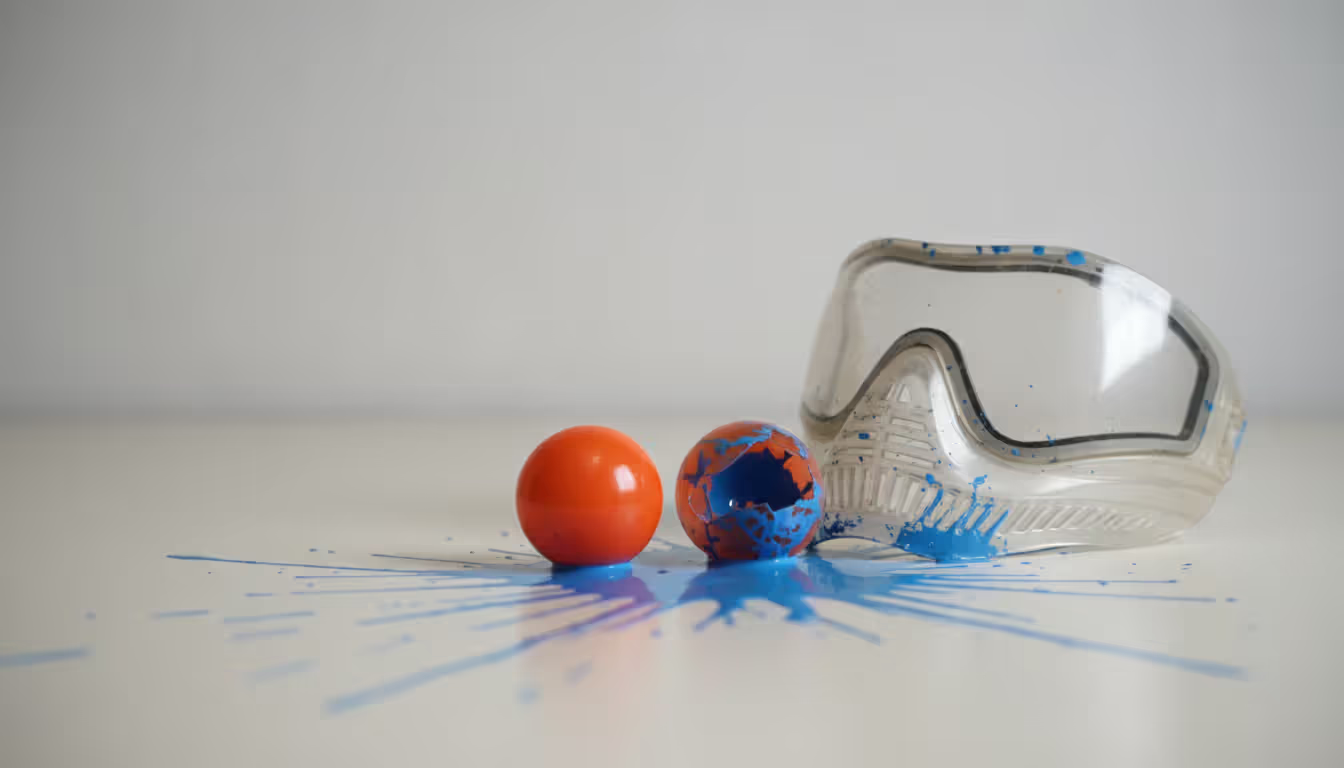
Beyond the safety angle, velocity affects how your marker performs. Shoot too fast and paint breaks inside your barrel, gunking up subsequent shots. Too slow—say below 250 FPS—and you'll get bounces. That's when a paintball smacks someone but doesn't break, leading to arguments nobody wants to have.
Author: Caleb Varden;
Source: lakestaytents.com
Weather messes with velocity more than most players realize. Cold days can drop your FPS by 20-30 points as CO2 pressure tanks. Hot summer afternoons might push you 15-20 FPS higher than your garage tests showed. This is why chronographing at the actual field isn't some bureaucratic hassle—it's the only way to know what your marker's really doing.
How a Chrono Paintball Device Measures Velocity
Modern chronograph paintball devices rely on two main approaches: optical sensors and radar detection. The optical versions position two infrared beams exactly one or two inches apart. Your paintball interrupts the first beam, then the second. The chronograph times the gap between those interruptions and calculates velocity. When properly calibrated and positioned, these units nail accuracy within ±2 FPS.
Radar chronographs work like miniature police speed guns. They bounce radio waves off your moving paintball and measure the Doppler shift to determine speed. These cost more—sometimes twice as much as optical models—but you don't need perfect alignment. Just point them downrange. The catch? They sometimes pick up interference from phones or radios, and really light projectiles can confuse them.
Reading the display is straightforward enough. Most show individual shot velocity plus a running average. Smart players fire three to five shots and use that average instead of trusting one reading. If you see 278, 282, 279, 281, and 280 FPS, you're averaging 280 FPS—you're good. But readings like 265, 290, 268, 295 mean something's wrong with your air system, your paint-to-barrel match, or your marker's internals.
Some newer chrono paintball units connect to your phone via Bluetooth. You can log velocity data, track performance changes over months, spot maintenance issues before they become problems, and dial in your setup for different weather. It's overkill for casual players, but competitive shooters love the data.
When and Where You Need to Chronograph Your Marker
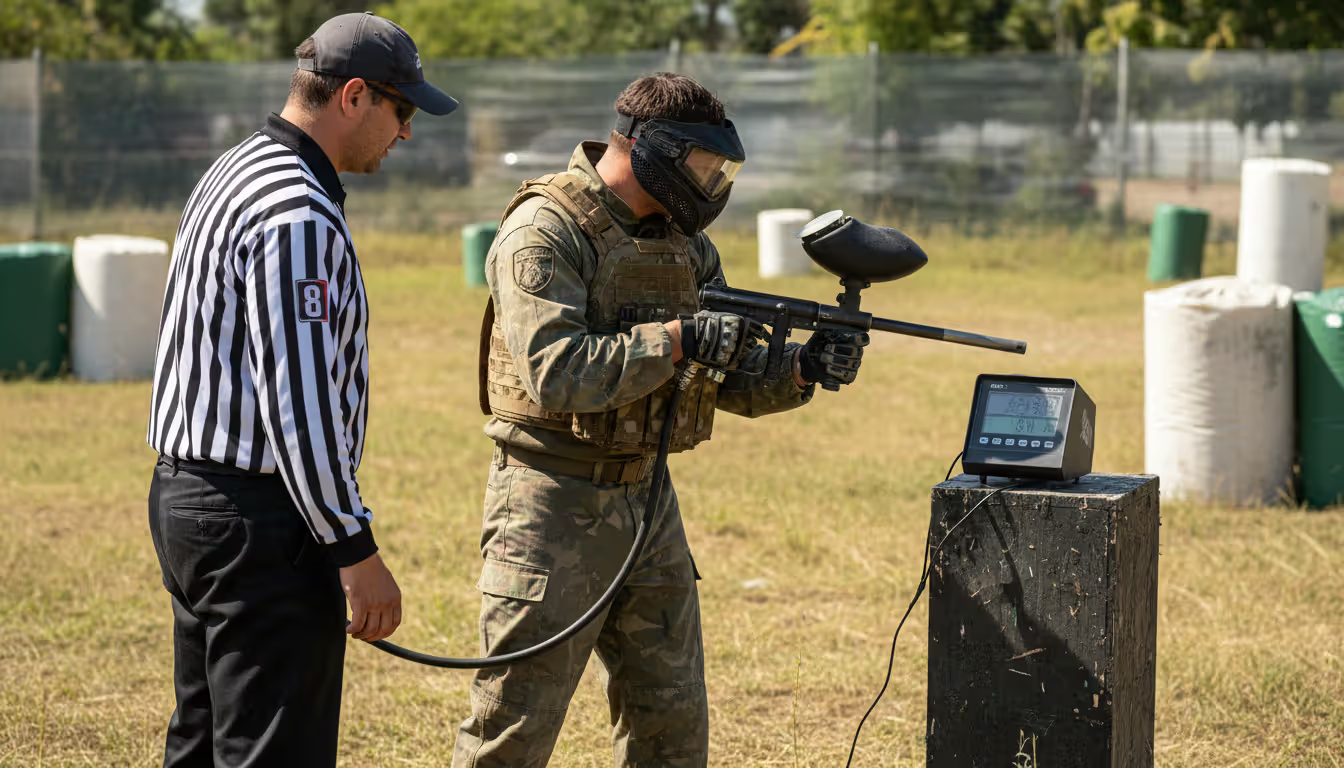
Every single player chronographs before entering the field. No exceptions, no shortcuts. You'll head to a designated chrono station—usually near the staging area—where refs verify your marker meets velocity requirements. Fire a few shots through their device. Either they wave you through or ask you to turn down your velocity.
Tournaments get stricter. Many leagues require chronographing before each game, not just once per day. Some events do random spot-checks mid-competition, pulling players aside between points to verify compliance. Get caught shooting hot during a spot-check? Penalties range from one-for-one eliminations to full disqualification, depending how far over the limit you're running and whether the refs think you did it intentionally.
Author: Caleb Varden;
Source: lakestaytents.com
Changed your barrel? Chronograph again. Swapping from a 14-inch aluminum barrel to an 8-inch carbon fiber paintball barrel can shift velocity by 10-20 FPS because of different air expansion dynamics and friction characteristics. Even switching barrel backs within your paintball barrel kit to better match paint bore size can nudge readings enough to push you over the limit.
After any marker maintenance—new O-rings, regulator adjustments, tank swaps—you need another chronograph check. That simple regulator tweak you made to improve efficiency? It might've bumped your velocity past safe limits. Experienced players chronograph obsessively. Conditions change, extended shooting sessions affect air system performance, and nobody wants to be that person who injures someone because they couldn't be bothered to recheck their FPS.
Choosing the Right Paintball Chronograph
Quality chronographs run anywhere from $60 for basic handheld units to over $400 for professional-grade systems with data logging and wireless features. The sweet spot sits around $120-180—enough to get reliable readings without paying for tournament-level features you'll never actually use.
Digital chronographs have basically replaced analog models. Digital gives you instant readouts, memory functions, and better accuracy. When you're shopping, prioritize clear displays you can read in bright sunlight. Cheap units often have dim screens that become invisible outdoors, which defeats the entire purpose.
Brand reputation matters here. Caldwell, Competition Electronics, and Shooting Chrony have proven track records for accuracy and durability. Generic imports might save you $20-30 upfront, but they frequently fail after one season or provide inconsistent readings—at which point you've wasted your money entirely.
Handheld vs. Mounted Chronographs
Handheld chronographs win on portability. They fit in a gear bag pocket and let you test your marker anywhere—home, car, parking lot. Perfect for players who hit multiple fields or want to verify their setup before driving an hour to a game. The downside? You need steady hands or some improvised rest to get consistent readings. Alignment becomes your problem to solve.
Mounted chronographs use tripods or dedicated stands. They provide stable, repeatable positioning that eliminates user error in alignment. Fields prefer these because they create consistent testing conditions for all players. But they're bulky. Not practical for personal use unless you've got dedicated storage and don't mind hauling extra gear.
Smartphone-connected chronographs represent the newest category. They pair Bluetooth sensors with apps that track historical data, calculate statistics, and suggest adjustments. Great for tech-savvy players who want performance trend analysis. But they add battery and connectivity dependencies that traditional units avoid. Your choice depends on whether you want simplicity or data.
Key Features to Look For
Accuracy specs should hit ±2 FPS or better. Anything less becomes unreliable when you're trying to tune your marker to 278 FPS at a field with a 280 FPS limit. Look for chronographs displaying both individual shot velocity and running averages—this helps you spot consistency problems immediately.
Battery life varies wildly between models. Units running on AA batteries typically last longer and are easier to support mid-game than proprietary rechargeable systems. Some chronographs auto-shutoff after sitting idle, extending battery life during all-day events where you might chronograph six or seven times.
Measurement range should cover at least 150 FPS to 400 FPS. Yeah, you'll operate in the 260-290 FPS range. But having headroom lets you test other markers or troubleshoot problems without maxing out the sensor and getting error messages.
How Paintball Barrels Affect Your Chrono Readings
Barrel length influences velocity through air expansion dynamics. Longer paintball barrels—say 14 to 16 inches—give propellant gas more time to accelerate the paintball, but they also create more friction and opportunities for air to escape. Shorter barrels around 8 to 10 inches reduce friction but might not fully utilize available air pressure. The practical difference between extremes typically ranges from 10 to 25 FPS, with 12-14 inch barrels hitting the best balance for most markers.
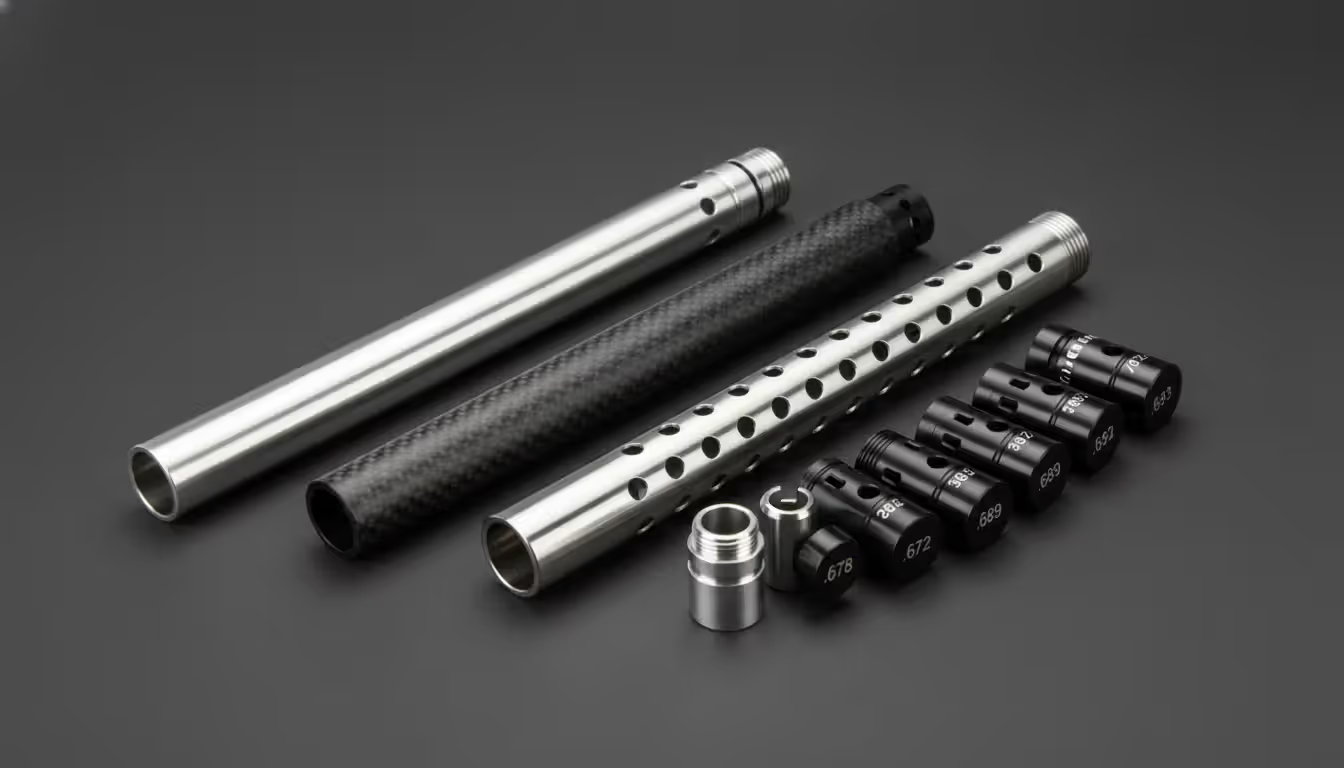
Bore size matching is critical for consistency. When a paintball rattles around too loosely in your barrel, air escapes around it. This kills efficiency and creates velocity fluctuations. Too tight? You risk barrel breaks plus increased friction that drops velocity. A proper paintball barrel kit includes multiple bore-size backs—usually .679, .682, .685, .687, .689—so you can match your barrel to whatever paint you bought that day.
Author: Caleb Varden;
Source: lakestaytents.com
Material composition affects weight and friction characteristics. Aluminum paintball barrels are durable and affordable, but heavy. That weight can impact marker handling, especially during extended games. Carbon fiber paintball barrel options slash weight dramatically—sometimes by 50%—without sacrificing rigidity. The reduced mass doesn't directly change velocity, but the different internal finish can affect friction enough to shift FPS readings by a few points.
Porting patterns—those holes drilled along a barrel's length—primarily affect sound signature and air efficiency rather than velocity. However, aggressive porting near the barrel's end can allow pressure to escape before the paintball fully exits, potentially dropping velocity by 5-10 FPS compared to non-ported designs. When you're hunting for the best paintball barrel for your marker, consider how porting interacts with your air system's output pressure.
Barrel condition matters more than most players realize. Scratches, dents, or residue buildup inside the barrel create inconsistent friction. That leads to erratic chronograph readings. A barrel showing 275, 285, 270, 288 FPS across four shots probably has internal damage or desperately needs cleaning.
Common Chronograph Mistakes and How to Avoid Them
Author: Caleb Varden;
Source: lakestaytents.com
Incorrect positioning causes more bad readings than anything else. Your paintball must pass cleanly through the sensor zone without clipping the chronograph's frame or diffuser screens. Position your marker 6-12 inches from the device opening, aligned straight down the measurement path. Angle your marker even slightly and the paintball might miss the second sensor entirely, generating error messages or wildly inaccurate readings that make no sense.
Environmental factors skew results in subtle ways. Chronographing in direct sunlight can mess with optical sensors. Strong winds push lightweight paintballs off course between sensors. Temperature extremes influence both your marker's performance and the chronograph's electronics. Whenever possible, test in shaded areas with minimal wind. Let your marker acclimate to current conditions for 10-15 minutes before testing—especially important if you just pulled it from an air-conditioned car on a hot day.
Not rechecking after adjustments is the rookie mistake that gets players kicked off fields. You adjust velocity down from 285 to what you think is 275, but you actually overcompensated to 265. Or you thought you made a tiny tweak but actually shifted velocity to 295. Always fire another three-shot string through the chrono after any adjustment to verify the change worked as intended.
Using damaged paint produces unreliable readings and potentially damages chronograph sensors. Dimpled, misshapen, or swollen paintballs don't travel consistently through air or sensors. They might tumble mid-flight, creating erratic velocity readings. Or they break inside the chronograph, coating sensors with fill that requires cleaning and recalibration. Nobody wants to be the person who broke the field's chronograph.
Failing to account for air system pressure particularly affects CO2 users. Your first few shots after filling a CO2 tank might read 20-30 FPS higher than shots 50-100 as the system stabilizes and cools. Always fire 10-15 shots to warm up your marker before chronographing. This ensures readings reflect actual playing conditions rather than initial pressure spikes that disappear after your first few eliminations.
In twenty years running paintball operations, I've seen exactly two serious eye injuries. Both involved players who bypassed chronograph stations.The chronograph isn't safety theater. It's the single most important piece of equipment we use to protect players. When someone complains about waiting in the chrono line, I remind them that a 30-second wait beats a lifetime of vision problems. Every legitimate field operator views chronographing as non-negotiable. Players should too
— Marcus Chen
Frequently Asked Questions About Paintball Chronographs
Chronographs serve as paintball's primary safety mechanism. They ensure every marker fires within limits designed to minimize injury risk while maintaining competitive integrity. Understanding how these devices work, when to use them, and how equipment choices affect readings empowers you to play responsibly and avoid the consequences of over-velocity markers.
Investing in a personal chronograph pays off through convenience, preparation, and peace of mind. You'll spend less time troubleshooting velocity issues at fields. You'll avoid the embarrassment of failing chronograph checks. You'll develop deeper understanding of your marker's performance characteristics across different conditions.
Remember—chronographing isn't a one-time task. It's an ongoing responsibility. Equipment changes, weather variations, and normal wear all affect velocity. Players who chronograph consistently, understand their equipment's behavior, and respect velocity limits contribute to safer playing environments for everyone while enjoying the sport at its best.
Whether you're selecting your first chronograph or refining your testing procedures, prioritize accuracy, reliability, and ease of use. The few minutes spent chronographing properly before each session protect you, your fellow players, and the sport's reputation far more than any time savings from cutting corners.