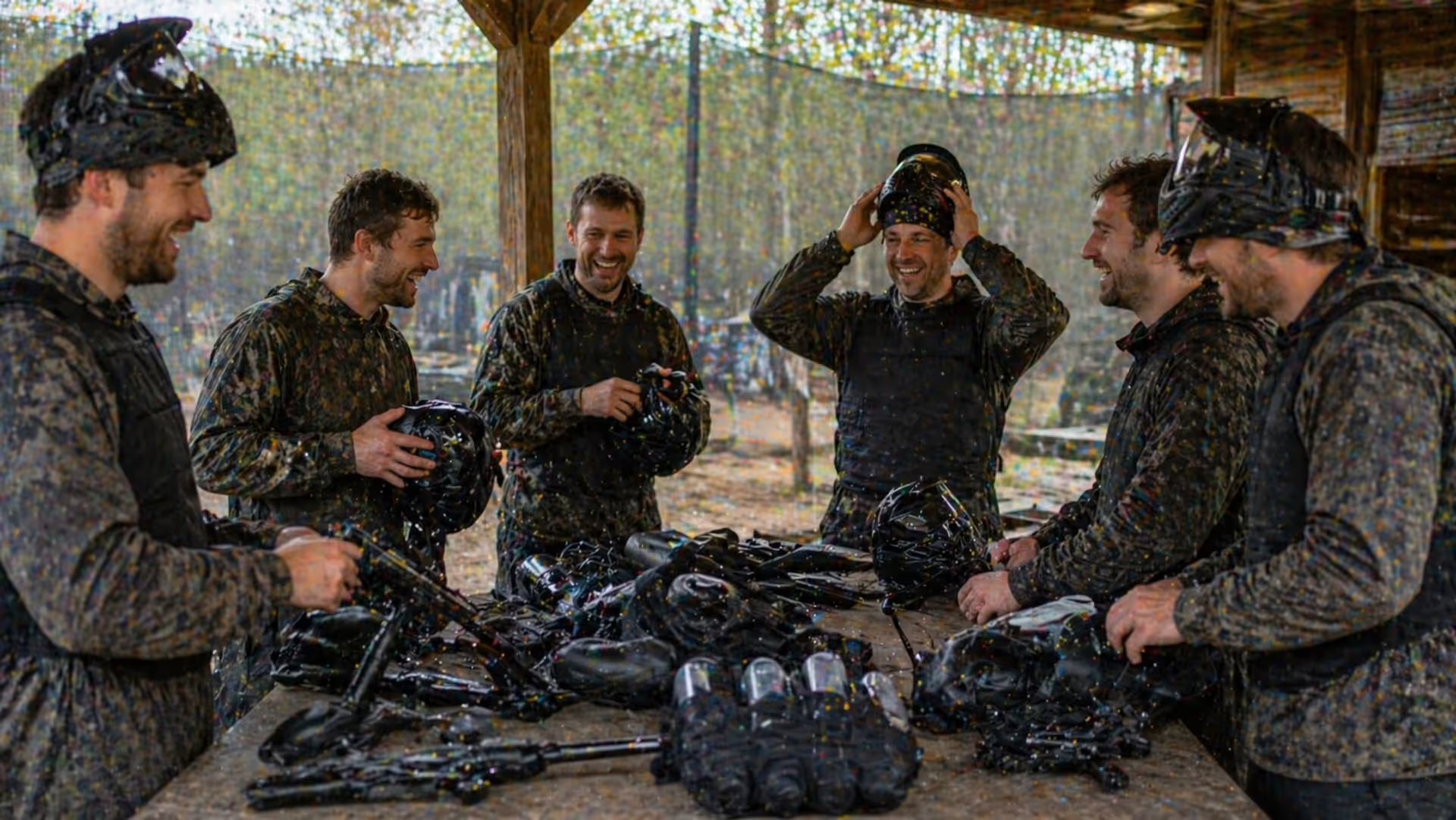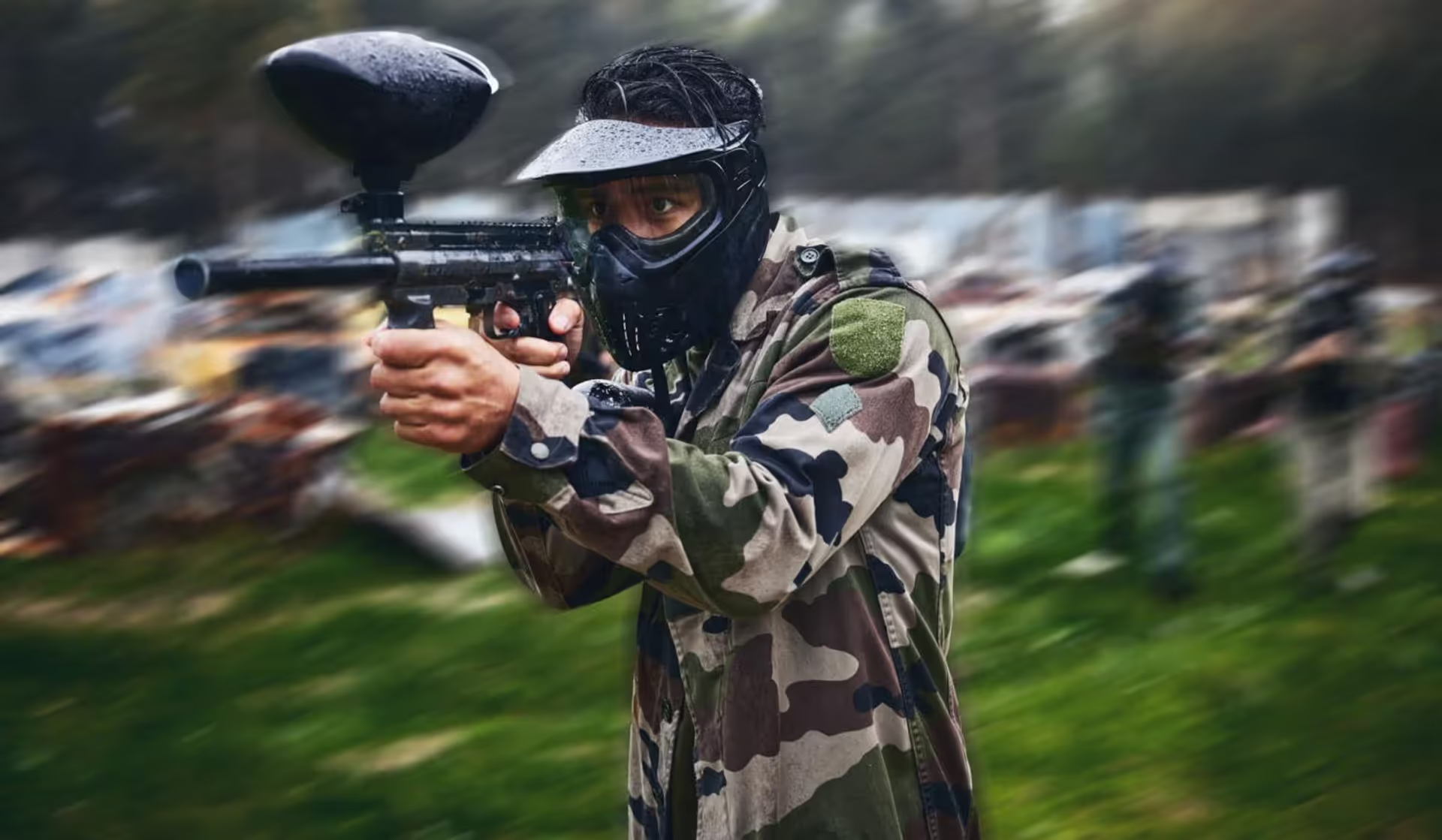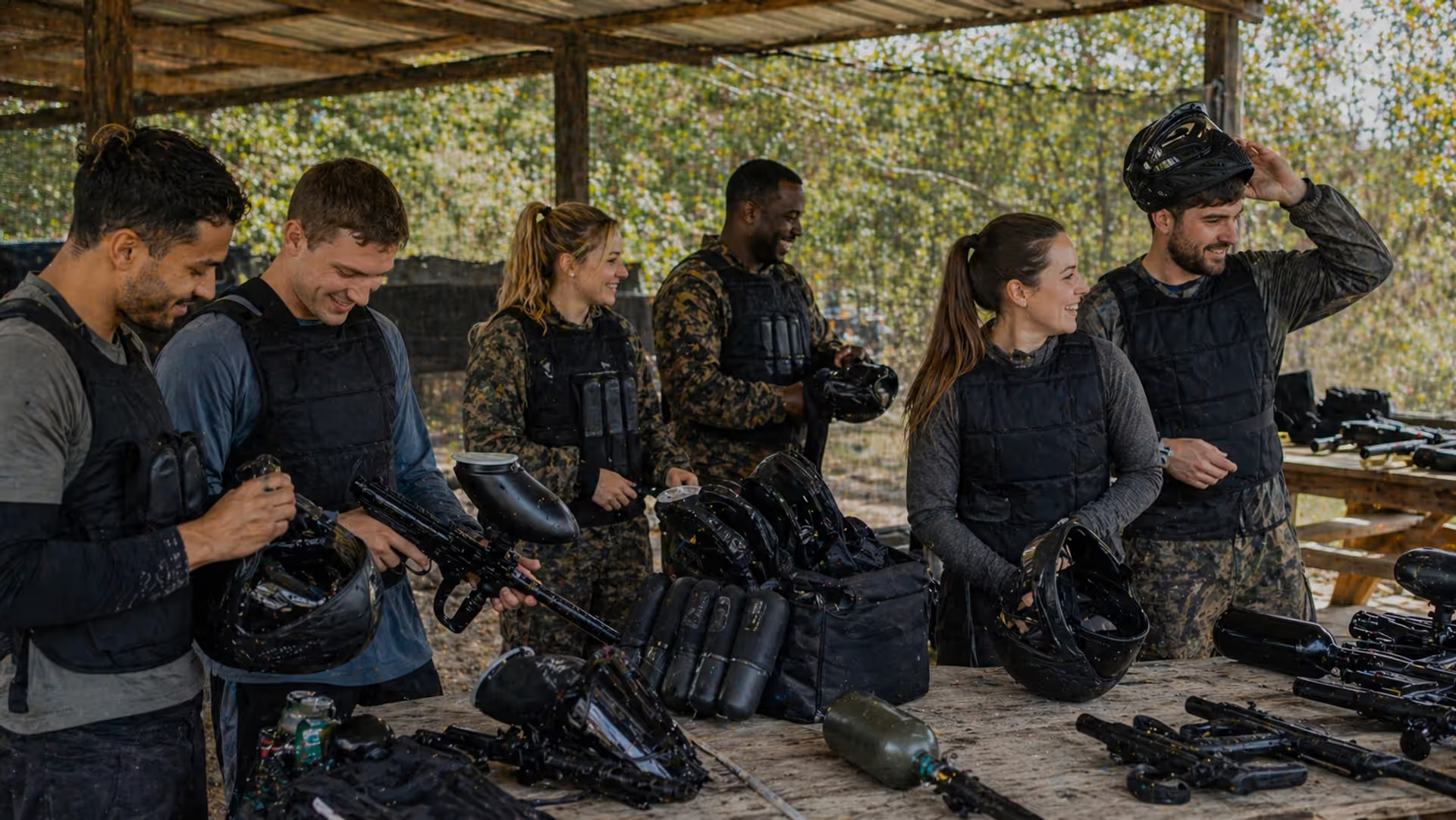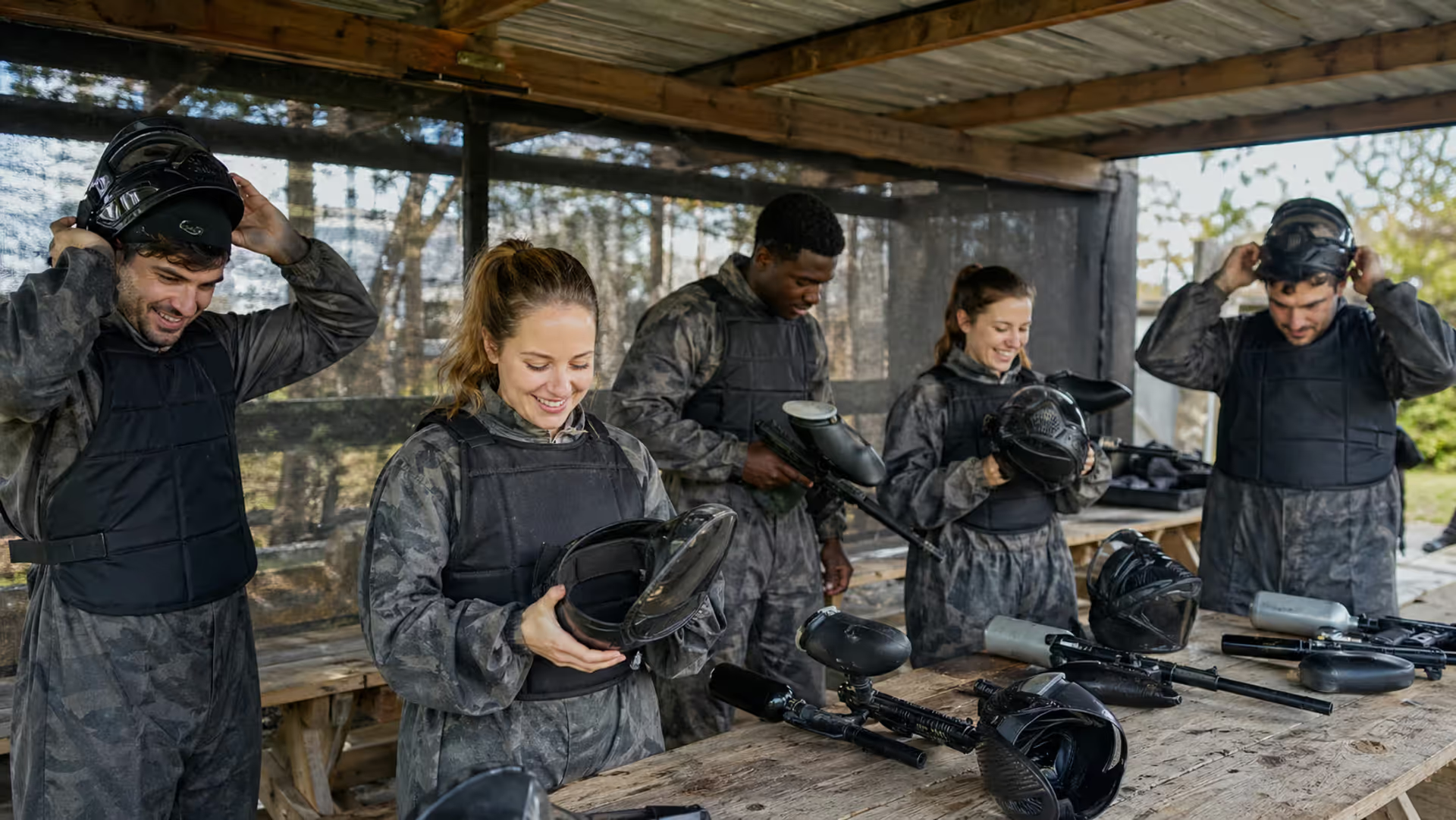
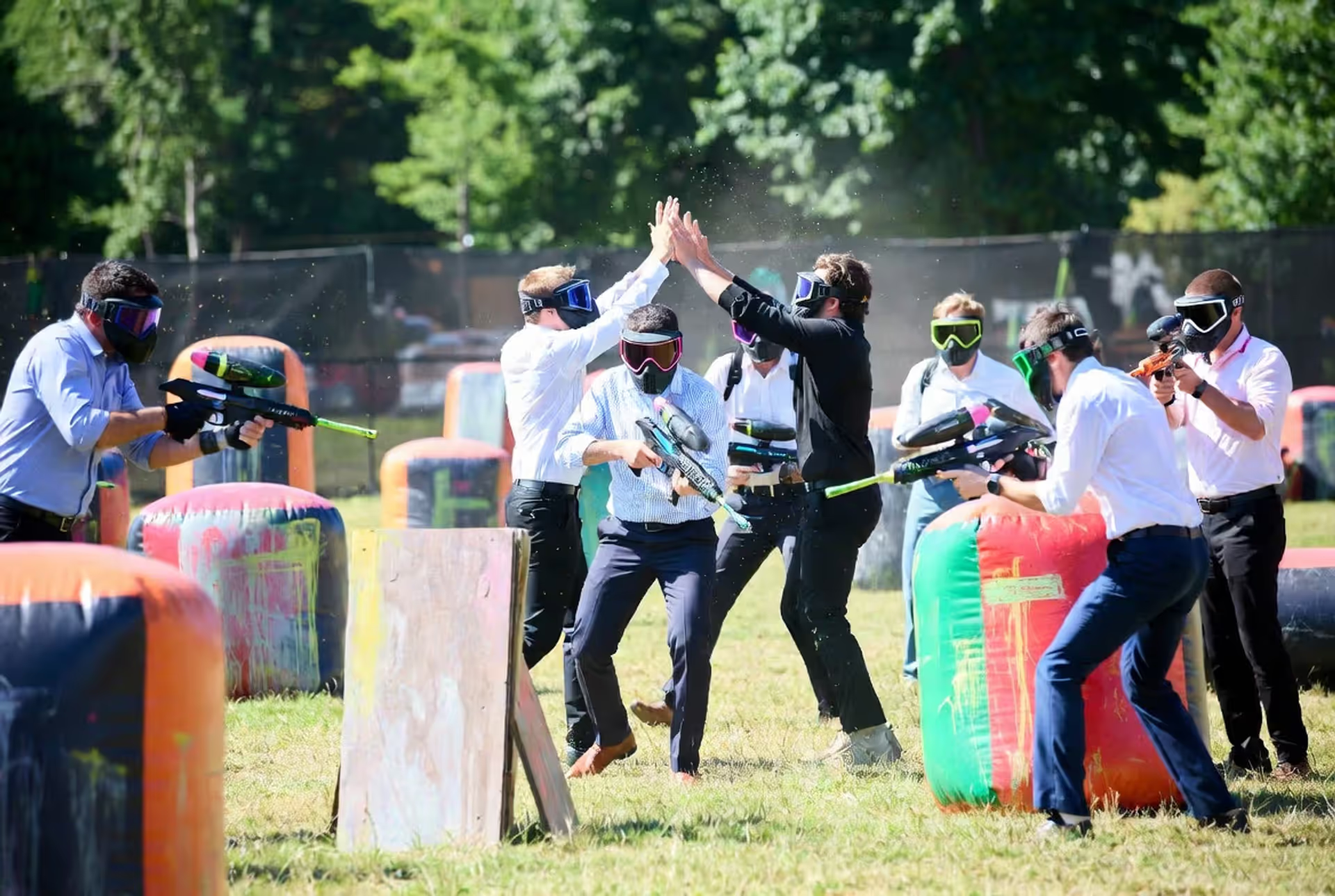
Corporate team building in action
Paintball Team Building Guide
Content
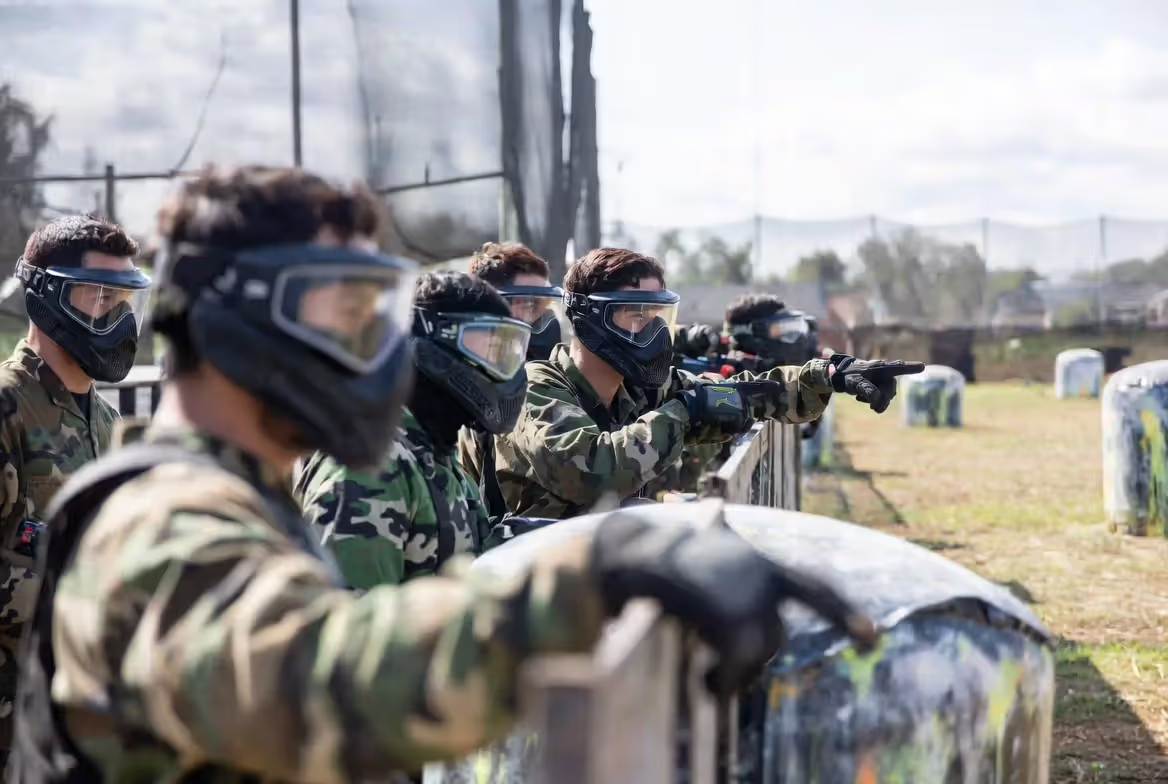
Here's what makes paintball stick as a corporate activity when so many team-building exercises get eye-rolls: people actually remember it. Three months later, your team's still joking about how Dave from accounting somehow became a tactical genius, or how the entire executive team got pinned down behind a single barrel.
Most workplace bonding attempts involve trust falls or those cringeworthy icebreaker questions. Paintball's different. You're making split-second calls while dodging projectiles flying at 280 feet per second. That kind of pressure reveals who stays calm, who panics, and who unexpectedly takes charge. Plus, the welts fade but the stories don't.
We'll cover venue selection, actual costs (including the hidden ones), game formats that work for different team dynamics, and how to avoid common planning mistakes that turn a great idea into a logistical mess.
Why Companies Choose Paintball for Team Building
Paintball corporate team building delivers immediate feedback loops that conference room exercises can't touch. Mess up your team coordination during a flag capture? You lose. Simple as that. No abstract lessons about synergy—just clear cause and effect.
Real communication happens under fire: A typical round forces constant updates. "Two coming left side!" "Covering your move!" "Fall back to the tire stack!" Your marketing director might excel at reading the field. That reserved programmer? Turns out they're scary good at spotting movement through trees.
During a 2024 event for a Phoenix tech startup, their CTO told us the quiet UX designer nobody expected much from orchestrated a three-point flanking move that won the game. Back at the office, people started actually listening to her project ideas. Sometimes you need paint-splattered proof that leadership shows up in unexpected places.
Vulnerability builds actual trust: Taking a paintball at close range stings like hell—something between a bee sting and a bad pinch. When you ask your coworker to provide cover fire while you advance across open ground, you're trusting them completely. That physical vulnerability creates bonds that survive Monday morning meetings.
Corporate training research from the University of Michigan's Ross School of Business found that shared physical challenges produce 37% stronger team cohesion metrics than mental exercises alone. Turns out sweating together matters.
Hierarchy vanishes on the field: Your VP's title means nothing when they're hiding behind the same inflatable bunker as an intern. The person with the best vantage point gives orders, regardless of their org chart position. Junior employees discover their ideas actually get heard. Managers learn to take direction from people they normally supervise.
We've seen this flatten workplace dynamics for weeks afterward. People who've coordinated paintball strategies together find it easier to collaborate on projects.
Group sizes that actually work: The sweet spot is 20-30 people. Enough for dynamic games, small enough that everyone plays simultaneously. You can run events for 10 (minimum for most facilities) or scale up to 100+ with rotating squads, though that cuts individual playing time.
Best scenarios for paintball team building: - Sales teams needing competitive edge training - Departments that barely interact (break those silos) - New leadership establishing team dynamics - Post-merger integration when company cultures clash - Remote teams finally meeting face-to-face
Comparing alternatives: Escape rooms max out at 8-10 people. Ropes courses terrify anyone with height issues and get cancelled when weather turns. Cooking classes work for foodies but bore half your team. Volunteer projects feel great but don't create the competitive energy some groups crave.
Paintball scales easily, accommodates varying fitness levels, and delivers high-energy competition with clear winners. Not every activity needs winners, but sometimes that's exactly what your team wants.
Author: Ethan Rowe;
Source: lakestaytents.com
How to Plan a Paintball Corporate Event
Start planning six weeks out for groups over 30, four weeks for smaller teams. Less time than that and you're competing for weekend slots or settling for whatever venue has availability.
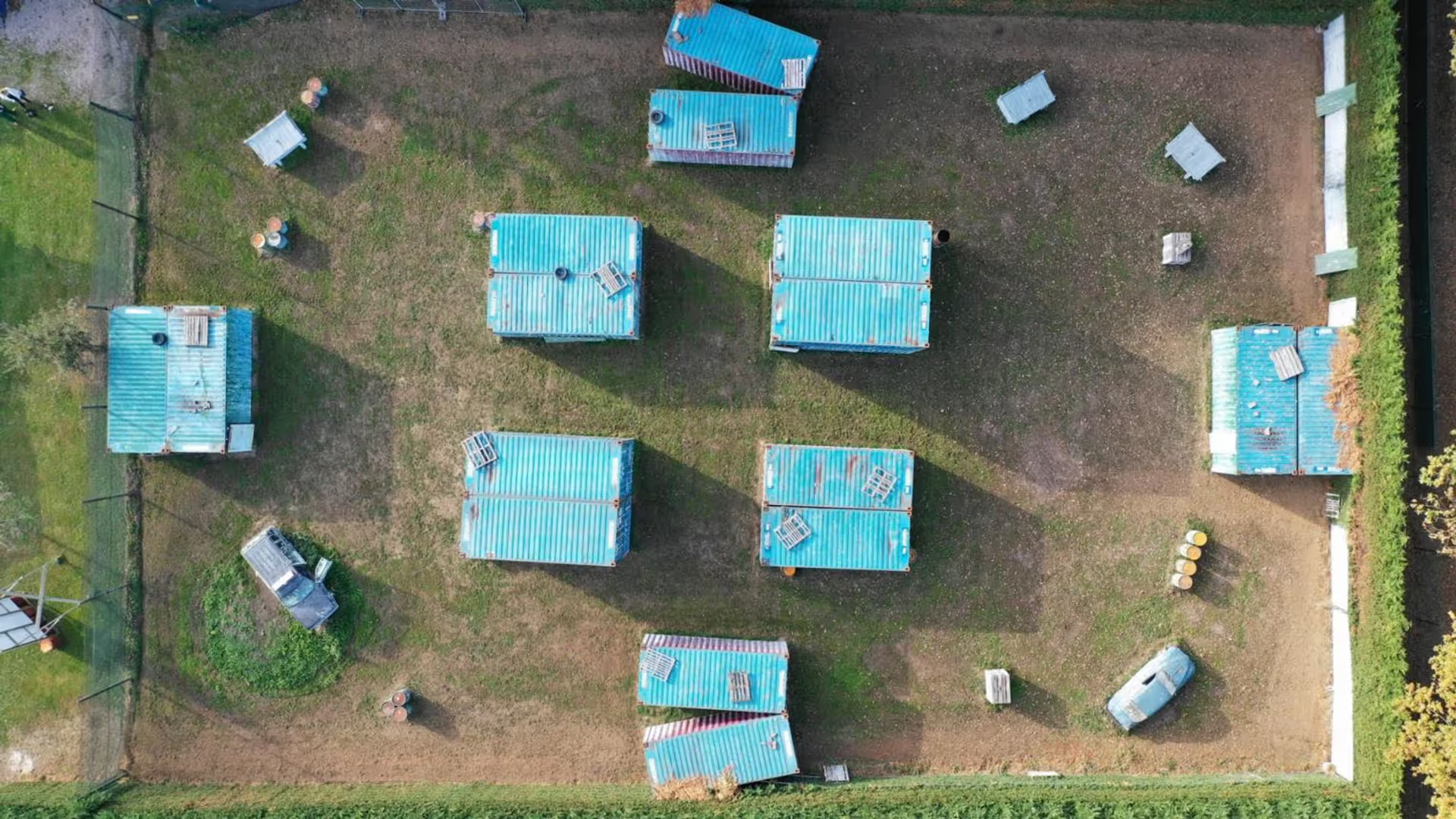
Finding the right facility: Not every paintball field caters to corporate groups. Some cater to hardcore weekend warriors who show up with custom $800 markers. You want facilities built for first-timers.
Look for these specifics: - Private field options (you don't want your accountants mixed with teenage regulars) - Indoor staging areas with real bathrooms (not port-a-potties) - At least three different field layouts to prevent repetitive games - On-site food service or partnerships with local caterers - Parking for your entire group without street overflow - Refs who've actually run corporate events before
Call ahead and grill them about their corporate packages. Top-tier facilities assign you a dedicated coordinator who handles waiver collection, equipment sorting, and keeps games moving on schedule. The best venue isn't necessarily the one with the most elaborate playing fields—it's the one with infrastructure for professional groups.
Real budget numbers: Mid-tier suburban facilities charge $50-70 per person for standard packages covering equipment, 300-500 paintballs, and 3-4 hours of field time. Premium packages ($90-120) add lunch, private field access, and double the ammunition.
Get itemized quotes showing: - Base admission plus equipment (mask, marker, air tank) - Paintball allocation (you'll burn through these faster than expected) - Referee fees for private groups (usually $100-200) - Exclusive field rental if you want zero other groups ($300-600) - Food and beverage if they provide it
Venues offer group discounts around 15 participants, better rates at 25+. Weekday bookings (Tuesday through Thursday) typically run 15-20% cheaper than Saturdays.
Timing your event: Half-day sessions (3-4 hours) work for time-crunched teams or first-timers who'll be sore afterward anyway. Full-day outings (6-7 hours) allow for complex game scenarios, extended lunch breaks, and proper debriefs between rounds.
Morning slots (9am-1pm) mean fresh players but might conflict with critical morning meetings. Afternoon time blocks (1pm-5pm) let people handle urgent work first, though energy dips faster. Summer events should book morning sessions—playing in 95-degree afternoon heat drains people fast.
Safety equipment rundown: Legitimate facilities provide full-face masks (non-negotiable—no mask, no play), chest protectors, and basic coveralls. Better venues add neck guards, quality gloves, and padding options.
The mandatory safety briefing covers mask rules (remove yours on the field and you're done for the day), barrel sock procedures, minimum shooting distances (usually 10-15 feet), and surrender protocols for point-blank encounters. Budget 25-30 minutes for this orientation. Facilities take safety seriously because their insurance rates depend on it.
Paintball Game Formats for Work Teams
Game format matters more than most organizers realize. The wrong scenarios bore people or create lopsided matches that kill momentum.
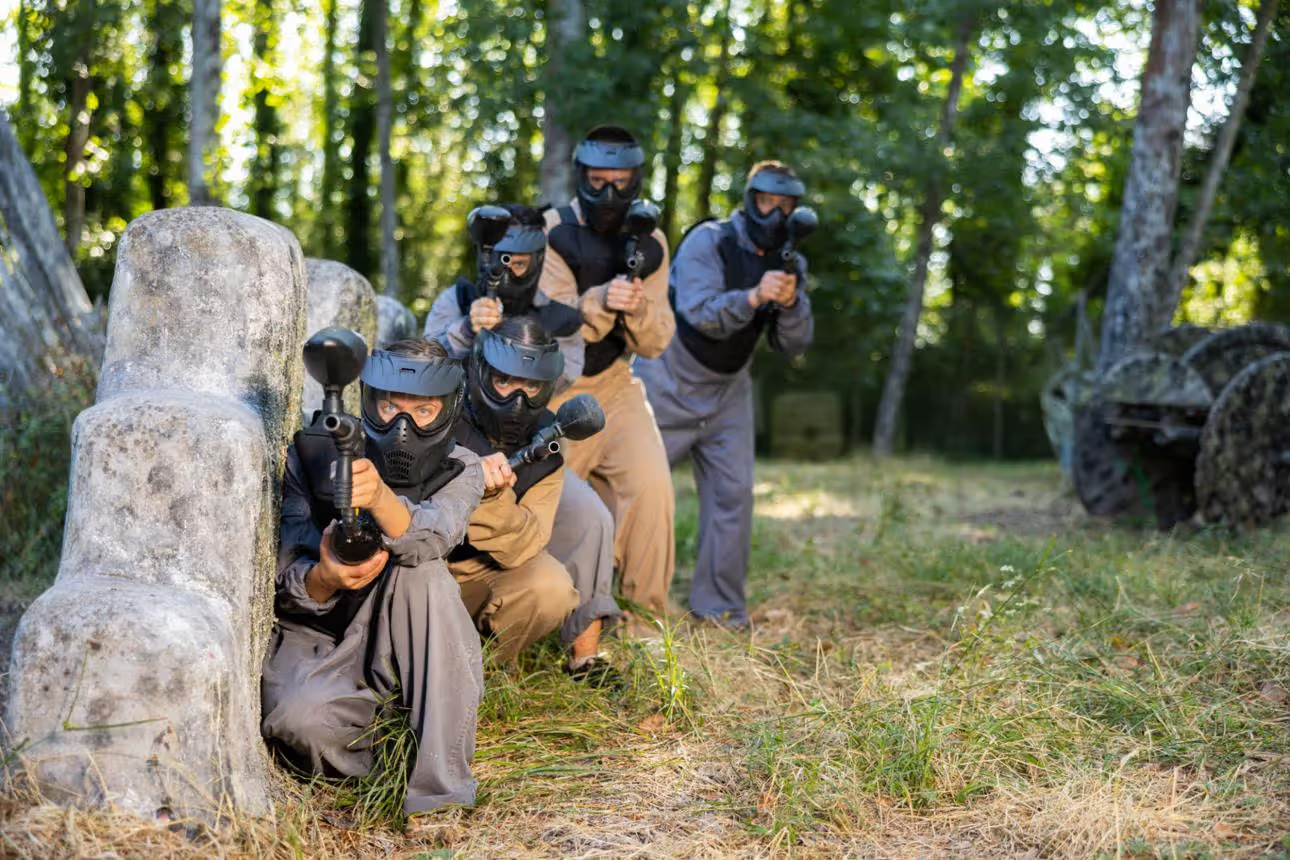
Capture the Flag: Teams defend their flag while trying to steal the opponent's. Roles emerge naturally—aggressive players attack, cautious ones defend, fast runners specialize in flag grabs. Games run 20-25 minutes, perfect for maintaining energy without exhaustion.
This format rewards communication over shooting accuracy. The team that coordinates movements and calls out enemy positions wins. Pure shooting skill matters less than strategy.
Attack and Defend: One side protects an objective (a flag station, building, or marked zone) while attackers try capturing it within a time limit. Then you switch roles. Great for showing how the same group adapts when objectives flip.
Defending teams learn patience and discipline. Attacking teams discover who thinks creatively under time pressure. We've seen reserved employees become aggressive attackers, while naturally bold personalities sometimes excel at tactical defense.
Team Elimination: Last team standing wins. These rounds run faster (10-15 minutes) and more intense. Elimination formats work best after teams have practiced basic movement and communication in earlier games.
They also produce obvious MVPs, which competitive groups love. Just rotate teams frequently so it doesn't become the same winners every round.
Custom corporate scenarios: Creative facilities design business-themed games. Some examples we've seen work well:
- "Hostile Takeover": Acquire three objectives before competitors get them
- "Product Launch": Deliver a flag to a target zone against defenders (like shipping product against competition)
- "Resource Raid": Collect scattered tokens while under fire (like competing for market share)
These themed games create inside jokes your team references for months. "Remember when Brad's team botched the product launch?" becomes shorthand for poor project coordination.
Author: Ethan Rowe;
Source: lakestaytents.com
| Game Type | Players Per Side | How Long It Runs | Experience Needed | Works Best For |
| Capture the Flag | 8-12 | 20-25 min | None—beginners welcome | First-time corporate groups building communication |
| Attack and Defend | 6-15 | 15-20 min each round | Basic understanding helps | Teaching teams to adapt strategies |
| Team Elimination | 5-10 | 10-15 min | Some experience preferred | Competitive teams who want intensity |
| VIP Escort | 8-12 | 15-20 min | Intermediate | Leadership development focus |
| King of the Hill | 10-20 | 20-30 min | Any level works | Large groups with rotating squads |
What to Expect During a Company Paintball Outing
Walking through the actual flow helps nervous employees (and there will be some) understand what they're committing to.
Check-in chaos: Even with 20 people arriving, expect a staggered 15-20 minute check-in window. The facility coordinator collects waivers—send these digitally three days beforehand to save serious time—confirms headcount, and points people toward locker areas if available.
This is your last chance to finalize add-ons like extra paint or lunch adjustments without derailing the schedule.
Gearing up: Equipment fitting takes 15-20 minutes for groups of 25-30. Staff measure participants for masks (critical that these fit properly), demonstrate marker operation, and explain air tank basics. Modern rental markers are surprisingly lightweight—usually under 3 pounds—with easy trigger pulls.
First-timers always worry about the guns. Honestly? They're simpler than most people's TV remotes. Point, pull trigger, paintball flies. The mechanisms are deliberately basic so beginners can use them immediately.
Safety briefings happen right after gear distribution. Refs demonstrate correct mask wear, explain field boundaries, describe hit-calling etiquette ("call yourself out when hit—honor system"), and review emergency procedures. They'll fire test shots so everyone hears what to expect.
Game rhythm: Most half-day corporate events fit 5-7 games comfortably. Full days accommodate 10-12 rounds. Each game breaks down as: - 3-5 minute strategy huddle (crucial—skipping this leads to chaos) - 15-25 minute playing time (seems short but feels longer when you're out there) - 5-10 minute break for reloading, tank refills, and catching your breath
Between games, refs modify field layouts or introduce new scenarios. Smart organizers use these breaks to shuffle team compositions—you want people interacting with different colleagues, not recreating existing friend groups.
Physical demands—the truth: Expect moderate cardio similar to a brisk walk with occasional sprints. You control your exertion level. Aggressive front-line positions involve running and diving. Defensive support roles? Way less movement.
Biggest surprise for first-timers: time disappears during rounds. That 20-minute game feels like five. You're too focused on not getting shot to notice your watch.
Post-game debrief: The difference between paintball as recreation versus team development happens here. Gather everyone for 15-20 minutes discussing: - What communication actually worked (and what fell apart) - How teams adapted when initial strategies failed - Who stepped up in unexpected ways - Direct parallels to workplace challenges
Skip this conversation and you've just organized expensive entertainment. Include it and you've created a genuine development experience.
Cost Breakdown for Group Paintball Events
Understanding the real numbers—including costs facilities don't advertise upfront—prevents budget surprises.
Base rates you'll actually pay (2026 pricing): - Budget packages: $40-55 per person (basic equipment, 200 rounds, shared fields with other groups) - Standard packages: $60-80 (better equipment, 500 rounds, semi-private fields) - Premium packages: $90-125 (top-tier equipment, 1000+ rounds, exclusive fields, lunch included)
Location drives pricing hard. New York City area facilities charge 35-45% more than facilities an hour outside Indianapolis. Southern and Midwest venues offer the best value—we've seen excellent $55 packages in North Carolina that would cost $95 in Boston.
Equipment rental specifics: Most packages bundle markers, masks, and air. Watch for separate charges: - Chest protectors: $5-10 each (worth it for nervous participants) - Upgraded markers: $15-25 each (unnecessary for corporate events) - Camouflage coveralls: $8-15 each (depends on how dirty people want to get) - Gloves: $5-8 each (hands take a beating without these)
Paintball costs—the hidden budget killer: Beginners burn through 400-700 rounds in a half-day. Competitive players or longer events? Easily 1000-1500 rounds. Extra paint pricing: - 500 rounds: $15-30 - 1000 rounds: $30-50 - 2000 rounds: $55-80
Facilities make significant profit margins on paint sales. Negotiate bulk rates when initially booking—"We'll guarantee $X spent on extra ammunition if you drop the per-500 price to $Y."
Add-ons worth considering: - Private field rental (exclusive venue access): $200-500 flat - Catered lunch (sandwich platters, drinks, sides): $12-22 per person - Event photography: $250-400 (trust us, you want action shots) - Custom team jerseys: $15-30 per shirt (great for recurring annual events) - Extended time blocks: $100-250 per additional hour
Volume discounts kick in at: - 20+ people: 10-15% off base rates - 30+ people: 15-20% off plus potentially free coordinator - 50+ people: 20-25% off plus complimentary lunch sometimes - 75+ people: Negotiate everything—they want your business
Some facilities waive equipment rental fees for groups exceeding 40 participants, or throw in free lunch for 50+.
Hidden costs nobody mentions until you're there: - Participants who blast through their paint allocation (happens to 30-40% of groups) - Tips for referees and staff (15-20% of package cost is standard) - Replacement gear fees if someone damages equipment - Extra time charges when games run long
Budget an additional 20% beyond the quoted price to cover these. If you spend $2,000 on a package, bring $2,400 total just in case.
Author: Ethan Rowe;
Source: lakestaytents.com
Tips for a Successful Office Paintball Experience
Small planning details separate memorable events from disasters people complain about for weeks.
Pre-event communication two weeks out: Send detailed information covering:
Dress code specifics: Long sleeves and full-length pants, period. Even in July. Paintballs leave temporary welts on exposed skin, and outdoor fields mean thorns, branches, and uneven ground. Tell people to wear old clothes they'd donate tomorrow—paintballs wash out of most fabrics but occasionally leave faint stains. Closed-toe athletic shoes with ankle support are mandatory. Absolutely no sandals, dress shoes, or brand-new sneakers they care about.
Physical reality check: Clarify that this involves running, crouching, and moderate cardio. It's not boot camp, but it's not sitting around either. Offer alternative roles (scorekeeper, photographer, team coordinator) for anyone with mobility limitations or health concerns. Making this explicit prevents awkward day-of conversations.
Digital waiver completion: Send waiver links immediately. Follow up with stragglers 72 hours before the event. Collecting paper waivers on-site devours 20-30 minutes of your event time.
Weather contingency plans: Paintball happens unless there's lightning. Light rain? You're playing. Cold weather? You're playing. Explain this upfront and suggest weather-appropriate gear to bring.
Building balanced teams: Avoid obvious mismatches like executives versus interns, or all salespeople versus all engineers. Mix departments, seniority levels, and physical abilities intentionally.
Pre-assign teams rather than letting people self-select into their usual friend groups. Rotate compositions between games—the goal is creating new working relationships, not reinforcing existing ones.
A Chicago marketing firm we worked with in 2025 deliberately paired their confrontation-averse design team with aggressive sales reps. The designers learned assertiveness; the sales team learned patience. Both groups reported improved collaboration on joint projects afterward.
Encouraging reluctant participants: Someone will resist. Address concerns directly:
- "I'm not competitive": Focus on collaborative scenarios (capture the flag, attack/defend) rather than pure elimination
- "Pain concerns": Explain protective gear, surrender rules for close encounters, and that most people say it hurts less than expected
- "Fitness worries": Emphasize that strategic positioning matters as much as running speed
- "Philosophical objection to guns": Acknowledge this is valid and offer the alternative roles mentioned earlier
Make attendance strongly encouraged but not mandatory. One or two opt-outs won't damage team dynamics. Forcing truly unwilling participants creates resentment.
Creative additions that work:
Paintball team names: Have squads create names and battle cries during the first break. Seems silly but builds immediate identity and loosens people up. Real examples from corporate events we've seen: "The Spreadsheet Spartans," "Ctrl+Alt+Defeat," "The Budget Cuts," "Merger & Acquisition Squad." The more ridiculous, the better the mood.
Tongue-in-cheek awards: Recognize non-combat contributions with titles like "Most Strategic Retreat," "Best Bullet Sponge," "Stealthiest Approach," or "Most Inspirational Battle Cry." This ensures everyone gets acknowledged for something beyond pure shooting skills.
Photo documentation: Designate someone (or hire the facility's photographer) to capture action shots and team photos. These become incredibly valuable for internal newsletters, social media, and recruitment materials—with participants' permission obviously.
Post-event social extension: Book a nearby restaurant or bar for drinks afterward. The shared experience creates natural conversation material beyond the usual work topics. Some of the best bonding happens during this casual decompression.
We've organized 200+ corporate paintball events since 2021. The consistent feedback centers on two things: people discover unexpected capabilities in their colleagues, and the shared intensity creates communication shortcuts that last for months. Teams that navigate paintball scenarios together have already practiced being vulnerable with each other, which translates directly to more open workplace discussions.
— Jennifer Martinez
Frequently Asked Questions About Paintball Team Events
Paintball team building works because it strips away office formality and creates genuine collaboration moments under pressure. You discover communication gaps, hidden leadership abilities, and team dynamics in ways conference room exercises never reveal.
Running successful corporate paintball events requires intentional planning: selecting facilities experienced with professional groups, choosing game formats matching your team objectives, budgeting accurately for the full experience (including ammunition costs people forget about), and preparing participants with clear expectations about clothing, physical demands, and safety protocols.
The investment—typically $60-100 per person for quality half-day events—delivers measurable returns in team cohesion, cross-departmental relationships, and workplace morale that persist long after the paint washes off. Whether you're integrating new hires, breaking down departmental silos, or simply giving employees an unforgettable shared experience, paintball provides a proven framework for bringing people together through action.
Start planning four to six weeks ahead, communicate transparently with participants about what to expect, and work closely with your facility coordinator to customize scenarios for your group's specific dynamics. The result will be a paintball team event that becomes a reference point for your team culture and collaboration for months to come.