Ready for the game
Paintball Rental Equipment Guide

Content
Last summer at a Pennsylvania field, I counted no fewer than five people unpacking enough gear to outfit a small militia. Custom cases everywhere. Matching jerseys. One guy spent twenty minutes just assembling his electronic hopper while his girlfriend stood there checking her phone. Their total equipment investment? Probably north of $1,500 based on what I saw.
Their coworker Jimmy showed up fifteen minutes late, walked straight to the counter, grabbed a rental package, and beat all of them to the staging area.
Those dedicated players might use their setups six, maybe eight times annually if they're serious about it. Jimmy dropped $30 and didn't worry about O-rings, storage solutions, or whether his air tank needed hydrostatic recertification. He just played paintball.
Most newcomers overthink this equipment situation. Fields wouldn't stay in business if you needed to purchase everything beforehand. The actual challenge isn't obtaining gear—rental counters exist specifically for this purpose—but knowing which package makes sense, recognizing reasonable pricing, and avoiding the beginner mistakes that'll wreck your afternoon faster than taking a paintball to the goggles.
What Paintball Rental Equipment Includes
Pop quiz: which item causes instant game-ending problems when it malfunctions? Your mask takes that prize every single time. Every other failure just annoys you. Mask failure? That's an emergency room visit.
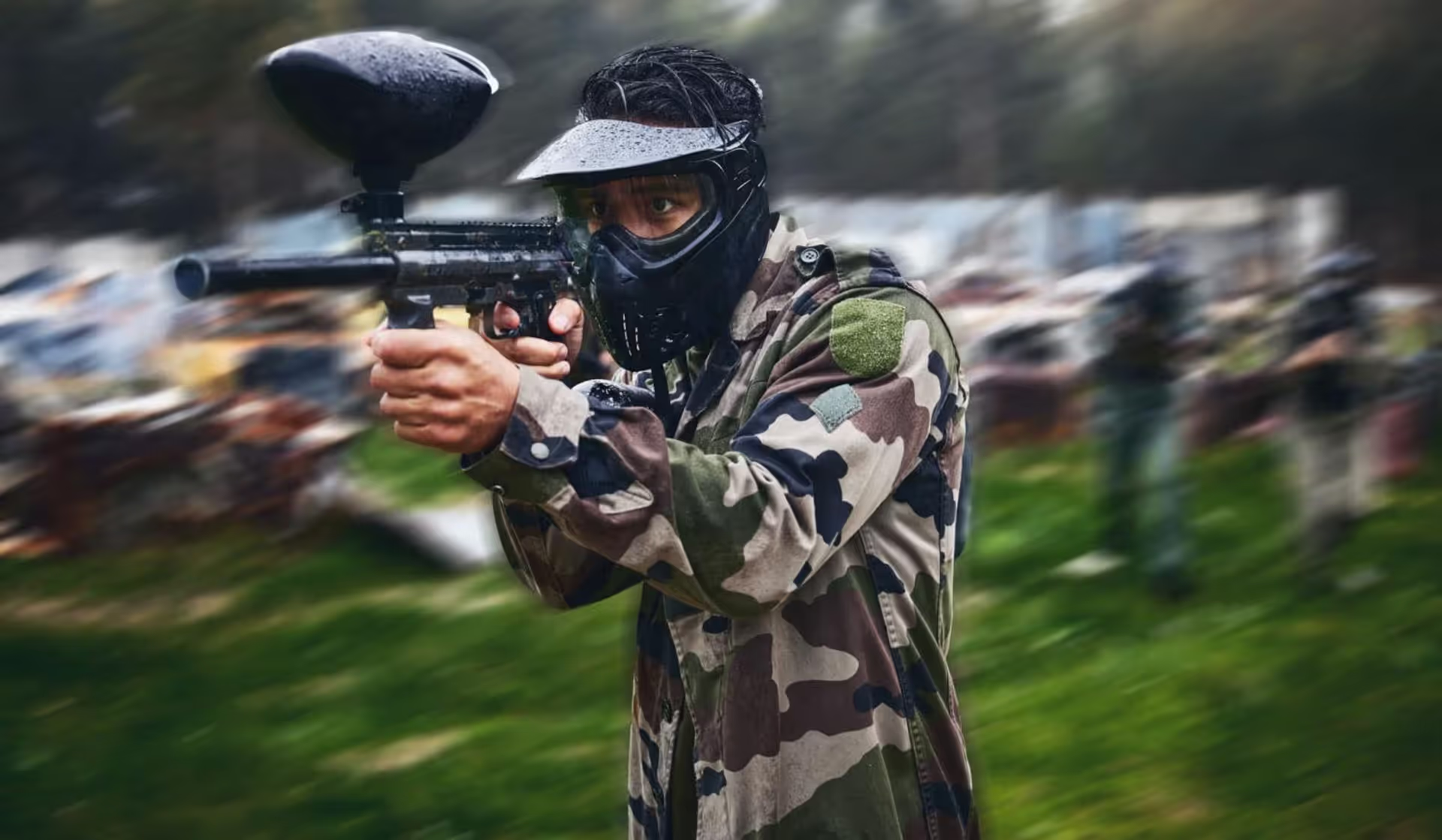
Paintball markers (guns): Most rental counters stock Tippmann 98 Customs because these things survive nuclear winters. They're the Nokia 3310 of paintball markers—ugly as sin, heavy as boat anchors, functionally indestructible during regular gameplay. Standard velocity sits around 280 feet per second launching .68 caliber rounds. Staff demonstrates the safety mechanism (usually positioned above the trigger assembly) and shows you how loading works. That's legitimately your entire orientation for round one.
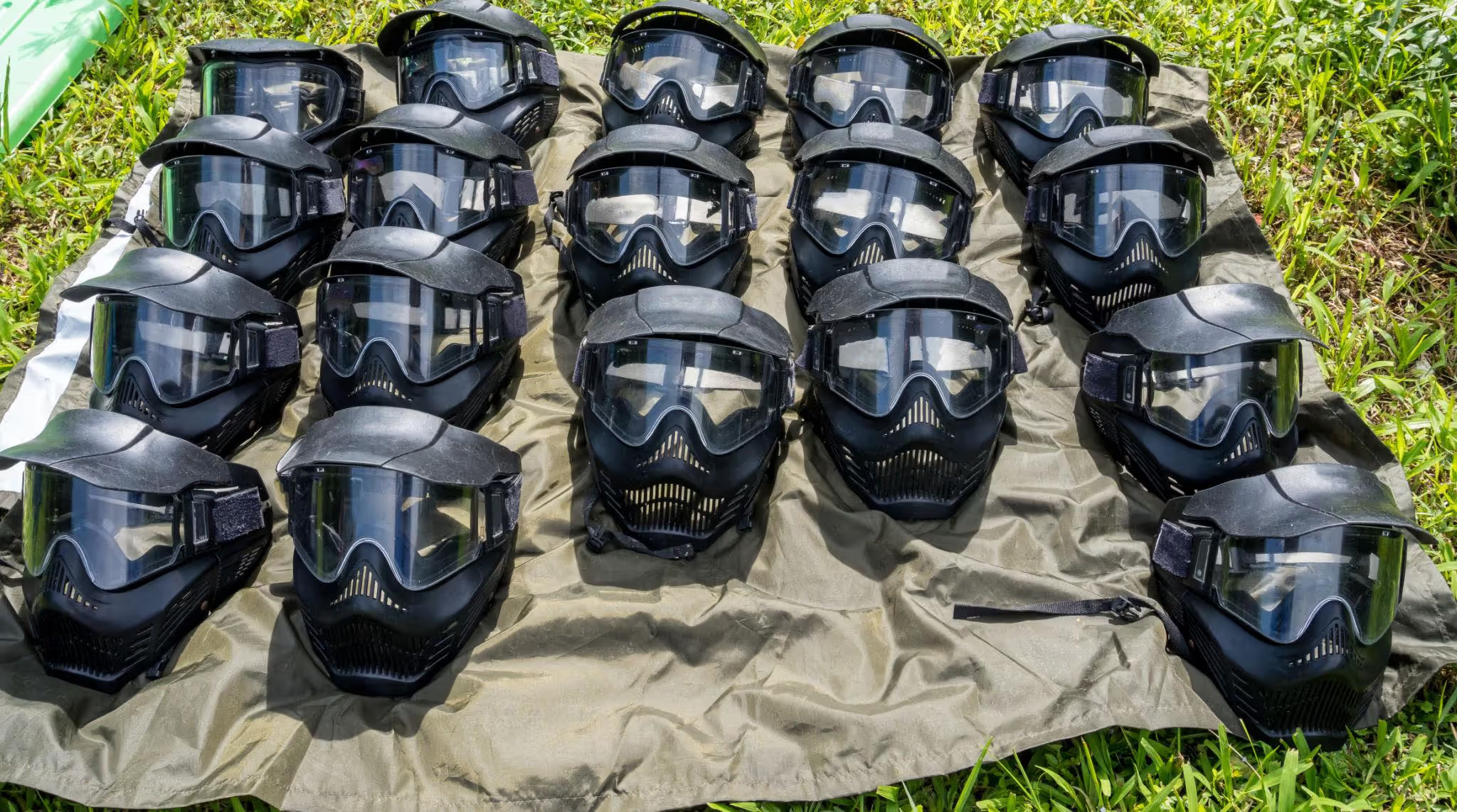
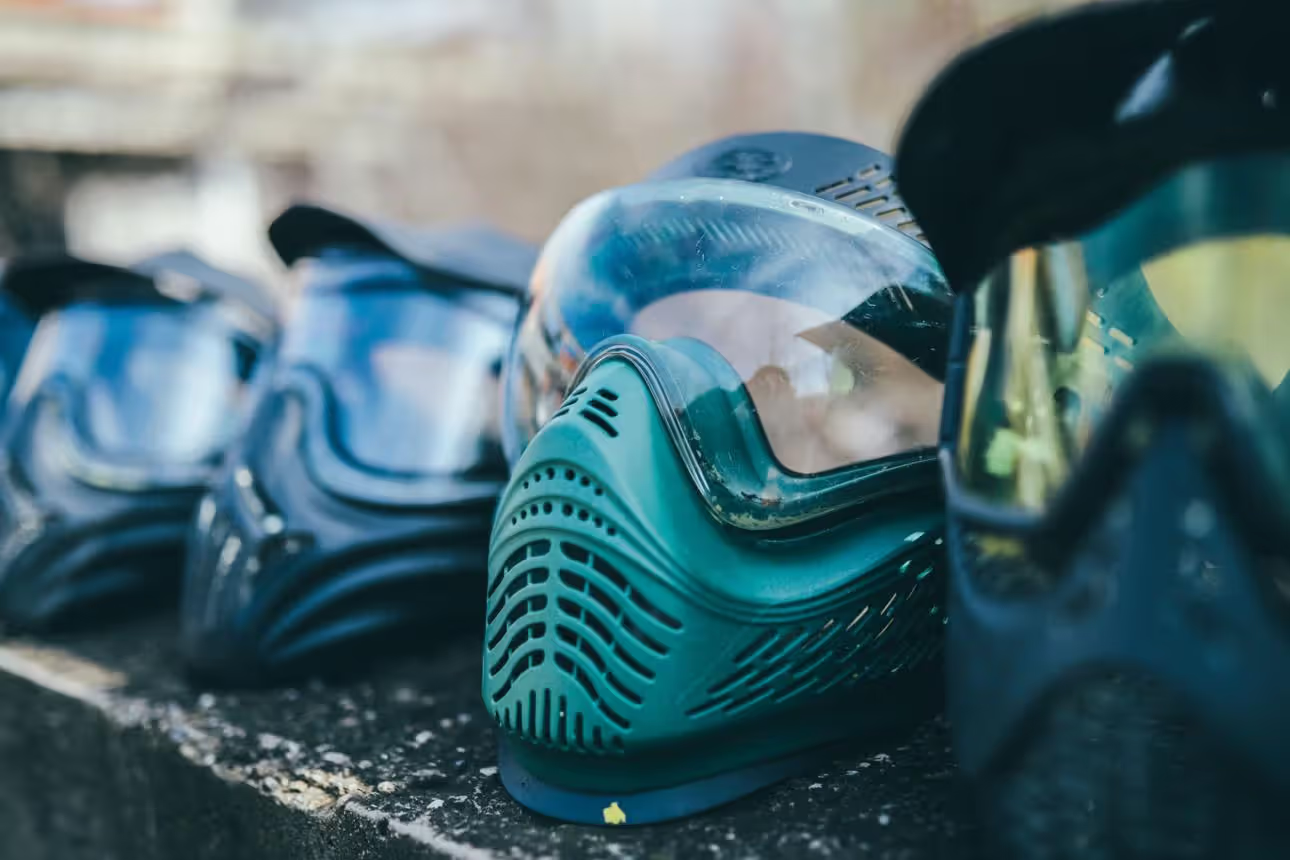
Protective masks: You're covering everything from hairline to jaw, sometimes wrapping temple-to-temple depending on which model the field stocks. Good news: these meet ASTM F1776 certification standards, stopping 300 fps impacts without shattering. Less appealing news: you're wearing something that's touched forty-seven sweaty faces just this week. Fields sanitize between users, but germaphobes often purchase their own $40 mask and call it a day.
Two lens technologies dominate rentals—thermal dual-pane systems (works like insulated windows with trapped air) or single-pane with anti-fog coating. Thermal outperforms coating dramatically, especially during muggy July games or after you sprint between obstacles breathing hard. I've seen more beginners rage-quit over fogged lenses than actual paint hits.
Air tanks: Standard packages typically include 9oz or 12oz CO2 canisters. These screw into your marker's grip frame and provide 800-1,000 shots before requiring refills. CO2 performs excellently in warm conditions but turns unreliable once temperatures dip below 50°F—pressure fluctuates weirdly and accuracy vanishes.
Premium options substitute HPA (high-pressure air) tanks, which maintain consistent performance regardless of weather. You'll definitely feel this difference during March or October sessions.
Hoppers (loaders): Basic gravity-fed models hold 200 paintballs and rely on physics to funnel rounds into your marker. Tip your gun sideways mid-firefight and feeding stops completely. Keep things upright and you're golden.
Electronic force-feed hoppers—occasionally available in upgraded packages—use battery-powered paddles pushing paintballs regardless of marker angle. They're louder but vastly more reliable during rapid-fire sequences.
Protective gear: This varies wildly facility to facility. Outdoor woodland fields with natural terrain? You might receive nothing beyond your mask. Indoor CQB arenas with inflatable barriers? Chest protectors and neck guards show up frequently since engagement distances shrink to fifteen feet. One Virginia location included padded gloves automatically. Another Arizona field didn't even sell gloves as add-ons.
Here's what definitely costs extra: paintballs themselves. Fields separate this charge because that's their actual profit center. A 500-count bag typically runs $15-25. You'll also encounter separate charges for snacks, additional air refills, or gear upgrades.
Author: Logan Mercer;
Source: lakestaytents.com
How to Rent Paintball Gear for Your Visit
The equipment checkout sequence takes roughly ten minutes unless the field's drowning in corporate team-building groups.
Before arrival: Call three days ahead minimum. Weekend slots fill fast, and some facilities cap total player counts for safety and insurance purposes. During this call, verify deposit requirements—I've encountered everything from zero dollars to $100 holds depending on location. Certain places file your credit card. Others hand over $300 worth of equipment after you sign their waiver.
Confirm group minimums too. Some venues won't open for fewer than eight players on weekdays.
Check-in consumes more time than anticipated: Budget 45 minutes, not the optimistic 15 your brain suggests. You'll sign liability waivers acknowledging paintballs cause welts and you won't pursue legal action over bruises. Staff photocopies your driver's license. Then payment happens—equipment rental appears as one line item, field admission as another, paintballs as a third. Your receipt breaks everything down separately.
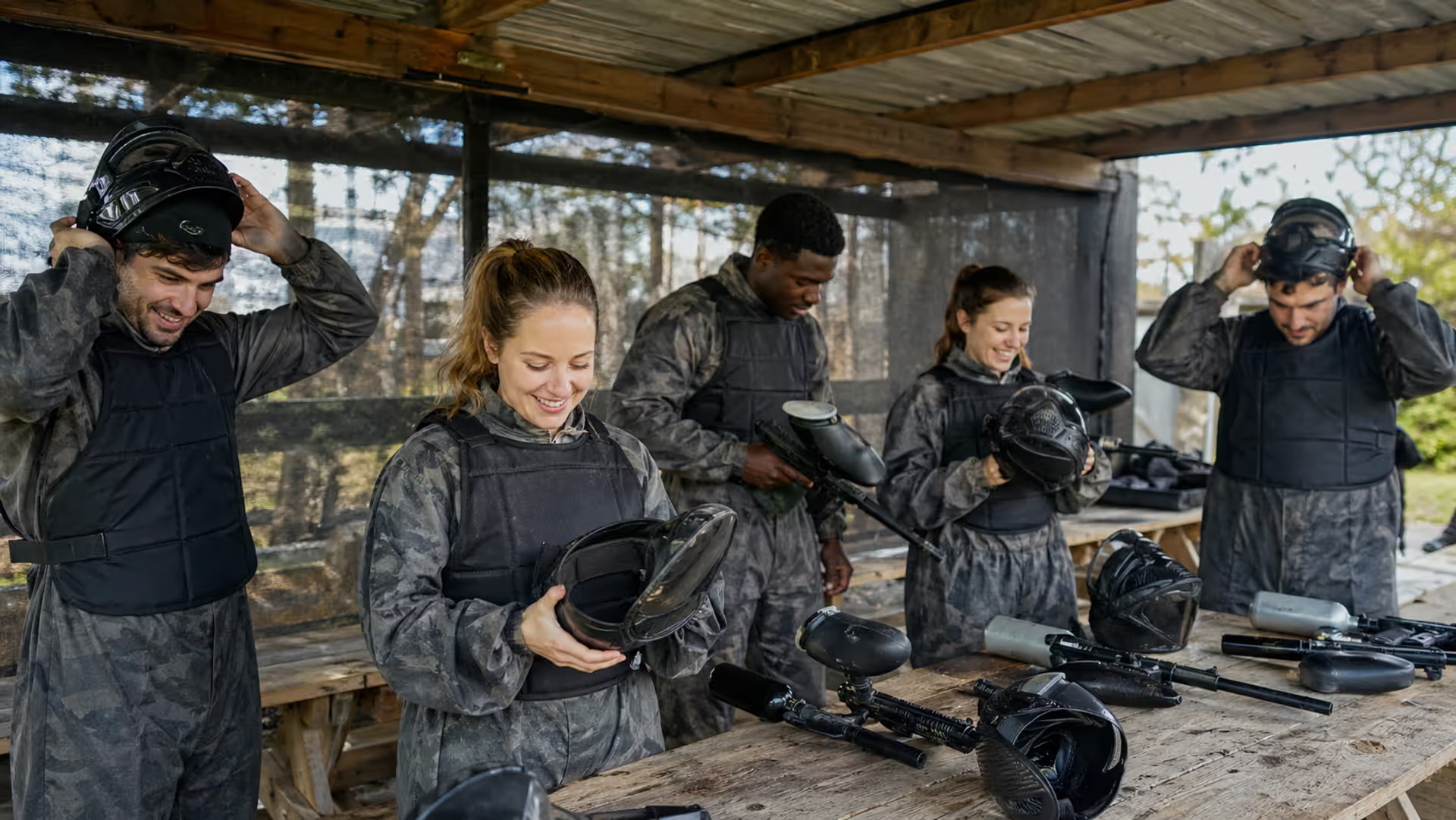
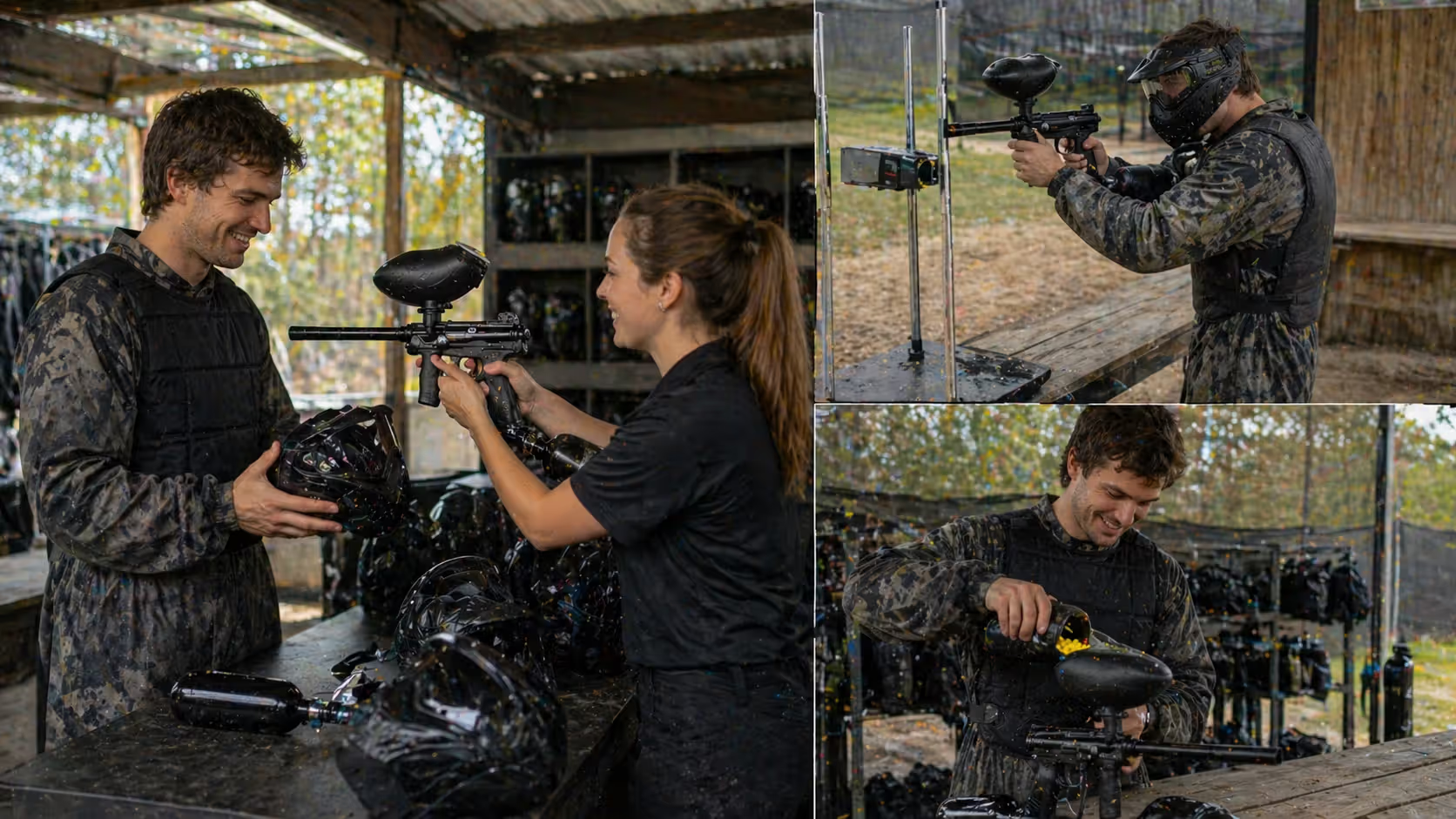
Equipment fitting affects your entire experience: Masks go on first. Inhale through your nose—the mask should create slight suction against your skin. Gaps around your lower jaw mean paintballs can slip underneath and fracture your mandible. Witnessed this exact injury in 2019. Not something I recommend experiencing.
Markers arrive in varying weights. A Tippmann A-5 weighs approximately two pounds empty. After holding it in shooting stance for twenty straight minutes, your brain insists it weighs eight pounds. Request lighter alternatives if shoulder issues or limited upper body strength apply.
Air tanks thread into the marker's grip frame—standard right-hand threading, usually just hand-tightened. Over-torque and you'll strip threads, which triggers a $30 damage fee.
Safety briefings sound boring but prevent injuries: You'll learn barrel plugging (inserting bright orange stoppers physically preventing discharge), chronograph verification (confirming velocity stays under 280 fps), and boundary rules. The briefing covers paint policies too—most facilities enforce field-paint-only rules, prohibiting cheaper Walmart paintballs.
One critical detail they'll emphasize repeatedly: masks remain on your face everywhere except designated safe zones. Nowhere else. Under any circumstances. Ever. Players ignoring this rule face immediate ejection without refunds.
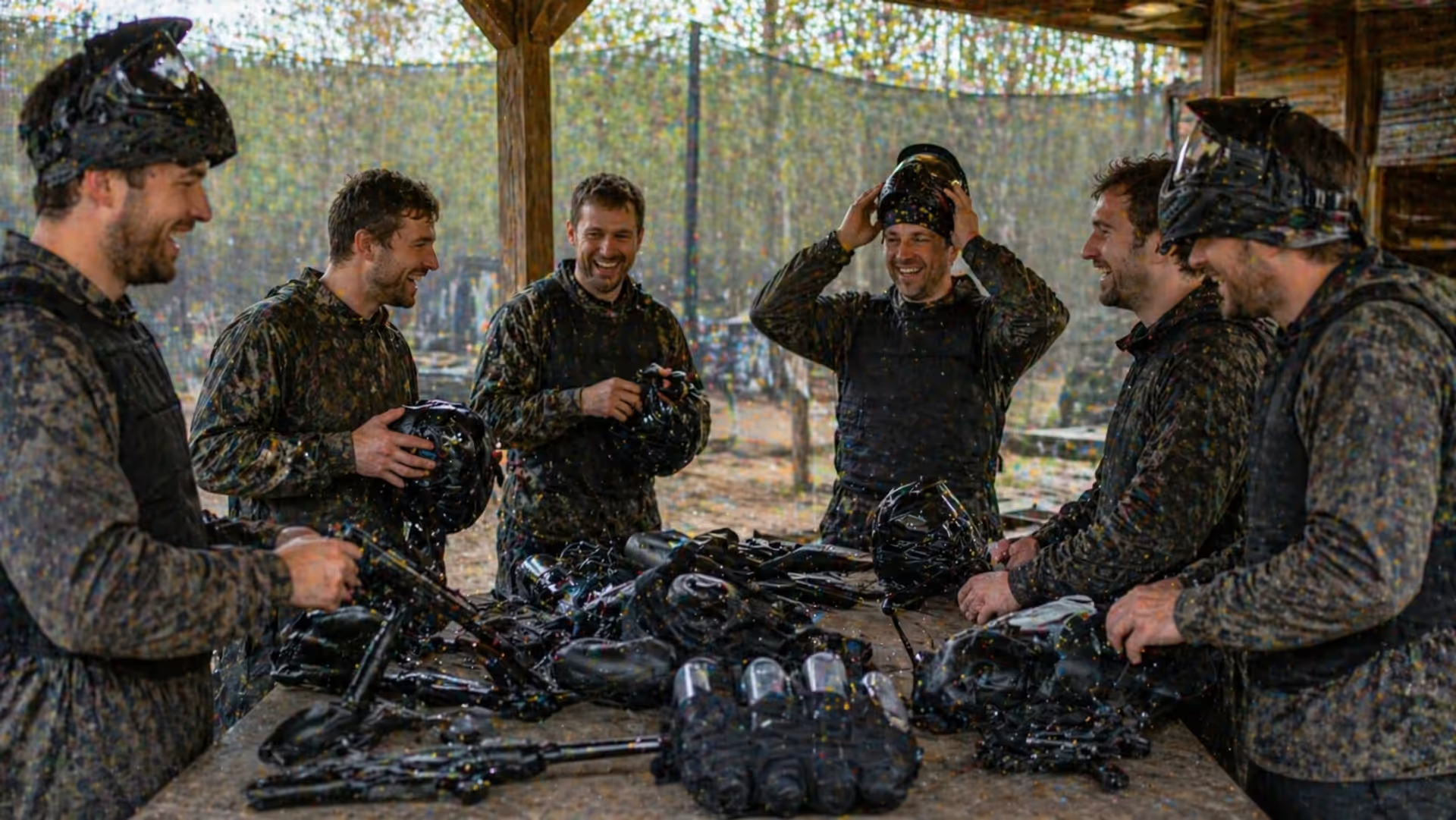
Returns proceed smoothly following one rule: Inspect everything with staff physically standing beside you. I got charged $25 once for a cracked hopper that arrived broken—I simply didn't notice during checkout. Now I spend thirty seconds examining equipment for damage before leaving the counter and again when returning. Haven't been falsely charged since.
Author: Logan Mercer;
Source: lakestaytents.com
Rental Package Options and Pricing
Pricing structures into tiers, and understanding what that extra $20 actually buys matters more than beginners realize.
Basic Rental Package
Entry-level packages run $20-35 for equipment. You receive a Tippmann 98 or equivalent workhorse marker, standard mask (possibly single-pane anti-fog coating that works okay-ish), 12oz CO2 tank, and 200-round gravity hopper.
This handles absolute beginners perfectly fine or folks who play once yearly at company picnics. The marker weighs more than upgraded versions and loses accuracy beyond sixty feet, but you're not attempting precision shots—you're mastering basics like not shooting teammates and remembering to use cover.
One downside worth mentioning: basic masks fog easier than thermal alternatives. You'll spend time wiping lens interiors between rounds.
Premium Rental Package
$40-60 gets you equipment genuinely affecting performance. Lighter markers (often Tippmann Cronus models or electronic options like Spyder Victor), thermal-lens masks that resist fogging even during August humidity, 48/3000 HPA tanks delivering superior shot consistency, and sometimes electronic hoppers.
Worth the extra $25? Depends on circumstances. Playing against experienced opponents owning personal gear? Absolutely yes. First game ever with equally clueless friends? Probably unnecessary.
Premium packages also include newer equipment showing less cosmetic damage and wear. Matters if you're documenting everything for Instagram.
Author: Logan Mercer;
Source: lakestaytents.com
Group and Event Packages
Fields bundle everything for groups of 8-20+ players: equipment, admission, referees, and paintballs. Typical per-person pricing lands between $50-75 for four hours of play with 500 rounds included per person.
The math favors groups significantly. Individual admission ($20) plus basic rental ($30) plus 500 paintballs ($20) totals $70. Group rate for identical items? $55. That's $15 savings per person by bringing seven friends.
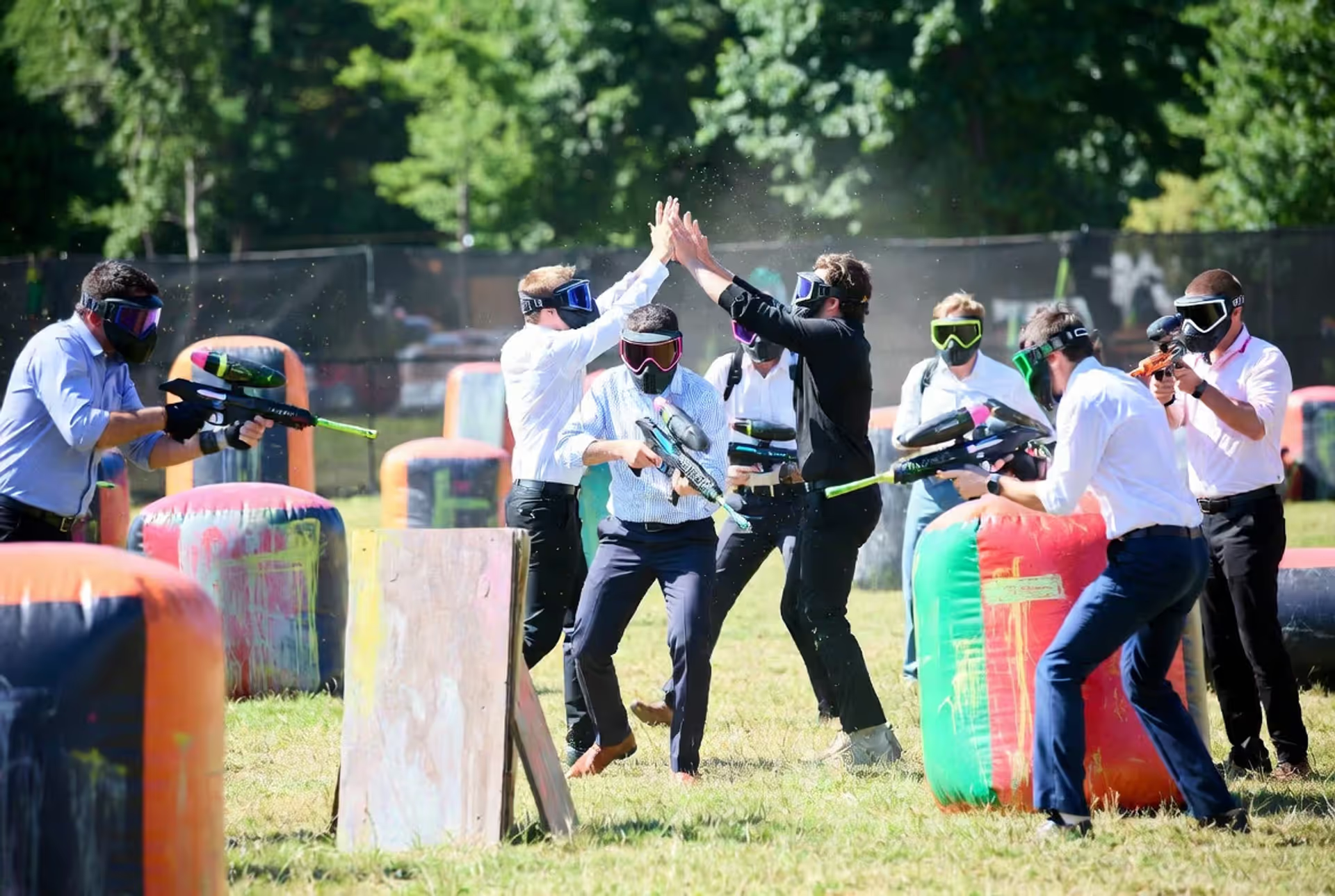
Birthday party packages sometimes include private field access, eliminating stranger interactions with players treating recreational paintball like Olympic trials. Corporate packages might add lunch or team-building exercises (yes, including trust falls).
| Package Type | Equipment Included | Price Range | Best For | Upgrade Options |
| Basic | Tippmann 98, standard mask, CO2 tank, gravity hopper | $20-35 (equipment only; add $15-25 for admission) | Complete beginners, annual players, anyone testing interest levels | Chest protector $5-10, extra tank refills $3-5 each |
| Premium | Upgraded marker, thermal mask, HPA tank, possibly electronic hopper | $40-60 (equipment only; admission separate) | Regular recreational players, anyone competing against experienced opponents | Extended barrel $10, tactical vest $8-12, knee pads $5 |
| Group/Event | Complete setup for 8-20+ people, admission bundled, 500 rounds per person | $50-75 per person (all-inclusive) | Birthday celebrations, bachelor/bachelorette parties, corporate team events | Extra paint $30-50 per 1,000 rounds, private field reservation $100-200/hour, catering (pricing varies) |
Renting vs. Buying Paintball Equipment
Let's calculate actual numbers instead of vague recommendations.
Playing twice annually: Rentals cost $35 each session, totaling $70 per year. A decent personal setup—Tippmann Stormer marker, JT Spectra mask, 48/3000 HPA tank, basic hopper—runs approximately $280 new. You'd need four years of twice-yearly play just breaking even. By then, your tank requires hydrotesting ($30-40) and your marker needs fresh O-rings plus possibly a new bolt ($20-40 in parts, not counting your time).
My verdict: keep renting in this scenario.
Playing monthly: Same $35 rental equals $420 annually. Your $280 setup pays for itself after eight months. By month twelve, you're $140 ahead financially. Beyond that, you're shooting identical equipment every time, which genuinely improves accuracy because you learn its specific quirks—how much to lead moving targets, where it shoots slightly left past seventy feet, how many paintballs you can fire before velocity dips.
My verdict: purchase your own equipment.
Maintenance reality: Owned markers need O-ring lubrication every 5,000 shots or they develop air leaks. Bolts eventually wear down. Velocity adjustment screws back themselves out and require threadlocker. If mechanical troubleshooting makes you anxious, factor in professional shop service at $30-50 per tune-up every six months.
Air tanks require DOT hydrostatic testing every 3-5 years depending on tank construction. Testing costs $20-30. Tanks failing testing? You're buying replacements ($50-150).
Storage isn't simple: Markers measure 20+ inches long with tanks attached. You need climate-controlled storage—garages hitting 100°F in summer destroy mask foam and O-rings. Basements freezing during winter make CO2 tanks basically useless. Apartment dwellers often lack suitable storage space entirely.
The compromise I actually recommend: buy your own mask ($40-80 for something decent like a V-Force Grill) since it's the most personal item and most prone to fogging when poorly fitted. Continue renting markers and tanks. You'll have properly sized, fog-free eye protection while avoiding bulk ownership costs and maintenance headaches.
The biggest mistake beginners make isn’t renting gear — it’s assuming great equipment makes a great player. Paintball has always been about awareness, positioning, and quick decisions. The gear just gets you onto the field; what you do there is what actually wins games.
— Marcus Ellery
What to Ask Before Renting Paintball Guns
Not all rental counters operate identically. These questions separate well-maintained facilities from questionable ones.
"When did this specific marker last receive servicing?" Well-run fields service rental equipment every 500-1,000 uses or quarterly, whichever arrives first. If the person helping you doesn't know or responds with "uh, recently I think," that's a red flag the size of a beach umbrella.
"Can I test-fire this before committing?" Legitimate fields maintain chronograph stations and designated test-fire areas. You should be able to shoot five paintballs confirming the marker feeds correctly, maintains air pressure, and hits proper velocity limits. Any field refusing this request is hiding something problematic.
"What specific damage am I liable for?" Get extremely specific here. Scuffed paint on the marker body from sliding into bunkers? Cracked air tank pressure gauge? Broken hopper lid? Ripped mask strap? Different fields define "normal wear and tear" differently. I've paid $15 for a broken hopper lid at one location and heard "don't worry about it" for identical damage elsewhere.
"Can I upgrade to better equipment for a small upcharge?" Some facilities let you step from the basic Tippmann to something superior for $10-20 extra. Worth considering if you're playing alongside experienced friends who all own equipment and you'd rather not be completely outgunned.
"What's your actual enforced minimum age?" Published age minimums sometimes differ from practice. A field might advertise "10+" but actually require low-impact .50 caliber equipment for anyone under twelve. This affects rental equipment availability and pricing structure.
"Do you sell damage insurance?" A handful of fields offer optional damage waivers for $5-10 that cover accidental equipment breakage. Whether this makes financial sense depends on your deposit amount and personal coordination level. I'm naturally clumsy and almost always buy the insurance.
Common Mistakes When Renting Paintball Gear
First-timers make predictable errors. Here's how to avoid them.
Accepting the first mask handed over: Masks come in small, medium, and large sizes. An oversized mask shifts position when you're running and creates gaps where paintballs squeeze through. Too-small masks pinch your temples and trigger headaches by game three. Try different sizes. This takes two minutes and prevents six hours of misery.
Skipping the test-fire step: You nod when staff asks "everything good?" and head straight to the field. Then your marker jams on shot number four during your first game. Walk over to the chronograph station. Fire ten paintballs. Confirm the hopper feeds smoothly, the air tank isn't leaking (listen carefully for hissing sounds), and shots group reasonably tight at forty feet.
Paying à la carte instead of asking about bundles: Marker rental: $25. Mask rental: $10. Tank rental: $8. Hopper rental: $5. You just spent $48 on items bundled in a $30 package. Fields don't prominently advertise bundle pricing because they profit more when you don't ask. Always ask about package deals first.
Mismatching paint quantity to equipment: You rent a premium electronic hopper capable of feeding twenty balls per second, then purchase only 200 rounds total. That's ten seconds of sustained firing. You'll spend more time refilling than actually shooting. Alternatively, you buy 2,000 rounds for a basic gravity hopper that feeds slowly. You'll waste half your day shaking the hopper trying to unjam paintballs. Match paint quantity to your equipment's feeding capabilities and your actual planned play time.
Returning gear without joint inspection: You're exhausted, covered in mud, and thinking about lunch. You pile equipment on the counter and leave immediately. Later that afternoon, you receive a phone call about a $40 charge for a cracked CO2 tank. Maybe you cracked it during play. Maybe it arrived already damaged. You'll never know for certain. Always inspect returned equipment with staff physically present and point out any pre-existing damage you didn't cause.
Ignoring weather's impact: CO2 tanks lose pressure once temperatures drop below 50°F. Humid days above 85°F fog every mask lacking thermal lenses. Rain makes gravity hoppers unreliable because moisture enters the feed neck. Check the weather forecast before booking. Request HPA instead of CO2 for cold days. Upgrade to thermal masks during humid conditions. Bring a squeegee if rain looks likely.
FAQ About Paintball Equipment Rentals
Rental equipment exists because paintball shouldn't demand a $500 investment before your first game. You show up, select a package matching your experience level, and focus on not getting shot instead of worrying about equipment malfunctions.
The decision tree stays pretty simple. First time playing? Basic packages keep costs down while you determine if paintball becomes your thing or something you'll try once and forget. Playing alongside experienced friends who own personal gear? Premium rentals keep you competitive. Organizing a bachelor party or team-building event? Group packages cut costs and simplify logistics.
Avoid common mistakes by asking specific questions about equipment condition, understanding damage policies before signing anything, and actually test-firing your marker before heading to the playing field. These small steps prevent most rental headaches—malfunctioning equipment, unexpected charges, or spending your entire day fighting with a jammed hopper.
The best part about renting? You play for a day, return everything, and head home. No maintenance schedules to track. No tank testing appointments to remember. No gear bag consuming half your closet space. Just the experience, some bruises you'll definitely feel tomorrow morning, and maybe a story about accidentally shooting your best friend in the back.