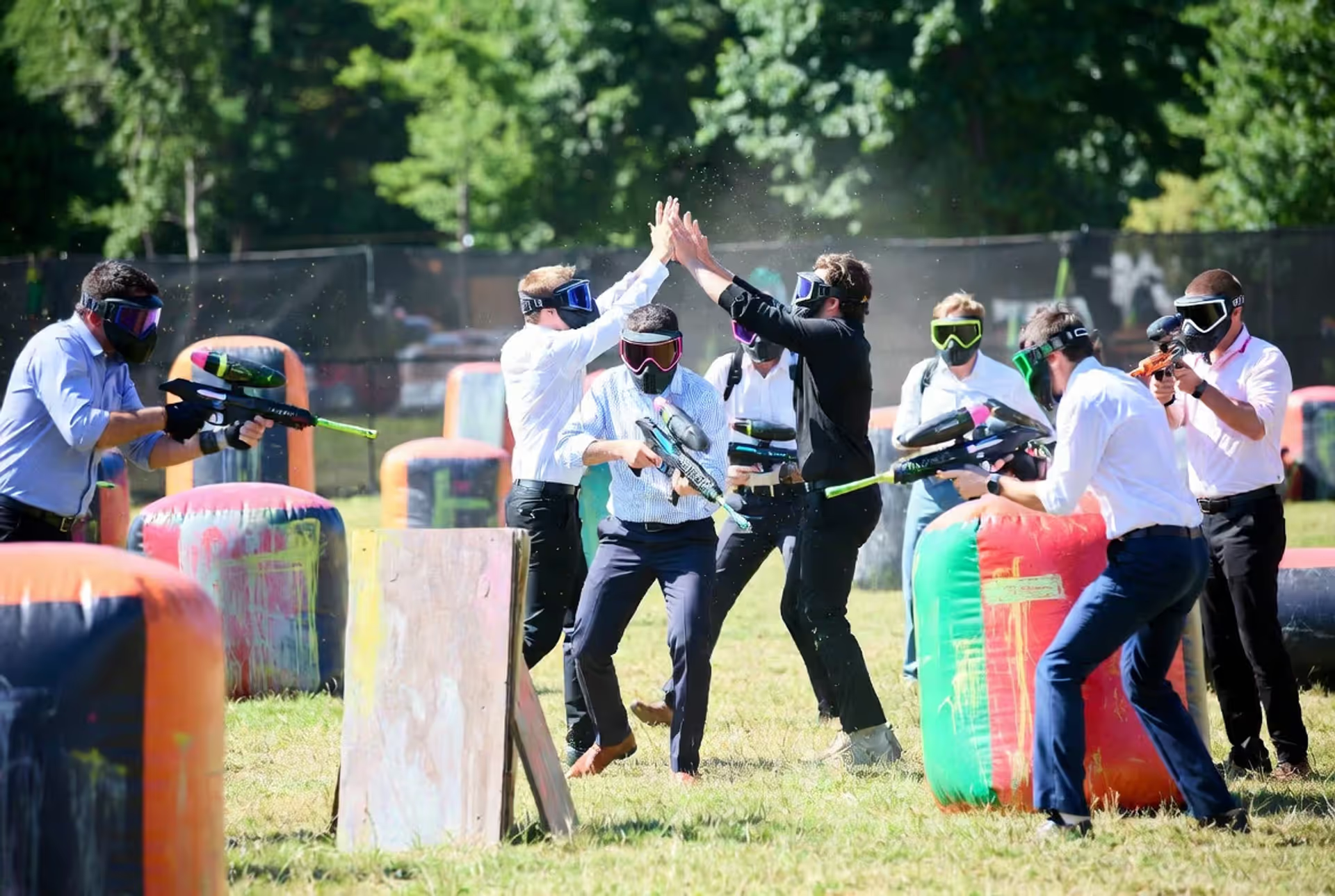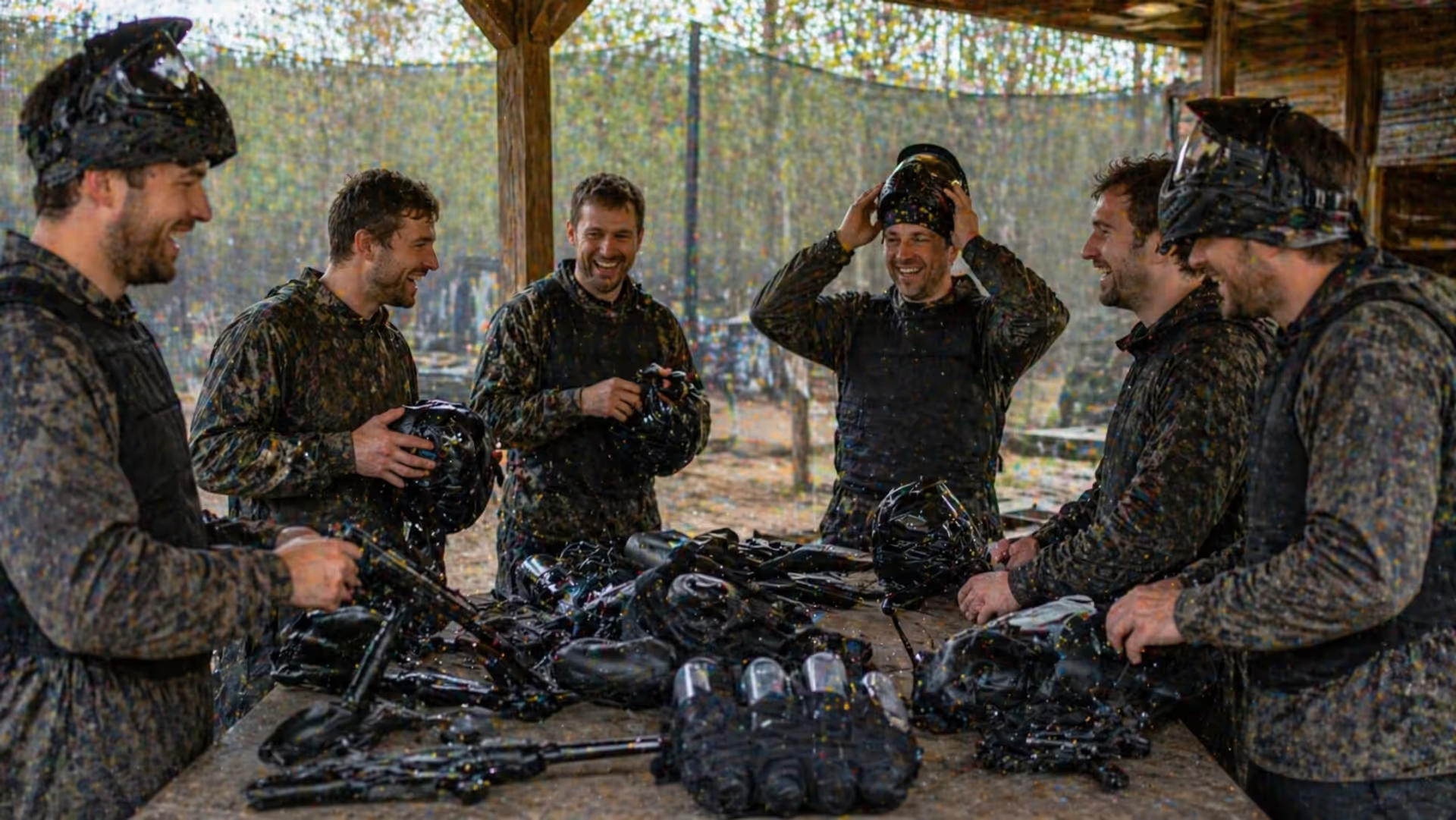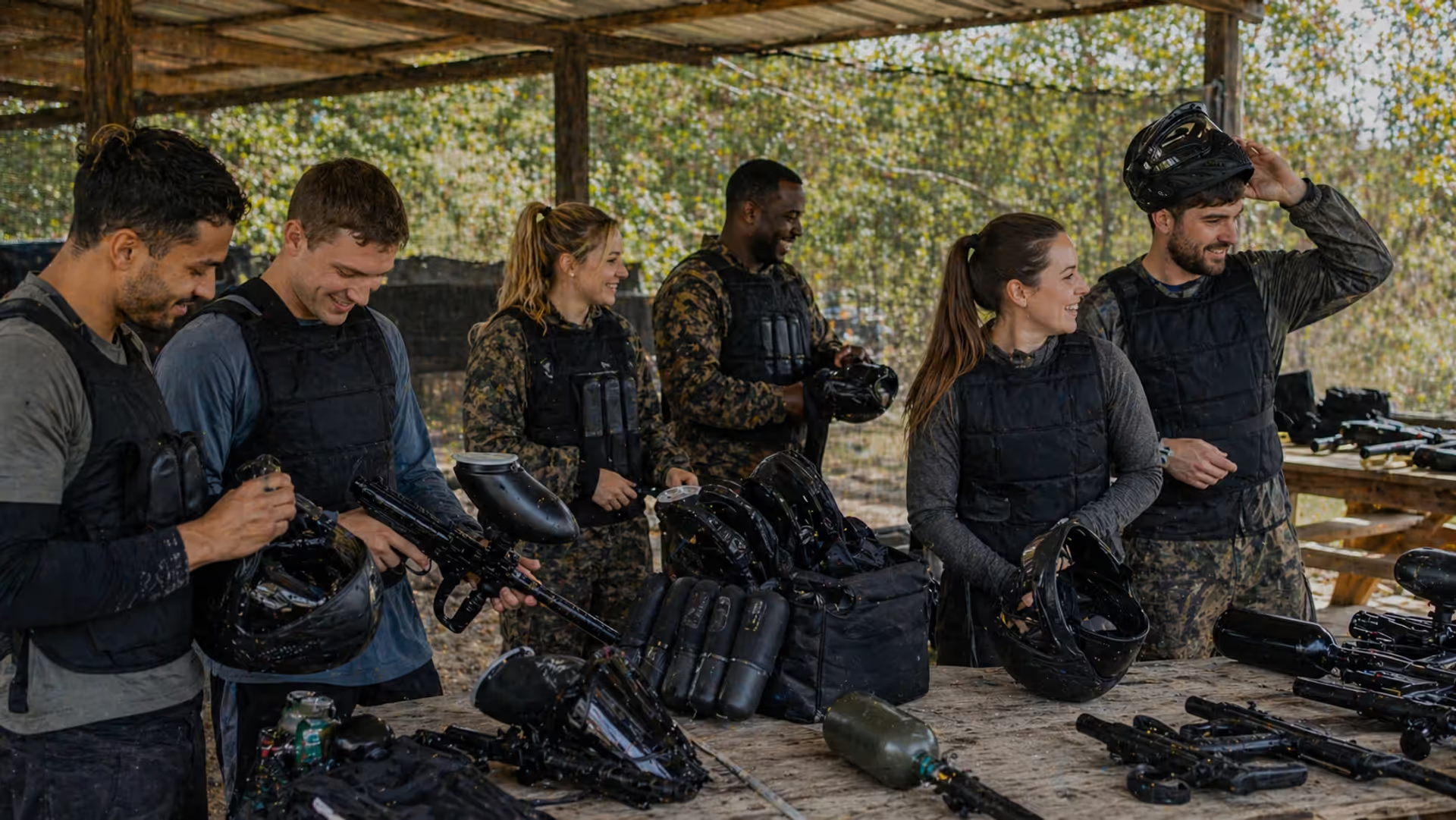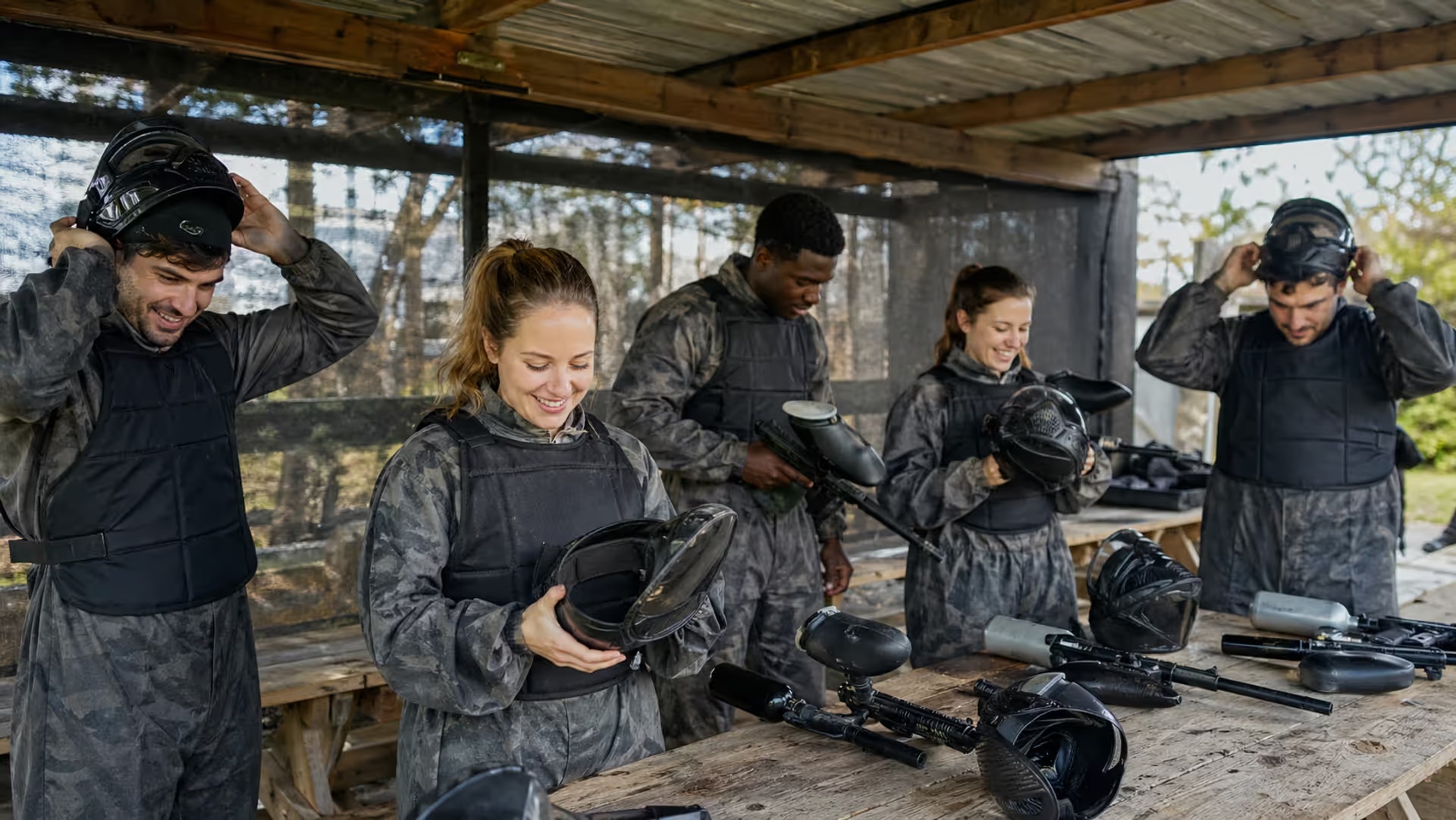
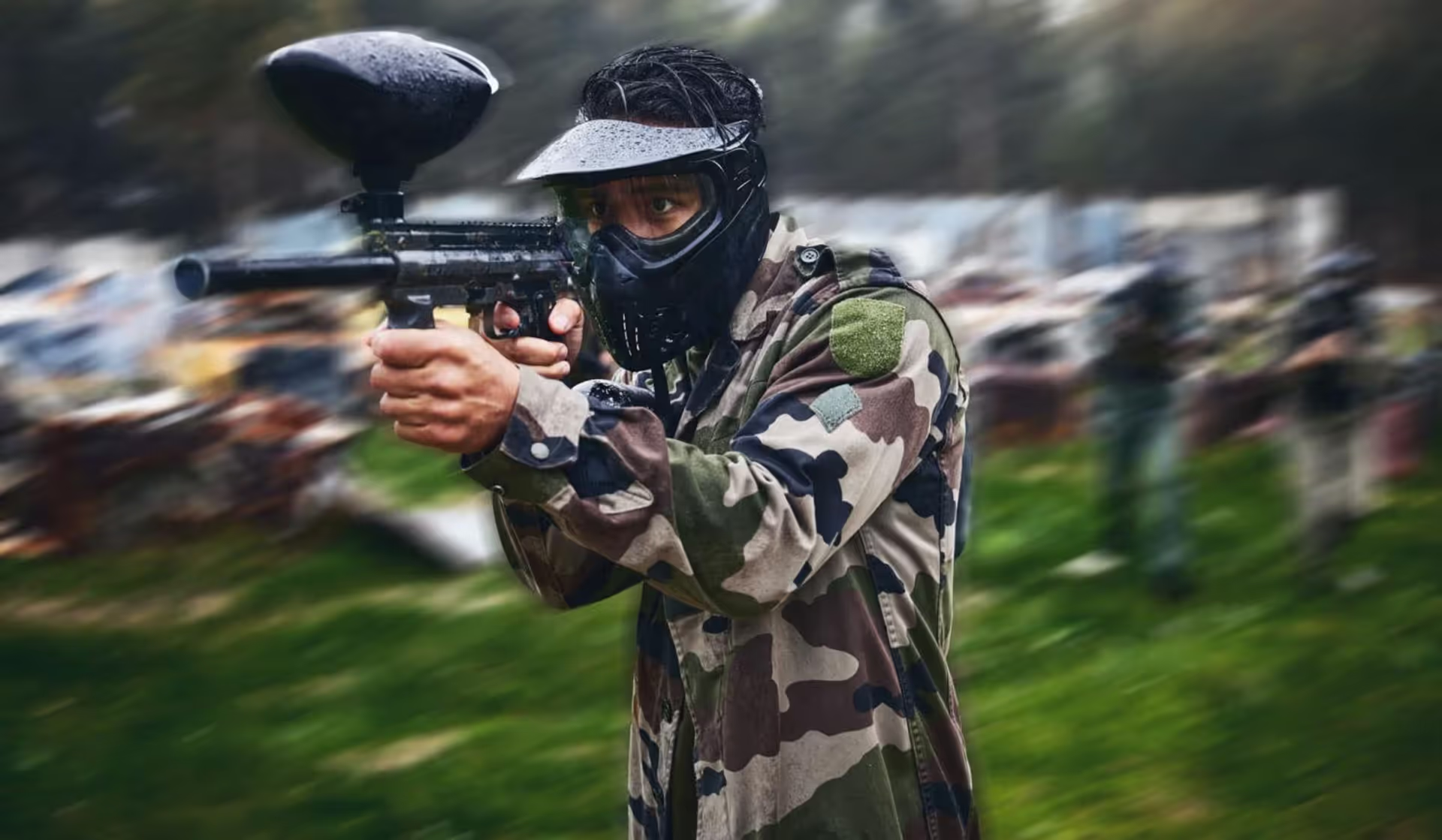
Paintball in motion
Paintball Shooting Guide

Content
Ever wondered what it's like to sprint through a forest dodging bright splatters of paint while your heart pounds in your chest? Paintball shooting delivers that rush—mixing strategy, teamwork, and pure adrenaline in ways few other activities can match. First-timers and seasoned players alike find something compelling about the sport, whether it's the tactical challenge or just the excuse to run around shooting your friends.
This guide walks through everything from basic rules to cost breakdowns, so you'll know exactly what you're getting into before you step onto the field.
What Is Paintball Shooting and How Does It Work
Picture this: you're holding an air-powered marker (calling it a "gun" makes field staff cringe) loaded with gelatin capsules filled with water-soluble dye. Your goal? Hit opponents with these paintballs before they hit you. When a capsule breaks on someone's gear or body, they're eliminated for that round.
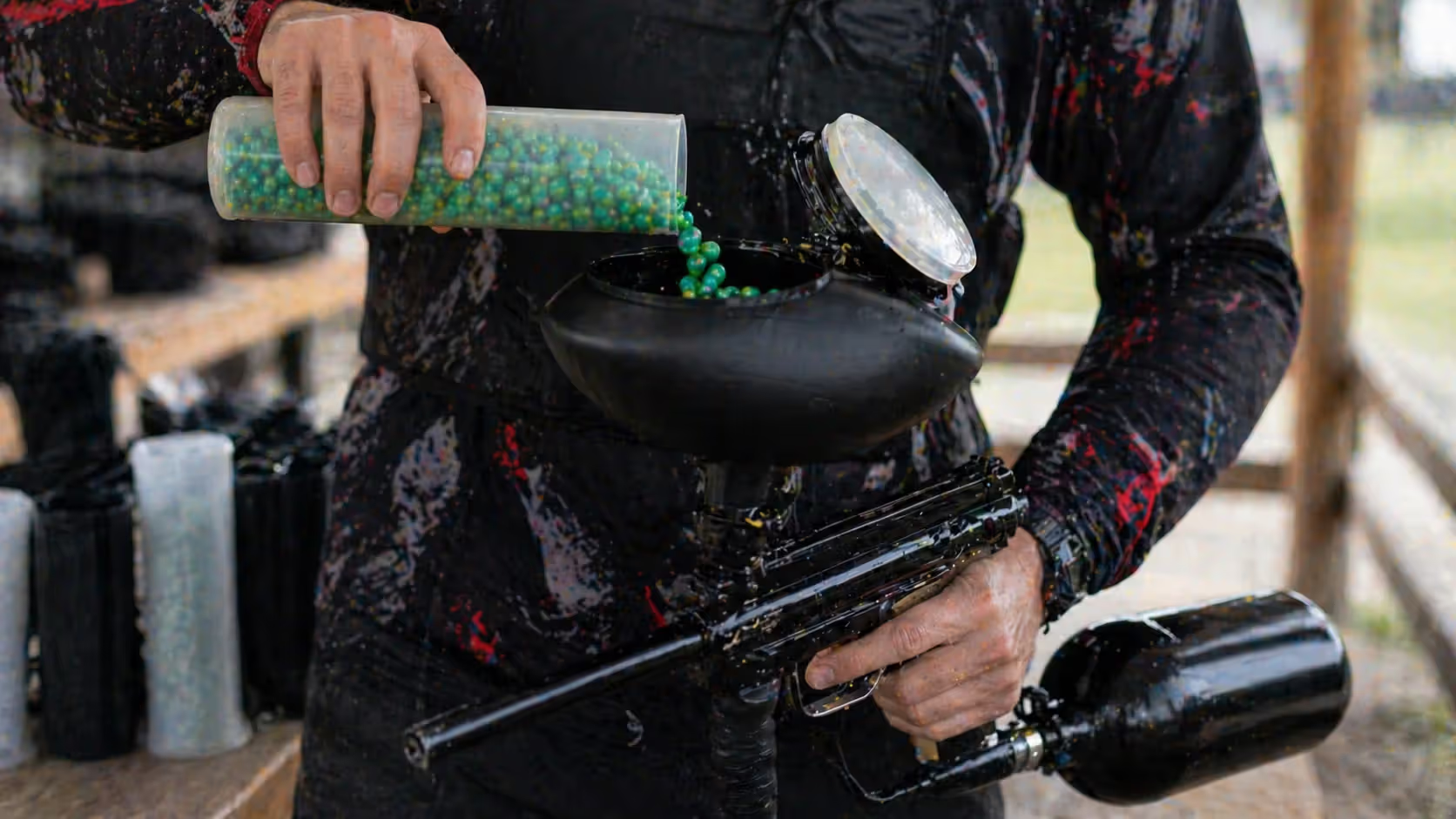
Your marker operates on compressed air or CO2—think of it like a sophisticated potato gun. These gas cartridges push paintballs out at roughly 280 feet per second. Before you play, referees use chronographs to test every marker's speed, making sure nobody's running a hot weapon that exceeds safety thresholds. The hopper sitting on top gravity-feeds or force-feeds balls into the chamber, and when you pull the trigger, a burst of air sends one flying downrange.
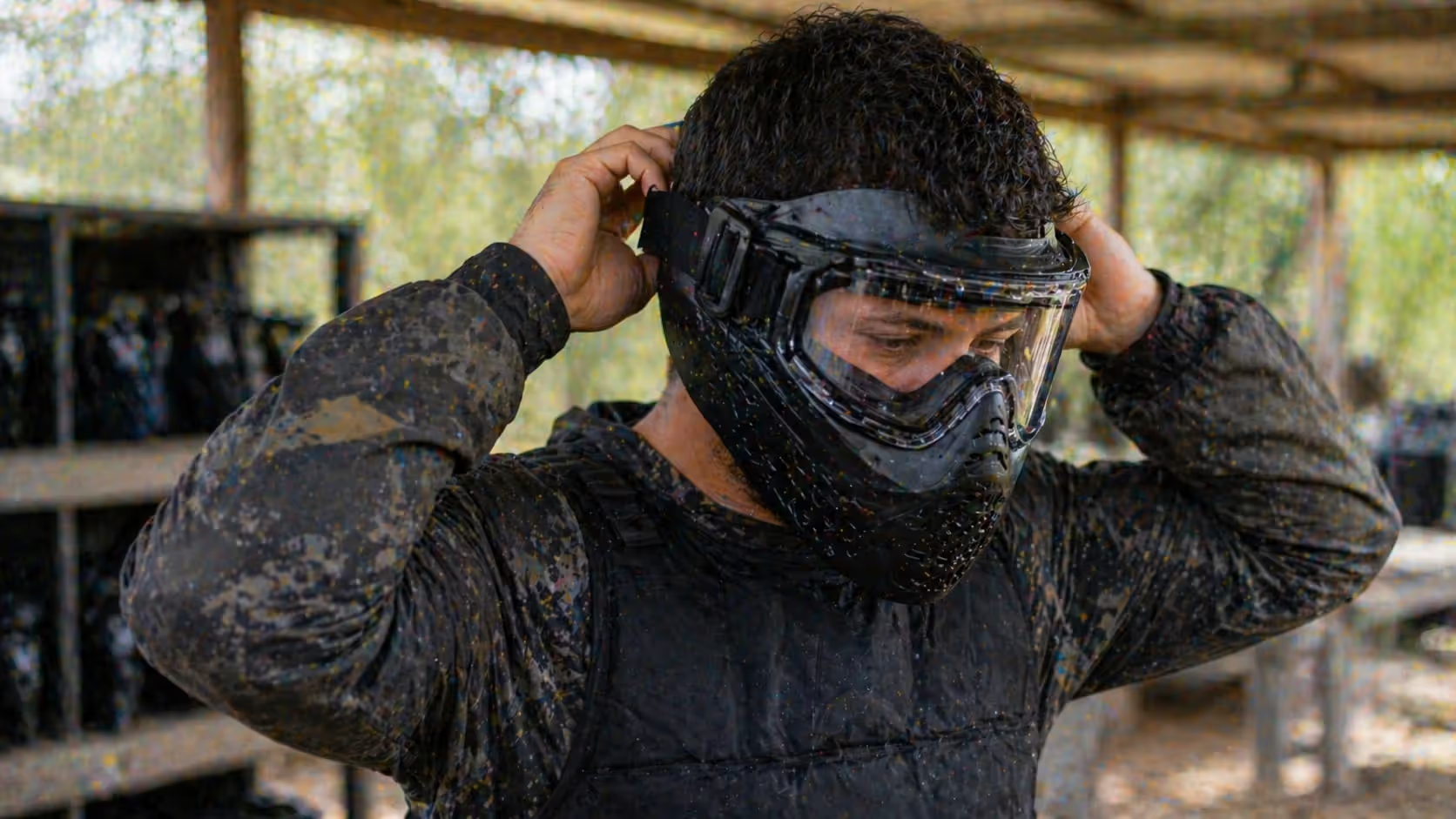
Now here's the non-negotiable part: safety rules aren't suggestions. Your mask stays on your face the entire time you're anywhere near an active field—and yes, that includes when you're walking back after getting eliminated. Those masks cover everything from forehead to chin, protecting eyes, ears, and teeth. Off the field, every marker gets plugged with a barrel sock or plug. Can't fire accidentally if there's a barrier in the barrel.
Fields also maintain minimum engagement distances, usually 10-15 feet. Shooting someone point-blank isn't just poor sportsmanship—it can cause nasty welts and bruises. Some venues hand out "mercy" rules where you're supposed to call out a close opponent rather than lighting them up.
What are you actually trying to accomplish out there? Depends on the game format. Sometimes you're grabbing flags, sometimes defending a zone, sometimes just trying to be the last player standing. Individual rounds run about 10-20 minutes typically, though big scenario events can stretch for half a day. Between matches, you're refilling hoppers, topping off air tanks, and arguing with your teammates about who actually got eliminated first.
Here's what separates paintball from just running around shooting randomly: tactics matter way more than trigger speed. Finding good cover, communicating with your team, and moving deliberately beats out the guy who empties 200 rounds without hitting anyone. You'll learn more about positioning and decision-making in an afternoon of paintball than you might expect.
Author: Ethan Rowe;
Source: lakestaytents.com
Types of Paintball Games You Can Play
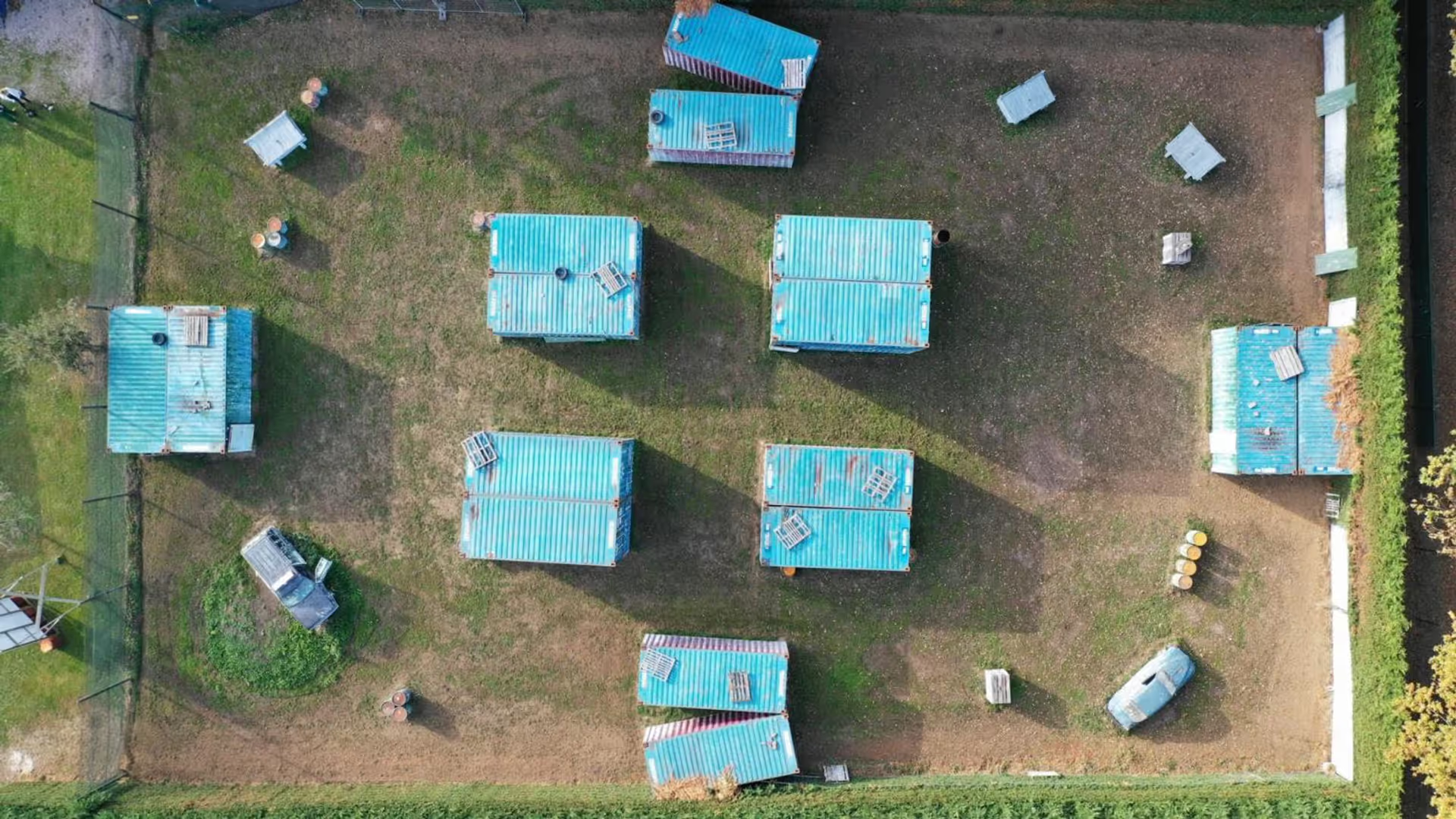
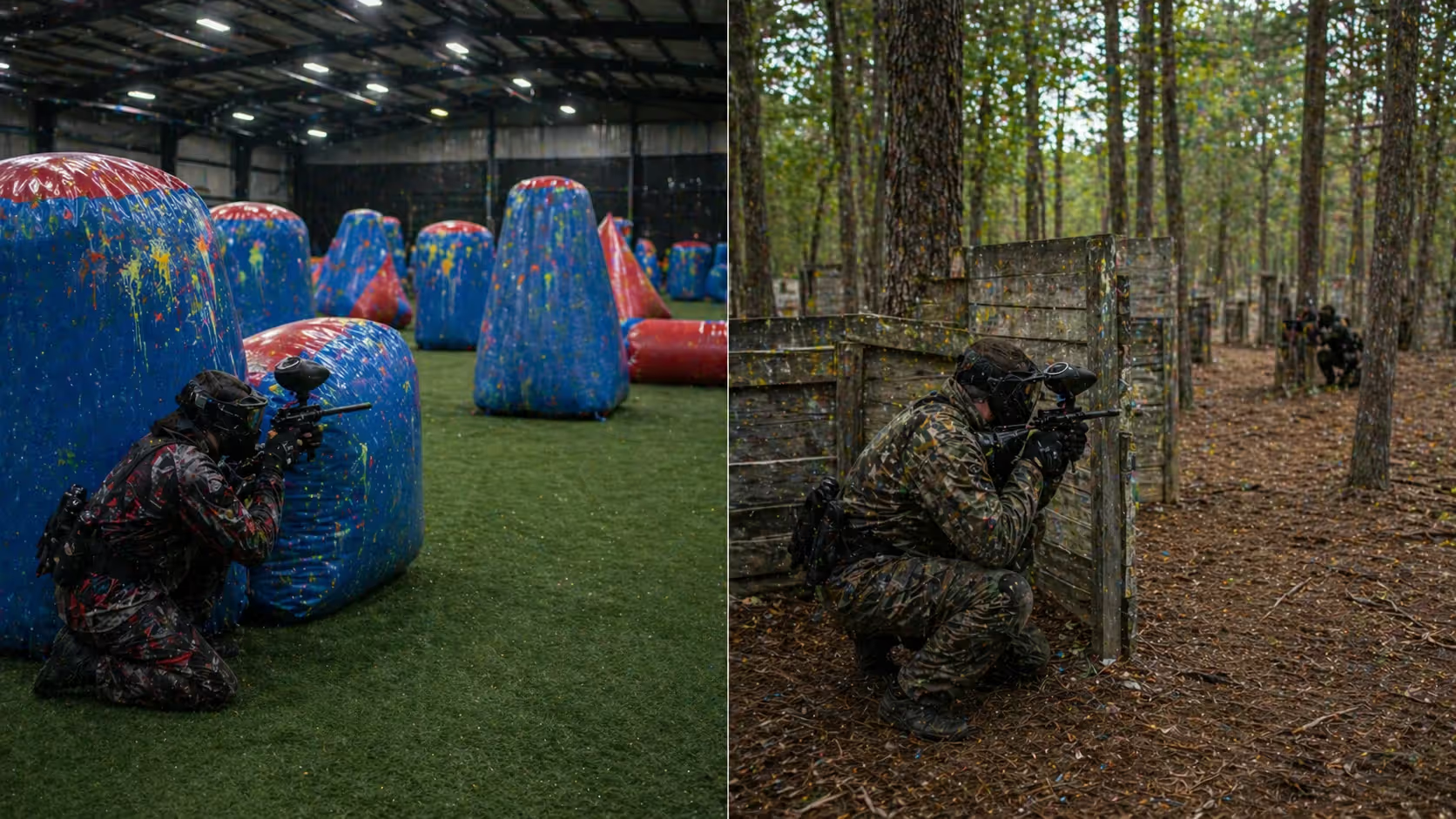
Speedball happens on manicured fields with inflatable bunkers arranged symmetrically. Think of it as paintball's answer to competitive chess—fast, aggressive, and highly strategic. Matches end quickly, sometimes in under three minutes when skilled teams execute coordinated pushes. Players practice specific moves and communicate constantly. If you like tournament-style competition and don't mind getting eliminated fast, speedball delivers.
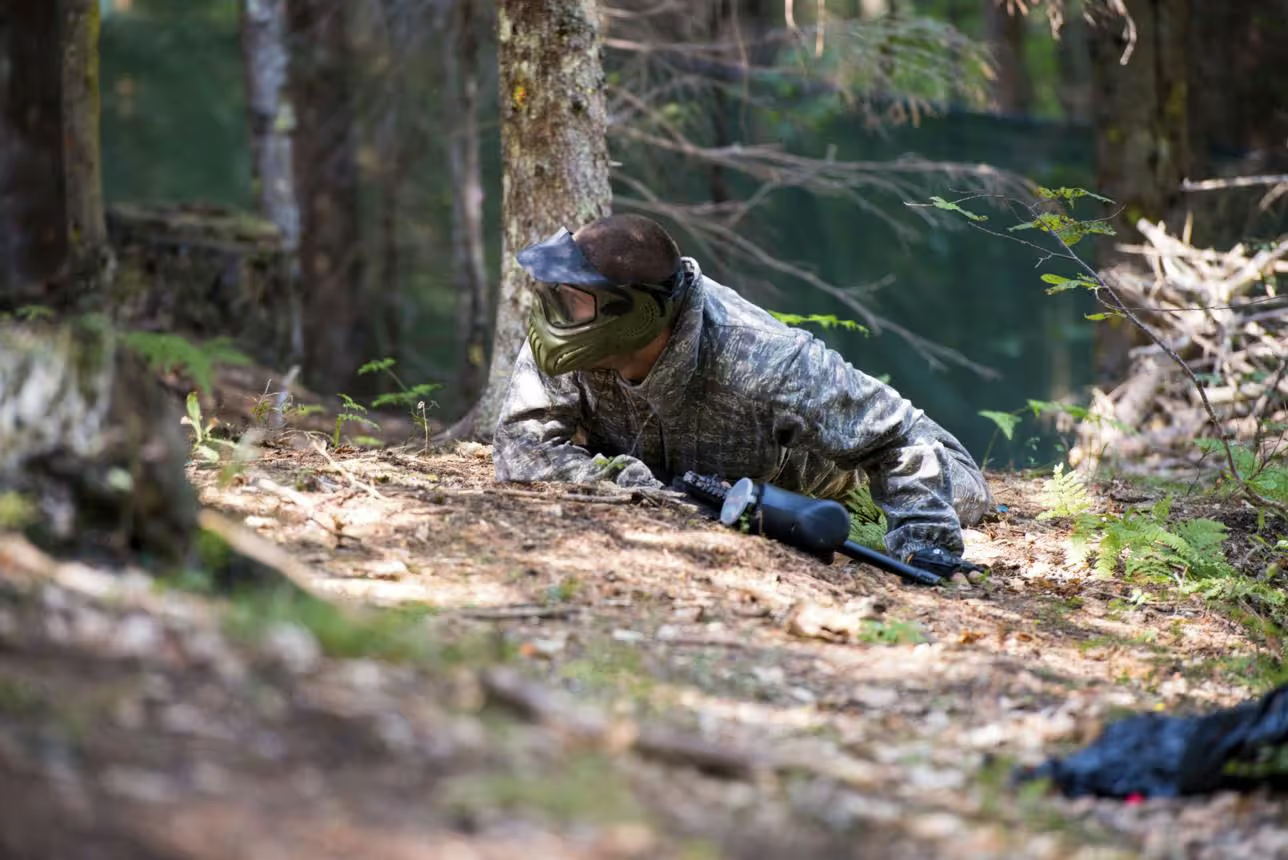
Woodsball takes the opposite approach. You're playing in actual forests with trees, hills, and whatever natural features exist. Games progress slowly because you're navigating roots, ducking behind trees, and trying to spot opponents in camouflage 50 yards away. This format rewards patience over aggression. Like hiking with the constant threat of colorful violence.
Scenario games add storylines to the shooting. Maybe you're defending a mock military base, or rescuing fake hostages, or completing timed objectives while opponents try stopping you. These events often run 4-8 hours with respawn points, meaning you can rejoin after being eliminated instead of sitting out. The narrative element attracts players who want more immersion than standard elimination provides.
Capture the flag needs no explanation—everyone knows the basic concept from elementary school. Grab the opponent's flag from their base, return it to yours without getting shot. Simple premise, tricky execution. You need offensive players pushing forward and defensive players protecting home base simultaneously.
Elimination strips everything down to survival. No flags, no objectives, no respawns. Last team with players still standing wins. Every decision feels weightier when you know one mistake ends your round. Some fields place a single flag at the midpoint, forcing both teams to fight over the same spot rather than defending separate territories.
Author: Ethan Rowe;
Source: lakestaytents.com
Indoor vs Outdoor Paintball Venues
Indoor facilities mean climate control—no sunburn, no frostbite, no mud. The temperature stays comfortable year-round, lighting stays consistent, and rain never cancels your plans. Most indoor arenas pack multi-level structures and tight corridors into compact spaces, creating fast-paced urban-style firefights. Field sizes rarely exceed 20,000 square feet, which keeps engagement ranges short and action constant.
Outdoor fields give you room to breathe. We're talking acres instead of square feet—some properties span 50+ acres with multiple field types. Natural terrain creates elevation changes, tree cover, and open clearings that shift tactical options dramatically. The tradeoff? Weather becomes a factor. Summer heat causes exhaustion, winter cold numbs fingers, and rain turns everything into a muddy mess.
Think about game pace differences. Indoor arenas favor quick reflexes and constant movement because you're always 20-30 feet from opponents. Outdoor fields let you engage from 100+ feet away, which slows things down and rewards careful positioning over twitchy shooting.
Terrain advantages get interesting outdoors. Indoor venues engineer balanced layouts where neither starting position has inherent superiority. Outside, one team might start on higher ground while the other has denser cover. These imbalances actually create strategic depth when teams switch sides between rounds—suddenly you're adapting to completely different tactical situations.
| Feature | Indoor Paintball | Outdoor Paintball |
| Typical field size | 10,000-20,000 square feet | 5 acres up to 50+ acres |
| Weather dependency | Zero—climate controlled all year | Totally dependent on conditions |
| Terrain type | Built structures and barriers | Hills, trees, natural obstacles |
| Game pace | Fast and continuous | Varies from slow stalking to quick bursts |
| Best for | Year-round reliability, new players | Big groups, tactical variety |
| Average cost | $35-50 per player | $30-45 per player |
Price differences between venue types stay pretty minimal. Outdoor fields sometimes charge slightly less for entry, while indoor places might include nicer amenities. Choose based on the experience you want rather than saving five bucks.
Author: Ethan Rowe;
Source: lakestaytents.com
What to Expect During Your First Paintball Experience
Show up 30-45 minutes before your scheduled time—seriously, don't cut this close. Check-in involves paperwork (waivers acknowledging you understand the risks), payment for entry and rentals, and buying your initial paintball supply. If you're under 18, your parent or guardian needs to sign off. Staff will ask if you've played before to help balance teams, though most places mix experience levels anyway.
Safety briefings come next, and you'd better pay attention. Referees spend 10-15 minutes explaining mask protocols, showing proper marker handling, and defining field boundaries. They'll demonstrate hand signals for common situations—like how to indicate your marker jammed or you need a referee. This isn't busywork; this is the stuff that prevents injuries.
Gear fitting happens after the briefing. Staff will size you for a mask that seals without gaps around your face, then hand you a marker, hopper, and air tank. Rental markers tend to be simple mechanical models rather than fancy electronic ones, which honestly makes life easier when you're learning. You'll also get a basic chest protector or pod pack for carrying extra paintballs.
Here's what nobody tells you: the fear of getting hit usually exceeds the actual pain. Yeah, it stings—think of a hard finger snap against your skin. But adrenaline dulls the sensation significantly, and most people don't even notice hits until they see paint on their clothes. The anticipation beforehand is honestly worse than the reality.
A typical session includes 4-6 games spread over 2-3 hours of actual play time. Between matches, you'll head back to safe zones for reloading, drinking water (seriously, hydrate), and discussing what just happened with teammates. Referees often switch up field layouts or game types to keep things fresh. From arrival to departure, plan on spending 3-4 hours at the facility.
You'll probably use 200-500 paintballs during a standard outing, though aggressive shooters blow through way more. Bring water—masks trap heat like crazy and dehydration sneaks up on you. Wear clothes you genuinely don't care about; the paint washes out eventually, but fields get dirty and dusty or muddy depending on recent weather.
Essential Gear and Safety Equipment
Masks are non-negotiable—the single piece of equipment you absolutely cannot compromise on. Quality masks provide full-face protection with thermal dual-pane lenses that resist fogging (cheap single-pane lenses fog up immediately and make you miserable). Rental masks work fine for occasional play, but regulars often drop $50-150 on personal masks for better comfort and visibility. Never, ever remove your mask in active play areas, even if it fogs completely. Walk to a designated safe zone first.
Markers range from simple mechanical models to sophisticated electronic versions. Mechanical ones use spring-loaded internals and run $100-300 for decent entry-level equipment. Electronic markers offer programmable firing modes and smoother operation, starting around $300 and climbing past $2,000 for tournament-grade gear. Stick with rentals initially—no point buying until you know you'll play regularly.
Hoppers are those containers sitting on top that feed paintballs down into your marker. Basic gravity-fed models cost $10-20 but limit how fast you can shoot. Electronic force-feed hoppers ($50-200) use motorized paddles to maintain consistent feeding during rapid fire. Match your hopper to your marker's capabilities—putting a $150 hopper on a basic rental marker makes zero sense.
Air tanks store the compressed gas powering your marker. Aluminum CO2 tanks run $20-40 but perform inconsistently when temperatures fluctuate. High-pressure air tanks ($50-250) maintain steady pressure regardless of weather and are required for electronic markers. These tanks need hydrostatic testing every 3-5 years to maintain safety certification—factor that into ownership costs.
Beyond masks, protective gear stays optional but recommended. Padded chest protectors, gloves, and neck guards reduce impact discomfort considerably. Long sleeves and pants prevent scratches in wooded areas. Avoid loose, baggy clothing that catches on obstacles. Lots of players wear athletic compression gear underneath regular clothes for extra padding without bulk.
Should you rent or buy? If you're playing monthly or more, personal equipment pays for itself within a year while delivering better performance and hygiene. Playing 2-3 times annually? Stick with rentals and avoid the maintenance headaches and storage hassles.
Author: Ethan Rowe;
Source: lakestaytents.com
How Much Does a Paintball Day Out Cost
Entry fees at most US venues run $25-40 per person. That buys you field access, basic equipment rentals, and air refills throughout the day. Notice what's missing? Paintballs. Facilities sell those separately, which is how they actually make money.
Equipment rental packages tack on another $10-25. That rental fee gets you the marker, mask, hopper, and air tank—basically everything you need to play. Some places throw in chest protectors or camo suits for a few extra dollars. Bringing your own gear obviously eliminates this cost, assuming you want to maintain and transport equipment.
Paintball refills represent the variable expense that surprises newcomers. A 500-round bag costs $15-25, and active players easily burn through 500-1,000 rounds during a typical session. Conservative shooters might make 500 last all day, while aggressive front players can blast through 2,000+. Budget $30-60 for ammunition as a realistic middle estimate.
Group packages offer better per-person value once you hit 8-12 players. These bundles typically include entry, equipment, and a set paintball allocation (often 500-1,000 per person) for $50-75 each. The per-person cost drops as your group grows, making birthday parties and team outings more economical.
All-day packages cater to serious players planning extended sessions. For $80-120, you get unlimited air, equipment use, and sometimes unlimited paintballs (though quality might be lower-grade). These deals make sense if you're planning 6+ hours of play.
| Cost Item | Low Range | High Range | Notes |
| Entry fee | $25 | $40 | Gets you field access and air refills |
| Equipment rental | $10 | $25 | Includes marker, mask, hopper, tank as a package |
| Paintballs (per 500) | $15 | $25 | Usage varies wildly by playing style |
| Group packages | $45 | $75 | Requires 8+ players, includes set paintball amount |
| All-day packages | $80 | $120 | Extended field time, possibly unlimited paint |
Paintball Experience Gift Packages
Gift certificates solve the eternal "what do I buy them" problem for birthdays and holidays. Most venues sell vouchers from $50-200, redeemable for entry, equipment, and ammunition. These packages often include perks like free upgrades or bonus paintballs.
Birthday party packages bundle field reservations with dedicated staff, sometimes private game areas, and occasionally food service. Expect to pay $300-600 for groups of 10-15, with costs per person dropping for larger parties. Many facilities offer party rooms for cake and gifts between game sessions.
Corporate events have become a significant part of the paintball business. Team-building packages for 20-50 employees include customized scenarios, professional facilitation, and catering options. Pricing starts around $1,500 for basic half-day events and can exceed $5,000 for elaborate full-day programs with specialized objectives and debriefing sessions.
Paintball teaches you more about teamwork in two hours than most corporate training does in two days. The adrenaline, strategy, and communication under pressure create bonds that last.
— Tom Cole
Gift packages work best when you know the recipient's schedule flexibility, since most vouchers expire within 6-12 months. Some venues let gift buyers coordinate surprise bookings, handling logistics while keeping the recipient unaware until the big reveal.
Common Mistakes New Paintball Players Make
Poor positioning eliminates more beginners than accurate shooting ever does. New players either bunch up together—creating one big easy target—or stand completely exposed while firing away. Smart cover usage means keeping most of your body protected while maintaining sightlines on opponents. Try the "slice the pie" technique: gradually lean out from cover to expand your view without exposing your entire body.
Mask removal in active zones breaks the cardinal safety rule. Fogged lenses tempt players to lift masks for "just a second," but stray paintballs don't check if you're ready. Can't see through fog? Signal a referee and walk to the safe zone with one hand on your mask and the other holding your marker overhead. That 30-second inconvenience beats a potential eye injury every single time.
Trigger discipline separates smart players from those who empty their hoppers in 30 seconds flat. Sustained full-auto fire reveals your exact position, wastes ammunition, and rarely improves accuracy. Fire 2-3 shot bursts, assess where they land, then continue if needed. Accuracy beats volume in almost every paintball scenario.
Ignoring communication leaves teams fragmented and ineffective. Coordinated units require constant updates on enemy positions, movement plans, and ammunition status. Develop simple callouts: "Two moving left," "Reloading," "Push on three." Teams that talk consistently outperform groups of individually skilled silent players.
Bunker fixation causes serious tunnel vision. New players often focus exclusively on the opponent directly in front of them, completely ignoring flanking threats. Maintain situational awareness by periodically scanning your periphery. Assume enemies are always trying to outmaneuver you—because they absolutely are.
Static gameplay hands all initiative to your opponents. Staying in one bunker the entire match makes you predictable and vulnerable. Even lateral movements to adjacent cover disrupt enemy aim and create new shooting angles. Coordinate with teammates so someone provides suppressing fire while others advance.
Frequently Asked Questions About Paintball
Paintball shooting offers accessible excitement whether you're planning a single birthday party outing or developing long-term competitive skills. The sport scales from casual weekend recreation to serious tournament competition, accommodating various commitment levels and budgets without forcing you into one path.
Success comes from tactical thinking, team coordination, and learning from mistakes—not expensive equipment or natural athleticism. Your first experience will probably reveal areas for improvement (positioning, communication, ammunition management) that become clearer with each subsequent game.
The barrier to entry stays low: most people can participate in their first session for under $75, covering all necessary equipment and ammunition. From there, explore different game formats, invest in personal gear if you play regularly, or just enjoy occasional outings with friends. The combination of physical activity, strategic challenge, and social interaction creates memorable experiences that explain why millions of Americans play paintball every year.