Paintball Industry Growth and Market Trends

Content
Here's something most people don't realize: paintball isn't dead, but it's definitely not the juggernaut it was in 2011. The sport has weathered a brutal decade of competition from smartphones, trampoline parks, and a seemingly endless parade of "the next big thing" in recreational activities. What we're seeing now is a leaner, smarter industry that's figured out how to survive—and in some pockets, actually thrive.
If you're trying to figure out whether paintball is worth investing in, playing regularly, or building a business around, you need real numbers. Not marketing fluff. Let's dig into what's actually happening with market size, who's still showing up to play, and where this whole thing is headed.
Current Paintball Market Size and Revenue Analysis
The US paintball industry pulled in about $1.2 billion last year. That number combines everything: markers and gear, field fees, those expensive bags of paint that seem to evaporate in minutes, and yes, even the overpriced hot dogs at the concession stand.
Here's how that revenue actually breaks down. Fields themselves grab the biggest slice—roughly 45% of every dollar spent on paintball. Makes sense when you consider admission fees, group bookings, and all those corporate team-building sessions where Dave from accounting finally gets to shoot his boss (with paint, obviously). Equipment sales take another 35%. Paint and gas refills? About 15%. Everything else—food, photos, that random merchandise nobody really needs—rounds out the last 5%.
We've got around 1,850 commercial paintball facilities operating across the country right now. That's down from nearly 2,400 back in 2012. Before you assume the sky is falling, understand what actually happened. Small fields running on borrowed time and maxed-out credit cards finally closed up shop. Meanwhile, the well-run operations with multiple fields, steady group bookings, and owners who actually understood business? They expanded.
A typical customer drops between $45 and $85 per visit, depending on where you're playing. Fields near Chicago or LA charge premium rates because they can. Rural operations in places like rural Kentucky or upstate New York compete on price—sometimes too aggressively for their own good. Corporate events are where the real money lives. A single company outing can bring in $800 to $2,500, and those customers aren't arguing over paint prices the way teenagers do.
The equipment market has split into two worlds. Tournament players drop $800+ on electronic markers with features that would make a casual player's head spin. But the volume? That's all in the $150-$300 mechanical markers that beginners buy after renting a few times and deciding they're hooked.
Paintball Participation Rates Over the Last Decade
2011 was peak paintball. That year, 10.6 million Americans played at least once. By 2019, we were down to 6.8 million. That's a 36% nosedive. Ouch.
Then COVID hit, and things got weird. Fields shut down in 2020, and participation cratered to just 4.2 million. But 2021 flipped the script. Suddenly everyone remembered that paintball happens outdoors, naturally keeps people spread out, and doesn't require you to touch anything gross in a public bathroom. Participation rocketed back up to 7.4 million in 2022.

Author: Ethan Rowe;
Source: lakestaytents.com
We're sitting at about 7.1 million players now in 2026. That's a slight cooldown from the post-pandemic surge, but here's what matters: the industry held onto players it would've never reached otherwise. Some of those people who tried paintball during the outdoor recreation boom actually stuck around.
The ugliest years were 2012 through 2016. Participation dropped 8-12% every single year during that stretch. That timeframe lines up perfectly with smartphones becoming everyone's constant companion, kids getting locked into year-round soccer and travel baseball, and Tough Mudder convincing people that paying to crawl through mud was somehow a good time.
Now here's a stat that explains why some fields print money while others barely survive: regular players—folks who show up six or more times a year—make up just 12% of total participants but generate 45% of field revenue. These are your league players, your tournament junkies, your weekend warriors who own $2,000 worth of gear. Casual players who visit once or twice annually? They're 63% of participants but contribute way less per capita.
Regional patterns tell interesting stories. Southeast and Southwest fields have bounced back stronger than Midwest and Northeast operations. Hard to run a profitable paintball field when you're dealing with snow from November through March.
Who Plays Paintball Today
The average paintball player is 26 years old now. In 2014, that number was 22. The sport's aging, and not in the good wine kind of way—we're losing teenagers faster than we're replacing them.
Break it down by age and you'll see the problem. Kids aged 12-17 are only 18% of players now, down from 28% ten years ago. The 18-25 bracket is still the biggest chunk at 34%. Players aged 26-35 make up 27%. Once you get past 35, numbers drop off fast—16% for the 36-50 crowd, and barely 5% over 50.
Gender breakdown hasn't changed much. We're still looking at 82% male, 18% female. Women's participation has crept up from 14% in 2016, thanks partly to fields running beginner programs that don't feel like stepping into a Call of Duty lobby, and scenario events where not everyone has to be infantry.
Income stats are revealing. About 38% of regular paintball players come from households making over $75,000 a year, compared to 32% of Americans overall. Paintball's expensive enough that it naturally filters out budget-conscious families. When you're spending $300 for a family outing, you need some financial cushion.
Geography follows population density, mostly. California, Texas, Florida, Pennsylvania, and Ohio have the most players by raw numbers. But per-capita participation is highest in Pennsylvania, Wisconsin, and North Carolina—states where paintball got established early and the culture stuck.
Here's the thing about casual versus competitive players: tournament players are less than 5% of everyone who plays, but they drive all the innovation. Manufacturers design new markers to win over these guys. Everyone else? They're showing up for bachelor parties, corporate events, and birthday parties. These groups account for 40% of bookings at most fields, but fewer than 15% ever come back to play on their own.

Author: Ethan Rowe;
Source: lakestaytents.com
What's Driving Growth in the Paintball Business Industry
Some facility operators figured out that waiting for walk-on players is a losing strategy. The fields making money have adapted hard.
Low-impact paintball has been a legitimate game-changer. Instead of the standard .68 caliber balls that sting like crazy, you're using .50 caliber. Smaller projectile, less impact, way less intimidation for first-timers. Fields offering low-impact report 25-30% better conversion rates among nervous beginners. Moms who'd never let their kids try regular paintball will sign off on the smaller ammo. Equipment makers now have entire product lines built around it.
Technology improvements matter more than you'd think. Modern electronic markers are reliable, accurate, and easy to maintain. Compare today's rental guns to what fields had ten years ago, and it's night and day. Better equipment means fewer frustrated customers and more five-star reviews.
Corporate events are quietly bankrolling a lot of successful fields. Companies that used to do trust falls and escape rooms discovered that paintball team-building actually works—and people remember it. Fields that invested in dedicated corporate packages, private reservations, catering partnerships, and actual event coordinators are charging premium rates and getting repeat bookings year after year.
Private parties keep the weekend slots filled. Birthdays, bachelor parties, youth groups—they all need somewhere to go. Smart operators built online booking systems, fixed-price packages, and streamlined the whole process so a stressed parent can book everything in ten minutes without playing phone tag.
Competitive leagues keep the serious players engaged. Regional tournament circuits give dedicated players something to work toward beyond just shooting their buddies. Prize money isn't life-changing—this isn't esports—but the competitive structure creates goals and keeps people buying new equipment.
Scenario paintball events are a whole different animal. Think 2,000+ players descending on a field for a weekend, playing out elaborate storylines with objectives, themes, and coordinated teams. Events like Oklahoma D-Day and Cousin's Big Game combine gameplay with camping, vendor expos, and community building. These mega-events generate serious revenue for host facilities and create memories that bring people back year after year.

Author: Ethan Rowe;
Source: lakestaytents.com
Paintball vs. Airsoft Industry Growth Comparison
Airsoft has been eating paintball's lunch with younger players, and the numbers don't lie.
| What We're Comparing | Paintball | Airsoft |
| Total US Market Value | $1.2 billion | $680 million |
| People Playing Annually | 7.1 million | 4.8 million |
| Typical Player Age | 26 years | 23 years |
| Getting Started Costs | $350-$600 | $200-$400 |
| Where People Play | Commercial fields (78%) | Private land/indoor (65%) |
| Growth Rate (Last 5 Years) | +1.2% | +4.7% |
Airsoft's growth advantage comes down to economics and flexibility. Plastic BBs are reusable. A typical paintball session burns through $30-$50 in paint. Airsoft? Maybe $10 in ammunition for the same amount of trigger time. That difference adds up fast when you're playing regularly.
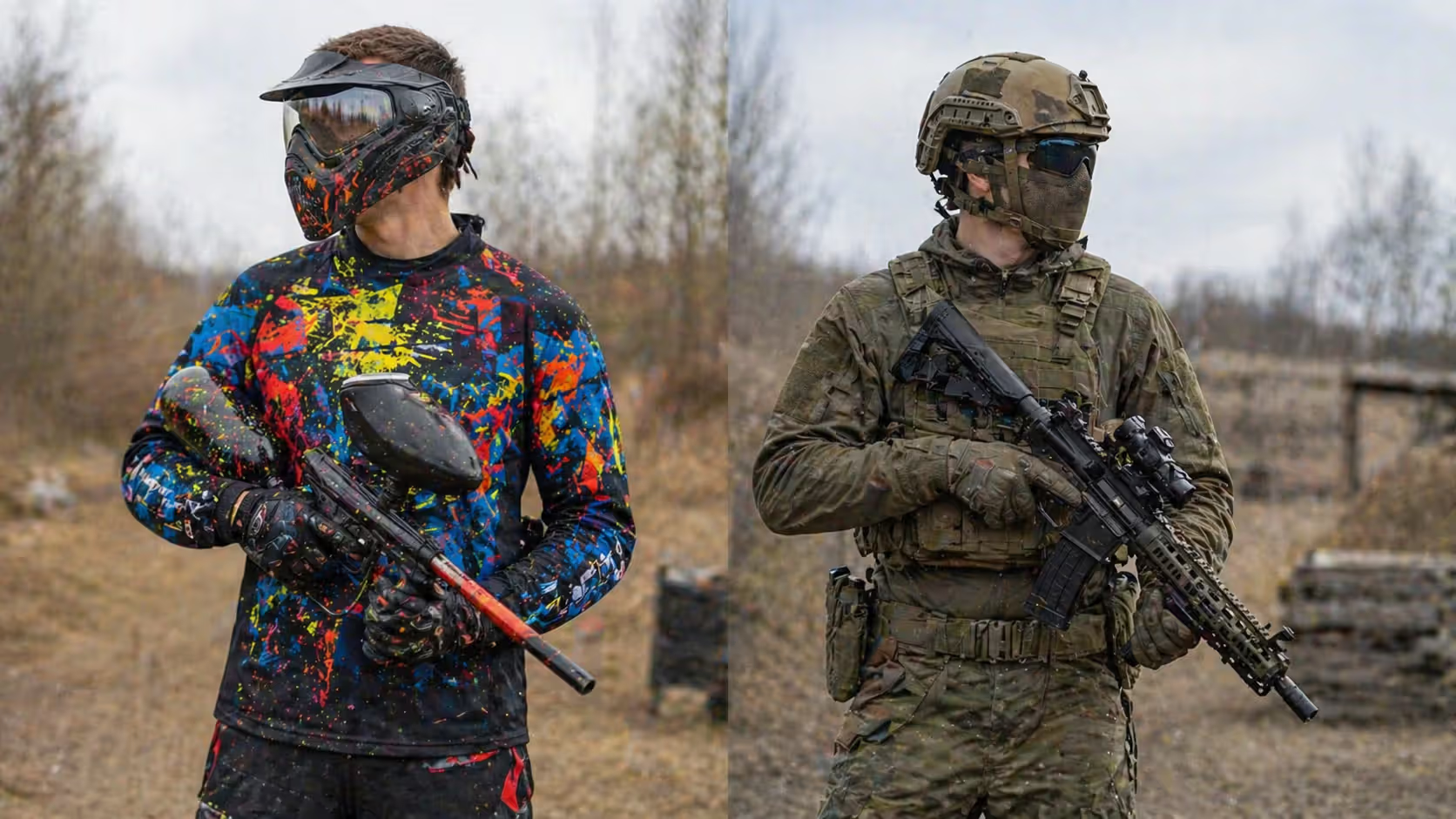
Equipment aesthetics appeal to completely different crowds. Airsoft guns look like actual firearms—realistic replicas that appeal to military sim enthusiasts and people who geek out over tactical gear. Paintball markers evolved toward sporty, futuristic designs that don't resemble real weapons. Some players prefer that. Others find it less appealing.
Here's where airsoft has a massive advantage: you can play almost anywhere. Honor-based hit-calling instead of visible paint marks means abandoned buildings, random wooded areas, even warehouse spaces work fine. Paintball needs paint cleanup, specific insurance, and facilities designed for it. That limits where you can operate.
Demographics reveal different niches. Airsoft skews younger and pulls in more military veterans and active-duty folks interested in tactical training elements. Paintball maintains broader mainstream appeal with corporate groups and casual players who just want to run around and shoot stuff without all the mil-sim intensity.
Crossover between sports is minimal. Only about 22% of regular paintball players also do airsoft, and vice versa. People pick one and stick with it based on their local community, preferred style, and which sport they tried first.
Both industries are getting squeezed by smartphones, streaming services, and kids' sports commitments. But airsoft's lower costs and venue flexibility have enabled steadier growth while paintball's defending a larger but mature market that's stopped expanding.
Author: Ethan Rowe;
Source: lakestaytents.com
Challenges Facing Paintball Sport Popularity
Let's talk about why paintball struggles to grow beyond its current base.
Cost is the elephant in the room. Take a family of four to a paintball field and you're dropping $250-$400 easy once you factor in admission, rentals, paint, and drinks. That's special-occasion money, not "let's do this every weekend" money. Compare that to bowling ($80-$120 for the same group) or mini-golf ($60-$80), and you see why families choose alternatives.
Paint costs specifically drive people crazy. A case of 2,000 paintballs runs $40-$70 at most fields. Shoot actively for a few hours and that case is gone. Fields maintain 60-75% margins on paint because they need those profits to offset lower admission revenue, but customers feel gouged when ammunition costs more than entry fees.
Safety perception is a constant battle. Actual serious injuries are rare when you've got proper masks and supervision. But paintball looks aggressive, leaves visible welts, and involves shooting projectiles at people. Parents see that and get nervous. Laser tag offers similar gameplay without anyone getting hit by anything, which matters to safety-conscious families.
Pain is part of the experience for enthusiasts. For everyone else, it's a dealbreaker. Getting hit by a paintball hurts—not badly, but enough that people with low pain tolerance bow out. Low-impact paintball helps, but hasn't fully overcome the "this is going to hurt" perception.
Regulations vary wildly by location and create headaches. Some cities restrict paintball facilities through zoning, noise ordinances, or expensive insurance mandates. Liability concerns have driven insurance premiums higher, and field operators pass those costs straight to customers.
Competition from alternative activities is relentless. Trampoline parks, ninja warrior gyms, escape rooms, axe throwing, VR arcades—they're all fighting for the same dollars and group bookings that used to default to paintball. These newer options often have air conditioning, require less gear, and photograph better for Instagram. That last point matters more than industry veterans want to admit.
Weather dependence kills outdoor fields. Rain, brutal heat, freezing cold—all of them reduce playability and comfort. Indoor facilities solve this but need massive capital investment and typically offer smaller playing areas that limit what you can do.
The sport's image hasn't evolved much. Paintball still carries associations with aggressive, male-dominated competition that doesn't appeal broadly. Fields that have successfully expanded their customer base invested heavily in welcoming environments, staff training focused on first-timer experiences, and marketing that emphasizes fun over hardcore intensity.
Future Outlook for the Paintball Market
Author: Ethan Rowe;
Source: lakestaytents.com
Industry projections through 2030 suggest 1-2% annual growth in overall market size. That's not sexy, but it's sustainable if operators play it smart.
Demographics are shifting in interesting ways. Millennials aging into their 30s and 40s now have disposable income and kids of their own. Nostalgia might drive some of them back to paintball. But capturing Gen Z requires addressing their preferences for shareable experiences, digital integration, and value-conscious spending habits that make $400 paintball outings a tough sell.
Technology integration is underutilized. Fields experimenting with electronic scoring, real-time stats tracking, and gameplay recording for social media sharing report higher engagement from younger players. Smart markers with Bluetooth, shot counting, and performance analytics appeal to data-driven consumers who track everything from sleep to steps.
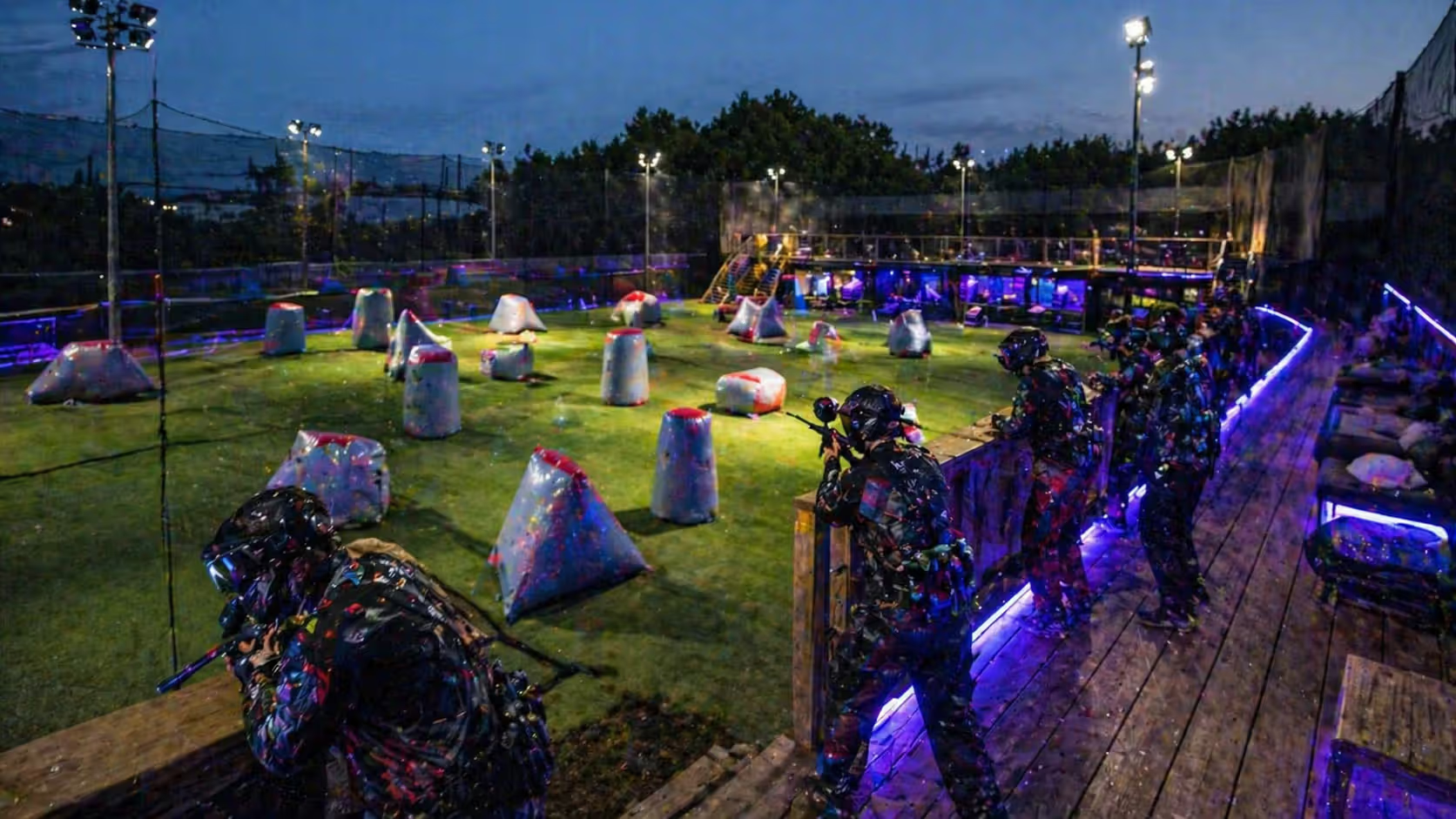
Facility format innovation will separate winners from losers. Hybrid venues combining paintball with ziplines, obstacle courses, axe throwing, or quality food and beverage are maximizing property value and appealing to groups where not everyone wants to play paintball. The "adventure park" model treating paintball as one attraction among several shows real promise for increasing visit frequency.
Equipment manufacturers need to solve the ammunition cost problem. Reusable paintball alternatives have been attempted multiple times without commercial success, but R&D continues. Any breakthrough that significantly lowers per-game costs while maintaining visible-hit confirmation could massively expand the accessible market.
Sustainability might influence future operations more than expected. Traditional paintballs use gelatin shells and non-toxic fills, which is good. But environmental consciousness around single-use products is growing. Fields emphasizing biodegradable materials and environmental stewardship might gain advantages as eco-conscious consumers make recreational choices.
International markets exist but face unique challenges. Paintball has presence in Europe, Australia, and parts of Asia, but cultural attitudes toward recreational shooting activities vary wildly. Regulatory environments differ dramatically. Domestic US growth will remain the primary focus.
Youth development programs represent untapped potential. Several organizations have launched high school and college club programs providing structured competition and skill development. Expanding these pathways could create dedicated long-term players, though funding and institutional support remain limited.
The facilities that will thrive in the next five years are those treating paintball as part of a broader outdoor recreation and events business rather than a standalone activity. The days of a field surviving on walk-on play alone are largely behind us.
— Chris Bales
The industry's future depends on operators adapting business models, controlling costs, and creating experiences that justify premium pricing in a crowded recreational landscape. Fields successfully positioning paintball as a premium group experience rather than a commodity show the strongest growth trajectories.
Frequently Asked Questions
Paintball in 2026 sits somewhere between its glory days in the early 2010s and an uncertain but potentially stable future. The $1.2 billion market with 7.1 million annual participants represents a mature recreational activity that's found its level—not growing explosively, but not collapsing either.
Succeeding in this environment requires facility operators to stop relying on walk-on play and build diversified revenue around corporate events, private parties, and premium experiences that justify higher prices. Technology integration, facility format innovation, and customer experience improvements separate thriving operations from ones barely hanging on.
Competition from airsoft and alternative activities isn't going anywhere, especially for younger demographics with more options than previous generations ever had. Fields creating welcoming environments for nervous first-timers, offering low-impact options, and integrating paintball into broader adventure park concepts consistently outperform traditional operations.
The industry's challenges—cost barriers, safety perceptions, weather dependence—are well-understood but tough to overcome without fundamental changes to economics or format. Equipment manufacturers and operators who can reduce per-session costs while maintaining quality experiences will expand the market beyond current enthusiast bases.
For investors, equipment buyers, and prospective facility operators, paintball offers modest but realistic opportunities within a defined niche rather than explosive growth potential. Understanding regional dynamics, demographic trends, and proven business models becomes essential for anyone entering or expanding in this space. The sport's future depends less on recapturing past participation peaks and more on building sustainable operations serving core enthusiasts while converting enough casual players to maintain steady revenue. That's not the sexiest pitch, but it's the honest one.