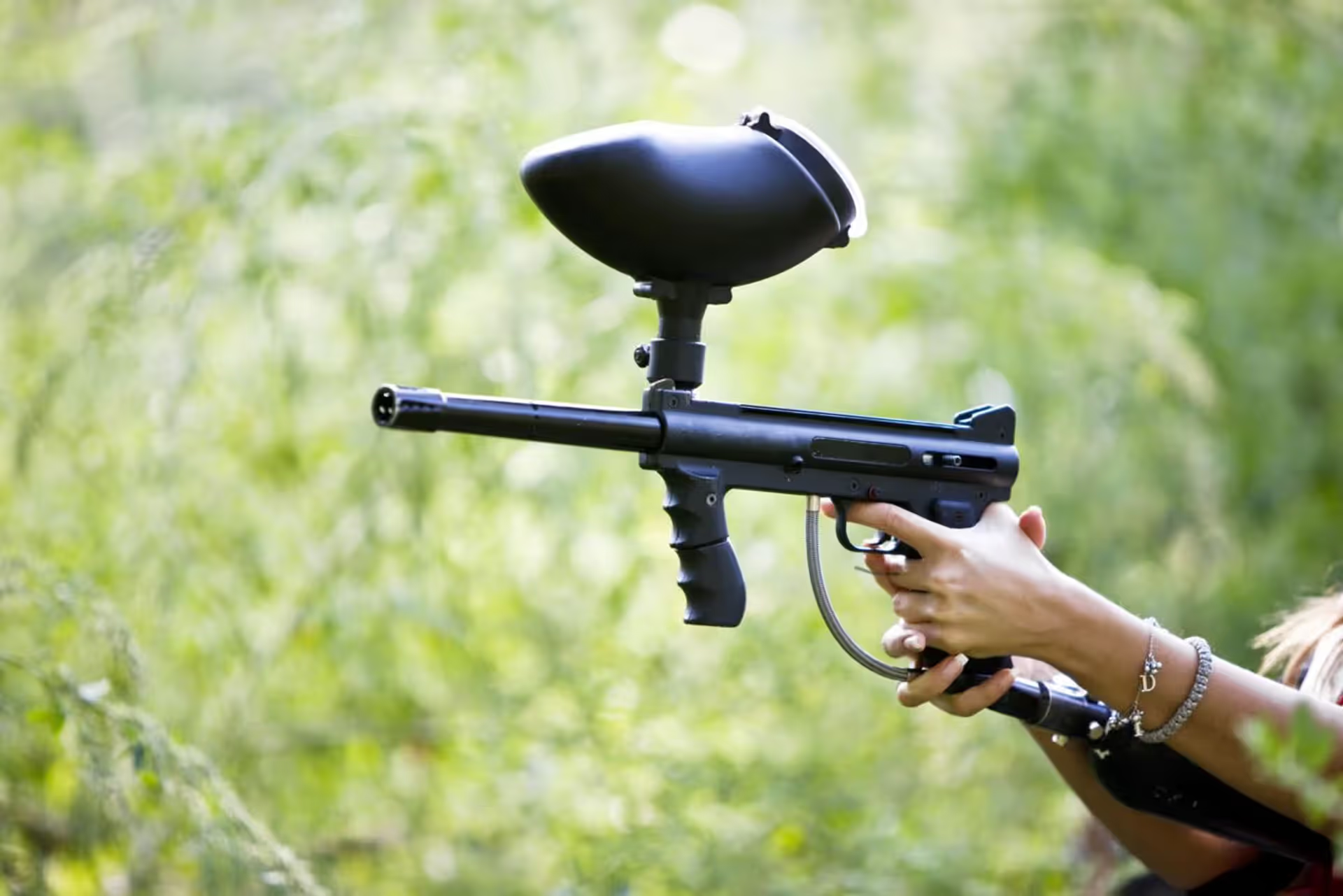
Upgrade your marker, upgrade your game
Paintball Gun Upgrades Guide

Content
Upgrading your paintball marker transforms how you play. Instead of settling for factory performance, targeted upgrades let you fine-tune accuracy, consistency, and handling to match your specific play style. Whether you're a woodsball player who needs reliability in harsh conditions or a speedball competitor chasing every millisecond of trigger response, the right parts make a measurable difference on the field.
Why Upgrade Your Paintball Marker
Buying a new high-end marker costs $800 to $1,500, but strategic upgrades to a mid-range gun often deliver 70-80% of that performance for $200 to $400. This cost-effectiveness makes upgrading the smarter choice for most players who already own a decent platform.
Factory markers ship with compromises. Manufacturers balance cost, broad appeal, and profit margins, which means your out-of-the-box gun likely uses generic barrels, basic regulators, and stock triggers designed for average users. Upgrading solves specific pain points: inconsistent velocity from cheap regulators, poor paint-to-barrel match causing breaks, or sluggish trigger pull slowing your rate of fire.
Performance benefits extend beyond speed. A quality barrel upgrade reduces sound signature by 15-20 decibels, making you harder to locate in woodsball scenarios. An aftermarket regulator maintains pressure consistency within ±3 psi instead of the ±10 psi fluctuation common in stock systems, which directly translates to tighter groupings at range. These improvements compound—better air efficiency means more shots per tank, which means fewer trips to the fill station during tournament play.
Upgrading also teaches you how your marker functions. Installing a new feedneck or regulator requires understanding your gun's internals, making field troubleshooting easier when something goes wrong mid-game. This knowledge saves matches when a quick o-ring swap gets you back in play while others walk back to the staging area.
Author: Brandon Kesswick;
Source: lakestaytents.com
Essential Paintball Gun Upgrade Parts
Four upgrade categories deliver the most noticeable performance gains. These parts directly affect accuracy, consistency, and reliability—the core metrics that separate frustrating days from dominant performances.
Paintball Barrel Upgrade
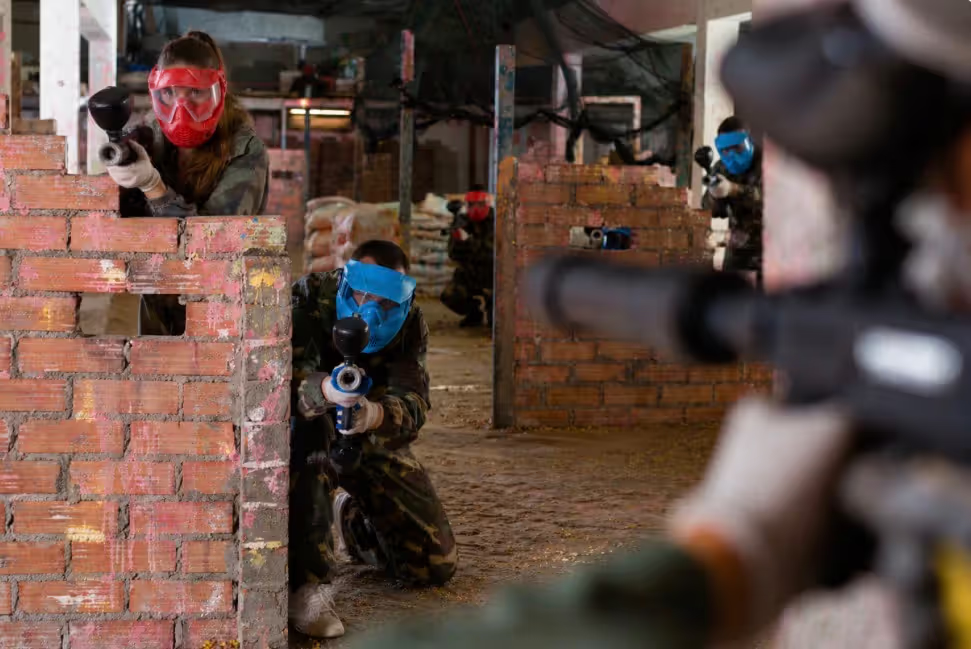
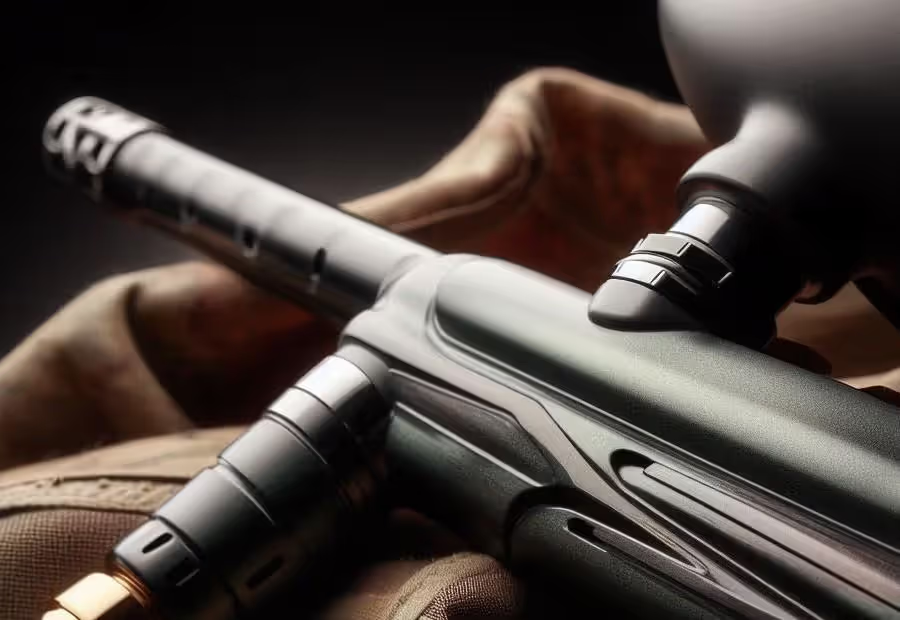
Barrels control how paint exits your marker. Stock barrels typically measure .689 bore diameter, a one-size-fits-all compromise that rarely matches your paint perfectly. When paint rattles in an oversized barrel, you lose accuracy and efficiency. When it's too tight, you risk barrel breaks that ruin your day.
Quality aftermarket barrels offer bore-sizing kits with inserts from .679 to .695, letting you match your barrel to your paint batch. A proper bore match—where paint rolls smoothly through the barrel with slight resistance—improves accuracy by 20-30% at ranges beyond 60 feet. Two-piece barrel systems separate the back (where paint accelerates) from the front (where it stabilizes), allowing you to swap front sections for different lengths without buying complete barrels.
Porting patterns matter more than marketing claims suggest. Spiral porting reduces turbulence as gas escapes, while straight ports are quieter but offer less spin stabilization. For tournament play where sound doesn't matter, spiral-ported 14-inch barrels optimize accuracy. For stealth-focused woodsball, straight-ported 16-inch barrels muffle your signature.
Material choice affects durability and weight. Aluminum barrels keep markers light and maneuverable, ideal for speedball where you're constantly moving. Carbon fiber barrels cost more but reduce front-end weight by 40%, making long tournament points less fatiguing. Stainless steel barrels handle abuse better for scenario games where you're crawling through brush.
Author: Brandon Kesswick;
Source: lakestaytents.com
Paintball Trigger Upgrade
Trigger response determines your maximum rate of fire and shooting comfort. Stock triggers often have 5-8mm of pre-travel (dead space before the trigger activates) and 3-5 pounds of pull weight. Aftermarket triggers reduce pre-travel to 1-2mm and drop pull weight to 1-2 pounds, letting you shoot faster with less finger fatigue.
Adjustable triggers let you dial in pull length, return spring tension, and magnet strength (on electronic markers). This customization matters because hand size varies—what feels crisp to someone with large hands feels mushy to someone with smaller fingers. Spending 15 minutes adjusting your trigger can boost your effective rate of fire from 8 balls per second to 12 without any other changes.
Trigger shoe shape affects comfort during extended play. Flat-faced triggers distribute pressure across your finger, reducing hot spots during long points. Curved triggers feel more natural for players who prefer a rolling pull motion. Some competitive players swap triggers between events based on whether they're playing front or back positions, using lighter triggers for aggressive play and heavier triggers for controlled back-line shooting.
Material quality separates good triggers from great ones. Machined aluminum triggers maintain tight tolerances and resist wear better than cast zinc triggers that develop play after 10,000 cycles. Anodized finishes prevent corrosion from sweat and weather exposure, critical for players in humid climates.
Paintball Regulator
Regulators control air pressure feeding your marker's firing chamber. Consistency is everything—velocity fluctuations cause vertical stringing where shots land unpredictably high or low. Stock regulators often swing ±8 to ±12 psi between shots, while high-performance regulators maintain ±2 to ±3 psi.
This consistency translates directly to field performance. With a stock regulator shooting 290 fps ±12 psi, your vertical spread at 75 feet might be 18 inches. Upgrade to a precision regulator maintaining ±3 psi, and that spread tightens to 6 inches—the difference between hitting center mass and missing entirely.
Adjustable regulators let you fine-tune output pressure to match your marker's operating requirements and current paint quality. Brittle paint benefits from lower pressure (250-270 fps) to prevent barrel breaks, while tournament-grade paint handles higher pressure (285-295 fps) for flatter trajectories. Being able to adjust on the field means you adapt to conditions instead of fighting your equipment.
Regulator placement affects rebuild complexity. Inline regulators mount between your tank and marker, making maintenance easier since you don't need to disassemble your gun. Integrated regulators mount inside the marker body, offering cleaner aesthetics and better balance but requiring more disassembly for servicing.
Paintball Feedneck
Feednecks secure your hopper to your marker. Stock feednecks use bulky thumb screws that snag on bunkers and require tools to adjust. Clamping feednecks use lever-action clamps that tighten with one hand in seconds, letting you swap hoppers between games without scrambling for an Allen key.
Low-rise feednecks drop your hopper 10-15mm closer to your marker body, lowering your profile when posted behind bunkers. This small change makes a real difference in tournament play where exposing an extra inch of hopper gets you eliminated. The trade-off is slightly awkward shouldering for taller players, so test before committing.
Material strength matters for players who dive frequently. Aluminum feednecks bend under impact, while steel feednecks add weight. Glass-filled nylon feednecks offer the best compromise—they're light, strong, and flex slightly to absorb impacts without permanent deformation.
Quick-release feednecks let you detach hoppers in under two seconds, useful for players who transport markers in tight cases or switch between different hopper types. The mechanism adds minimal weight and eliminates the common frustration of cross-threaded feedneck screws.
Performance-Boosting Accessories
Beyond core upgrades, several accessories improve comfort and handling without directly affecting shot performance. These parts reduce fatigue and improve ergonomics during long tournament days.
Paintball Tank Grip
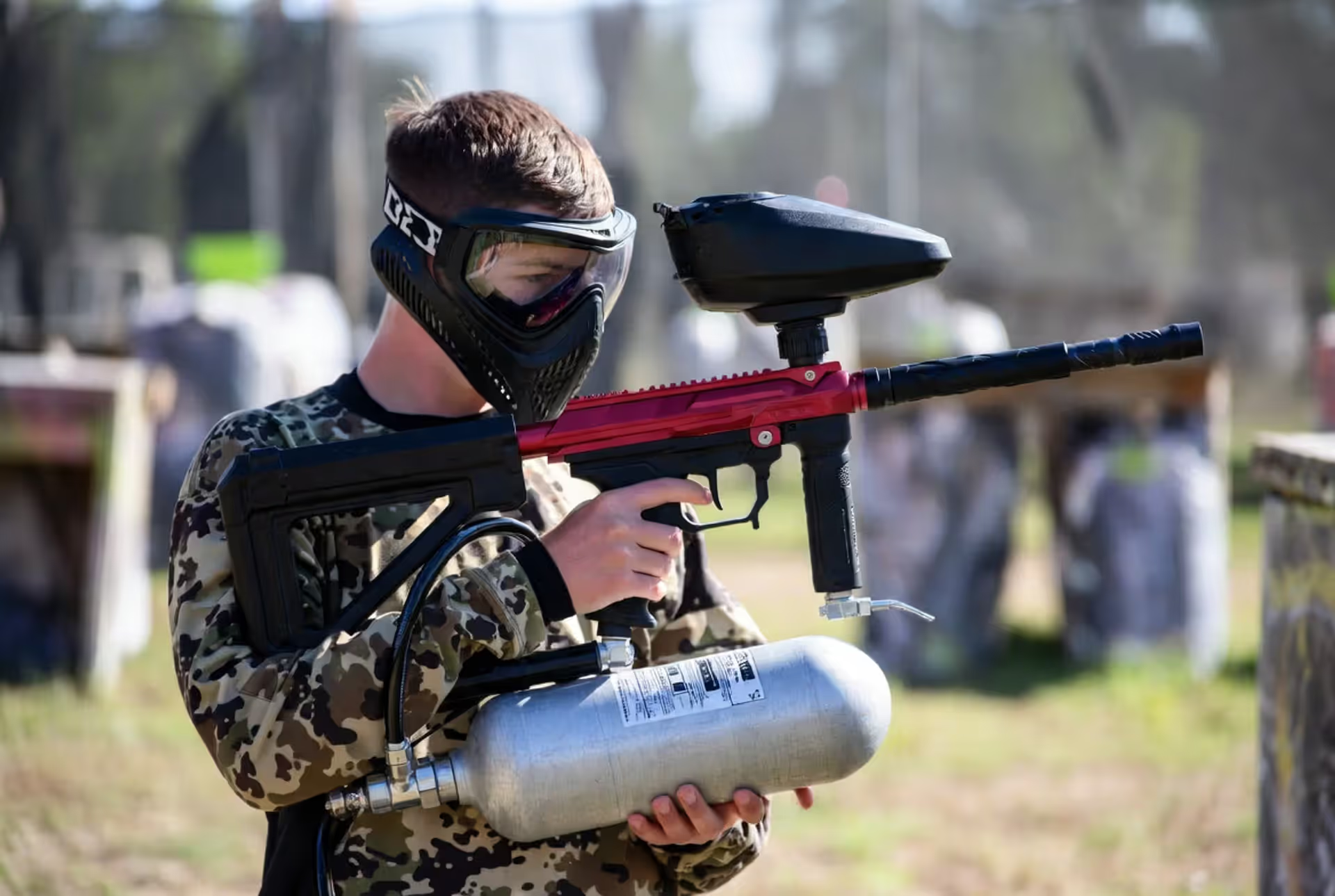
Tank grips wrap your air tank in rubberized or textured material, improving purchase when shouldering your marker. Stock aluminum tanks are slippery when wet from rain or sweat, causing your marker to shift during rapid shouldering. A quality grip adds friction without bulk, maintaining your sight picture and reducing adjustment time between shots.
Texture patterns matter. Aggressive diamond knurling provides maximum grip but can be uncomfortable during extended shoulder time. Medium crosshatch patterns balance grip and comfort for all-day tournament use. Some grips incorporate padding that reduces tank pressure against your shoulder during long points.
Tank grips also protect your tank's finish. Aluminum tanks scratch easily when dropped or bumped against bunkers, and deep scratches can mask developing cracks during hydro inspection. A $15 grip protects a $200 tank investment while improving handling.
Installation takes five minutes—clean the tank, stretch the grip over one end, and roll it into position. Some players add a thin layer of grip spray underneath for extra security, though quality grips stay put through normal play without adhesives.
Double Trigger Paintball Gun Conversion
Double triggers replace single-blade triggers with two-finger designs that let you "walk" the trigger using alternating index and middle fingers. This technique doubles your effective rate of fire on mechanical markers, pushing 6-8 balls per second up to 12-14 balls per second with practice.
Installation complexity varies by marker platform. Some guns accept drop-in double trigger kits requiring only a screwdriver, while others need frame modifications or complete lower receiver replacement. Check compatibility before purchasing—not all markers support double triggers without permanent modifications.
Double triggers change your shooting stance. You need to grip higher on the frame to position both fingers comfortably, which affects how you shoulder the marker. Spend range time adjusting your hold before using a new double trigger in competition. Most players need 500-1,000 practice shots to develop smooth trigger walking rhythm.
Tournament legality depends on your league. Some organizations restrict double triggers or impose rate-of-fire caps that make them less advantageous. Verify rules before investing in a double trigger setup for competitive play.
How to Choose Paintball Upgrade Parts
Compatibility determines whether an upgrade works with your marker. Paintball guns use different threading standards—Autococker threads, Spyder threads, Tippmann threads, and proprietary systems all exist. Buying an Autococker-threaded barrel for a Tippmann marker means you own an expensive paperweight. Always verify thread compatibility before purchasing.
Play style matching matters more than raw specifications. Woodsball players prioritize durability and stealth, making carbon fiber barrels and quiet regulators smart investments. Speedball players need fast trigger response and light weight, making titanium components and hair-trigger upgrades more valuable. Scenario players who shoot thousands of rounds per event benefit most from efficiency upgrades that maximize shots per tank.
Author: Brandon Kesswick;
Source: lakestaytents.com
Budget prioritization starts with the biggest pain points. If your shots scatter unpredictably, upgrade your barrel and regulator first. If you're getting shot because you can't shoot fast enough, prioritize trigger upgrades. Trying to upgrade everything at once usually means compromising on quality—better to install one excellent part than three mediocre ones.
Brand versus aftermarket parts involves trade-offs. Manufacturer parts guarantee compatibility and often include warranties, but cost 20-30% more than equivalent aftermarket options. Established aftermarket brands like Deadlywind, Inception Designs, and Lurker offer quality matching or exceeding OEM parts at lower prices. Unknown brands selling suspiciously cheap parts often use inferior materials that fail quickly.
Used parts save money but carry risks. Barrels and feednecks are relatively safe used purchases since they have few failure points. Regulators and triggers contain springs, seals, and small parts that wear out—buying used means you might need immediate rebuilds. Always inspect used parts for cross-threading, stripped screws, and damaged o-ring grooves before installing.
Common Mistakes When Upgrading Paintball Guns
Over-upgrading entry-level markers wastes money. Installing $300 worth of parts on a $150 Spyder doesn't create a tournament-ready marker—it creates an expensive Spyder. Budget markers use lower-quality internal components that limit performance regardless of external upgrades. Save upgrade money toward a better platform, or stick to basic improvements like barrels and feednecks that transfer to your next marker.
Ignoring compatibility extends beyond threading. Some regulators require specific input pressures that certain tanks don't provide. Some triggers need electronic boards with specific firmware versions. Assuming parts work together because they fit the same marker platform leads to frustrating installation failures and wasted return shipping costs.
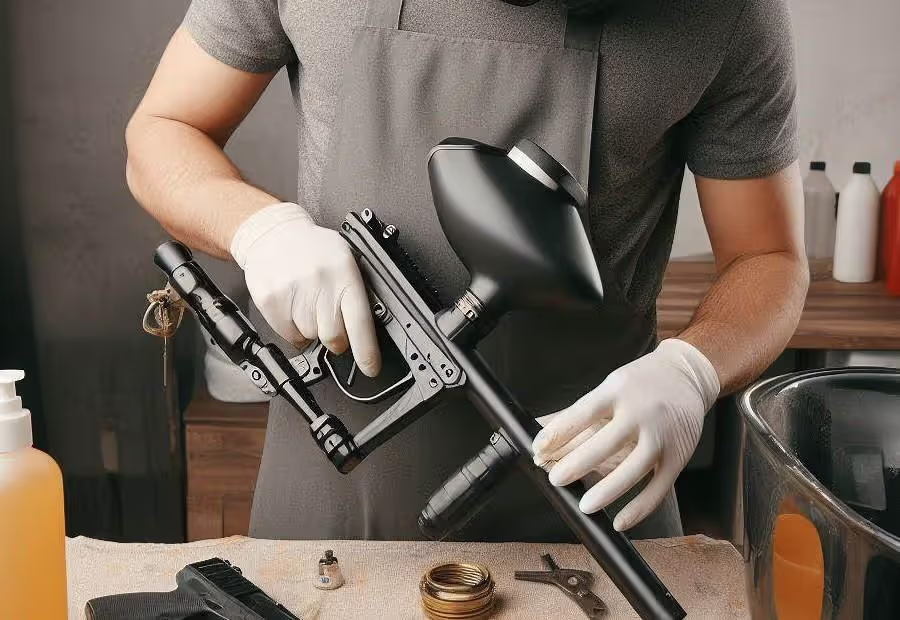
Improper installation damages parts and markers. Cross-threading a $120 barrel into your marker body can ruin both components. Over-torquing regulator fittings cracks aluminum bodies. Under-torquing creates air leaks that waste gas and reduce performance. Use proper tools, follow torque specifications, and apply appropriate thread lubricants. When instructions say "hand-tight plus a quarter turn," they mean it—gorilla-gripping everything doesn't improve reliability.
Neglecting maintenance after upgrades shortens part life. New regulators need break-in periods where you check output pressure every 500 shots for the first 2,000 shots. Aftermarket triggers require periodic cleaning to prevent dirt buildup that increases pull weight. Barrels need swabbing between games to prevent paint residue from affecting accuracy. Upgrades improve performance, but only if you maintain them properly.
Chasing trends instead of needs leads to buyer's remorse. Just because professional players use 16-inch carbon fiber barrels doesn't mean you need one for recreational woodsball. Just because a new regulator claims 1% better efficiency doesn't mean it's worth replacing your current regulator that works fine. Upgrade to solve actual problems, not to match what you see on social media.
Building Custom Paintball Markers
Author: Brandon Kesswick;
Source: lakestaytents.com
Full custom builds make sense when you've maximized your current platform or want something unique. Starting from a quality base marker and systematically upgrading every component creates guns tailored exactly to your preferences, but costs 40-60% more than buying a comparable factory high-end marker.
Popular build paths follow play styles. Speedball customs prioritize weight reduction and trigger response, often using titanium hardware, carbon fiber bodies, and hair-triggers. Woodsball customs emphasize durability and stealth, incorporating reinforced frames, quiet barrels, and weather-resistant finishes. Pump customs focus on smoothness and aesthetics, with polished internals and custom milling.
A competitive speedball custom typically starts with a mid-range electronic marker ($400-500), adds a precision barrel kit ($150-200), aftermarket regulator ($100-150), upgraded bolt system ($80-120), custom trigger ($60-100), and premium feedneck ($30-50). Total investment runs $820-1,120 for a marker that performs comparably to $1,000-1,200 factory high-ends. The advantage is customization—every part matches your exact preferences.
Cost comparison reveals when customs make financial sense:
| Build Type | Base Marker | Upgrades | Total Cost | Comparable Factory Marker | Savings/Premium |
| Entry Custom | $200 | $250 | $450 | $500 | -$50 savings |
| Mid-Range Custom | $450 | $400 | $850 | $900 | -$50 savings |
| High-End Custom | $600 | $700 | $1,300 | $1,200 | +$100 premium |
| Premium Custom | $800 | $1,000 | $1,800 | $1,500 | +$300 premium |
Entry and mid-range customs offer slight savings while providing exactly the features you want. High-end customs cost more than factory equivalents but deliver unique configurations unavailable in production markers. Premium customs are purely about personalization—you're paying extra for a one-of-a-kind marker.
Time investment matters. Building a custom marker requires research, ordering parts from multiple vendors, installation, tuning, and troubleshooting. Expect 15-20 hours from initial planning to field-ready marker. Players who enjoy the process find this rewarding; players who just want to play find it frustrating.
Resale value suffers with customs. Buyers prefer complete factory markers with warranties over pieced-together customs with unknown history. Expect to recover 50-60% of your custom build investment versus 70-75% for factory markers. Build customs for yourself, not as investments.
I tell new players to shoot their stock marker for a full season before upgrading anything. You need to understand what you actually need versus what looks cool on Instagram. I've seen too many players drop $500 on upgrades that don't match how they play, then wonder why they're not shooting better. Upgrade to solve problems you've actually experienced, not problems you think you might have.
— Jake Morrison
Upgrade Impact and Cost Overview
Different upgrades deliver varying performance improvements at different price points. This table helps prioritize where to invest first:
| Upgrade Type | Performance Impact | Price Range | Installation Difficulty |
| Barrel | High (accuracy, efficiency) | $60-$250 | Easy (5 minutes) |
| Regulator | High (consistency, efficiency) | $80-$180 | Moderate (30-45 minutes) |
| Trigger | Medium (rate of fire, comfort) | $40-$120 | Moderate (20-40 minutes) |
| Feedneck | Low (convenience, profile) | $25-$60 | Easy (10 minutes) |
| Tank Grip | Low (comfort, protection) | $12-$35 | Easy (5 minutes) |
| Double Trigger | Medium (rate of fire) | $45-$100 | Moderate to Hard (30-90 minutes) |
Start with high-impact, easy-installation upgrades like barrels to see immediate results. Progress to moderate-difficulty upgrades once you're comfortable working on your marker. Save complex upgrades requiring specialized tools or permanent modifications until you've exhausted simpler options.
Frequently Asked Questions
Upgrading your paintball marker strategically improves performance without the cost of buying new equipment. Start by identifying your actual pain points—inconsistent velocity, poor accuracy, slow trigger response—then choose upgrades that address those specific issues. Barrels and regulators deliver the biggest performance gains, while triggers and feednecks improve comfort and convenience.
Compatibility matters more than specifications. Verify threading standards, pressure requirements, and marker-specific fitment before purchasing parts. Quality aftermarket brands often match or exceed manufacturer parts at lower prices, but avoid suspiciously cheap components that fail quickly.
Build your upgrade path around your play style and budget. Woodsball players benefit from durability and stealth upgrades, while speedball competitors prioritize weight and trigger response. Invest in one quality upgrade rather than multiple mediocre parts, and maintain your upgrades properly to maximize their lifespan.
Custom builds offer ultimate personalization but cost more than comparable factory markers. They make sense for experienced players who know exactly what they want and enjoy the building process. For most players, targeted upgrades to a solid mid-range platform deliver better value than full customs or buying top-tier factory markers.
Upgrade to solve problems you've actually experienced on the field, not problems you think you might have. Your marker is a tool—make it work better for how you actually play, and you'll see real improvements in your game.