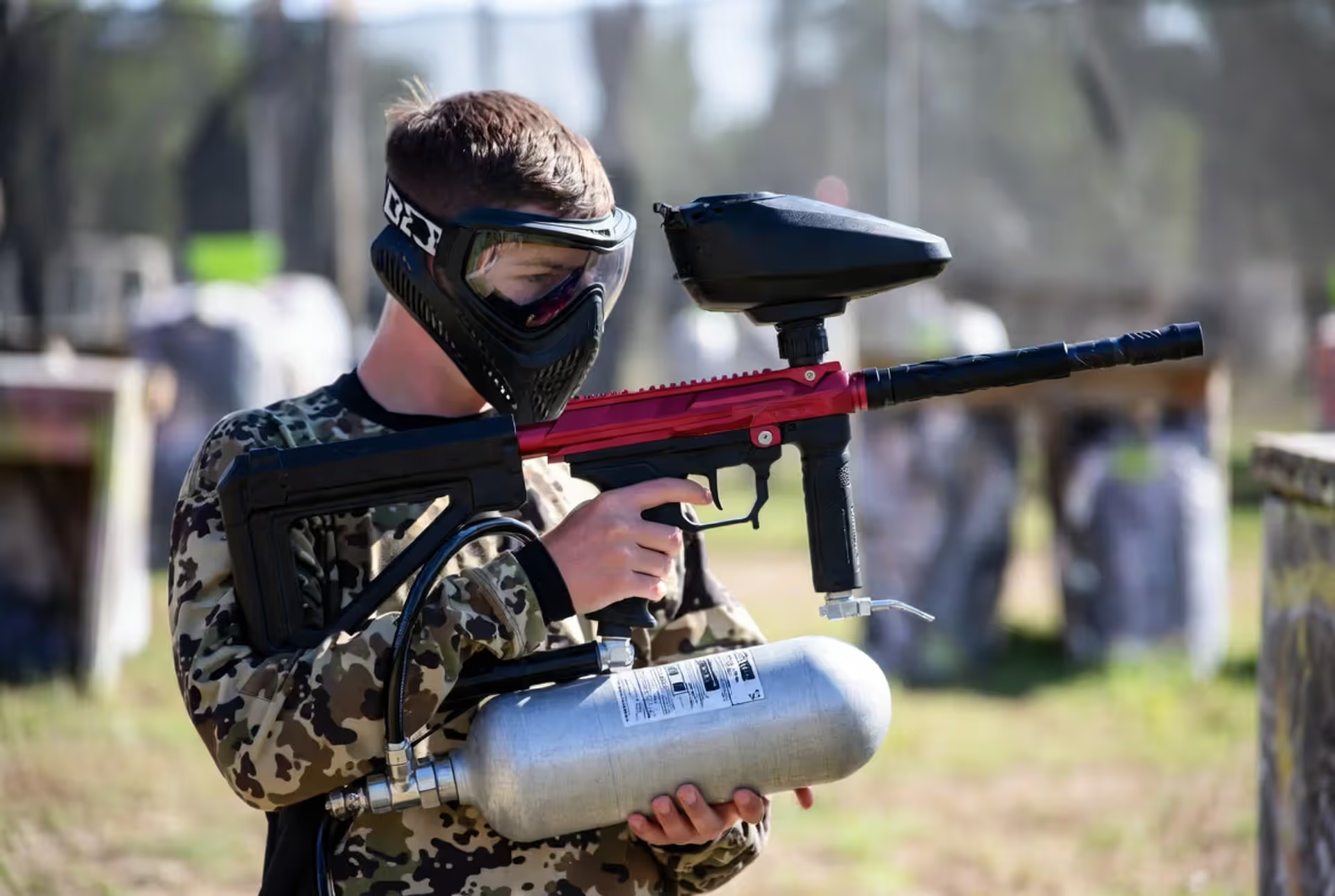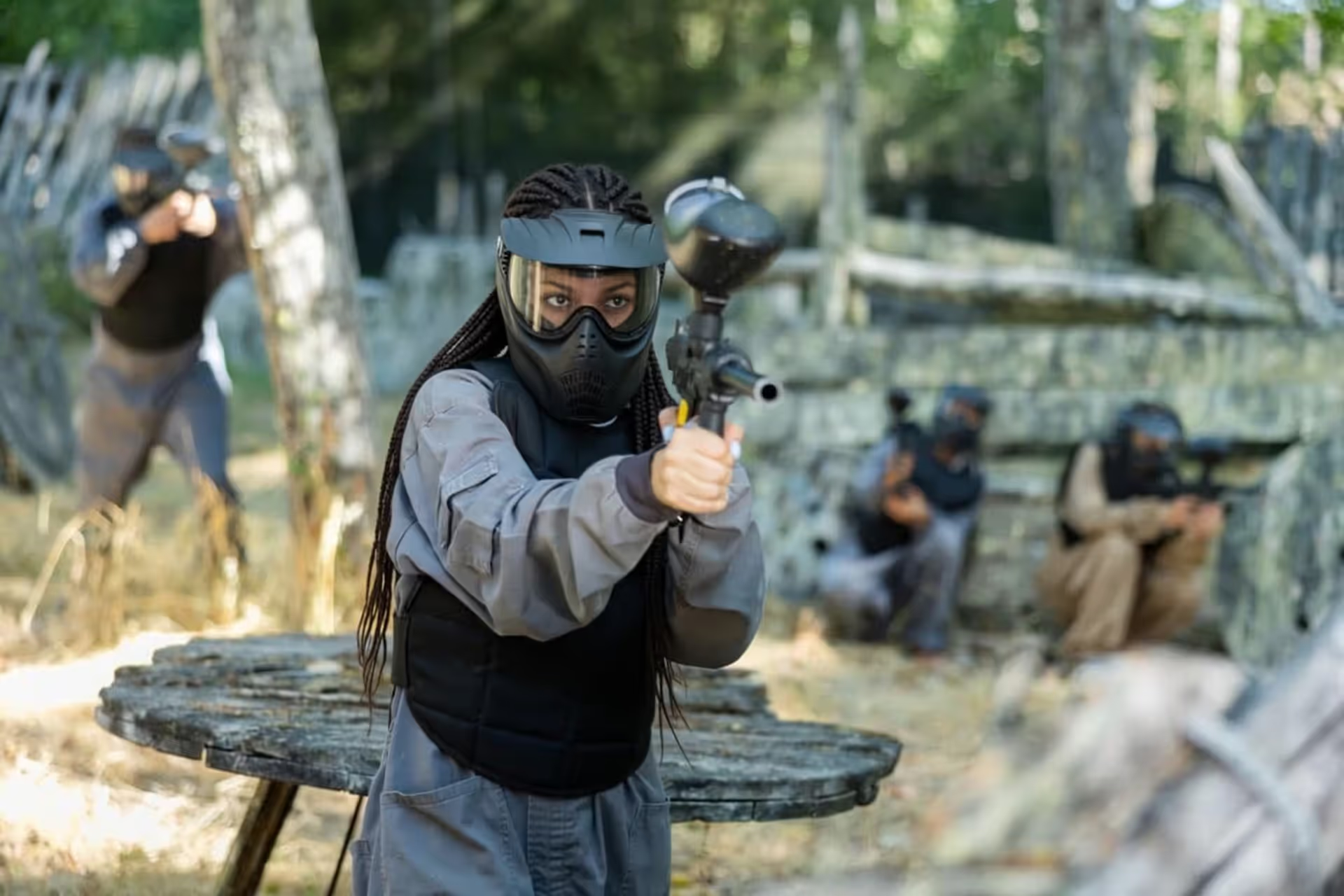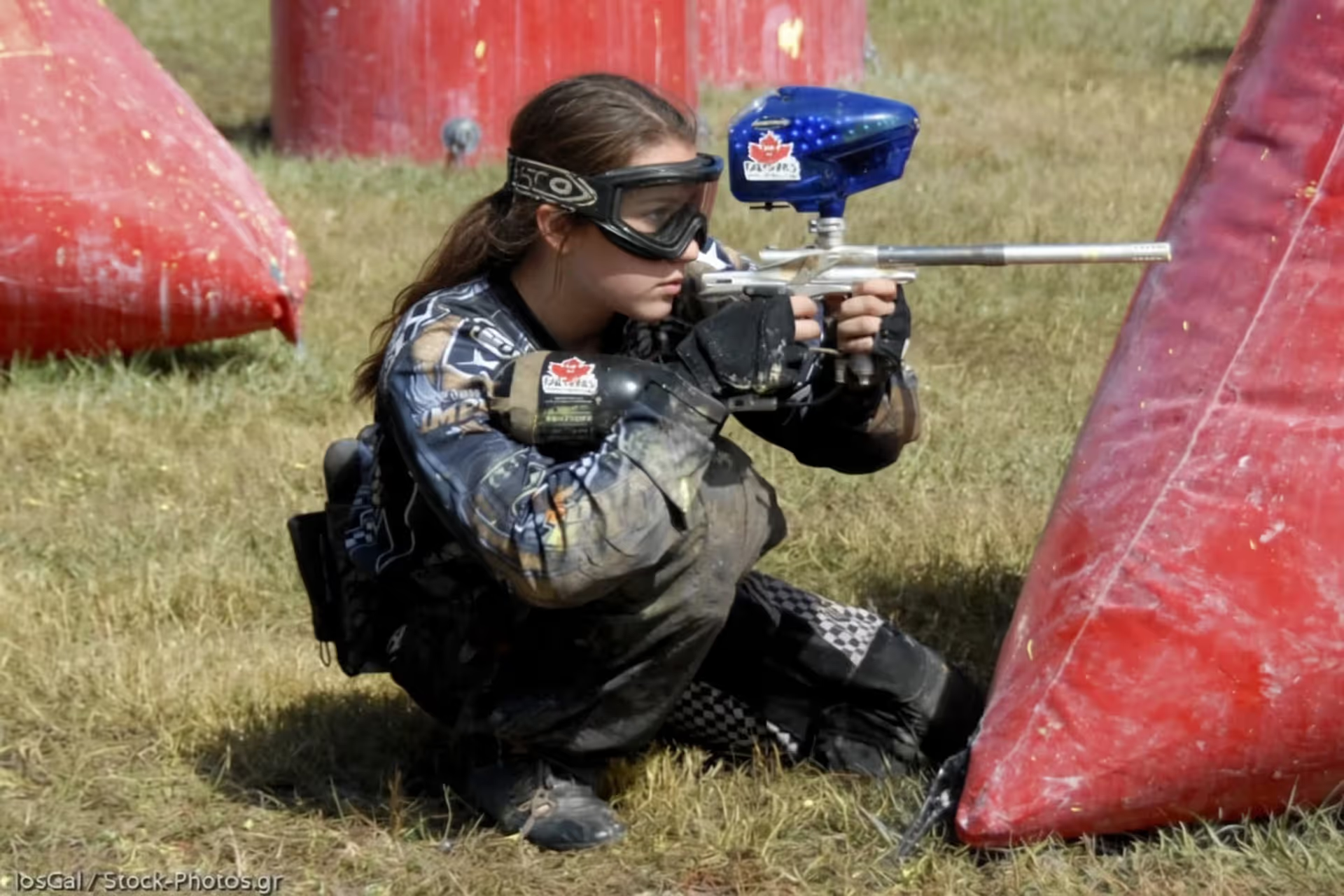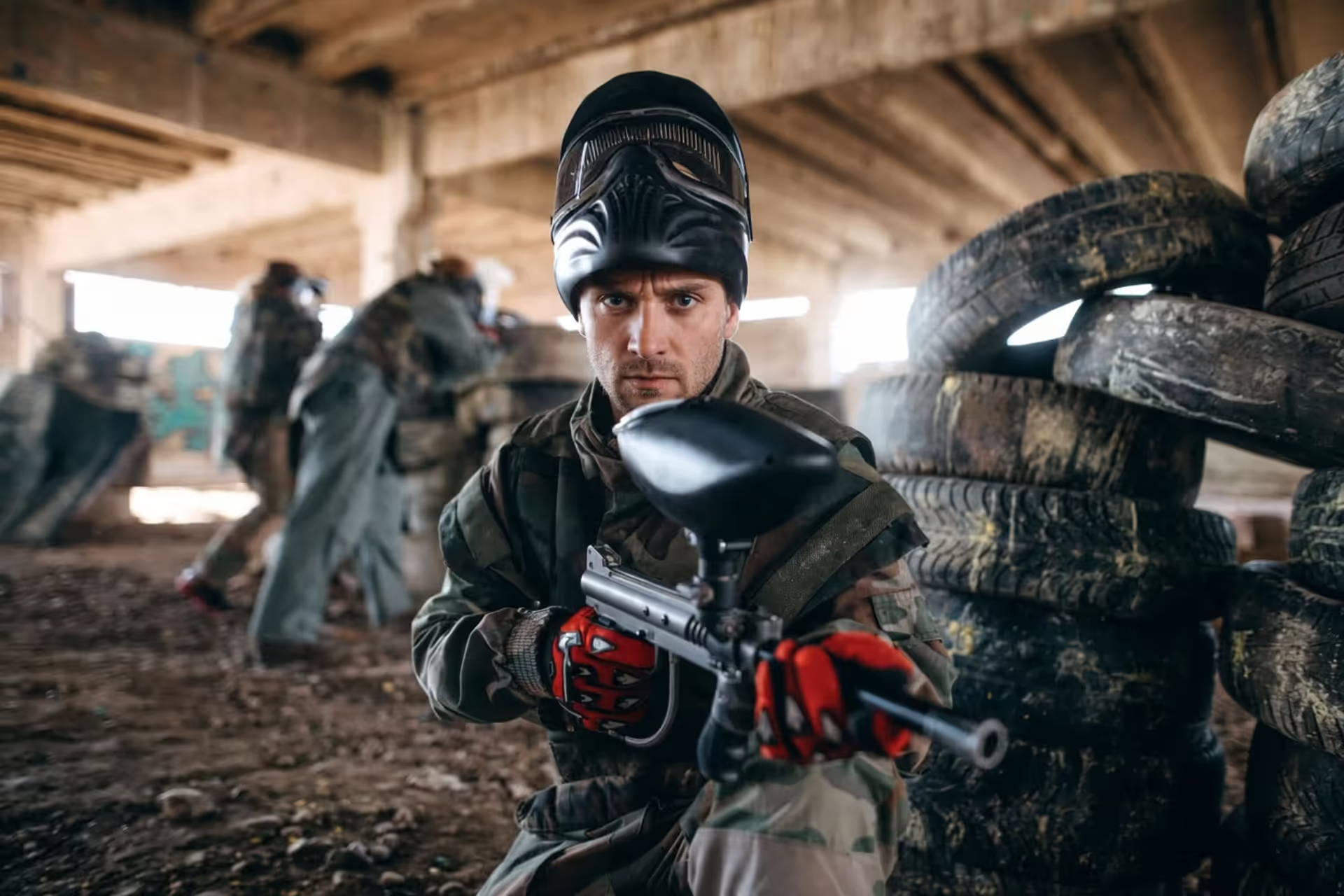
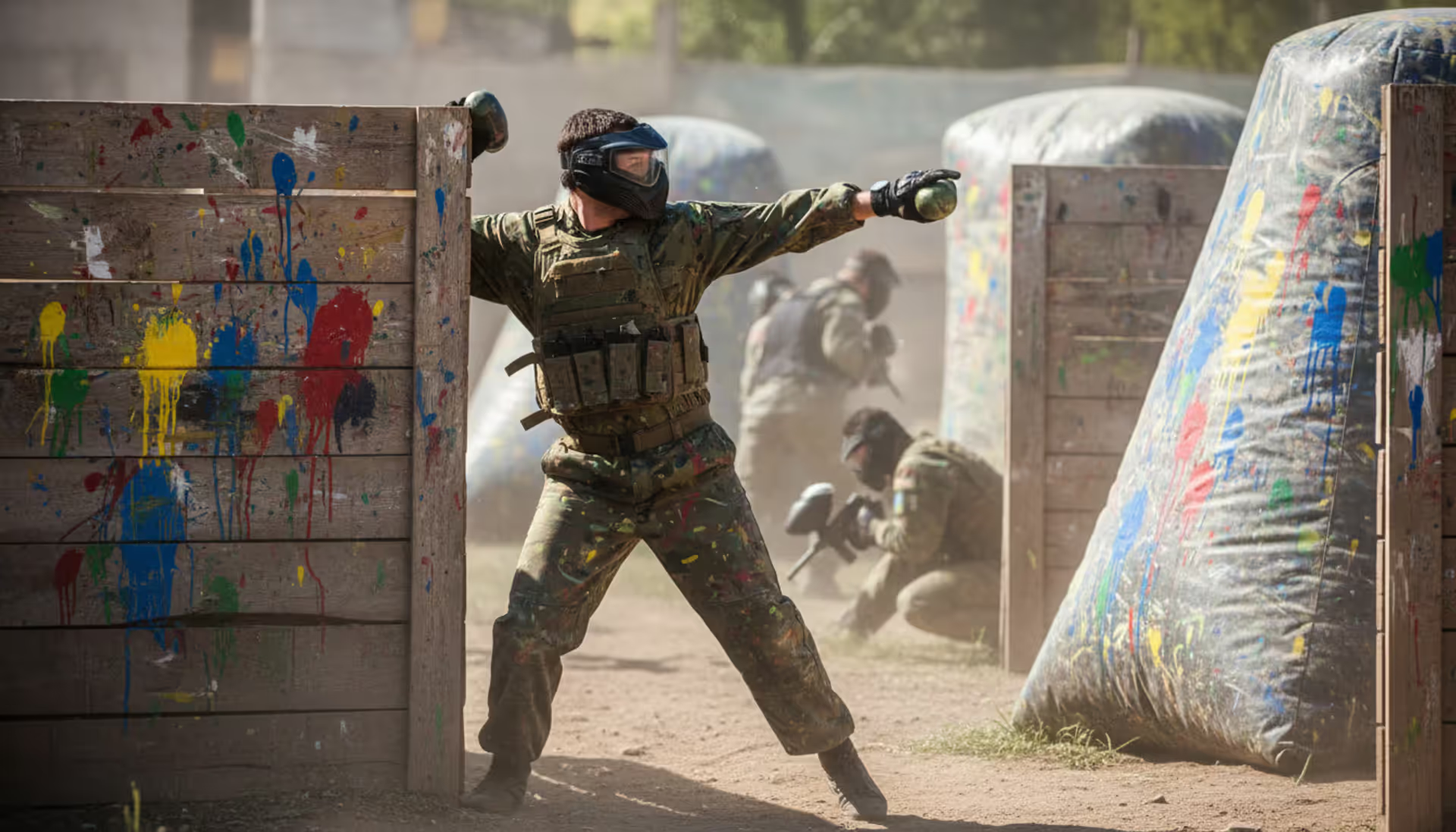
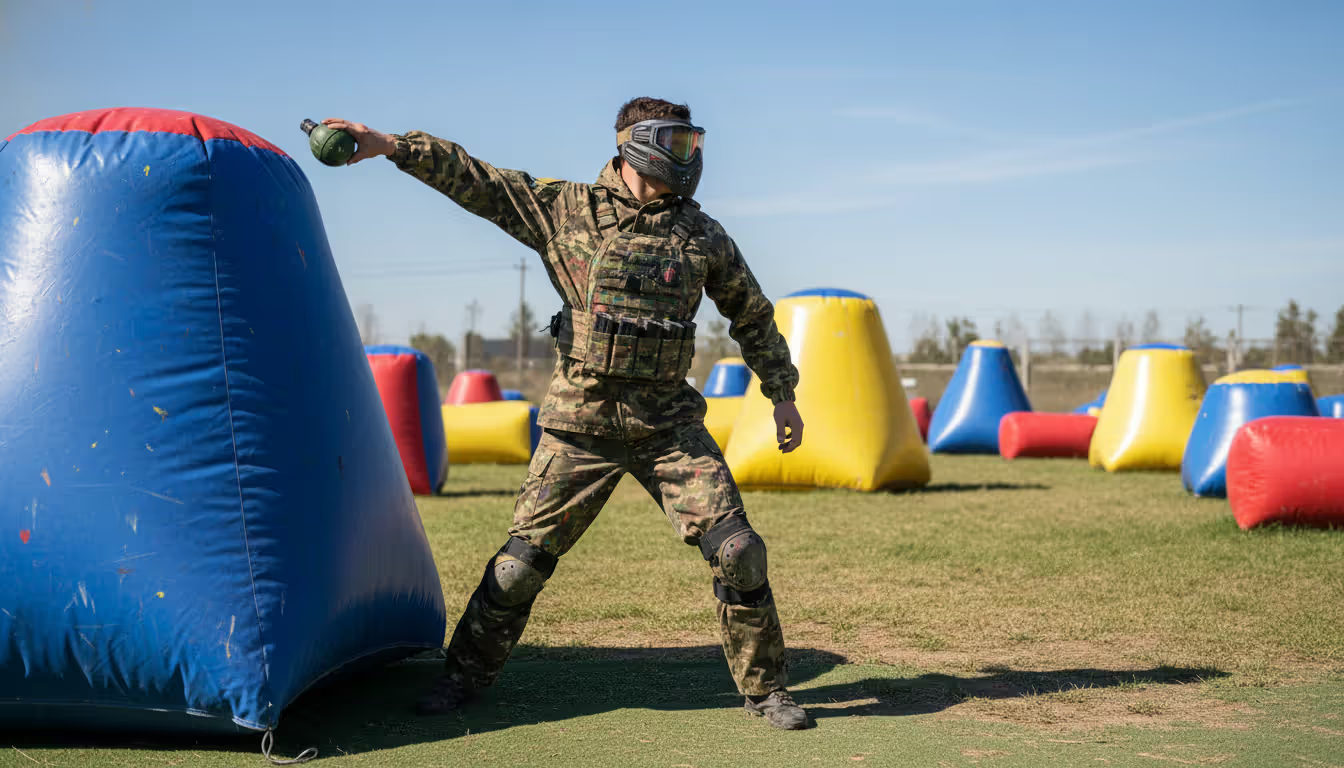
Paintball player in full gear throwing a paint grenade from behind a wooden barricade on an outdoor field
Paintball Grenade Guide

Content
Ever been stuck behind cover while three opponents have you pinned? That's where grenades change everything. These paint-slinging devices turn defensive stalemates into aggressive pushes—and they're way more nuanced than just “pull pin, throw, hope for the best.”
You'll find everything here—from basic mechanics to why your buddy's claymore setup keeps failing.
What Is a Paintball Grenade and How Does It Work
Think of paintball grenades as area-saturation devices. Your marker shoots one paintball at one target. A grenade dumps 200 paintballs across a 30-foot circle in half a second.
Basic Mechanism and Deployment
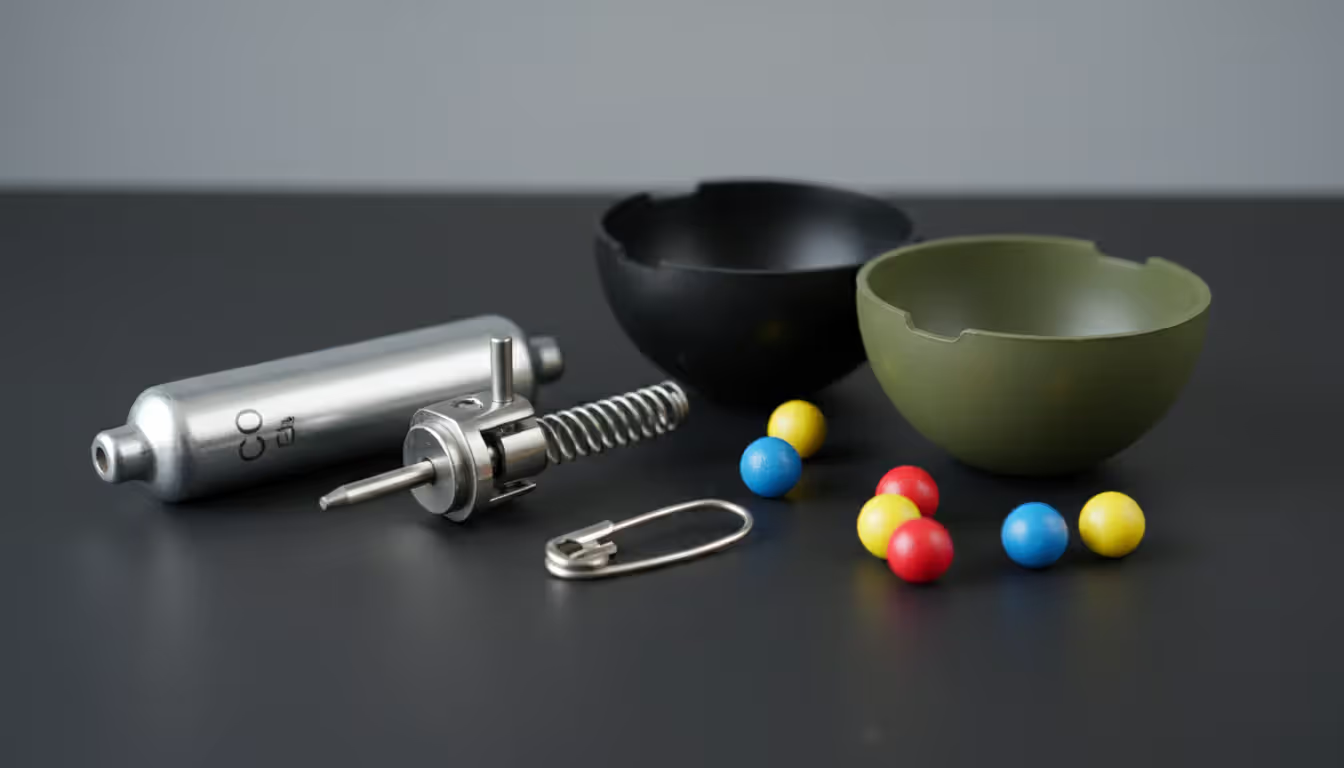
Here's what happens inside most grenades: A CO2 or nitrogen cartridge sits waiting. When you activate the device, a striker punches through the cartridge seal. Pressurized gas explodes outward, shoving paint in every direction.
Some cheaper models skip gas entirely. They use spring tension to fling paintballs mechanically—imagine a mousetrap scaled up and filled with paint. These work, but the spread pattern looks sad compared to gas-powered versions.
Pull the pin. That arms the internal striker. Release the spoon or trigger mechanism. Now you've got 2-5 seconds (depending on the model) before paint goes everywhere. During that delay, you're either throwing it at enemies or running away from your own grenade because you messed up the timing.
Paint capacity tells you how much coverage you're getting. Hand grenades hold 100-200 paintballs typically. Claymores pack 300+ since they don't need to be lightweight for throwing. How the paint comes out matters just as much as volume—omnidirectional burst designs spray 360 degrees, directional models focus everything into a specific arc.
Grenades completely reshaped our field design.Good players use them to control space and force movement. Bad players blow $15 on a throw that lands five feet short. The difference comes down to understanding what you're actually detonating and why the timing matters more than arm strength
— Marcus Rivera
Types of Activation Systems
Pull-pin models work like military grenades. Yank the pin, release the handle, count to two, throw. The delay gives you control over detonation timing. It also gives you a chance to blow yourself up if you count wrong.
Impact triggers activate on contact. Throw them hard enough and the internal striker smashes into the gas cartridge when the grenade hits. No timing needed—but weak throws mean duds, and overthrows mean wasted paint 20 feet past your target.
Remote detonation costs more but delivers precision. Radio transmitters let you trigger grenades exactly when enemies walk into the kill zone. You'll see these at big scenario games where teams set elaborate ambushes. Expect to pay $40+ just for the transmitter.
Pressure plates turn grenades into landmines. Step on one with 15-30 pounds of force and boom—paint erupts upward. Setting these up without marking friendly positions is how you eliminate your own teammates.
Author: Ethan Rowe;
Source: lakestaytents.com
Types of Paintball Grenades Explained
Paintball Hand Grenades
The Tippmann Big Boy holds 200 paintballs and costs about $60. Refillable. After the initial purchase, you're spending $4 per throw for a fresh CO2 cartridge and paint refill. Compare that to disposable grenades at $12 each—you break even after 15 uses.
Weight affects throw distance more than people realize. An 8-ounce grenade flies 50+ feet with a decent arm. A 16-ounce model? Maybe 30 feet before your shoulder gives out. You're trading paint capacity for range.
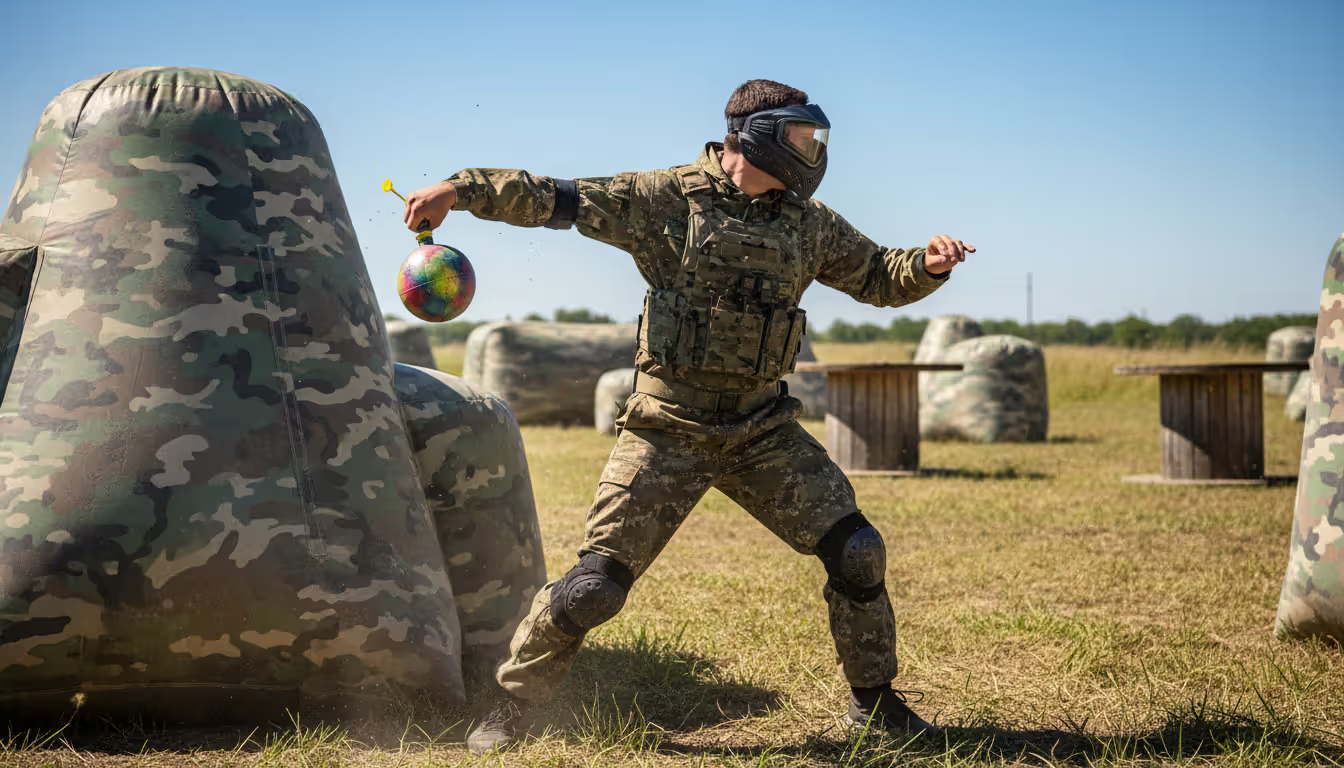
Throwing technique separates effective grenade users from guys who waste money. Underhand lobs arc nicely into bunkers and over barriers. Overhand throws cover distance but make you expose your entire upper body. Banking grenades off walls takes practice—you need to judge angles while opponents shoot at your throwing arm.
Want to maximize eliminations? Don't throw immediately after pulling the pin. Cook it for 2 seconds first. That cuts enemy reaction time in half. They'll see it land and start running right as it detonates.
Author: Ethan Rowe;
Source: lakestaytents.com
Paintball Smoke Grenades
Enola Gaye WP40s became the field standard for good reason. They burn for 90 seconds with genuinely thick smoke coverage. Cheaper brands produce wispy clouds that dissipate in 30 seconds—totally useless.
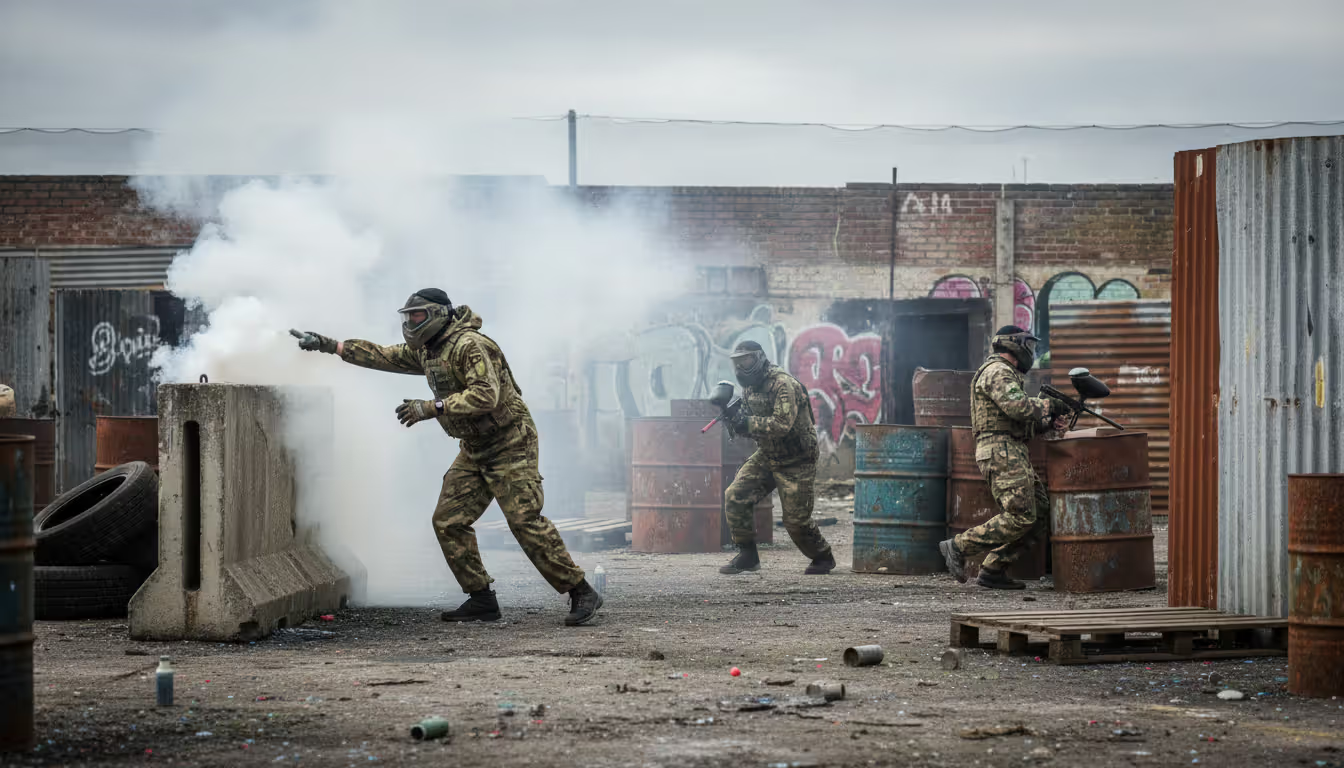
Wire-pull ignition starts the pyrotechnic reaction. Five seconds later, you've got a 40-foot diameter smoke cloud. Wind destroys effectiveness fast. Even 10 mph breezes cut coverage duration by half. On windy days, smoke grenades just donate money to the field operator's profit margin.
Most fields restrict smoke to outdoor use only. Indoor smoke creates visibility nightmares and leaves residue that requires serious cleaning. The smoke itself won't poison you, but players with asthma should stay upwind.
Colors matter for team coordination. White smoke signals neutral positions. Purple, red, green—these mark specific team locations in large scenario games. Just don't expect color visibility beyond 100 feet.
Price sits around $12-16 per grenade. They're single-use, which gets expensive during weekend-long events.
Paintball Landmines
Chokepoint control—that's what landmines deliver. Set one in a narrow trail and watch opponents carefully tipoe around it or take a different route entirely. Even if it never detonates, it's working.
Placement requires thought. Obvious locations get spotted immediately. Bury them slightly under leaves or position them in shadows near natural obstacles. But mark the location somehow your teammates recognize. Small paint dots on nearby trees work. Specific rock arrangements. Anything subtle.
Tripwire versions use monofilament fishing line stretched at ankle height. When someone snags it—paint everywhere. These excel in wooded terrain but become visible in open fields. Pressure plates blend better into natural ground but require direct center hits to trigger properly. Edge steps often fail to activate.
Author: Ethan Rowe;
Source: lakestaytents.com
Reusable landmines run $40-55. Each activation needs a fresh CO2 cartridge. Some fields ban them completely because players forget where they placed them, creating hazards for field staff.
Paintball Claymores
Directional devastation. Claymores mount on stakes and project 250 paintballs across a 60-degree arc extending 40-50 feet. Instead of wasting paint in all directions, everything launches toward enemies.
Setup takes 3 minutes once you've done it a few times. Mount the device, aim it perpendicular to expected enemy movement, connect the remote trigger or tripwire. Knee-height mounting catches prone players. Waist-height tags standing opponents more reliably.
Remote detonation adds serious tactical value. Watch multiple enemies enter the kill zone, then trigger it. One claymore eliminates entire squads. Basic radio detonators cost $30, but you'll see $100+ models at competitive events.
Fields requiring claymore briefings aren't being paranoid. Players who don't retrieve devices after games create genuine hazards. Most facilities now use a card system—you don't get your driver's license back until you return every claymore you deployed.
Pepper Paintballs and Spray Variants
Recreational fields ban these. Period. Pepper paintballs contain capsaicin powder or OC that burns exposed skin and causes respiratory discomfort beyond normal paint hits. You'll find them in law enforcement training scenarios, not weekend games.
Byrna and PepperBall manufacture .68 caliber rounds compatible with standard markers. They're marketed for home defense at $1.50-2 per round compared to 4 cents for regular paint. The irritant concentration exceeds what most players consider acceptable for sport use.
Some jurisdictions classify pepper projectiles as restricted weapons. Check local regulations before purchasing for any purpose. Using them on recreational fields without explicit permission creates massive liability exposure.
How to Use Paintball Grenades in Game Scenarios
Grenade timing matters more than throwing strength. Rush it and you waste $15. Wait too long and opponents reposition.
Bunker clearing works best when you've confirmed enemy positions. Throw blind and you're gambling. Confirmed positions? Cook the grenade 2 seconds before throwing. That gives defenders maybe 1 second to react after it lands. Most won't make it.
Approach angles determine success. Throw over the bunker top when you know exactly where they're hiding. Throw short and you've just announced your position while marking nobody. Banking grenades off bunker sides catches players around corners—but this requires practice throws to judge angles.
Suppression doesn't require eliminations to work. Throw a grenade into a chokepoint. Enemies stop advancing for 10-15 seconds while paint settles. That's enough time for your flag runner to make serious progress.
Defense gets desperate sometimes. When opponents overrun your position, drop an activated grenade at your feet and retreat. You're probably getting eliminated anyway. Might as well take three enemies with you. In objective games, trading one for three wins matches.
Coordinate grenade throws with teammate movements. While enemies dodge your grenade from one direction, teammates rush from another angle. Opponents can't cover both threats simultaneously.
Author: Ethan Rowe;
Source: lakestaytents.com
Safety overrides tactics always. Never throw grenades at players within 20 feet. The device itself causes injuries on impact before paint even disperses. Don't throw into enclosed spaces without confirming no bystanders are present. Yell "GRENADE OUT" loud enough for everyone nearby to hear—players, refs, spectators.
Wind affects lightweight grenades significantly. 15 mph gusts push 8-ounce models off target by several feet. Heavier grenades fly truer but demand stronger throws.
Paintball Grenade Performance Comparison
| Grenade Type | Activation Method | Coverage Area | Paint Capacity | Avg. Price Range | Best Use Case |
| Hand Grenade | Pull-pin with 3-5 sec delay | 25-35 ft radius | 100-200 paintballs | $8-80 (disposable vs. refillable) | Clearing fortified positions, area suppression |
| Smoke Grenade | Wire-pull igniter | 30-50 ft cloud diameter | None (smoke only) | $10-18 each | Movement concealment, position signaling |
| Landmine | Pressure plate or tripwire | 10-15 ft radius | 150-250 paintballs | $35-60 (reusable) | Trail defense, objective protection |
| Claymore | Remote trigger or tripwire | 60° arc extending 40-50 ft | 200-300 paintballs | $45-75 (reusable) | Ambush preparation, directional suppression |
| Pepper Ball Variants | Marker-fired, impact trigger | Single target + 3-5 ft irritant cloud | 1 round per projectile | $1-2 per round | Law enforcement drills, self-defense training |
Cost-per-use math favors reusable grenades if you're playing monthly or more. That $60 refillable hand grenade reaches cost parity with disposables after 10 uses. Weekly players hit that in three months.
Coverage specifications assume perfect conditions. Level ground. No wind. Proper activation. Reality delivers less. Vegetation absorbs splatter. Hills create asymmetric patterns. Test grenades during practice before relying on them in tournaments.
Safety Rules and Field Regulations
Grenade injuries happen when players ignore minimum engagement distances or fields skip safety briefings. Most common? Grenades impacting players at close range. Second most common? Someone trips over an unmarked landmine after the game ends.
Minimum engagement distance should match your field's marker rules—usually 20 feet minimum. Some facilities mandate 25-30 feet for heavier reusable grenades that cause more impact damage.
Masks stay on. Paint splatter reaches faces from unexpected angles during grenade detonations. Fragments from defective grenades (rare but possible) pose vision risks. Never remove eye protection in active zones, regardless of what's detonating.
Field restrictions vary wildly. Some places welcome all grenade types. Others allow only hand-thrown models. Certain fields ban grenades entirely because cleanup and safety enforcement require too much staff time. Before buying expensive claymore systems, confirm your primary field permits them.
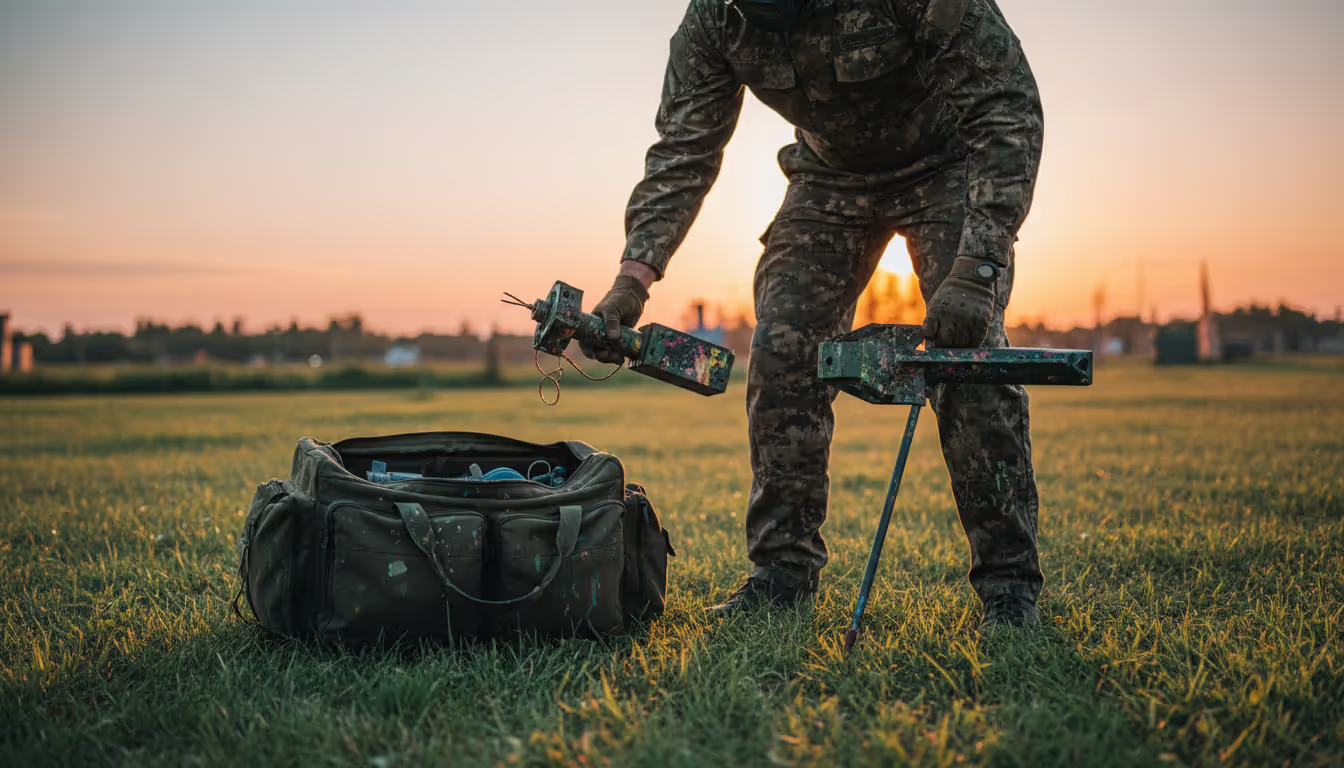
Post-game cleanup isn't optional. Retrieve every deployed device. Landmines and claymores left on fields create hazards for maintenance crews and next-day players. Fields increasingly use card systems—you don't get your ID back until you return all grenades.
Author: Ethan Rowe;
Source: lakestaytents.com
Transportation follows basic precautions. Store grenades separately from markers in dedicated bags. Keep safety pins inserted during transport. Airlines restrict some CO2-equipped grenades—check TSA regulations before packing them in luggage.
Common Mistakes When Using Paintball Grenades
Bad cooking timing wastes grenades constantly. Pull the pin and throw immediately? Opponents get 4 seconds to scatter. Hold it too long? You're wearing your own paint. Practice with cheap disposables until timing becomes instinctive.
Telegraphing throws warns opponents. Players who stand fully upright and wind up like baseball pitchers give defenders reaction time. Quick, compact throws from behind cover minimize exposure.
Wrong landmine placement reduces effectiveness dramatically. Open-area mines get spotted instantly. Good placement uses natural concealment—leaves, grass, shadows near obstacles. But excessive concealment creates friendly-fire incidents when teammates forget mine locations.
Ignoring wind with smoke grenades burns money. Strong winds disperse smoke in seconds. Check wind direction first and position grenades upwind of areas needing concealment.
No teammate communication before throwing means eliminating your own players. Confirm friendly positions before deploying area-effect weapons. Use clear verbal warnings.
Maintenance neglect kills reusable grenades. O-rings dry out and leak gas. Paint residue clogs dispersal ports. Clean internal chambers after each use and store grenades without CO2 cartridges installed to prevent corrosion.
Cheap knockoffs seem economical until they malfunction. Off-brand grenades use inferior gas cartridges that fail to puncture or produce weak dispersal. Stick with Tippmann, Empire, or Valken—their products actually work.
Frequently Asked Questions About Paintball Grenades
Grenades reward players who think beyond basic marksmanship. They control space, force movement, and enable coordinated tactics that markers alone can't achieve.
Hand grenades clear bunkers and suppress areas. Smoke conceals movement and signals positions. Landmines defend chokepoints. Claymores create ambush zones. Each type serves specific purposes that complement standard play.
Before spending money, verify your field's grenade policies. Practice with cheap disposables to develop timing and accuracy. Reusable systems deliver better value for frequent players. Disposables suit occasional use. Safety always comes first—proper engagement distances, clear communication, thorough cleanup after games.
Master these fundamentals and you'll dominate objective-based games where area control determines outcomes more than individual eliminations.