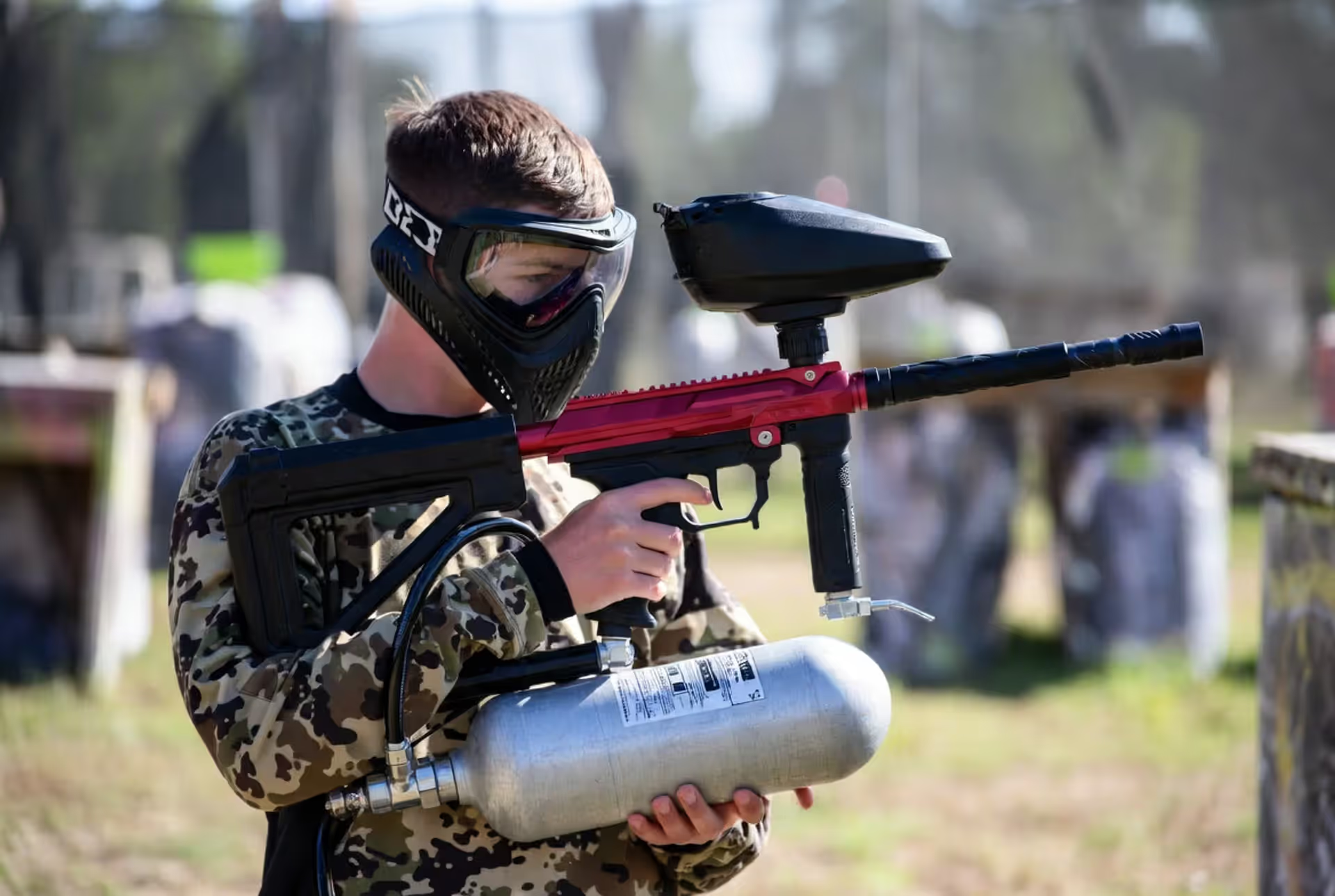
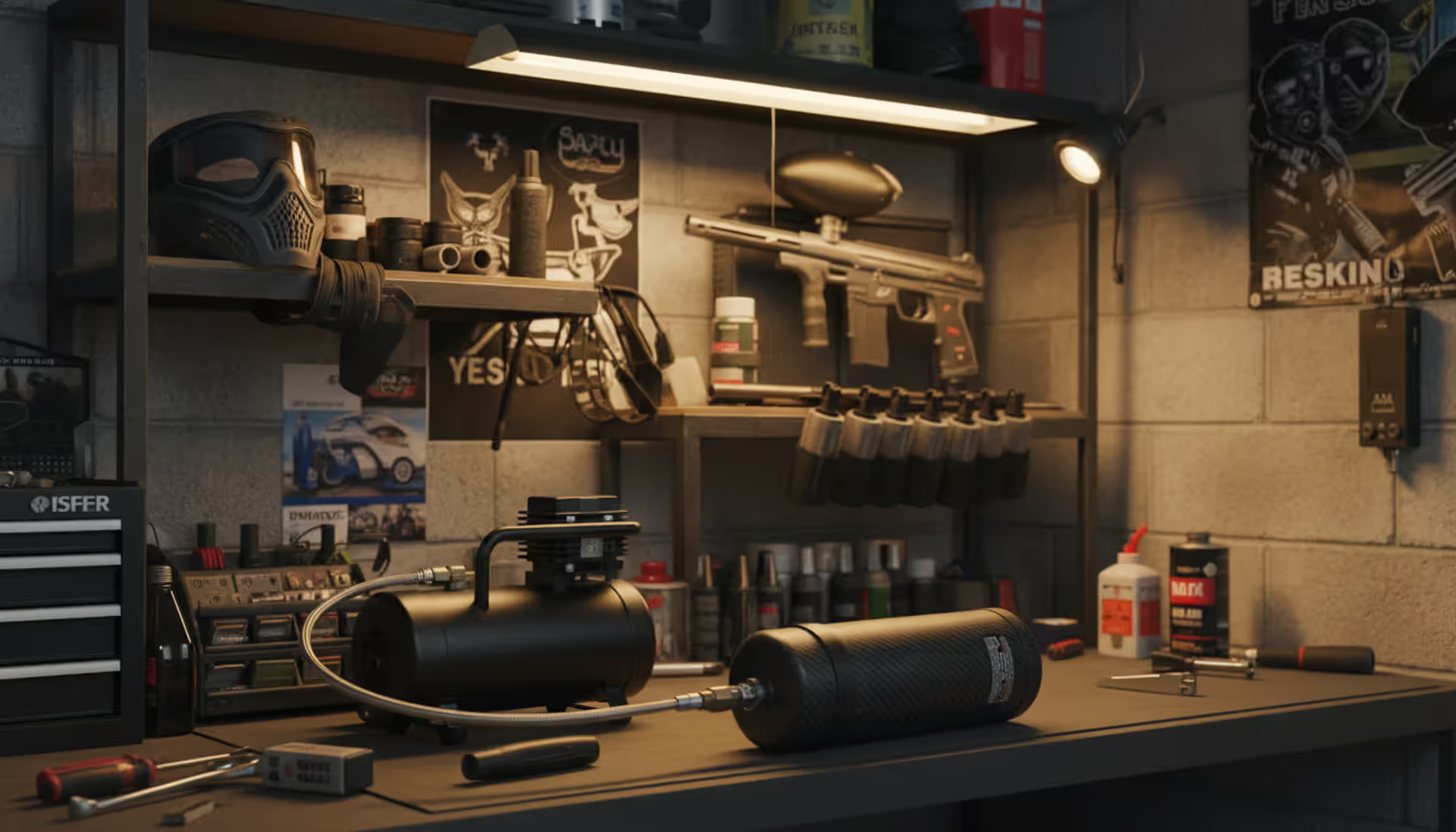
Black HPA high-pressure compressor on a garage workbench connected via fill whip to a carbon fiber paintball tank with paintball gear on shelves in the background
Paintball Air Compressor Guide

Content
Ever get tired of packing up your gear, driving across town to the pro shop, and waiting 20 minutes just to top off your tank before a game? I've been there more times than I care to admit. The solution isn't complicated—get your own paintball air compressor. You'll fill tanks whenever you want, skip the $5-per-fill fees that add up fast, and never miss a Sunday session because the shop closes early.
For casual players hitting the field twice a month, the math works out after 50-60 fills. Run a team or small field? You'll recover costs even faster. But here's the catch: buying the wrong unit means either replacing it within a year or dealing with constant headaches. Let's dig into what actually matters.
What Is a Paintball Air Compressor and How Does It Work
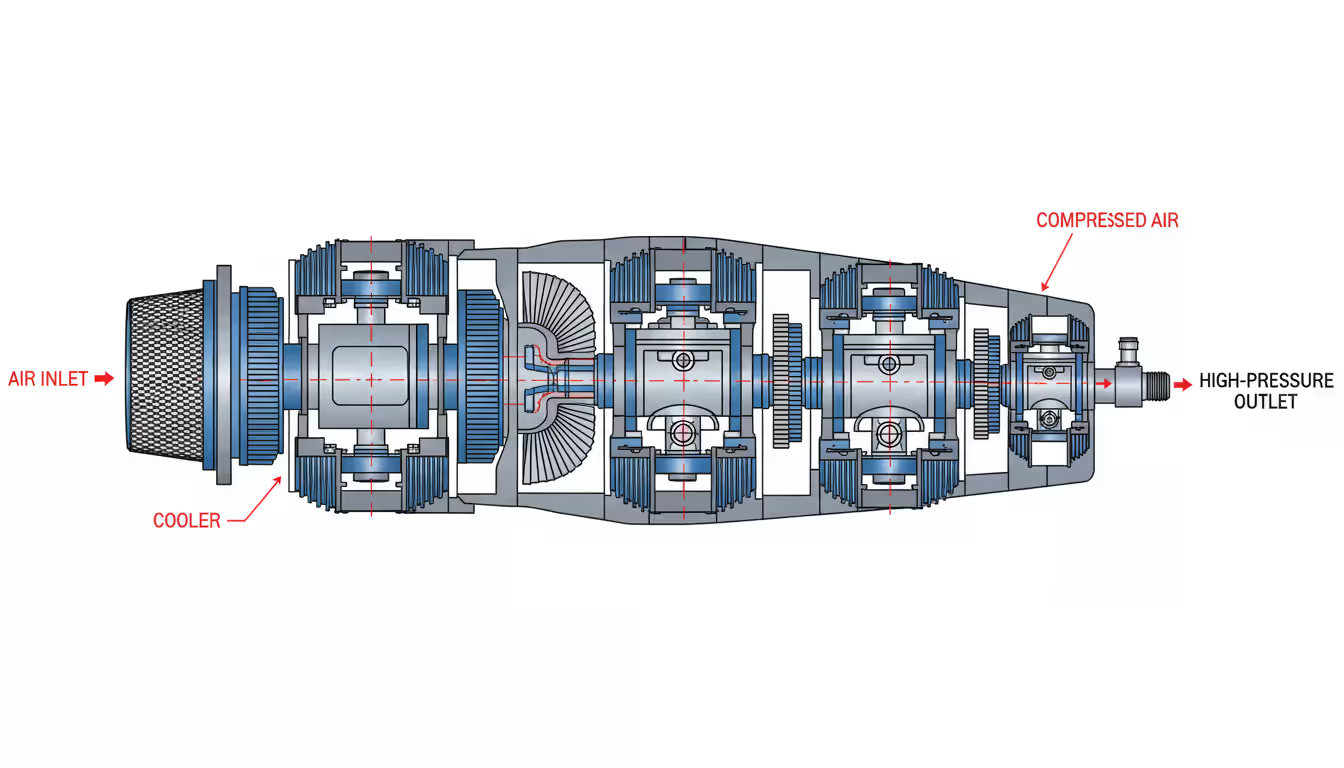
Think of this as a specialized pump that crams massive amounts of air into small spaces. Your paintball tank needs 3,000 to 4,500 PSI—that's 200 to 300 times normal atmospheric pressure. Standard garage compressors tap out around 150 PSI, which explains why your buddy's DeWalt pancake compressor won't cut it.
Here's what happens inside: ambient air gets sucked through filters, then squeezed progressively tighter across three or four compression stages. Between each stage, cooling fins or radiators dump the heat generated by squashing all that air (think of how a bicycle pump gets warm after a few strokes, then multiply that by about a thousand). The final stage pushes purified, dry air into your tank through a reinforced fill whip.
CO2 works completely differently. It's stored as liquid, not gas. When you crack open a CO2 tank, liquid flashes to vapor—which is temperature-sensitive. Ever notice your velocity dropping on cold November mornings? That's CO2 pressure fluctuating with the thermometer. Fire 15 rapid shots and watch your FPS swing wildly.
HPA (that's compressed atmospheric air, nothing fancy) maintains rock-steady pressure whether it's 40°F or 95°F outside. Fill it once, shoot all day without velocity drift. Modern electronic markers practically demand HPA because their solenoids can't handle CO2's pressure spikes. That's why you'll see HPA tanks on 95% of guns at any tournament.
Power requirements vary. Most home units run on regular 110V outlets. Bigger commercial compressors need 220V circuits (same as electric dryers). A few portable models offer 12V car adapters for tailgating, though they fill slowly.
The safety piece: quality compressors auto-stop at your preset PSI. Cheaper ones? You're watching gauges like a hawk and manually killing power. Overfill a tank even slightly, and you might void its certification or worse—create a hazard.
Author: Ethan Rowe;
Source: lakestaytents.com
Types of Paintball Compressors and Fill Stations
Portable HPA Compressors
These 25-to-50-pound boxes handle transport well. Toss one in your truck bed for scenario games three hours from civilization. Plug into household current or run from your vehicle battery if you've got the adapter.
Expect 10-20 minute fill times for a 68ci tank starting from empty. Not instant, but workable if you're filling one or two tanks between games. The limitation shows up during team practices—five players rotating through tanks means someone's always waiting.
Heat becomes your enemy fast. Lightweight construction and smaller motors mean these units cook during extended sessions. Fill three tanks back-to-back and you'll need a mandatory 20-minute cooldown before continuing. Plan accordingly.
Stationary High-Pressure Air Systems
Walk into any established paintball field and you'll find one of these beasts bolted to the floor. They weigh 80-200+ pounds, draw serious amperage (usually 220V), and fill tanks in 3-5 minutes flat.
Commercial operators filling 50-100 tanks on busy Saturdays need this capacity. The motors run cooler, components last longer, and duty cycles support continuous operation. Some models incorporate storage banks—essentially large pre-filled reserve tanks. Instead of compressing every molecule from scratch, the system transfers from reserves, then quietly refills the bank during downtime. Cuts fill time in half and reduces wear.
The price jump is real ($3,000-$12,000+ versus $1,500-$3,500 for portables), but per-fill costs drop to pennies when you're doing volume. Fields recoup costs in 6-12 months versus paying wholesale fill rates at a distributor.
CO2 Fill Stations vs HPA Compressors
CO2 stations don't compress anything—they're transfer pumps. You're moving liquid from a large bulk tank into smaller paintball bottles. Setup costs less ($200-$600 complete), but you're married to CO2 suppliers. Miss a delivery? You're shut down until the truck arrives.
Rural areas get squeezed hardest. I've heard stories of fields paying 40% premiums because they're 90 miles from the nearest distributor. HPA compressors need electricity and atmospheric air. That's it. No supply chain vulnerability.
Performance gap matters more now. Fifteen years ago, most markers ran fine on CO2. Today's electros? They'll technically function, but you're risking solenoid damage and dealing with inconsistent velocity. Unless you're exclusively running vintage mechanical markers (Autocockers, pre-2005 Tippmanns), skip CO2.
| Type | Max PSI | Fill Time (68ci/4500) | Portability | Price Range | Best For |
| Portable HPA | 3,000–4,500 | 15–25 min | Easy to move (25–50 lbs) | $1,500–$3,500 | Individual players, mobile operations |
| Stationary HPA | 4,500–5,000 | 3–7 min | Permanent install (80–200+ lbs) | $3,000–$12,000+ | Fields, pro shops, high-volume filling |
| CO2 Transfer Station | N/A (liquid system) | 2–5 min | Somewhat mobile (15–40 lbs) | $200–$800 | Budget-conscious vintage marker users |
Choosing the Right Air Compressor for Paintball Tanks
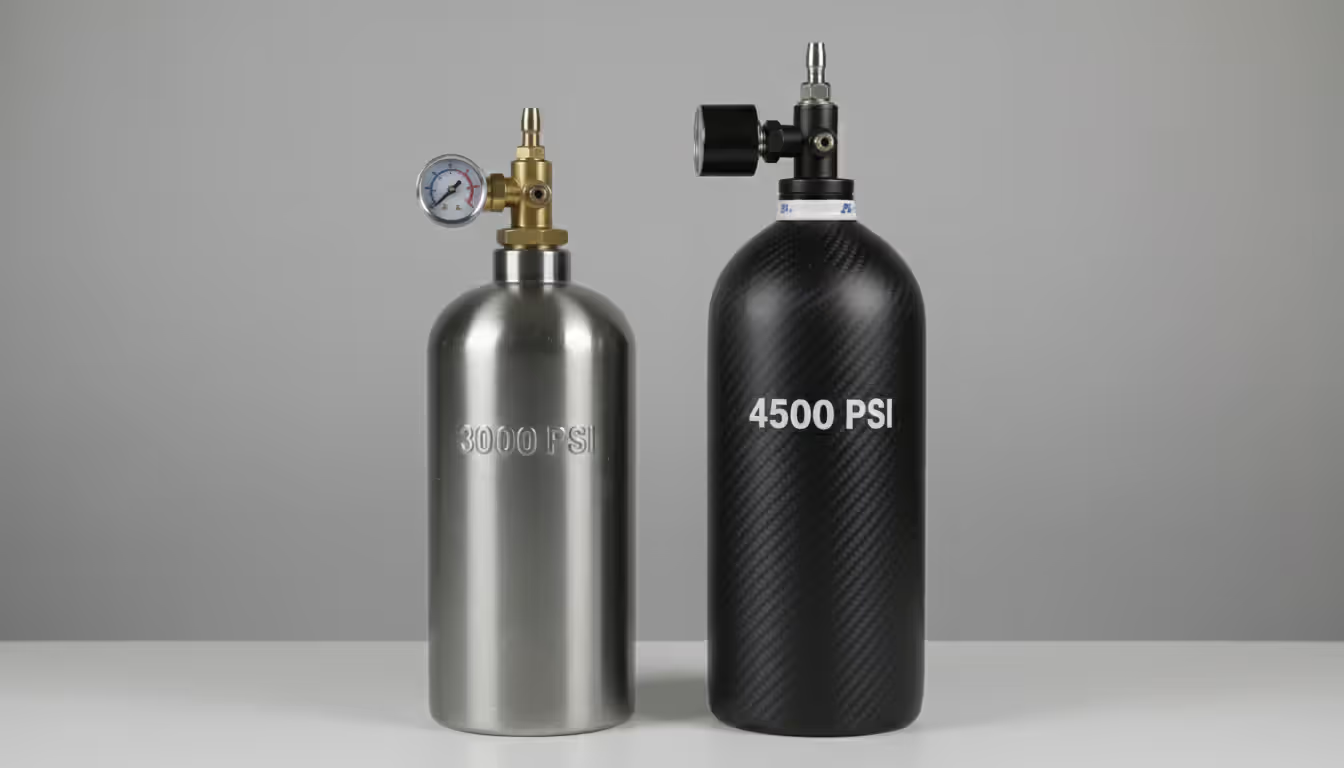
First fork in the road: 3,000 PSI or 4,500 PSI max pressure. Seems obvious until you see the price tags. A 3,000 PSI unit costs $400-$700 less, which sounds appealing until you realize you're locked into lower-capacity tanks forever.
Same 68-cubic-inch bottle holds roughly 800 shots at 3,000 PSI versus 1,200+ shots at 4,500 PSI. That's the difference between reloading twice per game or skating through on one fill. Buy the 4,500 PSI compressor now, even if you currently run 3,000 PSI tanks. You can fill low-pressure tanks with high-pressure equipment (just stop earlier). Doesn't work backwards.
Fill speed separates "continuous duty" from "intermittent duty" ratings. Continuous means fill tanks all day without forced breaks. Intermittent typically means 20-30 minutes on, 15-20 minutes mandatory rest. For home use filling one tank before heading out? Intermittent works fine. Team of eight players practicing Wednesday nights? You'll hate life without continuous duty.
Noise levels get overlooked until your neighbor pounds on the garage wall. Specifications list decibel ratings—70 dB sounds like a vacuum cleaner running, 85 dB hits shop-vac territory. Attached garage? Living in an HOA community? Spend extra for sound-dampening enclosures or check if the manufacturer offers quiet-running variants.
Portability involves tradeoffs. Wheels, handles, and compact dimensions sacrifice cooling capacity. That 32-pound portable unit fits behind your car seat but needs frequent cooldowns. The 65-pound stationary box with massive heat sinks stays in one place but runs all day without complaint.
Verify fill whip compatibility before buying. Modern standard uses Foster quick-disconnect fittings (post-2015 tanks). Older budget compressors sometimes ship with outdated connections. You'll either need adapters ($30-$60) or replacement whips ($80-$150).
Author: Ethan Rowe;
Source: lakestaytents.com
Key Features to Look for in a 4500 PSI Compressor
Auto-shutoff isn't negotiable. Period. Units lacking automatic pressure cutoff force you to babysit gauges constantly. Look away for 30 seconds and you've overfilled the tank. Quality models let you dial in target pressure—say 4,400 PSI—and they stop automatically when reached.
Moisture removal separates junk from legitimate equipment. Compressing air concentrates water vapor dramatically. Without proper filtration, that moisture corrodes tank interiors, gums up regulators, and freezes solid during winter use (hello, velocity problems and potential blowouts).
Multi-stage filtration using desiccant cartridges or molecular sieve media strips moisture down below 50 parts per million. Good systems use color-changing filters—start blue, turn pink when saturated. Cheap compressors skip this entirely or use inadequate single-stage filters.
I've inspected probably 40-50 failed tanks over the past decade. Maybe 70% showed significant internal corrosion from moisture contamination. A compressor without certified filtration will absolutely trash your tanks and regulators. You'll spend more on replacement gear and rebuilds than you saved buying cheap equipment. It's not a matter of if, it's when
— Marcus Chen
Cooling method determines how hard you can push the compressor. Air-cooled designs use fans blowing across heat sinks—simpler, cheaper, adequate for intermittent home use. Water-cooled systems circulate coolant through radiators like a car engine. More complex and expensive, but they maintain stable temperatures during continuous commercial operation.
Warranty duration tells you what manufacturers really think of their own products. Budget imports: one year, maybe. Mid-tier: two to three years. Premium commercial units: five years, sometimes with extended coverage options available. Read what's actually covered—some warranties exclude consumables (filters, seals), others cover everything except obvious abuse.
Safety certifications matter legally and practically. ASME (American Society of Mechanical Engineers) pressure vessel certification and UL (Underwriters Laboratories) electrical listings mean independent testing happened. Operating commercially? Your liability insurance probably requires certified equipment. Personal use? Certified units passed safety standards that budget imports often sidestep entirely.
Common Mistakes When Buying or Using a Paintball Tank Compressor
Cheaping out on pressure capacity backfires every time. That $900 compressor maxing at 3,000 PSI looks attractive compared to a $2,200 model hitting 4,500 PSI. But when you're staring at your new 4,500 PSI tank, the cheap compressor becomes a paperweight. You'll buy twice—trust me, I've watched this happen repeatedly.
Maintenance neglect kills compressors faster than anything else. Units using oil lubrication need changes every 50-100 operating hours. Skip it and you're grinding metal on metal. Moisture filters saturate after 20-40 hours depending on humidity—ignore them and you're pumping contaminated air into tanks. A $40 filter beats a $1,200 replacement compressor.
Assuming filtration is "set and forget" causes problems downstream. Yes, your compressor has filters. They saturate and stop working. High-humidity climates (I'm looking at you, Gulf Coast and Southeast) burn through filters faster than manufacturer schedules suggest. That color-changing desiccant turning pink? Replace it immediately, regardless of hour count.
Moisture drains need manual attention. Condensation accumulates in low spots inside the compressor. Most units have petcocks or drain valves specifically for purging water. Ignore them and you're cycling contaminated air through your system.
Overfilling happens even with auto-shutoff if you're careless. Tanks display maximum fill pressures—usually 3,000 or 4,500 PSI at 70°F. Temperature changes pressure. Fill to exactly 4,500 PSI in your 70°F basement, leave the tank in a 95°F car, and pressure climbs. Always leave 50-100 PSI headroom. Never fill tanks immediately after use when they're still warm.
Author: Ethan Rowe;
Source: lakestaytents.com
Hydrostatic test dates get forgotten until it's too late. DOT-certified tanks require retesting every 3-5 years (check the stamp on your tank). Using expired tanks is illegal for transport and genuinely dangerous. As the person operating the compressor, you're responsible for checking dates before filling anyone's tank. Exploding tanks cause serious injuries—this isn't theoretical.
Maintenance and Safety Tips for HPA Compressors
Filter replacement schedules printed in manuals assume ideal conditions. Real-world environments are dusty, humid, and imperfect. Operating in a garage workshop or outdoor field setting? Cut manufacturer intervals by 25-30%. Most systems use color-indicating desiccant—blue crystals mean good, pink means replace immediately. Don't wait for the timer if the filter's clearly saturated.
Oil-lubricated models need pre-session checks, not just scheduled changes. Check the sight glass before every use. Synthetic compressor oil only—manufacturer-specified grades matter because viscosity and additive packages differ from automotive or pneumatic tool oils. Wrong oil damages seals fast.
Keep oil levels at the midpoint on the sight glass. Overfilling causes foaming, which reduces lubrication effectiveness (counterintuitive, I know). Underfilling accelerates wear on compression stages.
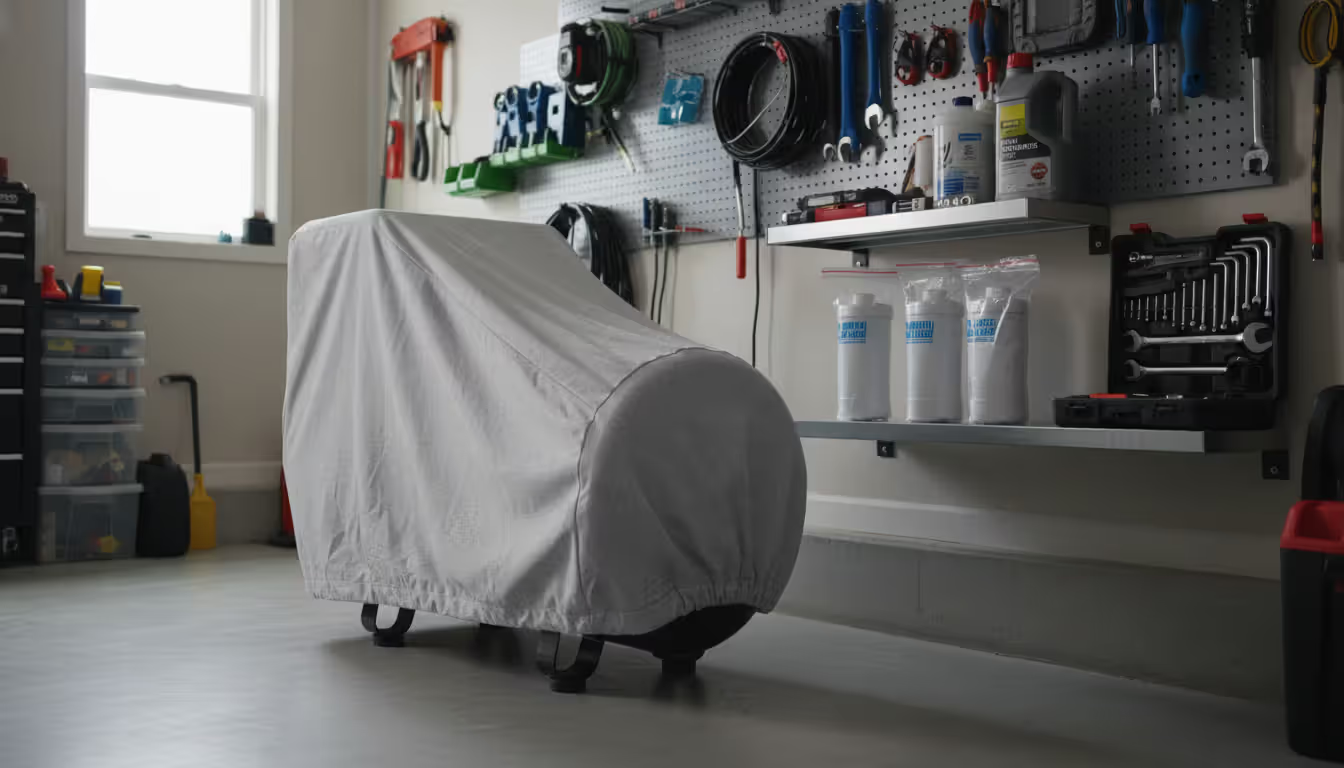
Climate-controlled storage extends equipment life significantly. Humidity corrodes external components and introduces moisture internally. Temperature swings affect seals and lubricants. Garage or shed storage? Run a dehumidifier or pack desiccant buckets nearby. Cover the compressor with breathable tarps—block dust but allow air circulation to prevent condensation.
Author: Ethan Rowe;
Source: lakestaytents.com
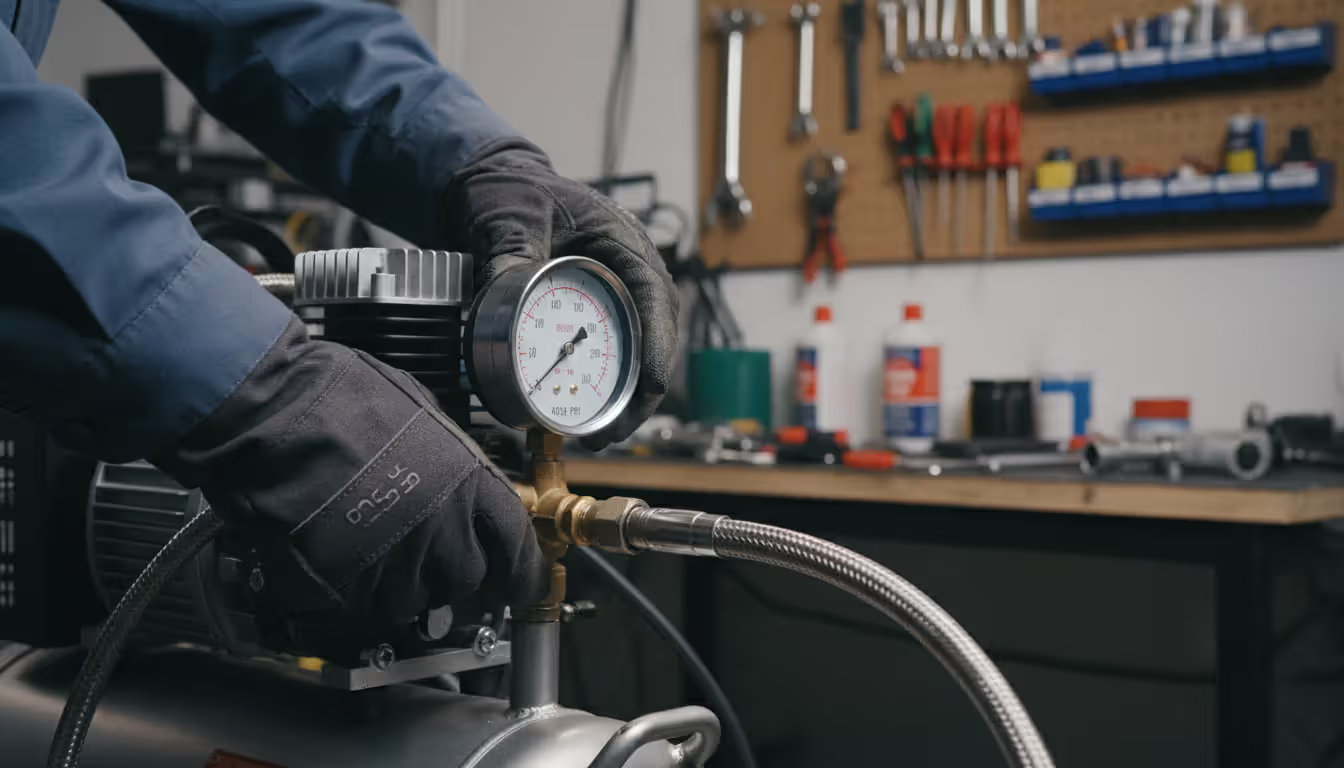
Annual pressure testing catches failures before they happen. Gauges drift over time. That gauge showing 4,500 PSI might actually deliver 4,700 PSI, systematically overfilling every tank you touch. Get gauges calibrated or replaced every 12-18 months.
Inspect fill whips for wear—cracks in the hose, fraying near fittings, damaged quick-disconnects. High-pressure hose failures during fills are legitimately dangerous. Replace whips showing any wear. They're $80-$150 versus potential injury.
Monthly exercise prevents seal deterioration during off-season storage. Even if you're not playing October through March, run the compressor for five minutes monthly with no load (fill whip disconnected). This circulates oil, exercises seals, and prevents stagnation. Simple habit, potentially doubles rebuild intervals.
Frequently Asked Questions
Getting your own compressor changes everything about how you approach paintball. Fill tanks on your schedule, not the pro shop's hours. Stop bleeding $5-$8 per fill when you're playing twice weekly. Stop planning entire days around getting air before games.
The critical part: match compressor specs to actual needs. Don't overbuy features you'll never touch, but absolutely don't cheap out on essentials. Proper PSI ratings, legit moisture filtration, and safety auto-shutoffs aren't optional—they're mandatory.
A properly maintained 4,500 PSI compressor with quality filtration will serve you 10+ years, filling thousands of tanks while protecting equipment from moisture damage and overfill risks. Factor real operating costs—electricity, filters, oil, periodic maintenance—when calculating total ownership expenses.
Whether you're setting up home fills for weekend recreational play or equipping a commercial field operation, the fundamentals stay consistent: buy adequate pressure capacity, maintain filtration religiously, follow service intervals precisely, and never compromise on safety equipment. The compressor keeping your tanks full and gear running is genuinely one of the smartest investments you'll make in this sport.