How to Plan a Paintball Birthday Party?

Content
Your kid wants a paintball party. Maybe they've been bugging you about it since their friend had one last summer, or they saw it on YouTube and won't stop talking about it. Either way, you're now researching whether this is actually doable—and whether you'll regret saying yes.
Here's what you need to know: paintball parties work incredibly well when you match the setup to your child's age and personality. A 10-year-old's first paintball experience looks completely different from a teenager's party. The venue matters. The equipment matters. And what you're actually paying for matters more than the sticker price suggests.
This isn't like booking a bowling alley where everything's basically identical. You've got real decisions to make, and they'll determine whether your child talks about this party for months or complains about bruises for a week.
Is Paintball Safe and Appropriate for Kids' Birthday Parties?
Let's tackle the worry keeping you up at night: safety.
Here's the truth—facilities that specialize in kids' paintball have safety dialed in. Injuries happen less frequently than in youth soccer or basketball. But that's only true when you're dealing with legitimate operations that follow protocols, not your neighbor's backyard setup with equipment from 1997.
Age minimums exist for good reasons. You'll find most places accept 10-year-olds for low-impact paintball. Standard paintball? Usually 12 and up. A handful of spots take 8-year-olds for special youth programs, but that's rare enough that you shouldn't count on finding one nearby.
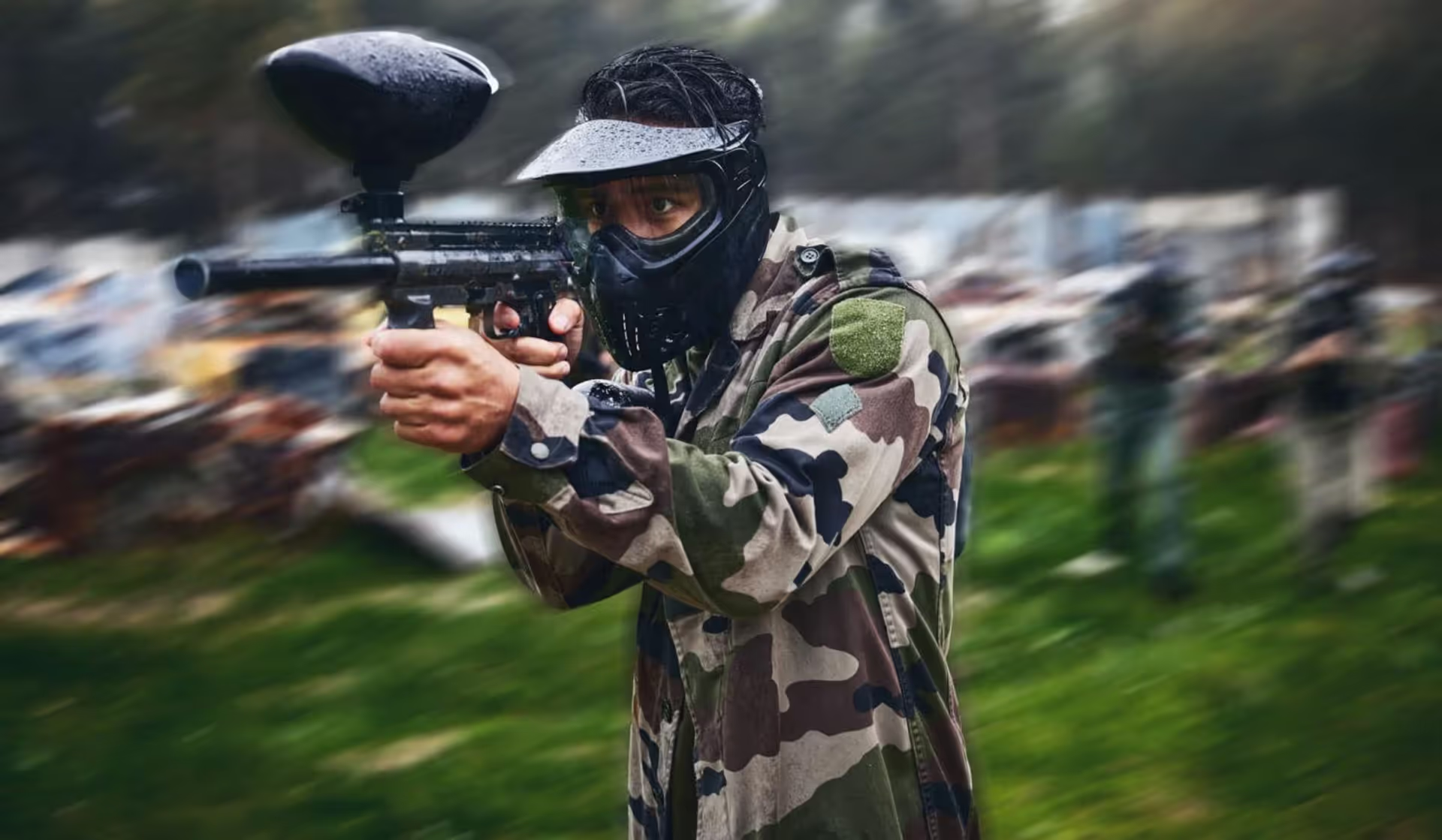
The "low-impact" label isn't marketing fluff. These use .50 caliber paintballs moving around 200 feet per second. Standard gear shoots .68 caliber at 280 fps. That difference translates to noticeably less sting and equipment light enough for smaller kids to actually handle comfortably. Your 10-year-old won't be lugging around a marker that weighs as much as their school backpack.
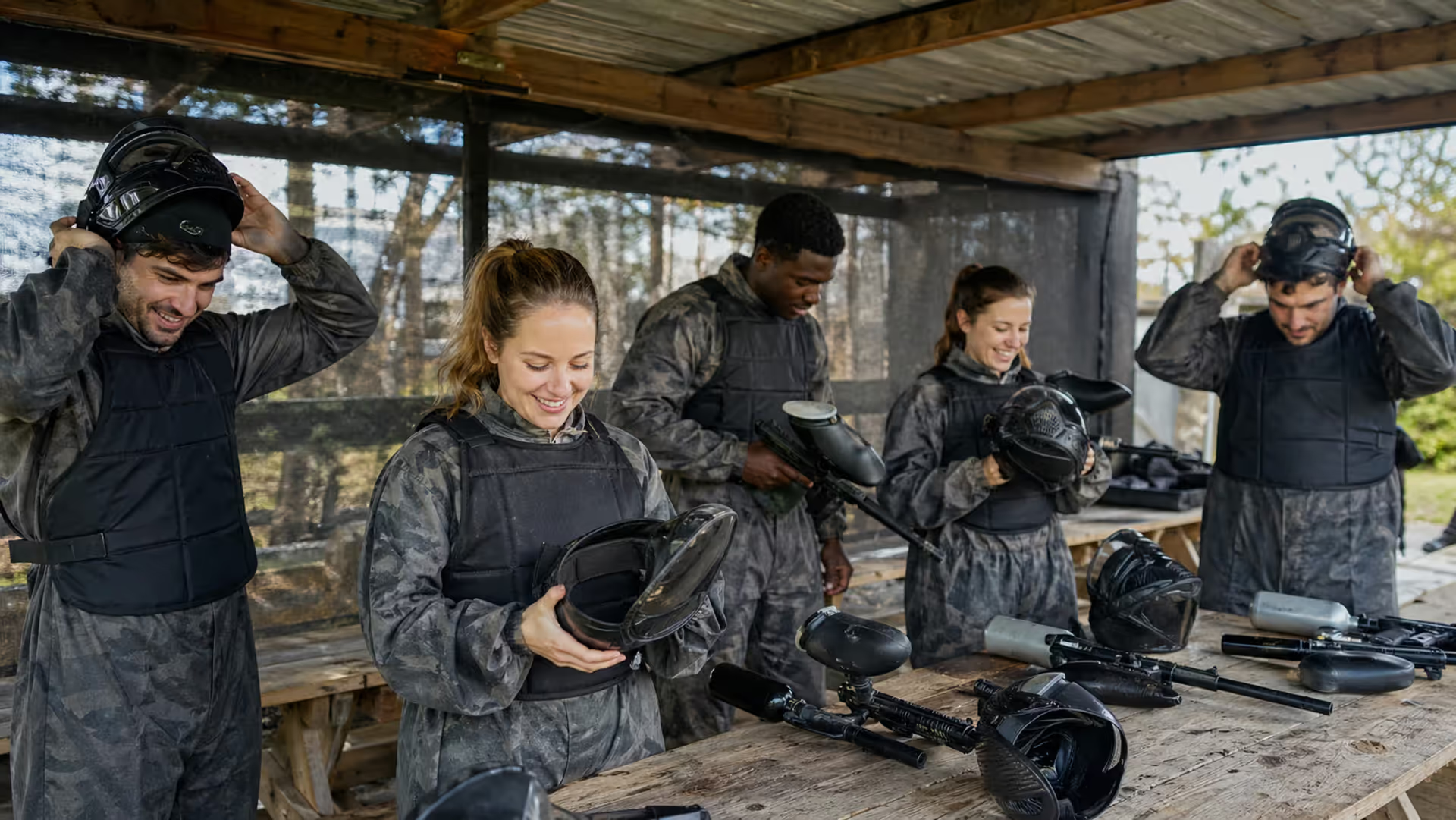
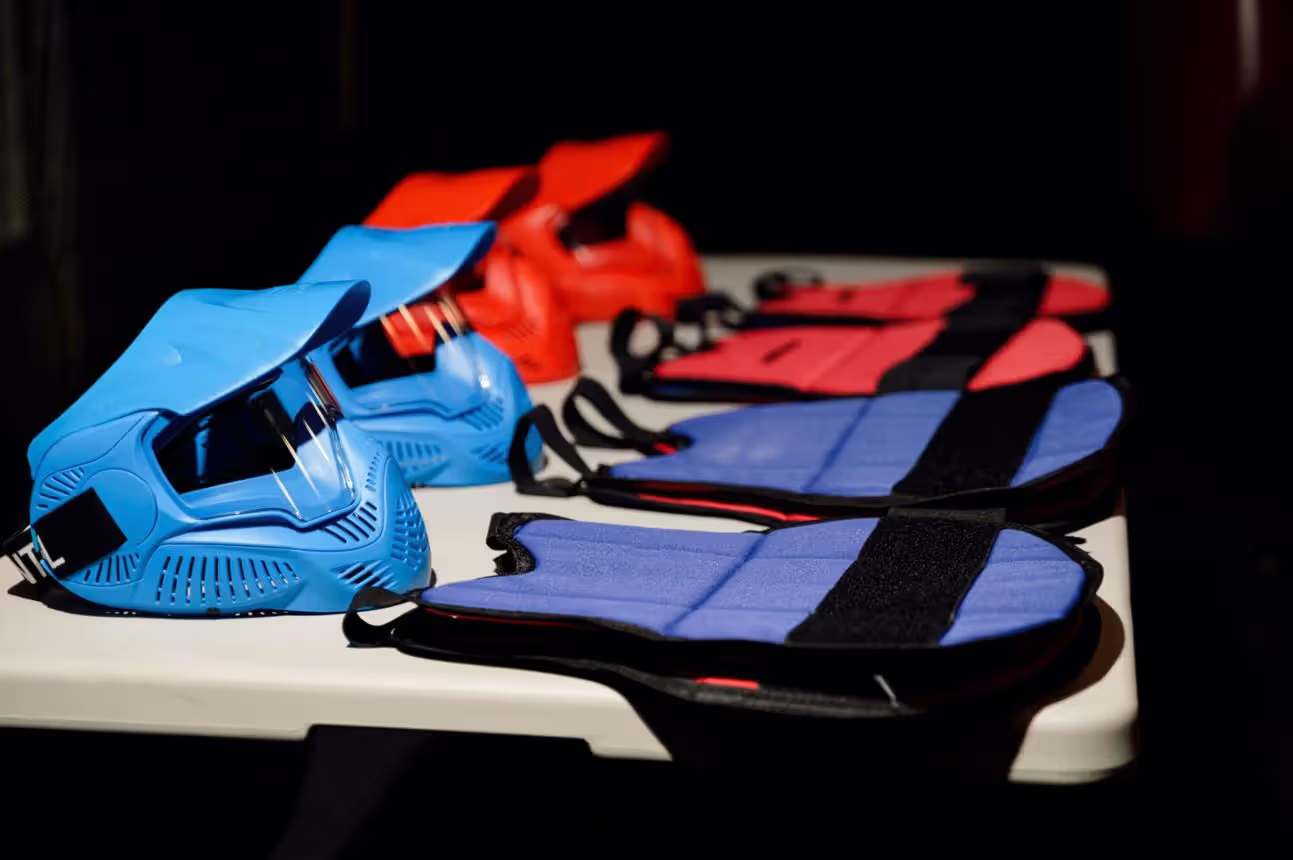
Every single player wears a full-face mask meeting ASTM standards—no exceptions, no "just for a second" removal in play areas. Quality spots provide masks with thermal lenses (so they don't fog up), extra padding, and chest protectors for younger players. Referees will absolutely stop games if anyone's mask shifts or comes loose.
Does getting hit hurt? Yeah, it stings. Think of snapping yourself with a thick rubber band—sharp for a moment, then it fades. Kids consistently report that anticipating it feels worse than the actual experience. You might see some bruising, especially on arms or legs. That's why long sleeves and pants aren't optional.
Watch the supervision ratio. A paintball party for 10 year olds needs at least one trained ref per 10 kids, plus additional staff watching equipment zones and rest areas. Professional venues assign someone who stays with your group the entire time, not someone juggling three parties at once.
The emotional readiness piece? That's often bigger than physical concerns. Some 10-year-olds jump right into competitive scenarios and love it. Others freeze up when paintballs start flying and spend the whole time hiding. Think about how your child handles organized sports, minor injuries, and being "out" in games. If they melt down when tagged during playground games, paintball might not be their jam yet.
Author: Brandon Kesswick;
Source: lakestaytents.com
Types of Paintball Party Venues and Formats
You've got three main options, and they're different enough that the wrong choice will torpedo your party.
Commercial Paintball Fields
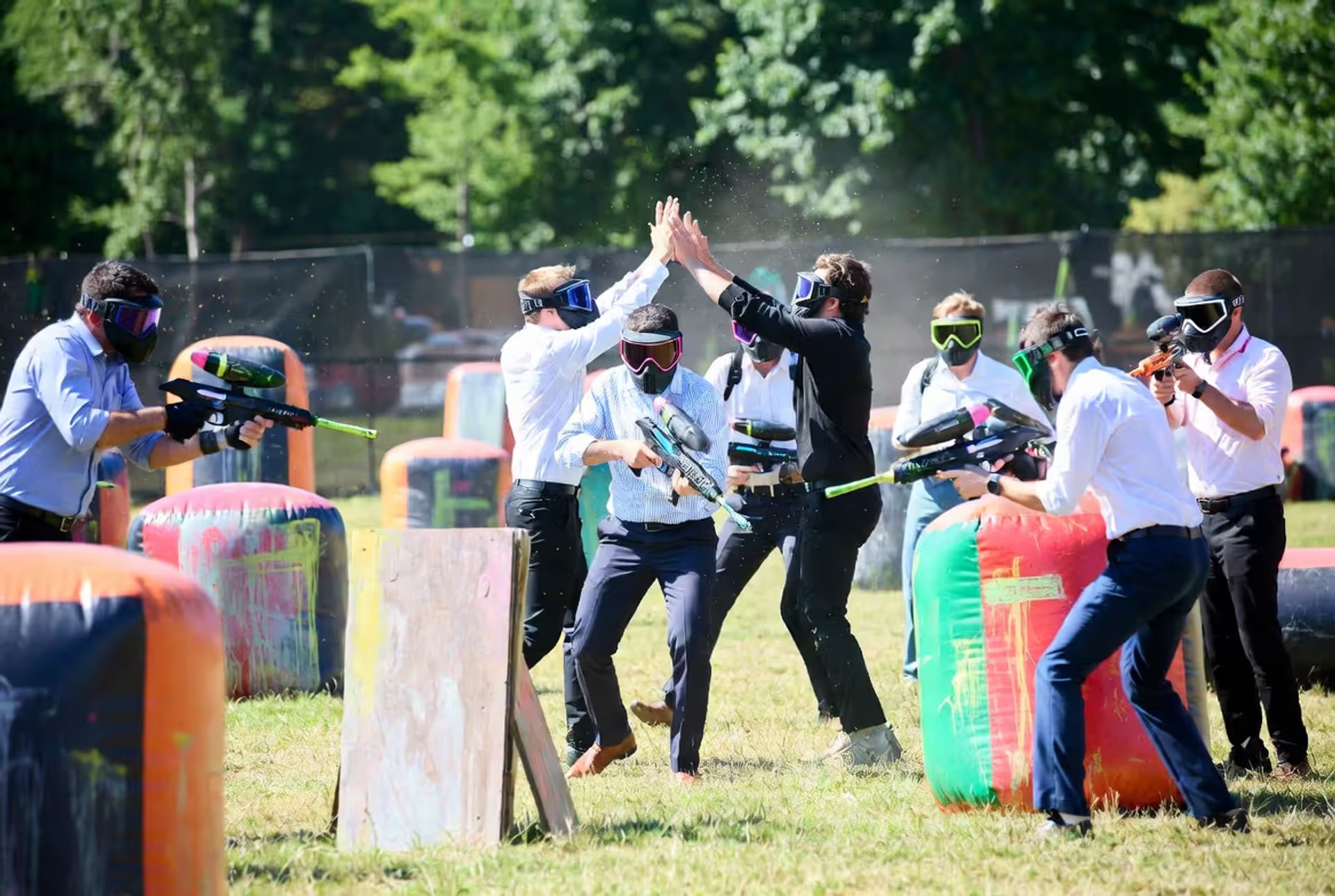
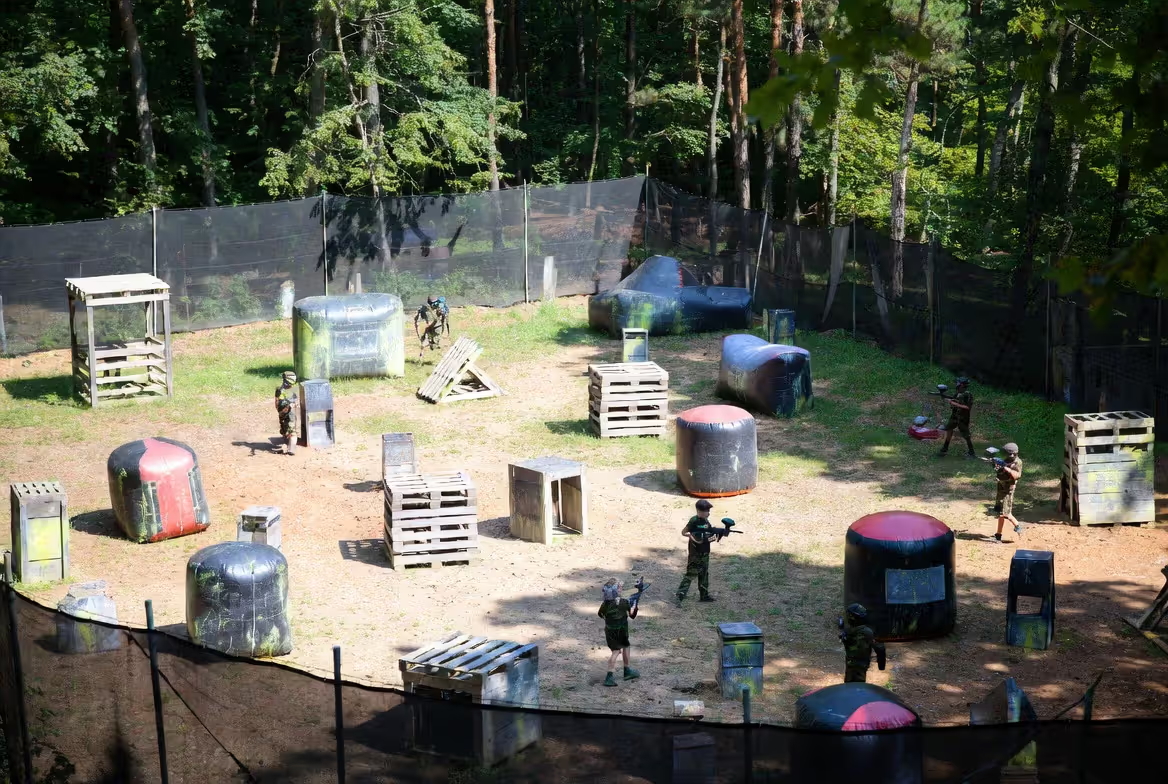
These dedicated facilities deliver the complete package. We're talking multiple playing fields—wooded trails, inflatable bunker courses, themed areas like Western towns or military compounds. Some fields cover just a quarter-acre for quick games; others sprawl across 10+ acres.
The infrastructure makes your life easier. Climate-controlled staging areas mean kids aren't standing in the cold while getting fitted for gear. Actual bathrooms (not port-a-potties). Party rooms for pizza and presents. Staff who handle literally everything from filling air tanks to organizing teams to settling arguments about who shot who first.
Many places throw in add-ons: pizza delivered at specific times, trophies for the winning team, group photos with everyone in their gear. One facility near me offers a "splatter wall" where kids shoot paintballs at a white board and take home a photo of the colorful chaos they created.
The catch? You're on their schedule. Prime Saturday afternoon slots in summer get booked 8-12 weeks out. Your group shares the facility with other parties, though most packages give you dedicated field time where only your guests play together. You're not dodging random adults or older teens, but you might wait for a field to open up if the party ahead of yours runs late.
Author: Brandon Kesswick;
Source: lakestaytents.com
Mobile Paintball Services
These companies haul everything to you—inflatable bunkers, markers, masks, paintballs, refs, the works. They'll set up in your backyard, a local park, or whatever space you've arranged.
The convenience factor is huge. No coordinating carpools with other parents. No worrying about half the guests getting lost on the way. Your location means you control food (order whatever you want), handle siblings more easily (they can play in another area), and extend the party with additional activities before or after paintball.
But you need space—and more than you probably think. A functional game area requires at least 100 by 50 feet of open terrain. Bigger is genuinely better. The ground matters too. Grass works great. Dirt is fine. Concrete or asphalt means kids hit hard when they dive, and you'll be dealing with scraped knees and elbows.
Confirm that paintball is actually allowed where you're planning. HOA neighborhoods frequently ban it. Many public parks prohibit paintball in their regulations (even if you've seen other activities there). Getting shut down 30 minutes into the party because someone complained ranks among parenting nightmares.
Mobile services typically run 15-25% more expensive than commercial fields for the same playing duration. You're paying for the convenience of them hauling gear and setting up at your chosen spot. Most parents figure they're breaking even anyway since they're not buying gas to drive across town or spending on venue-required food minimums.
At-Home Paintball Setups
Some parents buy their own equipment for a paintball at home party. This only makes financial sense if you're planning multiple events or your child wants to play regularly with friends beyond the birthday.
Outfitting 10 players costs roughly $800-1,200 up front. You need 10 markers at $40-60 each for decent entry-level models (cheaper ones jam constantly). Ten masks at $25-40 apiece. Paintballs run $30-50 per case of 2,000 rounds. Basic bunkers or barriers. And here's what many people skip—a chronograph to verify marker velocity stays in safe ranges. Without that, you're guessing whether equipment might injure someone.
The liability question should keep you awake at night. No professional supervision and no proper legal waivers mean you're personally on the hook if a child gets hurt. Your homeowner's insurance probably doesn't cover paintball incidents. Some policies explicitly exclude these activities, and you won't know until you file a claim after something goes wrong. One parent I know ended up paying $8,000 in medical bills and legal fees after a kid broke their collarbone diving behind a barrier. The family's insurance denied the claim entirely.
What's Included in Paintball Party Packages
Package details vary wildly between providers, and understanding what you're actually getting prevents frustration when surprise charges appear.
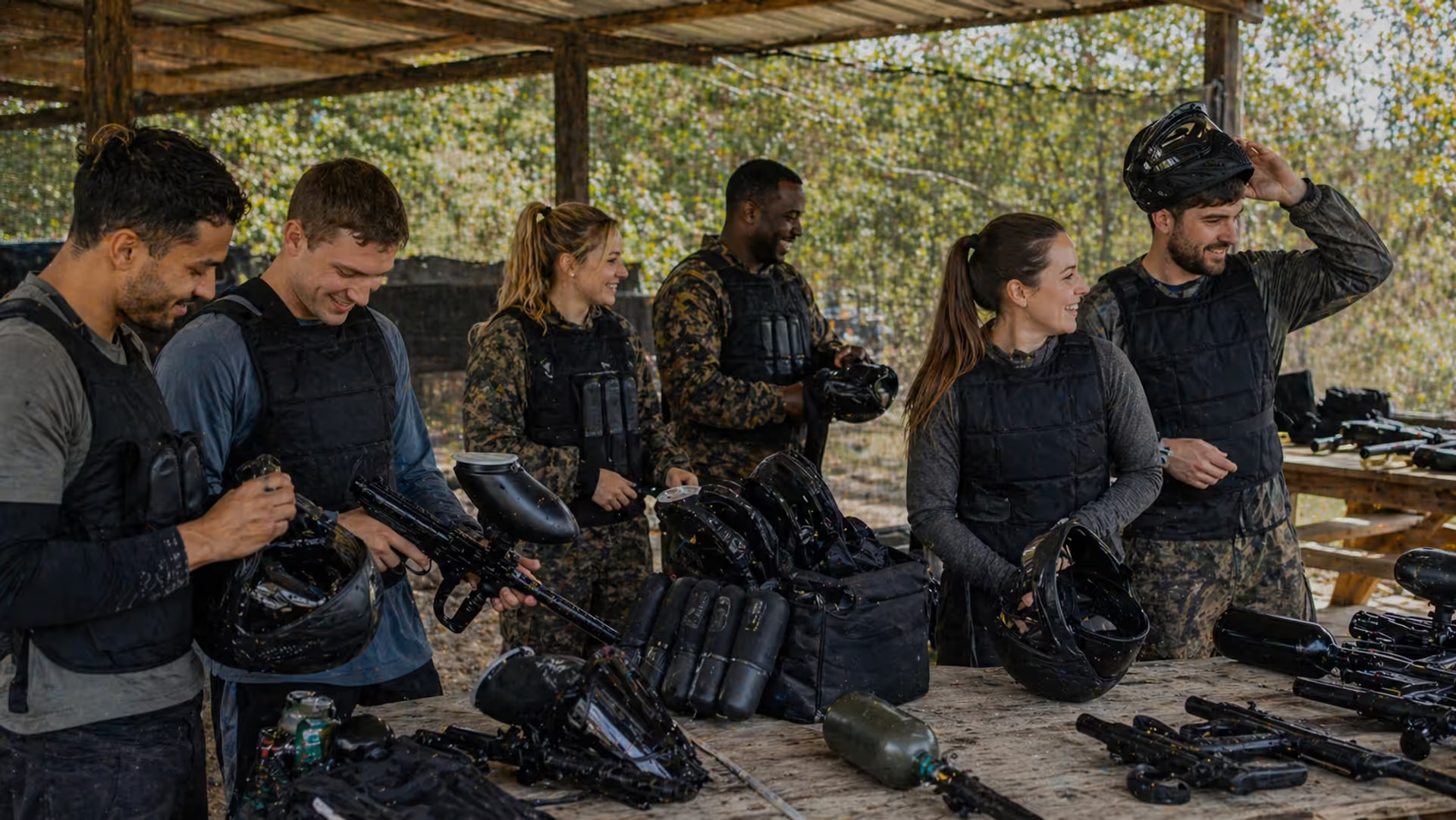
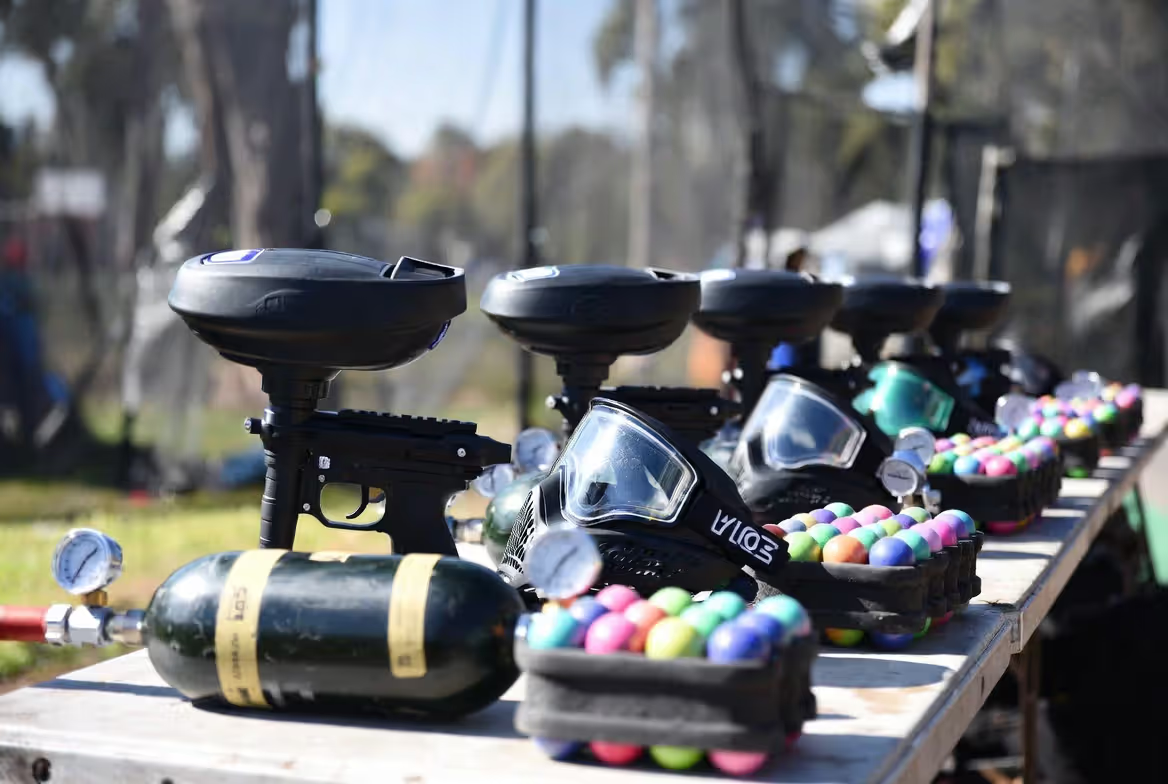
Equipment rental covers the basics: markers, CO2 or compressed air tanks, hoppers that feed paintballs into the marker, and masks for everyone. Upgraded packages sometimes include better markers with improved accuracy and firing rates. For birthday parties? Standard equipment works perfectly fine. Save your money.
Paintball quantities make or break the experience. Entry packages usually provide 200-300 rounds per player for two hours. Aggressive players burn through that in 30 minutes if they're not rationing shots. More cautious players stretch it the full session. Most facilities sell additional paintballs in 500-round bags for $15-25. Some parents pre-purchase extra cases; others wait to see if kids actually need more.
Referee services should be included, not charged separately. Refs start each game, enforce safety rules (especially the "masks stay on" requirement), settle disputes about hits, and adjust game complexity based on how kids are doing. Good refs simplify rules when kids look confused or add challenges when games end too fast. They're not just standing around watching—they're actively managing the experience.
Private field access means only your group is playing, not mixed with other parties or random walk-on players. This matters significantly for younger groups who might feel intimidated if 16-year-olds are sprinting around playing aggressively. Semi-private packages cost less but mean sharing field space. You'll still get dedicated time slots, just not complete isolation.
Party areas range dramatically in quality. Some places offer basic picnic tables under a pavilion. Others provide enclosed rooms with actual temperature control, decorated spaces, serving staff, and themed decorations matching your paintball party themes. Premium packages might include a dedicated party host who coordinates food timing and handles cake presentation.
Field time typically spans 2-3 hours total. Actual playing? Usually 90-120 minutes after you subtract equipment fitting (15-20 minutes), safety briefings (10-15 minutes), and breaks between games. Some packages charge hourly; others give you a fixed block regardless of how long games actually take.
Author: Brandon Kesswick;
Source: lakestaytents.com
Planning Your Paintball Party by Age Group
Getting this wrong ruins the party. What works for 10-year-olds will bore teenagers to tears. What excites 15-year-olds will overwhelm younger kids.
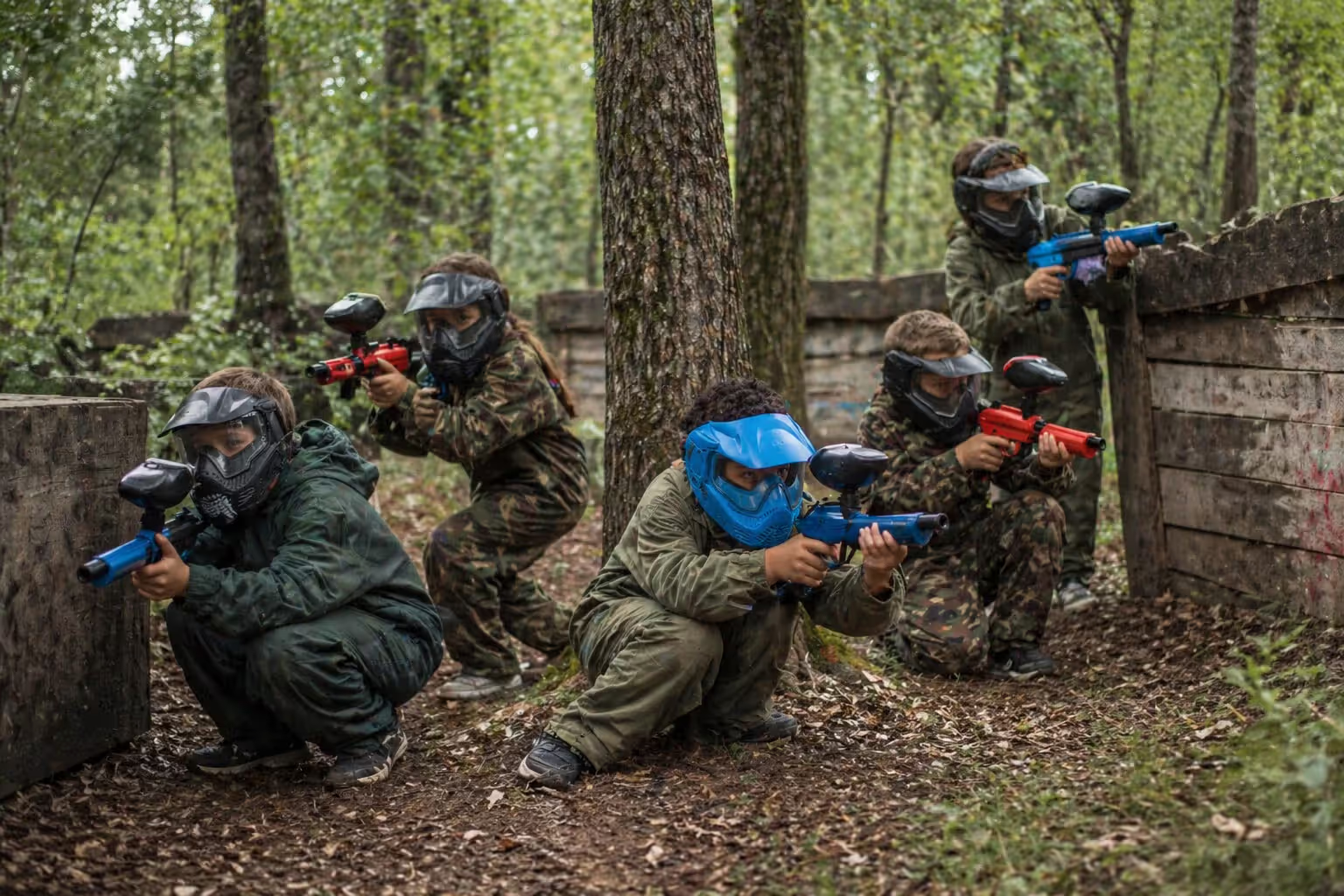
For paintball birthday parties targeting the 10-12 crowd, stick with low-impact paintball. The reduced sting means kids focus on strategy and teamwork instead of avoiding getting shot. Structure games around group objectives—capture the flag, defend the castle, or escort missions where players protect a VIP. Avoid pure elimination formats where getting hit early means sitting out for 15 minutes watching everyone else have fun.
Keep rounds short. Five to seven minutes works better than 15-minute games. Younger players exhaust themselves quickly between the physical running and the adrenaline surge. Frequent breaks prevent whining, overheating, and the energy crash that happens when 10-year-olds push too hard for too long. Rotate everyone through different roles each game—attackers one round, defenders the next, flag carriers after that. Everyone experiences varied gameplay instead of doing the same thing repeatedly.
Groups of 8-12 kids hit the sweet spot. Eight feels too small—you lose the team dynamics that make paintball exciting. Sixteen gets chaotic. Too many kids means excessive downtime waiting for turns or so much simultaneous action that refs can't manage it effectively.
Teenagers (13-16) usually prefer standard paintball. They want the longer range and harder impact. They'll enjoy complex scenarios: multi-flag tournaments where different flags carry different point values, timed attack-and-defend rotations, or elimination brackets with winners advancing. Competitive elements that frustrate younger kids—displaying scores, announcing MVPs, recognizing the winning team—actually enhance teens' experiences.
Mixed-age groups create headaches. If ages span more than three years, split into age-based teams or run separate sessions entirely. A 10-year-old matched against 15-year-olds typically hides the whole game rather than engaging. That tanks their experience while frustrating older players who want faster-paced action.
Author: Brandon Kesswick;
Source: lakestaytents.com
Paintball Party Themes and Game Ideas
Themes transform paintball from "shooting at friends" into something kids remember for years. The best paintball birthday ideas integrate storylines directly into game mechanics.
Military mission themes consistently rank as favorites. Frame players as special forces completing objectives: rescuing hostages (marked teammates waiting in designated zones), defusing bombs (reaching specific bunkers within time limits), or securing intelligence (capturing and holding particular areas). Provide simple costume touches—camo bandanas distributed when teams form, face paint stations before play starts, or dog tags as party favors. You don't need expensive outfits; small touches create immersion.
Zombie survival scenarios leverage paintball mechanics brilliantly. Start with two "zombies" who can only walk—no running allowed. Tagged players convert to zombie status. Survivors must reach the evacuation point before time expires. The growing zombie horde creates escalating tension, and eliminated players stay involved as zombies rather than sitting out feeling bored. This game format consistently gets requested for repeat rounds.
Capture the flag variations prevent boredom for experienced players. Try multiple flags assigned different point values—teams strategize which flags to prioritize rather than just grabbing the obvious one. Or reverse the format: each team starts holding the opponent's flag and must return it to the opponent's base while preventing the same. These variations keep kids who've played before engaged instead of running the same basic game repeatedly.
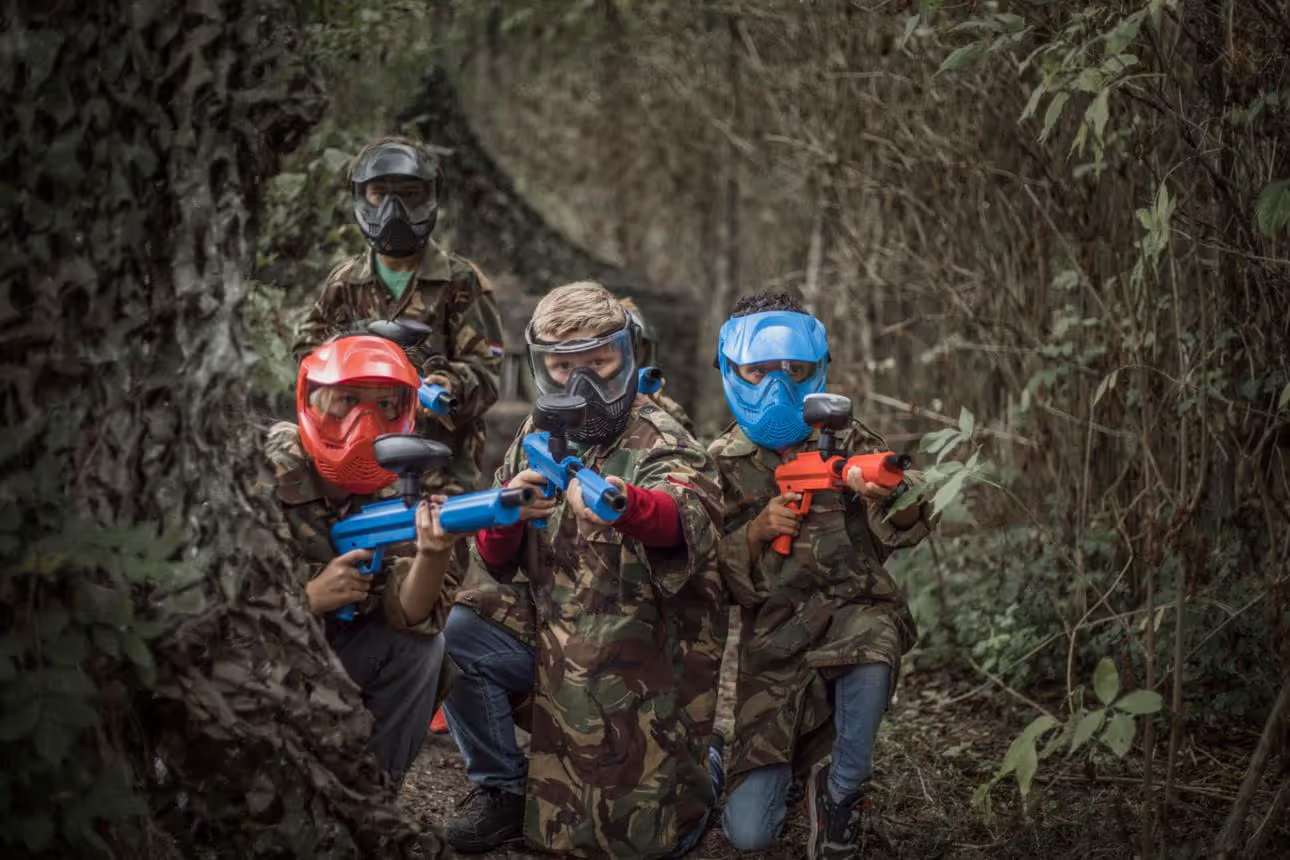
Color-coded team identities add visual excitement beyond generic "red versus blue." Create actual team names: Neon Squad versus Shadow Force, or Dragons versus Phoenixes. Provide colored armbands, headbands, or sports pinnies. Some parents order custom team t-shirts as party favors that pull double duty as game uniforms. Kids get more invested when teams have identity beyond marker color.
Historical scenarios appeal to kids obsessed with specific time periods. Revolutionary War skirmishes, Wild West showdowns, or medieval castle sieges frame the gameplay. The paintball mechanics stay identical, but narrative context makes it memorable. One parent I know created a pirate theme with a ship made from plywood barriers—kids fought to capture the ship and locate hidden treasure. Total construction time was maybe two hours, and it became the most photographed element of the party.
Progressive tournaments work well for longer parties spanning three or more hours. Warm up with simple team deathmatch so everyone gets comfortable. Progress to objective-based games as skills improve. Finish with a championship round where winning teams from earlier games face off, or let kids challenge party adults willing to play (parents love watching their kids get a chance to shoot them legally).
Author: Brandon Kesswick;
Source: lakestaytents.com
Costs and Booking Considerations
Budget planning means understanding both the advertised price and the additional costs that always appear. National pricing for 2026 varies significantly by region, but you can establish reasonable expectations.
Commercial fields charge $30-50 per player for basic 2-hour sessions covering equipment, 200-300 paintballs, and field access. Premium packages with private fields, extra paintballs, and party rooms run $50-75 per player. Mobile paintball party services typically charge $400-800 for the first 10 players, then $30-50 for each additional kid.
Most venues enforce group minimums—usually 8-10 paid players. Fall short? You're paying for 10 regardless. Some facilities waive minimums for off-peak bookings like weekday afternoons or January in Michigan. Always ask.
Deposits range from flat $100-200 fees to 25-50% of your total package cost. Most are non-refundable, though many facilities let you transfer deposits to different dates if you provide enough notice (usually 7-14 days). Read cancellation policies before booking. Weather-related cancellations often follow different rules than guest-count changes or your family emergency situations.
Peak versus off-peak pricing swings 20-30%. Saturday afternoons April through September? You're paying premium rates. Sunday mornings, Friday afternoons, or any winter weekday? Discounted pricing becomes available. If your child's birthday falls mid-week or during colder months, you'll stretch your budget considerably further.
Budget for hidden costs that always emerge. Additional paintballs top the list—add $10-15 per player if you want them shooting freely instead of rationing every shot nervously. Some facilities charge for spectators beyond two per player. Venues with catering often enforce food and beverage minimums. Sales tax adds 6-10% depending on your state. One place I called had a $50 "party host service fee" buried in fine print.
Questions worth asking before you book:
- What exactly does the base price include? (Get specifics, not vague "equipment rental")
- How many paintballs does each player receive, and what's your pricing on additional rounds?
- Will we have a private field or share space with other groups?
- What happens if weather forces cancellation? (Different from "what's your cancellation policy")
- How many referees will supervise, and what's the player-to-ref ratio?
- Are we allowed to bring our own food and decorations from outside?
- What safety training and certifications has your staff completed?
- Do you offer low-impact equipment for younger players, and does that cost extra?
Comparing quotes requires apples-to-apples analysis. A $35 package including 500 paintballs per player and private field access beats a $30 package with 200 paintballs and shared fields, even though that second number looks better initially.
Comparison of Paintball Party Formats
| Factor | Commercial Field | Mobile Service | At-Home Setup |
| Cost (10 players) | $300-$500 | $500-$700 | $800-$1,200 initial investment plus $50 each event |
| Age Suitability | Low-impact for 10+; standard for 12+ | Typically 8+ when proper equipment is used | Depends entirely on equipment choices |
| Equipment Provided | Complete rental packages included | Complete rental packages included | You purchase and maintain all equipment |
| Space Requirements | None—you're using their facility | 5,000+ square feet of outdoor area | 5,000+ square feet plus storage |
| Convenience | Requires travel coordination; operates on fixed schedules | They set up at your chosen location | Maximum scheduling flexibility |
| Supervision | Professional referees included | Professional referees included | Parent-managed with significant liability exposure |
| Additional Amenities | Party rooms, bathrooms, concessions available | Limited—you provide all facilities | You're responsible for everything |
| Best For | Those wanting comprehensive experiences | Convenience prioritizers willing to pay extra | Frequent players or hosts planning multiple events |
Parents constantly make one critical mistake—they think paintball is basically laser tag that leaves marks. Chen has managed youth paintball events for 12+ years across multiple facilities. "Low-impact paintball specifically engineered for the 10-12 age bracket changes the entire experience. We're using equipment scaled to their size, velocity reduced by nearly 30%, and games structured around cooperation instead of just elimination. When parents call asking if their 10-year-old can handle it, my response is always the same—the question isn't about physical capability. Can your child handle active, competitive play? If they enjoy soccer, basketball, or even intense tag games at school recess, they'll love paintball. If they gravitate toward quieter, individual activities, maybe wait a couple years.
— Marcus Chen
Frequently Asked Questions About Paintball Birthday Parties
Organizing a paintball birthday party takes more upfront work than booking a bowling alley, but watching your child's face light up makes the extra effort worthwhile. The decisions that matter most—commercial field versus mobile service, age-appropriate equipment and game formats, and the real costs beyond advertised prices—set you up for success or frustration.
Start planning 6-8 weeks ahead for weekend dates during peak season. This timeline secures your preferred slot, gives you time to send invitations with proper RSVP notice, and lets you make informed decisions instead of grabbing whatever's still available three days before the party.
Communicate details clearly with other parents. Include specifics in invitations: appropriate clothing, whether siblings can attend as spectators, what's provided versus what kids should bring. Address safety proactively—most parents appreciate knowing about supervision ratios, equipment standards, and your chosen facility's safety record. This prevents the 11th-hour phone calls from worried parents asking whether their child will get hurt.
Consider a trial visit if your child hasn't experienced paintball before. Many facilities offer walk-on play or beginner sessions where you can gauge their interest and comfort level before committing to a full party. Spending $25-40 now prevents discovering mid-party that your birthday child finds paintball overwhelming and wants to leave.
The most successful paintball parties balance structure with flexibility. Have a clear schedule and game plan, but adjust based on actual energy levels and engagement. If kids love a particular game, run it again instead of rigidly following your planned rotation. If they're getting tired or frustrated, call an early break for refreshments and regrouping rather than pushing through.
Capture moments throughout the party. Designate someone to photograph and record video, or ask if your facility offers photography services. Action shots of kids diving behind bunkers, team huddles plotting strategy, and victory celebrations become treasured memories. Just keep cameras safely outside active playing areas.
Manage expectations around competition and winning. Some kids handle losing gracefully; others dissolve into tears. Emphasize team effort, memorable plays, and personal improvement over final scores. Consider recognizing multiple achievements beyond "winning team"—best teamwork, most improved player, or best sportsmanship keeps everyone feeling valued instead of creating winners and losers.
A thoughtfully planned paintball birthday party delivers experiences that standard venues simply can't match. The combination of physical activity, strategic thinking, and team cooperation creates genuine engagement that kids talk about for months afterward. Match the format to your child's age and personality, communicate clearly with everyone involved, prioritize safety without being paranoid, and you'll create a celebration that becomes the benchmark other parties get measured against.