How to Find Paintball Events?

Content
Looking for paintball action in your area? You've got more options than you might think. Most metro areas now have at least three to five paintball facilities within a 30-minute drive, each running different types of events throughout the month. The tricky part isn't finding something to do—it's figuring out which events actually match what you're looking for.
Here's what happens to most people: They search "paintball near me," call the first field they find, show up on a random Saturday, and either have an amazing time or wonder what all the fuss is about. The difference usually comes down to whether they accidentally picked the right event type for their situation. A tournament feels nothing like a casual walk-on day. A scenario game isn't remotely similar to league play.
I'm going to show you exactly how to locate events in your area, what each format involves, and how to avoid the mistakes that make first-timers swear they'll never play again. By the end, you'll know whether you should be looking at Wednesday night speedball leagues, Saturday open play, or those massive 200-player scenario games that take over entire fields.
Types of Paintball Events You Can Attend
Not all paintball events work the same way. Three main categories exist, and picking the wrong one for your first experience pretty much guarantees disappointment.
Recreational Paintball Open Days
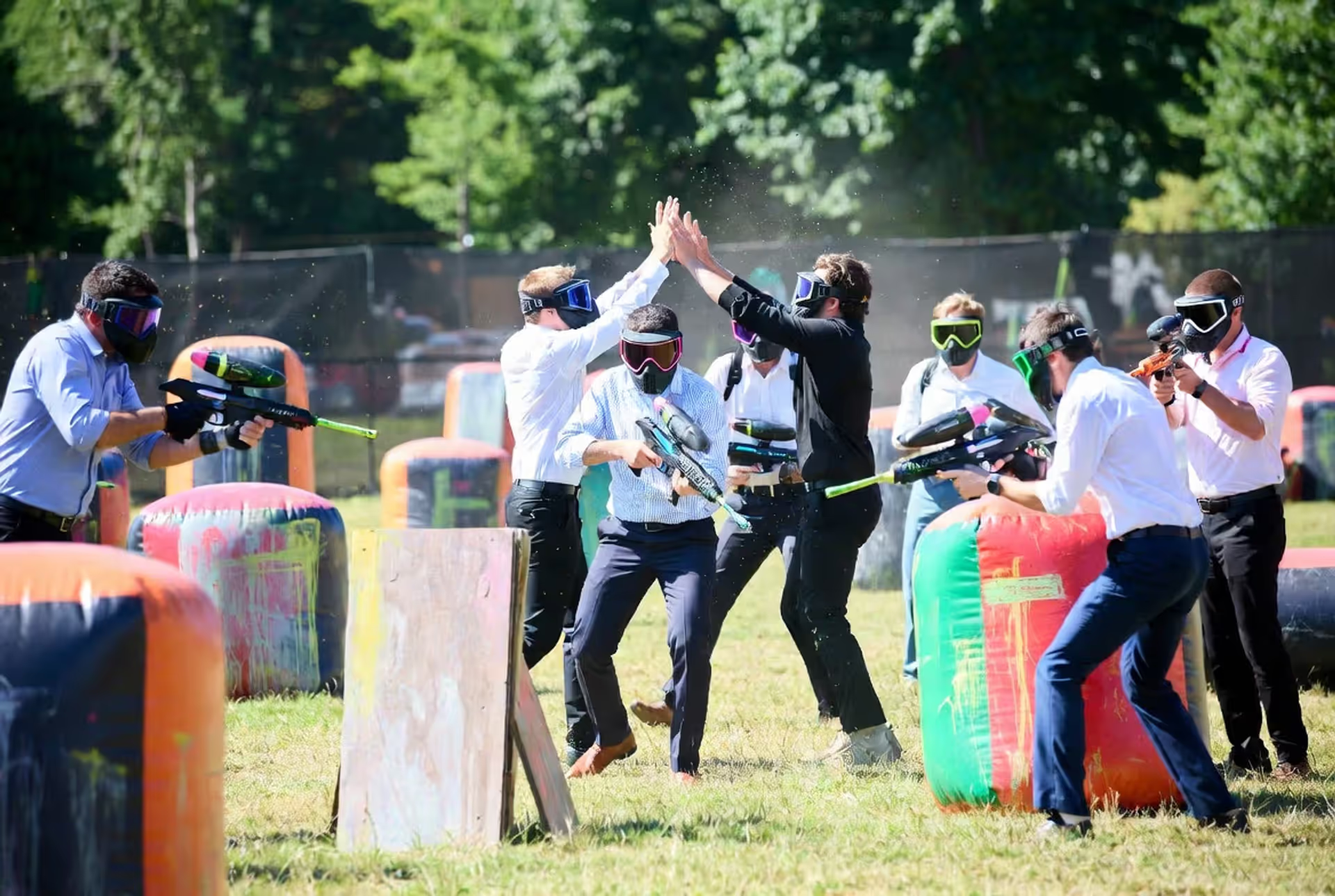
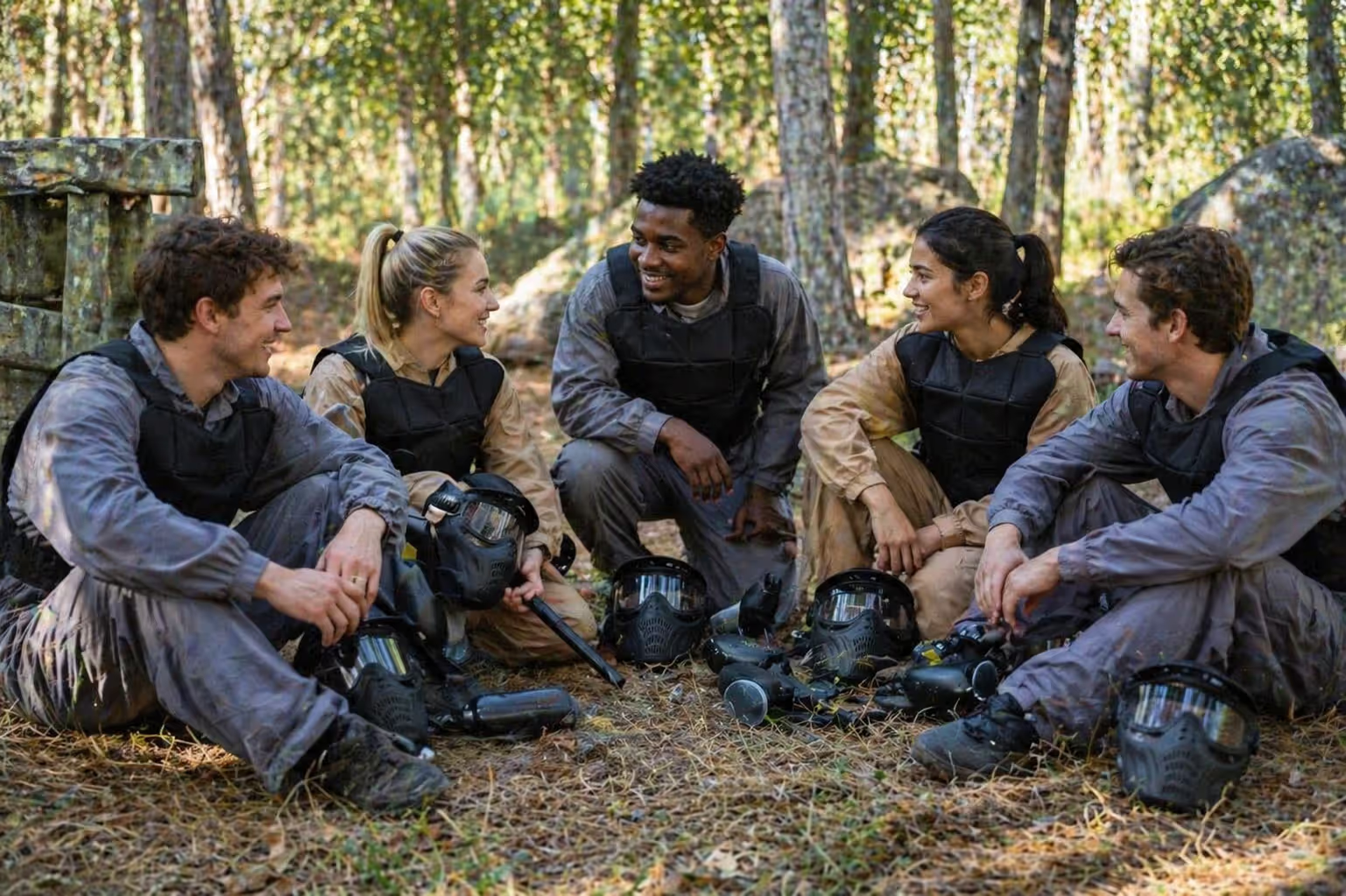
Walk-on play days are exactly what they sound like—show up, pay your fee, join whoever else is there. No reservations needed at most fields, though calling ahead during peak season prevents the "sorry, we're full" conversation nobody wants to have.
Fields structure these sessions as all-day packages, usually running 9:00 AM until 3:00 or 4:00 PM. You'll play a rotation of different games: team elimination, center flag, defend the base, attack and defend. Referees mix up teams after every few rounds so you're not stuck on the losing side all day (though some groups of friends request to stay together, which most fields allow).
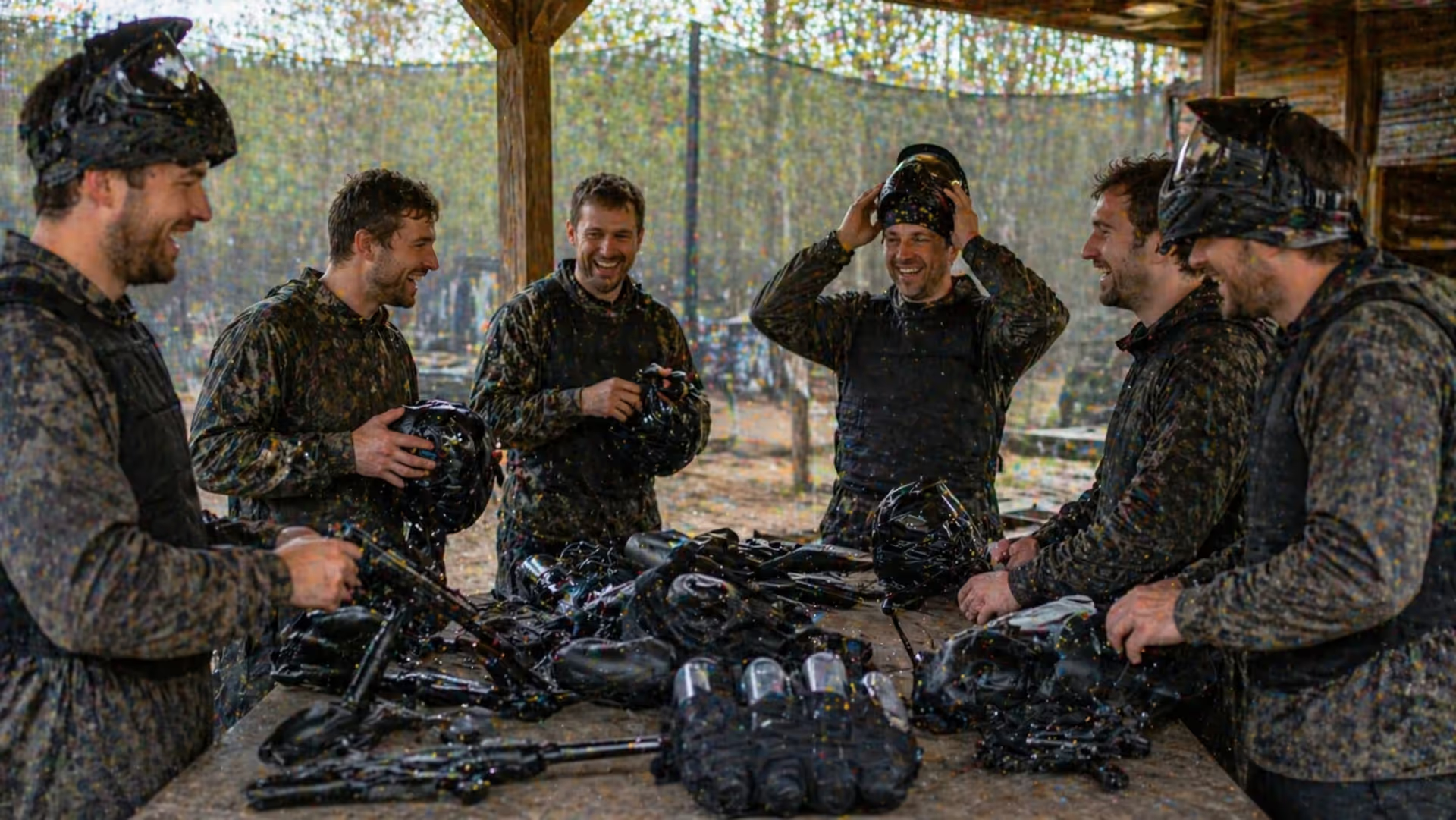
The skill range at these events spans from kids playing their first game ever to experienced players who just want to shoot paint without tournament pressure. That's actually the appeal—nobody's yelling at you for mistakes, nobody cares if you've never held a marker before. My local field runs Saturday and Sunday walk-ons year-round, and I've seen everyone from corporate groups to bachelor parties mixed in with regular players.
Expect to shoot 500 to 2,000 paintballs depending on how aggressively you play. Conservative players hiding in the back shoot less. Aggressive players pushing lanes burn through paint fast. Plan accordingly when deciding how many bags to buy.
Author: Logan Mercer;
Source: lakestaytents.com
Competitive Tournaments and Leagues
Tournament paintball operates in a completely different universe from recreational play. You need a registered team (three to seven players depending on format), everyone needs their own equipment, and you're playing for rankings or prizes.
Single-day tournaments are the most common competitive option. Teams pay entry fees ranging from $150 for small local events up to $500+ for regional competitions. That fee gets your team into a bracket where you'll play four to eight matches throughout the day. Win your bracket, take home prizes—usually paint cases, equipment, or cash payouts for larger events.
Speedball tournaments use inflatable bunkers on flat turf fields, with matches lasting 5-7 minutes. Woodsball tournaments happen in forest settings with natural cover, running longer games of 10-20 minutes. Format depends on the organizing body and regional preferences. The Southeast runs tons of woodsball tournaments. The Northeast is heavily speedball-focused.
League play stretches competition across multiple weeks or months. Teams register for a season—typically six to twelve events—accumulating points toward final standings. This format costs more upfront ($400-$1,200 per team for a full season) but breaks down cheaper per event day than individual tournaments. Plus you're playing the same teams repeatedly, which builds actual rivalries instead of one-off matches against strangers.
The Midwest Paintball League runs divisions from beginner to pro, with teams competing every other Sunday from April through September. That's the typical setup, though some regions run winter indoor leagues to keep play going year-round.
Community and Club Events
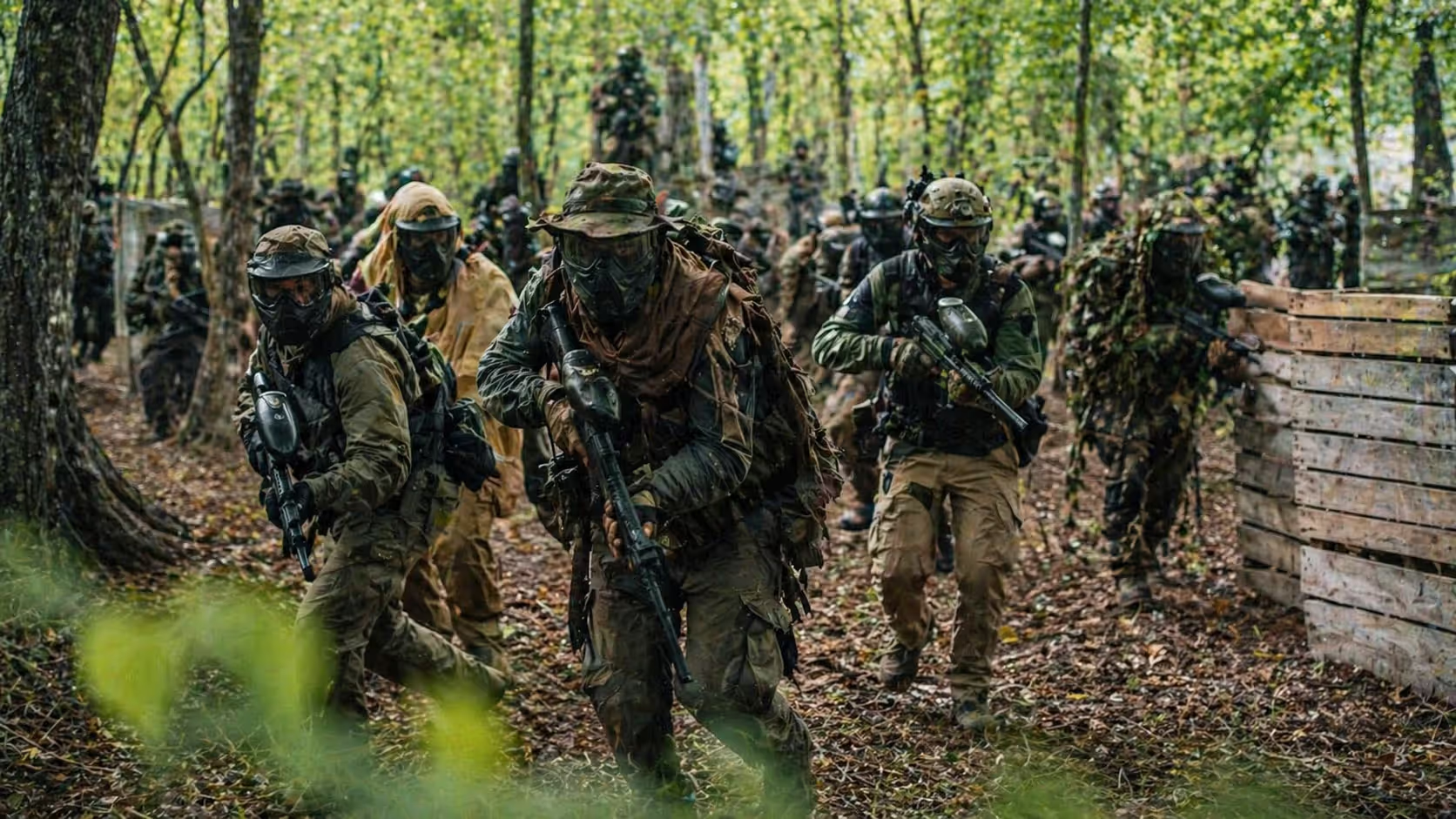
Scenario games deserve their own category. These events abandon normal game structures entirely in favor of storyline-based missions. You might defend a mock prison from attacking forces, recreate the Battle of Fallujah, or play out a zombie apocalypse scenario complete with special infected rules.
Larger scenario games draw 200+ players to multi-day events with camping, night missions, and objectives that span 12-24 continuous hours. Oklahoma D-Day hosts 4,000 players annually over three days, making it the largest paintball event in the world. That's extreme, but plenty of regional scenario games pull 100-300 players for single-day Saturday events that feel like mini festivals.
Themed nights at local fields offer smaller-scale community events: glow-in-the-dark night games, zombie survival modes, historical battle recreations. My nearest field runs "Zombies vs. Humans" on Halloween weekend every year, capping attendance at 80 players. Tickets sell out within a week.
Paintball clubs organize member events ranging from private practice sessions to social gatherings with no actual playing involved. Clubs give you consistent teammates, group discounts on paint and entry fees, and the inside track on upcoming events before they're publicly posted. Most clubs charge annual dues of $50-$150, which pays for itself if you play monthly.
Author: Logan Mercer;
Source: lakestaytents.com
Where to Search for Local Paintball Events
Google won't find everything happening in your area. You need to check multiple sources because fields announce events through different channels.
Start by identifying every paintball facility within reasonable driving distance—that probably means 30-45 minutes for most people, maybe stretching to 90 minutes if you're in a rural area. Don't limit yourself to the first three Google results. I've found some of the best fields on page two or three of search results because they don't invest in SEO.
Visit each field's website and look for their calendar or events page. Bookmark these. Check them the first of every month since many fields post their monthly schedule 2-4 weeks in advance. Sign up for email lists while you're there—fields send announcements about special events, tournament hosting, or last-minute open play additions when weather forces reschedules.
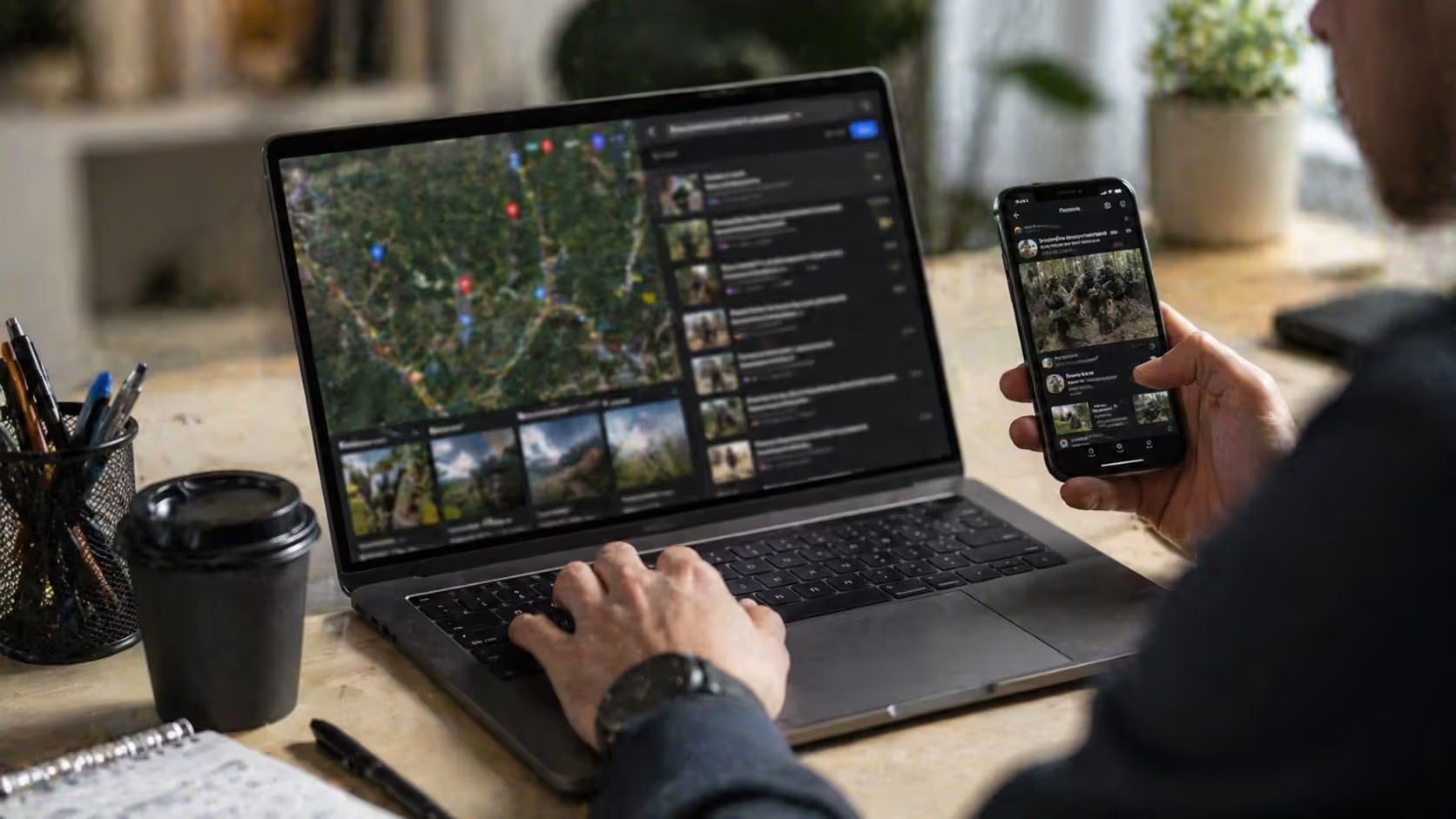
Facebook does the heavy lifting for finding community-organized events. Search "(Your City) Paintball" and join every group that pops up. Same for "(Your State) Paintball." These groups average 10-20 posts per week ranging from equipment sales to event announcements to players looking for teams. Turn on notifications for these groups if you're serious about catching events early, especially tournaments that fill roster spots weeks in advance.
Instagram accounts from local fields post flyers for upcoming events, usually 1-3 weeks before the date. Follow every field's account. They also tag players in photos from recent events, which helps you identify active community members to connect with for recommendations.
PBNation.com forums have regional subforums where tournament organizers post schedules. The site's design looks like it hasn't been updated since 2008 (because it probably hasn't), but serious competitive players still use it for event coordination and team recruitment. Navigate to the forum section for your state or region and scan the pinned posts.
Physical visits to local fields on busy Saturdays let you talk with staff and regular players face-to-face. Ask the pro shop staff what they'd recommend for someone at your skill level. Ask players in the staging area what events they attend besides this field's open play. You'll get information that never appears online, like which tournaments have the best refs or which scenario games actually deliver on their promotional hype.
Sporting goods stores selling paintball equipment sometimes maintain bulletin boards with event flyers, though this has declined as social media took over. Still worth checking Academy Sports, Dick's Sporting Goods, or local specialty shops. Counter staff who play paintball can point you toward active groups and quality events.
Author: Logan Mercer;
Source: lakestaytents.com
What to Expect at Different Paintball Game Days
Your first event goes smoother when you know the actual schedule and format, not just the general concept.
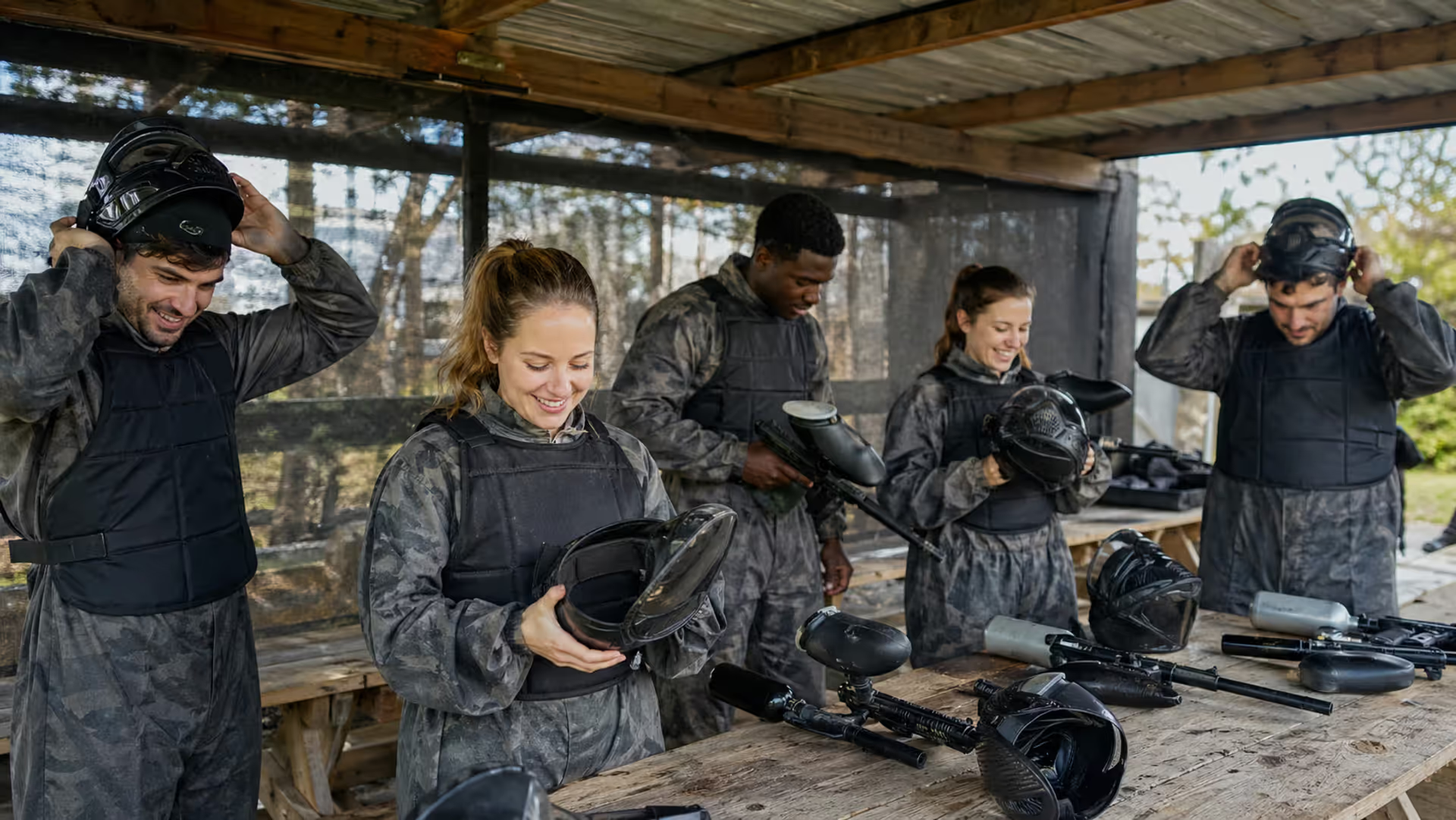
Walk-on Saturdays at recreational fields follow this pattern: Check-in opens at 8:30 AM, with the goal of starting the first game by 9:30 or 10:00 AM. You'll sign a liability waiver, either bring your own equipment or rent from the field, and buy your paint. Rental packages run $25-40 including marker, mask, hopper, and air tank. Paint sells by the bag (500 rounds, $20-30) or case (2,000 rounds, $60-80).
After everyone's checked in, a referee runs through safety rules and field boundaries. This takes 10-15 minutes. Don't skip it even if you've played before—every field has unique boundary markers and specific rules about blind firing, bonus balling, or surrender distances.
Games themselves last 15-30 minutes depending on how quickly one team completes the objective or eliminates the opposition. Between games, you'll refill your pod pack with paint, get air tank refills, hydrate, and wait for the ref to organize the next round. This downtime stretches longer when fields have 50+ players since getting everyone to the staging area takes time.
Plan on playing eight to twelve games during a full day session if you stay the whole time. Some players leave after lunch. Others show up late and only play the afternoon session. Fields don't usually require staying the entire day—your entry fee covers you for as long as you want to play.
Tournament days demand punctuality. Registration closes 30 minutes before first game time, usually meaning an 8:00 AM deadline for a 9:00 AM start. Late teams forfeit their first match. Bring your own chronograph if you have one—field chronographs have lines during check-in. Your marker needs to shoot under 280 fps (feet per second) for most tournaments, 300 fps for some woodsball events.
Matches run on published schedules. You might play at 9:30 AM, sit until 11:15 AM for your next match, play again at 1:00 PM, then wait for bracket finals at 4:00 PM if you advance. Bring shade canopy, chairs, coolers, and entertainment for downtime. Standing in the sun for seven hours between four 10-minute matches gets old fast.
Teams need ready boxes—containers holding all your paint for the match plus tools for quick repairs. Most tournaments prohibit bringing paint from outside the playing field, so your ready box sits in a designated area. You're allowed X number of pods per player (usually four to six) plus whatever your hopper holds.
Scenario events run on mission schedules instead of match brackets. Registration includes a briefing explaining the day's storyline and team assignments. You'll get assigned to either the attacking or defending force (or specific factions if it's a three-way scenario). Missions release every 30-60 minutes throughout the day: "Retrieve the intel case from the bunker by 1:30 PM" or "Hold the town center for 45 minutes against waves of attackers."
Points accumulate for completed objectives, with winning team declared at day's end based on total score. These events emphasize teamwork and communication over individual kills. Bring radios if your group has them—coordinate walkie-talkies make missions way more manageable when your squad's spread across 20 acres of woods.
How to Join Paintball Leagues and Organized Competitions
Breaking into competitive play takes more effort than showing up to walk-on Saturdays, but the path is straightforward.
Start by honestly evaluating your skill level. Have you played paintball three times recreationally? You're a beginner, period. Doesn't matter if you were all-state in football or hold a black belt—paintball skills don't transfer from other sports as much as you'd think. Most leagues offer D5 (novice), D4 (beginner), D3 (intermediate), D2 (advanced), and D1/Pro divisions. Start in D5 or D4. You can move up as you improve.
Finding a team is the main barrier. You need four to seven people with compatible schedules willing to commit to the entire season. Options:
- Attend local walk-on play and talk to other players about competitive interest. Some fields have bulletin boards where players post "looking for team" notices.
- Join local Facebook paintball groups and post that you're looking to join a team at [specific division level] for [specific league name]. Include your availability and general location.
- Message teams directly through social media. Watch local tournament results posted in Facebook groups, identify teams in your skill division, send them a message asking if they're looking for roster additions.
- Start your own team with friends willing to learn together. This works better than you'd think—most D5 teams are friend groups who decided to try competitive play together.
Team costs need clear discussion upfront. Who's paying for what? League entry fees alone run $400-800 per team for a six-event season. Add paint at $60-120 per player per event. Add practice paint. Add potential travel costs for away events. You're looking at $500-1,000 per player for a full season of competitive paintball. Some teams split costs equally. Others require each player to cover their own paint.
Registration opens 3-4 weeks before season start for most leagues. You'll need a team name, roster with minimum five players (seven is safer to cover absences), and full payment upfront. Some leagues allow payment plans. Most don't.
Equipment requirements are strict: Every player needs their own marker, mask, hopper, air tank, pod pack, and cleats. Rental equipment isn't allowed in competitive formats—the performance gap creates unfair advantages. If you're buying your first setup specifically for league play, budget $400-600 for entry-level tournament equipment (used market) or $800-1,500 for new mid-range gear.
Practice commitments separate casual teams from competitive ones. Serious teams practice weekly, 2-3 hours on weeknights or Sunday afternoons between league events. You're drilling breakouts, communication calls, lane shooting, and running team plays. Skip practice consistently and you'll get dropped from the roster—nobody wants dead weight when money's on the line.
What I've watched happen since 2015 is fields realizing they can't survive on rental birthday parties alone. The facilities thriving right now host beginner tournaments, run multiple league divisions, and create themed events that give people reasons to come back monthly instead of once a year. If you're new to paintball, my biggest advice is showing up to an event and being upfront about your experience level when you talk to other players. Nobody's going to judge you for being new—we all started somewhere. The players who struggle are the ones who pretend they know what they're doing, then get frustrated when reality doesn't match their expectations.
— Marcus Chen
Mistakes to Avoid When Attending Your First Paintball Event
New players make the same preventable errors that ruin their first experience. Here's what to watch for.
Clothing choices matter more than people realize. That cotton T-shirt and basketball shorts combo? You'll feel every hit, and welts will remind you for a week. Long sleeves and pants are mandatory in my book, regardless of temperature. Lightweight athletic wear works fine—moisture-wicking hiking pants and a long-sleeve gym shirt handle summer heat while providing protection. Skip anything camouflage if the field provides colored team jerseys. You'll confuse teammates about which side you're on, leading to friendly fire and frustrated players.
Paint purchases trip up beginners every time. New players buy 500 rounds thinking that sounds like a lot. Three games later they're tapped out, either sitting the rest of the day or paying inflated pro shop prices for small quantities. Get 1,500 rounds minimum for a full day of recreational play. You can save unused paint for next time if the field allows it (most do for recently purchased bags). Running out mid-day kills momentum and costs more money than buying extra upfront.
Team communication isn't optional. Paintball rewards players who callout enemy positions, coordinate movements, and work together. Going solo might feel tactical, but you're just making your team's job harder. Even if you're naturally quiet, force yourself to say basic things: "Two players behind the left bunker," "I'm moving to the tire stack," "I'm hit." Your teammates can't read your mind, and silence gets everyone eliminated faster.
Hydration sneaks up on you. You're wearing a mask, running around, breathing hard, sweating through your clothes. Dehydration hits before you realize it, causing headaches, fatigue, and sloppy play. Grab a water bottle after every single game, not just when you feel thirsty. Fields rarely have water fountains in playing areas, and you won't want to walk back to the parking lot between rounds.
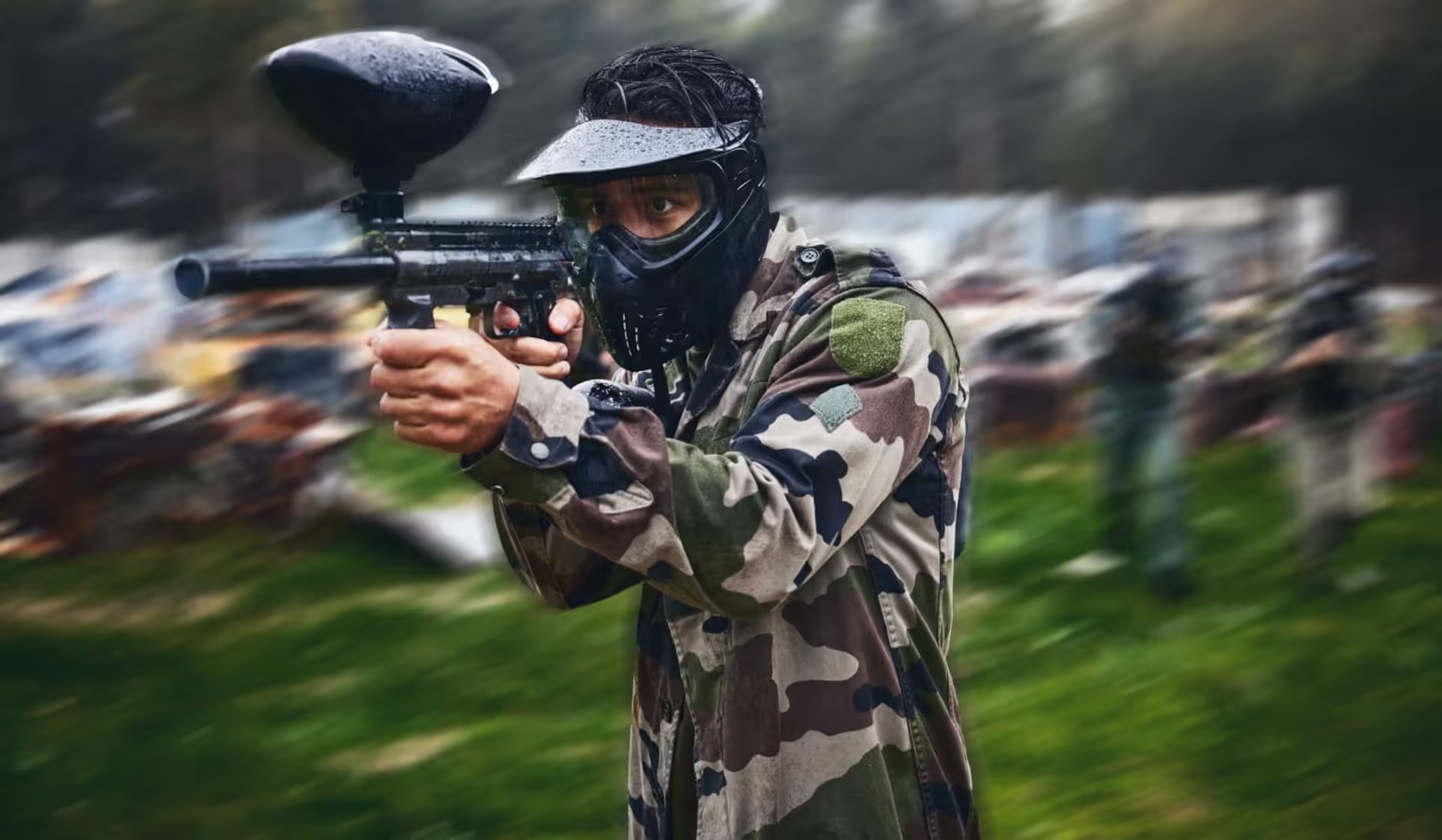
Mask discipline is non-negotiable. Keep your mask on at all times in designated play zones, even when you're certain the game ended. Paintballs might still be in the air. Accidental discharges happen when people think markers are empty. Eye injuries are permanent. Every field enforces mask rules strictly—break them and you're ejected without refunds. Wait until you're back in the safe zone before removing your mask, no matter how foggy it gets or how badly you want to wipe sweat.
Event research prevents mismatched expectations. Players show up to competitive tournaments thinking it's casual walk-on play, then get frustrated by the intensity and rules enforcement. Others arrive at laid-back scenario games hoping for serious speedball competition and leave disappointed. Spend five minutes on the field's website or call them directly: "What should I expect at this event? What's the format? What's the typical skill level?" Those questions save wasted trips and entry fees.
Safety briefings aren't optional. Yes, even for experienced players. Every field has different boundaries, special rules, and game-specific guidelines. Refs notice who ignores the briefing, and those players tend to get stricter enforcement during games. Ten minutes of instruction prevents confusion, rule violations, and potential ejection.
Skipping these preparation steps guarantees a rougher first experience than necessary. Do them right and you'll actually enjoy yourself enough to come back.
Comparison of Paintball Event Types
| Event Format | What You'll Pay | Who Should Attend | Gear Situation | How Often Available | Team Needs | Time Investment |
| Recreational Walk-On | $30-60 entry, $40-70 paint | Anyone—zero experience needed | Full rental packages available ($25-40) | Most weekends year-round | None—solo players welcome | Half or full day (4-8 hours) |
| Tournament | $150-400 per team entry, $60-150 paint per player | Intermediate to advanced players | Must own equipment—no rentals allowed | 1-2 per month regionally | Registered team of 3-7 players | Full day commitment (8-12 hours) |
| League Play | $400-1,000 per team per season, $50-100 paint per event | All skill levels (divided by division) | Must own equipment—no rentals allowed | Weekly or bi-weekly during season (6-12 events) | Registered team of 5+ players | Season commitment plus weekly practice |
Frequently Asked Questions About Local Paintball Events
You've now got the roadmap for finding and attending paintball events that actually match what you're looking for. The difference between a great day and a wasted Saturday comes down to picking the right event type for your current skill level and goals.
Start with walk-on recreational play at your nearest field. Go twice before making any equipment purchases. Use those sessions to figure out whether you prefer woodsball or speedball, whether you enjoy casual play or crave competition, and whether this is something you'll do monthly or just occasionally.
Once you've established baseline skills and decided paintball fits your interests, branch out. Try a scenario game to experience large-scale coordinated play. Watch a local tournament to see what competitive formats look like before committing to a team. Join regional Facebook groups and introduce yourself—the paintball community actively welcomes new players who show genuine interest and willingness to learn.
The event landscape is bigger than most people realize. Fields have figured out they need to offer variety to survive, which means more options for players at every skill level than existed even five years ago. Whether you're after occasional weekend entertainment or year-round competitive play, the right events are operating within driving distance. You just needed to know where to look and what to expect when you arrive.