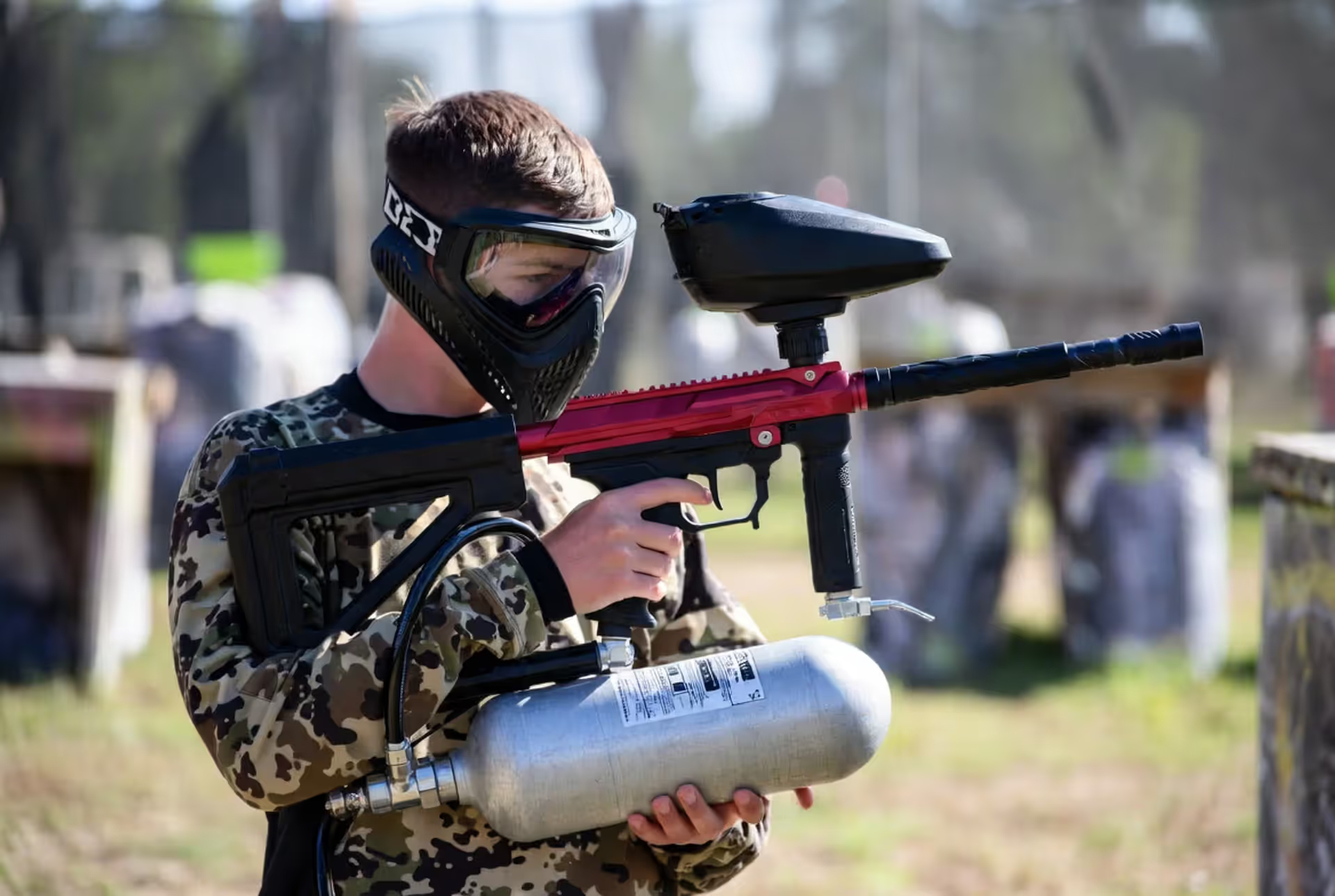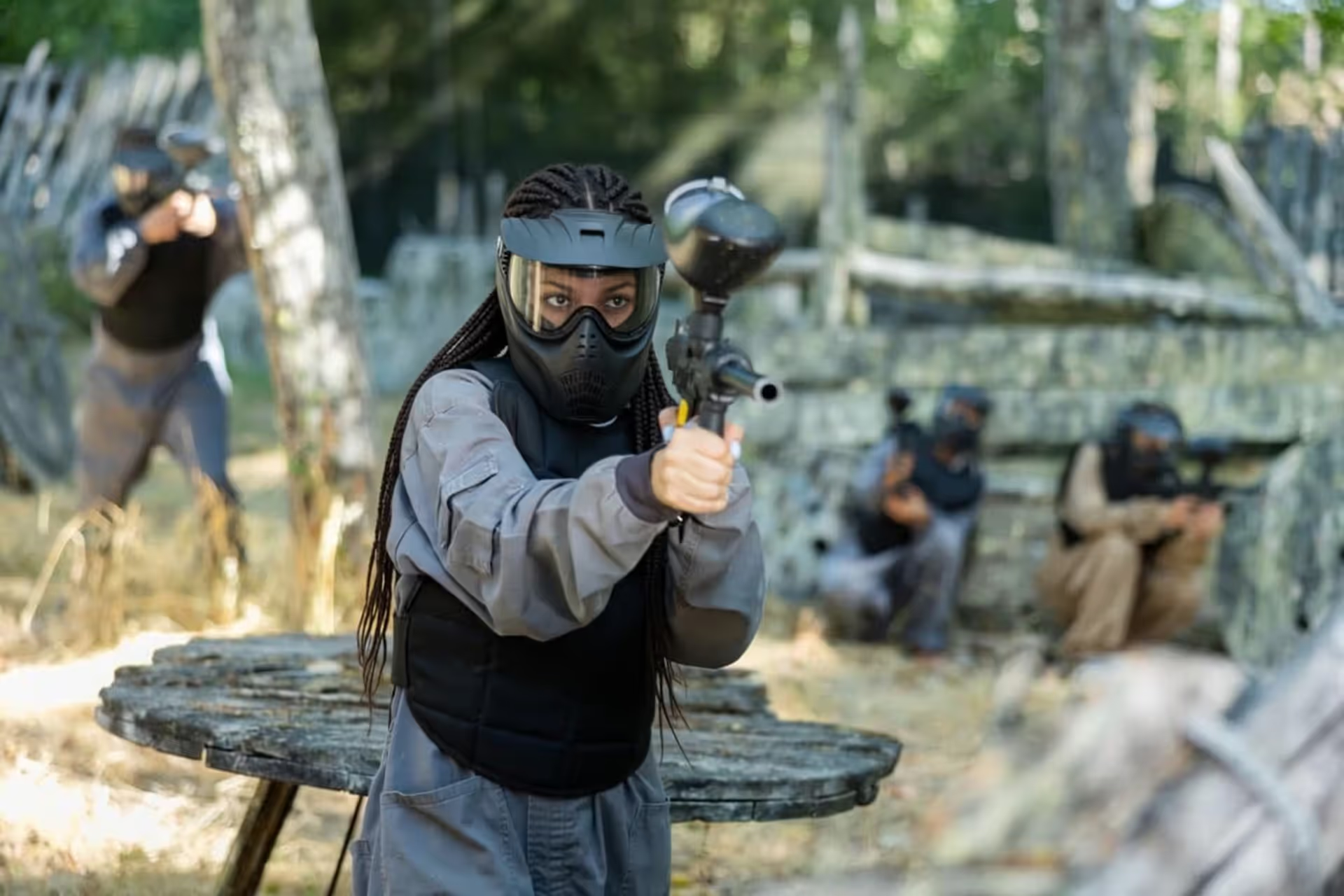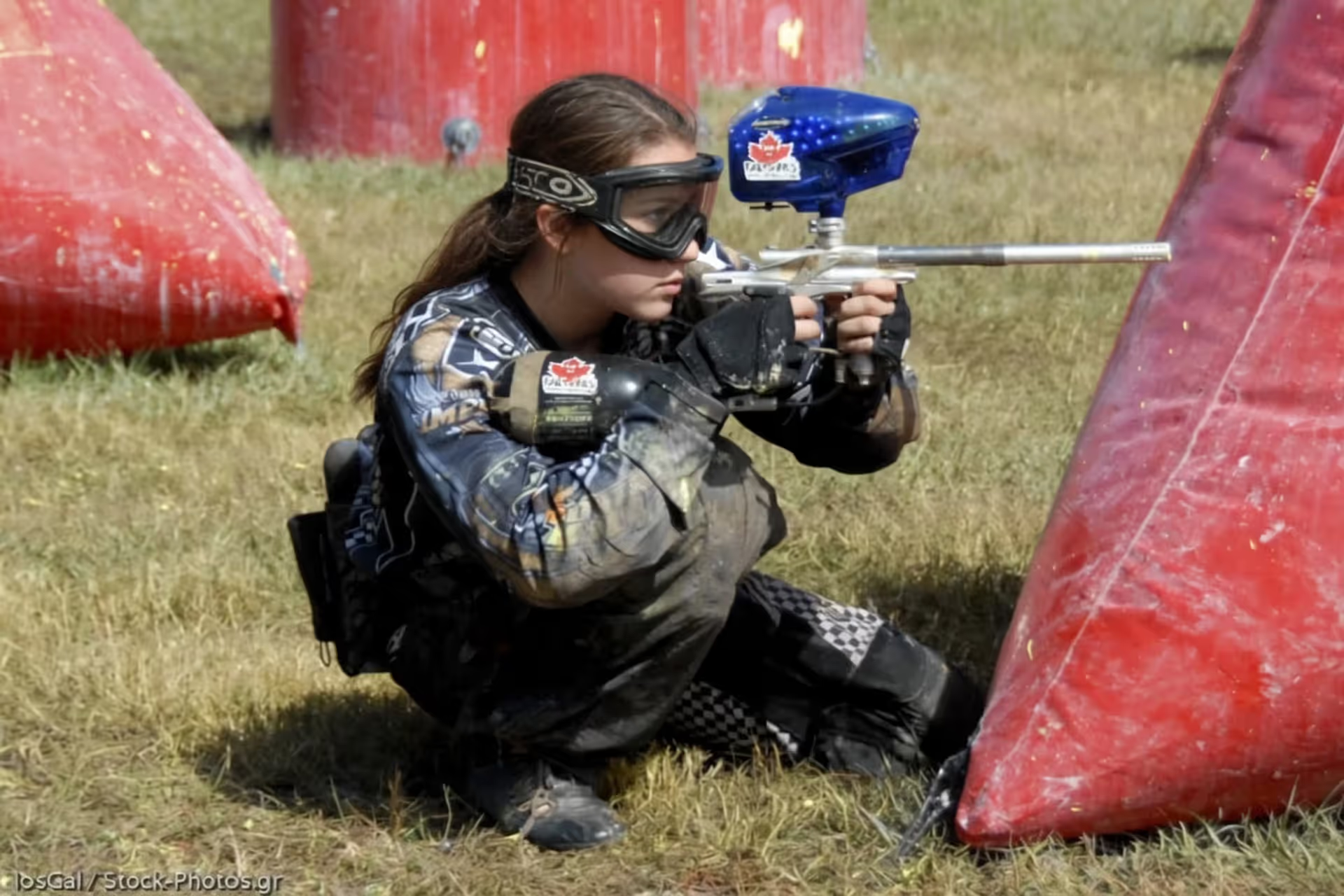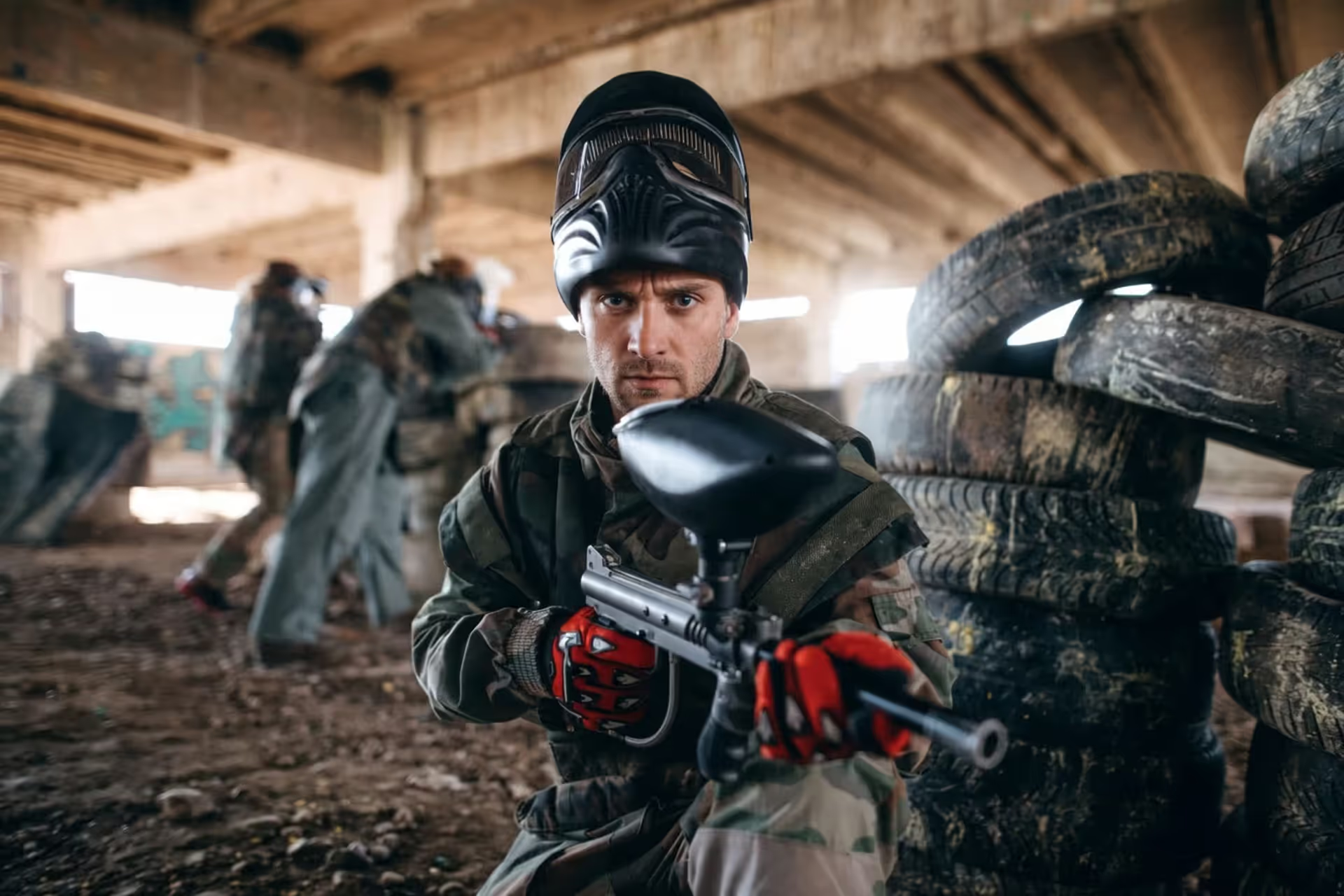
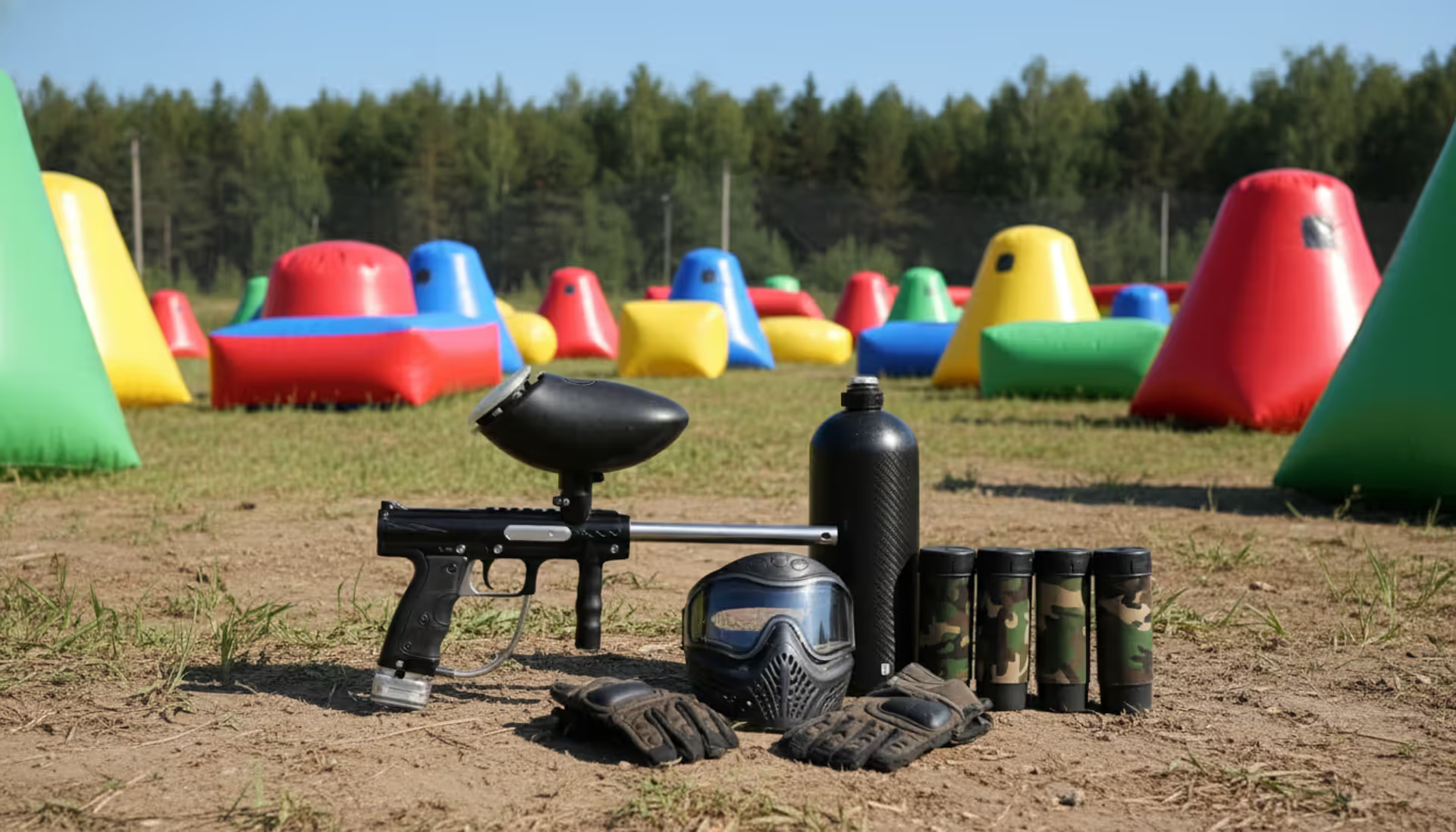
Paintball equipment set including marker, mask, air tank, hopper, pods and gloves laid out on the ground at an outdoor paintball field with inflatable bunkers in the background
How to Choose Paintball Gear?

Content
Here's what nobody tells you about buying paintball gear: you'll waste at least $200 on your first setup.
Most new players walk into a pro shop, get dazzled by shiny markers with LED displays, and walk out with equipment they'll replace within six months. I've watched it happen dozens of times. Guy buys a $900 marker, uses it twice, realizes he actually hates speedball and wants to play woodsball instead, then sells it for $450.
Even veterans fall into traps. They'll drop $1,200 on the latest tournament marker because their favorite pro uses it, ignoring that their current setup already shoots straighter than they can aim. Performance upgrades matter—but only after you've maxtered what you already own.
The gear part? That's actually straightforward once you cut through the marketing hype and focus on what changes your experience versus what just empties your wallet.
What Paintball Equipment Do You Actually Need to Play
Walk into any field in America and you'll face the same requirements: mask, marker, air source, loader, and paint. Everything else is negotiable.
Fields don't care if you show up in a $3,000 custom setup or rental gear that's seen 500 other players. They care that your mask meets ASTM F1776 certification and your marker chronographs under their velocity limit (usually 280 fps for recreational play, 300 fps for tournament).
You can't play without these:
- ASTM-certified paintball mask—no exceptions, no substitutions, no ski goggles or safety glasses
- Paintball marker that passes field chronograph testing
- Compressed air tank (HPA) or CO2 canister with proper output pressure
- Hopper feeding paintballs into your marker
- Paintballs (obviously)
You'll want these unless you enjoy suffering:
- Barrel cover preventing accidental discharge in staging areas
- Pod pack carrying 300-500 backup paintballs
- At least 3-4 pods filled with paint
- Long sleeves and pants (trust me on this)
Rental packages cost $30-50 at most commercial fields. Do the math: play 8 times and you've spent $320 on rentals. That's enough to buy a decent mask and entry-level marker.
But here's where players get it wrong—they think it's all or nothing. You don't need to buy everything simultaneously. Grab your own mask first (rentals fog like crazy). Keep renting markers for another month. Then buy a tank. Then a marker. Build gradually instead of maxing out credit cards.
Fields actually encourage this hybrid approach. I've never seen one refuse a player who brought their own mask but rented the marker. They're happy to reduce your rental fee accordingly.
Author: Brandon Kesswick;
Source: lakestaytents.com
Paintball Guns and Markers: Types and Selection Guide
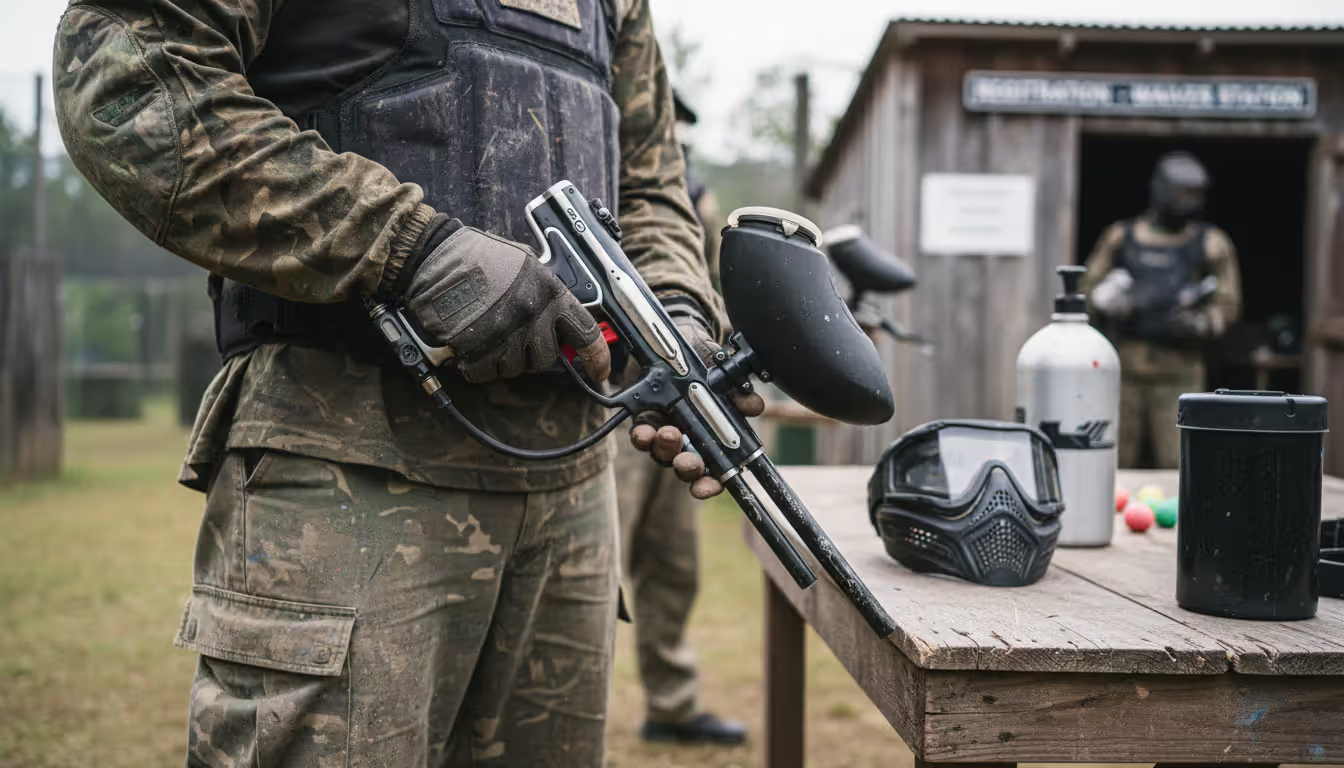
Markers split into two camps: mechanical and electronic. One uses springs and physics, the other uses circuit boards and batteries.
Mechanical markers fire once per trigger pull. Pull harder, pull faster—doesn't matter. One pull, one shot. They're heavier than electronic markers, louder than electronic markers, and less air-efficient than electronic markers. They also work in mud, rain, dust, and conditions that would brick an electronic marker instantly.
Tippmann built their reputation on mechanical reliability. Their Cronus ($110) and A5 ($230) run forever. I've seen Tippmanns pulled from storage after three years, filled with air, and fire perfectly. No maintenance, no cleaning, just point and shoot.
Electronic markers use solenoid valves controlled by circuit boards. They shoot smoother, cycle faster, and sip air compared to mechanical counterparts. The Empire Mini GS starts around $200. It'll outshoot markers costing twice as much from five years ago.
Trade-offs? Electronics hate moisture. Battery dies mid-game? You're done. Circuit board glitches? Hope you know how to troubleshoot or you're borrowing someone's backup.
Entry-Level vs. Advanced Paintball Markers
Entry markers prioritize not breaking. The Empire Axe 2.0 ($425) represents where durability meets actual performance improvements. Velocity stays consistent shot-to-shot, air efficiency doubles compared to entry mechanicals, and maintenance doesn't require engineering degrees.
Mid-range markers ($500-800) like Planet Eclipse's ETHA3 add tool-less disassembly, ergonomic refinements, and tighter shot groupings. You'll notice the difference at 60+ feet where entry markers spray 8-inch groups and mid-range markers cluster within 4 inches.
Premium tournament markers ($1,000+) like the Planet Eclipse CS3 or Field One Force? Honestly, you're paying for milliseconds and millimeters. Does the CS3 shoot better than an ETHA3? Marginally. Does it matter in recreational woodsball? Not even slightly.
Those milliseconds matter when you're posting 10 bps in a speedball snake and your opponent's doing the same. Recreational play where you're shooting 3 balls per minute from behind a tree? Save your money.
What to Look for in Your First Paintball Gun
First markers should meet three criteria: shoots straight, doesn't require PhD-level maintenance, and leaves budget for everything else you forgot you needed.
Consistency trumps speed every time. A marker shooting 8 bps with 5 fps velocity variation beats one shooting 12 bps varying 35 fps. Why? Because consistent velocity means consistent trajectory. Check reviews specifically for "shot-to-shot consistency" and "velocity stability"—ignore the flashy features.
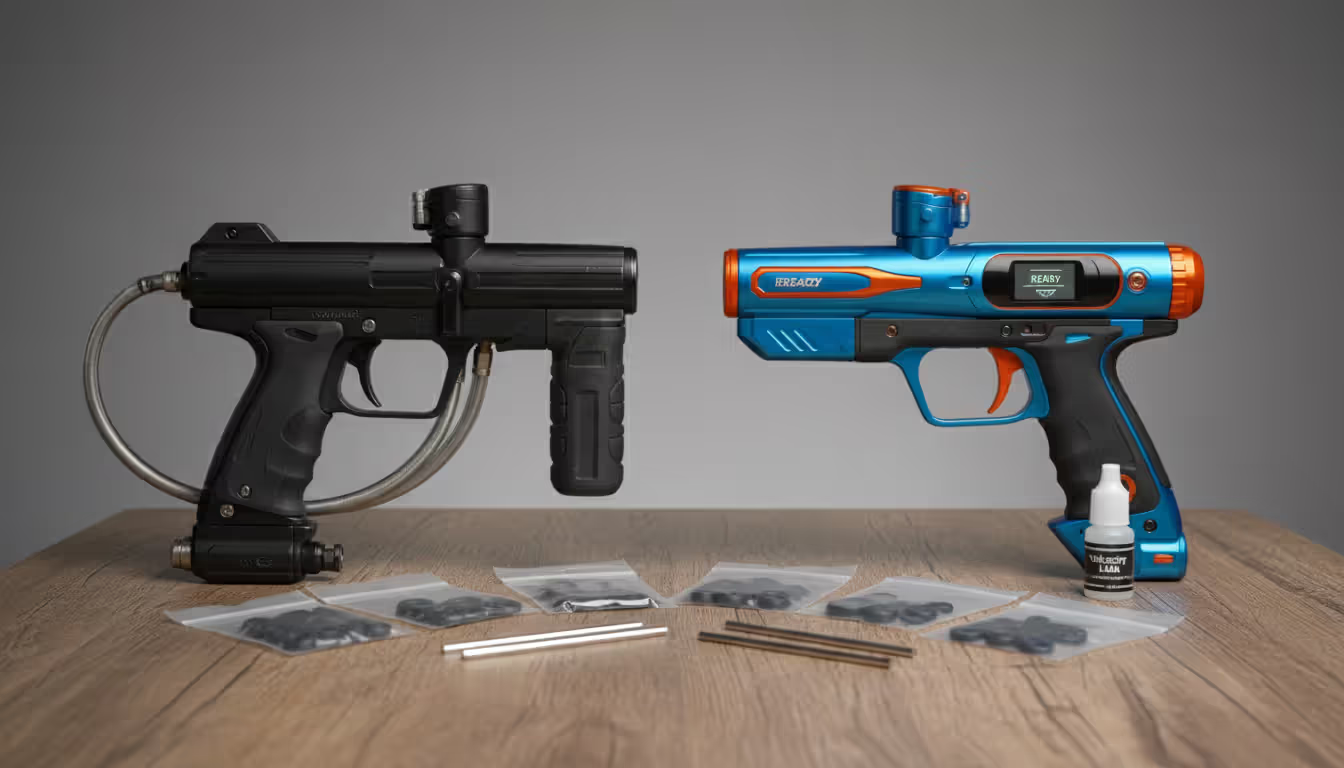
Can you take it apart without specialized tools? Are replacement o-rings standard sizes from any hardware store? Markers using proprietary parts become expensive headaches. Your local field pro shop doesn't stock proprietary parts for 47 different marker models. They stock standard o-rings and universal components.
Barrel threading determines your upgrade path. Most markers use Autococker, Spyder, or Tippmann A5 threads. Autococker threading offers the widest barrel selection—hundreds of options from $30 to $300. Lock yourself into proprietary threading and you're stuck with whatever that manufacturer offers.
Avoid used electronics unless you troubleshoot circuit boards for fun. That $150 used Dye Rize seems like a steal until you discover it needs a $95 circuit board replacement and the previous owner lost the original spare parts kit.
Author: Brandon Kesswick;
Source: lakestaytents.com
Protective Gear and Safety Equipment
Paintballs exit markers at 280 feet per second carrying 12 joules of kinetic energy. At point-blank range, that's enough force to rupture an eyeball.
Every field requires ASTM F1776 certified masks. Certification means it passed impact testing. Doesn't mean it's comfortable, doesn't fog, or provides decent peripheral vision.
The gap between a $35 rental mask and a $160 premium mask:
- Thermal dual-pane lenses versus single-pane that fogs instantly
- 260-degree peripheral vision versus 180 degrees where you can't see players flanking
- Ventilation channels moving air versus sweat traps that steam up within minutes
- Memory foam maintaining shape versus cheap foam compressing into hard plastic after 10 uses
- Quick-change lens systems versus seven screws and 15 minutes of frustration
JT Proflex masks ($85) have dominated since 1993 for good reasons. They ventilate incredibly well, provide excellent peripherals, and the lower face section flexes when you shoulder your marker. Dye i5 masks ($200) represent premium—massive lens, best ventilation on the market, and quick-change lens system swapping clear to tinted in 30 seconds.
Playing with a fogged mask? You're done. Can't see opponents, can't navigate terrain, can't aim. You're essentially paying $50 in field fees and paint to stand around wiping your lens every 90 seconds.
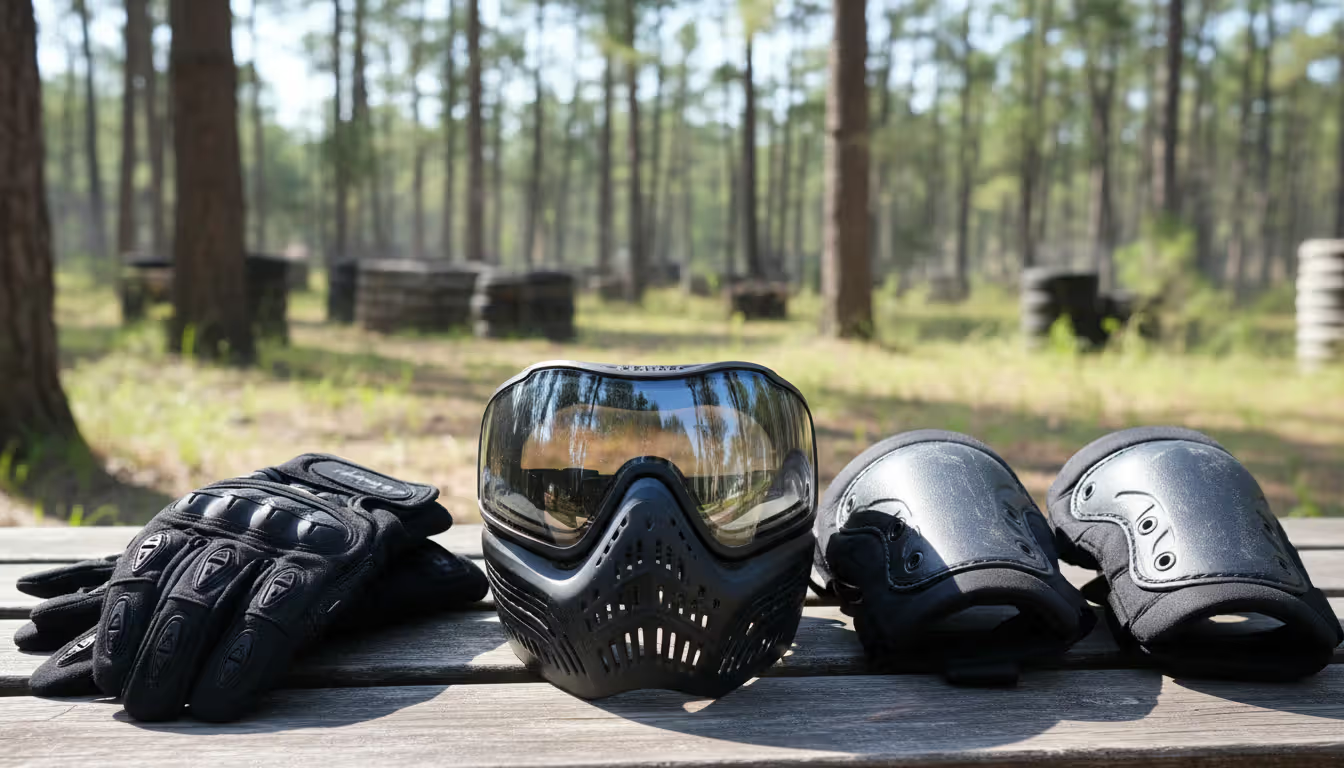
Beyond masks, protection becomes preference. Chest protectors exist. Padded jerseys exist. Most recreational players wear long sleeves and call it adequate. Speedball players often wear thin jerseys because mobility beats padding when you're sprinting 40 yards per point.
Gloves protect knuckles and improve wet-weather grip. Skip the $45 paintball-specific gloves. Buy Mechanix Wear gloves ($22) instead—designed for tool work, perfect for operating markers while protecting hands during slides.
Knee pads make sense if you dive frequently or play woodsball with lots of crawling. Volleyball knee pads ($18) outperform paintball-specific options because they're engineered for repeated impacts on gym floors. Why reinvent something that already works?
Author: Brandon Kesswick;
Source: lakestaytents.com
Paintball Gear Bag Essentials: What to Pack for Game Day
Forgetting your barrel squeegee ruins days. You'll get a barrel break (paintball explodes inside your barrel), and suddenly you're borrowing tools from strangers or making the 35-minute drive back home.
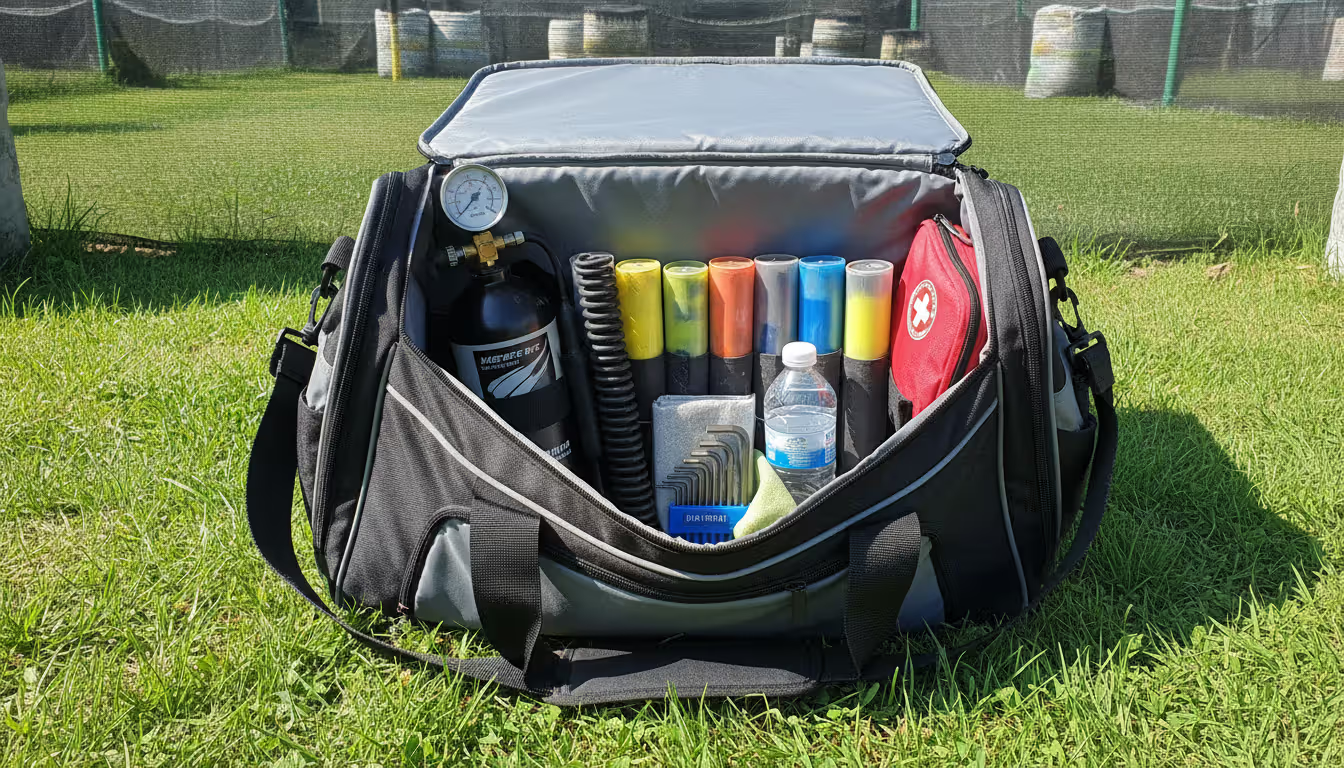
Don't leave home without:
- Barrel squeegee clearing paint breaks
- Allen key set (3mm, 5mm, and 7/64" cover 90% of markers)
- Spare o-rings—size 017, 015, and 014 fix most leaks
- Microfiber cloth for lens cleaning (never paper towels)
- Barrel cover or sock
- Filled air tank or cash for field fills ($5-10)
- Pods already loaded with paint
- Water bottle (dehydration hits fast in full gear)
Additions that prevent headaches:
- Small bottle of Gold Cup paintball oil (don't use WD-40)
- Spare 9V battery if you're running electronic markers
- Extra lens for changing weather—clear for overcast, tinted for bright sun
- Shop towel wiping paint off gear between games
- Zip-lock bags keeping electronics safe from paint splatter
- Basic first aid kit with band-aids and ibuprofen
Optional items you'll eventually buy anyway:
- Portable air compressor for private land games
- Chronograph checking your own velocity
- Backup hopper because they break at the worst moments
- Tool kit with needle-nose pliers and precision screwdrivers
Pod packs come in configurations like 3+2, 4+3, or 5+4. First number indicates pod capacity, second indicates utility pockets. A 4+3 pack hauls four 140-round pods (560 paintballs) plus three pockets for tools, phones, and snacks.
New players always over-pack. They'll show up with eight pods holding 1,120 paintballs for a two-hour recreational session. Then they're running around carrying 7 pounds of paint they'll never shoot. Most recreational players burn 200-400 paintballs hourly. Tournament speedball? Players can empty 1,000+ rounds in 15-minute matches.
Author: Brandon Kesswick;
Source: lakestaytents.com
How Much Does a Full Paintball Setup Cost
Building a complete setup requires honest assessment of frequency and style. The range spans from $300 minimum to $2,500+ for premium tournament gear.
| Item Category | Beginner Setup | Intermediate Setup | Advanced Setup | Cost Range |
| Marker | Tippmann Cronus, Spyder Victor | Empire Axe 2.0, ETHA3 | Planet Eclipse CS3, Dye M3+ | $100 – $1,500 |
| Mask | JT Proflex, V-Force Grill | Dye i4, Empire EVS | Dye i5, Push Unite | $80 – $220 |
| Tank | 48/3000 aluminum | 68/4500 carbon fiber | 77/4500 carbon fiber | $40 – $250 |
| Hopper | Gravity feed | Electronic (Dye LTR) | High-speed (Virtue Spire) | $15 – $180 |
| Pods & Pack | 3-pod harness + pods | 4+3 pod pack | Tournament harness | $30 – $90 |
| Barrel | Stock barrel | Aftermarket 2-piece | Barrel kit (multiple backs) | Included – $150 |
| Accessories | Squeegee, basic tools | Oil, spare parts, bag | Full tool kit, chronograph | $25 – $150 |
| Total | $290 – $390 | $700 – $1,100 | $1,500 – $2,540 |
Those numbers exclude paint and admission. Paint costs $40-70 per case (2,000 rounds) depending on quality grade. Field entry runs $25-45 daily. Air fills usually come with admission or cost $5-10.
Smarter budget allocation:
Buy mask first, marker second, everything else as budget allows. A $100 mask improves every single game you play. A $400 marker improves your game only after you've developed skills demanding better equipment.
Used markers from reputable sellers offering warranties make sense. A used Planet Eclipse Etha2 for $250 outperforms new $150 mechanical markers significantly. You're getting $400 performance for $250 because someone upgraded to the Etha3.
Skip barrel kits initially. Stock barrels work fine for recreational play. Invest that $120 in a better hopper or carbon fiber tank instead—you'll notice those upgrades immediately.
Carbon fiber tanks cost $180+ versus $40 for aluminum. Seems expensive until you realize carbon fiber tanks last 15 years versus aluminum's 5-year lifespan. Plus carbon fiber weighs 1.2 pounds versus aluminum's 2.8 pounds. Playing 6-hour scenario games? You'll feel that 1.6-pound difference.
Common Mistakes When Buying Paintball Equipment
New players make predictable purchasing errors. Avoiding them accelerates progression and protects budgets.
Overspending on first markers happens constantly. Excitement overrides strategy. Buying a $1,000 marker before understanding your play style resembles buying professional-grade golf clubs before learning proper swing mechanics. Start mid-range around $300-400, develop actual skills, then upgrade based on what your play style actually demands. That saved $600 buys a season's worth of paint and field fees.
Ignoring mask quality because "it's just a mask" creates miserable experiences. Fogged lenses, inadequate ventilation, and uncomfortable foam transform fun into frustration. I've watched players quit paintball entirely because they spent $400 on markers but $35 on masks. They assumed expensive markers mattered more. Wrong. The mask touches your face for 4-6 hours—make it comfortable.
Wrong clothing choices like cotton jeans and black shirts. Cotton absorbs paint and sweat, becoming heavy and uncomfortable within an hour. Paintballs show clearly on dark clothing, making you easier targets. Wear athletic pants or joggers in earth tones, tan, olive, or camo patterns. Long sleeves reduce sting and protect from thorns in wooded fields.
Skipping maintenance tools because "I'll borrow if needed" works until you're stranded 45 minutes from the pro shop with a blown o-ring. A $15 tool kit and $5 in spare o-rings prevents 90% of field-side emergencies. Markers are mechanical devices requiring periodic maintenance. Batteries die, o-rings fail, screws loosen—plan accordingly.
Buying incompatible equipment without verifying threading, tank regulators, or hopper compatibility. Not all hoppers fit all markers. Not all tanks work with all regulators. Electronic markers need low-pressure output (450-850 psi). High-pressure tanks (850+ psi) can damage electronics. Research compatibility before purchasing, especially mixing used equipment from multiple sources.
Prioritizing aesthetics over function tempts everyone. Custom-milled bodies look incredible but don't shoot straighter. Anodized finishes and aftermarket grips feel premium but don't improve accuracy. Function first, looks later once your setup actually performs.
Biggest mistake I see? Players buying complete setups immediately, then realizing they chose wrong for their style. Start with a quality mask and rent everything else for at least five games. Learn whether you prefer speedball or woodsball, aggressive or support positions, what features actually matter to your play. Then buy accordingly. I've seen players waste $800 buying speedball gear when they actually loved woodsball
— Marcus Chen
FAQ
You don't need thousands immediately or perfect choices from the start. Paintball rewards strategic investment—starting with safety and comfort before chasing performance upgrades.
Priority one: quality mask. Nothing else affects experience as dramatically. From there, assess frequency and style before committing to full gear purchases. Rent initially, buy essentials improving every game, then upgrade gradually as skills and preferences develop.
Players enjoying paintball long-term typically start conservatively, learn actual needs through experience, and build kits around personal play styles rather than following trends or buying everything simultaneously. Whether packing bags for weekend recreation or building competitive tournament setups, understanding what each piece actually contributes makes the difference between smart investments and expensive regrets.
Start with basics, play frequently, let growing experience guide equipment decisions. The best setup matches how you actually play—not what looks impressive online or maxes out credit cards.