Designing a field that plays right
How to Build a Paintball Field Design?

Content
Here's what most people get wrong: they buy a bunch of bunkers, drop them randomly across their property, and wonder why gameplay feels off. Maybe teams reach the center in 15 seconds flat. Or maybe players spend five minutes wandering around before finding anyone to shoot at.
A working paintball field needs three things done right—site planning that matches your goals, spacing that creates actual gameplay (not instant eliminations or boring wandering), and obstacles positioned where they'll shape how matches unfold.
Whether you're building a commercial venue or just want weekend games in your backyard, the fundamentals stay the same. Player safety comes first. Games need flow without dead zones where nothing happens. And you don't want a field that demands constant repairs every month.
We'll cover everything from your first property walkthrough to running those first test matches. Let's start with planning, since that's where most mistakes happen.
Planning Your Paintball Field Layout
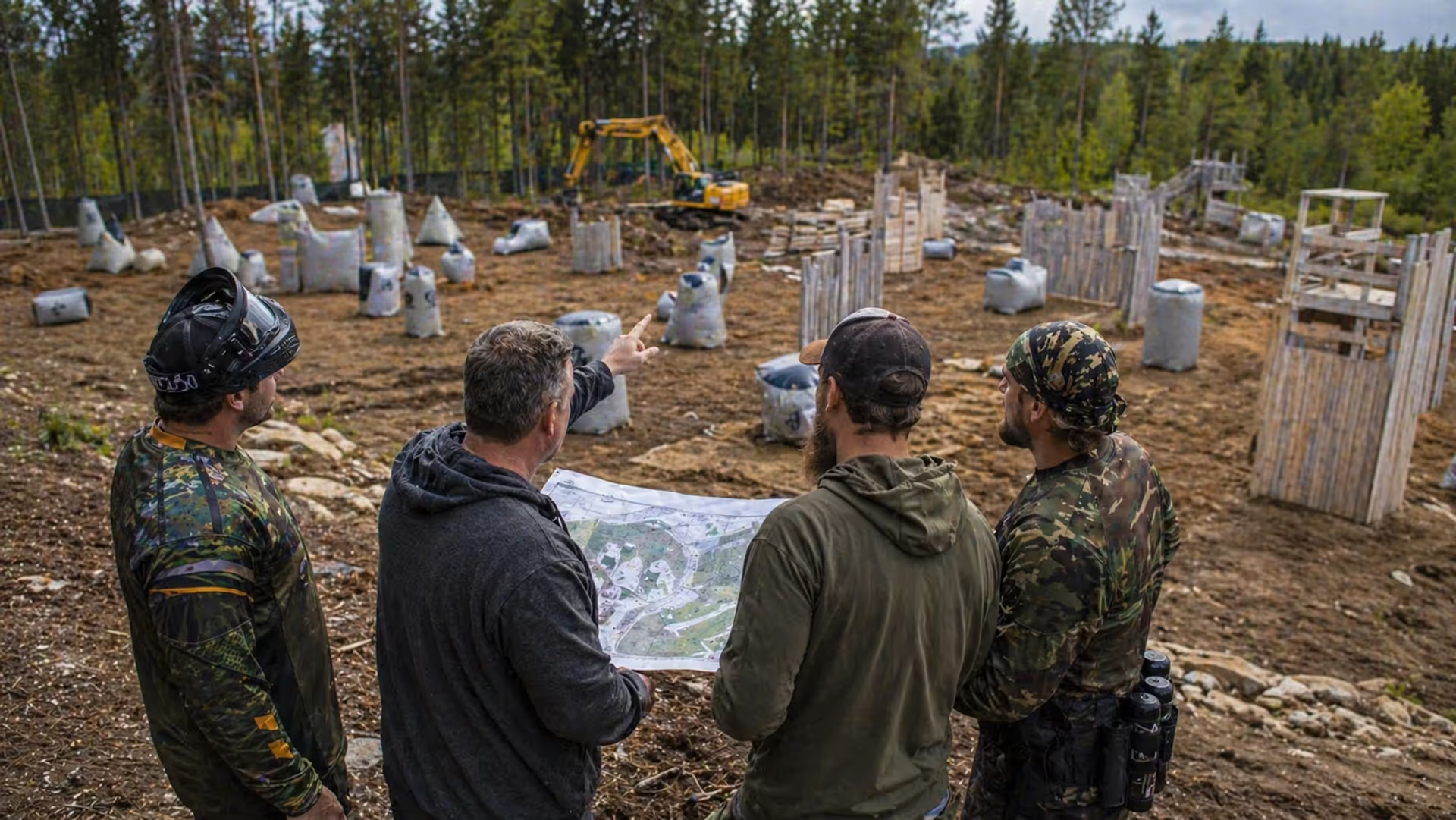
Don't buy anything yet. Not one bunker. Not a single roll of netting. First, figure out exactly what you're building.
Commercial venues and backyard setups share almost nothing in common. Running a business? You'll need parking for 50-plus cars, probably multiple fields so beginners aren't mixing with tournament players, and whatever permits your city or county requires. One operator I know in Texas spent four months just on zoning approvals.
Backyard projects face totally different challenges—you're working with whatever space you've got, and your neighbors can shut you down with a single noise complaint.
Start with player counts. Twenty people playing simultaneously need way more room than eight. Write down your maximum capacity before anything else. Most successful commercial fields run 3-5 games at once—that's where profit comes from, keeping people playing instead of waiting around.
Walk your property in different seasons. That perfect flat spot in July? Might turn into a pond every April. Rocky ground means excavation costs jump. Trees look great for woodsball atmosphere, but their roots tear up netting anchors, and you'll constantly deal with maintenance headaches.
Permits vary wildly depending on where you live. Some places treat paintball like any recreational activity—fill out a form, pay a fee, done. Others classify it as amusement parks, which means months of approvals and site inspections. Call your planning department first. Don't start building and hope nobody notices.
Budget for more than construction. Commercial site prep runs $5,000-$15,000. Obstacles cost $3,000-$25,000 based on quality. Netting and barriers? Figure $8,000-$40,000. Then add $2,500-$8,000 yearly for insurance. Keep six months of expenses in reserve because something always breaks at the worst time.
Standard Paintball Field Dimensions and Space Requirements
Size matters a lot. Too small and matches end in 30 seconds. Too big and players spend ten minutes searching for opponents.
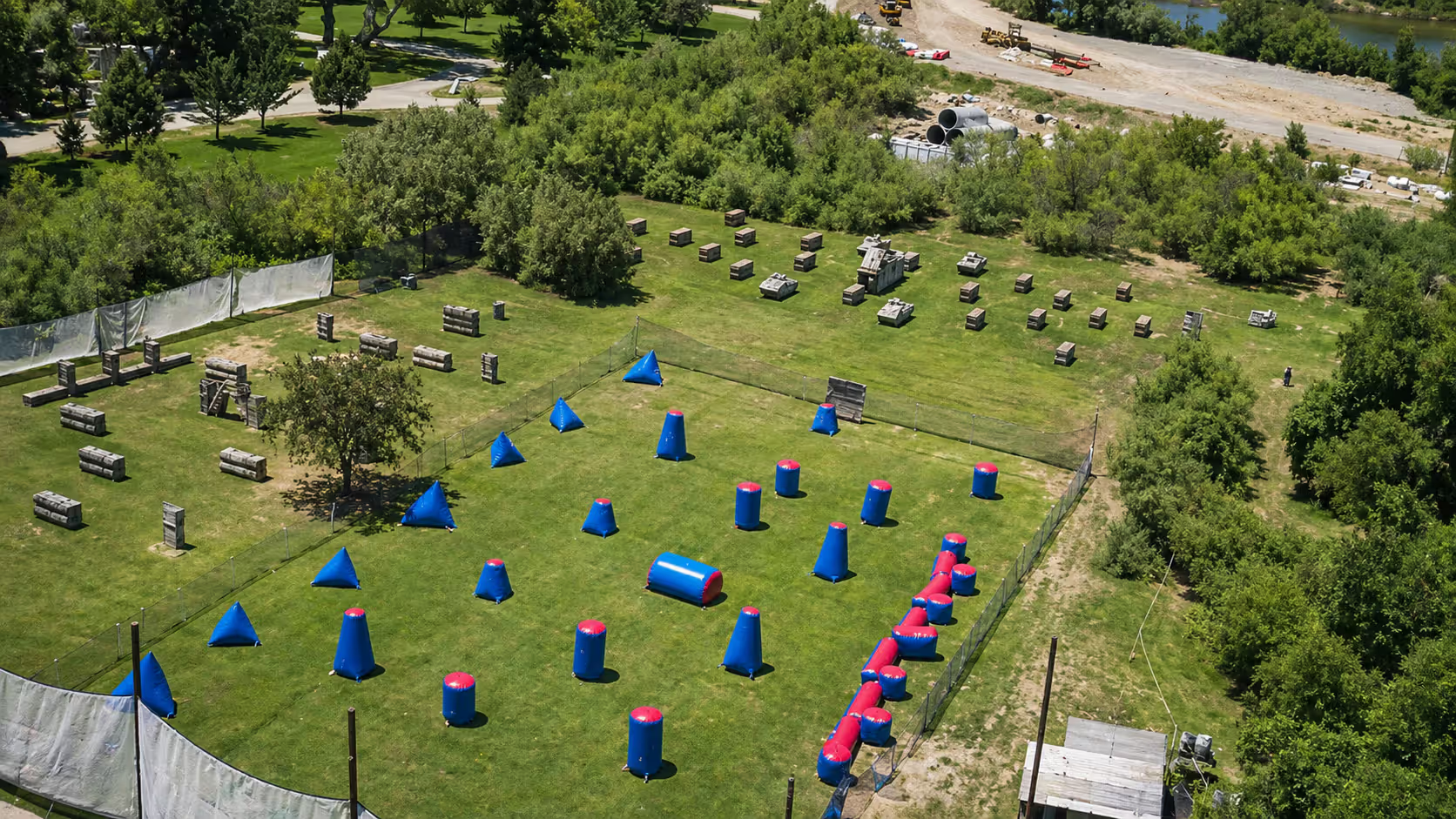
Competitive speedball uses 120 feet wide by 150-170 feet long. That's the standard. Five-player teams get enough room for actual tactics, not just immediate gunfights. The NXL (professional league) uses exactly 150x120 feet for tournaments.
Woodsball and scenario fields eat up way more space. You could technically run woodsball on 150x200 feet, but 300x400 feet lets real tactical play develop. Scenario events with 50-plus players? You need multiple acres with connected zones.
Safety buffers aren't optional. Chronograph stations sit 40-60 feet from active fields with physical barriers—not just signs—blocking shots from reaching players adjusting their markers. Staging areas need 20-foot clearance from boundaries, plus room for gear tables and air stations.
For commercial parking, figure one space per 2-3 players during busy hours. Sixty active players means 25-30 spots minimum, plus staff parking and equipment access lanes.
Author: Ethan Rowe;
Source: lakestaytents.com
| Field Type | Dimensions | Player Capacity | Typical Obstacles | Terrain Style |
| Speedball | 120' × 150' | 10-14 players | 30-50 inflatable bunkers | Flat grass or turf |
| Woodsball | 200' × 300' minimum | 16-30 players | Natural cover plus wooden structures | Trees with varied elevation |
| Scenario | 1-5 acres | 40-100+ players | Mixed bunkers, buildings, vehicles | Hills and natural features |
| Backyard | 60' × 80' to 100' × 150' | 6-12 players | DIY plywood, barrels, hay bales | Flat or gentle slopes |
Choosing Paintball Field Obstacles and Bunker Placement
What you use for obstacles directly shapes gameplay. Pick wrong and you get either boring stalemates or matches where everyone's eliminated before tactics even start.
Inflatable bunkers dominate commercial speedball for solid reasons. You can move them around. They handle weather. Tournament players expect them. Quality inflatables cost $150-$400 each and survive 5-8 years with decent maintenance. Standard speedball layouts use 40-50 bunkers—everything from little 18-inch "cans" to massive 6-foot "temples."
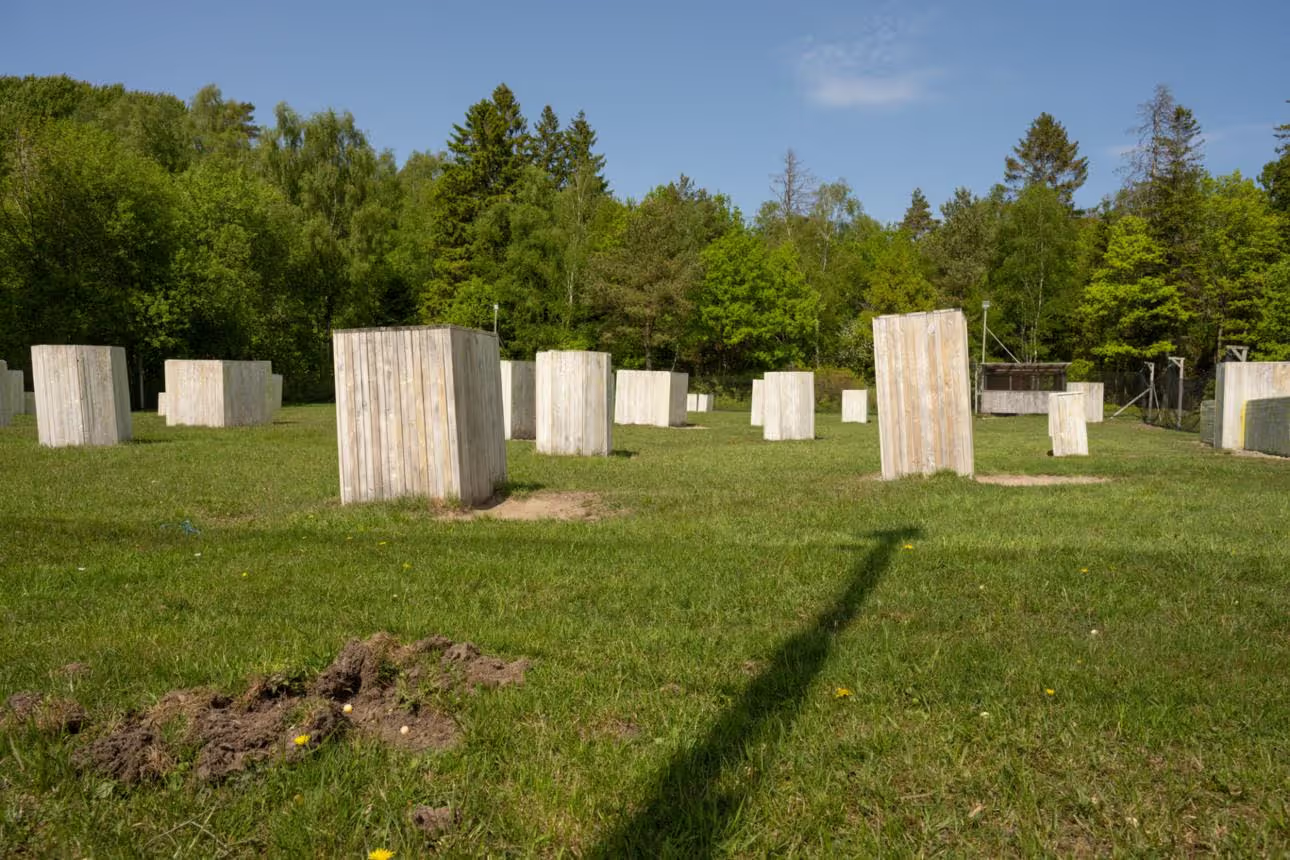
Wooden obstacles work great for permanent woodsball setups. Pressure-treated lumber lasts 10-15 years but needs more upkeep than inflatables. Wood's perfect for themed scenario fields—build forts, guard towers, crashed helicopters. Budget $50-$200 per structure depending how elaborate you get.
Natural cover costs zero but needs careful thought. Big trees, rock formations, elevation changes give woodsball authentic feel. Just add portable bunkers too—you need flexibility to adjust gameplay. Relying entirely on what nature provides means unpredictable shooting lanes and zero ability to tweak layouts when games get stale.
Position bunkers to create natural encounter zones. Think about where opposing players will meet. Get rid of long straight corridors that become one-sided shooting galleries. Stagger obstacles so advancement happens cover-to-cover without crossing huge open areas (anything over 30 feet gets rough).
Cover density controls game speed. Bunkers every 15-20 feet? Fast, aggressive play dominates. Space them 30-40 feet apart? You reward good aim and patience. The best fields mix both—dense cover near objectives, open areas where skilled shooters shine.
Symmetric versus asymmetric layouts: Tournament speedball uses mirror designs eliminating terrain advantages. Recreational and woodsball fields benefit from asymmetric setups forcing different strategies each round. Just rotate starting positions to keep things fair.
Author: Ethan Rowe;
Source: lakestaytents.com
Speedball vs. Woodsball Obstacle Strategies
Speedball emphasizes speed and clear visibility. Bunkers rarely exceed 4 feet since refs and spectators need sight lines. Layouts follow geometric patterns—triangles, diamonds, offset rows—that experienced players read and exploit strategically.
Woodsball embraces unpredictability and immersion. Obstacles vary dramatically in size, shape, and placement. Players adapt on the fly instead of running practiced plays. Taller structures (6-8 feet) introduce vertical elements. Include some sparse areas with minimal cover—those risky crossings generate the moments players talk about for weeks.
Paintball Course Design Elements Beyond Bunkers
Bunkers establish your foundation, but everything else determines whether your field actually functions or becomes an operational nightmare.
Add terrain features even on flat ground. Berms (dirt mounds) create tactical high ground and natural boundaries. A 3-4 foot berm along perimeters gives spectators seating while stopping stray paintballs. Shallow trenches (12-18 inches deep) add tactical variety without creating drainage disasters.
Mark boundaries clearly to eliminate arguments. Bright orange snow fencing shows out-of-bounds areas. Woodsball fields covering large areas need flagging tape on trees every 30 feet. Players shouldn't spend mental energy wondering if they've stepped out.
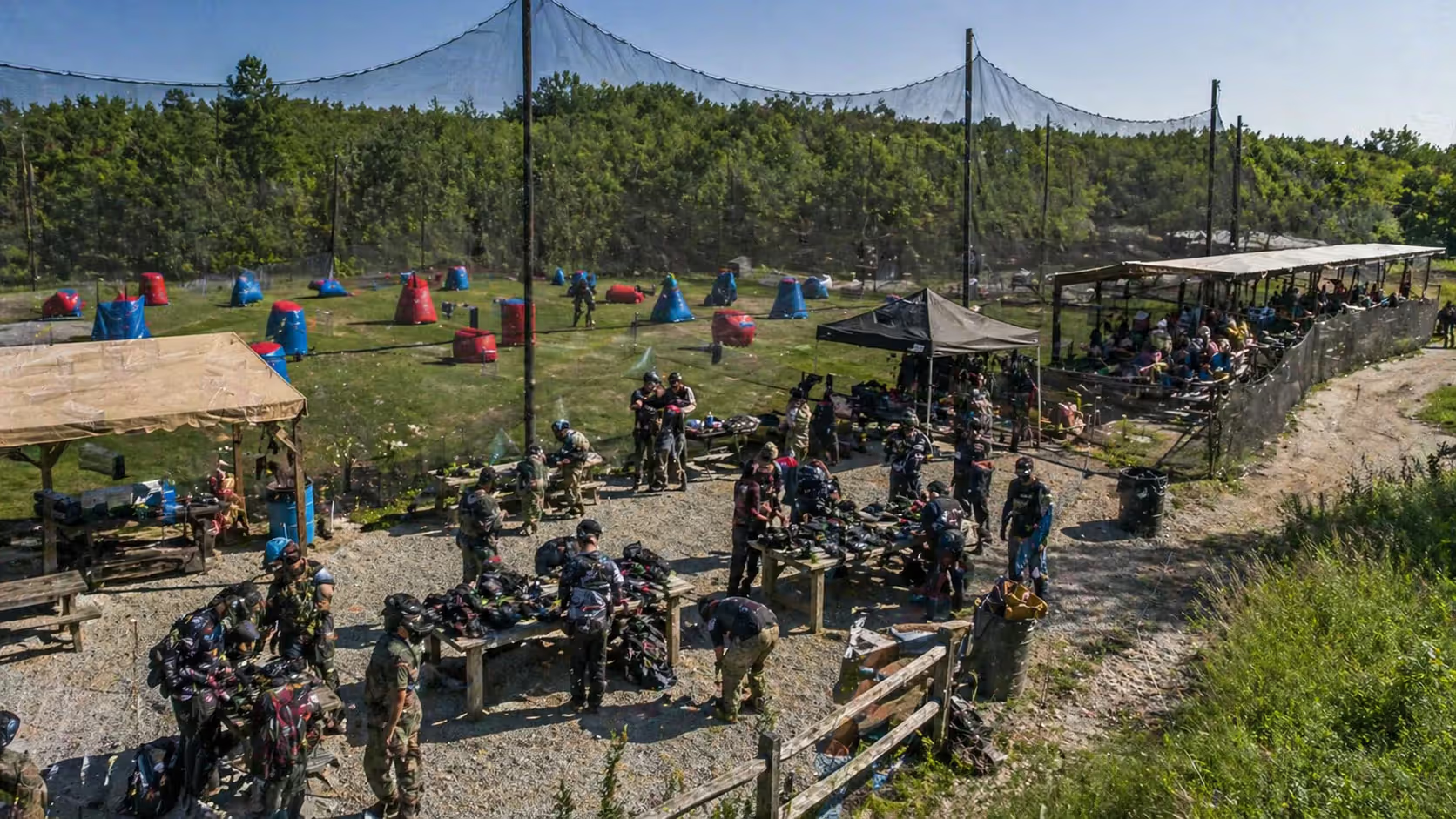
Netting protects spectators and keeps neighbors happy. Required height depends on field size and shooting angles—10-foot nets work for compact fields, larger setups need 15-20 foot barriers. Position netting 15-20 feet beyond field edges to catch lobbed shots. Professional installation runs $12-$25 per linear foot.
Spectator areas demand good sightlines and safety separation. Put viewing zones at field corners or midfield, elevated 2-3 feet above playing surfaces. Use mesh barriers (not solid walls) that allow visibility while stopping paintballs. Provide seating for 20-30% of player capacity.
Chronograph stations need weatherproof covers and decent lighting. Locate them near field entrances without blocking traffic. Players should chrono without creating bottlenecks. During busy periods? Multiple chronographs become essential—one station handles about 20-30 players before waits get annoying.
Safe zones need obvious demarcation. Use different colored fencing (usually yellow) marking areas where mask removal is allowed. Position safe zones upwind from playing areas cutting down on paint dust. Put barrel plug stations at every safe zone entrance.
Lighting extends your operating hours. LED sports lights (400-600 watts) mounted 20-25 feet high illuminate without harsh shadows. Installation costs $8,000-$15,000 for a single speedball field. Night games command premium pricing—$5-$10 extra per player—so installation pays for itself in 12-18 months.
Author: Ethan Rowe;
Source: lakestaytents.com
Building a Backyard Paintball Field on a Budget
Residential fields deliver recreational value without commercial investment, but you've got to plan carefully or you'll get shut down fast.
DIY obstacles slash costs dramatically. Plywood sheets (4'x8' treated exterior grade) run $35-$50 and make solid bunkers with proper bracing. Stack hay bales ($6-$8 each) for temporary cover that moves easily. Large cable spools, plastic barrels (secured so they don't roll), and wooden pallets work as free or cheap obstacles.
Maximize compact spaces. A 60x80 foot area accommodates 6-8 players for casual matches. Use vertical obstacles (walls, A-frames) creating cover without eating horizontal space. Position bunkers along boundaries maximizing usable playing area.
Safety escalates in residential settings. Install 10-foot netting on all sides, including those facing fences or buildings. Paintballs travel 250-plus feet—assuming your fence stops them creates serious liability. Check local ordinances about projectile discharge on residential property. Some cities ban backyard paintball completely.
Neighbors determine if this works long-term. Introduce yourself before building, explain safety measures, invite them to watch from outside the netting. Stick to reasonable hours (10am-6pm on weekends usually works). One complaint to code enforcement can permanently end your operation.
Residential maintenance prevents lasting damage. Pressure-wash bunkers monthly preventing permanent paint staining. Rake playing surfaces removing broken paintballs—they attract bugs and smell awful in heat. Store inflatable obstacles indoors during winter in freezing climates.
Field owners consistently underestimate the importance of proper drainage and ground preparation. I've witnessed operators invest $30,000 in bunkers and netting, then watch their facility become unplayable mud after a single storm. Invest in quality grading and drainage infrastructure before anything else—bunkers and barriers come second.
— Marcus Chen
Common Paintball Arena Design Mistakes to Avoid
Even experienced operators make design errors that wreck safety, gameplay, or profitability. Learn from these common mistakes instead of making them yourself.
Poor sightlines create referee blind spots. Refs need clear views of all field areas to call hits and enforce rules. Don't place large obstacles in field centers where they block visibility. Tournament fields limit center bunkers to 4 feet maximum for exactly this reason.
Inadequate safety zones cause preventable injuries. Cramming fields close together saves space but creates crossfire dangers. Minimum 30-foot spacing between active fields prevents stray shots reaching adjacent games. Budget for proper separation instead of maximizing field count.
Ignoring drainage turns fields into swamps. Standing water damages gear, creates slip hazards, forces cancellations. Grade fields with 1-2% slope toward drainage areas. Add subsurface drainage or collection basins in low spots. This costs $3,000-$8,000 but prevents losing $500-$1,000 in revenue during every rainstorm.
Too many obstacles seem like added value but actually ruin gameplay. Players spend forever hiding instead of engaging opponents. Fields with 60-plus bunkers in standard speedball dimensions create frustrating gridlock. Stick to the 40-50 bunker guideline for 120x150 foot fields.
Poor player flow causes congestion at entry and exit points. Fields need multiple access points—one per team plus ref entrances. Single-entry designs create bottlenecks during game transitions. Players standing around waiting to enter or leave aren't playing (or spending money).
Maintenance access problems surface after you're done building. Plan vehicle access to fields for bunker delivery, netting repairs, equipment transport. Operators who build fields requiring 200-foot hand-carries regret it during every maintenance cycle.
Paintball Field Setup: From Blueprint to Opening Day
Converting plans into operational fields requires proper sequencing and knowing when to hire professionals versus doing it yourself.
Construction timelines vary by project scope. Simple backyard fields take 2-4 weekends for motivated DIYers. Commercial operations need 3-6 months from site prep through opening, assuming permits don't hit delays. Weather impacts outdoor construction—plan accordingly for your climate.
Contractor versus DIY depends on your skills and scale. Hire professionals for excavation, major grading, electrical installations. Handle bunker assembly, painting, minor landscaping yourself to control costs. Get multiple quotes—prices vary 40-60% between contractors for identical work.
Ground preparation establishes long-term field quality. Remove rocks, roots, debris causing injuries or gear damage. Level high spots and fill depressions preventing water accumulation. Compact soil in high-traffic areas preventing erosion. This unglamorous work determines whether your field works well for years or needs constant repairs.
Install obstacles after ground prep finishes. For inflatable bunkers, use ground stakes (12-18 inches) instead of relying on weight alone. Wind gusts topple unstaked inflatables, creating safety hazards. Wooden obstacles need concrete footings (12-inch depth minimum) in areas with freeze-thaw cycles.
Safety inspection before opening day prevents liability nightmares. Walk the entire field checking for sharp edges, exposed hardware, unstable structures, netting gaps. Fire test rounds from various positions verifying netting height works. Document inspections with photos—useful for insurance claims if problems arise later.
Test games reveal design flaws before paying customers show up. Run 5-10 games with experienced players, rotating them through different starting positions. Ask for honest feedback about balance, cover placement, game flow. Make adjustments based on actual gameplay instead of theoretical plans.
FAQ
Building a working paintball field comes down to balancing player experience, safety requirements, and operational practicality. Start with clear goals matching your budget and available space. Focus on appropriate dimensions, strategic obstacle placement, adequate safety zones over flashy features that don't improve gameplay.
Commercial operators should invest in professional ground prep and quality obstacles that'll handle years of heavy use. Backyard builders can create satisfying fields on modest budgets using DIY obstacles and smart space optimization, but safety and neighbor relations must come first.
Test your design thoroughly before committing to permanent installations. The best fields evolve based on player feedback and observed gameplay patterns. Whether you're constructing a tournament-grade speedball arena or a weekend backyard course, thoughtful planning and attention to fundamentals create fields that deliver memorable experiences and keep players coming back.